Intermittent bolus versus Continuous infusions: Evaluating Neuromuscular blockers recovery.
- Dr. Maryam Inayat , MBBS, FCPS, Head of Department Anesthesia and Pain Management, Doctors Hospital, Lahore
- Dr. Shahzad Karim Bhatti , MBBS, FCPS Radiology, Associate Professor of Radiology, Department of Diagnostic Radiology & Medical Imaging, Mayo Hospital / King Edward Medical University, Lahore
- Dr. Aatir Farhan , MBBS, FCPS, Department Anesthesia and Pain Management, Doctors Hospital, Lahore
- Sana Zaheer Qureshi , B.Sc. Medical Imaging Technology, Lecturer MIT Radiology, Department of Diagnostic Radiology & Medical Imaging, Mayo Hospital / King Edward Medical University, Lahore,
- Noor Shahzad , Noor Shahzad, Bhatti, BS Honors Computer Sciences, PGD Public Health, Health Services Academy, Islamabad
Article Information:
Abstract:
Background: The optimal mode of maintaining intraoperative neuromuscular blockade remains uncertain, and no randomized comparison has been reported from Pakistan. We compared intermittent bolts and continuous infusion of atracurium for time to neuromuscular recovery and total drug requirement. Methods: In this single-Centre, parallel-group randomised controlled trial (Doctors Hospital and Medical Center, Lahore; 15 February to 14 August 2024), 80 adults aged 18–60 years, ASA physical status I–II, scheduled for elective surgery under general anesthesia were randomised to atracurium 0.1 mg/kg every 30 min (intermittent bolus, n = 40) or atracurium 0.2 mg/kg/h (continuous infusion, n = 40) after a 0.5 mg/kg intubating dose. The primary outcome was time from the last bolus or cessation of infusion to a train-of-four (TOF) ratio ≥0.8 at the adductor pollicis; the secondary outcome was total intraoperative atracurium dose. Groups were compared with independent-samples t tests. Results: All 80 randomized patients were analysed. Mean (SD) recovery time was 30.75 (3.99) min with intermittent bolus and 49.73 (4.20) min with continuous infusion (mean difference 18.98 min; 95% CI 17.16 to 20.80; P < 0.001). Total atracurium dose was 51.98 (4.40) mg and 80.60 (5.40) mg, respectively (mean difference 28.62 mg; 95% CI 26.43 to 30.81; P < 0.001). The direction and magnitude of both differences were consistent across age, sex, body mass index, ASA status and surgical specialty. Conclusions: In ASA I–II adults undergoing elective surgery, intermittent bolus atracurium was associated with faster neuromuscular recovery and a lower total dose than continuous infusion.
Keywords:
Article :
INTRODUCTION:
Non-depolarizing neuromuscular blocking agents are used during general anesthesia to facilitate tracheal intubation, optimize surgical conditions and permit controlled ventilation. Their safe use depends on complete recovery of neuromuscular function before tracheal extubation, because residual blockade impairs pharyngeal function, airway protection and the hypoxic ventilatory response and remains common in post-anesthesia care units [1,2]. Current guidance therefore recommends objective, train-of-four (TOF)-based monitoring at the adductor pollicis whenever these drugs are given [3,4].
Atracurium is an intermediate-acting benzylisoquinolinium agent that is degraded by Hofmann elimination and ester hydrolysis, with a substantial contribution from organ-based clearance [5]. Rapid bolus injections can release histamine and cause transient hypotension and tachycardia, effects that are attenuated by slower injection [6]. Recovery from blockade is also prolonged by hypothermia, acid–base and electrolyte disturbances and interacting drugs [7].
Maintenance of blockade can be achieved by repeated boluses or by a continuous infusion. Infusion offers a steadier depth of block and avoids repeated injections, whereas pharmacokinetic modelling suggests that, as peripheral compartments fill, recovery becomes increasingly dependent on elimination rather than redistribution, which can lengthen recovery after prolonged administration [8,9]. Clinical comparisons have produced conflicting results: some studies found no meaningful difference in recovery between atracurium regimens [10,11], whereas others reported faster recovery and lower drug use with intermittent dosing [12,13] or, conversely, lower consumption with infusion [14]. No randomized comparison has been reported from Pakistan, where atracurium remains widely used because of its low cost and organ-independent metabolism.
We therefore conducted a randomized controlled trial to compare intermittent bolus and continuous infusion of atracurium with respect to time to neuromuscular recovery and total intraoperative dose in adults undergoing elective surgery. We hypothesized that the two regimens would differ in both outcomes.
MATERIALS AND METHODS:
Study design and setting.
This was a single-Centre, parallel-group randomised controlled trial with a 1:1 allocation ratio, conducted in the Department of Anesthesia, Doctors Hospital and Medical Center, Lahore, Pakistan, from 15 February to 14 August 2024. It is reported in accordance with the CONSORT 2025 statement [15]. The study was approved and was conducted in accordance with the Declaration of Helsinki. Written informed consent was obtained from every participant before surgery.
Participants
Patients aged 18–60 years of either sex, of American Society of Anesthesiologists (ASA) physical status I or II, who required atracurium-induced neuromuscular blockade for elective surgery under general anesthesia with tracheal intubation were eligible. Exclusion criteria were known allergy or hypersensitivity to atracurium or other neuromuscular blocking agents; pre-existing neuromuscular disease, such as myasthenia gravis or peripheral neuropathy; current use of drugs that interact with neuromuscular blockers or alter neuromuscular transmission, such as aminoglycosides or calcium channel blockers; emergency surgery or procedures in which neuromuscular blockade was unnecessary or contraindicated; and pregnancy or breastfeeding. Patients were enrolled by non-probability consecutive sampling.
Randomization
Participants were randomly assigned to Group A (intermittent bolus) or Group B (continuous infusion) by the lottery method, with 40 patients per group.
Interventions
Anesthesia was induced intravenously with propofol 2 mg/kg and nalbuphine 0.1 mg/kg, and both groups received an intubating dose of atracurium 0.5 mg/kg before tracheal intubation. For maintenance of blockade, Group A received atracurium 0.1 mg/kg as intermittent boluses every 30 min, and Group B received a continuous atracurium infusion of 0.2 mg/kg/h. In both groups atracurium was discontinued 30 min before the anticipated end of surgery: the last bolus was given at this point in Group A, and the infusion was stopped at this point in Group B.
Neuromuscular monitoring and outcomes
Neuromuscular function was assessed with a peripheral nerve stimulator applied through surface electrodes over the ulnar nerve, with the response recorded at the adductor pollicis. Train-of-four stimulation (four supramaximal stimuli at 2 Hz) was applied and the number of twitches and the TOF ratio (amplitude of the fourth twitch divided by that of the first, T4/T1) were recorded on a structured form at 0, 10, 30, 60 and 90 min after the last dose.
The primary outcome was neuromuscular recovery time, defined as the interval from the last atracurium bolus (Group A) or cessation of the infusion (Group B) to a TOF ratio ≥0.8. The secondary outcome was the total intraoperative dose of atracurium (mg), comprising the intubating dose plus all boluses in Group A or the intubating dose plus the total infused amount in Group B.
Sample size
The sample size was calculated from the mean (SD) daily neuromuscular blocker dose reported by Jurado and Gulbis for bolus versus continuous-infusion administration (51.7 [40] vs 76.9 [40] mg) [13]. With a two-sided α of 0.05 and 80% power, 40 patients per group (80 in total) were required.
Statistical analysis
Data were analyzed with SPSS version 26.0 (IBM Corp., Armonk, NY, USA). Continuous variables (age, body mass index [BMI], recovery time, and total dose) are presented as mean (SD), and categorical variables (sex, ASA status and surgical specialty) as number (percentage). Baseline characteristics are reported descriptively without significance testing, in line with CONSORT. Recovery time and total dose were compared between groups with independent-samples t tests and are reported as mean differences with 95% confidence intervals (CI). To examine the consistency of the treatment effect, both outcomes were also compared within strata of age (18–40 vs 41–60 years), sex, BMI (≤25 vs >25 kg/m2), ASA status and surgical specialty. Two-sided P < 0.05 was considered statistically significant. All randomised patients were analysed in the group to which they were allocated.
RESULTS:
All 80 randomised patients received the allocated intervention and were included in the analysis; no patient was lost to follow-up (Figure 1). The mean (SD) age of the cohort was 43.45 (12.52) years, 41 (51.25%) patients were female, and the mean BMI was 26.44 (3.43) kg/m2. Baseline characteristics were similar in the two groups (Table 1).
Table 1. Baseline characteristics of participants by allocated group
|
Characteristic |
Intermittent bolus (n = 40) |
Continuous infusion (n = 40) |
Total (n = 80) |
|
Age, years, mean (SD) |
43.88 (12.31) |
42.86 (12.99) |
43.45 (12.52) |
|
Age group, n (%) |
|||
|
18–40 years |
18 (45.0) |
19 (47.5) |
37 (46.3) |
|
41–60 years |
22 (55.0) |
21 (52.5) |
43 (53.8) |
|
Sex, n (%) |
|||
|
Male |
19 (47.5) |
20 (50.0) |
39 (48.8) |
|
Female |
21 (52.5) |
20 (50.0) |
41 (51.3) |
|
BMI, kg/m2, mean (SD) |
26.40 (3.46) |
26.58 (3.46) |
26.44 (3.43) |
|
BMI group, n (%) |
|||
|
≤25 kg/m2 |
18 (45.0) |
16 (40.0) |
34 (42.5) |
|
>25 kg/m2 |
22 (55.0) |
24 (60.0) |
46 (57.5) |
|
ASA physical status, n (%) |
|||
|
I |
15 (37.5) |
12 (30.0) |
27 (33.8) |
|
II |
25 (62.5) |
28 (70.0) |
53 (66.3) |
|
Surgical specialty, n (%) |
|||
|
General surgery |
25 (62.5) |
23 (57.5) |
48 (60.0) |
|
Gynaecology |
10 (25.0) |
10 (25.0) |
20 (25.0) |
|
Orthopaedics |
5 (12.5) |
7 (17.5) |
12 (15.0) |
ASA, American Society of Anesthesiologists; BMI, body mass index; SD, standard deviation. Intermittent bolus: atracurium 0.1 mg/kg every 30 min; continuous infusion: atracurium 0.2 mg/kg/h; both after an intubating dose of 0.5 mg/kg. Percentages are rounded to one decimal place.
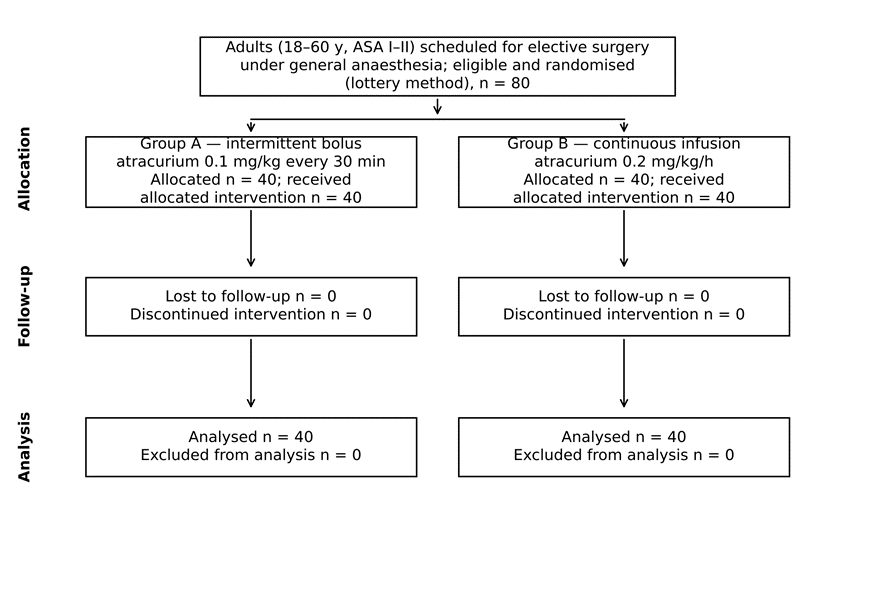
Figure 1. Flow of participants through the trial (CONSORT 2025).
Neuromuscular recovery time was shorter with intermittent bolus administration than with continuous infusion: mean (SD) 30.75 (3.99) vs 49.73 (4.20) min, a mean difference of 18.98 min (95% CI 17.16 to 20.80; P < 0.001). The total intraoperative dose of atracurium was also lower with intermittent boluses: 51.98 (4.40) vs 80.60 (5.40) mg, a mean difference of 28.62 mg (95% CI 26.43 to 30.81; P < 0.001) (Table 2, Figure 2).
Table 2. Primary and secondary outcomes
|
Outcome |
Intermittent bolus (n = 40) |
Continuous infusion (n = 40) |
Mean difference (95% CI) |
P value |
|
Recovery time to TOF ratio ≥0.8, min |
30.75 (3.99) |
49.73 (4.20) |
18.98 (17.16 to 20.80) |
<0.001 |
|
Total atracurium dose, mg |
51.98 (4.40) |
80.60 (5.40) |
28.62 (26.43 to 30.81) |
<0.001 |
Values are mean (SD). Mean difference = continuous infusion minus intermittent bolus. P values from independent-samples t test. CI, confidence interval; TOF, train-of-four. Recovery time was measured from the last bolus (intermittent bolus) or cessation of infusion (continuous infusion).
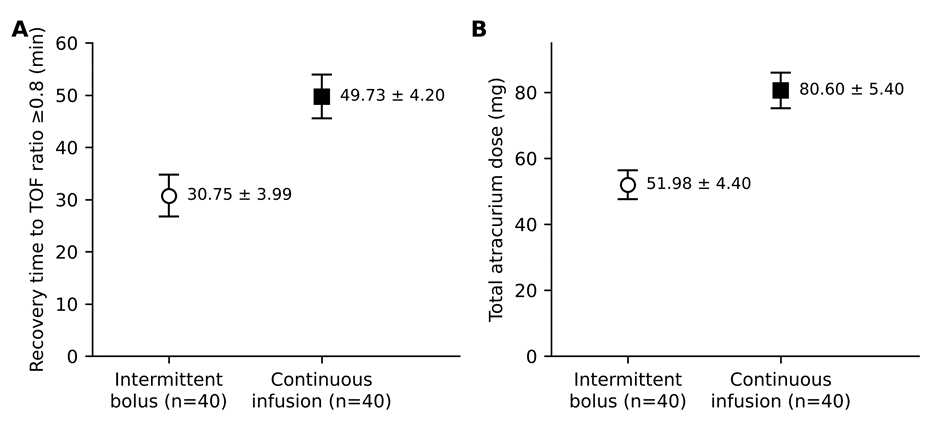
Figure 2. Primary and secondary outcomes by allocated group. (A) Time from the last atracurium dose to a train-of-four (TOF) ratio ≥0.8. (B) Total intraoperative atracurium dose. Markers show means and error bars ±1 SD; n = 40 per group.
In stratified analyses, recovery was faster and the total dose lower in the bolus group within every stratum of age, sex, BMI, ASA status and surgical specialty (all P < 0.001; Table 3, Figure 3). Mean differences in recovery time ranged from 17.40 min (gynaecological surgery) to 26.43 min (orthopaedic surgery), and in total dose from 25.73 mg (age 18–40 years) to 31.77 mg (BMI ≤25 kg/m2). Estimates for orthopaedic surgery were based on 12 patients and are correspondingly imprecise.
Table 3. Recovery time and total atracurium dose stratified by baseline characteristics
A. Recovery time to TOF ratio ≥0.8 (min)
|
Stratum |
n (B/I) |
Bolus |
Infusion |
Mean difference (95% CI) |
P value |
|
Age 18–40 years |
18/19 |
30.72 (4.38) |
51.32 (3.65) |
20.60 (17.91 to 23.29) |
<0.001 |
|
Age 41–60 years |
22/21 |
30.77 (3.75) |
48.29 (4.22) |
17.52 (15.06 to 19.98) |
<0.001 |
|
Male |
19/20 |
31.89 (3.18) |
50.25 (4.05) |
18.36 (15.99 to 20.73) |
<0.001 |
|
Female |
21/20 |
29.71 (4.43) |
49.20 (4.38) |
19.49 (16.71 to 22.27) |
<0.001 |
|
BMI ≤25 kg/m2 |
18/16 |
30.39 (4.22) |
49.63 (4.59) |
19.24 (16.16 to 22.32) |
<0.001 |
|
BMI >25 kg/m2 |
22/24 |
31.05 (3.87) |
49.79 (4.02) |
18.74 (16.39 to 21.09) |
<0.001 |
|
ASA I |
15/12 |
30.33 (4.05) |
50.00 (4.95) |
19.67 (16.11 to 23.23) |
<0.001 |
|
ASA II |
25/28 |
31.00 (4.02) |
49.61 (3.93) |
18.61 (16.42 to 20.80) |
<0.001 |
|
General surgery |
25/23 |
31.64 (3.25) |
49.52 (3.76) |
17.88 (15.84 to 19.92) |
<0.001 |
|
Gynaecology |
10/10 |
30.90 (4.75) |
48.30 (5.08) |
17.40 (12.78 to 22.02) |
<0.001 |
|
Orthopaedics |
5/7 |
26.00 (2.83) |
52.43 (3.46) |
26.43 (22.23 to 30.63) |
<0.001 |
B. Total atracurium dose (mg)
|
Stratum |
n (B/I) |
Bolus |
Infusion |
Mean difference (95% CI) |
P value |
|
Age 18–40 years |
18/19 |
52.11 (4.13) |
77.84 (4.44) |
25.73 (22.86 to 28.60) |
<0.001 |
|
Age 41–60 years |
22/21 |
51.86 (4.70) |
83.10 (5.03) |
31.24 (28.24 to 34.24) |
<0.001 |
|
Male |
19/20 |
51.63 (4.91) |
80.65 (5.12) |
29.02 (25.76 to 32.28) |
<0.001 |
|
Female |
21/20 |
52.29 (3.98) |
80.55 (5.79) |
28.26 (25.13 to 31.39) |
<0.001 |
|
BMI ≤25 kg/m2 |
18/16 |
51.23 (4.74) |
83.00 (5.14) |
31.77 (28.32 to 35.22) |
<0.001 |
|
BMI >25 kg/m2 |
22/24 |
52.89 (3.88) |
79.00 (5.05) |
26.11 (23.42 to 28.80) |
<0.001 |
|
ASA I |
15/12 |
51.20 (4.78) |
80.83 (5.22) |
29.63 (25.66 to 33.60) |
<0.001 |
|
ASA II |
25/28 |
52.44 (4.18) |
80.50 (5.56) |
28.06 (25.32 to 30.80) |
<0.001 |
|
General surgery |
25/23 |
52.08 (4.77) |
82.30 (5.56) |
30.22 (27.22 to 33.22) |
<0.001 |
|
Gynaecology |
10/10 |
52.80 (3.22) |
80.17 (5.56) |
27.37 (23.10 to 31.64) |
<0.001 |
|
Orthopaedics |
5/7 |
49.80 (4.60) |
79.57 (4.79) |
29.77 (23.62 to 35.92) |
<0.001 |
Values are mean (SD). n (B/I), number of patients in the bolus/infusion groups. Mean difference = continuous infusion minus intermittent bolus. P values from independent-samples t tests within each stratum. ASA, American Society of Anesthesiologists; BMI, body mass index; CI, confidence interval; TOF, train-of-four.
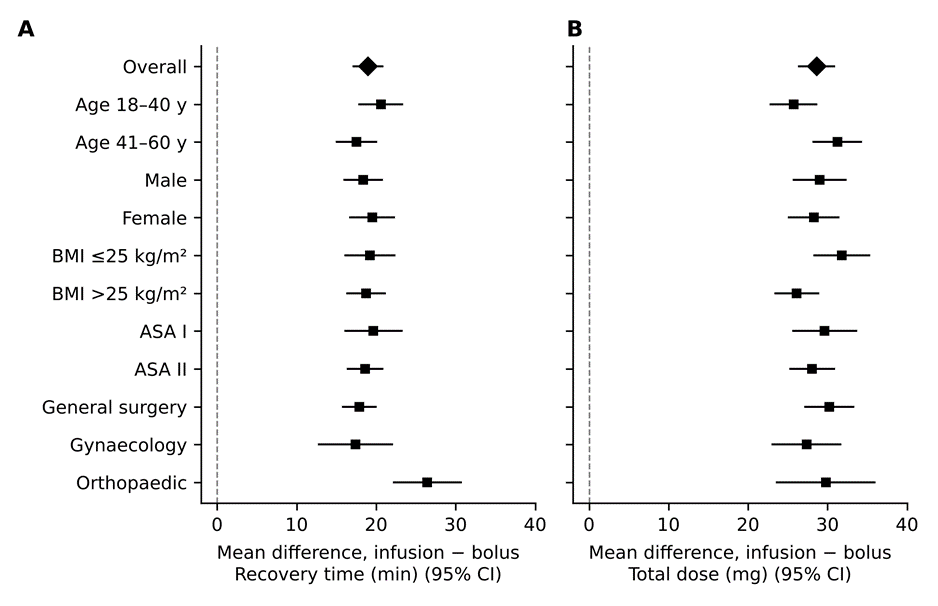
Figure 3. Mean difference (continuous infusion minus intermittent bolus) with 95% confidence intervals for (A) recovery time and (B) total atracurium dose, overall and within strata of age, sex, body mass index (BMI), American Society of Anesthesiologists (ASA) physical status and surgical specialty. Values to the right of zero favour intermittent bolus.
DISCUSSION:
In this randomised trial of ASA I–II adults undergoing elective surgery, maintaining atracurium blockade with intermittent boluses rather than a continuous infusion was associated with recovery to a TOF ratio ≥0.8 approximately 19 min sooner and with about 29 mg less atracurium in total. The effect was consistent in direction and size across all prespecified strata.
Our findings agree with those of Mirinejad et al., who randomised 60 cardiac surgical patients to bolus or infusion of cisatracurium and reported a lower total dose (23.6 vs 39.2 mg) and faster spontaneous recovery to a TOF ratio of 0.8 (43.8 vs 64.2 min) with intermittent boluses [12]. The longer absolute recovery times in that study are plausibly explained by hypothermic cardiopulmonary bypass, which slows both Hofmann elimination and organ clearance [7]. In critically ill patients treated with therapeutic hypothermia, Jurado and Gulbis likewise found that intermittent vecuronium boluses achieved the goal TOF response earlier and with a lower daily dose than continuous infusion, although the setting, drug and time scale differ substantially from ours [13].
Other studies have not shown this advantage. Diefenbach et al. found similar maintenance requirements and recovery indices with repeated injection and infusion of atracurium, with differences in recovery driven by the drug (atracurium vs vecuronium) rather than the mode of administration [11]; Gordon and Reilly similarly compared infusion and intermittent dosing of both agents and attributed differences in postoperative recovery mainly to the agent used [10]. Selcuk et al. [16] and Dong and Li [14] reported no significant difference in recovery with cisatracurium, and the latter found lower consumption with infusion. In patients with renal failure, Potnis et al. reported similar recovery times but a lower total atracurium dose with infusion [17], and Cammu et al. found greater consumption with a single large bolus than with infusion during cardiac surgery [18].
Several mechanisms may contribute to these divergent results. Atracurium shows little cumulation after repeated doses [19], but during prolonged infusion recovery depends increasingly on elimination, and modest cumulation and decreasing infusion requirements have been reported with both atracurium and vecuronium [8,20]. Recovery after infusion may also be slower when the infusion maintains a deeper block at the time of discontinuation; in contrast, the final bolus in a fixed-interval regimen is given into a partially recovered block [9,21]. With aminosteroid agents, pharmacokinetic studies of rocuronium describe a saw-tooth concentration profile with repeated boluses and a steady plateau with infusion [22], and the duration of a single dose may be prolonged by surgical factors such as pneumoperitoneum [23]. Comparisons between studies are further limited by differences in drug, dosing rule (fixed interval vs titrated to twitch response), anaesthetic technique, duration of surgery and recovery end point.
The trial has limitations. First, it was a single-centre study with non-probability sampling and a lottery method of allocation, and the method of allocation concealment and any blinding of the anaesthetist or outcome assessor were not described; because the regimens are visibly different, performance and detection bias cannot be excluded. Second, both regimens used fixed doses rather than titration to a target depth of block, so the comparison reflects these specific protocols; the nominal maintenance rates were similar, and duration of surgery and drug exposure were not reported, so the total dose was not normalised to body weight or time. Third, recovery was assessed with a peripheral nerve stimulator; tactile or visual estimation of fade is unreliable at TOF ratios above approximately 0.4, and current guidelines recommend quantitative monitoring with recovery defined as a TOF ratio ≥0.9 rather than ≥0.8 [1,3,24]. Our recovery times are therefore likely to underestimate the time to full recovery. Fourth, core temperature, maintenance anaesthetic agent, use of reversal agents and adverse events were not reported, although each can influence the time course of blockade [7]. Finally, only ASA I–II adults aged 60 years or younger were included, and the orthopaedic subgroup was small, so the results may not apply to older or higher-risk patients or to other neuromuscular blocking agents.
Despite these limitations, the trial provides the first randomised data from Pakistan on this question. Multicentre trials using quantitative monitoring, a TOF ratio ≥0.9 end point, depth-guided dosing and weight- and time-normalised dose would help to establish whether the observed advantage of intermittent boluses is robust.
CONCLUSION:
In ASA I–II adults undergoing elective surgery under general anaesthesia, maintenance of atracurium neuromuscular blockade with intermittent boluses was associated with faster recovery to a TOF ratio ≥0.8 and a lower total dose than continuous infusion. Whichever regimen is used, objective monitoring should confirm adequate recovery before tracheal extubation.
REFERENCES:
1. Naguib M, Brull SJ, Kopman AF, Hunter JM, Fülesdi B, Arkes HR, et al. Consensus statement on perioperative use of neuromuscular monitoring. Anesth Analg. 2018;127(1):71-80. doi:10.1213/ANE.0000000000002670
2. Murphy GS, Brull SJ. Residual neuromuscular block: lessons unlearned. Part I: definitions, incidence, and adverse physiologic effects of residual neuromuscular block. Anesth Analg. 2010;111(1):120-8. doi:10.1213/ANE.0b013e3181da832d
3. Thilen SR, Weigel WA, Todd MM, Dutton RP, Lien CA, Grant SA, et al. 2023 American Society of Anesthesiologists practice guidelines for monitoring and antagonism of neuromuscular blockade: a report by the American Society of Anesthesiologists Task Force on Neuromuscular Blockade. Anesthesiology. 2023;138(1):13-41. doi:10.1097/ALN.0000000000004379
4. Duţu M, Ivaşcu R, Tudorache O, Morlova D, Stanca A, Negoiţă S, et al. Neuromuscular monitoring: an update. Rom J Anaesth Intensive Care. 2018;25(1):55-60. doi: 10.21454/rjaic.7518.251.nrm
5. Fisher DM, Canfell PC, Fahey MR, Rosen JI, Rupp SM, Sheiner LB, et al. Elimination of atracurium in humans: contribution of Hofmann elimination and ester hydrolysis versus organ-based elimination. Anesthesiology. 1986;65(1):6-12.
6. Scott RP, Savarese JJ, Basta SJ, Embree P, Ali HH, Sunder N, et al. Clinical pharmacology of atracurium given in high dose. Br J Anaesth. 1986; 58:834-8.
7. Heier T, Caldwell JE. Impact of hypothermia on the response to neuromuscular blocking drugs. Anesthesiology. 2006;104(5):1070-80.
8. Fisher DM, Rosen JI. A pharmacokinetic explanation for increasing recovery time following larger or repeated doses of nondepolarizing muscle relaxants. Anesthesiology. 1986;65(3):286-91.
9. Donati F. Cumulation and flexibility with infusions of neuromuscular blocking drugs. Can J Anaesth. 2000;47(10):936-42. doi:10.1007/BF03024862
10. Gordon KL, Reilly CS. Recovery of neuromuscular function after infusion or intermittent bolus doses of atracurium or vecuronium. Br J Anaesth. 1989;62(3):269-73. doi:10.1093/bja/62.3.269
11. Diefenbach C, Mellinghoff H, Grond S, Buzello W. Atracurium and vecuronium: repeated bolus injection versus infusion. Anesth Analg. 1992;74(4):519-22.
12. Mirinejad M, Azarfarin R, Asl AA. Cisatracurium in cardiac surgery – continuous infusion vs. bolus administration. Middle East J Anaesthesiol. 2007;19(3):563-72.
13. Jurado LV, Gulbis BE. Continuous infusion versus intermittent bolus dosing of vecuronium in patients receiving therapeutic hypothermia after sudden cardiac arrest. Pharmacotherapy. 2011;31(12):1250-6.
14. Dong YJ, Li X. Comparative study on the pharmacodynamics of cisatracurium: continuous infusion or intermittent bolus injection. Contemp Clin Trials. 2012;33(3):482-5.
15. Hopewell S, Chan AW, Collins GS, Hróbjartsson A, Moher D, Schulz KF, et al. CONSORT 2025 statement: updated guideline for reporting randomised trials. BMJ. 2025;389:e081123. doi:10.1136/bmj-2024-081123
16. Selcuk M, Celebioglu B, Celiker V, Basgul E, Aypar U. Infusion and bolus administration of cisatracurium – effects on histamine release. Middle East J Anaesthesiol. 2005;18(2):407-19.
17. Potnis M, Mehta S, Mistry D, Desai N. Comparison of intermittent bolus and continuous infusion techniques for administration of atracurium in renal failure. Natl J Med Res. 2012;2(3):376-80.
18. Cammu G, Boussemaere V, Foubert L, Hendrickx J, Coddens J, Deloof T. Large bolus dose vs. continuous infusion of cisatracurium during hypothermic cardiopulmonary bypass surgery. Eur J Anaesthesiol. 2005;22(1):25-9.
19. Ali HH, Savarese JJ, Basta SJ, Sunder N, Gionfriddo M. Evaluation of cumulative properties of three new nondepolarizing neuromuscular blocking drugs BW A444U, atracurium and vecuronium. Br J Anaesth. 1983;55 Suppl 1:107S-111S.
20. Martineau RJ, St-Jean B, Kitts JB, Curran MC, Lindsay P, Hull KA, et al. Cumulation and reversal with prolonged infusions of atracurium and vecuronium. Can J Anaesth. 1992;39(7):670-6.
21. Beattie WS, Buckley DN, Forrest JB. Continuous infusions of atracurium and vecuronium, compared with intermittent boluses of pancuronium: dose requirements and reversal. Can J Anaesth. 1992;39(9):925-31. doi:10.1007/BF03008341
22. McCoy EP, Mirakhur RK, Maddineni VR, Wierda JM, Proost JH. Pharmacokinetics of rocuronium after bolus and continuous infusion during halothane anaesthesia. Br J Anaesth. 1996;76(1):29-33.
23. Wang T, Huang S, Geng G. Comparison of the duration of neuromuscular blockade following a single bolus dose of rocuronium during laparoscopic gynaecological surgery vs conventional open surgery. Anaesthesia. 2014;69(8):854-9. doi:10.1111/anae.12707
24. Fuchs-Buder T, Brull SJ, Fagerlund MJ, Renew JR, Cammu G, Murphy GS, et al. Good clinical research practice (GCRP) in pharmacodynamic studies of neuromuscular blocking agents III: the 2023 Geneva revision. Acta Anaesthesiol Scand. 2023;67(8):994-1017. doi:10.1111/aas.14279