Between Tumour and Triumph: A Prognostic Inquiry into the Vulnerable.
- Dr. Renija V.T. , Assistant Professor, Department of General Surgery, Government Medical College, Thrissur, Kerala, India.
- Dr. Sethu T.S , Assistant Professor, Department of General Surgery, Government Medical College, Thrissur, Kerala, India.
- Dr. Mrudhul Mathew , Assistant Professor, Department of General Surgery, Government Medical College, Thrissur, Kerala, India.
- Dr. Rajesh T.R. , Professor, Department of General Surgery, Government Medical College, Thrissur, Kerala, India.
- Dr. Santhosh T.V. , Associate Professor, Department of General Surgery, Government Medical College, Thrissur, Kerala, India.
Article Information:
Abstract:
Background: Facial nerve dysfunction is the most important and feared complication following parotidectomy, with significant implications. Despite advances in surgical techniques and perioperative management, postoperative facial weakness remains a notable source of morbidity, particularly in patients with complex tumour and surgical characteristics. This study was conducted to determine the prevalence, assess the recovery pattern of postoperative facial nerve palsy and to identify predictors of facial nerve dysfunction following parotidectomy. Methods: This retrospective observational study included patients who underwent parotidectomy at a tertiary care centre over a five-year period. Demographic, clinicopathological, and surgical variables were analysed in relation to postoperative facial nerve outcomes. Facial nerve dysfunction was classified as temporary or permanent and as complete or incomplete. Univariate analysis and binary logistic regression were used to identify the association and independent predictors of postoperative facial nerve palsy. Results: The estimated prevalence of postoperative facial nerve palsy was noted in 65.6% of cases and among them temporary dysfunction occurred more frequently (89.7%). Pleomorphic adenoma was the most common tumour (65.6%), and superficial parotidectomy was the most commonly performed procedure (70.0%). Malignancy (aOR [95% C.I] = 8.9 [0.9 to 81.4], P = 0.05) and the deeper extent of parotidectomy i.e., total conservative or near total or total with or without lymph node dissection (aOR [95% C.I] = 4.4 [0.8 to 23.6], P = 0.08) were independent predictors of facial nerve palsy but for its significance. Among patients with temporary facial palsy, 56.9% had recovered completely by 12 weeks (median recovery time: 12 [range: 4 to 12 weeks]. Conclusions: Facial nerve dysfunction remains an important postoperative morbidity following parotidectomy, although the majority of cases were temporary and recovered completely. A deeper extent of parotidectomy i.e., total conservative or near total or total with or without lymph node dissection and malignancy was associated with an increased risk of permanent facial nerve deficits. Recognition of these risk factors may facilitate better preoperative counselling, risk stratification, and surgical planning.
Keywords:
Article :
INTRODUCTION:
Parotid gland tumours are the most common neoplasms of the major salivary glands, and most are benign. Pleomorphic adenoma and Warthin tumour are the predominant benign histological types encountered in clinical practice.[1] No instrumental grading was performed; instead, clinical grading was used to assess facial nerve palsy and classify it as either complete or incomplete palsy according to House Brackman grading. Surgical management depends on tumour characteristics and anatomical location, with facial nerve preservation being a major consideration during parotidectomy.[2] Postoperative facial nerve dysfunction is an important complication of parotid surgery because of the close anatomical relationship between the facial nerve and the parotid gland. It may manifest as temporary weakness or persistent facial paralysis, affecting facial symmetry and function. Although intraoperative facial nerve monitoring can reduce the risk of immediate postoperative weakness, nerve dysfunction remains a clinically relevant concern.[3]
The incidence and severity of postoperative facial nerve palsy vary across studies, partly because of differences in patient populations, surgical procedures, and definitions of temporary and permanent weakness. In a retrospective study of 794 parotidectomies, Jin et al. reported temporary facial weakness in 9.2% of patients and persistent weakness beyond six months in 5.2%.[4] In a separate study involving 1,018 patients with benign parotid tumours, Kawata et al. reported postoperative facial palsy in 19.5% of patients, with recovery documented within 24 months.[5] Several factors may influence postoperative facial nerve outcomes. These include tumour location, deep-lobe involvement, malignancy, recurrent disease, patient age, and the extent of surgical resection. Jin et al. identified older age, malignancy, and recurrent tumours as independent risk factors, whereas Kawata et al. reported a higher incidence of palsy in patients with larger tumours and deep-lobe lesions.[4,5] Understanding these factors and the subsequent recovery patterns is essential for preoperative counselling and postoperative care. Therefore, the present study aims to evaluate postoperative facial nerve dysfunction following parotidectomy, identify associated risk factors, and assess the pattern of recovery.
Aims and Objectives
The present study aimed to determine the prevalence of postoperative facial nerve palsy following parotidectomy, assess the pattern and extent of facial nerve recovery over time, and identify factors associated with postoperative facial nerve dysfunction. The study also sought to evaluate the recovery profile of temporary facial nerve palsy to facilitate appropriate preoperative counselling, guide postoperative management, and improve patient outcomes.
MATERIALS AND METHODS:
Study Design and Setting
This retrospective observational study was conducted at a tertiary care centre in South India and included patients who underwent parotidectomy between January 2019 and December 2023. The study was undertaken to determine the incidence and pattern of postoperative facial nerve dysfunction following parotidectomy and to identify demographic, tumour-related, and surgical factors associated with temporary and permanent facial nerve palsy.
Study Population
Patients aged 18-80 years who underwent parotidectomy for a parotid lesion during the study period were eligible for inclusion. Both benign and malignant parotid lesions were included. Patients with documented facial nerve weakness or paralysis before surgery were excluded to ensure that postoperative facial nerve dysfunction could be attributed to the surgical procedure rather than pre-existing nerve impairment. Patients with inadequate postoperative facial nerve assessment or insufficient clinical records for assessment of the study outcomes were also excluded. The final study cohort comprised 90 patients.
Data Collection
Patient demographic, clinical, pathological, and operative data were retrospectively collected from hospital records. Demographic variables included age and sex. Tumour-related variables included laterality, clinical tumour size, histopathological diagnosis, deep lobe involvement, and malignant or benign pathology. Surgical variables included the extent of parotidectomy, categorized as superficial or total parotidectomy. A history of recurrent disease was also recorded.
The primary postoperative outcome was facial nerve dysfunction following parotidectomy. The presence or absence of postoperative facial nerve dysfunction was determined from the postoperative clinical examination documented in the medical records.
Assessment of Facial Nerve Function
Facial nerve function was assessed clinically after surgery by evaluating the function of the facial nerve branches and the presence of facial asymmetry or weakness. No instrumental facial nerve grading system was used. Postoperative facial nerve dysfunction was categorized as either temporary or permanent according to the subsequent clinical course and documented recovery. Facial nerve dysfunction was additionally classified as complete or incomplete according to the extent of clinically apparent weakness. Temporary facial nerve palsy was defined as postoperative facial weakness followed by complete recovery during follow-up. Persistent postoperative facial nerve dysfunction without documented recovery during the follow-up period was classified as permanent palsy. Among patients with temporary facial nerve dysfunction, the time from surgery to complete clinical recovery was recorded in weeks.
Outcome Measures
The primary outcome was the incidence of postoperative facial nerve palsy following parotidectomy. Secondary outcomes included the proportion of patients developing temporary and permanent facial nerve dysfunction, the severity of postoperative dysfunction based on complete or incomplete involvement, and the time required for complete recovery among patients with temporary palsy. The associations between postoperative facial nerve dysfunction and demographic, tumour-related, histopathological, and surgical variables were also evaluated.
Statistical Analysis
Statistical analysis was performed using appropriate descriptive and inferential statistical methods. Continuous variables were summarized as mean ± standard deviation (SD) or median [range], while categorical variables were expressed as frequencies and percentages. For univariate analysis, categorical variables were compared using the chi-square test, with Fisher's exact test used when expected cell frequencies were small. Variables demonstrating a statistically significant association with postoperative facial nerve dysfunction on univariate analysis were considered for binary logistic regression analysis to identify independent predictors of facial nerve palsy. The results of the logistic regression analyses were expressed as adjusted odds ratios (aORs) with corresponding 95% confidence intervals (CIs). A p-value of less than 0.05 was considered statistically significant.
Ethical Considerations
The study was conducted after obtaining approval from the institutional ethics committee. As this was a retrospective study based on existing medical records, patient information was analysed confidentially and anonymously. No personally identifiable patient information was included in the study or manuscript. The study was conducted and reported in accordance with established recommendations for observational studies, including the STROBE (Strengthening the Reporting of Observational Studies in Epidemiology) guidelines.
RESULTS:
A total of 90 subjects were included in the study. The mean age of the study subjects was 46.1 ± 14.3 years and it ranged from a minimum of 19 years to a maximum of 79 years, with a male predominance of 54.4% (49/90). Right-sided tumours were more commonly seen among 61.1% (55/90), with the majority being there for a duration of less than 5 years, which was noted among 83.3% (75/90) of the subjects. The majority i.e., 66.7% (60/90), had a maximum tumour size of at least 3 cm or more than that on either side and deep lobe involvement was identified during diagnostic workup in 7.8% (7/90) of them. However, during surgery, 20 subjects with superficial lobe involvement underwent total conservative or near total or total parotidectomy with or without lymph node dissection which was noted among 30.0% of the subjects (27/90). Benign tumours were the commonest type (66/90, 73.3%) and pleomorphic adenoma was the commonest histopathological diagnosis recorded among the subjects (60/90, 65.6%), mucoepidermoid carcinoma was the commonest malignant tumour (22/90, 24.4%). [Table-1]
Postoperative facial nerve palsy occurred in 58 subjects, resulting in an overall prevalence of 64.4%. (Fig-1) Temporary facial nerve palsy with complete recovery formed the majority (29/58, 50.0%) and permanent facial palsy almost had similar distributions across the types of recovery complete (3/58, 5.2%), partial (4/58, 6.9%) and incomplete recovery (3/58, 5.2%). (Fig-2) The median recovery for the buccal branch (30/58, 51.8%) and the buccal branch with the zygomaticotemporal branch (26/58, 44.8%) involved was observed to be 12 weeks; however, when both branches were involved, 2 among 58 subjects, i.e., 3.4%, had no recovery, and when all three branches were involved (1/58, 1.7%), recovery time was highest, accounting for 96 weeks. Whereas when only the marginal mandibular branch was affected (1/58, 1.7%), it was noted to be 8 weeks.
Tarsoraphy was done in 3 subjects amounting to (3/58, 51.7%), which actually corresponded to all with malignancy, difficult dissection, permanent palsy and with post radiation treatment. Complete recovery of facial paralysis was noted in 33 subjects (33/58, 56.9%), whereas incomplete or partial dysfunction was observed in 23 subjects (23/58, 39.7%) and no recovery was recorded among 2 subjects (02/58, 3.4%). 12 weeks was the median recovery period and it varied from 2 weeks to 96 weeks. Steroid was required in 56 of them constituting 96.6%. Tumour recurrence was reported among 8 of them (08/90, 8.9%) of them.
Among the subjects who underwent superficial parotidectomy, 5 out of 63 i.e., 7.9% had malignancy. Two of those subjects (31.7%) had low grade mucoepidermoid carcinoma and among those, 1 subject had no facial palsy (1/63, 1.6%) and 1 subject (1/63, 1.6%) had only buccal branch involved with temporary facial palsy and partial recovery; however, the remaining 3 cases of 63, i.e., 4.8% were with high grade mucoepidermoid carcinoma among whom 1 case (1/63, 1.6%) had all three branches i.e., buccal, zygomaticotemporal and marginal mandibular branches affected with permanent facial palsy and partial recovery, 1 case (1/63, 1.6%) had buccal and zygomaticotemporal branches affected with permanent facial palsy and partial recovery and 1 more case (1/63, 1.6%) had buccal and zygomaticotemporal branches affected with temporary facial palsy and partial recovery. [Figure-3]
29 subjects of 63, 46.1%, had benign tumours with no facial palsy, and the remaining 29 of 63, 46.1%, had facial palsy. 20 of 29 cases, i.e., 68.9%, had temporary facial palsy and complete recovery, with 8 of 20, i.e., 40.0%, having both the eye and buccal branches affected, 11 of 20, i.e., 55.0%, having only the buccal branch, and one of 20 (5.0%) having the marginal mandibular branch involved, and 7 had temporary facial palsy and partial recovery (7/30, 23.4%). 3 of 7 cases (42.9%) had both the buccal and zygomaticotemporal branches affected and the remaining 4 of those 7 (57.1%) had only the buccal branch. 2 of 30, i.e., 6.7% had permanent facial palsy with complete recovery with buccal branch affected.
The association table suggests that the proportion of subjects with facial palsy was slightly higher in age group more than 45 years (70.2% vs. 58.1%), among males (65.3% vs. 63.4%), among the right sided tumours (67.3% vs. 60.0%), those with a disease for a minimum of 5 years and above (66.7% vs 64.0%), the tumour measuring at least 3 cm or more in either side (65.0% vs. 63.3%), with deep lobe involvement (71.4% vs. 63.9%), those with malignancy (95.8% vs. 53.0%) and those with total conservative or near total or total with or without lymph node dissection (92.6% vs. 52.4%). The association of age, sex, laterality, duration of disease, maximum measurement of tumour in either side and lobe involvement were not statistically significant (P>0.05), however, the proportion of those with facial palsy were significantly higher in malignant tumours compared to benign ones and among those who underwent total conservative or near total or total with or without lymph node dissection (P<0.05). It was also observed that there was no statistically significant association of benign tumour type as per histopathology and facial palsy (Pleomorphic adenoma vs. others: 49.2% vs. 85.7%; P<0.05) [Table-2]
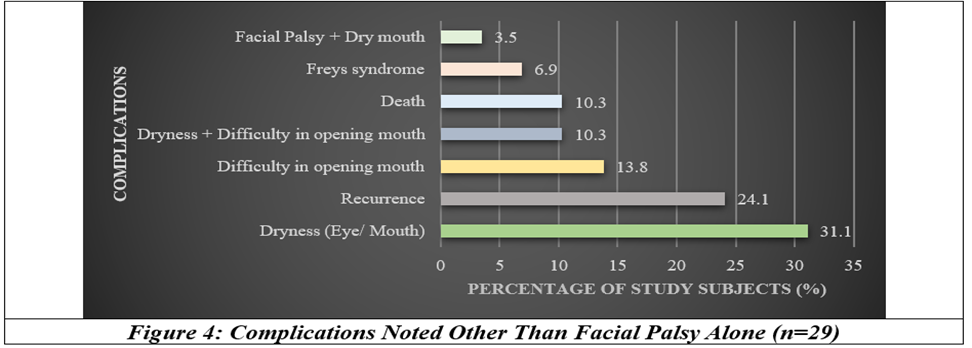
On applying binary logistic regression, malignant tumours had 8.9 times higher odds of facial palsy compared to benign tumours (aOR [95% C.I] = 8.9 [0.9 to 81.4], P = 0.05) and the subjects who underwent total conservative or near total or total with or without lymph node dissection had 4.4 times higher odds of facial palsy compared to superficial parotidectomy (aOR [95% C.I] = 4.4 [0.8 to 23.6], P = 0.08) but it was not statistically significant (P>0.05). [Table-3] 21 of the subjects (23.3%) had either of the below complications other than facial palsy. Among the elicited 29 complications overall, most common complication experienced was dryness (9/29, 31.1%) followed by recurrence (7/29, 24.1%), difficulty in opening mouth (4/29, 13.8%), dryness and difficulty in opening mouth (3/29, 10.3%), death (3/29. 10.3%), Frey’s syndrome (4/29, 6.9%) and facial palsy with dryness of mouth (1/29, 3.5%). All the subjects with dryness and difficulty in opening mouth had received radiation therapy. Death were recorded among 10.3% subjects, one was reported to be due to coronary artery disease, one due to GI malignancy and only one was related to recurrence and progression of malignancy of parotid to distant metastasis. [Figure-4]
Table 1: Distribution of the Subjects Based on Socio-Demographic and Clinical Variables (n=90)
|
Socio-demographic and Clinical variables |
Frequency (n) |
Percentage (%) |
|
Age-group in years |
||
|
>45 |
47 |
52.2 |
|
≤45 |
43 |
47.8 |
|
Sex |
||
|
Male |
49 |
54.4 |
|
Female |
41 |
45.6 |
|
Laterality |
||
|
Right sided |
55 |
61.1 |
|
Left sided |
35 |
38.9 |
|
Duration in years |
||
|
≥5 |
15 |
16.7 |
|
<5 |
75 |
83.3 |
|
Maximum size of the tumour in either side |
||
|
≥3 cm |
60 |
66.7 |
|
<3cm |
30 |
33.3 |
|
Lobe involved |
||
|
Superficial |
83 |
92.2 |
|
Deep |
07 |
07.8 |
|
Extent of parotidectomy |
||
|
Superficial |
63 |
70.0 |
|
Total conservative or near total or total with or without lymph node dissection |
27 |
30.0 |
|
Histopathological characteristic of tumour |
||
|
Benign |
67 |
74.4 |
|
Malignant |
23 |
25.6 |
|
Histopathological diagnosis of tumour |
||
|
Pleomorphic Adenoma |
59 |
65.6 |
|
Warthin’s tumour |
06 |
06.7 |
|
Inflammatory lesions |
01 |
01.1 |
|
Mucoepidermoid carcinoma |
22 |
24.4 |
|
Acinic cell tumour |
02 |
02.2 |
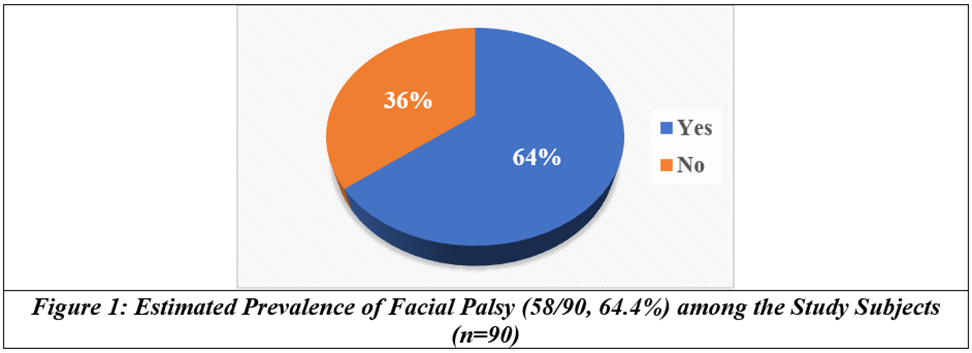
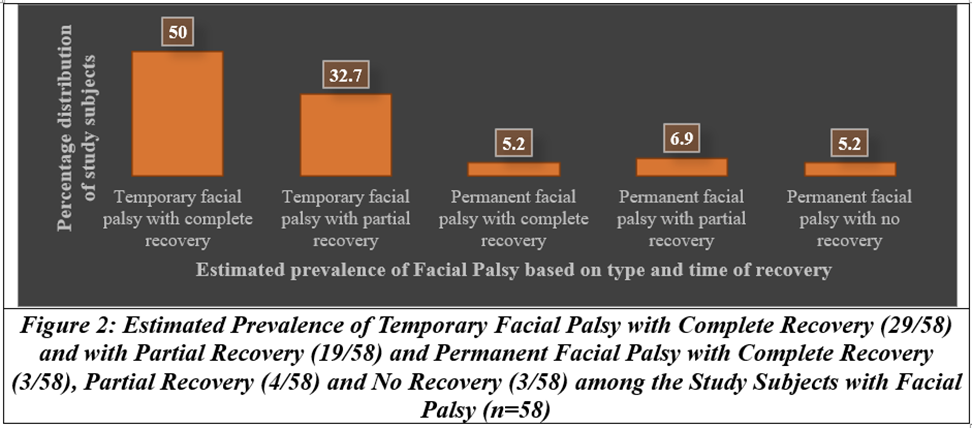
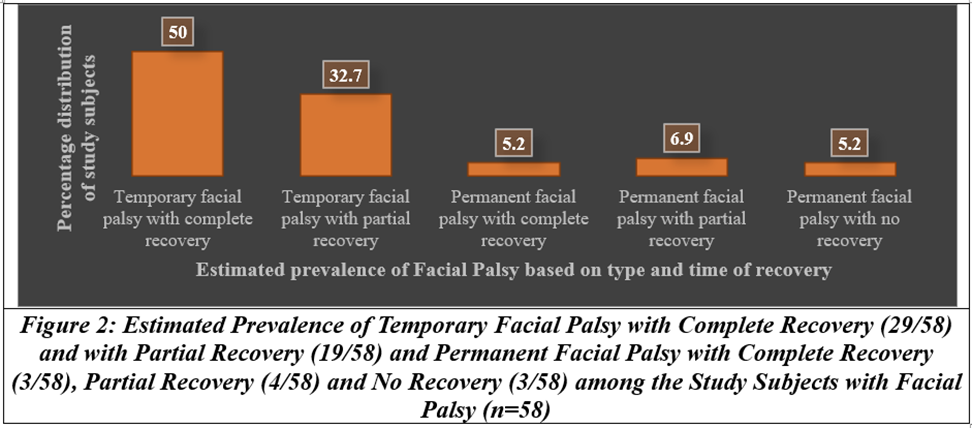
Table 2: Association of Socio-Demographic and Clinical Variables with Facial Palsy
|
Socio-demographic and Clinical variables |
Facial Palsy n (%) |
χ2 – value (P-value) |
|
|
Yes (n=58) |
No (n=32) |
||
|
Age group in years (n=90) |
|||
|
>45 |
33 (70.2) |
14 (29.8) |
1.43 (0.23) |
|
≤45 |
25 (58.1) |
18 (41.9) |
|
|
Sex (n=90) |
|||
|
Male |
32 (65.3) |
17 (34.7) |
0.035 (0.85) |
|
Female |
26 (63.4) |
15 (36.6) |
|
|
Laterality (n=90) |
|||
|
Right sided |
37 (67.3) |
14 (40.0) |
0.49 (0.48) |
|
Left sided |
21 (60.0) |
18 (32.7) |
|
|
Duration of disease (n=90) |
|||
|
≥5 |
10 (66.7) |
05 (33.3) |
0.04 (0.84) |
|
<5 |
48 (64.0) |
27 (36.0) |
|
|
Maximum size of the tumour in either side (n=90) |
|||
|
≥3 cm |
39 (65.0) |
21 (35.0) |
0.02 (0.88) |
|
<3cm |
19 (63.3) |
11 (36.7) |
|
|
Lobe involved♯ (n=90) |
|||
|
Superficial |
53 (63.9) |
30 (36.1) |
(0.69) |
|
Deep |
05 (71.4) |
02 (28.6) |
|
|
Extent of parotidectomy♯ (n=90) |
|||
|
Superficial |
33 (52.4) |
30 (47.6) |
(<0.001)* |
|
Total conservative or near total or total with or without lymph node dissection |
25 (92.6) |
02 (07.4) |
|
|
Histopathological diagnosis of benign type of tumour♯ (n=66) |
|||
|
Pleomorphic adenoma |
29 (49.2) |
30 (50.8) |
(0.07) |
|
Others |
06 (85.7) |
01 (14.3) |
|
|
Histopathological characteristic of tumour♯ (n=90) |
|||
|
Malignant |
23 (95.8) |
01 (04.2) |
(<0.001)* |
|
Benign |
35 (53.0) |
31 (47.0) |
|
|
♯Fisher’s exact test applied; *indicates significant statistical association at P<0.05 |
|||
Table 3: Binary Logistic Regression Analysis Predicting Occurrence of Facial Palsy by Histopathological Characteristic Among Patients with Parotid Tumours
|
Parameters |
Adjusted Odds Ratio [95% CI] Exp (β) |
P- value |
|
Histopathological characteristic of tumour (Malignant v/s Benign⸗) |
8.9 [0.9 to 81.4] |
0.05 |
|
Extent of parotidectomy (Superficial vs Total conservative or near total or total with or without lymph node dissection) |
4.4 [0.8 to 23.6] |
0.08 |
|
⸗Benign and superficial are the reference categories |
||
DISCUSSION:
Facial nerve dysfunction is the most frequent and most feared complication of parotid surgery. In the present study, 58 of 90 patients (64.4%) developed postoperative facial nerve palsy. Of these, 48 (82.8%) had temporary and 10 (17.2%) had permanent dysfunction. This prevalence is considerably higher than in most published series, which are largely restricted to benign disease. Sethi et al.[6] reported temporary and permanent weakness in 26.7% and 2.6% of 150 benign parotid operations (29.3% overall). Albosaily et al.[7] reported 31.9% in 191 parotidectomies. Kumar et al.[8] found 35% temporary and 1.66% permanent palsy in 60 superficial parotidectomies. Kawata et al.[5] reported 19.5% in 1,018 benign tumours, and Salih et al.[9] reported only 9.0% transient and 1.6% permanent palsy in 127 patients, 92.1% of whom underwent superficial parotidectomy. Our figure is nevertheless within the wide range quoted in the literature, up to 64.6% for temporary weakness[7] and 10–68% for transient weakness.[8] Several features of our cohort probably explain the higher rate. A quarter of our patients had malignant tumours (24/90, 26.7%), and 30% (27/90) underwent total conservative, near-total or total parotidectomy. In addition, weakness of any branch was recorded clinically without an instrumental grading scale, so mild deficits may have been captured.
The permanent palsy rate in our series (10/90, 11.1%) was also higher than the 1.6–2.6% reported in benign-dominant series,[6,8,9] though still within the 0–19% range cited by Kumar et al.[8] Carta et al.[10] who used an operative microscope with intraoperative nerve monitoring, observed palsy in 13 of 145 parotidectomies for benign disease (9.0%; 11 temporary, 2 permanent). Among 53 malignant cases, 5 had temporary and 6 permanent weakness after excluding those with a preoperative deficit. By our calculation, this is about 25.6% of the 43 malignant patients with normal preoperative function. Even this malignant-subgroup rate is well below our 95.8%, which suggests that case-mix and the extent of resection were major contributors in our series.
Malignancy was the strongest factor in our data. Palsy occurred in 23 of 24 patients with malignant tumours (95.8%) compared with 35 of 66 with benign tumours (53.0%) (P<0.001). In the adjusted model, malignancy carried an aOR of 8.9 (95% CI 0.9–81.4; P=0.05). Jin et al.[4] in 794 parotidectomies, similarly identified malignancy as an independent risk factor for both temporary (OR 3.47, 95% CI 2.02–5.97) and permanent weakness (OR 4.02, 95% CI 2.01–8.09), both P<0.0001. Our point estimate is larger than theirs, but our confidence interval is very wide and crosses unity, so the result should be read as a strong trend rather than a confirmed independent effect. Bron and O’Brien[11] likewise found weakness in 100% of malignant lobe tumours treated by near-total parotidectomy, compared with 13% of malignant tumours treated by limited superficial parotidectomy. Nerve infiltration, wider oncological clearance and, in some patients, deliberate sacrifice of branches are the likely mechanisms.
The extent of parotidectomy showed a similar pattern. Palsy occurred in 25 of 27 patients (92.6%) who underwent total conservative, near-total or total parotidectomy (with or without lymph node dissection), compared with 33 of 63 (52.4%) after superficial parotidectomy (P<0.001). The adjusted odds ratio was 4.4 (95% CI 0.8–23.6; P=0.08). Jin et al.[4] found that total parotidectomy carried an odds ratio of 18.7 (95% CI 4.28–81.46) for temporary and 19.8 (95% CI 2.58–152.20) for permanent weakness compared with extracapsular dissection. Albosaily et al.[7] identified total parotidectomy and specimens larger than 60 cm³ as risk factors for temporary weakness. Bron and O’Brien[11] reported weakness in 83% of parotidectomies combined with neck dissection, against 13–16.5% for limited superficial resections. This closely matches our inclusion of lymph node dissection in the extensive-surgery group. Two points explain the wide confidence intervals in our model. Malignancy and extent of surgery are clinically interlinked, and Jin et al.[4] excluded extent from their multivariable model because it correlated strongly with pathology and tumour subsite (P<0.001). Also, only 1 malignant and 2 extensively resected patients were free of palsy, so the data were sparse. Notably, 20 of the 27 patients with extensive surgery had only superficial-lobe involvement on workup, which suggests that intraoperative or oncological decisions, rather than tumour depth alone, drove the extent of resection.
The remaining variables were not significantly associated with palsy in our study. Palsy occurred in 70.2% of patients older than 45 years versus 58.1% of younger patients (P=0.23), and in 65.3% of males versus 63.4% of females (P=0.85). For tumours of 3 cm or more, it occurred in 65.0% versus 63.3% (P=0.88), and for disease duration of 5 years or more in 66.7% versus 64.0% (P=0.84). Sethi et al.[6] and Albosaily et al.[7] also found no association with age, sex or tumour size. Kumar et al.[8] did not find rising palsy rates with increasing size (46.1% for 1–2 cm and 44.4% for 2–3 cm tumours, versus about 35–40% above 3 cm), nor with disease duration (29.4%, 41.3% and 35% for <1, 1–5 and >5 years). Jin et al.[4] reported that tumour size was significant on univariable analysis but lost significance after adjustment (P=0.186 for permanent and P=0.162 for temporary weakness), and our unadjusted results agree. Age was an independent risk factor in their large cohort (OR 1.019 per year for temporary and 1.031 for permanent weakness).[4] Our lack of an age effect may reflect our smaller sample, with only 32 patients without palsy. Deep-lobe involvement (71.4% vs 63.9%; P=0.69) and non-pleomorphic histology (85.7% vs 49.2%; P=0.07) were also non-significant. However, only 7 patients had deep-lobe disease and 7 had non-pleomorphic benign tumours, so these comparisons were underpowered. Jin et al.[4] did find that deep-lobe tumours independently predicted temporary weakness (OR 2.20, 95% CI 1.05–4.61).
In terms of recovery, complete recovery occurred in 33 of 58 patients (56.9%), partial recovery in 23 (39.7%) and none in 2 (3.4%). The median recovery time was 12 weeks (range 2–96 weeks). This is slower and less complete than the figures of Albosaily et al.[7] where 90% of patients with temporary weakness regained normal movement within 6 months. It is also slower than Kumar et al.[8] where all 22 affected patients had weakness on day 1, but only one remained affected at 6 months, with most recovering within 3–4 months. The difference is probably due to case-mix. Those series were benign-only, whereas ours included malignancies, extensive resections and postoperative radiotherapy (three patients needed tarsorrhaphy, all with malignancy, difficult dissection, permanent palsy or radiotherapy). Some of our partial recoveries may also have improved with longer follow-up. Steroids were given to 56 of 58 patients (96.6%), so we could not assess their effect. Albosaily et al.[7] found no faster recovery with steroids, whereas Kumar et al.[8] considered steroid therapy useful. The buccal branch alone (30/58, 51.8%) or with the zygomaticotemporal branch (26/58, 44.8%) was most often involved, with a median recovery of 12 weeks. Isolated marginal mandibular involvement was rare (1/58, 1.7%; recovery 8 weeks). Kumar et al.[8] found the marginal mandibular branch the most frequently affected, and attributed this to its thin calibre, long intraparenchymal course and few anastomoses. The difference may reflect how branch involvement was recorded rather than a true anatomical difference. The single patient with involvement of all three branches had the longest recovery (96 weeks). Other complications occurred in 21 patients (23.3%), most commonly dryness, trismus (all in irradiated patients), Frey’s syndrome and recurrence (8/90, 8.9%). Only one of the three deaths was attributable to parotid malignancy.
CONCLUSION:
Postoperative facial nerve dysfunction remains a clinically important complication of parotidectomy, although the majority of postoperative deficits are temporary and recover completely. In this study, deep lobe involvement and tumour size greater than 3 cm emerged as independent predictors of temporary facial nerve palsy, highlighting the importance of tumour anatomy and surgical complexity in determining transient nerve dysfunction. In contrast, malignancy was the only independent predictor of permanent facial nerve palsy, underscoring the additional risk associated with malignant parotid disease.
Importantly, the favourable recovery observed in most patients with temporary palsy supports an overall good functional prognosis following postoperative facial nerve weakness. Identification of patients at increased risk before surgery may facilitate more accurate preoperative counselling, individualized surgical planning, and closer postoperative surveillance. These findings emphasize that, while facial nerve dysfunction remains an important morbidity of parotidectomy, careful assessment of tumour size, depth, and malignant potential can help anticipate neurological outcomes and optimize patient management.
REFERENCES:
1. Luers JC, Guntinas-Lichius O, Klussmann JP, et al. The incidence of Warthin tumours and pleomorphic adenomas in the parotid gland over a 25-year period. Clin Otolaryngol 2016;41(6):793–7.
2. Ahmad YES, Winters R. Parotidectomy. In: StatPearls [Internet]. Treasure Island (FL): StatPearls Publishing 2026.
3. Sood AJ, Houlton JJ, Nguyen SA, et al. Facial nerve monitoring during parotidectomy: a systematic review and meta-analysis. Otolaryngol Head Neck Surg 2015;152(4):631-7.
4. Jin H, Kim BY, Kim H, et al. Incidence of postoperative facial weakness in parotid tumor surgery: a tumor subsite analysis of 794 parotidectomies. BMC Surg 2019;19:199.
5. Kawata R, Kinoshita I, Omura S, et al. Risk factors of postoperative facial palsy for benign parotid tumors: outcome of 1,018 patients. Laryngoscope 2021;131(12):E2857-64.
6. Sethi N, Tay PH, Scally A, et al. Stratifying the risk of facial nerve palsy after benign parotid surgery. J Laryngol Otol 2014;128(2):159-62.
7. Albosaily A, Aldrees T, Doubi A, et al. Factors associated with facial weakness following surgery for benign parotid disease: a retrospective multicenter study. Ann Saudi Med 2020;40(5):408-16.
8. Kumar P, Gupta A, Aggarwal N, et al. Incidence and possible predictive factors of facial nerve paralysis after superficial parotidectomy for benign tumours: our experience. Indian J Otolaryngol Head Neck Surg 2023;75(3):2000-5.
9. Salih AM, Baba HO, Saeed YA, et al. Pattern of facial nerve palsy during parotidectomy: a single-center experience. J Int Med Res 2022;50(7):3000605221108930.
10. Carta F, Chuchueva N, Gerosa C, et al. Parotid tumours: clinical and oncologic outcomes after microscope-assisted parotidectomy with intraoperative nerve monitoring. Acta Otorhinolaryngologica Italica 2017;37(5):375-86.
11. Bron LP, O’Brien CJ. Facial nerve function after parotidectomy. Arch Otolaryngol Head Neck Surg 1997;123(10):1091-6.