Strict fasting, clear fluids until 2 hours, or carbohydrate loading before elective surgery in adults: a rapid systematic review and network meta-analysis of randomized trials.
- Ramulu Andole , Specialist Anesthesia, Department of Anesthesia, Madinat Zayed Hospital, SEHA, United Arab Emirates.
Article Information:
Abstract:
kground: Many surgical patients still fast from midnight even though guidelines permit clear fluids until 2 hours before anaesthesia. Whether a carbohydrate drink adds anything beyond plain water is unsettled. We compared strict fasting, water or placebo until 2 hours, and carbohydrate loading in adults having elective surgery. Methods: This rapid review used web-indexed literature searches to 2026. Outcomes were length of stay, postoperative nausea or vomiting, preoperative thirst and hunger, gastric volume, insulin resistance, complications and aspiration. We pooled direct comparisons with restricted maximum likelihood random-effects models and Hartung-Knapp intervals, and fitted a frequentist network model where the evidence connected. Risk of bias was assessed with RoB 2 and certainty with GRADE. Results: Eighteen trials with 1,698 participants were included. Compared with fasting, carbohydrate loading did not change length of stay (mean difference 0.06 (95% CI −0.56 to 0.67) days; 5 comparisons; I²=0%). Against water or placebo, the estimate was −1.53 (95% CI −3.66 to 0.61) days (I²=90%), and it was −0.22 (95% CI −1.33 to 0.88) days without two trials reporting stays over 3 days shorter. Nausea or vomiting was not clearly reduced against fasting (risk ratio 0.62 (95% CI 0.21 to 1.79)) or water (risk ratio 0.39 (95% CI 0.09 to 1.64)). Against fasting, carbohydrate reduced thirst (standardized mean difference −1.11 (95% CI −2.18 to −0.03)) and hunger (−0.83 (95% CI −1.66 to −0.01)), though heterogeneity was high and the upper limits were near zero. Gastric volume tended to be larger with carbohydrate than with fasting (0.51 (95% CI −0.03 to 1.04); 3 trials). No aspiration occurred in six trials reporting it (0 of 245 carbohydrate participants). Conclusions: Low to very low certainty evidence suggests that carbohydrate loading eases preoperative thirst and hunger compared with fasting, with no demonstrated effect on length of stay. Any advantage over water is unresolved, because two trials showed large reductions in stay and the others showed none. Allowing clear fluids until 2 hours appears reasonable in low-risk adults.
Keywords:
Article :
INTRODUCTION:
Fasting before anaesthesia exists to protect the airway from regurgitated gastric contents. In everyday practice the instruction often becomes far longer than anyone intended. In one Brazilian audit of elective digestive and abdominal wall surgery, patients actually fasted for about 16 hours against the 11 hours prescribed, and hunger and thirst grew worse with time.1 A later nurse-led quality improvement project reported less dehydration and distress after nurses introduced a liberal fluid regimen, with no aspiration recorded.2
The physiological argument against long fasts is that they add to the insulin resistance that surgery itself provokes.3,4 Two practice changes have followed. The first is simple shortening of the fluid fast: a Cochrane review of 22 trials found no evidence that it raised the risk of aspiration, regurgitation or related morbidity.5 The second is to give a carbohydrate drink, a step now built into enhanced recovery pathways. The 2023 American Society of Anesthesiologists update supports carbohydrate-containing clear liquids until 2 hours before elective procedures in healthy adults.6,7
What these two steps contribute separately is less clear. Earlier syntheses often merged water, placebo and fasting into one control group, which cannot show whether benefit comes from the carbohydrate or just from drinking.8,9 Network analyses that kept the groups apart reached mixed conclusions. Amer and colleagues found a stay about 0.2 to 0.4 days shorter than with fasting, and no benefit over water or placebo.10 Ricci and colleagues found that both carbohydrate and clear water beat fasting for morbidity in abdominal surgery,11 while Tong and colleagues reported less insulin resistance but no clear gain in comfort.12 A 2026 review of 98 trials again rated most outcomes as low to moderate certainty.13
We therefore compared the three strategies that a clinician actually chooses between (strict fasting, water or placebo until 2 hours, and carbohydrate loading), and we added trials published up to early 2026.
MATERIALS AND METHODS:
Protocol and reporting
This rapid review was reported with reference to PRISMA 2020.14 No protocol was registered, and deviations from a full systematic review are stated below.
Eligibility
We included randomized trials in adults having elective surgery that compared at least two of: (1) strict fasting, with no oral intake from midnight or for at least 6 hours; (2) water or a non-caloric placebo drink up to about 2 hours before surgery; and (3) an oral carbohydrate drink of at least 10 g in the same window. We excluded paediatric, obstetric, emergency and non-randomized studies, and trials whose arms differed by a second co-intervention. In three-arm designs with such a co-intervention, we used only the arms that differed by carbohydrate. Trials of intravenous carbohydrate were excluded.
Search strategy
Searches were run on 2 and 3 November 2026 through a general web search tool, using combinations of preoperative, carbohydrate loading, oral carbohydrate, fasting, clear fluids, water, surgery and randomized controlled trial. Publisher sites and open-access full texts were then read directly. We also checked recent reviews9,10,12,13 and a supplied set of notes. PubMed, Embase, CENTRAL and Web of Science could not be queried directly, so database record counts are not available and no language or date limits were applied.
Selection and data extraction
One reviewer screened reports and extracted data with the assistance of an artificial intelligence tool; there was no independent second reviewer. We extracted design, population, drink, dose, timing, comparator and outcome data. For nausea and vomiting, we took a composite when reported, otherwise vomiting at the earliest postoperative window. Thirst and hunger were pooled only when measured before surgery.
Risk of bias and certainty
Risk of bias was assessed with RoB 2,15 and certainty for each main outcome with GRADE.16
Statistical analysis
We pooled mean differences for length of stay, risk ratios for binary outcomes and Hedges' g for outcomes measured on different scales. Random-effects models used restricted maximum likelihood, with Hartung-Knapp intervals when three or more comparisons were available17 and Wald intervals otherwise. Medians and interquartile ranges were converted to means and standard deviations by the method of Wan and colleagues.18 Binary thirst and hunger data were converted to standardized differences through the odds ratio.19 Zero cells received a 0.5 continuity correction. Heterogeneity was described by I² and τ². Trials with zero events in both arms contributed no estimate, so aspiration was summarized descriptively.
Where outcomes formed a connected network, we fitted a contrast-based frequentist model with restricted maximum likelihood, allowing for correlation within three-arm trials. Consistency was checked by comparing direct and indirect estimates where a closed loop existed. Sensitivity analyses removed outlying trials and tested assumptions about arm sizes. Funnel plots were not drawn because no comparison had 10 trials. Analyses were run in Python with SciPy.
RESULTS:
Study selection and characteristics
We sought 48 reports. Six could not be retrieved and 24 were excluded, leaving 18 trials with 1,698 participants (Figure 1, Table 1).20-37 Twelve compared carbohydrate with fasting, seven with water or placebo, and three provided water-versus-fasting data; three were three-arm trials or designs with two carbohydrate arms (Figure 2). Three trials enrolled only people with diabetes.25,28,30 Most procedures were cholecystectomy or abdominal and colorectal resection. Doses ranged from about 25 g to 150 g, and most trials gave the final drink about 2 hours before surgery. One trial allowed ad libitum clear liquids in cardiac procedures but gave no extractable data; it found no benefit in satisfaction.38 One trial combining carbohydrate with goal-directed fluid therapy was excluded because the two interventions could not be separated.39
Study selection and characteristics
We sought 48 reports. Six could not be retrieved and 24 were excluded, leaving 18 trials with 1,698 participants (Figure 1, Table 1).20-37 Twelve compared carbohydrate with fasting, seven with water or placebo, and three provided water-versus-fasting data; three were three-arm trials or designs with two carbohydrate arms (Figure 2). Three trials enrolled only people with diabetes.25,28,30 Most procedures were cholecystectomy or abdominal and colorectal resection. Doses ranged from about 25 g to 150 g, and most trials gave the final drink about 2 hours before surgery. One trial allowed ad libitum clear liquids in cardiac procedures but gave no extractable data; it found no benefit in satisfaction.38 One trial combining carbohydrate with goal-directed fluid therapy was excluded because the two interventions could not be separated.39
Table 1. Characteristics of included trials.
|
Study |
Country |
Surgery |
N |
Carbohydrate regimen |
Comparator |
Outcomes used |
|
Sada 201420 |
Kosovo |
Colorectal; open cholecystectomy |
142 |
CHO 12.5%: 800 mL evening + 400 mL 2 h (≈150 g) |
Placebo; fasting |
LOS |
|
Lee 202521 |
South Korea |
Colorectal cancer |
54 |
400 mL 2 h (≈51 g) |
Fasting from midnight |
LOS, complications |
|
He 202522 |
China |
Colorectal cancer |
212* |
800 mL evening + 400 mL 2 h (≈150 g) |
Conventional fasting |
LOS, complications |
|
Singh V 202523 |
India |
Mixed elective general, urological and breast surgery |
40 |
75 g glucose in 1 L, 2-4 h |
Fasting ≥6 h |
LOS |
|
Abo-Omar 202524 |
Egypt |
Major abdominal |
54 |
Honey drink 200 mL, ≥2 h (≈34 g) |
200 mL water |
LOS, PONV, thirst, hunger |
|
Wang 202625 |
China |
Laparoscopic non-gastrointestinal surgery, T2DM |
60 |
Isomaltulose 50 g, 2-3 h |
300 mL water |
LOS, PONV, thirst, hunger, HOMA-IR, aspiration |
|
Singh BN 201526† |
India |
Laparoscopic cholecystectomy |
120 |
Carbohydrate drink |
Placebo; fasting |
PONV |
|
Gök 202027 |
Turkey |
Cholecystectomy |
42 |
12.5% dextrose: 800 mL 8 h + 200 mL 2 h |
Fasting from midnight |
PONV, thirst, hunger, aspiration |
|
Yadav 202328 |
India |
Laparoscopic cholecystectomy, diabetes |
64 |
50 g maltodextrin, 2 h |
Fasting |
PONV, gastric volume, HOMA-IR, aspiration |
|
Ge 202329 |
China |
Laparoscopic cholecystectomy |
91 |
12.5% maltodextrin 800 + 400 mL (≈150 g) |
Overnight fasting |
PONV, thirst, hunger, gastric volume, aspiration |
|
Li 202230† |
China |
GI surgery, T2DM |
63 |
50 g dextrose with insulin, 2 h |
Overnight fasting |
PONV |
|
Yildiz 201331† |
NR |
Laparoscopic cholecystectomy |
60 |
NR |
Fasting |
Thirst, hunger |
|
Helminen 201932† |
Finland |
Laparoscopic cholecystectomy |
113 |
67 g |
Fasting |
Thirst, hunger |
|
Zhang Z 202033 |
China |
Ambulatory surgery |
64‡ |
200 mL 14.2% (≈28 g), 2 h |
200 mL water |
Hunger, gastric volume, aspiration |
|
Wang X 202436 |
China |
Laparoscopic cholecystectomy |
129 |
200 or 400 mL 12.5% (≈25 or 50 g), 2-4 h; arms combined |
Overnight fasting |
Thirst, hunger, gastric volume, HOMA-IR, aspiration |
|
Urkan 202537 |
Türkiye |
Colorectal |
50‡ |
12.5%: 800 mL evening + 400 mL 2-3 h (≈150 g) |
Water, same volumes |
LOS |
|
Vishak 202334 |
India |
Regional anaesthesia, with and without diabetes |
240 |
50 g dextrose in 400 mL, 2 h |
400 mL water |
Gastric volume |
|
Dalal 201035 |
India |
Mixed elective (age 12-60 y) |
100 |
None (water arm only) |
150 mL water 2 h vs overnight fasting |
Gastric volume |
*Carbohydrate-only and conventional arms only. †Extracted from a secondary report or abstract. ‡Arm split assumed equal. Sada 2014: arm sizes 22/23/26 applied to both cohorts. NR, not reported in the source available. Carbohydrate grams with ≈ are calculated from reported concentration and volume.
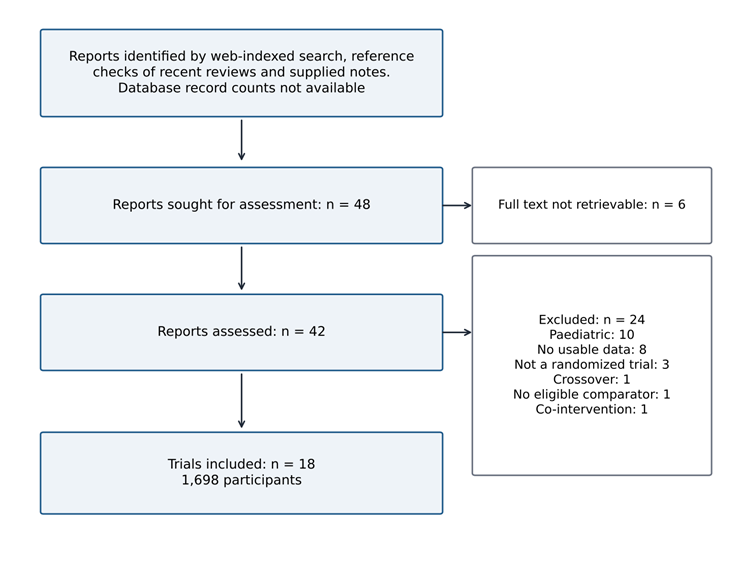
Figure 1. Flow of reports through the review, adapted from the PRISMA 2020 diagram.
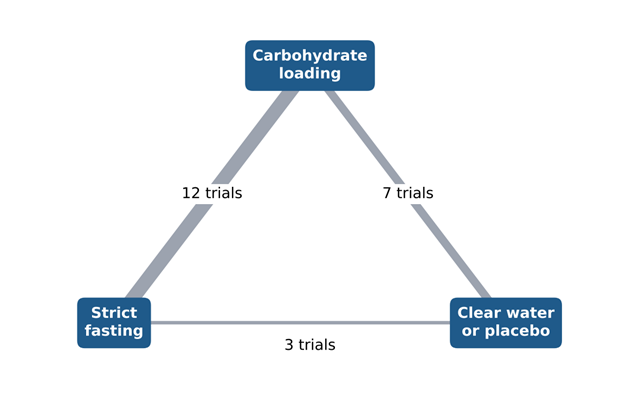
Figure 2. Evidence network. Line width reflects the number of trials contributing to each comparison for any outcome; three-arm trials contribute to all three edges.
Risk of bias
Of the 14 trials we could assess from the full report, 11 raised some concerns and three were at high risk of bias (Table 2). The common problems were undisclosed allocation concealment, no patient blinding for subjective outcomes, and per-protocol or completer analyses. Four trials known to us only through abstracts or secondary reports could not be rated.
Table 2. Risk of bias (RoB 2).
|
Study |
D1 Randomization |
D2 Deviations |
D3 Missing data |
D4 Measurement |
D5 Reporting |
Overall |
|
Sada 2014 |
Some |
Low |
Some |
Low |
Some |
Some concerns |
|
Lee 2025 |
Low |
High |
Some |
Low |
Some |
High |
|
He 2025 |
Some |
High |
Some |
Low |
Some |
High |
|
Singh V 2025 |
Low |
Some |
Some |
Some |
Some |
Some concerns |
|
Abo-Omar 2025 |
Some |
Some |
Low |
Low |
Some |
Some concerns |
|
Wang 2026 |
Low |
Some |
Low |
Low |
Low |
Some concerns |
|
Gök 2020 |
Some |
Some |
Low |
High |
Some |
High |
|
Yadav 2023 |
Some |
Some |
Low |
Some |
Some |
Some concerns |
|
Ge 2023 |
Some |
Some |
Some |
Some |
Some |
Some concerns |
|
Zhang Z 2020 |
Low |
Low |
Low |
Low |
Some |
Some concerns |
|
Wang X 2024 |
Low |
Some |
Some |
Some |
Some |
Some concerns |
|
Urkan 2025 |
Some |
Low |
Low |
Low |
Some |
Some concerns |
|
Vishak 2023 |
Low |
Some |
Low |
Some |
Some |
Some concerns |
|
Dalal 2010 |
Some |
Some |
Some |
Low |
Some |
Some concerns |
|
Singh BN 2015 |
- |
- |
- |
- |
- |
Not assessed |
|
Li 2022 |
- |
- |
- |
- |
- |
Not assessed |
|
Yildiz 2013 |
- |
- |
- |
- |
- |
Not assessed |
|
Helminen 2019 |
- |
- |
- |
- |
- |
Not assessed |
Length of stay
Against fasting, carbohydrate loading made no detectable difference to length of stay (mean difference 0.06 (95% CI −0.56 to 0.67) days; I²=0%; Figure 3). Against water or placebo the pooled estimate was −1.53 (95% CI −3.66 to 0.61) days, with marked heterogeneity (I²=90%). Two trials reported stays more than 3 days shorter,24,37 while three comparisons showed almost no change. Without the two trials, the estimate was −0.22 (95% CI −1.33 to 0.88) days with I²=0%. Table 3 shows the network estimates with and without these two trials.
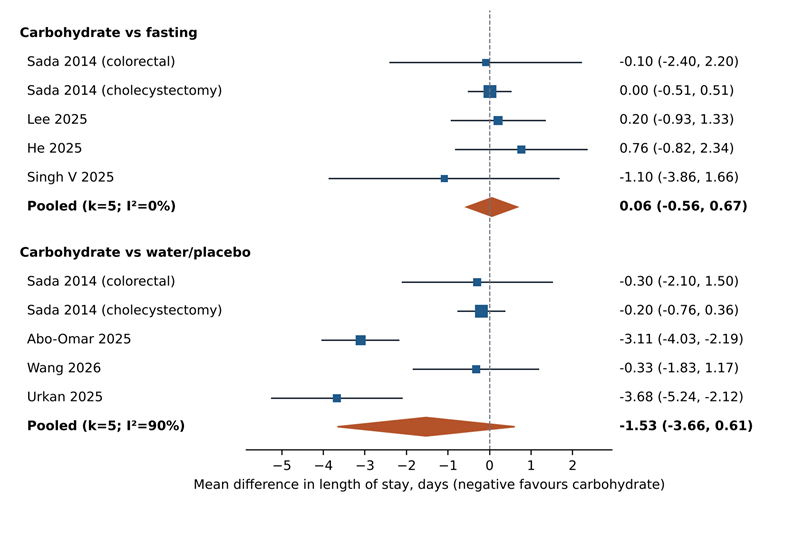
Figure 3. Length of stay. Squares are trial estimates and diamonds pooled estimates, with Hartung-Knapp intervals for three or more comparisons.
Nausea and vomiting
The risk ratio was 0.62 (95% CI 0.21 to 1.79) against fasting (I²=72%) and 0.39 (95% CI 0.09 to 1.64) against water or placebo (I²=0%; Figure 4). The estimate against fasting depended heavily on one trial in which carbohydrate increased nausea and vomiting; that trial gave a further 800 mL drink 8 hours before surgery.27 Removing it gave 0.41 (95% CI 0.18 to 0.93) (I²=0%). Keeping only the trials we read in full gave 0.92 (95% CI 0.10 to 8.45), so this result should not be regarded as stable.
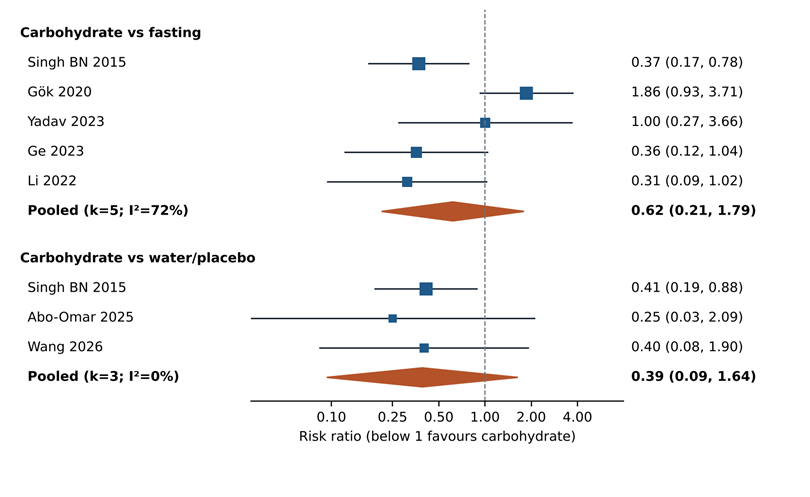
Figure 4. Postoperative nausea or vomiting.
Thirst and hunger
Against fasting, the standardized mean difference was −1.11 (95% CI −2.18 to −0.03) for thirst (I²=90%) and −0.83 (95% CI −1.66 to −0.01) for hunger (I²=69%; Figure 5). All five trials pointed the same way for each symptom, but none of the assessed trials had secure patient blinding, and these are self-reported outcomes. Against water or placebo, the results were −0.48 (95% CI −1.65 to 0.68) for thirst (2 trials) and −0.56 (95% CI −1.33 to 0.21) for hunger (3 trials). Thirst did not differ at all in the isomaltulose trial, where both arms drank 300 mL.25 One double-blind trial reported less postoperative thirst and hunger with carbohydrate than water, but those time points were outside our preoperative window.37
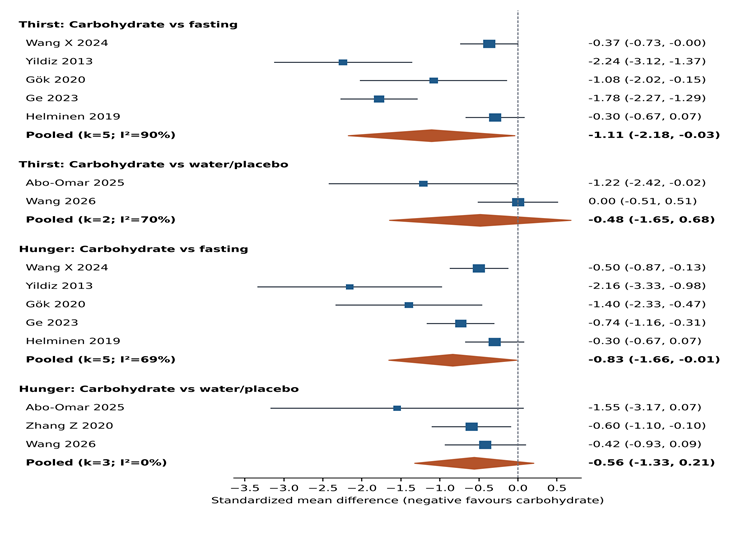
Figure 5. Preoperative thirst and hunger.
Gastric volume and aspiration
Gastric volume tended to be larger after carbohydrate than after fasting (0.51 (95% CI −0.03 to 1.04); 3 trials; Figure 6), and was similar to water or placebo (0.10 (95% CI −0.99 to 1.18); 3 comparisons). The single trial comparing water with fasting showed less gastric fluid with water.35 Direct and indirect estimates of that comparison disagreed strongly (direct −1.81, indirect 0.41; P<0.001), so we did not report a network estimate for this outcome. Measurement method also varied, from ultrasound to aspiration. No aspiration occurred in the six trials reporting it: 0 of 245 participants given carbohydrate and 0 of 205 controls. With these numbers, the upper 95% limit for the risk in the carbohydrate arm is about 1.2%, which is too imprecise to exclude a rare harm.
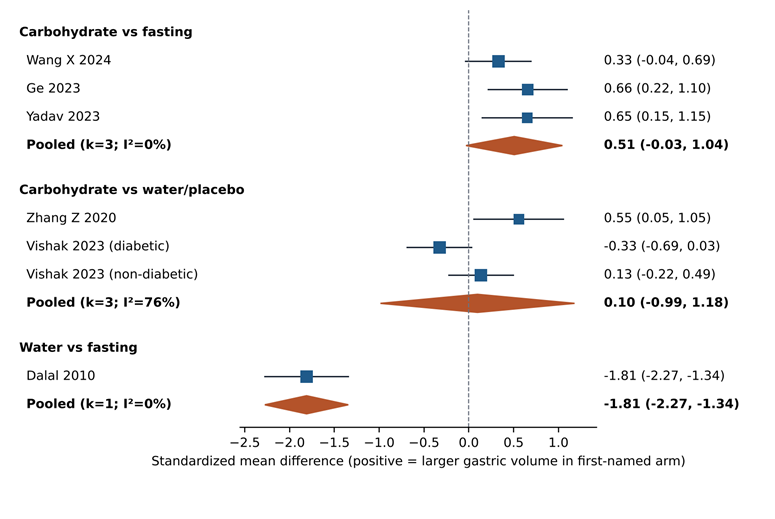
Figure 6. Gastric volume. Positive values indicate larger volume in the first-named arm.
Insulin resistance and complications
Three trials gave usable postoperative HOMA-IR values, and we did not pool them because timing and populations differed. In type 2 diabetes, HOMA-IR at 24 hours was lower with carbohydrate than with fasting (mean difference −2.27 (95% CI −3.16 to −1.38))28 and with isomaltulose than with water (−4.71 (95% CI −6.68 to −2.74)).25 In non-diabetic patients, there was no clear difference 1 hour after surgery (−0.35 (95% CI −1.16 to 0.45)).36 Another trial reported lower values without giving numbers.24 Complications were reported in two comparisons against fasting (risk ratio 0.86 (95% CI 0.39 to 1.88); I²=0%).21,22
Network estimates and certainty
Network estimates appear in Table 3. Carbohydrate was close to fasting for length of stay. Against water or placebo the network estimate favoured carbohydrate by about 1.5 days, but this depended on the two trials with large effects and disappeared without them. No network contrast showed a clear difference for nausea and vomiting. The water-versus-fasting edge rests on few trials, so its estimates are imprecise. Certainty of evidence was low or very low for all outcomes (Table 4).
Table 3. Network meta-analysis estimates. MD, mean difference; RR, risk ratio.
|
Contrast |
Length of stay, MD in days (95% CI) |
Length of stay without Abo-Omar 2025 and Urkan 2025 |
Nausea or vomiting, RR (95% CI) |
|
Carbohydrate vs fasting |
−0.20 (−1.43 to 1.02) |
0.06 (−0.38 to 0.49) |
0.61 (0.31 to 1.20) |
|
Carbohydrate vs water/placebo |
−1.45 (−2.61 to −0.30) |
−0.22 (−0.73 to 0.28) |
0.42 (0.15 to 1.13) |
|
Water/placebo vs fasting |
1.25 (−0.26 to 2.76) |
0.28 (−0.39 to 0.94) |
1.47 (0.48 to 4.51) |
Table 4. Summary of findings. SMD, standardized mean difference.
|
Outcome (comparison) |
Comparisons |
Effect (95% CI) |
Certainty |
Reasons for rating down |
|
Length of stay (carbohydrate vs fasting) |
5 |
MD 0.06 (−0.56 to 0.67) |
Low |
Risk of bias, imprecision |
|
Length of stay (carbohydrate vs water) |
5 |
MD −1.53 (−3.66 to 0.61) |
Very low |
Risk of bias, inconsistency, imprecision |
|
Nausea or vomiting (carbohydrate vs fasting) |
5 |
RR 0.62 (0.21 to 1.79) |
Very low |
Risk of bias, inconsistency, imprecision |
|
Thirst (carbohydrate vs fasting) |
5 |
SMD −1.11 (−2.18 to −0.03) |
Very low |
Risk of bias, inconsistency, imprecision |
|
Hunger (carbohydrate vs fasting) |
5 |
SMD −0.83 (−1.66 to −0.01) |
Very low |
Risk of bias, inconsistency, imprecision |
|
Gastric volume (carbohydrate vs fasting) |
3 |
SMD 0.51 (−0.03 to 1.04) |
Very low |
Risk of bias, indirect surrogate, imprecision |
|
Aspiration |
6 trials |
0/245 vs 0/205 |
Very low |
Imprecision, risk of bias, no events |
DISCUSSION:
This review found no firm evidence that carbohydrate loading shortens hospital stay compared with fasting, and the comparison with water was unresolved. Patients given carbohydrate felt less thirsty and hungry than those who fasted, although the trials differed greatly. Insulin resistance was lower in two small diabetic trials but not in one non-diabetic trial measured early, and no aspiration occurred.
The length of stay result sits at the sceptical end of the literature. Amer and colleagues reported a small saving against fasting and none against water or placebo,10 and the recent large review put the saving at about 0.4 days.13 Our estimate cannot exclude a benefit of that size, because the interval reaches −0.56 days. The difference is more likely to reflect fewer trials than a true conflict. Against water, the picture splits. Three comparisons agree with earlier work in showing no benefit,10 but two trials reported stays 3 to 4 days shorter. One used 34 g of honey-based carbohydrate, and its control arm drank water despite being labelled a fasting arm.24 The other was double-blind and gave about 150 g, yet reported baseline imbalances and a long stay in the water arm.37 We could not explain the split, and effects this large are hard to attribute to a drink alone.
The comfort signal is plausible and agrees with the guidance that patients prefer drinking to absolute fasting.6 Yet thirst is relieved by fluid, not sugar, and the two trials against water disagreed about thirst. For hunger, the data against water were few but pointed mildly towards carbohydrate, in line with the guideline statement that carbohydrate liquids appear to reduce hunger compared with non-caloric liquids.6 This matters in low-resource settings, where a carbohydrate product adds cost and supply steps while water does not.
Although carbohydrate loading showed a tendency towards higher gastric volumes in some trials, no aspiration events were reported. Previous Cochrane evidence also found no increased aspiration risk with shortened fluid fasting.⁵ These findings are reassuring, although larger studies are needed to assess rare complications. Increased glucose levels reported in some diabetic participants highlight the need for individualized perioperative management.²⁵˒³⁴
Limitations and Future Directions
This review provides a comparative assessment of three clinically relevant fasting strategies. However, the rapid-review approach, limited database access, single-reviewer data extraction and incomplete availability of some trial reports may have affected study identification and data assessment. Variations in interventions, outcome measurements and study populations also contributed to heterogeneity. Some analyses involved converted data or assumed group sizes, and one study included participants from 12 years of age.³⁵
Future multicentre trials should compare all three strategies using standardized protocols, adequate sample sizes and clearly defined outcomes. Plain water should be included as a comparator to establish whether carbohydrate loading offers additional benefits beyond liberal fluid intake.
CONCLUSION:
In adults having elective surgery, carbohydrate loading may ease thirst and hunger compared with strict fasting, but the certainty is low to very low and no effect on length of stay was shown. Whether carbohydrate beats plain water is unresolved. Replacing midnight fasting with clear fluids until 2 hours seems a sensible first step for low-risk patients; the case for adding carbohydrate needs better trials.
REFERENCES:
1. Francisco SC, Batista ST, Pena GD. Fasting in elective surgical patients: comparison among the time prescribed, performed and recommended on perioperative care protocols. Arq Bras Cir Dig. 2015;28(4):250-4.
2. Kim J. Transforming pre-operative fasting practice: a nurse-led liberal fluid fasting regimen. J Perioper Nurs. 2025;38(1):e-15.
3. Soop M, Nygren J, Myrenfors P, Thorell A, Ljungqvist O. Preoperative oral carbohydrate treatment attenuates immediate postoperative insulin resistance. Am J Physiol Endocrinol Metab. 2001;280(4):E576-83.
4. Sharma L, Joon M, Gupta S, Sharma D. Carbohydrate loading and early postoperative feeding. In: Integrated anesthesia and nutrition approaches to enhanced recovery after surgery: clinical perspectives and patient care. Singapore: Springer Nature Singapore; 2026. p. 125-51.
5. Brady M, Kinn S, Stuart P. Preoperative fasting for adults to prevent perioperative complications. Cochrane Database Syst Rev. 2003;(4):CD004423.
6. Joshi GP, Abdelmalak BB, Weigel WA, Harbell MW, Kuo CI, Soriano SG, et al. 2023 American Society of Anesthesiologists practice guidelines for preoperative fasting: carbohydrate-containing clear liquids with or without protein, chewing gum, and pediatric fasting duration. Anesthesiology. 2023;138(2):132-51.
7. Practice guidelines for preoperative fasting and the use of pharmacologic agents to reduce the risk of pulmonary aspiration: application to healthy patients undergoing elective procedures: an updated report. Anesthesiology. 2017;126(3):376-93.
8. Smith MD, McCall J, Plank L, Herbison GP, Soop M, Nygren J. Preoperative carbohydrate treatment for enhancing recovery after elective surgery. Cochrane Database Syst Rev. 2014;(8):CD009161.
9. Sebestyén AR, Turan C, Szemere A, Virág M, Ocskay K, Dembrovszky F, et al. Preoperative carbohydrate loading reduces length of stay after major elective, non-cardiac surgery when compared to fasting: a systematic review and meta-analysis. Sci Rep. 2025;15. doi:10.1038/s41598-025-00767-z.
10. Amer MA, Smith MD, Herbison GP, Plank LD, McCall JL. Network meta-analysis of the effect of preoperative carbohydrate loading on recovery after elective surgery. Br J Surg. 2017;104(3):187-97.
11. Ricci C, Ingaldi C, Alberici L, Serbassi F, Pagano N, De Raffele E, et al. Preoperative carbohydrate loading before elective abdominal surgery: a systematic review and network meta-analysis of phase II/III randomized controlled trials. Clin Nutr. 2022;41(2):313-20.
12. Tong E, Chen Y, Ren Y, Zhou Y, Di C, Zhou Y, et al. Effects of preoperative carbohydrate loading on recovery after elective surgery: a systematic review and Bayesian network meta-analysis of randomized controlled trials. Front Nutr. 2022;9:951676.
13. Ng KT, Chia TH, Heng ES, Zainal Abidin MF. The impact of pre-operative oral carbohydrate loading on peri-operative outcomes: a systematic review and meta-analysis of randomised controlled trials. Indian J Anaesth. 2026;70(9):985-97.
14. Page MJ, McKenzie JE, Bossuyt PM, Boutron I, Hoffmann TC, Mulrow CD, et al. The PRISMA 2020 statement: an updated guideline for reporting systematic reviews. BMJ. 2021;372:n71.
15. Sterne JAC, Savović J, Page MJ, Elbers RG, Blencowe NS, Boutron I, et al. RoB 2: a revised tool for assessing risk of bias in randomised trials. BMJ. 2019;366:l4898.
16. Guyatt GH, Oxman AD, Vist GE, Kunz R, Falck-Ytter Y, Alonso-Coello P, et al. GRADE: an emerging consensus on rating quality of evidence and strength of recommendations. BMJ. 2008;336(7650):924-6.
17. IntHout J, Ioannidis JPA, Borm GF. The Hartung-Knapp-Sidik-Jonkman method for random effects meta-analysis is straightforward and considerably outperforms the standard DerSimonian-Laird method. BMC Med Res Methodol. 2014;14:25.
18. Wan X, Wang W, Liu J, Tong T. Estimating the sample mean and standard deviation from the sample size, median, range and/or interquartile range. BMC Med Res Methodol. 2014;14:135.
19. Chinn S. A simple method for converting an odds ratio to effect size for use in meta-analysis. Stat Med. 2000;19(22):3127-31.
20. Sada F, Krasniqi A, Hamza A, Gecaj-Gashi A, Bicaj B, Kavaja F. A randomized trial of preoperative oral carbohydrates in abdominal surgery. BMC Anesthesiol. 2014;14:93.
21. Lee YM, Kim KE, Bae SU, Baek SK, Jeong WK. Safety and patient's satisfaction of preoperative carbohydrate drink until 2 hours before colorectal cancer surgery: a single-center, prospective randomized controlled trial. Ann Coloproctol. 2025;41(6):519-27.
22. He Z, Liu Y, Xu Q, Yang X, Zhou D, Zhang L. Effect of preoperative oral carbohydrate combined with postoperative early enteral nutrition on the perioperative rehabilitation of patients with colorectal cancer: a multicenter randomized controlled trial. Front Nutr. 2025;12:1699541.
23. Singh V, Mishra A, Bains L, Garg K. Effect of preoperative oral carbohydrate loading on early surgical outcomes: a randomised controlled study. J Glob Surg. 2025;1(2):147-55.
24. Abo-Omar EMTS, Abo-Elnasr LM, Soliman SM, Ahmad Abdalraheem TM, Mohamed Yousef NK. Preoperative oral carbohydrate loading versus fasting in patients undergoing major abdominal surgery: a randomized controlled study. Anaesth Pain Intensive Care. 2025;29(1):91-8.
25. Wang C, Shang Y, Wang J, Sun L, Li Z, Gao C. Effect of preoperative oral isomaltulose on insulin resistance and glycemic variability in patients with type 2 diabetes mellitus: a randomized controlled trial. Front Nutr. 2026;12:1718843.
26. Singh BN, Dahiya D, Bagaria D, Saini V, Kaman L, Kaje V, et al. Effects of preoperative carbohydrate drinks on immediate postoperative outcome after day care laparoscopic cholecystectomy. Surg Endosc. 2015;29(11):3267-72.
27. Gök MA, Kafadar MT, Yeğen SF. Effects of preoperative oral carbohydrate loading on preoperative and postoperative comfort in patients planned to undergo elective cholecystectomy: a prospective randomized controlled clinical trial. Iran Red Crescent Med J. 2020;22(11):e107.
28. Yadav K, Prakash R, Singh G, Chandra A, Verma R, Bogra J, et al. Effect of carbohydrate loading in diabetic patients undergoing laparoscopic cholecystectomy: a randomized controlled trial. Cureus. 2023;15(9):e44570.
29. Ge Y, Shen D, Ding Y, Wu K, Zhang Y. Ultrasound assessment of gastric content in patients undergoing laparoscopic cholecystectomy after preoperative oral carbohydrates: a prospective, randomized controlled, double-blind study. Front Surg. 2023;10:1265293.
30. Li X, Liu L, Liang XQ, Li YT, Wang DX. Preoperative carbohydrate loading with individualized supplemental insulin in diabetic patients undergoing gastrointestinal surgery: a randomized trial. Int J Surg. 2022;98:106215.
31. Yildiz H, Gunal SE, Yilmaz G, Yucel S. Oral carbohydrate supplementation reduces preoperative discomfort in laparoscopic cholecystectomy. J Invest Surg. 2013;26(2):89-95.
32. Helminen H, Branders H, Ohtonen P, Saarnio J. Effect of pre-operative oral carbohydrate loading on recovery after day-case cholecystectomy: a randomised controlled trial. Eur J Anaesthesiol. 2019;36(8):605-11.
33. Zhang Z, Wang R, Duan B, Cheng Z, Wang E, Guo Q, et al. Effects of a preoperative carbohydrate-rich drink before ambulatory surgery: a randomized controlled, double-blinded study. Med Sci Monit. 2020;26:e922837.
34. Vishak M, Gayathri B, Chandrasekhar G, Ramani S. Randomized controlled trial comparing the effects of preoperative carbohydrate and non-carbohydrate loading on gastric emptying in diabetic and non-diabetic patients posted for elective surgery. Cureus. 2023;15(11):e49213.
35. Dalal KS, Rajwade D, Suchak R. "Nil per oral after midnight": is it necessary for clear fluids? Indian J Anaesth. 2010;54(5):445-7.
36. Wang X, Zhuang J, Cheng J, Wang Z, Sheng J, Guo S, et al. Effect of preoperative oral carbohydrates on insulin resistance in patients undergoing laparoscopic cholecystectomy: a randomized controlled trial. Langenbecks Arch Surg. 2024;409. doi:10.1007/s00423-024-03268-1.
37. Urkan M, Celebi C, Meral UM, Cavdar I, et al. The effect of preoperative oral carbohydrate administration on postoperative glucometabolic response, subjective well being and quality of life in patients undergoing colorectal surgery: a randomized controlled double-blind study. BMC Surg. 2025;25:376.
38. Atkinson DJ, Romeiser JL, Almasry IO, Tannous HJ, Parikh PB, Bennett-Guerrero E. Randomized controlled trial of liberal vs. standard fasting instructions in percutaneous cardiac procedures. Perioper Med (Lond). 2023;12:44.
39. Liu X, Zhang P, Liu MX, Ma JL, Wei XC, Fan D. Preoperative carbohydrate loading and intraoperative goal-directed fluid therapy for elderly patients undergoing open gastrointestinal surgery: a prospective randomized controlled trial. BMC Anesthesiol. 2021;21:157.