Postoperative pain at 4 hours in children undergoing elective tonsillectomy with and without topical ropivacaine: a prospective observational study.
- Sruthi A , Assistant Professor, Department of Anesthesiology, Government Medical College, Thiruvananthapuram, Kerala, India.
- Neetha Jose , Assistant Professor, Department of Anesthesiology, Government Medical College, Thiruvananthapuram, Kerala, India.
- Thusharendhu N , Associate Professor, Department of Anesthesiology, Government Medical College, Thiruvananthapuram, Kerala, India
Article Information:
Abstract:
Background: Pain after tonsillectomy in children is most intense in the first postoperative hours. We compared pain at 4 hours in children who did and did not receive topical ropivacaine at the end of elective tonsillectomy. Methods: This prospective observational study included 80 children aged 5–12 years, ASA I–II, undergoing elective tonsillectomy under general anaesthesia. Group I (n = 40) received no topical local anaesthetic; in Group II (n = 40), gauze soaked in 2–3 mL of 0.2% ropivacaine was held in each tonsillar fossa for 5 minutes. Pain was assessed with the Wong–Baker FACES scale at 1, 2 and 4 hours. Rescue analgesia and haemodynamic variables were recorded. Results: Baseline characteristics were comparable. Pain scores were lower in Group II at 1 hour (0.5 ± 1.8 vs 2.2 ± 2.5), 2 hours (1.2 ± 1.3 vs 2.6 ± 1.8) and 4 hours (1.8 ± 0.6 vs 5.2 ± 2.7) (all p < 0.001). At 4 hours, no child in Group II had moderate or severe pain, compared with 65% in Group I. Rescue analgesia was needed in 7.5% of Group II and 95% of Group I (p < 0.001). Heart rate was lower in Group II at extubation and 1 hour later, and blood pressure was lower at 1 hour after extubation. Conclusion: Topical ropivacaine applied to the tonsillar fossae was associated with lower pain over the first 4 postoperative hours and a much smaller need for rescue analgesia in children undergoing tonsillectomy.
Keywords:
Article :
INTRODUCTION:
Tonsillectomy is among the most frequently performed operations in children.1 Although the procedure is short, the recovery is not always comfortable. Pain from the exposed tonsillar bed is aggravated by swallowing, is often moderate to severe, and may last for several days.2 In the immediate postoperative period, poorly controlled pain can cause agitation at emergence, delay the return to oral intake, and increase the demand for systemic analgesics, including opioids, which carry a risk of respiratory depression in children with obstructive airway symptoms.1,2 A safe and simple method of reducing early pain would therefore be useful in day-to-day paediatric anaesthesia practice.
Local anaesthetics applied to the tonsillar fossa, either by infiltration or by topical application, have been studied for this purpose with variable results.3 Ropivacaine is a long-acting amide local anaesthetic with a better cardiovascular and central nervous system safety profile than bupivacaine. It penetrates large myelinated motor fibres less readily and therefore produces a greater separation between sensory and motor block.4 This property is relevant in the peritonsillar region, where motor block of the pharyngeal muscles could interfere with swallowing.
Earlier trials have reported lower pain scores with topical ropivacaine in children,5 although a trial in adults found no benefit over placebo.6 Other studies have compared ropivacaine with bupivacaine7,10 or examined pre-incisional or peritonsillar infiltration.8,11 Topical bupivacaine has also been reported to be effective.9 Most of the available paediatric evidence concerns infiltration, which requires injection into the tonsillar bed. Topical application avoids this step, but it has been studied less often, and data from Indian children are limited.
The primary objective of this study was to compare postoperative pain at 4 hours in children undergoing elective tonsillectomy with and without topical ropivacaine. The seconday objectives were to compare pain at 1 and 2 hours, the need for rescue analgesia, and perioperative hemodynamic variables between the two groups.
MATERIALS AND METHODS:
Study design and setting
This prospective observational study was carried out in the Department of Anaesthesiology, Government Medical College, Thiruvananthapuram, Kerala, India, a tertiary care teaching hospital. The protocol was approved by the Institutional Research Committee and by the Institutional Ethics Committee Written informed consent was obtained from a parent or legal guardian of every child, and assent was obtained from children aged 7 years and above. The study was conducted in accordance with the Declaration of Helsinki. Because the study only observed existing practice, no change was made to the anaesthetic or surgical care of any participant.
Participants
Consecutive children aged 5–12 years with American Society of Anesthesiologists (ASA) physical status I or II who were scheduled for elective tonsillectomy under general anaesthesia were enrolled until the required sample size was reached. Children with peritonsillar abscess, acute pharyngeal infection, known allergy to ropivacaine, coagulopathy, or cardiovascular, renal or hepatic disease were excluded.
Groups
Allocation to the two groups depended on the routine practice of the operating ENT surgeon. In Group I (n = 40), no topical local anaesthetic was used. In Group II (n = 40), at the end of tonsillectomy, sterile gauze soaked in 2–3 mL of 0.2% ropivacaine was placed in each tonsillar fossa and held there for 5 minutes before removal. General anaesthesia was administered in both groups according to the standard practice of the department.
Outcome measures
Postoperative pain was assessed with the Wong–Baker FACES Pain Rating Scale,12 a validated self-report tool for children that ranges from 0 (no hurt) to 10 (hurts worst). Assessments were made at 1, 2 and 4 hours after surgery. For analysis, scores were grouped as nil, mild, moderate or severe pain. Pain at 4 hours was the primary outcome. Rescue analgesia, in the form of diclofenac suppository 0.5–1 mg/kg, was given when the pain score was 4 or more, and the number of rescue doses and their timing were recorded. Heart rate, systolic blood pressure (SBP), diastolic blood pressure (DBP) and mean arterial pressure (MAP) were recorded before induction, at extubation, and 1 hour after extubation. Age, sex, weight, duration of surgery and ASA status were also recorded on a structured proforma.
Sample size
The sample size was calculated with the formula for comparing two means, n = (Z1−α/2 + Z1−β)2 (S12 + S22) / (M1 − M2)2, using the mean and standard deviation of postoperative pain scores at 4 hours reported by Sood et al.,11 with a two-sided α of 0.05 and a power of 80%. On this basis, 40 children were included in each group, giving a total of 80.
Statistical analysis
Categorical variables were expressed as frequency and percentage, and quantitative variables as mean ± standard deviation (SD). Quantitative variables were compared between groups with the independent samples t-test. The chi-square test and Fisher’s exact test were used for categorical variables. Ordinal pain scores were compared with the Mann–Whitney U test. A p value below 0.05 was taken as statistically significant. Analysis was performed with SPSS version 27.0 (IBM Corp., Armonk, NY, USA).
RESULTS:
Eighty children were included, 40 in each group. Group I did not receive topical ropivacaine, and Group II received topical ropivacaine.
Baseline characteristics
The mean age was 7.1 ± 1.9 years in Group I and 7.8 ± 2.4 years in Group II. The two groups were comparable with respect to age, sex, weight, duration of surgery and ASA physical status (Table 1).
Table 1. Baseline characteristics of the children in the two groups
|
Variable |
Group I (n = 40) |
Group II (n = 40) |
Test statistic |
p |
|
Age (years), n (%) |
|
|
|
|
|
5 – 6 |
18 (45.0) |
16 (40.0) |
|
|
|
6 – 7 |
15 (37.5) |
12 (30.0) |
|
|
|
8 – 9 |
3 (7.5) |
3 (7.5) |
|
|
|
10 – 11 |
4 (10.0) |
9 (22.5) |
|
|
|
Mean ± SD |
7.1 ± 1.9 |
7.8 ± 2.4 |
t = 0.18 |
0.586 |
|
Sex, n (%) |
|
|
|
|
|
Male |
20 (50.0) |
23 (57.5) |
χ2 = 0.45 |
0.501 |
|
Female |
20 (50.0) |
17 (42.5) |
|
|
|
Weight (kg), mean ± SD |
27.1 ± 6.5 |
28.0 ± 10.3 |
t = 0.47 |
0.640 |
|
Duration of surgery (min), mean ± SD |
110.0 ± 19.5 |
114.5 ± 15.8 |
t = 1.13 |
0.260 |
|
ASA physical status, n (%) |
|
|
|
|
|
Grade 1 |
37 (92.5) |
32 (80.0) |
χ2 = 2.64 |
0.105 |
|
Grade 2 |
3 (7.5) |
8 (20.0) |
|
|
SD, standard deviation; ASA, American Society of Anesthesiologists; t, independent samples t-test; χ2, chi-square test.
Postoperative pain
Pain scores differed significantly between the groups at 1, 2 and 4 hours after surgery (p < 0.001 at each time point) (Table 2; Figure 1). At 1 hour, 92.5% of children in Group II had no pain, compared with 35.0% in Group I. At 2 hours, the corresponding proportions were 47.5% and 2.5%. At 4 hours, the primary outcome, 90.0% of children in Group II had mild pain and 10.0% had no pain, whereas 65.0% of children in Group I had moderate or severe pain (30.0% moderate and 35.0% severe). The mean pain score at 4 hours was 1.8 ± 0.6 in Group II and 5.2 ± 2.7 in Group I.
Table 2. Comparison of postoperative pain (Wong–Baker FACES score) between the groups
|
Time |
Pain |
Group I (n = 40) |
Group II (n = 40) |
Z# |
p |
|
1 hour |
Nil |
14 (35.0) |
37 (92.5) |
4.99*** |
<0.001 |
|
|
Mild |
19 (47.5) |
1 (2.5) |
|
|
|
|
Moderate |
3 (7.5) |
0 (0.0) |
|
|
|
|
Severe |
4 (10.0) |
2 (5.0) |
|
|
|
|
Mean ± SD |
2.2 ± 2.5 |
0.5 ± 1.8 |
|
|
|
2 hours |
Nil |
1 (2.5) |
19 (47.5) |
4.61*** |
<0.001 |
|
|
Mild |
34 (85.0) |
20 (50.0) |
|
|
|
|
Moderate |
2 (5.0) |
1 (2.5) |
|
|
|
|
Severe |
3 (7.5) |
0 (0.0) |
|
|
|
|
Mean ± SD |
2.6 ± 1.8 |
1.2 ± 1.3 |
|
|
|
4 hours |
Nil |
2 (5.0) |
4 (10.0) |
5.55*** |
<0.001 |
|
|
Mild |
12 (30.0) |
36 (90.0) |
|
|
|
|
Moderate |
12 (30.0) |
0 (0.0) |
|
|
|
|
Severe |
14 (35.0) |
0 (0.0) |
|
|
|
|
Mean ± SD |
5.2 ± 2.7 |
1.8 ± 0.6 |
|
|
Values are number (percentage) unless stated otherwise. #Mann–Whitney U test. ***p < 0.001.
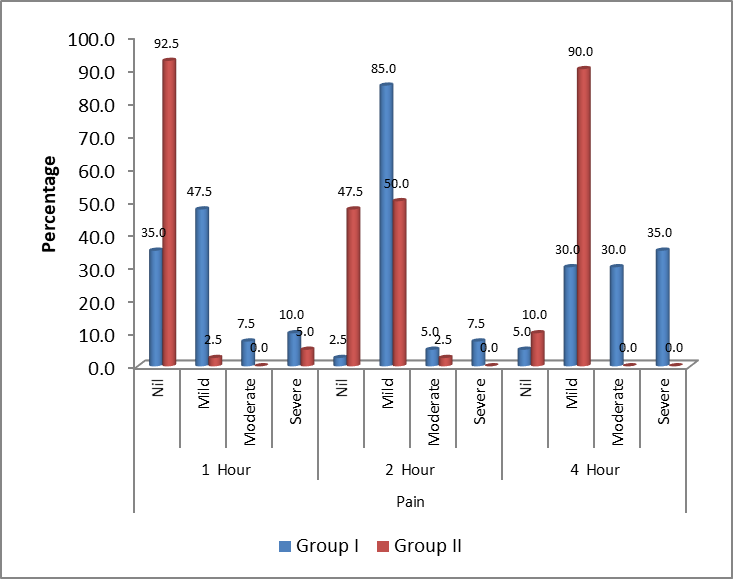
Figure 1. Postoperative pain grades at 1, 2 and 4 hours in the two groups (percentage of children)
Rescue analgesia
Rescue analgesia was given to 38 of 40 children (95.0%) in Group I and to 3 of 40 children (7.5%) in Group II. No child required more than one rescue dose. The difference was statistically significant (Fisher’s exact test, p < 0.001) (Table 3; Figure 2).
Table 3. Number of times rescue analgesia was given in the two groups
|
Number of rescue doses |
Group I (n = 40) |
Group II (n = 40) |
p# |
|
0 |
2 (5.0) |
37 (92.5) |
<0.001 |
|
1 |
38 (95.0) |
3 (7.5) |
|
Values are number (percentage). #Fisher’s exact test.
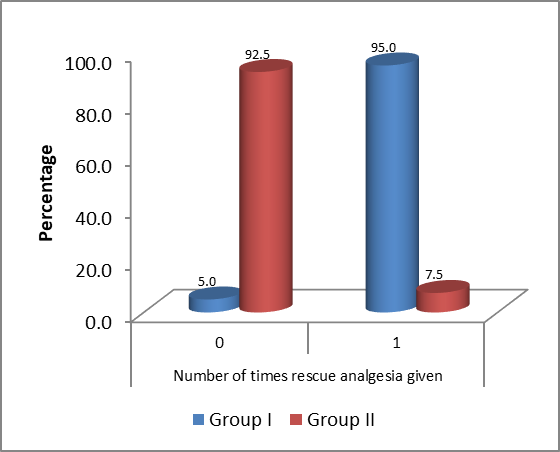
Figure 2. Number of times rescue analgesia was given (percentage of children)
Haemodynamic variables
Baseline heart rate, SBP, DBP and MAP were similar in the two groups (Table 4; Figure 3). At extubation, mean heart rate was lower in Group II than in Group I (100.5 ± 8.9 vs 108.7 ± 11.0 beats/min; p < 0.001), and the difference persisted at 1 hour after extubation (96.1 ± 8.3 vs 108.1 ± 10.7 beats/min; p < 0.001).
SBP did not differ between the groups at extubation (p = 0.278) but was lower in Group II at 1 hour after extubation (96.6 ± 5.4 vs 101.1 ± 6.5 mmHg; p = 0.001). DBP was comparable at extubation (p = 0.071) and lower in Group II at 1 hour (59.1 ± 5.3 vs 61.9 ± 4.0 mmHg; p = 0.009). MAP followed the same pattern, with no significant difference at extubation (p = 0.091) and a lower value in Group II at 1 hour (71.6 ± 4.8 vs 75.0 ± 4.3 mmHg; p = 0.001).
Table 4. Comparison of haemodynamic variables between the groups
|
Parameter |
Time |
Group I (n = 40) |
Group II (n = 40) |
t |
p |
|
Heart rate (beats/min) |
Preoperative |
107.1 ± 13.1 |
106.6 ± 9.3 |
0.20 |
0.845 |
|
|
At extubation |
108.7 ± 11.0 |
100.5 ± 8.9 |
3.65*** |
<0.001 |
|
|
1 h after extubation |
108.1 ± 10.7 |
96.1 ± 8.3 |
5.63*** |
<0.001 |
|
SBP (mmHg) |
Preoperative |
103.0 ± 8.4 |
102.9 ± 8.0 |
0.10 |
0.924 |
|
|
At extubation |
100.7 ± 7.7 |
99.1 ± 5.4 |
1.09 |
0.278 |
|
|
1 h after extubation |
101.1 ± 6.5 |
96.6 ± 5.4 |
3.36** |
0.001 |
|
DBP (mmHg) |
Preoperative |
63.5 ± 6.2 |
63.0 ± 6.0 |
0.37 |
0.716 |
|
|
At extubation |
61.4 ± 3.8 |
59.5 ± 5.2 |
1.83 |
0.071 |
|
|
1 h after extubation |
61.9 ± 4.0 |
59.1 ± 5.3 |
2.68** |
0.009 |
|
MAP (mmHg) |
Preoperative |
76.7 ± 5.8 |
76.3 ± 6.1 |
0.29 |
0.769 |
|
|
At extubation |
74.5 ± 4.7 |
72.7 ± 4.7 |
1.71 |
0.091 |
|
|
1 h after extubation |
75.0 ± 4.3 |
71.6 ± 4.8 |
3.32** |
0.001 |
Values are mean ± SD. SBP, systolic blood pressure; DBP, diastolic blood pressure; MAP, mean arterial pressure; SD, standard deviation; t, independent samples t-test. ∗∗p < 0.01; ∗∗∗p < 0.001.
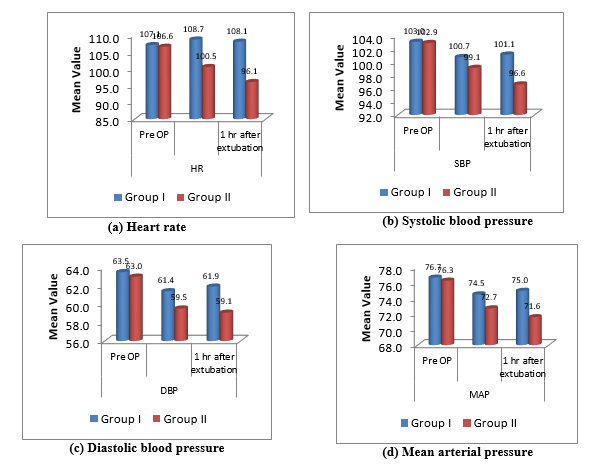
Figure 3. Haemodynamic variables before surgery, at extubation and 1 hour after extubation in the two groups: (a) heart rate (beats/min); (b) systolic blood pressure (mmHg); (c) diastolic blood pressure (mmHg); (d) mean arterial pressure (mmHg)
DISCUSSION:
In this study, children who had ropivacaine-soaked gauze placed in the tonsillar fossae at the end of tonsillectomy reported less pain at every assessment during the first 4 hours, and only a small proportion of them needed rescue analgesia. At 4 hours, the primary outcome, no child in the ropivacaine group had moderate or severe pain, whereas almost two-thirds of the children in the comparison group did. The mean pain score at that time was 1.8 in the ropivacaine group and 5.2 in the comparison group. A difference of this size is clinically meaningful, since a score of 4 or more was the threshold for rescue medication.
Our findings agree with those of Oghan et al.,5 who studied 41 children aged 4–16 years in a randomised, double-blind trial. They placed swabs soaked in 1% ropivacaine in the tonsillar fossae and used saline-soaked swabs in controls, and assessed pain with McGrath’s face scale. Ropivacaine reduced pain at most time points, but not during the first postoperative hour. In the present study, the difference was already evident at 1 hour. The two studies differed in the concentration of ropivacaine, the way and duration in which it was applied, and the pain scale used, and any of these may explain the earlier effect seen in our children.
Sood et al.11 randomised 140 children aged 4–12 years to peritonsillar infiltration with 0.2% ropivacaine or normal saline and assessed pain with the Wong–Baker FACES scale. At 4 hours, 87.1% of children in the ropivacaine group had a score of 6, while 92.9% of controls had a score of 8 (p < 0.01), and the ropivacaine group continued to have lower scores at 8 hours. Because both studies used the same pain scale and the same concentration of ropivacaine, the comparison is a fair one. The main difference is the route: we applied the drug topically rather than injecting it. That topical application produced a comparable reduction in pain suggests that infiltration of the tonsillar bed may not be essential for early analgesia.
Hong et al.13 studied 66 children aged 3–7 years in a randomised, double-blind trial that compared topical ropivacaine with saline against topical ropivacaine with ketamine, using the modified Children’s Hospital of Eastern Ontario Pain Scale. Adding ketamine reduced pain at 15 minutes (p = 0.046), but the advantage did not persist at later assessments, and rescue analgesic needs differed only at some time points. Because both of their groups received ropivacaine, their work does not test ropivacaine against no local anaesthetic. It does, however, show that topical ropivacaine-based techniques are practical in young children. Our study adds a comparison with children who received no topical agent and shows a consistent difference over the first 4 hours.
Not all studies have been positive. In adults, Tolska et al.6 found that topical ropivacaine did not reduce post-tonsillectomy pain compared with placebo, and a Cochrane review found no clear evidence that perioperative local anaesthesia improves pain control after tonsillectomy, although the trials it included were small and heterogeneous.3 Differences in age group, surgical technique, timing of assessment and concomitant analgesia may account for this variation. Studies in children comparing ropivacaine with bupivacaine have generally found the two drugs to be similarly effective,7,10 and both pre-incisional ropivacaine infiltration8 and topical bupivacaine9 have been reported to reduce pain. Taken together with these reports, our results support a role for topical local anaesthesia in the early postoperative period in children.
Heart rate was lower in the ropivacaine group at extubation and 1 hour later, and SBP, DBP and MAP were lower at 1 hour after extubation. These differences may reflect a smaller sympathetic response to pain. However, the differences were modest, all values remained within the normal range for age, and other anaesthetic and perioperative factors may have contributed. Because this was an observational study, these changes cannot be attributed to ropivacaine alone.
Topical application has practical advantages. It takes only a few minutes, requires no needle in the tonsillar bed, and avoids the small risk of intravascular injection or deep spread that accompanies infiltration. The sensory-selective profile of ropivacaine4 is also helpful in a region where motor block of the pharyngeal muscles would be undesirable. The very low use of rescue analgesia in the ropivacaine group suggests that the technique could reduce the need for systemic analgesics in the early recovery period.
Limitations
This study has limitations. Children were not randomised; group membership depended on the routine practice of the operating surgeon, so differences between surgeons in technique or perioperative care may have influenced the results, even though baseline characteristics were similar. Neither the children nor the assessors were blinded, which may have introduced observer bias. Pain was followed for only 4 hours, so the duration of benefit beyond the early period is unknown. Outcomes such as time to first oral intake, postoperative bleeding and length of hospital stay were not analysed. The study was conducted at a single centre, which may limit generalisability.
CONCLUSION:
In children undergoing elective tonsillectomy, topical application of 0.2% ropivacaine to the tonsillar fossae was associated with lower pain scores over the first 4 postoperative hours, a much lower need for rescue analgesia, and lower heart rate and blood pressure in the early recovery period. It is a simple adjunct that may be considered for early post-tonsillectomy analgesia in children. Randomised controlled trials with longer follow-up are needed to confirm these findings and to define the optimal concentration, volume and duration of application.
REFERENCES:
1. Mitchell RB, Archer SM, Ishman SL, Rosenfeld RM, Coles S, Finestone SA, et al. Clinical practice guideline: tonsillectomy in children (update). Otolaryngol Head Neck Surg 2019;160(1 Suppl):S1–42.
2. Stewart DW, Ragg PG, Sheppard S, Chalkiadis GA. The severity and duration of postoperative pain and analgesia requirements in children after tonsillectomy, orchidopexy, or inguinal hernia repair. Paediatr Anaesth 2012;22:136–43.
3. Hollis LJ, Burton MJ, Millar JM. Perioperative local anaesthesia for reducing pain following tonsillectomy. Cochrane Database Syst Rev 1999;(4):CD001874.
4. Kuthiala G, Chaudhary G. Ropivacaine: a review of its pharmacology and clinical use. Indian J Anaesth 2011;55:104–10.
5. Oghan F, Harputluoglu U, Guclu E, Kocaman B, Ozturk O. Does topical ropivacaine reduce the post-tonsillectomy morbidity in pediatric patients? Int J Pediatr Otorhinolaryngol 2008;72:361–5.
6. Tolska HK, Takala A, Blomgren K, Hamunen K, Kontinen V. Topical ropivacaine in prevention of post-tonsillectomy pain in adults. Anesth Analg 2017;124:1459–66.
7. Akoglu E, Akkurt BC, Inanoglu K, Okuyucu S, Dagli S. Ropivacaine compared to bupivacaine for post-tonsillectomy pain relief in children: a randomized controlled study. Int J Pediatr Otorhinolaryngol 2006;70:1169–73.
8. Meshram SN, Walthare AG, Sonone JK, Kumar A. Effect of pre-incisional infiltration of 0.5% ropivacaine versus placebo in post-operative pain relief among patients undergoing tonsillectomy under general anaesthesia: a comparative study. Int J Otorhinolaryngol Head Neck Surg 2020;6:1638–41.
9. Qamar SN, Latif S, Awan SM, Sarfraz S, Saeed R. Efficacy of topical 0.5% bupivacaine in pain reduction in pediatric tonsillectomy patients. J Univ Med Dent Coll 2022;13:329–33.
10. Hydri AS, Sadiq SM, Kumar A, Nagra SR, Mahesar J, Mirza F. Ropivacaine versus bupivacaine: post-tonsillectomy pain relief perspective. Rawal Med J 2024;49:930–3.
11. Sood AS, Pal P, Gill GS. Peritonsillar ropivacaine infiltration in paediatric tonsillectomy: a randomised control trial. Iran J Otorhinolaryngol 2020;32:207–12.
12. Wong DL, Baker CM. Pain in children: comparison of assessment scales. Pediatr Nurs 1988;14:9–17.
13. Hong B, Lim CS, Kim YH, Lee JU, Kim YM, Jung C, et al. Comparison of topical ropivacaine with and without ketamine on post-surgical pain in children undergoing tonsillectomy: a randomized controlled double-blind study. J Anesth 2017;31:559–64.