Comparison of Bilateral Superficial Cervical Plexus Block with Wound Infiltration for Postoperative Pain Relief After Thyroid Surgery Under General Anaesthesia.
- Dr. Harikrishnan V.M. , Senior Resident, Department of Anesthesiology, Government Medical College, Kannur, Pariyaram, Kerala, India.
- Dr. Anju Mariam Jacob , Professor, Department of Anaesthesiology, Government Medical College, Trivandrum, Kerala, India.
- Dr. Divya Dhananjayan , Assistant Professor, Department of Anesthesiology, Government Medical College, Kannur, Pariyaram, Kerala, India.
Article Information:
Abstract:
Background: Effective postoperative analgesia is essential for patient comfort and recovery following thyroid surgery. BSCPB (Bilateral Superficial Cervical Plexus Block) and LWI (Local Wound Infiltration) are commonly used techniques to reduce postoperative pain. This study aimed to compare their analgesic efficacy in patients undergoing thyroid surgery under general anaesthesia. Methods: This observational study was conducted in the Department of Anaesthesia, Government Medical College, Kannur, over one year following ethical approval. Ninety patients undergoing thyroid surgery were included through consecutive sampling and divided into two groups of 45 each. Group 1 received ultrasound-guided BSCPB with 10 mL of 0.5% bupivacaine, while Group 2 received 10 mL of 0.5% bupivacaine through local wound infiltration. Postoperative pain was assessed using the VAS (Visual Analogue Scale) immediately after transfer to the recovery room and at 2, 6, 12, and 24 hours. Intravenous tramadol (1 mg/kg) was administered when the VAS score was ≥4. The time to first rescue analgesia and total tramadol consumption over 24 hours were recorded. Results: The mean time to first rescue analgesia was significantly longer in the BSCPB group than in the LWI group (9.7 ± 0.4 vs. 6.6 ± 0.5 hours; p < 0.01). Mean total tramadol consumption over 24 hours was significantly lower in the BSCPB group (56.7 ± 17.2 vs. 107.8 ± 18.3 mg; p < 0.01). VAS scores were significantly lower in the BSCPB group at 6 and 12 hours, whereas differences at recovery-room admission, 2 hours, and 24 hours were not statistically significant. Conclusion: Ultrasound-guided BSCPB provides more prolonged postoperative analgesia and reduces rescue tramadol consumption compared with local wound infiltration. It is an effective option for postoperative pain management following thyroid surgery.
Keywords:
Article :
INTRODUCTION:
Thyroidectomy is a commonly performed surgical procedure for managing thyroid malignancies, benign thyroid disorders, and hormonal conditions unresponsive to medical treatment. Thyroid and parathyroid hormones play essential roles in metabolism, growth, development, cognition, energy balance, and thermoregulation. Disorders affecting these glands are prevalent worldwide and represent significant concerns in endocrinology and oncology.
Goitre is a frequently encountered thyroid disorder that may cause cosmetic deformity and significant compressive symptoms. Enlarged goitres can compress the trachea, oesophagus, and RLN (Recurrent Laryngeal Nerve), resulting in respiratory distress, dysphagia, and hoarseness. Thyroidectomy is indicated in symptomatic cases, particularly when the goitre extends into the thoracic cavity and compromises adjacent vital structures.
Although thyroidectomy is generally considered a safe procedure, postoperative pain remains an important concern. Inadequately controlled acute pain may delay recovery, increase opioid requirements, and potentially contribute to persistent postsurgical pain. Effective postoperative analgesia is therefore essential to improve patient comfort and facilitate recovery.[1-3] Postoperative pain also activates the sympathetic nervous system, producing adverse respiratory and cardiovascular responses. These include impaired ventilation, hypoxia, tachycardia, increased myocardial oxygen demand, and elevated peripheral vascular resistance, potentially increasing the risk of pulmonary and cardiovascular complications.[4–6]
The superficial cervical plexus, formed by the ventral rami of C2–C4, supplies sensory innervation to the anterolateral neck and adjacent superficial tissues. Its cutaneous branches include the greater auricular, lesser occipital, and transverse cervical nerves.[7] Surgical manipulation of these tissues during thyroidectomy may contribute to incisional pain and postoperative discomfort.[8] Superficial cervical plexus block (SCPB) provides regional anaesthesia and analgesia for the anterolateral neck and is used in various superficial neck procedures.[9]
Alternatively, local anaesthetic infiltration at the surgical site offers targeted analgesia and may reduce systemic analgesic requirements.[10] Its analgesic effects result from sodium-channel blockade, which inhibits nociceptive transmission,[11,12] and modulation of the local inflammatory response through reduced inflammatory mediator release, neutrophil adhesion, and reactive oxygen species production.[13]
AIMS AND OBJECTIVES
The aim of this study was to compare the effectiveness of 0.5% bupivacaine wound infiltration (LWI) and BSCPB (Bilateral Superficial Cervical Plexus Block) for postoperative pain management in patients undergoing thyroid surgery under general anaesthesia (GA). The objectives are to evaluate the analgesic effectiveness of BSCPB and LWI (Local Wound Infiltration) in reducing postoperative pain following thyroid operations and to determine the differences in their effectiveness in providing postoperative analgesia.
MATERIALS AND METHODS:
Study Design
This observational study was conducted in the Department of Anaesthesia, Government Medical College, Kannur, for a period of one year following approval from the Institutional Ethics Committee. The study was carried out in accordance with the ethical guidelines and institutional protocols.
Inclusion and Exclusion Criteria
The study included adults aged 25–65 years with American Society of Anesthesiologists Physical Status (ASA PS) I and II who are scheduled for thyroid surgery and provide written informed consent to participate. Patients with ASA PS III or IV, those who refuse to participate, those with coagulation disorders, systemic infection or infection at the injection site, and those with a history of allergy to local anaesthetic agents were excluded from the study.
Sample Size Calculation
Calculated using the formulae:[14]
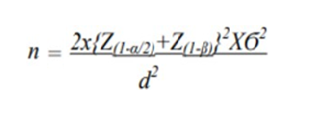
· Z1-α/2 =1.96 at alpha 5%
· Z1-β =0.84 at beta 20% (power 80%) 16
· σ = standard deviation
· µ = mean
· d = Effect size
Data Collection Procedure
Patients scheduled for elective thyroid surgery who fulfilled the inclusion criteria and belonged to ASA physical status I and II were enrolled through consecutive sampling after obtaining written informed consent. Baseline HR (Heart Rate), SBP (Systolic Blood Pressure), DBP (Diastolic Blood Pressure), and peripheral oxygen saturation (SpO₂) were recorded before induction of general anaesthesia. Patients were divided into two groups: Group 1 received ultrasound-guided bilateral superficial cervical plexus block using 5 mL of 0.5% bupivacaine on each side, while Group 2 received local wound infiltration with 10 mL of 0.5% bupivacaine along the surgical incision. Postoperative pain was assessed using the VAS at 0, 2, 6, 12, and 24 hours after arrival in the recovery room. Duration of analgesia was measured from arrival in the recovery room until the VAS score exceeded 4. Intravenous tramadol (1 mg/kg) was administered as rescue analgesia when the VAS score was greater than 4, and cumulative tramadol consumption over 24 hours was recorded. Patients were monitored for adverse events, including injection-site infection, haematoma, symptoms of local anaesthetic systemic toxicity, and cardiovascular complications.
Statistical Analysis
Data were entered into Microsoft Excel and analysed using SPSS version 20.0. Categorical variables were expressed as frequencies and percentages, while quantitative variables were summarised as mean ± standard deviation (SD), median with interquartile range (IQR), and minimum and maximum values, as appropriate. The independent-samples t-test was used to compare quantitative variables between the two groups, and the chi-square test was used to compare categorical variables. A p-value of less than 0.05 was considered statistically significant.
RESULTS:
Table 1. Comparison of Age and Weight between the Study Groups
|
Variable |
Category/Statistic |
BSCPB (n=45) |
Wound Infiltration (n=45) |
Test Statistic |
p-value |
|
Age (years) |
36–45, n (%) |
21 (46.7%) |
19 (42.2%) |
χ² = 0.18 |
0.671 |
|
Age (years) |
46–55, n (%) |
24 (53.3%) |
26 (57.8%) |
|
|
|
Age (years) |
Mean ± SD |
45.8 ± 5 |
46.3 ± 4.9 |
|
|
|
Weight (kg) |
45–55, n (%) |
23 (51.1%) |
17 (37.8%) |
χ² = 1.62 |
0.203 |
|
Weight (kg) |
56–65, n (%) |
22 (48.9%) |
28 (62.2%) |
|
|
|
Weight (kg) |
Mean ± SD |
55.1 ± 5.2 |
56.5 ± 5.1 |
|
|
Table 1 illustrates the age and weight distributions of patients in the two groups. The mean age was 45.8 ± 5 years in the BSCPB group and 46.3 ± 4.9 years in the wound infiltration group. Mean weight was 55.1 ± 5.2 kg and 56.5 ± 5.1 kg, respectively. The reported p-values for age (0.671) and weight (0.203) were greater than 0.05, indicating no statistically significant difference between groups.
Table 2. Comparison of Height and Body Mass Index between the Study Groups
|
Variable |
Category/Statistic |
BSCPB (n=45) |
Wound Infiltration (n=45) |
Test Statistic |
p-value |
|
Height (cm) |
150–160, n (%) |
27 (60.0%) |
19 (42.2%) |
χ² = 2.85 |
0.092 |
|
Height (cm) |
161–170, n (%) |
18 (40.0%) |
26 (57.8%) |
|
|
|
Height (cm) |
Mean ± SD |
159.2 ± 5.1 |
161.1 ± 5.2 |
|
|
|
BMI (kg/m²) |
18.5–21.5, n (%) |
17 (37.8%) |
24 (53.3%) |
χ² = 2.2 |
0.138 |
|
BMI (kg/m²) |
21.6–24.5, n (%) |
28 (62.2%) |
21 (46.7%) |
|
|
|
BMI (kg/m²) |
Mean ± SD |
21.9 ± 1.5 |
21.4 ± 1.5 |
|
|
Table 2 observes the distribution of height and BMI. Mean height was 159.2 ± 5.1 cm in the BSCPB group and 161.1 ± 5.2 cm in the wound infiltration group. Mean BMI was 21.9 ± 1.5 and 21.4 ± 1.5 kg/m², respectively. The reported p-values for height (0.092) and BMI (0.138) were not statistically significant.
Table 3. Comparison of ASA Physical Status between the Study Groups
|
ASA Physical Status |
BSCPB n (%) |
Wound Infiltration n (%) |
χ² |
p-value |
|
Grade I |
25 (55.6%) |
26 (57.8%) |
0.05 |
0.832 |
|
Grade II |
20 (44.4%) |
19 (42.2%) |
|
|
|
Total |
45 (100%) |
45 (100%) |
|
|
Table 3 illustrates the ASA physical status distribution. Grade I accounted for 55.6% of the BSCPB group and 57.8% of the wound infiltration group, while Grade II accounted for 44.4% and 42.2%, respectively. There was no statistically significant difference between the groups (χ² = 0.05, p = 0.832).
Table 4. Comparison of Postoperative Pain Scores at Different Time Points
|
Assessment Time |
Pain Category |
BSCPB n (%) |
Wound Infiltration n (%) |
Reported Statistic |
p-value |
Mean ± SD: BSCPB |
Mean ± SD: Infiltration |
|
0 hours |
Mild |
45 (100.0%) |
45 (100.0%) |
Z# = 1.75 |
0.080 |
1.0 ± 0 |
1.1 ± 0.3 |
|
0 hours |
Moderate |
0 (0.0%) |
0 (0.0%) |
|
|
|
|
|
2 hours |
Mild |
45 (100.0%) |
45 (100.0%) |
Z# = 0.66 |
0.508 |
1.6 ± 0.5 |
1.7 ± 0.5 |
|
2 hours |
Moderate |
0 (0.0%) |
0 (0.0%) |
|
|
|
|
|
6 hours |
Mild |
45 (100.0%) |
36 (80.0%) |
Z# = 6.66 |
<0.01 |
1.7 ± 0.5 |
2.8 ± 0.7 |
|
6 hours |
Moderate |
0 (0.0%) |
9 (20.0%) |
|
|
|
|
|
12 hours |
Mild |
38 (84.4%) |
40 (88.9%) |
Z# = 3.24** |
0.001 |
2.2 ± 0.5 |
2.7 ± 0.7 |
|
12 hours |
Moderate |
7 (15.6%) |
5 (11.1%) |
|
|
|
|
|
24 hours |
Mild |
41 (91.1%) |
45 (100.0%) |
Z# = 1.75 |
0.080 |
2.3 ± 0.8 |
2.0 ± 0.6 |
|
24 hours |
Moderate |
4 (8.9%) |
0 (0.0%) |
|
|
|
|
Table 4 compares postoperative pain at recovery-room arrival and at 2, 6, 12 and 24 hours. No statistically significant group difference was reported at 0 hours (p = 0.080), 2 hours (p = 0.508) or 24 hours (p = 0.080). At 6 hours, all patients in the BSCPB group reported mild pain, compared with 80.0% in the wound infiltration group; the difference was significant (p < 0.01). At 12 hours, the mean pain score was 2.2 ± 0.5 in the BSCPB group and 2.7 ± 0.7 in the wound infiltration group (p = 0.001).
Table 5. Comparison of Time to First Rescue Analgesia
|
Group |
Mean time (hours) |
SD |
N |
t-value |
p-value |
|
Superficial cervical plexus block (BSCPB) |
9.7 |
0.4 |
45 |
33.25 |
<0.01 |
|
Wound infiltration |
6.6 |
0.5 |
45 |
|
|
Table 5 illustrates the time from transfer to the recovery room until the first request for rescue analgesia. The BSCPB group required rescue analgesia after a mean of 9.7 ± 0.4 hours, compared with 6.6 ± 0.5 hours in the wound infiltration group. The source reports a statistically significant difference (t = 33.25, p < 0.01), indicating a longer interval before rescue analgesia was needed in the BSCPB group.
Table 6. Comparison of Total Tramadol Consumption over 24 Hours
|
Group |
Mean Tramadol Consumption (mg) |
SD |
N |
t-value |
p-value |
|
Superficial cervical plexus block (BSCPB) |
56.7 |
17.2 |
45 |
13.65 |
<0.01 |
|
Wound infiltration |
107.8 |
18.3 |
45 |
|
|
Table 6 compares cumulative rescue tramadol consumption during the first 24 postoperative hours. Mean consumption was 56.7 ± 17.2 mg in the BSCPB group and 107.8 ± 18.3 mg in the wound infiltration group. The reported difference was statistically significant (t = 13.65, p < 0.01), with lower tramadol consumption in the BSCPB group.
Table 7. Summary of the Principal Postoperative Analgesia Outcomes
|
Outcome |
BSCPB Group (n=45) |
Wound Infiltration Group (n=45) |
Reported p-value |
Interpretation from source |
|
Mean age (years) |
45.8 ± 5 |
46.3 ± 4.9 |
0.671 |
No significant baseline difference |
|
Mean BMI (kg/m²) |
21.9 ± 1.5 |
21.4 ± 1.5 |
0.138 |
No significant baseline difference |
|
Mean pain score at 6 hours |
1.7 ± 0.5 |
2.8 ± 0.7 |
<0.01 |
Lower score with BSCPB |
|
Mean pain score at 12 hours |
2.2 ± 0.5 |
2.7 ± 0.7 |
0.001 |
Lower score with BSCPB |
|
Time to first rescue analgesia (hours) |
9.7 ± 0.4 |
6.6 ± 0.5 |
<0.01 |
Later rescue request with BSCPB |
|
Total tramadol over 24 hours (mg) |
56.7 ± 17.2 |
107.8 ± 18.3 |
<0.01 |
Lower consumption with BSCPB |
Table 7 provides a consolidated overview of selected baseline and primary analgesia findings. The reported results favour BSCPB for pain scores at 6 and 12 hours, longer time to first rescue analgesia and lower 24-hour tramadol consumption. This summary repeats values from the preceding tables and does not represent a new statistical analysis.
DISCUSSION:
Demographic Characteristics and Comparability of Study Groups
In the present study, the BSCPB and LWI groups were comparable in terms of age (45.8 ± 5 vs. 46.3 ± 4.9 years; p = 0.671), weight (55.1 ± 5.2 vs. 56.5 ± 5.1 kg; p = 0.203), height (159.2 ± 5.1 vs. 161.1 ± 5.2 cm; p = 0.092), BMI (21.9 ± 1.5 vs. 21.4 ± 1.5 kg/m²; p = 0.138), and ASA physical status (55.6% vs. 57.8% ASA grade I; p = 0.832). Similarly, Arslan[14] reported comparable baseline characteristics in patients undergoing thyroidectomy, with mean ages of 46.5 ± 13.5 years in the infiltration group and 46.8 ± 13.6 years in the BSCPB group (p = 0.9), and mean BMIs of 29.0 ± 3.2 and 30.1 ± 3.4 kg/m², respectively (p = 0.07). These findings demonstrate baseline comparability between the groups, supporting a reliable comparison of postoperative analgesic outcomes.
Comparison of Postoperative Pain Scores
In the present study, postoperative VAS scores were comparable between the BSCPB and LWI groups immediately after recovery (1.0 ± 0 vs. 1.1 ± 0.3; p = 0.080) and at 2 hours (1.6 ± 0.5 vs. 1.7 ± 0.5; p = 0.508). However, BSCPB provided significantly better analgesia at 6 hours (1.7 ± 0.5 vs. 2.8 ± 0.7; p < 0.01) and 12 hours (2.2 ± 0.5 vs. 2.7 ± 0.7; p = 0.001), while the difference at 24 hours was not significant (2.3 ± 0.8 vs. 2.0 ± 0.6; p = 0.080). These findings may be attributed to the regional sensory blockade provided by BSCPB. Similarly, Arslan[14] in a study involving 158 thyroidectomy patients, reported significantly higher postoperative verbal rating scale scores in the infiltration group than in the BSCPB group (p < 0.05). Egan et al[15] in a randomized trial involving 58 patients undergoing thyroid or parathyroid surgery, found significantly lower pain scores with the addition of superficial cervical plexus block at all assessed postoperative time points (p < 0.020), with area under the receiver operating characteristic curve values of 0.722 at 30 minutes (p = 0.012), 0.747 at 90 minutes (p = 0.005), 0.803 at 150 minutes (p < 0.001), and 0.849 at 210 minutes (p < 0.001). Similarly, Karthikeyan et al.[16] studying 60 thyroidectomy patients across three groups, reported significantly lower pain scores with bupivacaine plus clonidine than with saline at 2 hours (p = 0.002), 4 hours (p = 0.016), and 8 hours (p = 0.012). In contrast, Hoh et al.,[17] in a randomized controlled trial involving 70 patients, found no significant differences between BSCPB and LWI using 0.5% ropivacaine at 4 hours (VAS 2.93 vs. 3.14; p = 0.208), 12 hours (2.34 vs. 2.07; p = 0.860), 16 hours (1.97 vs. 1.96; p = 0.376), or 24 hours (1.55 vs. 1.57; p = 0.375). Overall, the present study supports the analgesic benefit of BSCPB, particularly at 6 and 12 hours postoperatively, although variations in anaesthetic agents, study protocols, and assessment times may explain differences across studies.
Comparison of Time to First Rescue Analgesia
The duration of postoperative analgesia is an important indicator of the effectiveness of regional and local anaesthetic techniques. In the present study, the mean time to first rescue analgesia was 9.7 ± 0.4 hours in the BSCPB group, compared with 6.6 ± 0.5 hours in the LWI group. The difference was statistically significant (t = 33.25; p < 0.01), demonstrating that patients receiving BSCPB experienced a longer interval before requiring additional analgesia. This finding is consistent with Arslan[14] who reported a mean duration of postoperative analgesia of 10.2 ± 4.0 hours in the BSCPB group and 7.9 ± 3.7 hours in the infiltration group (p = 0.0001). The longer duration of analgesia observed with BSCPB in both studies suggests that regional blockade may provide more sustained postoperative pain relief than infiltration confined to the incision site. Karthikeyan et al.[16] also found that the time to first analgesic requirement was significantly prolonged in patients receiving BSCPB with bupivacaine, with or without clonidine, compared with the saline group (p = 0.002). Their findings further support the role of BSCPB in delaying the need for postoperative rescue analgesia.
Comparison of Total Rescue Analgesic Consumption
In the present study, the mean total tramadol consumption during the first 24 postoperative hours was 56.7 ± 17.2 mg in the BSCPB group and 107.8 ± 18.3 mg in the LWI group. This difference was statistically significant (t = 13.65; p < 0.01). The lower tramadol requirement in the BSCPB group supports the finding that regional blockade provided more sustained analgesia and reduced the need for additional systemic analgesics.
These results are consistent with the study by Khan et al.[18] published in 2025, which compared ultrasound-guided BSCPB with local wound infiltration in 68 patients undergoing total thyroidectomy. The mean opioid consumption was 8.18 ± 5.62 mg in the BSCPB group and 13.03 ± 7.88 mg in the LWI group, with a statistically significant difference (p < 0.001). The authors also observed significantly better pain outcomes with BSCPB at 6 and 12 hours. Although the opioid regimen and reported units differ from those in the present study, the direction of the findings is similar, with lower analgesic requirements following BSCPB.
Egan et al.[15] likewise demonstrated reduced postoperative opioid requirements when superficial cervical plexus block was added to incisional local anaesthesia. Only 5 of 29 patients in the block group required strong opioids, compared with 16 of 29 patients in the control group (p = 0.003). Rescue opioid use was also lower in the block group, with 6 of 29 patients requiring rescue opioids compared with 20 of 29 controls (p < 0.001). Although their study evaluated the addition of a block rather than BSCPB alone against LWI, these results support the opioid-sparing potential of cervical plexus blockade. Karthikeyan et al.[16] also reported significantly lower postoperative morphine requirements in patients receiving BSCPB with bupivacaine, with or without clonidine, compared with saline (p = 0.001). Taken together, these studies support the potential of BSCPB to reduce postoperative systemic analgesic requirements.
Evidence Supporting Local Wound Infiltration
Although the present study favoured BSCPB for several postoperative analgesic outcomes, local wound infiltration remains an established method of postoperative pain management. Laskou et al.[13] in their 2023 review of local wound infiltration following thyroidectomy, evaluated the available evidence from 18 articles published between 1994 and April 2023. Their review concluded that local anaesthetic infiltration was generally effective in reducing postoperative pain and rescue analgesic requirements. The authors also highlighted its potential role as an adjunct within multimodal analgesia.
These findings are important when interpreting the present study. The absence of statistically significant differences in VAS scores immediately after surgery, at 2 hours, and at 24 hours indicates that local wound infiltration also provided satisfactory analgesia at these time points. Consequently, BSCPB should not be interpreted as universally superior in every postoperative setting.
Hoh et al.[17] similarly concluded that LWI was a simple, economical option with analgesic efficacy comparable to BSCPB in their randomized controlled trial. They also reported one case of transient left upper limb weakness in the BSCPB group, which resolved within 12 hours. This observation illustrates the importance of considering the procedural risks of regional blockade when selecting an analgesic technique. Therefore, the choice between BSCPB and LWI should consider the anticipated duration of analgesia, the expected need for rescue medication, clinician expertise, patient characteristics, and the availability of an appropriate multimodal analgesic regimen.
Clinical Implications
The findings of the present study suggest that ultrasound-guided BSCPB may be a useful option for improving postoperative pain control following thyroid surgery under general anaesthesia. The longer time to first rescue analgesia and lower tramadol consumption indicate a potential advantage in reducing the need for additional systemic analgesics during the first postoperative day.
The significant differences in pain scores at 6 and 12 hours are particularly relevant because they indicate that the advantage of BSCPB was most apparent during the intermediate postoperative period rather than immediately after surgery. The lack of a significant difference at 24 hours may reflect the waning effect of the local anaesthetic or the contribution of other postoperative analgesic measures. However, this explanation remains a possible interpretation rather than a directly established finding of the study.
BSCPB may be particularly useful when prolonged early postoperative analgesia and reduced rescue analgesic requirements are desired. Nevertheless, local wound infiltration remains a reasonable alternative because of its relative simplicity. The decision should be individualised according to the clinical setting, procedural expertise, and the overall analgesic plan.
Limitations
First, the relatively small sample size of 45 patients in each group may have limited the statistical power to detect significant differences in secondary outcomes. Second, the duration of sensory blockade was assessed based on the time to the onset of postoperative pain, which may not accurately reflect the actual duration of the block due to interindividual variations in pain perception. Third, postoperative pain was assessed using the visual analogue scale (VAS), a subjective assessment tool that may be influenced by individual differences in pain tolerance and perception.
CONCLUSION:
The present observational study evaluated the postoperative analgesic efficacy of BSCPB compared with LWI in patients undergoing thyroid surgery over a 24-hour postoperative period. Although both techniques provided effective postoperative pain relief, BSCPB demonstrated superior and more prolonged analgesia, with a reduced requirement for rescue opioid medication. Patients in the BSCPB group also experienced a longer interval before the first request for rescue analgesia, suggesting a longer duration of analgesic effect compared with the LWI group. Based on these findings, BSCPB may be considered an effective and feasible technique for postoperative pain management following thyroid surgery.
REFERENCES:
1. Jo JY, Kim YJ, Choi SS, et al. A prospective randomized comparison of postoperative pain and complications after thyroidectomy under different anaesthetic techniques: volatile anesthesia versus total intravenous anesthesia. Pain Research and Management 2021;2021(1):8876906.
2. Meyr AJ, Steinberg JS. The physiology of the acute pain pathway. Clinics in podiatric medicine and surgery. 2008;25(3):305-26.
3. Lewis KS, Whipple JK, Michael KA, et al. Effect of analgesic treatment on the physiological consequences of acute pain. American Journal of Health-System Pharmacy 1994;51(12):1539-54.
4. Lee SY, Lee WH, Lee EH, et al. The effects of paracetamol, ketorolac, and paracetamol plus morphine on pain control after thyroidectomy. The Korean Journal of Pain 2010;23(2):124-30.
5. Pergolizzi J, Ahlbeck K, Aldington D, et al. The development of chronic pain: physiological CHANGE necessitates a multidisciplinary approach to treatment. Current Medical Research and Opinion 2013;29(9):1127-35.
6. Reddi D, Curran N. Chronic pain after surgery: pathophysiology, risk factors and prevention. Postgraduate Medical Journal 2014;90(1062):222-7.
7. Nunes Drisana R, Santos Catharine NO, Nogueira Matheus S, et al. Anatomical variation of sensory nerve branches of the cervical plexus. Int J Anat Res 2019;7(4.3):7183-86.
8. Kalmovich LM, Cote V, Sands N, et al. Thyroidectomy: exactly how painful is it? Journal of Otolaryngology--Head & Neck Surgery 2010;39(3):277-83.
9. Sarkar AK, O’Connor CM, Goldstein RB. Superficial cervical plexus nerve block. In: Bedside pain management interventions. Cham: Springer International Publishing 2022:271-9.
10. Betancourt C, Sanabria A. Post-thyroidectomy pain relief is enhanced by wound infiltration. A systematic review of randomized controlled trials. Surgeon 2024;22(3):e133-40.
11. Dubin AE, Patapoutian A. Nociceptors: the sensors of the pain pathway. The Journal of Clinical Investigation 2010;120(11):3760-72.
12. Das V. An introduction to pain pathways and pain “targets”. Progress in molecular biology and Translational Science. Vol. 131. Elsevier 2015:1-30.
13. Laskou S, Tsaousi G, Pourzitaki C, et al. Local wound infiltration for thyroidectomized patients in the era of multimodal analgesia. Medicina 2023;59(9):1662.
14. Arslan A. Bilateral superficial cervical plexus block versus infiltration block in thyroidectomy. Analgesia 2019;1(2):6-8.
15. Egan RJ, Hopkins JC, Beamish AJ, et al. Randomized clinical trial of intraoperative superficial cervical plexus block versus incisional local anaesthesia in thyroid and parathyroid surgery. Br J Surg 2013;100(13):1732-8.
16. Karthikeyan VS, Sistla SC, Badhe AS, et al. Randomized controlled trial on the efficacy of bilateral superficial cervical plexus block in thyroidectomy. Pain Practice 2013;13(7):539-46.
17. Hoh SY, Doon YK, Chong SS, et al. Randomized controlled trial comparing bilateral superficial cervical plexus block and local wound infiltration for pain control in thyroid surgery. Asian Journal of Surgery 2019;42(12):1001-8.
18. Khan N, Khan A, Rizvi AM, et al. Comparison between efficacies of bilateral superficial cervical plexus block versus local infiltration of wound with bupivacaine after thyroidectomy. Pakistan Armed Forces Medical Journal 2025;75(6):1111-4.