Study to Assess the Quality Of Life Score and Symptom Severity Scale in Patient with Irritable Bowel Syndrome Variants.
- Dr. Pratibha Chauhan , Junior Resident, Department of Internal Medicine, Mahatma Gandhi Memorial Medical College, Indore, Madhya Pradesh, India
- Dr. Paridhi Shivde , Professor, Department of Internal Medicine, Mahatma Gandhi Memorial Medical College, Indore, Madhya Pradesh, India
- Dr. Amit Agarwal , Associate professor, Department of Medicine, Mahatma Gandhi Memorial Medical College, Indore, Madhya Pradesh, India
- Dr. Renuka Belkhede , Junior Resident, Department of Internal Medicine, Mahatma Gandhi Memorial Medical College, Indore, Madhya Pradesh, India.
Article Information:
Abstract:
Background: Irritable Bowel Syndrome is a chronic disorder of gut–brain interaction associated with significant symptom burden and impaired health-related quality of life (HRQOL). Limited Indian data are available comparing symptom severity and quality-of-life impairment across IBS variants using validated assessment tools. This study aimed to assess symptom severity and quality of life among patients with different IBS variants using IBS Symptom Severity Score (IBS-SSS) and IBS Quality of Life (IBS-QOL) questionnaires. Materials and Methods: This observational cross-sectional study was conducted among 150 adult IBS patients attending the Medicine and Gastroenterology outpatient departments of a tertiary care hospital over 12 months. Symptom severity and quality of life were assessed using validated IBS-SSS and IBS-QOL questionnaires. Statistical analysis was performed using jamovi software. Non-parametric tests, Chi-square test, Spearman correlation, and multivariate linear regression analysis were used as appropriate. A p-value <0.05 was considered statistically significant. Results: The mean age of participants was 40.85 ± 10.70 years, with slight female predominance (52.7%). IBS-D was the most common subtype (39.3%). The mean IBS-SSS score was 259.43 ± 82.81, with most patients demonstrating moderate (44.0%) or severe (38.7%) symptom burden. The mean IBS-QOL score was 56.17 ± 17.73, indicating moderate impairment in quality of life. IBS-D patients demonstrated significantly higher symptom severity and poorer quality-of-life scores compared with IBS-C and IBS-M variants (p <0.001). Increasing age and longer disease duration were associated with worsening IBS-QOL scores. A strong negative correlation was observed between IBS-SSS and IBS-QOL scores (ρ = −0.994, p <0.001). Conclusion: Patients with IBS demonstrate substantial symptom burden with significant impairment in quality of life. IBS-D is associated with greater disease severity and poorer quality-of-life outcomes. Routine assessment of symptom severity and quality of life may help improve individualized management strategies in IBS.
Keywords:
Article :
INTRODUCTION:
Irritable Bowel Syndrome is a chronic disorder of gut–brain interaction characterized by recurrent abdominal pain associated with altered bowel habits in the absence of structural disease. According to the Rome IV criteria, IBS is classified into constipation-predominant (IBS-C), diarrhea-predominant (IBS-D), mixed (IBS-M), and unclassified subtypes based on stool form and frequency.1,2 Contemporary understanding of IBS follows a biopsychosocial model integrating biological, psychological, and social determinants, with emphasis on positive symptom-based diagnosis rather than exhaustive exclusion of organic disease.3
The global prevalence of IBS using Rome IV criteria is estimated at approximately 4–6%, although prevalence varies according to diagnostic criteria, methodology, and geographical region.4,5 Indian studies have reported comparatively lower but heterogeneous prevalence rates ranging from 2–4%, influenced by dietary habits, health-seeking behavior, and enteric infections.6,7 Despite relatively lower community prevalence, IBS contributes substantially to outpatient consultations and healthcare utilization. IBS significantly affects patients’ health-related quality of life (HRQOL), daily functioning, and work productivity. Symptoms such as abdominal pain, bloating, altered bowel habits, and food-related symptom exacerbation often impair social and psychological well-being.3 Increasing evidence suggests that symptom severity correlates strongly with reduced quality of life and is further influenced by anxiety, depression, sleep disturbances, and stress-related factors.3 The pathophysiology of IBS is multifactorial and involves visceral hypersensitivity, altered gastrointestinal motility, mucosal immune activation, microbiome alterations, epithelial barrier dysfunction, and dysregulation of the gut–brain axis.3,8
Post-infectious IBS has emerged as an important subtype, with studies demonstrating increased risk following acute gastroenteritis and, more recently, after SARS-CoV-2 infection.9,10 These mechanisms highlight the importance of individualized assessment and longitudinal symptom monitoring. Validated patient-reported outcome measures (PROMs) are increasingly used to quantify symptom burden and disease impact in IBS. The IBS Symptom Severity Score (IBS-SSS) is a validated tool assessing abdominal pain severity and frequency, abdominal distension, dissatisfaction with bowel habits, and interference with daily life, with higher scores indicating greater disease severity.11,12 The IBS-Quality of Life (IBS-QOL) questionnaire is a disease-specific instrument evaluating the impact of IBS on emotional, social, and functional well-being.13,14
Together, these tools provide a structured assessment of symptom burden and quality of life and are useful for clinical evaluation and therapeutic monitoring. Although several international studies have evaluated IBS severity and HRQOL, limited Indian data are available comparing these parameters across IBS subtypes using standardized PROMs.6,7 Furthermore, prospective evaluation of symptom severity and quality of life in routine tertiary care settings remains limited. Therefore, the present study was undertaken to assess symptom severity and quality of life among patients with different variants of IBS using validated scoring systems.
MATERIALS AND METHODS:
This observational cross-sectional study was conducted in the Department of Medicine and Gastroenterology Outpatient Department (OPD) of Maharaja Yeshwantrao Hospital under Mahatma Gandhi Memorial Medical College over a period of 12 months after obtaining approval from the Institutional Ethics Committee. Adult patients diagnosed with irritable bowel syndrome attending the Medicine and Gastroenterology OPDs were screened consecutively for enrolment. Patients aged >18 years and <70 years who were willing to provide written informed consent were included in the study. Medico-legal cases, pregnant women, and patients with chronic systemic illnesses such as chronic kidney disease, chronic obstructive pulmonary disease, and cerebrovascular accident were excluded.
A total of 150 patients diagnosed with IBS were included in the study. Diagnosis of IBS was established clinically based on patient history and relevant investigations wherever required. Patients were categorized into different IBS variants according to their predominant clinical presentation. The primary outcome measures included assessment of symptom severity and quality of life using standardized questionnaire-based instruments, namely the IBS Symptom Severity Score (IBS-SSS) and IBS Quality of Life (IBS-QOL) score.
Eligible patients underwent detailed baseline evaluation including demographic profile, clinical history, and relevant examination findings. Investigations including complete blood count, liver function tests, stool examination, upper gastrointestinal endoscopy, and colonoscopy were performed whenever clinically indicated by the treating physician. Following enrolment, participants were administered the IBS-SSS and IBS-QOL questionnaires in their preferred language with appropriate assistance when required.
All study data were initially recorded in a predesigned case record form and subsequently entered into Microsoft Excel using coded identifiers to maintain confidentiality. A coded data dictionary was maintained for consistency and validation of data entry. Statistical analysis was performed using the jamovi software package. Normality of continuous variables was assessed using the Shapiro–Wilk test, which demonstrated non-normal distribution for most variables, including IBS-SSS and IBS-QOL scores. Accordingly, continuous variables were expressed as mean ± standard deviation and median (interquartile range), while categorical variables were expressed as frequencies and percentages. Comparisons between two groups were performed using the Mann–Whitney U test, whereas comparisons across multiple groups were performed using the Kruskal–Wallis test. Associations between categorical variables were analysed using the Chi-square test. Correlation analysis was performed using Spearman’s rank correlation coefficient. Multivariate linear regression analysis was performed to identify predictors of IBS-QOL total score. A p-value of <0.05 was considered statistically significant, and statistically significant findings were reported with 95% confidence intervals where appropriate.
Written informed consent was obtained from all participants prior to enrolment. Confidentiality and anonymity of patient information were strictly maintained throughout the study. The study was conducted in accordance with ethical principles for biomedical research involving human participants.
RESULTS:
A total of 150 patients with irritable bowel syndrome were included in the present cross-sectional study. The mean age of the study population was 40.85 ± 10.70 years, with most participants belonging to the 30–39 years age group. Females constituted 52.7% of the study population, showing a slight female predominance. IBS-D was the most common subtype, followed by IBS-C and IBS-M. Most participants had disease duration greater than 24 months, indicating a predominantly chronic disease course. Anxiety was the most common associated comorbidity, while loperamide was the most frequently used medication (Table 1).
The mean IBS Symptom Severity Score (IBS-SSS) was 259.43 ± 82.81, indicating an overall moderate-to-severe symptom burden among the study participants. Most patients belonged to the moderate and severe IBS-SSS categories (Table 2, Figure 1). The mean IBS-QOL total score was 56.17 ± 17.73, suggesting moderate impairment in quality of life. Domain-wise analysis demonstrated maximum impairment in dysphoria, food avoidance, and activity interference domains, whereas sexual health showed comparatively lower impairment (Table 2).
IBS symptom severity increased significantly with advancing age and longer disease duration (p < 0.001). Female participants demonstrated significantly higher IBS-SSS scores and poorer IBS-QOL scores compared to males. Significant differences were also observed across IBS variants, with IBS-D patients demonstrating the highest symptom burden and poorest quality of life (Tables 3 and 4). Severe IBS-SSS category was observed predominantly in IBS-D patients, whereas IBS-C patients demonstrated comparatively lower symptom severity. Similarly, IBS-D patients showed maximum impairment across all IBS-QOL domains, particularly dysphoria, activity interference, and food avoidance (p < 0.001) (Figure 2).
A strong negative correlation was observed between IBS symptom severity and quality of life (ρ = −0.994, p < 0.001), indicating that increasing symptom severity was associated with worsening quality of life (Figure 3). On multivariate linear regression analysis, increasing age, longer duration of disease, and IBS-D subtype were independently associated with lower IBS-QOL scores (Table 5). The regression model demonstrated excellent predictive ability with an adjusted R² value of 0.962.
Table 1: Baseline Demographic and Clinical Characteristics of Study Participants (n = 150)
|
Variable |
Findings |
|
Age (years), Mean ± SD |
40.85 ± 10.70 |
|
Median age (IQR) |
40 (33–48.75) |
|
Female sex, n (%) |
79 (52.7) |
|
Male sex, n (%) |
71 (47.3) |
|
IBS-D, n (%) |
59 (39.3) |
|
IBS-C, n (%) |
47 (31.3) |
|
IBS-M, n (%) |
44 (29.3) |
|
Duration of disease (months), Mean ± SD |
42.39 ± 27.48 |
|
Median duration (IQR) |
31 (20–64) |
|
Duration >24 months, n (%) |
93 (62.0) |
|
Most common comorbidity |
Anxiety – 27 (18.0%) |
|
Most common medication |
Loperamide – 52 (34.7%) |
Table 2: IBS Symptom Severity and Quality-of-Life Profile among Study Participants (n = 150)
|
Parameter |
Value |
|
IBS-SSS score, Mean ± SD |
259.43 ± 82.81 |
|
Median IBS-SSS (IQR) |
252.50 (200–327.50) |
|
Mild IBS-SSS category, n (%) |
26 (17.3) |
|
Moderate IBS-SSS category, n (%) |
66 (44.0) |
|
Severe IBS-SSS category, n (%) |
58 (38.7) |
|
IBS-QOL total score, Mean ± SD |
56.17 ± 17.73 |
|
Median IBS-QOL (IQR) |
59 (40–72) |
|
Most affected IBS-QOL domain |
Dysphoria |
|
Least affected IBS-QOL domain |
Sexual health |
Table 3: Comparison of IBS Symptom Severity Scores across IBS Variants
|
IBS Variant |
n |
Median IBS-SSS (IQR) |
Severe IBS-SSS Category, n (%) |
|
IBS-C |
47 |
200 (170–215) |
4 (8.5) |
|
IBS-D |
59 |
310 (265–377.5) |
39 (66.1) |
|
IBS-M |
44 |
265 (168.75–302.5) |
15 (34.1) |
|
Kruskal–Wallis test: H = 42.89, p < 0.001 |
|||
Table 3 Legend: Comparison of IBS Symptom Severity Score (IBS-SSS) across IBS variants. Values are expressed as median (IQR). Comparison across groups was performed using the Kruskal–Wallis test. Severity category distribution was analysed using the Chi-square test.
Table 4: Comparison of IBS-QOL Total Scores across IBS Variants
|
IBS Variant |
n |
Median IBS-QOL Score (IQR) |
|
IBS-C |
47 |
70 (66–75) |
|
IBS-D |
59 |
42 (34–54) |
|
IBS-M |
44 |
53.5 (43.5–75.25) |
|
Kruskal–Wallis test: H = 41.79, p < 0.001 |
||
Table 4 Legend: Comparison of IBS Quality of Life (IBS-QOL) total scores across IBS variants. Values are expressed as median (IQR). Comparison across groups was performed using the Kruskal–Wallis test.
Table 5: Multivariate Linear Regression Analysis for Predictors of IBS-QOL Total Score
|
Predictor |
β Coefficient |
95% CI |
p-value |
|
Age (years) |
−0.997 |
−1.212 to −0.782 |
<0.001 |
|
Duration of disease (months) |
−0.176 |
−0.262 to −0.089 |
<0.001 |
|
IBS-D vs IBS-C |
−6.386 |
−7.994 to −4.778 |
<0.001 |
|
IBS-M vs IBS-C |
−3.801 |
−5.340 to −2.262 |
<0.001 |
|
Model fit: R² = 0.963; Adjusted R² = 0.962. |
|||
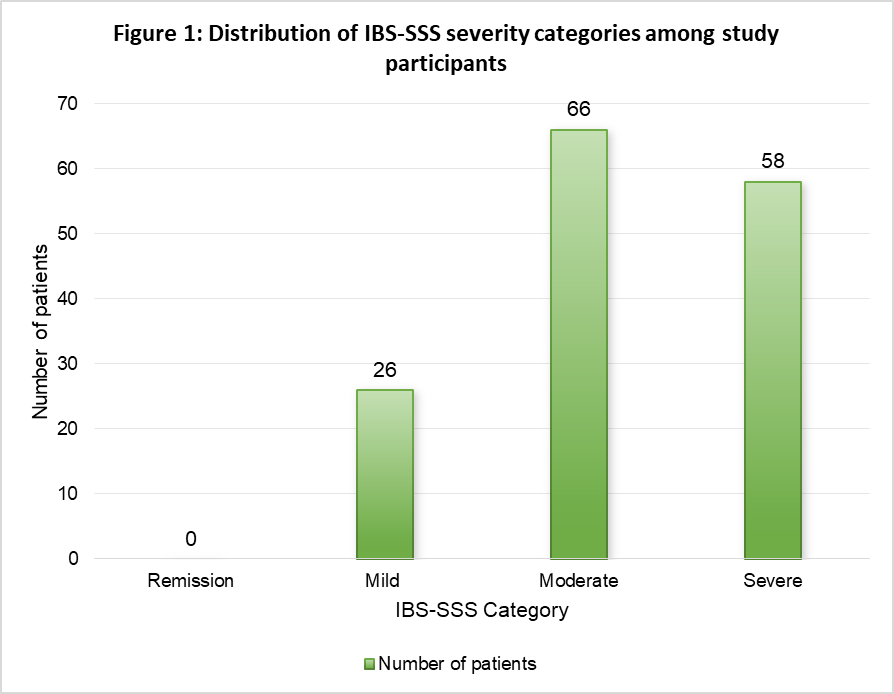
Figure 1 Legend: Distribution of IBS Symptom Severity Score (IBS-SSS) severity categories among study participants (n = 150).
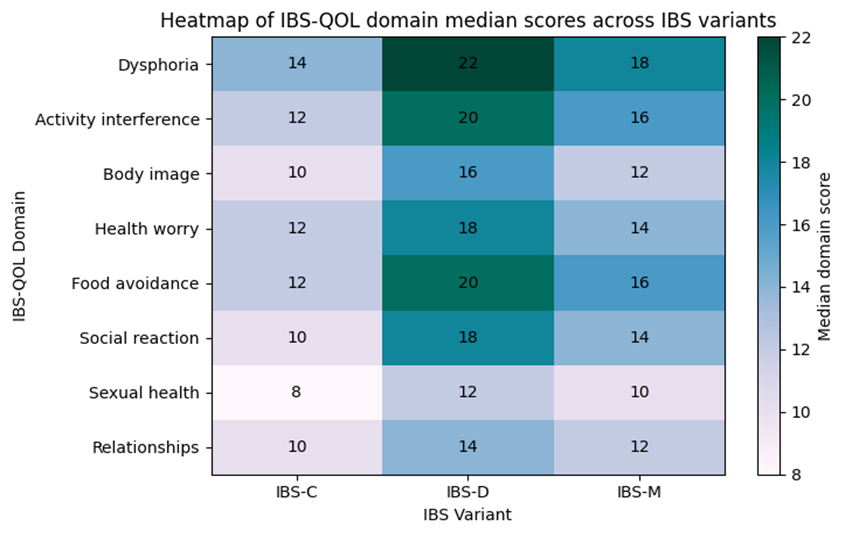
Figure 2: Heatmap of IBS-QOL domain median scores across IBS variants
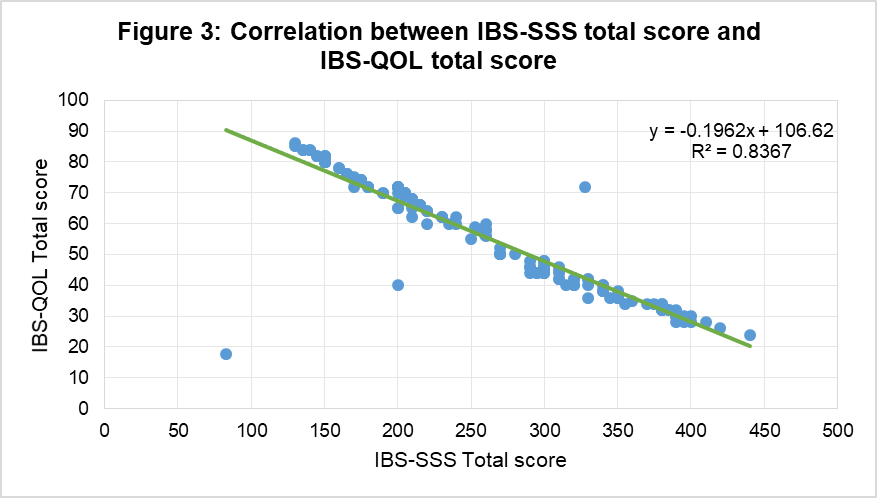
Figure 3 Legend: Correlation between IBS Symptom Severity Score (IBS-SSS) total score and IBS Quality of Life (IBS-QOL) total score among study participants. Increasing symptom severity was associated with poorer quality of life.
DISCUSSION:
The present study evaluated symptom severity using the IBS Symptom Severity Score (IBS-SSS) and health-related quality of life using the IBS Quality of Life questionnaire (IBS-QOL) among 150 patients with Irritable Bowel Syndrome. The study population demonstrated middle-aged predominance with slight female preponderance and a higher representation of diarrhea-predominant IBS (IBS-D). Most patients had moderate-to-severe symptom burden with corresponding impairment in quality of life. Significant differences in symptom severity and quality-of-life scores were observed across age groups, sex, duration of illness, and IBS variants. Additionally, a strong inverse correlation was observed between IBS-SSS and IBS-QOL scores, indicating that worsening symptom severity was associated with poorer quality of life.
A statistically significant association was observed between age and both symptom severity and quality of life in the present study (p < 0.001). IBS symptom severity progressively increased with advancing age, while IBS-QOL scores declined significantly among older participants, indicating greater disease burden and poorer quality of life in elderly patients. Female participants also demonstrated significantly higher IBS-SSS scores and lower IBS-QOL scores compared to males, suggesting greater symptom burden and quality-of-life impairment among women. These findings are concordant with Trindade et al., who reported poorer quality-of-life outcomes among female IBS patients across multiple domains.15 The observed age- and sex-related differences highlight the influence of demographic factors on disease perception and overall impact of IBS.
IBS-D emerged as the most common subtype in the present study, followed by IBS-C and IBS-M. Significant subtype-wise differences were observed in both symptom severity and quality of life. IBS-D patients demonstrated the highest IBS-SSS scores and the poorest IBS-QOL scores, whereas IBS-C patients showed comparatively lower symptom severity and better quality-of-life outcomes. These findings are consistent with Khasawneh et al., who reported significantly lower IBS-QOL scores among IBS-D patients compared with IBS-C and IBS-M subtypes.16 Symptoms related to diarrhea, urgency, and unpredictability may substantially contribute to emotional distress and lifestyle restriction in IBS-D patients.16
The present cohort also demonstrated a predominantly chronic disease course, with most patients reporting symptoms for more than two years. Increasing duration of illness was associated with significantly higher IBS-SSS scores and lower IBS-QOL scores, suggesting progressive symptom burden and worsening quality of life with chronicity. Persistent gastrointestinal symptoms are likely to contribute to cumulative emotional distress, functional limitation, and increased healthcare utilization over time.
A substantial proportion of participants demonstrated moderate-to-severe symptom burden, with 44.0% classified as moderate and 38.7% as severe according to IBS-SSS categorisation. The mean IBS-SSS score further reflected clinically significant disease burden in the study population. These findings are supported by Black et al., who observed that patients fulfilling Rome IV criteria often demonstrate greater symptom severity and poorer psychological health compared with those meeting older diagnostic criteria.17 The present findings therefore reinforce that tertiary-care IBS populations frequently represent patients with higher symptom burden and substantial disease impact.
The mean IBS-QOL total score in the present study indicated moderate impairment in quality of life. Domain-wise analysis demonstrated maximum impairment in dysphoria, food avoidance, and activity interference, highlighting the major emotional and lifestyle-related impact of IBS. These observations are comparable to findings by El-Salhy et al., who reported significant impairment in quality of life, social functioning, and sexual wellbeing among IBS patients.18 Similarly, Trindade et al. demonstrated that IBS adversely affects emotional and social functioning across multiple domains of daily life.15 The pronounced impairment observed in dysphoria and food avoidance domains further supports the multidimensional nature of IBS-related burden.
Domain-wise comparison across IBS variants demonstrated that IBS-D patients experienced the greatest impairment across all IBS-QOL domains, particularly dysphoria, activity interference, and food avoidance. These findings suggest that diarrhea-predominant disease exerts greater emotional and functional impact than other IBS variants. Trindade et al. similarly reported significant impairment in emotional functioning, vitality, and social functioning among IBS patients, particularly among women.15 The broad impairment observed in the present study emphasizes that IBS affects psychosocial wellbeing and day-to-day functioning in addition to gastrointestinal symptoms.
One of the most important findings of the present study was the strong inverse correlation between IBS symptom severity and quality of life. Increasing IBS-SSS scores were associated with progressively poorer IBS-QOL scores, demonstrating that symptom burden is a major determinant of patient wellbeing. Similar findings have been reported by Trindade et al., who showed that increasing IBS severity adversely affects both mental and physical quality-of-life domains and may additionally be influenced by GI-specific anxiety and depressive symptoms.15 Although mediation analysis was not performed in the present study, the strong negative correlation supports the close relationship between symptom burden and psychosocial impairment in IBS.
Multivariate regression analysis demonstrated that increasing age, longer duration of illness, and IBS-D subtype were independently associated with poorer IBS-QOL scores. These findings indicate that both demographic and disease-related factors contribute significantly to quality-of-life impairment in IBS. The greater impact observed in IBS-D patients further supports previous literature indicating that diarrhea-predominant disease represents a higher-burden subgroup requiring focused evaluation and management.16,17
The findings of the present study have important clinical implications. Most patients demonstrated moderate-to-severe symptom burden with corresponding impairment in quality of life, emphasizing the need for comprehensive assessment beyond symptom-based treatment alone. IBS-D patients consistently demonstrated the greatest impairment in symptom severity and quality-of-life domains, suggesting that this subgroup may require more intensive symptom control and psychosocial support. Furthermore, the strong association between symptom severity and quality of life highlights the importance of individualized management strategies aimed at improving both gastrointestinal symptoms and overall patient wellbeing.
CONCLUSION:
The present study demonstrated significant impairment in symptom severity and health-related quality of life among patients with Irritable Bowel Syndrome. IBS-D patients exhibited comparatively greater disease burden and poorer quality-of-life outcomes than other IBS variants. Increasing age and longer duration of illness were associated with worsening quality-of-life scores. The findings underscore the importance of routine assessment of both symptom severity and quality of life in the comprehensive management of IBS.
Strengths and Limitations
The present study has several strengths. It utilized validated instruments, namely IBS-SSS and IBS-QOL, for comprehensive assessment of symptom severity and health-related quality of life among IBS patients. The study additionally performed subtype-wise comparison across IBS variants and evaluated demographic and disease-related predictors of quality-of-life impairment using multivariate analysis. Domain-wise assessment of IBS-QOL further provided clinically relevant insight into the multidimensional burden of IBS in a tertiary care population.
However, certain limitations should be acknowledged. The study had a moderate sample size and was conducted at a single tertiary care center, which may limit generalizability of the findings. The cross-sectional design precluded assessment of causal relationships, and lack of long-term follow-up prevented evaluation of treatment response and longitudinal changes in symptom severity and quality of life.
REFERENCES:
1. Schmulson MJ, Drossman DA. What is new in Rome IV. J Neurogastroenterol Motil. 2017 Apr 30;23(2):151-63.
2. Lacy BE, Patel NK. Rome criteria and a diagnostic approach to irritable bowel syndrome. J Clin Med. 2017 Nov;6(11):99.
3. Lacy BE, Pimentel M, Brenner DM, Chey WD, Keefer LA, Long MD, et al. ACG clinical guideline: Management of irritable bowel syndrome. Am J Gastroenterol. 2021 Jan;116(1):17-44.
4. Almario CV, Sharabi E, Chey WD, Lauzon M, Higgins CS, Spiegel BMR. Prevalence and burden of illness of Rome IV irritable bowel syndrome in the United States: results from a nationwide cross-sectional study. Gastroenterology. 2023 Dec;165(6):1475-1487.
5. Sperber AD, Bangdiwala SI, Drossman DA, Ghoshal UC, Simren M, Tack J, et al. Worldwide prevalence and burden of functional gastrointestinal disorders, results of Rome Foundation Global Study. Gastroenterology. 2021 Jan;160(1):99-114.e3.
6. Makharia GK, Verma AK, Amarchand R, Goswami A, Singh P, Agnihotri A, et al. Prevalence of irritable bowel syndrome: a community based study from northern India. J Neurogastroenterol Motil. 2011 Jan;17(1):82-7.
7. Chua AS. Prevalence of irritable bowel syndrome in northern India. J Neurogastroenterol Motil. 2011 Jan;17(1):6-8.
8. Cheng X, Ren C, Mei X, Jiang Y, Zhou Y. Gut microbiota and irritable bowel syndrome: status and prospect. Front Med (Lausanne). 2024 Oct 17;11:1429133.
9. Porcari S, Ingrosso MR, Maida M, Eusebi LH, Black C, Gasbarrini A, et al. Prevalence of irritable bowel syndrome and functional dyspepsia after acute gastroenteritis: systematic review and meta-analysis. Gut. 2024 Sep;73(9):1431-1440.
10. Changela S, Ashraf S, Lu JY, et al. New-onset gastrointestinal disorders in COVID-19 patients 3.5 years post-infection in the inner-city population in the Bronx. Sci Rep. 2024;14:31850.
11. Betz C, Mannsdörfer K, Bischoff SC. Validierung des IBS-SSS [Validation of the IBS-SSS]. Z Gastroenterol. 2013;51(10):1171–6.
12. Kaptchuk TJ, Friedlander E, Kelley JM, Sanchez MN, Kokkotou E, Singer JP, et al. Placebos without deception: a randomized controlled trial in irritable bowel syndrome. PLoS One. 2010;5(12):e15591.
13. Patrick DL, Drossman DA, Frederick IO, DiCesare J, Puder KL. Quality of life in persons with irritable bowel syndrome: development and validation of a new measure. Dig Dis Sci. 1998;43(2):400–11
14. Andrae DA, Patrick DL, Drossman DA, Covington PS. Evaluation of the Irritable Bowel Syndrome Quality of Life (IBS-QOL) questionnaire in diarrheal-predominant irritable bowel syndrome patients. Health Qual Life Outcomes. 2013;11:208.
15. Trindade IA, Melchior C, Törnblom H, Simrén M. Quality of life in irritable bowel syndrome: exploring mediating factors through structural equation modelling. J Psychosom Res. 2022;157:110809.
16. Khasawneh M, Shaikh FA, Ng CE, Black CJ, Goodoory VC, Ford AC. Utility of irritable bowel syndrome subtypes and most troublesome symptom in predicting disease impact and burden. Neurogastroenterol Motil. 2024 Feb;36(2):e14756.
17. Black CJ, Yiannakou Y, Houghton LA, Ford AC. Epidemiological, clinical, and psychological characteristics of individuals with self-reported irritable bowel syndrome based on the Rome IV vs Rome III criteria. Clin Gastroenterol Hepatol. 2020;18(2):392-398.e2
18. El-Salhy M, Johansson M, Klevstul M, Hatlebakk JG. Quality of life, functional impairment and healthcare experiences of patients with irritable bowel syndrome in Norway: an online survey. BMC Gastroenterol. 2025;25(1):143.