A Comparative Study Of Efficacy Of Intrathecal 0.5% Bupivacaine Heavy Vs Intrathecal 0.75% Ropivacaine Heavy In Elective Infraumblical Surgeries.
- Dr. Pankaj Kumar , Additional Chief Medical Officer & Senior Consultant DNB, Department of Anaesthesiology, Durgapur Steel plant hospital, J. M. Sengupta Road, durgapur, West Bengal 713205, India.
- Dorathy Kommerla , Junior Resident 3, Durgapur Steel plant Hospital, West Bengal, India.
- Dr. Praveen Garg , Resident doctor (PG2), Department of Anaesthesia, Durgapur Steel plant main Hospital, JMSengupta Road, Durgapur, West Bengal 713205, India.
Article Information:
Abstract:
Background: Bupivacaine has been used successfully for spinal anaesthesia. The main adverse effects of the drug manifest as perioperative hemodynamic instability, its longer duration of action and urinary retention makes it unsuitable for ambulatory anaesthesia. The cardiotoxic disadvantage of this drug along with prolongation of motor blockade resulted in the development of newer anaesthetic agent Ropivacaine. Materials and Methods: In this randomized double-blind comparative study of a total of 52 patients irrespective of gender undergoing elective infraumbilical surgery were studied. After Administration of SA to group A (3ml of 0.5% Bupivacaine heavy) & group B (3ml of 0.75% Ropivacaine heavy) both were compared for their intraoperative haemodynamic parameters, post-operative effects with Bromage score & Visual Analogue Score. Result: The onset of sensory and motor block was significantly faster in Group A compared to Group B. Haemodynamic stability was maintained in Group B. The duration of sensory and motor block was significantly shorter in Group B facilitating early ambulation. Conclusion: Hyperbaric ropivacaine (0.75%) is comparable to the readily available hyperbaric (0.5%) bupivacaine in terms of quality of block, but with a delayed onset of motor and sensory block, shorter and early recovery profile. It has good haemodynamic profile and lesser side effects, shorter time of rescue analgesia. It is suitable for short procedures where a rapid return of ambulatory function is desirable, such as in the day care setting, where its recovery profile could confer a distinct clinical advantage.
Keywords:
Article :
INTRODUCTION:
Spinal anaesthesia, also called SAB, is a form of regional anaesthesia involving injection of a local anaesthetic into the CSF through a fine needle. Anaesthesia is obtained by blocking the spinal nerves in the subarachnoid space that act on the spinal nerve roots.1
In recent years, Bupivacaine has been used successfully for spinal anaesthesia in either a glucose-free or a hyperbaric solution.1 It is an amino amide local anesthetic, a racemic (50:50) mixture of S and R enantiomers, has been used as the drug of choice for spinal anesthesia since its introduction in 1956, due to its longer duration of action, producing profound sensory and motor blockade.2 The main adverse effects of the drug manifest as perioperative hemodynamic instability and respiratory depression.3 Its longer duration of action and urinary retention make it unsuitable for ambulatory anesthesia. This led to a quest for a newer local anesthetic agent which could be used for spinal anesthesia for day-care cases and could sidetrack the cardiotoxic potential of bupivacaine.4
The cardiotoxic disadvantage of this drug along with neurotoxicity and prolongation of motor blockade resulted in the development of newer anaesthetic agent Ropivacaine.5 Ropivacaine, a long-acting amide local anaesthetic agent, is a pure S(−) enantiomer of propivacaine. It belongs to the pipecoloxylidide group of local anesthetics, with a propyl group added to the piperidine nitrogen atom compared to a butyl group in bupivacaine2. It has reduced potential for cardiotoxicity and neurotoxicity and is thus safer than the racemic preparation, bupivacaine.
Ropivacaine has lower lipid solubility than bupivacaine, which is responsible for its lower penetration into myelinated motor fibers and thus lesser motor blockade with greater sensorimotor differentiation.6 Ropivacaine, offers the advantage of producing a more selective blockade, resulting in less motor impairment. This characteristic may facilitate early ambulation, reduce the risk of deep vein thrombosis and providing other ambulation-related benefits.5
Previously ropivacaine was prepared as heavy from isobaric solution, now it is commercially available as heavy. Considering these relative advantages and disadvantages of both the drugs, an endeavor was made to compare the effects of intrathecal hyperbaric Ropivacaine versus hyperbaric Bupivacaine for infraumbilical surgeries, in respect to onset and duration of anesthesia, perioperative hemodynamic and any adverse effects. This study is aimed to compare the efficacy and safety between intrathecal 0.5% heavy Bupivacaine and 0.75% heavy Ropivacaine for infraumbilical surgeries in adults.
AIMS & OBJECTIVES OF THE STUDY
1. Comparison of onset (in minutes) of sensory block.
2. Comparison of duration (in minutes ) of sensory block.
3. Comparison of onset (in minutes) of motor block.
4. Comparison of duration (in minutes) of motor block.
5. Haemodynamic parameters (mean arterial pressure, heart rate, SpO2).
6. Adverse effects: Bradycardia, hypotension, nausea, vomiting and shivering.
MATERIALS AND METHODS:
After obtaining approval from the Institutional Ethics Committee (IEC), along with the written & informed consent, 52 adults of either sex belonging to ASA grade I & II, aged 18-60 years and scheduled for infraumbilical surgeries, using subarachnoid block would be enrolled in this prospective, randomized controlled study, to be conducted in the Department of Anaesthesia at Durgapur steel plant hospital, Durgapur over a period of one and half year.
The patients would be randomly categorized into 2 groups Group A and Group B.
Group A - 3ml of 0.5% Hyperbaric Bupivacaine (15mg)
Group B - 3ml of 0.75% Hyperbaric Ropivacaine (22.5mg).
INCLUSION CRITERIA
1. Patient age between 18-60 yrs
2. Patient with ASA grade 1 & 2
3. Patient’s whose height is in between 150cms to 175cms.
4. Short duration surgeries within 1–1.5 hrs.
EXCLUSION CRITERIA
1. Patient refusal to participate in the study.
2. Patient with history of coagulation disorders.
3. Patient with thyroid disease, Parkinson’s disease, dysautonomia, Raynaud’s syndrome, cardiopulmonary disease, history of allergy to agents to be used, a need for blood transfusion during surgery, known history of alcohol use, use of sedative hypnotic agents or use of vasodilators.
4. Sepsis.
5. Patient having sub-arachnoid block failure will be excluded from the study.
6. Cesarean section
7. Emergency surgeries
Pre- anaesthetic check-up was done on all patients. Preoperatively, procedure was explained in detail and written consent was taken. Patients were explained regarding VAS which has to be assessed for pain in postoperative period (denoting 0= no pain and 10= worst imaginable pain). All the patients were kept fasting for 8 hours prior to the scheduled operation and premedicated with tab alprazolam 0.25mg, tab pantoprazole 40mg and tab ondansetron 4mg a night before the surgery.
On arrival to the operating room,an intravenous 18G line was secured & infusion with freely flowing ringer lactate was started. All patients were monitored by automated BP, PR, RR, pulse oximetry (SpO2) & ECG. Patient was placed in sitting position and under all aseptic precautions, sub-arachnoid block was given at L3-L4 or L2-L3 intervertebral space with 25-G Quincke spinal needle.
After administering the drug, spinal needle will be taken out and the patient will be positioned supine immediately. The anaesthesiologists performing the technique will record the vital parameters such as HR, MAP, SpO2 at every 5 minutes for 15 minutes, then every 15-minute interval till 60 minutes and then every 60-minute interval till 180 minutes. In both the groups, sensory blockade will be assessed by loss of sensation to pin prick in the midline using a 22-gauge blunt hypodermic needle after administration of study drug every 30 seconds.
Parameters noted:
1. onset of sensory block (time from injection of local anaesthetic in intrathecal space up to the time when the patient does not feel the pin prick at T10 level)
2. Total duration of sensory block (the interval from intrathecal administration till the regression to S1 dermatome).
3. onset of motor block (time taken in minutes from deposition of study drug into subarachnoid space to Bromage scale grade 3 motor block)
4. duration of motor block (time taken in minutes from deposition of the study drug to the regression of motor block to Bromage Grade 0)
5. Haemodynamic parameters – MAP,HR,Sp02
6. Adverse effects like hypotension,bradycardia,nausea,vomiting&shivering
7. Duration of analgesia (time from the deposition of study drug till the requirement of first rescue analgesia when VAS>3) and VAS score
Bromage Scale
Grade 0: No motor block
Grade 1: Inability to raise extended leg; able to move knees and feet
Grade 2: Inability to raise extended leg and move knee; able to move feet
Grade 3: Complete block of motor function of limb
STATISTICAL ANALYSIS:
The data are tabulated in Microsoft excel and analysed with SPSS V.24 software. The continuous variables are presented with mean and standard deviation. The categorical variables are presented with frequency and percentage. Chi square test, independent t-test are used for the statistical analysis. The p value ≤ 0.05 is considered statistically significant.
RESULTS:
The demographic profile was comparable in both groups in terms of age, sex ,height and ASA grade.
Table 1: shows the comparison of parameters of spinal anaesthesia including the onset and duration of sensory and motor block.
|
PARAMETER |
GROUP A (Mean±SD) |
P-value |
GROUP B (Mean±SD) |
P-value |
|
Onset of Sensory Blockade(min) |
4.18±0.50 |
<0.001 |
5.06±0.81 |
<0.001 |
|
Duration of Sensory Blockade(min) |
190.85±16.13 |
<0.001 |
172.69±9.10 |
<0.001 |
|
Onset of Motor Blockade(min) |
5.22±0.62 |
<0.001 |
6.37±0.68 |
<0.001 |
|
Duration of Motor Blockade(min) |
190.19±12.55 |
<0.001 |
148.88±11.93 |
<0.001 |
The quality of analgesia was comparable between the two groups but the duration of analgesia was longer in the bupivacaine group than in the ropivacaine.
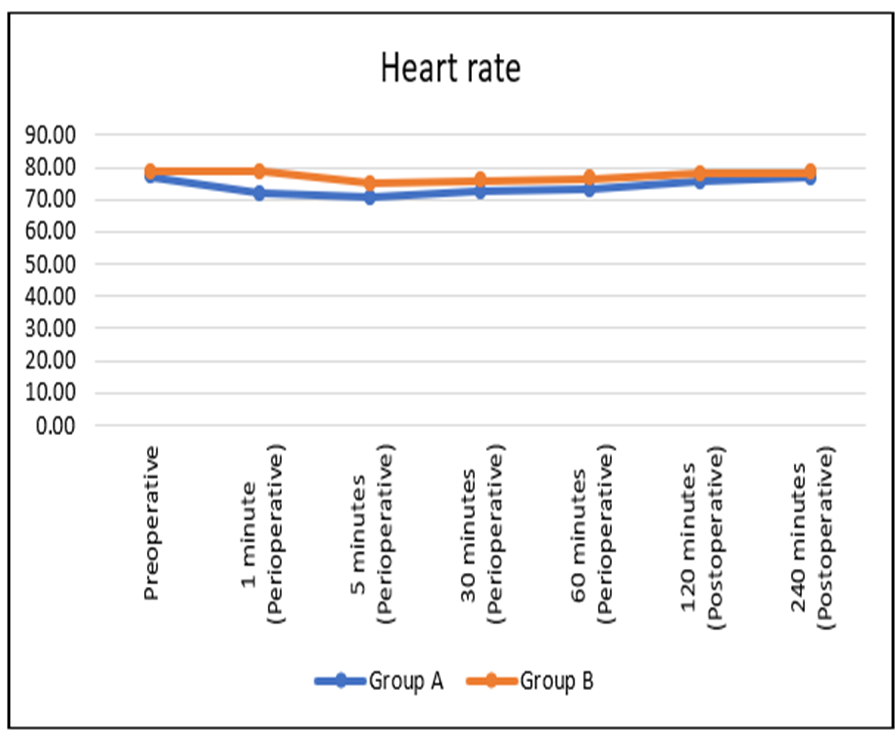
Figure 1: shows comparison of mean heart rate between the two groups
In all the intervals, the mean heart rate was greater in group B than the mean heart rate of group A. Statistically significant difference exists between them during peri-operative period
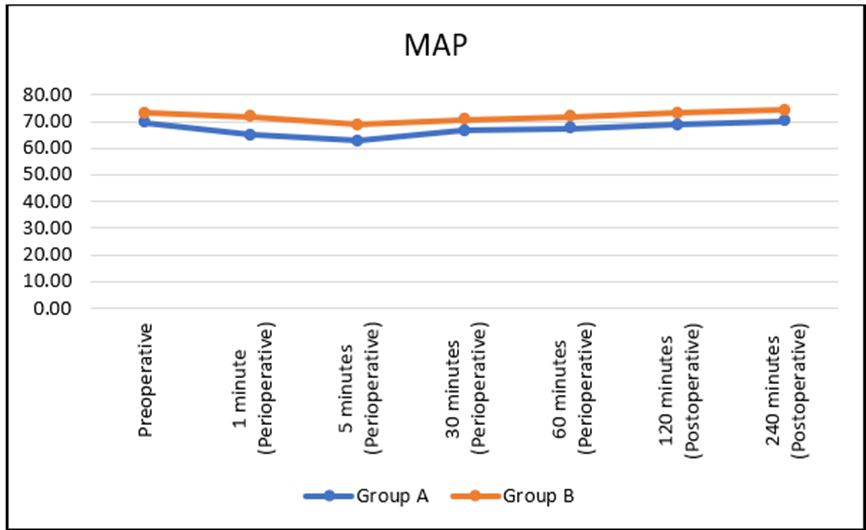
Figure 2: shows comparison of mean arterial pressure between the two groups.
In all the intervals, the MAP was greater in group B than the MAP of group A.
Statistically significant difference exists between them during peri-operative period.
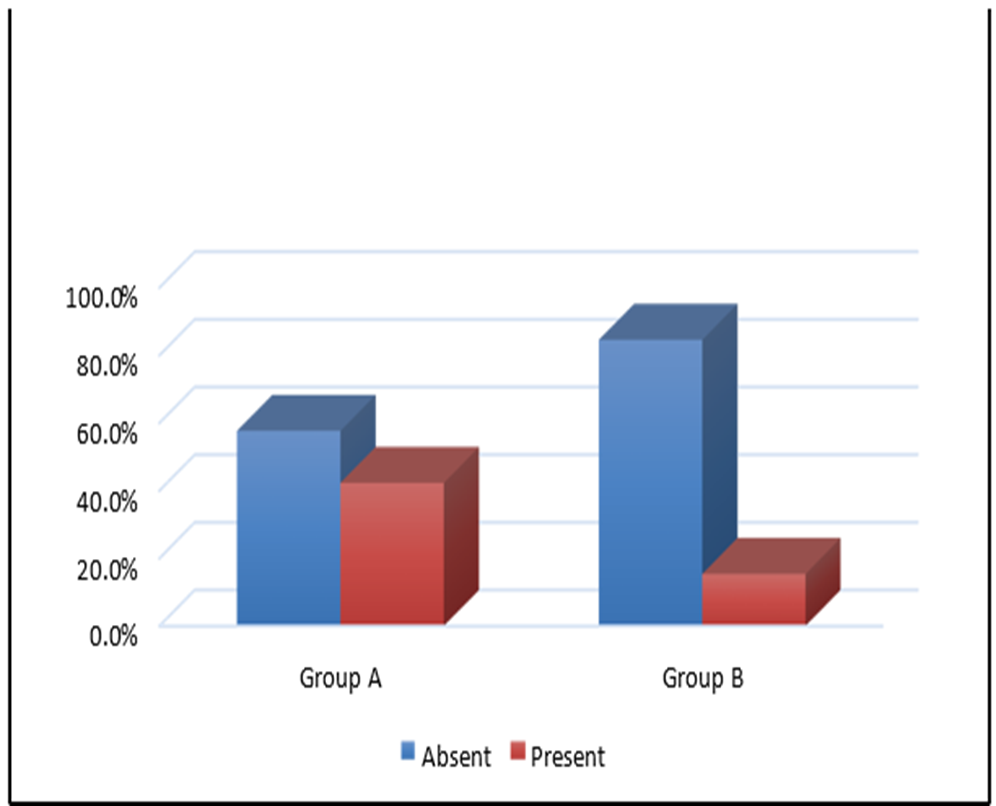
Figure 3: shows comparison of incidence of bradycardia between the two groups.
The distribution of Bradycardia was greater in group A than of group B. Statistically significant difference exists between them.
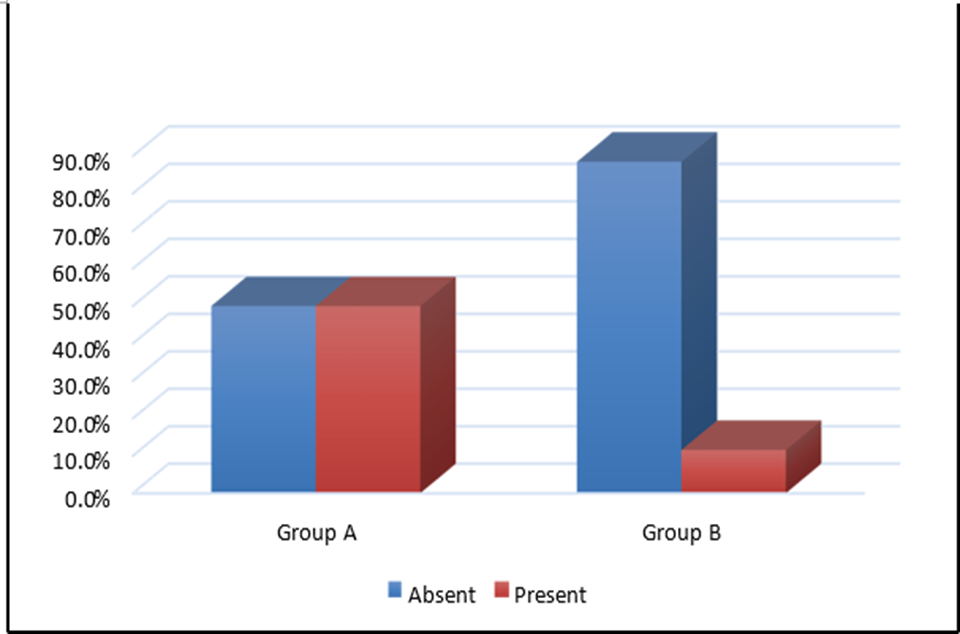
Figure 4: shows comparison of incidence of hypotension between the two groups.
The distribution of hypotension was greater in group A than of group B. Statistically significant difference exists between them.
DISCUSSION:
Till today spinal anaesthesia is the most versatile block available and being used for various surgeries on the lower half of the body. The advantages of spinal anaesthesia include simplicity, ease of performance, good muscle relaxation, postoperative analgesia, blunting of autonomic, somatic, endocrine response and prevention of complications like deep vein thrombosis. One of the primary goals of perioperative physicians while performing SAB is to achieve adequate effects for the required duration without causing significant derangement of physiological parameters or side effects.
Present study was conducted in Department of Anaesthesiology, Durgapur steel plant hospital, Durgapur to compare equipotent hyperbaric ropivacaine (0.75%) and hyperbaric bupivacaine (0.5%) for SAB in patients undergoing elective infraumblical surgeries. Comparision was done in terms of sensory and motor blockade characteristics, side effects and haemodynamic stability. We conducted a study on 52 patients of ASA Grade I-II between age group of 18 to 60 years, scheduled for elective infraumblical surgeries. The time taken for sensory blockade to reach T10 level was noted which was (4.18 ± 0.50) mins in group A and (5.06 ± 0.81) mins in group B. The duration of sensory blockade in Group A was (190.85 ± 16.13) mins and in Group B was (172.69 ±9.10) mins, (P<0.001) The findings mentioned above were statistically significant(P<0.001).
Homa Fatima et al.7 conducted a similar study in 2024 by comparison of 3 mL of 0.5% bupivacaine heavy and 3 mL of 0.75% ropivacaine heavy in SAB in elective infraumblical surgeries. Ropivacaine showed faster sensory and motor recovery, better hemodynamic stability, and fewer side effects compared to bupivacaine. Hyperbaric ropivacaine 0.75% was found to be a comparable and safer alternative to hyperbaric bupivacaine 0.5% for patients undergoing lower abdominal surgery, offering faster recovery and better hemodynamic stability.
Jithendra V kalbande et al.8 in 2024 conducted a study by comparison of 3 mL of 0.5% bupivacaine heavy and 3 mL of 0.75% ropivacaine heavy in SAB in elective infraumblical surgeries. Ropivacaine exhibited a slower onset for both sensory and motor blockade. Two-segment sensory and motor blockade regression were faster with ropivacaine compared to bupivacaine (p < 0.001).
Surbhi Bhardwaj et al.9 in 2024 conducted a study to compare efficacy of intrathecal hyperbaric ropivacaine (0.75%) versus hyperbaric bupivacaine (0.5%) in lower abdominal and limb surgical procedures. Hyperbaric Ropivacaine had a slower onset of sensory, motor blockade, with early regression. It is more cardiostable with lesser side effects and shorter duration of analgesia. It provides patient and surgeon satisfaction comparable to bupivacaine, and hence ropivacaine is better option in short duration surgery.
Till now, hyperbaric bupivacaine (specific gravity, 1.025) has been the primary choice for SAB. It is favoured for offering profound sensory analgesia, adequate muscle relaxation, reduced operative blood loss, and postoperative pain relief. However, caution is warranted due to the potential cardiotoxicity and neurotoxicity of the R-enantiomer. Therefore, there is a need for a local anaesthetic with minimal side effects while ensuring sufficient sensory and motor blockade. Ropivacaine, a long-acting amide local anaesthetic agent, is a pure S (−) enantiomer of bupivacaine. It exhibits reduced potential for cardiotoxicity and neurotoxicity, rendering it a safer alternative to the racemic preparation, bupivacaine.
In the present study, no differences were observed between the two groups in age, sex, weight, height, ASA physical status, or duration of surgery. However, the characteristics of the nerve blocks, including the onset of sensory and motor blockade, time taken to achieve T10 sensory block, and complete motor block, were delayed in the ropivacaine group compared to those in the bupivacaine group.
Our findings align with those of Surbhi Bhardwaj et al9, Savita Gupta et al10, who reported delayed sensory and motor block onset in the ropivacaine group. This delay may be attributed to the less lipophilic nature of ropivacaine. Given that the effectiveness of local anaesthetics is directly related to the myelination and size of nerve fibers, more lipophilic local anaesthetics (such as bupivacaine) are likely to penetrate larger myelinated motor fibers more rapidly and persistently than less lipophilic drugs (such as ropivacaine).
In the current study, we found that the level of sensory block achieved was comparable in both groups. Nevertheless, there was a faster regression of the two segments in the ropivacaine group, consistent with findings in other studies. An interesting finding in our study was that, despite the quicker regression of two segments in the ropivacaine group, the total duration of sensory block and the time required for rescue analgesia were comparable in both groups.
The ropivacaine group maintained a good sensory block until the completion of surgery. Similarly, ropivacaine 22.5 mg provided a duration of sensory block similar to bupivacaine 15 mg. This equivalence is attributed to the fact that at equipotent doses (1.5:1 or 0.75%), ropivacaine exhibits comparable potency to bupivacaine at higher dosages. Additionally, it is well established that hyperbaric solutions, as opposed to plain local anesthetic solutions, result in a more predictable cephalad spread and prolong the duration of clinically useful blocks.
Our observations also revealed that motor blockade was prolonged in the bupivacaine group. Being less lipophilic, ropivacaine exerts a greater effect on non-myelinated pain fibers than myelinated motor fibers, leading to a pronounced degree of sensory-motor differentiation compared to bupivacaine. This differentiation contributes to early patient movement, a phenomenon supported by similar observations in other studies. The observed common side effects in both groups included hypotension and bradycardia.
The bupivacaine group showed a numerically higher incidence of hypotension and bradycardia, and the difference between the two groups was statistically significant. Roopal R Garaniya et al11, Maroti Ghaikwad et al12, Surbhi Bhardwaj et al9, Savita Gupta et al10, have corroborated this finding in their studies, indicating a lower incidence of hypotension with intrathecal ropivacaine compared to intrathecal bupivacaine. This difference is attributed to the absence of the R enantiomer in ropivacaine. As ropivacaine is a pure S-enantiomer, it results in less hemodynamic instability during surgery. The remaining intraoperative complications (nausea, vomiting, and shivering) showed no statistically significant differences between the two groups.
Considering the minimal impact of ropivacaine on hemodynamics with fewer adverse effects, it can be considered an alternative to bupivacaine for spinal anaesthesia in patients with heart disease and elderly patients with multiple comorbidities. Early recovery of motor function is associated with a decreased incidence of venous thromboembolism and facilitates early mobilization. However, the minimal prolonged duration is unlikely to affect healthcare dynamics and is practically acceptable in most elective surgeries. Nonetheless, this approach might be a hurdle for time-sensitive cases such as emergency caesarean sections.
This comparative study examined the effectiveness of hyperbaric ropivacaine (0.75%) compared to hyperbaric bupivacaine (0.5%) among patients undergoing infra-umbilical surgeries under spinal anesthesia. It revealed that hyperbaric ropivacaine at an equipotent dose (0.75%) proved to be a comparable and safer alternative to hyperbaric bupivacaine (0.5%). Furthermore, it had better motor-recovery profiles.
STRENGHTS AND LIMITATIONS OF THE STUDY
Our study has the strength of randomization and an adequate sample size. However, it also has notable limitations: it focuses on relatively healthy adults, and the effects on older patients with cardiovascular comorbidities remain unknown. The study did not standardize the dose based on age, height, and weight. Furthermore, we performed a study on elective surgeries only, and the practical application of the results needs to be weighed against time sensitive emergency cases. A single-center study is also another limitation.
CONCLUSION:
From our study, we concluded that
1. Ropivacaine produced a slower onset of sensory and motor block with shorter duration when compared to Bupivacaine.
2. Ropivacaine was haemodynamically more stable with lesser incidence of hypotension and bradycardia than bupivacaine.
3. Bupivacaine produced a longer duration of analgesia.
4. Ropivacaine facilitates early ambulation, enhances patient satisfaction, and suggests its potential as an efficient and equally safe alternative to the more commonly used bupivacaine in routine clinical practice.
5. Thus, we can say that intrathecal hyperbaric ropivacaine is safe and hemodynamically stable with faster recovery while quality of muscle relaxation is equivalent.
ACKNOWLEDGEMENT
As I complete this humble contribution to scientific pursuit, it gives me immense pleasure to acknowledge the guidance provided by my mentors Dr.Pankaj Kumar and Dr.Samarpita Mondal and all the professors of Department of Anaesthesiology,Duragapur Steel plant Hospital,Durgapur. I am also indebted to Almighty God, Mr.Sai Krishna and my family for constant support.I would express my gratitude to the patients who willingly participated in the study. All the credit for the successful completion of this study, the results of which I hope will be of some benefit to humanity, goes to them.
REFERENCES:
1. Ghimire, R. and Gyawali, M. (2019). Effectiveness of hyperbaric ropivacaine over hyperbaric bupivacaine in spinal anaesthesia, Europasian Journal of Medical Sciences, 1, pp. 10–5.
2. Swaika, S., Chatterjee, S., Bisui, B., Mandal, A., Sheet, J. and Sengupta, S. (2014). Effects of intrathecal hyperbaric ropivacaine versus hyperbaric bupivacaine for lower limb orthopedic surgery, Anesthesia: Essays and Researches, 8, pp. 349.
3. Rezayi Soufiani, A., Joulani, M., Jolani, M.S. et al. Accessing the efficacy and perioperative adverse effects of three different hyperbaric bupivacaine 0.5% dosages for spinal anesthesia induction in lower limb orthopedic surgeries: a randomized clinical trial. BMC Anesthesiol 24, 285 (2024). https://doi.org/10.1186/s12871-024-02673-9
4. Kharat, P. A., & Deopujari, R. C. (2021). A comparison of intrathecal 0.5% hyperbaric ropivacaine with 0.5% hyperbaric bupivacaine for elective surgery: a prospective, randomized, double-blind, controlled study. International Journal of Research in Medical Sciences, 9(2), 471–478. https://doi.org/10.18203/2320-6012.ijrms20210426
5. Leena Mahajan et al.2022, Comparison of Intrathecal 0.5% Hyperbaric Bupivacaine And 0.75% Hyperbaric Ropivacaine In Infraumblical Surgeries In Adults. Int J Recent Sci Res. 13(08), pp. 2167-2171. DOI: http://dx.doi.org/10.24327/ijrsr.2022.1308.0444 Simpson D, Curran MP, Oldfield V, Keating GM. Ropivacaine. Drugs. 2005;65(18):2675–717.
6. Fatima DrH, Kumar DrM, Jha DrA, Imam DrMdA. A Comparative Study Of Intrathecal 0.5% Hyperbaric Bupivacaine And Intrathecal 0.75% Hyperbaric Ropivacaine In Lower Abdominal Surgeries. IOSR Journal of Dental and Medical Sciences. 2024 Nov;23(11):08–15.
7. Kalbande JV, Kukanti C, Karim HMR, Sandeep G, Dey S. The Efficacy and Safety of Spinal Anesthesia with Hyperbaric Ropivacaine 0.75% and Bupivacaine 0.5% in Patients Undergoing Infra-Umbilical Surgeries: A Randomized, Double-Blind Study. Cureus. 2024 Mar 26;16(3): e57005. doi: 10.7759/cureus.57005. PMID: 38681261; PMCID: PMC11046173.
8. Bhardwaj, S. (2024). COMPARATIVE EFFICACY OF INTRATHECAL HYPERBARIC ROPIVACAINE (0.75%) VERSUS HYPERBARIC BUPIVACAINE (0.5%) IN LOWER ABDOMINAL AND LIMB SURGICAL PROCEDURES. International Journal of Medicine and Public Health, 14(4), 236–240. https://doi.org/ 10.70034/ijmedph.2024.4.46
9. 9. Savita Gupta, Isha Yadav, Anupriya Saxena, & Satendra Kumar. (2024). Comparison of clinical efficacy of hyperbaric ropivacaine with hyperbaric bupivacaine in spinal anesthesia for transurethral resection of prostate: A randomized and double-blind study. Asian Journal of Medical Sciences, 15(2), 8–13. https://doi.org/10.3126/ajms.v15i2.60765
10. 10. Garaniya, R.R. and Satasia, J.R. (2023) ‘COMPARISON OF THE CLINICAL EFFECT OF INTRATHECAL HYPERBARIC 0.75% ROPIVACAINE AND 0.5% BUPIVACAINE FOR LOWER ABDOMINAL SURGERIES IN ADULT PATIENTS’, International Journal of Academic Medicine and Pharmacy, 5(4), pp.349–353.doi:10.47009/jamp.2023.5.4.72.
11. 11. Gaikwad Maroti , waghmare Jitendra . Comparative Study Of Efficacy And Safety Of Intrathecal Hyperbaric Ropivacaine 0.75% And Intrathecal Hyperbaric Bupivacaine 0.5% In Patients Undergoing Elective Infra-Umbilical Surgeries. IOSR Journal of Dental and Medical Sciences. 2023 Apr 22;22(4):51–6