Maternal Near Miss As A Window Into The Quality Of Obstetric Care: A Two-Year Retrospective Audit Of Clinical Characteristics, Organ Dysfunction, Interventions, Outcomes And The Three Delays In A Tertiary-Care Centre In Eastern India.
- Dr. Debasmita Mondal , Junior Resident, Department of OBGY, Medical College Kolkata.
- Dr. Samrat Chakrabarti , Professor, Department of OBGY, Medical College, Kolkata.
- Dr. Soumi Biswas , Department of Obstetrics and Gynaecology, Medical College and Hospital, Kolkata, West Bengal, India.
Article Information:
Abstract:
Background: Maternal near-miss (MNM) is a sentinel indicator of the quality of obstetric care, capturing life-threatening complications among women who survive. Systematic audits of these cases can identify clinical and healthcare-system deficiencies amenable to intervention. Materials and Methods: This retrospective, audit-based observational study included 192 women fulfilling WHO MNM organ-dysfunction criteria at Medical College and Hospital, Kolkata, from January 2023 to December 2024. Sociodemographic and obstetric characteristics, clinical complications, interventions, pregnancy outcomes and the three delays were analysed. Results: Obstetric haemorrhage (43.75%) and hypertensive disorders (27.08%) were the leading causes of MNM, with critical care admission (93.75%) and massive blood transfusion (54.17%) among the common interventions. Haematological/coagulation dysfunction (54.17%) was the most frequent organ dysfunction, followed by cardiovascular dysfunction (27.60%). Delays I, II and III occurred in 61.98%, 65.10% and 4.69% of women, respectively. The MNM ratio and severe maternal outcome ratio was 9.73 and 12.72 per 1,000 live births, respectively, with a mortality index of 23.51%. Conclusion: Obstetric haemorrhage and hypertensive disorders remain major contributors to MNM. The high prevalence of the first two delays highlights the need to strengthen early recognition, timely care-seeking and referral pathways. Regular MNM audits can provide valuable insights into remediable deficiencies and guide improvements in the quality of obstetric care.
Keywords:
Article :
INTRODUCTION:
No woman should die giving life.” This enduring principle underpins global efforts to prevent avoidable maternal deaths and ensure equitable, high-quality obstetric care [1]. Despite progress, approximately 287,000 women died from maternal causes in 2020 and an estimated 260,000 in 2023. Although the global maternal mortality ratio declined by approximately 40% between 2000 and 2023, progress remains insufficient to achieve Sustainable Development Goal Target 3.1 of fewer than 70 maternal deaths per 100,000 live births by 2030 [2–4]. Every maternal near-miss is an unwritten epitaph, a life suspended at the threshold of loss thus bearing witness to opportunities for prevention and improvement in care. The World Health Organization (WHO) defines a maternal near-miss (MNM) case as a woman who nearly died but survived a complication during pregnancy, childbirth or within 42 days of termination of
pregnancy [5]. The WHO near-miss approach standardises identification through clinical, laboratory and management-based criteria indicating life-threatening organ dysfunction [5,6]. These criteria encompass seven domains: • Cardiovascular dysfunction: Shock; cardiac arrest; use of continuous vasoactive drugs; cardiopulmonary resuscitation; severe hypoperfusion, indicated by lactate greater than 5 mmol/L; or severe acidosis, with arterial pH below 7.1. • Respiratory dysfunction: Acute cyanosis; gasping; respiratory rate above 40 or below 6 breaths/min; severe hypoxaemia, indicated by oxygen saturation below 90% for at least 60 minutes or a PaO₂/FiO₂ ratio below 200; or intubation and ventilation unrelated to anaesthesia. • Renal dysfunction: Acute oliguria unresponsive to fluid administration or diuretics; severe acute azotaemia, with serum creatinine ≥300 μmol/L (≥3.5 mg/dL); or dialysis for acute renal failure. • Coagulation/haematological dysfunction: Failure to form clots; severe acute thrombocytopenia, with platelet count below 50,000/mm³; or transfusion of at least five units of blood or packed red blood cells. • Hepatic dysfunction: Jaundice in the presence of pre-eclampsia, or severe acute hyperbilirubinemia, with serum bilirubin above 100 μmol/L (6 mg/dL). • Neurological dysfunction: Prolonged unconsciousness, including coma, lasting at least 12 hours; stroke; uncontrollable fits or status epilepticus; or total paralysis. • Uterine dysfunction: Hysterectomy performed following uterine haemorrhage or uterine infection.
Beyond clinical complications, the circumstances in which women access and receive care are critical. The three-delays model proposed by Thaddeus and Maine identifies three major barriers contributing to maternal morbidity and mortality [7]. Delay I refers to the delay in deciding to seek medical care, which may be influenced by lack of awareness, financial constraints and sociocultural barriers. Delay II refers to the delay in reaching an appropriate healthcare facility, commonly arising from geographical distance, lack of transport, inadequate ambulance services and referral-related barriers. Delay III refers to the delay in receiving adequate care after arrival at a healthcare facility, which may be attributable to inadequate staffing, limited availability of blood and blood products, operating theatre facilities, intensive care services and other essential resources [7,8]. Indian studies have identified obstetric haemorrhage, hypertensive disorders, sepsis and other severe complications as important contributors to MNM, although their relative proportions vary across settings [9–12]. Systematic maternal near-miss audits can therefore illuminate clinical outcomes and potentially remediable deficiencies in obstetric care. The present study undertakes a retrospective audit of maternal near-miss cases at a tertiary-care centre in Eastern India, examining sociodemographic and obstetric characteristics, clinical complications, WHO-defined criteria, interventions and pregnancy outcomes. It also evaluates the three delays in maternal care, with the aim of identifying potentially modifiable gaps in obstetric care and opportunities for quality improvement.
MATERIALS AND METHODS:
A retrospective, audit-based observational study was conducted in the Department of Obstetrics and Gynaecology, Medical College and Hospital, Kolkata, over a two-year period from January 2023 to December 2024. The study included 192 women who fulfilled the WHO maternal near-miss organ-dysfunction criteria described by Say et al. (2009). Data were collected retrospectively from hospital records, maternal near-miss audit records, operation theatre records, discharge summaries and critical care unit (CCU) records using a pretested, structured data collection sheet. The three delays in maternal care were assessed according to the framework proposed by Thaddeus and Maine [7], with the following operational definitions adopted for the present study: Delay I was defined as an interval exceeding 24 hours between onset of complication and the decision to seek medical care; Delay II as an interval exceeding 1 hour between the decision to seek medical care and arrival at an appropriate healthcare facility; and Delay III as an interval exceeding 30 minutes between arrival at the tertiary-care centre and initiation of definitive intervention. The operational time thresholds for the three delays were adopted with reference to previously published maternal near-miss studies, particularly the study by Podder et al. [9]. Data were analysed using the Statistical Package for the Social Sciences (SPSS), version 16. Categorical variables were expressed as frequencies and percentages, while continuous variables were summarized using appropriate measures of central tendency and dispersion. Associations between categorical variables were assessed using the chi-square test or Fisher’s exact test, as appropriate. A p-value of less than 0.05 was considered statistically significant. Maternal deaths recorded during the study period and the total number of live births were additionally obtained from institutional records to calculate maternal near-miss indicators. The study was approved by the Institutional Ethics Committee of Medical College and Hospital, Kolkata (MC/KOL/IEC/3420/10/2026).
RESULTS:
The present study included 192 women who fulfilled the World Health Organization (WHO) criteria for maternal near miss (MNM), based on organ dysfunction, during the study period. The largest proportion of women belonged to the 25–29-year age group (58; 30.21%), followed by those aged 35 years and above (48; 25.00%) and 30–34 years (38; 19.79%), as illustrated in Figure 1. The mean age of the participants was 28.45 ± 6.34 years, with a median age of 28 years and an age range of 17–39 years. The majority of women were Muslim (111; 57.81%), while 79 (41.15%) were Hindu and 2 (1.04%) belonged to other religious groups. About 180 women (93.75%) were literate, whereas 12 (6.25%) were illiterate. Among the literate women, 86 (47.78%) had primary education and 94 (52.22%) had higher secondary education. Most participants were homemakers (180; 93.75%), whereas 12 (6.25%) were employed. According to the Modified BG Prasad socioeconomic classification, the largest proportion belonged to Class IV (76; 39.58%), followed by Class III (50; 26.04%) and Class V (40; 20.83%). The complete distribution is shown in Table 1.
Table 1. Sociodemographic profile of the study cohort
|
Characteristic |
|
n |
% (N = 192) |
|
1. Age: |
<18 years |
19 |
9.90% |
|
|
18–24 years |
29 |
15.10% |
|
|
25–29 years |
58 |
30.21% |
|
|
30–34 years |
38 |
19.79% |
|
|
≥35 years |
48 |
25.00% |
|
2. Religion: |
Muslim |
111 |
57.81% |
|
|
Hindu |
79 |
41.15% |
|
|
Other |
2 |
1.04% |
|
3. Employment status: |
Homemaker |
180 |
93.75% |
|
|
Employed |
12 |
6.25% |
|
4. Socioeconomic status: |
Class I |
7 |
3.65% |
|
|
Class II |
19 |
9.90% |
|
|
Class III |
50 |
26.04% |
|
|
Class IV |
76 |
39.58% |
|
|
Class V |
40 |
20.83% |
|
5. Literacy: |
Illiterate |
12 |
6.25% |
|
|
Literate |
180 |
93.75% |
|
|
Primary education |
86 |
47.78% (N = 180) |
|
|
Higher secondary education |
94 |
52.22% (N = 180) |
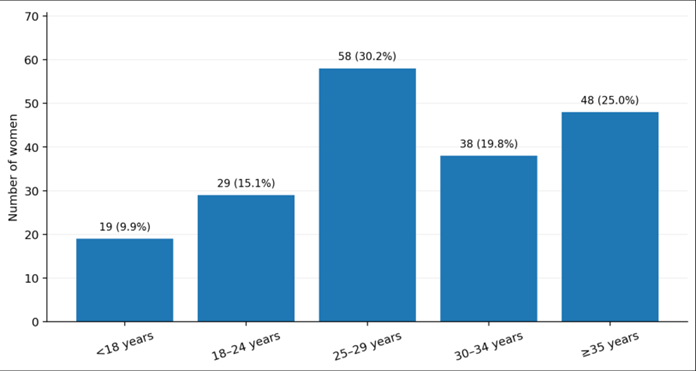
Figure 1. Age distribution of women with maternal near miss (N = 192).
The obstetric profile of the study population revealed that 115 (59.90%) women were multigravidae, while 77 (40.10%) were primigravidae. A history of previous caesarean section was recorded in approximately 104 (54.17%) women, while 35 (18.23%) had a history of previous abortion. Furthermore, 60 (31.25%) women had a gravidity of three or more, reflecting a considerable representation of women with higher gravidity in the study cohort. Antenatal care was booked in 170 (88.54%) women; 22 (11.46%) were unbooked. Among the 167 women presenting during the antenatal period, 67 (40.12%) were at or beyond 37 weeks, 59 (35.33%) were at 32–36 weeks and 6 days, 3 (1.80%) were at 22–31 weeks and 6 days, and 38 (22.75%) were at less than 22 weeks, as illustrated in Figure 2. About 23 (11.98%) women presented during the postnatal period and 2 (1.04%) during labour as shown in Table 2.
Table 2. Obstetric profile and antenatal care (N = 192)
|
Characteristic |
|
n |
% |
|
1. Gravidity |
Primigravida |
77 |
40.10% |
|
|
Multigravida |
115 |
59.90% |
|
2. Obstetric history |
Previous caesarean section |
104 |
54.17% |
|
|
Previous abortion |
35 |
18.23% |
|
3. Antenatal care |
Booked for antenatal care |
170 |
88.54% |
|
|
Unbooked |
22 |
11.46% |
|
4. Timing of presentation: |
Antenatal |
167 |
86.98% |
|
|
Intranatal |
2 |
1.04% |
|
|
Postnatal |
23 |
11.98% |
Pre-existing medical comorbidities were documented in 100 (52.08%) women. Hypertension was the most frequently reported comorbidity, affecting 28 (14.58%) women, followed by anaemia in 18 (9.38%), diabetes mellitus in 16 (8.33%), jaundice in 15 (7.81%), and heart disease in 14 (7.29%) as illustrated in Figure 3.
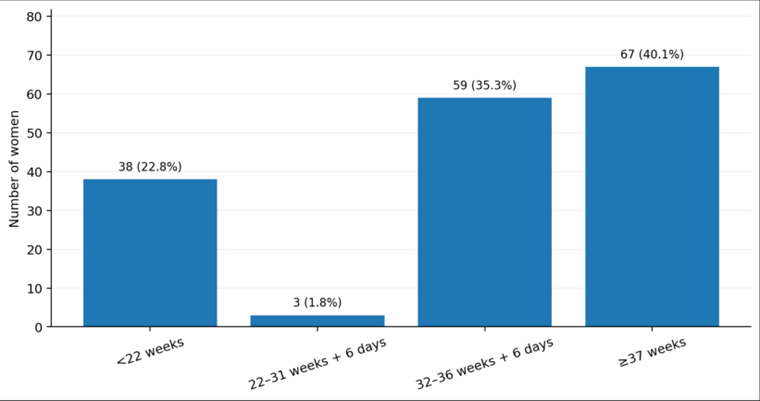
Figure 2. Gestational-age distribution among antenatal presentations (n = 167).
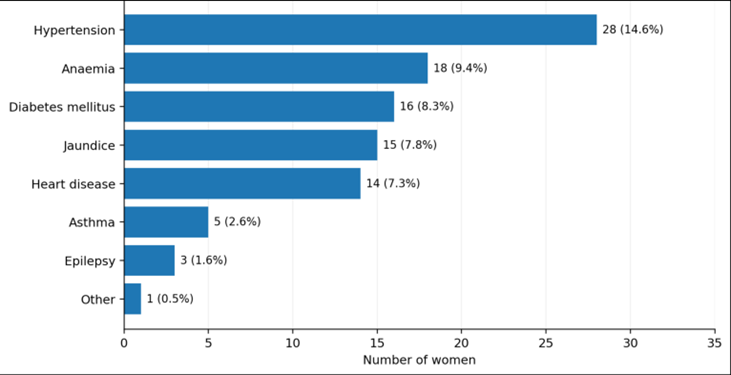
Figure 3. Distribution of pre-existing medical comorbidities (N = 192; categories may overlap).
Of the 192 women included in the study, 151 (78.65%) were referred from healthcare facilities, whereas 41 (21.35%) presented as self-referrals. Among the referred women, 107 (70.86%) were referred from government facilities and 44 (29.14%) from private facilities. Here, about 135 (89.40%) were referred through a single facility, whereas 16 (10.60%) underwent referral through two or more facilities before reaching the tertiary centre. The median time taken to reach the tertiary healthcare facility was 2.5 hours (IQR: 2–3 hours). The median distance travelled was 7 km (IQR: 5.75–8 km). A total of 170 (88.54%) women presented with a maternal near-miss condition within the first 12 hours of hospital admission, while 22 (11.46%) developed a near-miss condition during their hospital stay. Obstetric haemorrhage was the most frequent cause associated with maternal near miss, affecting 84 (43.75%) women, followed by hypertensive disorders in 52 (27.08%). Ectopic pregnancy was recorded in 23 (11.98%) women and abortion-related complications in 15 (7.81%) as illustrated in Figure 4. Within the obstetric haemorrhage subgroup, the most frequently recorded conditions were antepartum haemorrhage due to placenta previa or placental abruption (34 cases, 40.48%), followed by placenta accreta spectrum (32 cases, 38.10%), postpartum haemorrhage in 14 cases (16.67%), uterine rupture in 10 cases (11.90%), and other haemorrhagic conditions in 7 cases (8.33%). Categories were not mutually exclusive, as individual women could have more than one haemorrhagic condition.
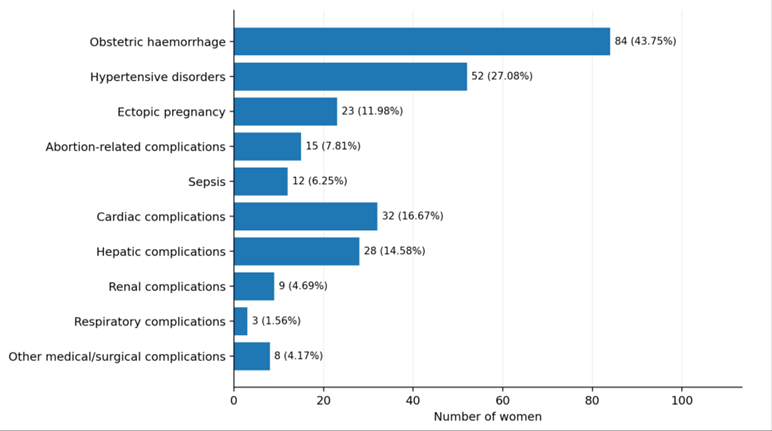
Figure 4. Spectrum of causes and complications associated with Maternal Near Miss (N = 192). Categories overlap.
Admission to the critical care unit was the most frequently recorded intervention or level of care, documented in 180 (93.75%) women. Among the recorded CCU/ICU admissions, the mean duration of stay was 5.84 ± 1.38 days, with a median of 6 days (range: 4–10 days). Massive blood transfusion was required in 104 (54.17%), while magnesium sulphate was administered in all the 52 (27.08%) women with pre-eclampsia and eclampsia and obstetric hysterectomy was performed in 35 (18.23%). The complete intervention profile is presented in Table 3.
Table 3. Interventions and supportive management (N = 192). Categories not mutually exclusive.
|
Intervention |
N |
% |
|
Massive blood transfusion |
104 |
54.17% |
|
Tranexamic acid |
108 |
56.25% |
|
Tamponade/compression sutures |
25 |
13.02% |
|
Obstetric hysterectomy |
35 |
18.23% |
|
Laparotomy |
36 |
18.75% |
|
Mechanical ventilation |
42 |
21.88% |
|
Dialysis |
9 |
4.69% |
|
Vasopressor support |
36 |
18.75% |
|
CCU admission |
180 |
93.75% |
|
Magnesium sulphate administration |
52 |
27.08% |
|
Cardiopulmonary resuscitation |
4 |
2.08% |
On classification by organ-system dysfunction, haematological/coagulation dysfunction was the most frequently recorded category, affecting 104 (54.17%) women, followed by cardiovascular dysfunction in 53 (27.60%). Uterine dysfunction, meanwhile, was recorded in 35 (18.23%) as illustrated in Figure 5.
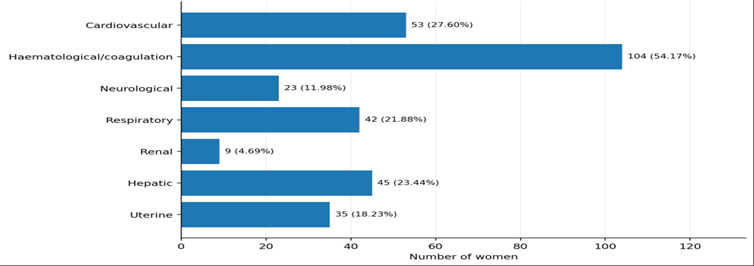
Figure 5. Distribution of recorded organ-system dysfunction criteria (N = 192), categories not mutually exclusive.
Among the 192 women with maternal near miss, 102 (53.13%) underwent caesarean section, 48 (25.00%) had vaginal delivery, 23 (11.98%) underwent laparotomy for ectopic pregnancy, and 15 (7.81%) underwent abortion/evacuation. The remaining 4 (2.08%) women were undelivered at the end of their hospital stay. A total of 123 (64.06%) pregnancies resulted in live births and 27 (14.06%) in stillbirths. No neonatal deaths were documented during the index hospitalisation. The median duration of hospital stay was 9.5 days (IQR: 8–11 days; range: 7–14 days).
Table 4. Pregnancy outcomes among women with maternal near-miss (N = 192)
|
Pregnancy and perinatal outcomes |
Number (n) |
Percentage (%) |
|
Caesarean section |
102 |
53.13 |
|
Vaginal delivery |
48 |
25.00 |
|
Laparotomy for ectopic pregnancy |
23 |
11.98 |
|
Abortion/evacuation |
15 |
7.81 |
|
Undelivered |
4 |
2.08 |
|
Live birth |
123 |
64.06 |
|
Stillbirth |
27 |
14.06 |
On assessment of the three-delays model, Delay I, involving delay in deciding to seek care, was identified in 119 (61.98%) women. The most common reason was lack of awareness of danger signs, accounting for 95 (49.48%) women, followed by financial constraints in 65 (33.85%), family or social factors and delayed decision-making in 48 (25.00%), and initial treatment or home remedies elsewhere in 30 (15.62%). The median interval between onset of the problem and the decision to seek care was 25 hours (IQR: 24–26.25 hours). Delay II, involving delay in reaching an appropriate healthcare facility, was identified in 125 (65.10%) women. Long distance or travel time and transport or ambulance-related delays were the most frequent reasons, each accounting for 69 (35.94%) women, followed by delay in referral or transfer in 63 (32.81%) and lack of awareness of the free ambulance service in 31 (16.15%). Among the 151 referred women, delay II was less frequent among women referred from government facilities (65.4%) than among those referred from private facilities (72.7%), a difference of 7.3 percentage points. However, this difference was not statistically significant (χ² = 0.759, df = 1, p = 0.384; Table 5). Delay III, involving delay in receiving adequate care after reaching the tertiary healthcare facility, was identified in 9 (4.69%) women. Unavailability or delayed provision of blood or blood components accounted for 5 (2.60%) cases, unavailability of an ICU/HDU bed for 3 (1.56%) cases, and an engaged operating theatre for 1 (0.52%) case. The median interval between arrival at the tertiary centre and initiation of definitive intervention was 18 minutes (IQR: 15–30 minutes). The distribution of the three delays is illustrated in Figure 6.
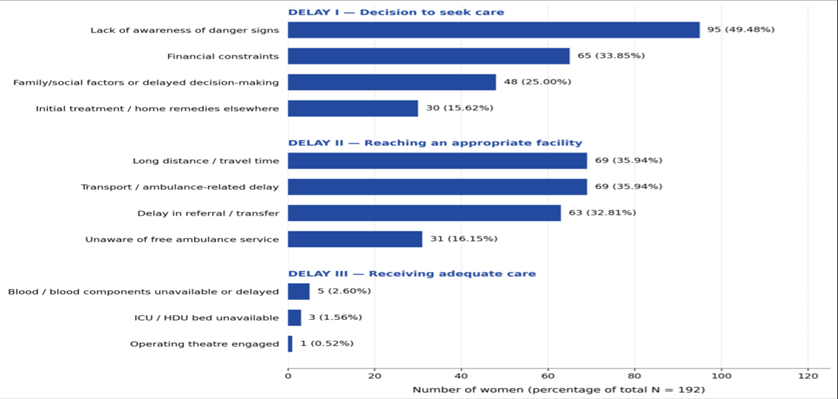
Figure 6. Distribution and reasons for the three delays in the study population (N = 192). Categories not mutually exclusive.
Table 5. Association between referral source and Delay II (N = 151, i.e. total referred population)
|
Referral source |
Delay II present, n (%) |
Delay II absent, n (%) |
Total, n |
|
Government facility |
70 (65.4) |
37 (34.6) |
107 |
|
Private facility |
32 (72.7) |
12 (27.3) |
44 |
|
Total |
102 (67.5) |
49 (32.5) |
151 |
Total: 102 (67.5%) with Delay II, 49 (32.5%) without, n = 151. Pearson’s χ² = 0.759; df = 1; p = 0.384.
During the 2-year study period, 192 maternal near-miss cases and 59 maternal deaths were recorded among 19,729 live births. The maternal near-miss ratio was 9.73 per 1,000 live births, while the severe maternal outcome ratio was 12.72 per 1,000 live births. The maternal near-miss-to-maternal-death ratio was 3.25:1, indicating approximately 3 maternal near-miss cases for every maternal death. The mortality index was 23.51% (Table 6). The relatively high mortality index may reflect the substantial burden of critically ill referrals presenting with advanced obstetric complications, highlighting the importance of timely referral, early recognition, and prompt access to multidisciplinary critical care.
Table 6. Maternal Near-Miss Indicators
|
Indicator |
Formula |
Result |
|
MNM ratio |
MNM cases / Live births × 1,000 |
9.73 |
|
Severe maternal outcome ratio |
(MNM cases + MD) / Live births × 1,000 |
12.72 |
|
MNM-to-MD ratio |
MNM cases / MD |
3.25:1 |
|
Mortality index |
MD / (MNM cases + MD) × 100 |
23.51% |
MNM: maternal near-miss; MD: maternal death. Ratios are per 1,000 live births where specified.
DISCUSSION:
The present study analysed 192 maternal near-miss (MNM) cases using WHO criteria, highlighting the sociodemographic profile, obstetric characteristics, clinical causes, referral pathways and delays in care. However, the sociodemographic and obstetric characteristics of maternal near-miss cases vary across populations and healthcare settings. In our cohort, women aged ≥35 years constituted 25.00% of cases, while 31.25% had a gravidity of three or more. Considered together, these findings highlight the importance of examining advanced maternal age alongside higher gravidity, although their independent contributions cannot be established in this case-only study. In Kolkata, Podder et al. reported gravidity ≥3 more frequently among cases than controls; however, this association did not remain significant after multivariable adjustment. Previous caesarean section, pre-existing medical disorders, inadequate antenatal care and first delay were identified as independent predictors of MNM [9]. A study from Southern Ethiopia similarly examined obstetric and care-related determinants, although differences in population and study design warrant cautious comparison [13]. The clinical profile in our study was dominated by obstetric haemorrhage (43.75%) and hypertensive disorders (27.08%), consistent with findings from Kolkata and Tamil Nadu [9,11]. The substantial requirement for blood transfusion and critical care admission in our cohort further reflects the severity of complications encountered. Referral and access-related barriers were prominent. Delay I and Delay II affected 61.98% and 65.10% of women, respectively, closely resembling the proportions reported in Belagavi (67% and 65%) [10]. Podder et al. also identified first delay as an independent predictor of MNM [9]. In a prospective study from northeastern Brazil, de Lima et al. examined delays among the determinants of MNM, highlighting the importance of timely access to appropriate facilities [14]. Research applying the three-delays model to maternal deaths in Malawi further illustrates the contribution of transport barriers and deficiencies in facility-level care to poor outcomes [15]. Referral source was not significantly associated with Delay II (χ² = 0.759, p = 0.384). The high prevalence of the first two delays highlights the importance of improving danger-sign recognition, timely care-seeking and interfacility transfer. Although Delay III was relatively uncommon in our cohort, timely availability of essential resources remains important for ensuring adequate facility-level obstetric care. The observational design precludes causal inference.
STRENGTHS AND LIMITATIONS
The present study provides a comprehensive audit of 192 maternal near-miss cases using the WHO 2009 organ-dysfunction criteria and the three-delays framework. By examining clinical characteristics, interventions, outcomes and delays in care within a tertiary-care referral centre, it offers a multidimensional assessment of severe maternal morbidity and identifies potentially modifiable gaps in the obstetric care pathway. However, the retrospective, single-centre design makes the study dependent on the completeness of existing hospital records and may limit the generalisability of the findings. The absence of a comparison group precludes identification of independent predictors of maternal near-miss, while retrospective assessment of delays may be affected by incomplete documentation. Furthermore, the small number of women experiencing Delay III limits the detailed assessment of facility-level delays.
RECOMMENDATIONS
The findings emphasise the need to strengthen awareness of obstetric danger signs, facilitate timely care-seeking and improve referral and transport systems. At the institutional level, ensuring the timely availability of blood and blood components, operating theatres and critical care facilities remains essential. Regular multidisciplinary maternal near-miss audits, followed by implementation and reassessment of corrective measures, may help improve the quality of obstetric care.
CONCLUSION:
Maternal near-miss represents a critical opportunity to evaluate the quality of obstetric care and identify deficiencies before they culminate in maternal death. In the present study, obstetric haemorrhage and hypertensive disorders constituted the principal clinical causes of maternal near-miss, while delays in seeking and reaching appropriate care affected a substantial proportion of women. These findings highlight the importance of timely recognition of obstetric danger signs, prompt decision-making and efficient referral pathways. Although the retrospective design does not establish causality, the findings highlight actionable priorities for strengthening maternal healthcare delivery. Institutional preparedness, including the timely availability of blood and blood components, operating theatres and critical care services, must remain integral to emergency obstetric management. Embedding standardised maternal near-miss audits within routine clinical practice, coupled with multidisciplinary review and sustained corrective action, may help transform individual experiences of survival into meaningful improvements in the quality and safety of maternal care.
REFERENCES:
1. Obaid TA. No woman should die giving life. Lancet. 2007;370(9595):1287–1288. doi:10.1016/S0140-6736(07)61550-5.
2. World Health Organization, UNICEF, UNFPA, World Bank Group, United Nations Department of Economic and Social Affairs, Population Division. Trends in maternal mortality 2000 to 2020: estimates by WHO, UNICEF, UNFPA, World Bank Group and UNDESA/Population Division. Geneva: World Health Organization; 2023.
3. World Health Organization, UNICEF, UNFPA, World Bank Group, United Nations Department of Economic and Social Affairs, Population Division. Trends in maternal mortality 2000 to 2023: estimates by WHO, UNICEF, UNFPA, World Bank Group and UNDESA/Population Division. Geneva: World Health Organization; 2025.
4. United Nations Department of Economic and Social Affairs. Goal 3: Ensure healthy lives and promote well-being for all at all ages. Target 3.1. Available from: https://sdgs.un.org/goals/goal3
5. Say L, Souza JP, Pattinson RC; WHO Working Group on Maternal Mortality and Morbidity Classifications. Maternal near miss—towards a standard tool for monitoring quality of maternal health care. Best Pract Res Clin Obstet Gynaecol. 2009;23(3):287–296. doi:10.1016/j.bpobgyn.2009.01.007.
6. World Health Organization. Evaluating the quality of care for severe pregnancy complications: the WHO near-miss approach for maternal health. Geneva: World Health Organization; 2011.
7. Thaddeus S, Maine D. Too far to walk: maternal mortality in context. Soc Sci Med. 1994;38(8):1091–1110. doi:10.1016/0277-9536(94)90226-7.
8. World Health Organization. Strategies toward ending preventable maternal mortality (EPMM). Geneva: World Health Organization; 2015.
9. Podder D, Paul B, Biswas SC, Dasgupta A, Roy S, Pal A. Predictors and pathway of maternal near miss: a case–control study in a tertiary care facility in Kolkata. Indian J Community Med. 2022;47(4):555–561. doi:10.4103/ijcm.ijcm_183_22.
10. Singh J, Metgud CS. Study of “three delay model” of maternal morbidity and mortality in two tertiary care hospitals of Belagavi. Indian J Health Sci Biomed Res KLEU. 2021;14(2):234– 238. doi:10.4103/kleuhsj.kleuhsj_280_20.
11. Sengodan SS, Mallesh T. Maternal near miss: a retrospective study in a tertiary care hospital at South India. Int J Reprod Contracept Obstet Gynecol. 2024;13(4):899–903. doi:10.18203/2320-1770.ijrcog20240784.
12. Mahankale AB, Aher J. Causes and outcome indicators of maternal near miss using the WHO criteria: a prospective observational study at a district referral hospital. CME J Geriatr Med. 2016;8(1):41–48.
13. Habte A, Wondimu M. Determinants of maternal near miss among women admitted to maternity wards of tertiary hospitals in Southern Ethiopia, 2020: a hospital-based case-control study. PLoS One. 2021;16(5):e0251826. doi:10.1371/journal.pone.0251826.
14. de Lima THB, Amorim MM, Kassar SB, Katz L. Maternal near miss determinants at a maternity hospital for high-risk pregnancy in northeastern Brazil: a prospective study. BMC Pregnancy Childbirth. 2019;19:271. doi:10.1186/s12884-019-2381-9.
15. Mgawadere F, Unkels R, Kazembe A, van den Broek N. Factors associated with maternal mortality in Malawi: application of the three delays model. BMC Pregnancy Childbirth. 2017;17:219. doi:10.1186/s12884-017-1406-5.