A retrospective study of thyroid lesions for a period of five years
- Akhtar Un Nisa Salaria , Assistant Professor, Department of Pathology, Govt. Medical College, Jammu, Jammu and Kashmir, India
- Bharti Devi Thaker , Associate Professor, Department of Pathology, Govt. Medical College, Jammu, Jammu and Kashmir, India
- Subhash Bhardwaj , Professor and Ex Head, Department of Pathology, Govt. Medical College, Jammu, Jammu and Kashmir, India
- Kailash Thaker , Associate Professor, Department of Surgery, GMC Jammu, Jammu and Kashmir, India. (Corresponding Author)
Article Information:
Abstract:
Background: The thyroid is a butterfly-shaped gland located in the front of the neck just above the trachea. Fine-needle aspiration cytology (FNAC) is a well-established technique for preoperative investigation of thyroid nodule. The present study was conducted for assessing occurrence of thyroid lesions with the aim of assessing cytological features of FNAC aspirateof thyroid swellings. Materials: Patients were clinically examined & careful palpation was done to guide precisely the location. Fine needle aspiration (FNA) was done with a 23-gauge needle attached to a 20-cc airtight disposable syringe fitted in a syringe holding FNA Gun which provides better grip and negative pressure to aspirate adequate sample. The sample was obtained by to and fro motion. Samples were smeared onto glass slides and fixed in 95% methanol, along with one or two air-dried smears. In cystic lesions, after aspiration of fluids, the lesion was again aspirated. The fluid was centrifuged and smears are made from sediment. Wet-fixed smears were stained with Hematoxylin and Eosin (H and E). All the results were recorded in Microsoft excel sheet and were subjected to statistical analysis using SPSS software. Results: 546 patients were evaluated. Among them, 252 had non-neoplastic lesions, 192 had neoplastic lesions, 93 had inflammatory lesions and the remaining 9 had development lesions. Among non-neoplastic pathologies, simple goiter was seen in 78.57 percent of the patients while nodular colloid goiter was seen in 19.84 percent of the patients. Sensitivity and specificity of FNAC of non-neoplastic lesions with histopathology was 91.8 percent and 89 percent respectively. Sensitivity and specificity of FNAC of inflammatory lesions with histopathology was 86.6 percent and 95 percent respectively. Sensitivity and specificity of FNAC of neoplastic lesions with histopathology was 92 percent and 97 percent respectively. Conclusion: FNAC is therefore an invaluable and minimally invasive procedure for preoperative assessment of patients with thyroid nodules. It has high sensitivity and diagnostic accuracy in evaluation of thyroid nodules.
Keywords:
Article :
Introduction :
The thyroid is a butterfly-shaped gland located in the front of the neck just above the trachea. It weighs approximately 15 to 20 grams in the adult human. The thyroid produces and releases into the circulation at least two potent hormones, thyroxine (T4) and triiodothyronine (T3), which influence basal metabolic processes and/or enhance oxygen consumption in nearly all body tissues. Thyroid hormones also influence linear growth, brain function including intelligence and memory, neural development, dentition, and bone development.1- 3
The most sensitive test in an ambulatory population at risk for thyroid dysfunction is the serum TSH. Serum TSH assays today have sufficient sensitivity and specificity to identify individuals with all forms of thyroid dysfunction in the general population. However, among individuals with serious, acute illness, the serum TSH is less specific for thyroid disease because a serious illness alone can depress TSH secretion.4
Fine-needle aspiration cytology (FNAC) is a well-established technique for preoperative investigation of thyroid nodule. It is considered the gold standard diagnostic test in the evaluation of thyroid nodule. FNAC can provide an equivocal benign diagnosis in 60% of patients with benign nodules, and its potential to reduce the number of necessary surgeries is significant. The prevalence range of thyroid nodule is 4–10% in the adult and 0.2–1.2% in children. The most clinically diagnosed thyroid nodules are neoplastic, only 5–30% are malignant and require surgical intervention. The main goal of evaluating nodules by FNAC is to identify nodules with malignant potential and getting prompt management of them considering the limitation of open biopsy and advantages of FNAC.5- 8Hence; the present study was conducted for assessing occurrence of thyroid lesions for a period of five years in a known population.
MATERIALS & METHODS:
The present study was conducted for assessing occurrence of thyroid lesions with the aim of assessing cytological features of FNAC aspirateof thyroid swellings among the patients of surgical and allied O.P. dept., Govt. medical college Jammu. Further, we also correlated these results with Histopathological diagnosis. All the patients were clinically examined & careful palpation was done to guide precisely the location.Fine needle aspiration (FNA) was done with a 23-gauge needle attached to a 20-cc airtight disposable syringe fitted in a syringe holding FNA Gun which provides better grip and negative pressure to aspirate adequate sample. The sample was obtained by to and fro motion. Samples were smeared onto glass slides and fixed in 95% methanol, along with one or two air-dried smears. In cystic lesions, after aspiration of fluids, the lesion was again aspirated. The fluid was centrifuged and smears are made from sediment. Wet-fixed smears were stained with Hematoxylin and Eosin (H and E). All the results were recorded in Microsoft excel sheet and were subjected to statistical analysis using SPSS software.
Results:
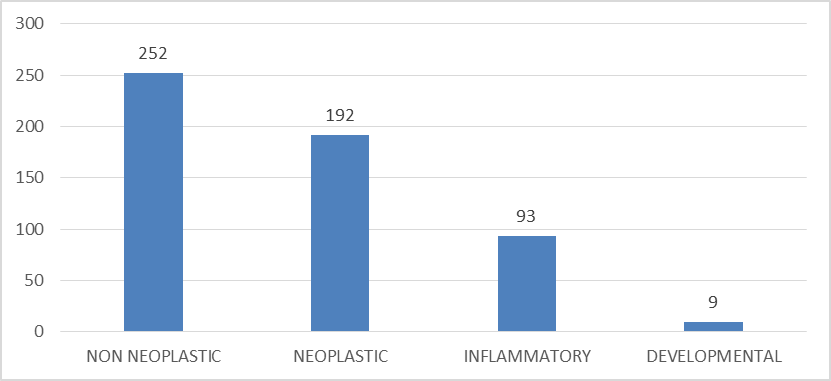
546 patients were evaluated. Among them, 252 had non-neoplastic lesions, 192 had neoplastic lesions, 93 had inflammatory lesions and the remaining 9 had development lesions. Among non-neoplastic pathologies, simple goiter was seen in 78.57 percent of the patients while nodular colloid goiter was seen in 19.84 percent of the patients. Sensitivity and specificity of FNAC of non-neoplastic lesions with histopathology was 91.8 percent and 89 percent respectively. Sensitivity and specificity of FNAC of inflammatory lesions with histopathology was 86.6 percent and 95 percent respectively. Sensitivity and specificity of FNAC of neoplastic lesions with histopathology was 92 percent and 97 percent respectively
Graph 1: Distribution of cases of thyroid lesions on FNAC
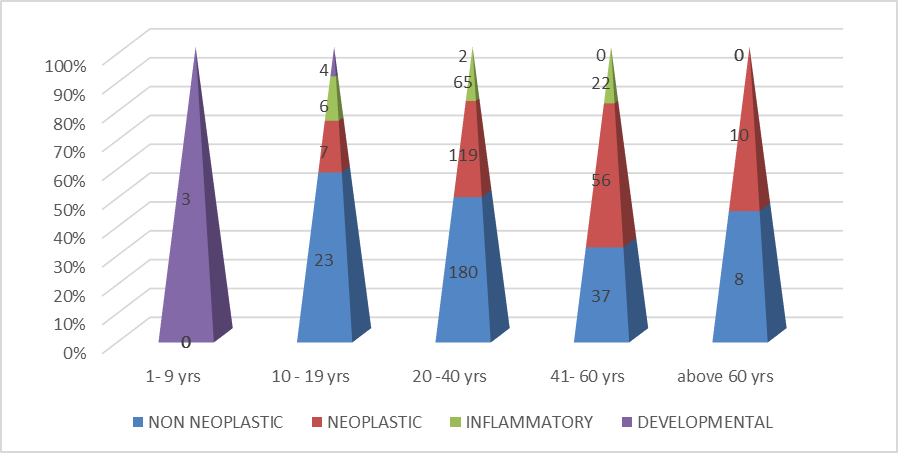
Graph 2: Age-wise distribution and type of lesions
Graph 3: Gender-wise distribution and type of lesions
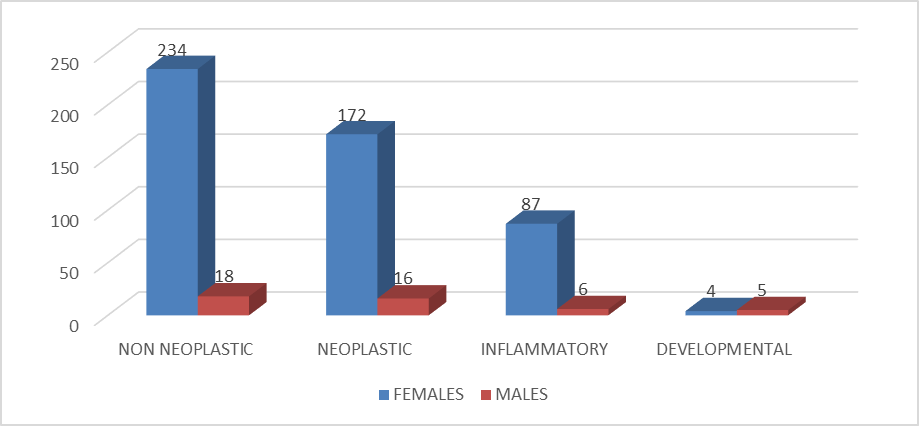
Table 1: Distribution of non-neoplastic lesions
|
Non-neoplastic cases |
Number |
Percentage |
|
Simple colloid goiter |
198 |
78.57 |
|
Nodular colloid goiter |
50 |
19.84 |
|
Thyroid cyst |
4 |
1.59 |
|
Total |
252 |
100 |
Table 2: Correlation of FNAC of non-neoplastic lesions with histopathology
|
FNAC of non-neoplastic lesions |
Histopathology |
Total |
|
|
Positive |
Negative |
||
|
Positive |
45 |
13 |
58 |
|
Negative |
4 |
109 |
113 |
|
Total |
49 |
122 |
171 |
|
Sensitivity of FNAC for diagnosing non-neoplastic lesions |
91.8% |
||
|
Specificity of FNAC for diagnosing non-neoplastic lesions |
89% |
||
Table 3: Correlation of FNAC of inflammatory lesions with histopathology
|
FNAC of inflammatory lesions |
Histopathology |
Total |
|
|
Positive |
Negative |
||
|
Positive |
26 |
6 |
32 |
|
Negative |
4 |
135 |
139 |
|
Total |
30 |
141 |
171 |
|
Sensitivity of FNAC for diagnosing inflammatorylesions |
86.6% |
||
|
Specificity of FNAC for diagnosing inflammatorylesions |
95% |
||
Table 4: Distribution of patients according to neoplastic lesions
|
NEOPLASTIC LESIONS ON FNAC |
NUMBER |
PERCENTAGE |
|
|
BENIGN |
Follicular neoplasm |
153 |
79.68% |
|
MALIGNANT |
Papillary Carcinoma |
37 |
19.27% |
|
Follicular Carcinoma |
0 |
0 |
|
|
Medullary Carcinoma |
1 |
0.52% |
|
|
Anaplastic Carcinoma |
0 |
0 |
|
|
Squamous cell Carcinoma |
1 |
0.52% |
|
|
TOTAL |
192 |
100 |
|
Table 5: Correlation of FNAC of neoplastic lesions with histopathology
|
FNAC of neoplastic lesions |
Histopathology |
Total |
|
|
Positive |
Negative |
||
|
Positive |
79 |
2 |
81 |
|
Negative |
6 |
84 |
90 |
|
Total |
85 |
86 |
171 |
|
Sensitivity of FNAC for diagnosing neoplastic lesions |
92% |
||
|
Specificity of FNAC for diagnosing neoplastic lesions |
97% |
||
Discussion:
Fine needle aspiration cytology (FNAC) is a cost – effective and a simple office procedure which gives a quick diagnosis at the first contact of the patient. It can delineate between benign and malignancy and can be repeated for definite confirmation of diagnosis . FNAC being a minimally invasive technique is particularly suitable in thyroid where an incisional biopsy may present problems. The lesions in thyroid are varied ranging from inflammation to neoplasm.9- 11Hence; the present study was conducted for assessing occurrence of thyroid lesions for a period of two years in a known population.
546 patients were evaluated. Among them, 252 had non-neoplastic lesions, 192 had neoplastic lesions, 93 had inflammatory lesions and the remaining 9 had development lesions. Among non-neoplastic pathologies, simple goiter was seen in 78.57 percent of the patients while nodular colloid goiter was seen in 19.84 percent of the patients. Sensitivity and specificity of FNAC of non-neoplastic lesions with histopathology was 91.8 percent and 89 percent respectively. Hajmanoochehri F et al determined the accuracy with which FNAC diagnoses thyroid neoplasms. A comparison was drawn between FNAC results and final histological diagnosis using samples collected over a period of 3 years.For all patients, age, sex, cytological features, and histological types were determined. All cases of false negative (FN) and false positive (FP) diagnosis were reanalyzed.About 52% of the cases were found malignant, and they were of six different histological types. Papillary carcinoma was the commonest type of malignancy at 76.9%. The rate of malignancy was 63% in males and 49.4% in females. In two of the FN cases, the tumor had a diameter of ≥35 mm. Of the 12 FP cases, nine were in the follicular neoplasm or suspicious for follicular neoplasm Bethesda category. FNAC diagnosis had 95.2% sensitivity, 68.4% specificity, 83.3% positive predictive value, 89.6% negative predictive value, and 85.14% accuracy.FNAC was found to have a high level of sensitivity and an acceptable degree of specificity in diagnosing different types of thyroid neoplasms. The presence of microfollicular structures or crowded cellular clusters is a challenge to diagnosis, particularly in low-quality specimens.12
In the present study, sensitivity and specificity of FNAC of inflammatory lesions with histopathology was 86.6 percent and 95 percent respectively. Sensitivity and specificity of FNAC of neoplastic lesions with histopathology was 92 percent and 97 percent respectively.Sinna EAet al evaluated the accuracy of fine needle aspiration cytology (FNAC) in the diagnosis of different thyroid lesions.296 diagnosed cases of thyroid nodules who underwent FNAC for diagnosis were assessed. Ninety-eight cases (33.1%) were diagnosed as benign, 40 cases (13.5%) as follicular lesion of undetermined significance, 49 cases (16.5%) as follicular neoplasm, 30 cases (10.1%) as suspicious for malignancy, 58 cases (19.5%) as malignant, and 21 cases (7.1%) as unsatisfactory. Nodular hyperplasia represented the majority of benign cases (89.8%), while papillary carcinoma was the most frequent malignant lesion (72.4%). Cytologic diagnoses were compared with their corresponding final histologic ones. FNAC achieved a sensitivity of 92.8, a specificity of 94.2%, a positive predictive value of 94.9%, a negative predictive value of 91.8%, a false positive rate of 7.2%, a false negative rate of 5.8%, and a total accuracy of 93.6%. They concluded that FNA cytology is a sensitive, specific, and accurate initial diagnostic test for the evaluation of patients with thyroid swellings.13
Conclusion:
FNAC is therefore an invaluable and minimally invasive procedure for preoperative assessment of patients with thyroid nodules. It has high sensitivity and diagnostic accuracy in evaluation of thyroid nodules.
References:
1. Hollowell JG, Staehling NW, Flanders WD, Hannon WH, Gunter EW, Spencer CA. Serum TSH, T(4), and thyroid antibodies in the United States population (1988 to 1994): National Health and Nutrition Examination Survey (NHANES III). J Clin Endocrinol Metab. 2002; 87(2):489–499.
2. Larsen PR, Davies TF, Schlumberger MJ, Hay ID. 2003. Thyroid physiology and diagnostic evaluation of patients with thyroid disorders. In: Larsen PR, editor; , Kronenberg HM, editor; , Melmed S, editor; , Polonsky K, editor. , eds. Williams' Textbook of Endocrinology. 10th ed. Philadelphia: WB Saunders Company. Pp.389–516.
3. Agrawal S. Diagnostic accuracy and role of fine needle aspiration cytology in the management of thyroid nodules J Surg Oncol. 1995;58:168–172
4. Baloch ZW, Sack MJ, Yu GH, Livolsi VA, Gupta PK. Fine-needle aspiration of the thyroid: an institutional experience Thyroid. 1998;8:565–569
5. Lumachi F, Borsato S, Tregnaghi A, Marino F, Polistina F, Basso S, et al FNA cytology and frozen section examination in patients with follicular lesions of the thyroid gland Anticancer Res. 2009;29:5255–5257
6. Shahid F, Mirza T, Moustafa S, Sabahat S, Sharafat S. An experiential status of fine needle aspiration cytology of head and neck lesions in atertiary care scenario J Bas Appl Sci. 2010;6:159–162
7. Gharib H, Goellner JR. Fine-needle aspiration biopsy of the thyroid Ann Int Med. 1993;118:282–289
8. Gupta M, Gupta S, Gupta VB. Correlation of fine needle aspiration cytology with histopathology in the diagnosis of the solitary thyroid nodule J Thyroid Res. 2010;18:37–40
9. Bukhari MH, Niazi S, Hanif G, Qureshi SS, MunirM, Hasan M, Naeem S. An updated audit of fine needle aspiration cytology procedure of solitary thyroid nodule. Diagn Cytopathol. 2008 Feb;36(2):104-12.
10. Stavrić GD, Karanfilski BT, Kalamaras AK, Serafimov NZ, Georgievska BS, Korubin VH. Early diagnosis and detection of clinically non-suspectedthyroid neoplasia by the cytologic method: a critical review of 1536 aspiration biopsies. Cancer. 1980 Jan 15; 45 (2):340-4.
11. Kantasueb SA, Sukpan KO, Mahanupab PO. The study of thyroid lesions and the correlation between histological and cytological findings. Chiang Mai Med J 2010;49(3):105–10
12. Hajmanoochehri F, Rabiee E. FNAC accuracy in diagnosis of thyroid neoplasms considering all diagnostic categories of the Bethesda reporting system: A single-institute experience. J Cytol. 2015;32(4):238-243
13. Sinna EA, Ezzat N. Diagnostic accuracy of fine needle aspiration cytology in thyroid lesions. Journal of the Egyptian National Cancer Institute. 2012; 24(2): 63- 70.