Efficacy and Safety of Bevacizumab-Containing Neoadjuvant Chemotherapy Followed by Interval Debulking Surgery in Advanced Epithelial Ovarian, Fallopian Tube, and Primary Peritoneal Carcinomas: A Comparative Study
- Kanchan Singh , 3rd year DrNB Resident, Department of Medical Oncology, Jawaharlal Nehru Cancer Hospital and Research Institute, Bhopal, Madhya Pradesh, India
- Shaunak Valame , Consultant, Department of Medical Oncology, Jawaharlal Nehru Cancer Hospital and Research Institute, Bhopal, Madhya Pradesh, India
- Vijay Bhargav , Consultant, Department of Medical Oncology, Jawaharlal Nehru Cancer Hospital and Research Institute Bhopal, Madhya Pradesh, India
- Harsh Sahu , Consultant, Department of Medical Oncology, Jawaharlal Nehru Cancer Hospital and Research Institute Bhopal, Madhya Pradesh, India
Article Information:
Abstract:
Background: Advanced epithelial ovarian cancer (EOC), fallopian tube carcinoma (FTC), and primary peritoneal carcinoma (PPC) are frequently diagnosed at FIGO stage IIIC–IV. Neoadjuvant chemotherapy (NACT) followed by interval debulking surgery (IDS) is an established strategy in patients not suitable for primary debulking surgery. Bevacizumab, a monoclonal antibody targeting vascular endothelial growth factor (VEGF), has demonstrated improved progression-free survival in first-line treatment. Objective: To evaluate the efficacy and safety of bevacizumab-containing NACT followed by IDS in advanced epithelial ovarian, fallopian tube, and primary peritoneal cancers. Methods: A comparative non-randomized clinical trial was conducted over 18 months at Jawaharlal Nehru Cancer Hospital, Bhopal. Ninety-eight patients with FIGO stage IIIC/IV epithelial ovarian, fallopian tube, or primary peritoneal carcinoma were included. Group 1 (n=62) received carboplatin and paclitaxel; Group 2 (n=36) received carboplatin, paclitaxel, and bevacizumab (15 mg/kg q3w for three cycles). Outcomes included CA-125 response, RECIST 1.1 response, resection status, and adverse events. Statistical analysis was performed using SPSS v24. Results: Objective response rate was significantly higher in the bevacizumab group (89% vs. 71%, p<0.05). Mean CA-125 reduction was greater in the bevacizumab arm (2071.8 U/ml vs. 854.4 U/ml, p<0.05). R0 resection rates were higher in the bevacizumab group (94% vs. 88%, p=0.38). Adverse events were significantly higher in the bevacizumab group (39% vs. 15%, p<0.01), particularly hypertension and thromboembolic events. Conclusion: Bevacizumab-containing NACT improves tumor response and CA-125 reduction, with a trend toward improved surgical outcomes, but is associated with increased toxicity. Careful patient selection is essential
Keywords:
Article :
INTRODUCTION:
Epithelial ovarian cancer (EOC) is the most lethal gynecologic malignancy globally and remains a major public health concern due to late-stage presentation and high recurrence rates [1]. According to global cancer statistics, the majority of patients are diagnosed at advanced stages (FIGO stage IIIC–IV), contributing to poor overall survival outcomes [2]. High-grade serous carcinoma constitutes the predominant histological subtype and is characterized by aggressive biological behavior and early peritoneal dissemination [3]. Primary debulking surgery (PDS) followed by platinum-based chemotherapy has historically been considered the standard treatment approach for advanced disease [4]. Numerous studies have demonstrated that the extent of residual disease following cytoreductive surgery is one of the strongest prognostic factors for survival, with complete gross resection (R0) conferring the most favorable outcomes [5]. However, optimal primary cytoreduction is not feasible in a significant proportion of patients due to extensive tumor burden or poor performance status. The EORTC 55971 trial demonstrated that neoadjuvant chemotherapy (NACT) followed by interval debulking surgery (IDS) was non-inferior to primary surgery in terms of overall survival [6]. Similarly, the CHORUS trial confirmed comparable survival outcomes with reduced perioperative morbidity in the NACT group [7]. These findings established NACT followed by IDS as a validated alternative in selected patients with advanced ovarian cancer. Angiogenesis plays a critical role in ovarian cancer progression, ascites formation, and metastatic spread. Vascular endothelial growth factor (VEGF) over expression has been correlated with tumor aggressiveness and poor prognosis [8]. Targeting VEGF has therefore emerged as a rational therapeutic strategy. Bevacizumab is a recombinant humanized monoclonal antibody directed against VEGF-A. In the frontline setting, the GOG-0218 trial demonstrated improved progression-free survival (PFS) with the addition of bevacizumab to carboplatin and paclitaxel [9]. Likewise, the ICON7 trial reported improved PFS and suggested an overall survival benefit in high-risk subgroups [10]. Despite evidence supporting bevacizumab in first-line therapy, limited data exist regarding its incorporation into neoadjuvant chemotherapy, particularly in Indian populations.
Therefore, this study aimed to evaluate the efficacy and safety of bevacizumab-containing NACT followed by IDS in advanced epithelial ovarian, fallopian tube, and primary peritoneal cancers
MATERIAL AND METHODS:
This comparative non-randomized clinical trial was conducted over 18 months (May 2023 to November 2024) at the Department of Medical Oncology, Jawaharlal Nehru Cancer Hospital and Research Center, Bhopal. The study included newly diagnosed patients with FIGO stage IIIC and IV epithelial ovarian, fallopian tube, and primary peritoneal cancers. Sample size was calculated based on the ANTHALYA trial methodology using the chi-square test formula to detect differences between treatment groups.
INCLUSION CRITERIA
· Female of more than 18 year of age.
· Histologically confirmed and documented high-risk FIGO stage IIIC/IV epithelial ovarian carcinoma, Fallopian tube carcinoma, or primary peritoneal carcinoma.
· Not eligible for primary complete debulking surgery.
· Eastern Cooperative Oncology Group (ECOG) performance status 0, 1, or 2 5. Life expectancy greater than or equal to (>/=) 3 months.
· Eligible for Carboplatin and Paclitaxel chemotherapy in accordance with local standards.
EXCLUSION CRITERIA
· Non-epithelial ovarian cancer, ovarian tumor with low malignant potential, Mucinous and Clear cell ovarian cancer, or Carcinosarcoma.
· Previous systemic therapy for ovarian cancer.
· Inadequate bone marrow, liver, or renal function
· History of myocardial infarction, unstable angina, stroke, or transient ischemic attack within 6 months, congestive heart failure.
· History of other clinically active malignancy within 5 years of enrollment.
TREATMENT PROTOCOL
In the Neoadjuvant period, patients were given:
Group 1:
· Area under the curve 5 mg/mL/min of Carboplatin and 175 mg/m2 of Paclitaxel intravenously on Day 1.
· Four cycles of Paclitaxel and Carboplatin were given 3 weekly.
Group 2:
· Three cycles of Paclitaxel plus Carboplatin + Bevacizumab 3 weekly followed by 4th cycle of Paclitaxel plus Carboplatin only.
· Bevacizumab dose was 15 mg/kg intravenously every 3 weeks (q3w) on Day 1 of each cycle.
Ethical approval for the study was obtained from the Institutional Ethics Committee prior to initiation of the study.
Statistical Analysis: All statistical analyses were performed using Statistical Package for the Social Sciences (SPSS) software, version 24.0 (IBM Corp., Armonk, NY, USA). Continuous variables were expressed as mean ± standard deviation and compared using the independent t-test for between-group analysis, while paired t-test was applied for within-group comparisons before and after chemotherapy. Categorical variables were presented as frequencies and percentages and analyzed using the chi-square test or Fisher’s exact test where appropriate. A p-value of <0.05 was considered statistically significant.
RESULTS:
Table 1: Histopathological Distribution of Patients (n=98)
|
Histological Subtype |
Frequency (n) |
Percentage (%) |
|
Serous adenocarcinoma |
83 |
85% |
|
Mucinous adenocarcinoma |
8 |
8% |
|
Papillary adenocarcinoma |
5 |
5% |
|
Clear cell carcinoma |
2 |
2% |
Serous adenocarcinoma was the predominant histological subtype, accounting for 85% of cases. Other types like Mucinous (8%), Papillary (5%), and Clear Cell Carcinoma (2%) were present.
Table 2: Comparison of Surgery Performed Between Treatment Groups
|
Surgery Performed |
Bevacizumab Group (n=36) |
Control Group (n=62) |
P-Value |
|
Yes |
33 (92%) |
53 (85%) |
0.67 |
|
No |
3 (8%) |
9 (15%) |
A high proportion of patients underwent surgery—92% in the Bevacizumab group and 85% in the control group. The difference was not significant (p = 0.67), indicating that both groups had similar surgical management.
Table 3: Comparison of serum CA-125 levels before and after neoadjuvant chemotherapy
|
Parameter |
Bevacizumab Group |
Control Group |
P-Value |
|
Baseline CA-125 (U/ml) |
2169.1 ± 797.9 |
1025.4 ± 764.4 |
0.25 |
|
Post-chemo CA-125 (U/ml) |
97.2 ± 8.9 |
171.1 ± 62.6 |
0.18 |
|
Mean Reduction |
2071.8 |
854.4 |
|
|
P-Value (Within Group) |
<0.05 |
<0.05 |
|
Baseline CA-125 levels were higher in the Bevacizumab group (2169.1 U/ml) compared to the control group (1025.4 U/ml), though not statistically significant. After chemotherapy, both groups showed significant reductions (Bevacizumab: 97.2 U/ml, control: 171.1 U/ml), with a larger mean drop in the Bevacizumab group. Paired tests confirmed statistically significant within-group reductions (p < 0.05), highlighting effective tumor marker response in both regimens.
Table 4: Comparison of the two treatment groups based on response as per RECIST 1.1 criteria
|
Response Type |
Bevacizumab Group (n=36) |
Control Group (n=62) |
P-Value |
|
Partial Response |
32 (89%) |
44 (71%) |
- |
|
Stable Disease |
2 (6%) |
12 (19%) |
- |
|
Progressive Disease |
1 (3%) |
5 (8%) |
- |
|
Death (Drug related) |
1 (3%) |
0 |
- |
|
Not Known |
0 |
1 (2%) |
- |
|
Objective Response Rate |
89% |
71% |
<0.05 |
|
Clinical Benefit Rates |
94% |
90% |
0.29 |
This table evaluates treatment response per RECIST 1.1 criteria. Partial response was significantly higher in the Bevacizumab group (89% vs. 71%), and objective response was statistically superior (p < 0.05). Stable disease was less common in the Bevacizumab group. Clinical benefit rates (partial + complete + stable disease) were comparable (94% vs. 90%), suggesting a better overall response with Bevacizumab inclusion, especially in tumor shrinkage.
Table 5: Comparison of the two treatment groups based on resection status
|
Resection Status |
Bevacizumab Group (n=33) |
Control Group (n=51) |
P-Value |
|
R0 Resection |
31 (94%) |
45 (88%) |
0.38 |
|
R1 Resection |
2 (6%) |
6 (12%) |
Among patients who underwent surgery, R0 resection (no residual tumor) was achieved in 94% of the Bevacizumab group and 88% of the control group. R1 resection (microscopic residual tumor) was slightly more common in the control group. However, this difference was not statistically significant (p = 0.38).
Table 6: Comparison of the two treatment groups based on side effects
|
Variable |
Bevacizumab Group |
Control Group |
P-Value |
|
Any Toxicity |
14 (39%) |
9 (15%) |
<0.01 |
|
Hypertension |
3 (8%) |
0 |
- |
|
DVT |
3 (8%) |
0 |
- |
|
Neutropenia |
2 (6%) |
4 (6%) |
- |
|
GI Complications |
2 (6%) |
0 |
- |
Side effects were significantly more common in the Bevacizumab group (39% vs. 15%, p < 0.01). Cardiovascular toxicities like hypertension and DVT, as well as GI complications such as hematemesis and perforation, were observed only in the Bevacizumab group. Peripheral neuropathy was observed more frequently in the control group. Hematological side effects were equal in both groups.
Figure 1: Comparison of Objective Response Rate between treatment groups (p < 0.05).
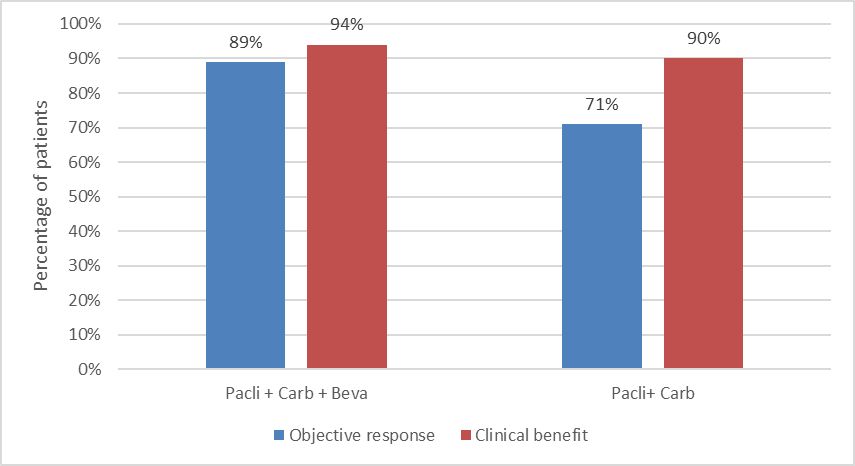
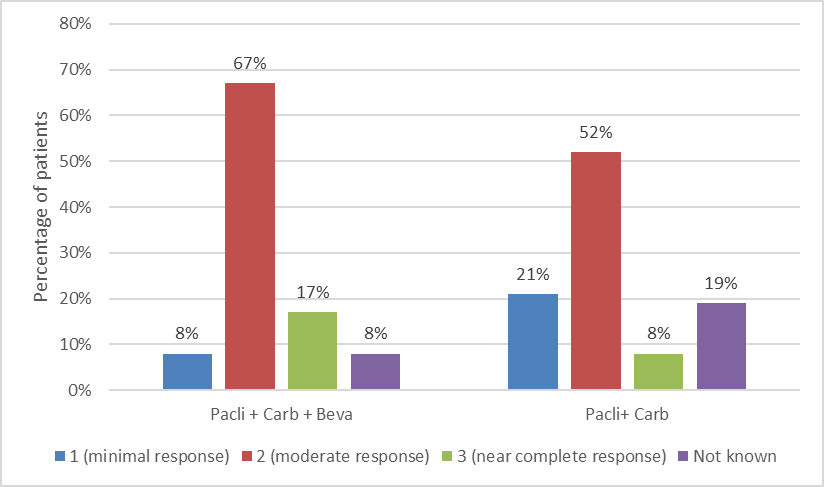
Figure 2: Comparison of Chemotherapy Response Grades between groups (p = 0.09).
DISCUSSION:
The present study demonstrated that the addition of bevacizumab to neoadjuvant carboplatin and paclitaxel significantly improved objective response rate compared to chemotherapy alone. These findings are biologically plausible, as VEGF inhibition reduces tumor vascular permeability and angiogenesis, thereby enhancing chemotherapy delivery and tumor shrinkage [11]. In frontline therapy trials, bevacizumab has consistently shown improved progression-free survival. Long-term follow-up of the GOG-0218 study confirmed sustained PFS benefit in patients receiving bevacizumab during chemotherapy and maintenance phases [12]. Similarly, final analyses of the ICON7 trial demonstrated that high-risk patients derived the greatest survival advantage from bevacizumab-containing regimens [13]. Although those trials were not specifically designed for neoadjuvant settings, the improved tumor response observed in our study aligns with these findings. The neoadjuvant role of bevacizumab was directly evaluated in the ANTHALYA trial, which reported higher complete resection (R0) rates without significantly increasing perioperative complications [14]. In our study, R0 resection was achieved in 94% of patients in the bevacizumab group compared to 88% in the control group, demonstrating a favorable trend. Similar improvements in surgical outcomes have been reported in observational analyses evaluating bevacizumab-containing NACT [15]. The greater decline in CA-125 levels in the bevacizumab arm suggests enhanced tumor cytoreduction. Several studies have demonstrated that early normalization or significant decline in CA-125 during NACT correlates with improved surgical outcomes and survival [16]. Our findings reinforce the predictive value of CA-125 as a surrogate marker of treatment response. Regarding safety, the bevacizumab group experienced a higher incidence of hypertension and thromboembolic events. This toxicity profile is consistent with previously reported data. Meta-analyses of bevacizumab in ovarian cancer have shown increased risks of hypertension and vascular events compared to chemotherapy alone [17]. Gastrointestinal perforation, although rare, remains a recognized but serious complication associated with VEGF inhibition [18]. Importantly, hematologic toxicities were comparable between groups, suggesting that bevacizumab does not significantly exacerbate chemotherapy-induced myelosuppression.
Although long-term endpoints such as progression-free survival and overall survival were not evaluated due to limited follow-up, prior studies indicate that the greatest benefit of bevacizumab is observed in high-risk and stage IV patients [19]. Given that our cohort predominantly consisted of advanced-stage cases unsuitable for primary surgery, the observed improvement in tumor response is clinically meaningful. The non-randomized design and single-center setting may introduce selection bias. However, this study provides valuable real-world evidence supporting the incorporation of bevacizumab into neoadjuvant regimens in carefully selected patients. Overall, bevacizumab-containing NACT appears to enhance tumor shrinkage and may improve surgical cytoreduction rates, albeit with increased but manageable toxicity
CONCLUSION:
Bevacizumab-containing neoadjuvant chemotherapy significantly improves radiological and biochemical response in advanced epithelial ovarian cancer, with a trend toward improved surgical cytoreduction. However, the increased incidence of treatment-related toxicity necessitates careful patient selection and close monitoring. Larger randomized multicentric trials are warranted to validate these findings.
REFERENCES:
1. Torre LA, Trabert B, DeSantis CE, Miller KD, Samimi G, Runowicz CD, et al. Ovarian cancer statistics, 2018. CA Cancer J Clin. 2018; 68(4):284-296.
2. Sung H, Ferlay J, Siegel RL, Laversanne M, Soerjomataram I, Jemal A, et al. Global cancer statistics 2020: GLOBOCAN estimates of incidence and mortality worldwide for 36 cancers in 185 countries. CA Cancer J Clin. 2021; 71(3):209-249.
3. Kurman RJ, Shih IM. The origin and pathogenesis of epithelial ovarian cancer: a proposed unifying theory. Am J Surg Pathol. 2010; 34(3):433-443.
4. Colombo N, Sessa C, du Bois A, Ledermann J, McCluggage WG, McNeish I, et al. ESMO–ESGO consensus conference recommendations on ovarian cancer: pathology and molecular biology, early and advanced stages, borderline tumours and recurrent disease. Ann Oncol. 2019; 30(5):672-705.
5. du Bois A, Reuss A, Pujade-Lauraine E, Harter P, Ray-Coquard I, Pfisterer J. Role of surgical outcome as prognostic factor in advanced epithelial ovarian cancer: a combined exploratory analysis of three prospectively randomized phase III trials. Cancer. 2009; 115(6):1234-1244.
6. Vergote I, Tropé CG, Amant F, Kristensen GB, Ehlen T, Johnson N, et al. Neoadjuvant chemotherapy or primary surgery in stage IIIC or IV ovarian cancer. N Engl J Med. 2010; 363(10):943-953.
7. Kehoe S, Hook J, Nankivell M, Jayson GC, Kitchener H, Lopes T, et al. Primary chemotherapy versus primary surgery for newly diagnosed advanced ovarian cancer (CHORUS): an open-label, randomised, controlled, non-inferiority trial. Lancet. 2015; 386(9990):249-257.
8. Ferrara N. VEGF and the quest for tumour angiogenesis factors. Nat Rev Cancer. 2008; 8(6):457-465.
9. Burger RA, Brady MF, Bookman MA, Fleming GF, Monk BJ, Huang H, et al. Incorporation of bevacizumab in the primary treatment of ovarian cancer. N Engl J Med. 2011; 365(26):2473-2483.
10. Perren TJ, Swart AM, Pfisterer J, Ledermann JA, Pujade-Lauraine E, Kristensen G, et al. A phase 3 trial of bevacizumab in ovarian cancer. N Engl J Med. 2011; 365(26):2484-2496.
11. Jain RK. Normalization of tumor vasculature: an emerging concept in antiangiogenic therapy. Nat Med. 2005; 11(9):987-989.
12. Burger RA, Brady MF, Bookman MA, Walker JL, Homesley HD, Fowler J, et al. Final overall survival results of a phase III trial of bevacizumab in the primary treatment of ovarian cancer (GOG-0218). J Clin Oncol. 2015; 33(34):4067-4074.
13. Oza AM, Cook AD, Pfisterer J, Embleton A, Ledermann JA, Pujade-Lauraine E, et al. Standard chemotherapy with or without bevacizumab for women with newly diagnosed ovarian cancer (ICON7): overall survival results of a phase 3 randomised trial. Ann Oncol. 2015; 26(8):1753-1760.
14. Rouzier R, Gouy S, Selle F, Lambaudie E, Floquet A, Fourchotte V, et al. Efficacy and safety of bevacizumab-containing neoadjuvant therapy followed by interval debulking surgery in advanced ovarian cancer: ANTHALYA trial. Ann Oncol. 2016; 27(5):955-961.
15. Coleman RL, Brady MF, Herzog TJ, Sabbatini P, Armstrong DK, Walker JL, et al. Bevacizumab and paclitaxel–carboplatin chemotherapy and secondary cytoreduction in recurrent ovarian cancer. Lancet Oncol. 2017; 18(6):779-791.
16. Kang S, Nam BH, Kim YT. Normalization of CA-125 levels after neoadjuvant chemotherapy is associated with improved survival in advanced ovarian cancer. Gynecol Oncol. 2012; 125(2):362-366.
17. Ranpura V, Hapani S, Wu S. Treatment-related mortality with bevacizumab in cancer patients: a meta-analysis. J Clin Oncol. 2011; 29(28):4098-4104.
18. Aghajanian C, Blank SV, Goff BA, Judson PL, Teneriello MG, Husain A, et al. OCEANS: a randomized, double-blind, placebo-controlled phase III trial of chemotherapy with or without bevacizumab in patients with platinum-sensitive recurrent epithelial ovarian cancer. J Clin Oncol. 2012; 30(17):2039-2045.
19. Tewari KS, Burger RA, Enserro D, Norquist BM, Swisher EM, Brady MF, et al. Final overall survival of a randomized trial of bevacizumab for primary treatment of ovarian cancer (GOG-0218). J Clin Oncol. 2019; 37(26):2317-2328.