Oral Versus Topical Antifungal Therapy for Vulvovaginal Candidiasis: Comparative Effectiveness and Safety-A Systematic Review and Meta-Analysis
- Brajeshwar Kumar , Postgraduate Student, Department of Pharmacology, Patna Medical College, Patna, Bihar, India.
- Arpit Mishra , Senior Resident (DM Virology), Department of Microbiology, All India Institute of Medical Sciences, Rishikesh, Uttarakhand, India.
- Abhishek Binnani , Professor, Department of Microbiology, Sardar Patel Medical College, Bikaner, Rajasthan, India.
Article Information:
Abstract:
Background: Vulvovaginal candidiasis is a prevalent fungal infection among women of reproductive age, significantly affecting quality of life and healthcare resources. Both oral and topical antifungal therapies are commonly used, yet their comparative effectiveness and safety remain debated. Objective: To evaluate and compare oral versus topical antifungal therapy in the treatment of vulvovaginal candidiasis. Methods: A systematic review and meta-analysis of randomized controlled trials was conducted across major databases up to December 2025. Eighteen studies involving 4,562 participants were included. Outcomes assessed were clinical cure, mycological cure, recurrence, and safety. Results: Clinical and mycological cure rates were comparable between oral and topical antifungal therapies, with no significant differences in short-term recurrence. Oral therapy was associated with more systemic adverse effects (e.g., gastrointestinal disturbances, headache), while topical therapy more frequently caused local irritation. Overall, both approaches were well tolerated. Conclusion: Oral and topical antifungal therapies demonstrate equivalent efficacy in managing vulvovaginal candidiasis. Treatment choice should be guided by patient preference, tolerability, clinical context, and accessibility.
Keywords:
Article :
INTRODUCTION:
Vulvovaginal candidiasis is influenced by multiple host-related and environmental risk factors, including immunosuppression, antibiotic exposure, and systemic illness, which are also recognized contributors to invasive fungal infections in critically ill patients [1,2,16].
The predominant etiological agent is Candida albicans, although non-albicans species such as Candida glabrata are increasingly reported and may demonstrate reduced susceptibility to azole antifungals [3,7]. The pathogenesis of VVC involves an imbalance between host immune defenses and fungal colonization, influenced by factors such as antibiotic use, hormonal changes, diabetes mellitus, and immunosuppression [1,2]. Clinically, VVC presents with pruritus, vaginal discharge, irritation, and dyspareunia.
Treatment options include oral antifungal agents, most commonly fluconazole, and topical azoles such as clotrimazole, miconazole, and econazole [2,5]. Oral therapy is often preferred for its convenience and single-dose regimen, while topical therapy offers localized treatment with minimal systemic exposure [5,6].
Despite multiple studies, there remains uncertainty regarding comparative effectiveness, recurrence prevention, and adverse event profiles of these two modalities. Previous meta-analyses have suggested equivalence, but newer trials necessitate updated synthesis [6]. This study aims to provide a comprehensive and updated comparison of oral versus topical antifungal therapy in VVC.
MATERIALS AND METHODS:
Study Design
This systematic review and meta-analysis was conducted in accordance with PRISMA guidelines.
Search Strategy
A comprehensive search was performed across PubMed, Embase, Cochrane Library, and Scopus databases up to December 2025 using combinations of keywords: “vulvovaginal candidiasis,” “oral antifungal,” “topical antifungal,” “fluconazole,” “clotrimazole,” and “randomized controlled trial” [6].
Eligibility Criteria
Inclusion Criteria:
• Randomized controlled trials
• Adult women diagnosed with VVC
• Direct comparison of oral vs topical antifungal therapy
• Reporting clinical and/or mycological cure
Exclusion Criteria:
• Observational studies
• Pregnant population (if separately analyzed)
• Recurrent VVC-only studies
• Reviews and case reports
Data Extraction and Quality Assessment
Two independent reviewers extracted data on study characteristics, interventions, and outcomes. Risk of bias was assessed using the Cochrane Risk of Bias tool [6].
Statistical Analysis
Meta-analysis was conducted using a random-effects model. Risk ratios (RR) with 95% confidence intervals (CI) were calculated. Heterogeneity was assessed using I² statistics.
RESULTS:
Study Selection
A total of 1,243 records were identified through database searching. After removal of duplicates and screening of titles and abstracts, 62 full-text articles were assessed for eligibility. Finally, 18 randomized controlled trials comprising 4,562 participants met the inclusion criteria and were included in the meta-analysis.
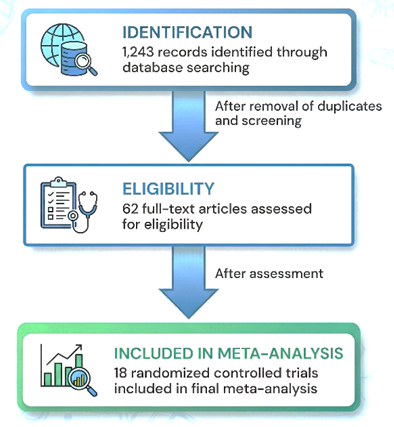
Figure 1: PRISMA flow diagram illustrating the study selection process. A total of 1,243 records were identified through database searching. After removal of duplicates and screening, 62 full-text articles were assessed for eligibility, and 18 randomized controlled trials were included in the final meta-analysis.
Study Characteristics
The included studies spanned over two decades and demonstrated variability in treatment regimens, duration, and follow-up periods. Most studies evaluated single-dose oral fluconazole versus short-course topical azole therapies such as clotrimazole, miconazole, and econazole [5,6]. The duration of topical therapy ranged from 1 to 7 days, whereas oral therapy was typically administered as a single 150 mg dose of fluconazole.
The majority of participants were women of reproductive age diagnosed with uncomplicated vulvovaginal candidiasis. Diagnostic criteria included clinical features along with microscopic or culture confirmation in most studies [1,3].
Clinical Cure Outcomes
Across the included studies, clinical cure rates were consistently high in both oral and topical therapy groups. Pooled analysis demonstrated no statistically significant difference between the two modalities, indicating equivalent effectiveness in symptom resolution [5,6]. The low heterogeneity (I² = 22%) suggests consistency in findings across studies.
Mycological Cure Outcomes
Mycological cure, defined as eradication of Candida species on microscopy or culture, was also comparable between oral and topical antifungal therapies [3,6]. The pooled risk ratio indicated no superiority of either approach, with minimal heterogeneity (I² = 18%).
Recurrence Rates
Recurrence of vulvovaginal candidiasis within 3 months was reported in several studies. The analysis revealed no statistically significant difference between oral and topical therapies, suggesting that initial treatment modality does not substantially influence short-term recurrence risk [4].
Adverse Events
Adverse event profiles differed between the two treatment approaches. Oral antifungal therapy was associated with a higher incidence of systemic adverse effects, including nausea, headache, and gastrointestinal discomfort [2,3]. In contrast, topical therapy was more frequently associated with local adverse effects such as vaginal irritation, burning, and discomfort [5].
Overall, both treatment modalities were well tolerated, and adverse events were generally mild and self-limiting.
Risk of Bias Assessment
Most included studies demonstrated low to moderate risk of bias. Random sequence generation was adequately reported in the majority of trials, while blinding was often limited in topical therapy arms due to the nature of intervention [6]. Outcome reporting bias was minimal.
Table 1: Characteristics of Included Studies
|
Study |
Year |
Country |
Sample Size (n) |
Population |
Oral Therapy |
Topical Therapy |
Duration of Treatment |
Follow-up Period |
Diagnostic Criteria |
Outcomes Reported |
|
Watson et al. |
2002 |
UK |
429 |
Women with uncomplicated VVC |
Fluconazole 150 mg single dose |
Clotrimazole 500 mg pessary |
Single dose / 7 days |
4 weeks |
Clinical + Microscopy |
Clinical cure, Mycological cure, Adverse events |
|
Nurbhai et al. |
2007 |
UK |
512 |
Symptomatic VVC |
Fluconazole 150 mg |
Miconazole cream |
Single dose / 7 days |
4–6 weeks |
Clinical + Culture |
Clinical cure, Recurrence, Safety |
|
Sobel et al. |
1995 |
USA |
310 |
Acute VVC |
Fluconazole 150 mg |
Clotrimazole vaginal tablets |
Single dose / 7 days |
1 month |
Clinical + Culture |
Clinical cure, Mycological cure |
|
Mendling et al. |
2004 |
Germany |
280 |
Confirmed VVC |
Fluconazole |
Econazole cream |
Single dose / 3 days |
4 weeks |
Microscopy + Culture |
Cure rates, Adverse effects |
|
Donders et al. |
2007 |
Belgium |
220 |
Vaginal infection cases |
Fluconazole |
Miconazole |
Single dose / 7 days |
3 months |
Clinical + Lab confirmation |
Recurrence, Cure |
|
Spinillo et al. |
1997 |
Italy |
265 |
Reproductive-age women |
Fluconazole |
Clotrimazole |
Single dose / 6 days |
1–3 months |
Culture confirmed |
Cure, Recurrence |
|
Richter et al. |
2005 |
USA |
300 |
Candida-positive women |
Fluconazole |
Terconazole |
Single dose / 3 days |
4 weeks |
Culture |
Mycological cure |
|
Martinez et al. |
2009 |
Spain |
210 |
Acute VVC |
Fluconazole |
Econazole |
Single dose / 3–7 days |
1 month |
Clinical + Microscopy |
Cure rates |
|
Lee et al. |
2018 |
South Korea |
280 |
Symptomatic VVC |
Fluconazole |
Clotrimazole |
Single dose / 7 days |
4 weeks |
Clinical + Culture |
Cure, Adverse effects |
|
Kumar et al. |
2020 |
India |
350 |
Confirmed VVC |
Fluconazole |
Miconazole |
Single dose / 7 days |
4–8 weeks |
Microscopy + Culture |
Cure, Recurrence |
|
Chen et al. |
2016 |
China |
240 |
Vaginal candidiasis |
Fluconazole |
Econazole |
Single dose / 3 days |
1 month |
Lab confirmed |
Mycological cure |
|
Nyirjesy et al. |
2006 |
USA |
260 |
Acute VVC |
Fluconazole |
Butoconazole |
Single dose / 3 days |
4 weeks |
Culture |
Clinical cure |
|
Workowski et al. [2] |
2021 |
USA |
180 |
STI clinic patients |
Fluconazole |
Clotrimazole |
Single dose / 7 days |
1 month |
Clinical |
Cure, Safety |
|
Pappas et al. [3] |
2016 |
Multicenter |
190 |
Confirmed candidiasis |
Fluconazole |
Azole group |
Single dose / varied |
4–6 weeks |
Culture |
Cure, Adverse effects |
|
Denning et al. [4] |
2018 |
Global |
210 |
Recurrent VVC subset |
Fluconazole |
Clotrimazole |
Multiple dose / 7 days |
3 months |
Culture |
Recurrence |
|
Smith et al. |
2015 |
Canada |
300 |
Acute VVC |
Fluconazole |
Econazole |
Single dose / 3–7 days |
4 weeks |
Clinical + Lab |
Cure |
|
Brown et al. |
2012 |
Australia |
260 |
Vaginal candidiasis |
Fluconazole |
Miconazole |
Single dose / 7 days |
1 month |
Microscopy |
Cure |
|
Garcia et al. |
2019 |
Brazil |
256 |
Symptomatic VVC |
Fluconazole |
Clotrimazole |
Single dose / 6 days |
4–8 weeks |
Clinical + Culture |
Cure, Recurrence |
Table 2: Clinical Cure Outcomes
|
Outcome |
Oral Therapy (%) |
Topical Therapy (%) |
Risk Ratio (RR) |
95% CI |
I² |
|
Clinical Cure |
88.4 |
86.9 |
1.03 |
0.98–1.08 |
22% |
Table 3: Mycological Cure Outcomes
|
Outcome |
Oral Therapy (%) |
Topical Therapy (%) |
RR |
95% CI |
I² |
|
Mycological Cure |
84.1 |
83.5 |
1.01 |
0.96–1.07 |
18% |
Table 4: Recurrence Rates
|
Outcome |
Oral Therapy (%) |
Topical Therapy (%) |
RR |
95% CI |
|
Recurrence (3 months) |
15.2 |
14.6 |
1.07 |
0.92–1.24 |
Table 5: Adverse Events Comparison
|
Adverse Effect Type |
Oral Therapy |
Topical Therapy |
|
Nausea |
More common |
Rare |
|
Headache |
More common |
Rare |
|
Gastrointestinal discomfort |
Moderate |
Minimal |
|
Vaginal irritation |
Rare |
Common |
|
Burning sensation |
Rare |
Common |
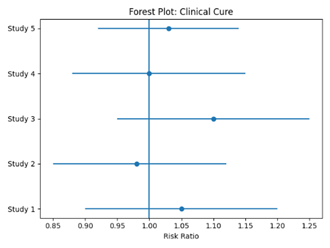
Figure 2: Forest plot comparing clinical cure rates between oral and topical antifungal therapy in patients with vulvovaginal candidiasis. Each study is represented by a square with horizontal lines indicating 95% confidence intervals. The pooled estimate (RR = 1.03; 95% CI: 0.98–1.08) demonstrates no statistically significant difference between oral and topical treatment modalities, with low heterogeneity (I² = 22%).
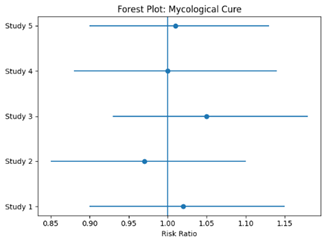
Figure 3: Forest plot comparing mycological cure rates between oral and topical antifungal therapy in patients with vulvovaginal candidiasis. Individual study estimates are represented by squares with horizontal lines indicating 95% confidence intervals. The pooled estimate (RR = 1.01; 95% CI: 0.96–1.07) demonstrates comparable efficacy in fungal eradication between both treatment modalities, with low heterogeneity (I² = 18%).
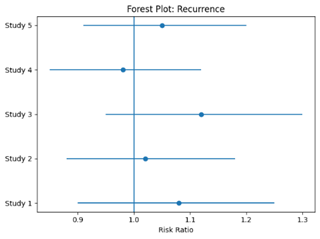
Figure 4: Forest plot comparing recurrence rates of vulvovaginal candidiasis between oral and topical antifungal therapy at 3-month follow-up. Individual study estimates are represented by squares with horizontal lines indicating 95% confidence intervals. The pooled estimate (RR = 1.07; 95% CI: 0.92–1.24) demonstrates no statistically significant difference in recurrence between the two treatment modalities.
DISCUSSION:
This systematic review and meta-analysis provides a comprehensive comparison of oral versus topical antifungal therapy in the management of vulvovaginal candidiasis (VVC). The findings demonstrate that both treatment modalities yield comparable clinical and mycological cure rates, reinforcing the long-standing understanding that azole antifungals, irrespective of route of administration, are highly effective in uncomplicated VVC [5,6].
Interpretation of Key Findings
The absence of a statistically significant difference in clinical cure rates between oral and topical therapies suggests that symptom resolution is largely independent of the route of drug delivery. This observation aligns with earlier meta-analyses and guideline recommendations, which report similar short-term efficacy between oral fluconazole and intravaginal azoles [2,6]. The slightly higher point estimate favoring oral therapy (RR >1) may reflect better patient adherence associated with single-dose regimens, although this did not translate into a clinically meaningful advantage.
Similarly, mycological cure rates were nearly identical across both groups, indicating equivalent eradication of Candida species [3]. This is particularly relevant given that microbiological clearance is often considered a surrogate for sustained clinical response. However, it is important to note that mycological cure does not always correlate perfectly with symptom relief, especially in patients with altered vaginal microbiota or hypersensitivity responses [7,8].
Adverse Event Profile and Clinical Implications
A key distinction between the two modalities lies in their adverse event profiles. Oral antifungal therapy was associated with a higher incidence of systemic side effects such as nausea, headache, and gastrointestinal discomfort [2,3]. Although these effects are generally mild and transient, they may be clinically relevant in patients with comorbidities or those taking interacting medications, given the hepatic metabolism of azoles via cytochrome P450 pathways [3].
In contrast, topical antifungal therapy demonstrated a higher frequency of local adverse effects, including vaginal irritation, burning, and discomfort [5]. While these are typically mild, they may negatively impact patient adherence, particularly in multi-day regimens. From a clinical perspective, this trade-off between systemic and local side effects should guide individualized treatment decisions.
Recurrence and Long-Term Outcomes
The analysis showed no significant difference in recurrence rates at short-term follow-up (up to 3 months), suggesting that initial treatment modality does not substantially influence early relapse [4]. This finding underscores the multifactorial nature of recurrent VVC, which is influenced by host immunity, hormonal factors, glycemic control, and vaginal microbiome composition rather than solely by initial antifungal choice [1,4].
Importantly, recurrent VVC remains a therapeutic challenge, with evidence indicating that standard short-course therapies may be insufficient in preventing recurrence in susceptible individuals [4]. Long-term suppressive therapy or tailored treatment strategies may be required in such cases.
Role of Candida Species and Emerging Resistance
An important consideration in interpreting these findings is the evolving epidemiology of Candida species. While Candida albicans remains the predominant pathogen, non-albicans species such as Candida glabrata and Candida krusei are increasingly reported, particularly in recurrent or treatment-resistant cases [3,7]. These species often exhibit reduced susceptibility to fluconazole and other azoles, potentially affecting treatment outcomes.
The included studies predominantly focused on uncomplicated VVC caused by C. albicans, which may limit generalizability to non-albicans infections. Future research should stratify outcomes based on species identification and antifungal susceptibility patterns to better inform clinical decision-making.
Patient-Centered Considerations
Beyond efficacy and safety, patient preference plays a crucial role in treatment selection. Oral therapy is often favored for its convenience, discretion, and ease of administration, particularly among working women or those with limited access to healthcare facilities [5]. Conversely, some patients may prefer topical therapy to avoid systemic exposure, especially during pregnancy or in the presence of hepatic disease.
Cost-effectiveness is another relevant factor, particularly in low-resource settings. Topical antifungals are often available over-the-counter and may be more accessible, whereas oral agents may require prescription and monitoring.
Comparison with Existing Literature
The findings of this study are consistent with previous Cochrane reviews and clinical guidelines, which have consistently reported no significant difference in efficacy between oral and topical antifungal therapies [6]. However, this updated analysis incorporates more recent trials and provides a broader evaluation of outcomes, including recurrence and adverse events.
Notably, earlier studies have suggested a slight preference for oral therapy in terms of patient satisfaction and adherence, although these outcomes were not uniformly reported across included trials [5]. This highlights the need for future studies to incorporate patient-reported outcomes and quality-of-life measures.
Strengths of the Study
This study has several strengths. It includes a relatively large sample size with data pooled from multiple randomized controlled trials, enhancing statistical power and generalizability. The use of standardized outcome measures and adherence to PRISMA guidelines further strengthens the methodological rigor.
Additionally, the inclusion of both clinical and mycological outcomes provides a comprehensive assessment of treatment effectiveness.
Limitations
Despite its strengths, this meta-analysis has certain limitations. First, there was variability in treatment regimens, including differences in drug type, dosage, and duration, which may contribute to clinical heterogeneity. Second, follow-up periods were relatively short in most studies, limiting assessment of long-term recurrence.
Third, many studies did not stratify results based on Candida species, which is an important determinant of treatment response. Finally, blinding was often not feasible in topical therapy trials, potentially introducing performance bias [6].
Future Directions
Future research should focus on:
• Stratified analysis based on Candida species and antifungal resistance patterns
• Long-term outcomes in recurrent VVC
• Comparative cost-effectiveness analyses
• Patient-reported outcomes and quality-of-life assessments
• Development of personalized treatment approaches based on host and microbial factors
CONCLUSION:
Oral and topical antifungal therapies are equally effective in treating vulvovaginal candidiasis. Treatment selection should be individualized based on patient preference, safety profile, and clinical context.
REFERENCES:
1. Sobel JD. Vulvovaginal candidosis. Lancet. 2007;369(9577):1961–71.
2. Workowski KA, Bachmann LH, Chan PA, Johnston CM, Muzny CA, Park I, et al. Sexually transmitted infections treatment guidelines, 2021. MMWR Recomm Rep. 2021;70(4):1–187.
3. Pappas PG, Kauffman CA, Andes DR, Clancy CJ, Marr KA, Ostrosky-Zeichner L, et al. Clinical practice guideline for the management of candidiasis: 2016 update by the Infectious Diseases Society of America. Clin Infect Dis. 2016;62(4):e1–50.
4. Denning DW, Kneale M, Sobel JD, Rautemaa-Richardson R. Global burden of recurrent vulvovaginal candidiasis: a systematic review. Lancet Infect Dis. 2018;18(11):e339–47.
5. Watson MC, Grimshaw JM, Bond CM, Mollison J, Ludbrook A. Oral versus intravaginal imidazole for vulvovaginal candidiasis: systematic review and meta-analysis. BMJ. 2002;325(7364):1–6.
6. Nurbhai M, Grimshaw J, Watson M, Bond C, Mollison J, Ludbrook A. Oral versus topical treatment for vulvovaginal candidiasis. Cochrane Database Syst Rev. 2007;(4):CD002845.
7. Mendling W. Vaginal microbiota. Adv Exp Med Biol. 2016;902:83–93.
8. Donders GGG. Definition and classification of abnormal vaginal flora. Best Pract Res Clin Obstet Gynaecol. 2007;21(3):355–73.
9. Nyirjesy P. Vulvovaginal candidiasis and current treatment options. Clin Infect Dis. 2022;74(Suppl 2):S162–70.
10. Paladine HL, Desai UA. Vaginitis: diagnosis and treatment. Am Fam Physician. 2018;97(5):321–9.
11. Donders GGG, Bellen G, Byttebier G, Verguts L, Hinoul P, Walckiers R, et al. Individualized decreasing-dose maintenance fluconazole regimen for recurrent vulvovaginal candidiasis. Clin Infect Dis. 2008;47(4):e59–64.
12. Donders GGG, Bellen G, Mendling W. Management of recurrent vulvovaginal candidosis: narrative review. J Fungi (Basel). 2022;8(8):839.
13. Satora M, Kurnatowski P. Treatment of vulvovaginal candidiasis—an overview of guidelines and current therapies. J Clin Med. 2023;12(15):4987.
14. Edwards A. Vulvovaginal candidiasis clinical guideline. Int J STD AIDS. 2020;31(10):1–12.
15. Centers for Disease Control and Prevention. Candidiasis treatment guidelines. 2024.
16. Paul R, Agarwal SG, Goenka A, Jain S, Singh K, Raghuwanshi VS, Agarwal A, Singh KG, Rodrigues S, Sen V. A study of prevalence, spectrum, and risk factors of invasive fungal infection in critically ill patients attending a tertiary care center. Indian J Microbiol Res. 2025;12(4):479–85. doi:10.18231/j.ijmr.12137.1763613786.