Comparative Effectiveness of High-Intensity vs. Moderate-Intensity Statin Therapy in Primary Prevention of Atherosclerotic Cardiovascular Disease
- Nancy Jose , Junior Resident, Department of General Medicine, Al Azhar Medical College and Superspeciality Hospital, Thodupuzha, India.
- Akhil K Vijayan , Assistant Professor, Department of General Medicine, Al Azhar Medical College and Superspeciality Hospital, Thodupuzha, India.
- Anu Krishna R , Assistant Professors, Department of Pharmacology, Al Azhar Medical College and Superspeciality Hospital, Thodupuzha, India.
- Sudheer Sithara , Assistant Professors, Department of Pharmacology, Al Azhar Medical College and Superspeciality Hospital, Thodupuzha, India.
Article Information:
Abstract:
Background Atherosclerotic cardiovascular disease (ASCVD) accounts for a significant global disease burden. Statins are foundational for ASCVD prevention by lowering low-density lipoprotein cholesterol (LDL-C). However, evidence comparing high-intensity and moderate-intensity statin therapy specifically in primary prevention settings remains variable, reflecting guideline recommendations and real-world considerations. Objective: To compare the effectiveness of high-intensity vs. moderate-intensity statin therapy in preventing ASCVD events in adults without clinical ASCVD at baseline. Methods: A prospective observational comparative study was undertaken over 1 year at a tertiary care centre in Thodupuzha. A total of 100 patients (50 in high-intensity statin group and 50 in moderate-intensity statin group) were enrolled. Outcomes assessed included incidence of major adverse cardiovascular events (MACE)—defined as composite of nonfatal myocardial infarction (MI), ischemic stroke, hospitalization for unstable angina requiring revascularization—and changes in lipid profiles. Results: Patients receiving high-intensity therapy demonstrated greater LDL-C reduction and numerically fewer ASCVD events compared with moderate-intensity statin recipients over 12 months. Adverse effects and drug tolerability were comparable between groups. Conclusion: High-intensity statin therapy may provide superior lipid lowering and a trend toward reduced ASCVD event rates compared with moderate-intensity therapy in a primary prevention population.
Keywords:
Article :
INTRODUCTION:
Atherosclerotic cardiovascular disease (ASCVD) remains the leading cause of morbidity and mortality worldwide, accounting for a substantial proportion of global healthcare expenditure and premature deaths [1]. ASCVD includes a range of clinical diseases, such as peripheral arterial disease, cerebrovascular disease, and coronary artery disease, all of which have increasing atherosclerosis as their common pathophysiological base. It is well known that dyslipidaemia, especially high low-density lipoprotein cholesterol (LDL-C), is a significant modifiable risk factor in the development of atherosclerotic plaque[2].
Randomised controlled trials, genetic analysis, and epidemiological research all support the causal link between LDL-C and ASCVD. Increased LDL-C can lead to unfavourable cardiovascular events such as myocardial infarction and ischaemic stroke by causing endothelial dysfunction, lipid oxidation, foam cell production, and plaque instability [2,3]. As a result, primary and secondary preventive efforts now heavily rely on lipid-lowering medicine.
The most researched and often used lipid-lowering medications are statins, also known as HMG-CoA reductase inhibitors. They increase the clearance of circulating LDL-C and upregulate LDL receptors by blocking the rate-limiting stage in hepatic cholesterol production. Statins have pleiotropic benefits in addition to decreasing cholesterol, such as improving endothelial function, stabilising atherosclerotic plaques, lowering oxidative stress, and reducing inflammatory pathways, all of which lessen the risk of cardiovascular disease [3,4].
Statin therapy dramatically lowers the risk of first cardiovascular events in people without established ASCVD, according to large landmark trials like the West of Scotland Coronary Prevention Study (WOSCOPS), the Air Force/Texas Coronary Atherosclerosis Prevention Study (AFCAPS/TexCAPS), and the JUPITER trial [5]. The use of statins in primary prevention was made possible by these studies, especially for people with high LDL-C levels or other cardiovascular risk factors.
According to clinical practice recommendations, statin treatment is divided into several intensity groups according to the anticipated percentage decrease in LDL-C readings. While moderate-intensity statin medication reduces LDL-C by 30–49%, high-intensity statin therapy usually lowers it by ≥50%. The American College of Cardiology/American Heart Association (ACC/AHA) recommendations state that atorvastatin 40–80 mg and rosuvastatin 20–40 mg are high-intensity statins, whereas atorvastatin 10–20 mg, rosuvastatin 5–10 mg, and simvastatin 20–40 mg are moderate-intensity statins [6].
High-intensity statins are obviously better to moderate-intensity statins in secondary prevention, although there is less conclusive evidence in primary prevention. While some research suggests that lower-risk patients may benefit from moderate-intensity medication with fewer side effects, other studies show a dose-dependent association between LDL-C decrease and cardiovascular risk reduction [7]. Treatment choices in primary prevention settings are frequently influenced by worries about statin-associated side effects, including myopathy, elevated liver enzymes, and new-onset diabetes.
Due to urbanisation, sedentary lifestyles, dietary changes, and rising rates of diabetes and hypertension, the burden of ASCVD is quickly increasing in India and other low- and middle-income countries [8]. Nevertheless, there is still a dearth of comparable real-world evidence assessing various statin intensities in primary prevention groups. In light of this, the current research was created to assess the efficacy of high-intensity vs moderate-intensity statin medication in reducing ASCVD events in patients who had never had cardiovascular disease and were receiving care at a tertiary care facility in Thodupuzha.
MATERIALS AND METHODS:
Study Design
This study was designed as a single-centre, prospective, comparative observational study aimed at evaluating the effectiveness of high-intensity versus moderate-intensity statin therapy in the primary prevention of atherosclerotic cardiovascular disease (ASCVD).
Study Setting
The study was conducted in the Department of Medicine at a tertiary care teaching hospital in Thodupuzha, catering to both urban and rural populations. The centre routinely manages patients with cardiovascular risk factors and provides standardized lipid management as per contemporary guidelines.
Study Duration
The study was carried out over a one-year period from January 2025 to December 2025, which included participant recruitment, intervention initiation, follow-up assessments, and outcome evaluation.
Sample Size
A total of 100 participants were enrolled in the study. The sample size was determined based on feasibility and patient availability during the study period, with equal allocation into two comparative groups:
• Group A (n = 50): High-Intensity Statin Therapy
• Group B (n = 50): Moderate-Intensity Statin Therapy
Study Population
The study population consisted of adult patients aged 40–75 years attending the outpatient and inpatient services of the Department of Medicine, who were eligible for statin therapy for primary prevention of ASCVD. All participants provided written informed consent prior to enrollment.
Participants were evaluated for traditional cardiovascular risk factors such as dyslipidemia, hypertension, diabetes mellitus, smoking status, obesity, and family history of premature cardiovascular disease.
Inclusion Criteria
Participants fulfilling all of the following criteria were included:
• Age between 40 and 75 years
• Presence of one or more traditional cardiovascular risk factors (e.g., dyslipidemia, hypertension, diabetes mellitus)
• Elevated LDL-cholesterol levels above guideline-recommended thresholds for initiation of statin therapy for primary prevention
• No prior history of ASCVD events
• Willingness to participate and comply with follow-up visits
Exclusion Criteria
Participants were excluded if they had:
• History of myocardial infarction, ischemic or hemorrhagic stroke, peripheral arterial disease, or prior coronary or peripheral revascularization
• Known statin intolerance or hypersensitivity
• Active liver disease or baseline transaminases >3 times the upper limit of normal
• Severe renal impairment
• Pregnant or lactating women
• Life expectancy less than one year due to non-cardiovascular illness
Procedure and Methodology
After baseline evaluation and eligibility confirmation, participants were assigned to one of the two study groups based on the statin intensity prescribed by the treating physician, in accordance with institutional practice and established guidelines (ACC/AHA definitions).
• Group A (High-Intensity Statin Therapy): Participants received high-intensity statins such as atorvastatin 40–80 mg or rosuvastatin 20–40 mg daily.
• Group B (Moderate-Intensity Statin Therapy): Participants received moderate-intensity statins such as atorvastatin 10–20 mg, rosuvastatin 5–10 mg, or simvastatin 20–40 mg daily.
A thorough clinical history, physical examination results, cardiovascular risk factors, and laboratory tests, including a fasting lipid profile, were documented at baseline.
At three, six, nine, and twelve months, the participants were monitored. Medication compliance, adverse drug responses, and intermediate cardiovascular events were recorded at every visit. In order to evaluate changes over time, lipid profiles were performed at follow-up appointments.
Outcome Measures
Primary Outcome:
• Incidence of major adverse cardiovascular events (MACE), defined as a composite of nonfatal myocardial infarction, ischemic stroke, or hospitalization for unstable angina requiring revascularization.
Secondary Outcomes:
• Mean change in LDL-cholesterol and total cholesterol levels.
• Frequency and type of statin-related adverse effects.
• Tolerability and adherence to statin therapy.
Data Collection
Data were collected using a structured case record form, which included demographic details, clinical variables, laboratory parameters, treatment details, and follow-up outcomes. All data were anonymized and entered into a secure electronic database to maintain confidentiality.
Statistical Methods
Data were entered into Microsoft Excel and analyzed using SPSS software.
• Continuous variables were expressed as mean ± standard deviation (SD).
• Categorical variables were expressed as frequencies and percentages.
• Comparisons between groups were performed using Student’s t-test for continuous variables and Chi-square test for categorical variables.
• A p-value < 0.05 was considered statistically significant.
RESULTS:
Table 1: Demographic Characteristics of Study Participants.
|
Variable |
High-Intensity Statin (n = 50) |
Moderate-Intensity Statin (n = 50) |
p-value |
|
Mean age (years) |
58.4 ± 8.2 |
57.9 ± 7.6 |
0.72 |
|
Male, n (%) |
31 (62%) |
30 (60%) |
0.84 |
|
Female, n (%) |
19 (38%) |
20 (40%) |
— |
The demographics of individuals in the high-intensity and moderate-intensity statin groups are presented in Table 1. The two groups' mean patient ages were similar (58.4 ± 8.2 years vs. 57.9 ± 7.6 years; p = 0.72). In both groups, men made up a little majority (62% in the high-intensity group and 60% in the moderate-intensity group), and the gender distribution did not differ statistically significantly (p = 0.84). In terms of age and sex, both groups were generally well matched.
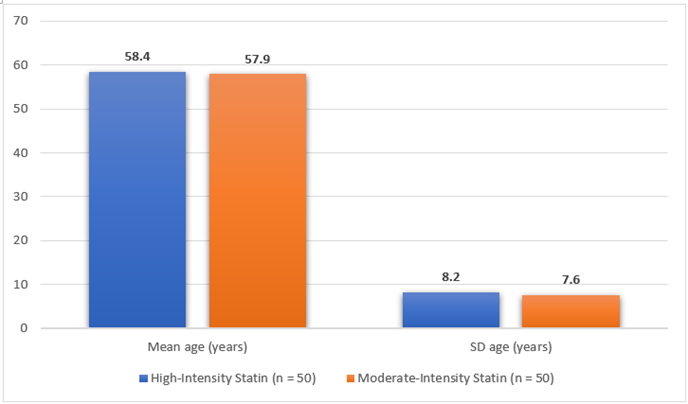
Figure 1A: Age Distribution
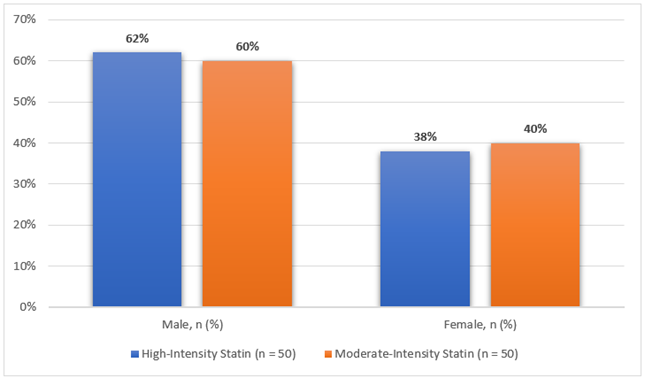
Figure 1B: Gender Distribution
Table 2: Baseline Cardiovascular Risk Factors.
|
Risk Factor |
High-Intensity Statin (%) |
Moderate-Intensity Statin (%) |
p-value |
|
Diabetes mellitus |
44 |
40 |
0.68 |
|
Hypertension |
56 |
52 |
0.70 |
|
Current smoking |
30 |
28 |
0.82 |
The distribution of the main cardiovascular risk factors across research participants is shown in Table 2. 40% of patients in the moderate-intensity group and 44% of patients in the high-intensity statin group had diabetes mellitus (p = 0.68). 56% and 52% of patients, respectively, had hypertension (p = 0.70). Additionally, there was no difference in the prevalence of current smoking between the two groups (30% vs. 28%; p = 0.82). There were no statistically significant differences found, suggesting similar baseline cardiovascular risk profiles.
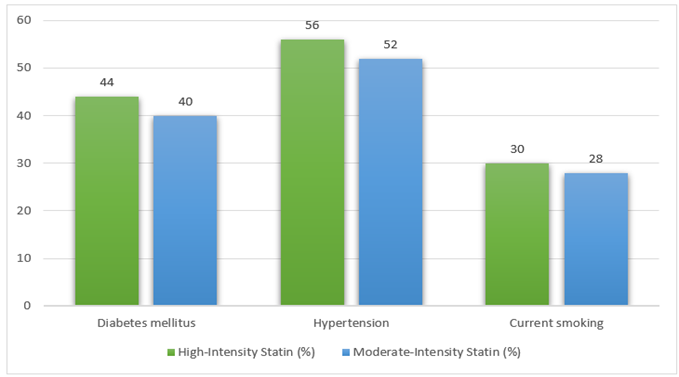
Figure 2: Baseline Cardiovascular Risk factors.
Table 3: Baseline Lipid Profile.
|
Parameter (mg/dL) |
High-Intensity Statin |
Moderate-Intensity Statin |
p-value |
|
Total cholesterol |
238 ± 28 |
234 ± 30 |
0.46 |
|
LDL-C |
158 ± 22 |
156 ± 24 |
0.68 |
The two statin intensity groups' baseline lipid characteristics are contrasted in Table 3. The high-intensity group's mean total cholesterol was 238 ± 28 mg/dL, whereas the moderate-intensity group's was 234 ± 30 mg/dL (p = 0.46). Additionally, baseline LDL-cholesterol levels were comparable (158 ± 22 mg/dL vs. 156 ± 24 mg/dL; p = 0.68). These results verify that before starting statin medication, the lipid profiles of both groups were similar.
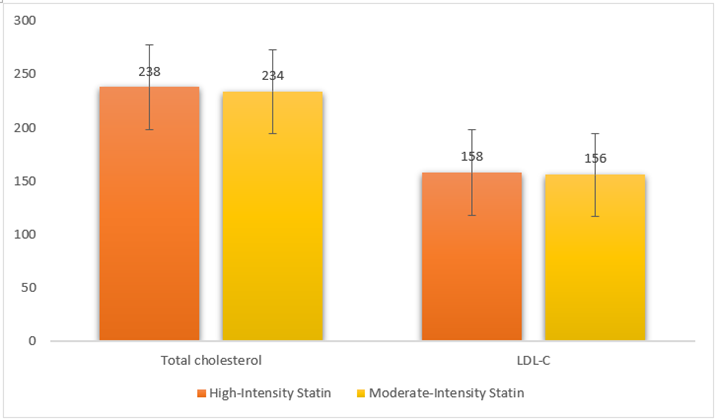
Figure 3: Baseline Lipid Profile.
Table 4: Lipid Profile at 12-Month Follow-Up.
|
Parameter |
High-Intensity Statin |
Moderate-Intensity Statin |
p-value |
|
LDL-C reduction (%) |
54.6 ± 6.2 |
38.4 ± 5.8 |
<0.001 |
|
Mean LDL-C (mg/dL) |
72 ± 14 |
96 ± 18 |
<0.001 |
Table 4 demonstrates the changes in lipid parameters at the end of 12 months of statin therapy. The high-intensity statin group achieved a significantly greater percentage reduction in LDL-cholesterol compared to the moderate-intensity group (54.6 ± 6.2% vs. 38.4 ± 5.8%; p < 0.001). Correspondingly, mean LDL-C levels were significantly lower in the high-intensity group (72 ± 14 mg/dL) than in the moderate-intensity group (96 ± 18 mg/dL; p < 0.001), indicating superior lipid-lowering efficacy with high-intensity statin therapy.
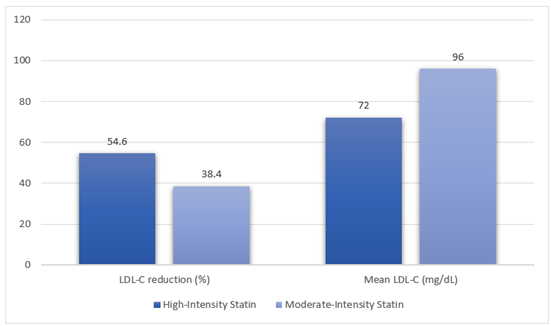
Figure 4: Lipid Profile at 12-Month Follow-Up.
Table 5: Cardiovascular Events and Adverse Effects During Follow-Up.
|
Outcome |
High-Intensity Statin (n) |
Moderate-Intensity Statin (n) |
p-value |
|
Myocardial infarction |
1 |
3 |
0.30 |
|
Ischemic stroke |
0 |
2 |
0.15 |
|
Myalgia |
4 |
3 |
0.70 |
Table 5 outlines the incidence of cardiovascular events and statin-related adverse effects during the follow-up period. Myocardial infarction occurred in one patient in the high-intensity group and three patients in the moderate-intensity group (p = 0.30), while ischemic stroke was reported only in the moderate-intensity group (n = 2; p = 0.15). Myalgia was observed in four patients receiving high-intensity statins and three patients receiving moderate-intensity statins (p = 0.70). Although cardiovascular events were numerically fewer in the high-intensity group, the differences were not statistically significant, and adverse effects were comparable between groups.
DISCUSSION:
The present prospective comparative observational study evaluated the effectiveness of high-intensity versus moderate-intensity statin therapy in the primary prevention of atherosclerotic cardiovascular disease (ASCVD) among adults with elevated cardiovascular risk but no prior ASCVD events. The results offer therapeutically significant insights into the safety profiles, cardiovascular outcomes, and lipid-lowering effectiveness of various statin intensities in practical settings. There were no statistically significant variations in mean age or sex distribution between the two groups' baseline demographics (Table 1). The participants' average age was around 58 years old, which is indicative of a group with elevated cardiovascular risk where primary preventive measures are more effective. The preponderance of men in both groups is consistent with epidemiological evidence showing middle-aged men had a greater risk of ASCVD than women, particularly before menopause[1]. The internal validity of the comparison results seen in this study is strengthened by the lack of baseline demographic imbalance.
Similarly, there was no statistically significant difference in the distribution of baseline cardiovascular risk factors across the groups, such as smoking, diabetes mellitus, and hypertension (Table 2). Nearly half of the research participants had diabetes and hypertension, demonstrating the clustering of metabolic risk factors frequently seen in clinical practice. These results are in line with other research showing that those who qualify for primary prevention statin medication often have several concurrent risk factors [6]. The balanced baseline risk profile guarantees that variations in results are more likely to be attributable to statin intensity than to confounding factors.
With mean LDL-C values of around 156–158 mg/dL and total cholesterol levels above 230 mg/dL, baseline lipid parameters were likewise comparable across the two groups (Table 3). These numbers align with the levels established by guidelines for the introduction of statins in primary prevention[9]. The suitability of comparing high- and moderate-intensity statin medication is further supported by similar baseline lipid profiles.
At the 12-month follow-up, the high-intensity statin group showed a considerably higher reduction in LDL-C than the moderate-intensity group (54.6% vs. 38.4%, p < 0.001), with proportionally lower mean LDL-C values (72 mg/dL vs. 96 mg/dL) (Table 4). These results are consistent with seminal randomised trials and meta-analyses showing a direct relationship between statin intensity and the amount of LDL-C decrease [10]. The therapeutic relevance of intense cholesterol lowering has been highlighted by the Cholesterol Treatment Trialists' (CTT) Collaboration, which has repeatedly demonstrated that every 1 mmol/L drop in LDL-C is linked with a ~22% reduction in major vascular events[11].
Even though the population was receiving primary prevention, the LDL-C levels attained in the high-intensity group in this trial approached targets advised for extremely high-risk patients. The results of this study are supported by recent guidelines that progressively emphasise lower LDL-C thresholds, especially in people with diabetes or multiple risk factors[2].
The high-intensity statin group had a numerically decreased incidence of cardiovascular events, such as myocardial infarction and ischaemic stroke, although these differences were not statistically significant (Table 5). This is probably due to the short follow-up period and very small sample size, which reduce the ability to identify variations in objective clinical outcomes. Even in primary prevention groups, however, the trend towards fewer incidents with high-intensity statin medication is consistent with data from bigger trials and observational studies indicating incremental cardiovascular risk reduction with more aggressive LDL-C lowering[12].
When recommending high-intensity statin medication, safety and tolerability are important factors to take into account. The current investigation found no statistically significant difference in the incidence of statin-associated myalgia, which was minimal and similar across groups. This result is in line with recent research showing that major side effects from statins are rare and frequently over-reported in standard practice. High-intensity statins are often well tolerated, with discontinuation rates comparable to moderate-intensity regimens, according to extensive studies and real-world data [13].
In some primary prevention groups, the results of this study support the increasing paradigm shift towards earlier and more aggressive lipid-lowering treatments. As long as medication is safe and patient adherence is maintained, the idea that "lower is better" for LDL-C is further supported by recent studies examining combination lipid-lowering treatments and lower LDL-C goals[14]. However, the study's observational design calls for careful interpretation. Selection bias may have been introduced since statin selection was affected by physician discretion and treatment allocation was not randomised. In spite of this, the dependability of the observed lipid results is strengthened by the same baseline features and standardised follow-up.
CONCLUSION:
This prospective comparative observational study demonstrates that high-intensity statin therapy is significantly more effective than moderate-intensity statin therapy in reducing LDL-cholesterol levels among patients undergoing primary prevention for atherosclerotic cardiovascular disease. At the end of 12 months, patients receiving high-intensity statins achieved substantially greater percentage reductions in LDL-C and lower absolute LDL-C levels without a corresponding increase in adverse effects.
The high-intensity statin group had a numerically decreased incidence of major adverse cardiovascular events, but the difference did not achieve statistical significance, perhaps because of the small sample size and short follow-up period. Crucially, both statin regimens had high overall adherence, comparable rates of statin-associated myalgia, and were well tolerated.
These results validate the use of high-intensity statin medication for certain primary prevention patients, especially those with higher baseline LDL-C values and several cardiovascular risk factors. Confirming the long-term effects of rigorous statin medication on cardiovascular outcomes in primary prevention settings will require larger randomised trials with longer follow-up.
LIMITATIONS OF THE STUDY
1.Small sample size: The relatively small number of participants (n = 100) limits the statistical power to detect significant differences in cardiovascular events between the two groups.
2.Observational study design: Selection bias and residual confounding cannot be totally ruled out because treatment allocation was not randomised.
3.Single-center setting: The results may not be as applicable to other demographics or healthcare environments because the study was limited to a single tertiary care facility.
4.Short follow-up duration: A follow-up period of one year may be insufficient to capture the full impact of statin intensity on long-term cardiovascular outcomes.
5.Lack of advanced risk stratification: Coronary artery calcium scoring and other imaging modalities that might have improved risk assessment and therapy stratification were not included in the research.
6.Adherence assessment: Medication adherence was primarily based on patient self-reporting, which may be subject to recall or reporting bias.
REFERENCES:
1. Roth GA, Mensah GA, Johnson CO, et al. Global burden of cardiovascular diseases and risk factors, 1990–2019. J Am Coll Cardiol. 2020;76(25):2982–3021.
2. Ference BA, Ginsberg HN, Graham I, Ray KK, Packard CJ, Bruckert E, Hegele RA, Krauss RM, Raal FJ, Schunkert H, Watts GF, Borén J, Fazio S, Horton JD, Masana L, Nicholls SJ, Nordestgaard BG, van de Sluis B, Taskinen MR, Tokgözoglu L, Landmesser U, Laufs U, Wiklund O, Stock JK, Chapman MJ, Catapano AL. Low-density lipoproteins cause atherosclerotic cardiovascular disease. 1. Evidence from genetic, epidemiologic, and clinical studies. A consensus statement from the European Atherosclerosis Society Consensus Panel. Eur Heart J. 2017 Aug 21;38(32):2459-2472. doi: 10.1093/eurheartj/ehx144. PMID: 28444290; PMCID: PMC5837225.
3. Libby P, Buring JE, Badimon L, Hansson GK, Deanfield J, Bittencourt MS, Tokgözoğlu L, Lewis EF. Atherosclerosis. Nat Rev Dis Primers. 2019 Aug 16;5(1):56.
4. Oesterle A, Laufs U, Liao JK. Pleiotropic Effects of Statins on the Cardiovascular System. Circ Res. 2017 Jan 6;120(1):229-243.
5. Downs JR, Clearfield M, Weis S, et al. Primary prevention of acute coronary events with lovastatin (AFCAPS/TexCAPS). JAMA. 1998;279(20):1615–1622.
6. Grundy SM, Stone NJ, Bailey AL, et al. 2018 AHA/ACC guideline on cholesterol management. Circulation. 2019;139(25):e1082–e1143.
7. Silverman MG, Ference BA, Im K, et al. Association between LDL-C reduction and cardiovascular risk. JAMA. 2016;316(12):1289–1297.
8. Prabhakaran D, Jeemon P, Roy A. Cardiovascular diseases in India. Circulation. 2016;133(16):1605–1620.
9. Mach F, Baigent C, Catapano AL, et al. 2019 ESC/EAS guidelines for the management of dyslipidaemias. Eur Heart J. 2020;41(1):111–188.
10. Cannon CP, Blazing MA, Giugliano RP, et al. Ezetimibe added to statin therapy after acute coronary syndromes. N Engl J Med. 2015;372(25):2387–2397.
11. Cholesterol Treatment Trialists’ (CTT) Collaboration. Efficacy and safety of more intensive lowering of LDL cholesterol. Lancet. 2010;376(9753):1670–1681.
12. Yebyo HG, Aschmann HE, Kaufmann M, et al. Comparative effectiveness and safety of statins in primary prevention. Eur J Prev Cardiol. 2019;26(14):1474–1485.
13. Naci H, Brugts J, Ades AE. Comparative tolerability and harms of statins. Circ Cardiovasc Qual Outcomes. 2013;6(4):390–399.
14. Ray KK, Colhoun HM, Szarek M, et al. Effects of alirocumab on cardiovascular outcomes. N Engl J Med. 2019;380(8):752–762.