Effect of Different Volumes of Normal Saline for Epidural Volume Expansion on Spinal Anaesthesia in Patients Undergoing Infra-Umbilical Surgeries
- Naveen Baloda. , Senior Resident, Department of Anaesthesiology, Kanti Devi Medical College and Hospital, Mathura, Uttar Pradesh, India.
- Macha Niranjan Reddy. , Assistant Professor, Department of Anaesthesiology, Teerthanker Mahaveer Medical College & Research Centre, Moradabad, Uttar Pradesh, India.
- Gurdeep Singh Jheetay. , Professor & HOD, Department of Anaesthesiology, Dr. K.K.B.M Subharti Hospital, Jhajra, Dehradun, Uttarakhand, India.
Article Information:
Abstract:
Combined spinal–epidural anaesthesia (CSE) with epidural volume expansion (EVE) is an effective technique to enhance the spread and duration of spinal anaesthesia. Administration of saline through the epidural catheter after intrathecal injection is known to augment sensory blockade and prolong analgesia. However, the optimal volume of saline for epidural volume expansion remains uncertain. Aim and Objectives: To evaluate the effect of three different volumes of normal saline (0 mL, 10 mL, and 15 mL) used for epidural volume expansion on sensory blockade, motor blockade, haemodynamic parameters, and duration of analgesia following intrathecal anaesthesia in patients undergoing infra-umbilical surgeries. Materials and Methods: This prospective randomized clinical study was conducted on 120 patients (ASA I–II) aged 18–60 years undergoing elective infra-umbilical surgeries. Patients were randomly divided into three groups (n=40 each): Group 0 received intrathecal 10 mg (2 mL) of 0.5% hyperbaric bupivacaine without epidural volume expansion; Group 10 received an additional 10 mL of normal saline epidurally; and Group 15 received 15 mL of normal saline epidurally. Sensory and motor blockade characteristics, haemodynamic parameters, duration of anaesthesia, and time to first rescue analgesia were recorded and analysed. Results: The onset of sensory and motor blockade was comparable among the groups. However, the maximum level of sensory blockade was significantly higher in Group 10 and Group 15 compared to Group 0. The time to achieve maximum sensory block, two-segment regression time, and total duration of sensory blockade were significantly prolonged in Group 10 and Group 15. The total duration of motor blockade was also significantly higher in these groups. The duration of anaesthesia and time to first rescue analgesia were significantly increased in Group 10 and Group 15 compared to Group 0. A higher incidence of side effects, particularly hypotension and bradycardia, was observed in Group 15. Conclusion: Epidural volume expansion significantly enhances the quality and duration of spinal anaesthesia. Both 10 mL and 15 mL volumes of normal saline improve sensory and motor blockade and prolong analgesia; however, 10 mL provides an optimal balance between efficacy and haemodynamic stability, whereas 15 mL is associated with increased side effects.
Keywords:
Article :
INTRODUCTION:
Combined spinal–epidural (CSE) anaesthesia is widely preferred for elective infraumbilical surgeries, particularly for procedures of longer duration and for effective postoperative pain management.[1] This technique involves a single puncture approach in which an epidural catheter is inserted, followed by administration of local anaesthetic and/or opioid agents. It provides the advantage of rapid onset of spinal anaesthesia along with the flexibility of prolonging analgesia through the epidural route.
First introduced in obstetric practice for caesarean section in 1984, CSE combines the benefits of both intrathecal and epidural techniques. Intrathecal block ensures a rapid onset with dense neural blockade, whereas epidural anaesthesia offers better haemodynamic stability and prolonged postoperative analgesia. The combined approach reduces the limitations and risk factors associated with individual techniques while enhancing overall anaesthetic efficacy.[2]
A key concept associated with CSE is epidural volume expansion (EVE), wherein saline is administered through the epidural catheter following subarachnoid block.[3] This results in augmentation of the sensory blockade by increasing its onset, extent, and duration. EVE improves the density and height of the block, enhances intraoperative anaesthesia, and contributes to effective postoperative pain relief.[4]
The CSE technique offers the advantage of a single puncture, thereby reducing procedural trauma. Studies have reported a failure rate of approximately 2–5% with isolated spinal or epidural anaesthesia, which decreases significantly to around 0.16% when both techniques are combined. The enhancement in block characteristics is attributed to epidural administration of saline or local anaesthetic, which increases epidural volume and leads to compression of the intrathecal space. This, in turn, facilitates cephalad spread of intrathecal drugs.[5]
Following spinal anaesthesia, rapid administration of saline or drugs via the epidural catheter results in epidural volume expansion, which further augments the spread and effectiveness of the block.[6] However, the effect of EVE on sensory blockade remains controversial. Some studies have demonstrated an increase in maximum sensory block level,[7] while others have suggested that similar levels can be achieved using higher doses of intrathecal agents without EVE.[8] In contrast, Loubert et al.[9] reported no significant effect of epidural volume expansion on sensory block height.
Several factors influence the efficacy of EVE, including the volume of fluid administered.[10] Stienstra et al.[11] observed that increasing epidural volume leads to higher sensory block levels, while Takiguchi et al.[12] reported that administration of 10 mL saline after spinal anaesthesia significantly enhances sensory blockade. Additionally, EVE allows the use of lower doses of intrathecal local anaesthetics, such as bupivacaine, particularly in non-obstetric patients.[13] This reduction in dosage is associated with decreased incidence of hypotension and faster recovery of motor function.[5,14]
The mechanism underlying this effect is attributed to increased epidural volume causing compression of the dural sac, resulting in redistribution of cerebrospinal fluid and enhanced spread of intrathecal drugs.[15] Unlike epidural top-up with local anaesthetics, saline primarily influences block characteristics through a volume effect without significantly altering the duration of anaesthesia.
However, the timing of epidural volume expansion is crucial. Its effectiveness diminishes if administered after the onset of regression of the spinal block, typically beyond 30 minutes.[17] EVE has been shown to provide adequate anaesthesia with lower intrathecal doses, facilitating earlier recovery of motor function in the lower limbs.[17]
In view of these observations, the present study was conducted to evaluate the effect of three different volumes of normal saline (0 mL, 10 mL, and 15 mL) administered for epidural volume expansion on sensory blockade, motor blockade, and haemodynamic parameters following intrathecal anaesthesia.
Aim And Objectives
Aim
To evaluate epidural volume extension in surgeries below umbilicus by three different volumes of normal saline (0ml, 10ml and 15ml) after intrathecal block with 10 mg (2 ml) of 0.5% hyperbaric bupivacaine:
Objectives
To assess sensory blockade and motor blockade variations.
To assess haemodynamic state.
To assess first rescue analgesia time.
MATERIALS AND METHODS:
This prospective randomized clinical study titled “Effect of Different Volumes of Normal Saline for Epidural Volume Expansion on Spinal Anaesthesia in Patients Undergoing Infra-Umbilical Surgeries” was conducted in the Department of Anaesthesiology at Teerthanker Mahaveer Medical College and Research Centre, Moradabad, over a period from 2019 to 2022, after obtaining approval from the Institutional Ethical Committee and Board of Studies.
Study Design and Sample Size
The study was designed as a prospective, randomized, controlled trial. Sample size was calculated using G-power software with 80% power and 5% level of significance. The minimum required sample size was estimated to be 117; however, to avoid error and ensure adequate representation, a total of 120 patients were included in the study.
Randomization and Group Allocation
Participants were randomized using the chit-and-box method into three groups, each comprising 40 patients:
• Group 0: Received intrathecal 10 mg (2 mL) of 0.5% hyperbaric bupivacaine without epidural volume expansion
• Group 10: Received intrathecal 10 mg (2 mL) of 0.5% hyperbaric bupivacaine followed by 10 mL of 0.9% normal saline for epidural volume expansion
• Group 15: Received intrathecal 10 mg (2 mL) of 0.5% hyperbaric bupivacaine followed by 15 mL of 0.9% normal saline for epidural volume expansion
Inclusion Criteria
• Patients aged 18–60 years of either sex
• American Society of Anaesthesiologists (ASA) physical status I or II
• Patients scheduled for elective infra-umbilical surgeries
Exclusion Criteria
• Patient refusal
• Contraindications to spinal anaesthesia
• Patients with significant cardiovascular, respiratory, or central nervous system disorders
• Obstetric patients
• Patients with uncontrolled diabetes mellitus, coagulopathy, local site infection, thyroid or hepatorenal disease
• Body mass index >30 kg/m²
• Patients already receiving epidural anaesthesia or requiring conversion to general anaesthesia
Preoperative Preparation
All patients underwent detailed pre-anaesthetic evaluation including history, clinical examination, and relevant investigations. Written informed consent was obtained. Patients were kept nil per oral for 8 hours for solids and 2 hours for clear fluids prior to surgery. Premedication included tablet ranitidine 150 mg and tablet alprazolam 0.5 mg administered the night before surgery.
Anaesthetic Technique
In the operating room, intravenous access was secured and patients were preloaded with Ringer’s lactate at 10 mL/kg approximately 30 minutes prior to anaesthesia. Standard monitoring including ECG, pulse oximetry, and non-invasive blood pressure was instituted.
Combined spinal-epidural anaesthesia was performed in the sitting position using a two-segment technique under strict aseptic precautions. The epidural space was identified at the L2–L3 or L3–L4 interspace using the loss of resistance technique with air. Following epidural catheter placement, subarachnoid block was administered at L3–L4 or L4–L5 interspace using a 25G Quincke needle via a midline approach. After confirmation of free flow of cerebrospinal fluid, 10 mg (2 mL) of 0.5% hyperbaric bupivacaine was injected at a rate of 0.2 mL/second with the operating table in a horizontal position.
Patients were immediately placed supine after securing the epidural catheter. Epidural volume expansion was then performed using 0 mL, 10 mL, or 15 mL of normal saline according to group allocation. The drug administration was performed by an anaesthesiologist not involved further in the study, ensuring blinding of both the observer and the patient.
Outcome Measures
The following parameters were observed and recorded:
• Onset of sensory block at T10 dermatome
• Onset of motor block (Modified Bromage score 1)
• Maximum level of sensory blockade and time to achieve it
• Two-segment regression time
• Total duration of sensory blockade (time to regression to S1)
• Duration of analgesia (time from spinal injection to first request for analgesia)
• Maximum motor blockade achieved
• Total duration of motor blockade (time to Modified Bromage score 0)
Sensory blockade was assessed using the pinprick method with a blunt 27G needle, while motor blockade was assessed using the Modified Bromage scale. Monitoring continued until the first epidural top-up, and patients were observed for 24 hours postoperatively.
Statistical Analysis
Data were entered into Microsoft Excel and analysed using SPSS version 21.0. Quantitative variables were expressed as mean ± standard deviation, while qualitative variables were presented as frequency and percentage. Student’s t-test was used for comparison of means, and chi-square test was applied for categorical variables. A p-value of <0.05 was considered statistically significant.
RESULTS:
A total of 120 patients were included in the study and were equally distributed into three groups (Group 0, Group 10, and Group 15), with 40 patients in each group. The demographic parameters were comparable across groups. Sensory and motor blockade characteristics, duration of anaesthesia, and analgesia were significantly influenced by epidural volume expansion. Higher volumes of saline (10 mL and 15 mL) were associated with increased sensory block height, prolonged duration of blockade, and delayed requirement for rescue analgesia. However, a higher incidence of side effects was also observed with increased volume, particularly in Group 15.
Table 1: Mean age among different groups
Table 1 shows that the mean age of patients was comparable among all three groups.
|
Group |
Mean age (years) |
SD |
p-value |
|
Group 0 |
39.83 |
12.25 |
0.129 |
|
Group 10 |
42.80 |
9.10 |
|
|
Group 15 |
43.13 |
9.95 |
Table 1 shows that the mean age was 39.83±12.25 years in Group 0, 42.80±9.10 years in Group 10, and 43.13±9.95 years in Group 15, indicating no statistically significant difference (p=0.129).
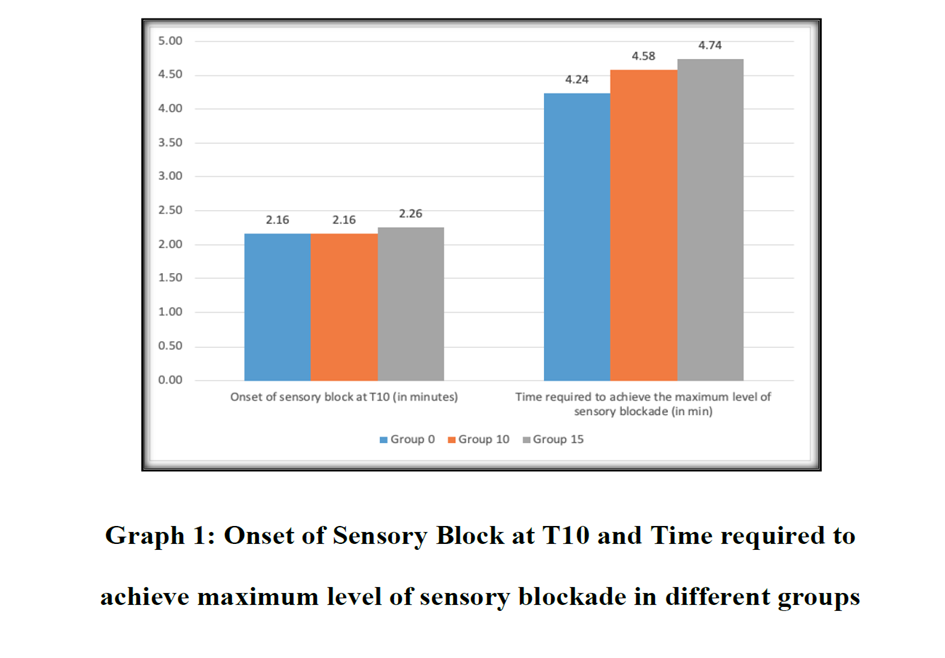
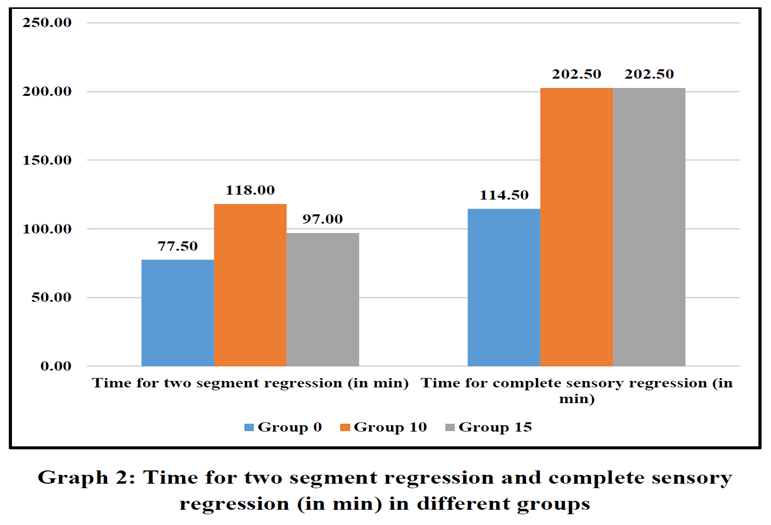
Table 2: Gender proportion in different groups
Table 2 shows equal gender distribution across all study groups.
|
Gender |
Group 0 |
Group 10 |
Group 15 |
|
Male |
20 (50.0%) |
20 (50.0%) |
20 (50.0%) |
|
Female |
20 (50.0%) |
20 (50.0%) |
20 (50.0%) |
Table 2 shows that males and females were equally distributed in all groups, with 50% each, ensuring comparability.
Table 3: Parameters of sensory block in different groups
Table 3 shows comparison of sensory block characteristics among the groups.
|
Parameters |
Group 0 |
Group 10 |
Group 15 |
P value |
|
Onset of sensory block at T10 (min) |
2.16±0.35 |
2.16±0.35 |
2.26±0.42 |
0.540 |
|
Maximum level of sensory blockade |
0.001* |
|||
|
T2 |
0 |
5 |
15 |
|
|
T4 |
0 |
32 |
25 |
|
|
T6 |
4 |
3 |
0 |
|
|
T8 |
11 |
0 |
0 |
|
|
T10 |
16 |
0 |
0 |
|
|
T12 |
9 |
0 |
0 |
|
|
Time required to achieve maximum level (min) |
4.24±0.92 |
4.58±0.54 |
4.74±0.70 |
0.030* |
|
Time for two segment regression (min) |
77.50±14.7 |
118.00±21.2 |
97.00±17.41 |
0.010* |
|
Time for complete sensory regression (min) |
114.50±22.1 |
202.50±32.1 |
202.50±32.1 |
0.020* |
Table 3 shows that the onset of sensory block at T10 was similar across groups (Group 0: 2.16±0.35 min, Group 10: 2.16±0.35 min, Group 15: 2.26±0.42 min; p=0.540), while maximum sensory blockade was significantly higher in Group 10 and Group 15 (predominantly T4 level). Time to achieve maximum sensory block and duration parameters were significantly prolonged in Group 10 and Group 15 (p<0.05).
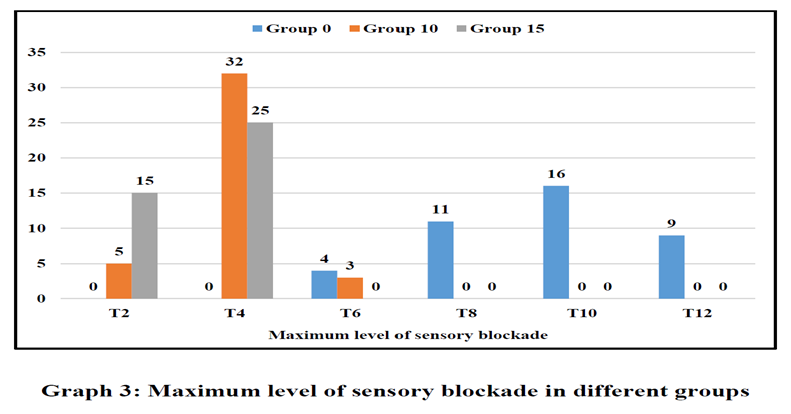
Table 4: Parameters of motor block in different groups
Table 4 shows comparison of motor block characteristics among the groups.
|
Parameters |
Group 0 |
Group 10 |
Group 15 |
P value |
|
Time of onset of motor blockade (min) |
2.58±0.5 |
2.31±0.3 |
2.28±0.6 |
0.121 |
|
Maximum motor blockade (min) |
2.81±0.2 |
2.91±0.1 |
3.02±0.0 |
0.050* |
|
Total duration of motor blockade (min) |
104.0±18.1 |
191.00±29.0 |
160.0±15.2 |
0.001* |
Table 4 shows that onset of motor blockade was comparable across groups (p=0.121), whereas maximum motor blockade and total duration were significantly higher in Group 10 and Group 15 compared to Group 0 (p<0.05).
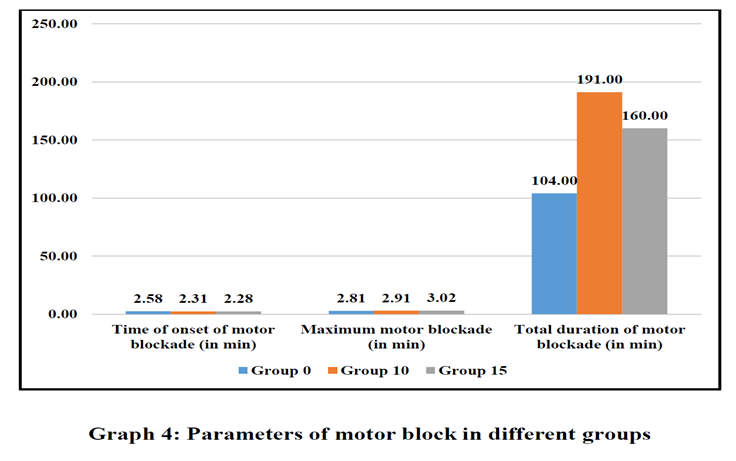
Table 5: Side effects in different groups
Table 5 shows incidence of side effects among the groups.
|
Side Effects |
Group 0 |
Group 10 |
Group 15 |
P value |
|
Nausea |
1 |
3 |
4 |
|
|
Vomiting |
0 |
2 |
5 |
|
|
Hypotension |
3 |
4 |
12 |
|
|
Bradycardia |
0 |
5 |
13 |
|
|
Any other |
0 |
0 |
0 |
0.021* |
Table 5 shows that incidence of side effects was higher in Group 15, particularly hypotension (30%) and bradycardia (32.5%), compared to Group 0 and Group 10 (p=0.021).
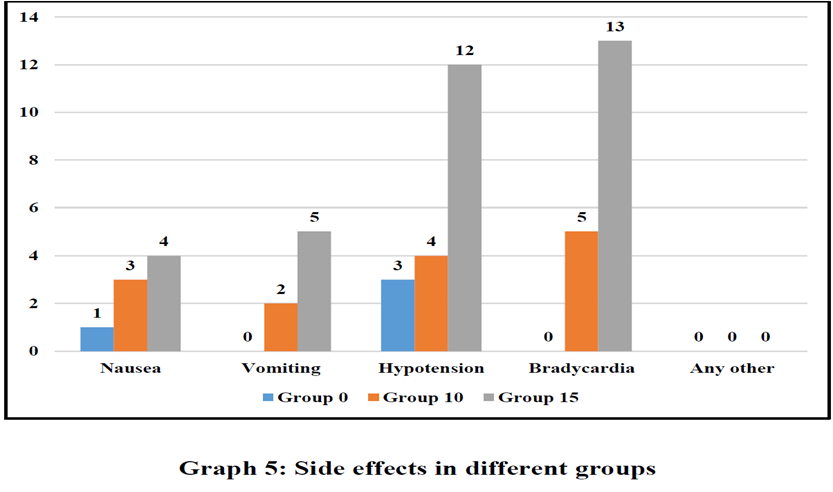
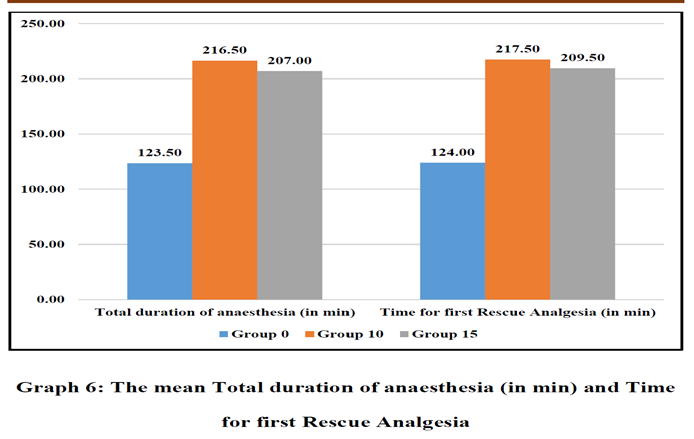
Table 6: Total duration of anaesthesia and time for first rescue analgesia
Table 6 shows comparison of duration parameters among groups.
|
Parameters |
Group 0 |
Group 10 |
Group 15 |
|
Total duration of anaesthesia (min) |
123.50±24 |
216.50±34.7 |
207.0±18 |
|
Time for first rescue analgesia (min) |
124.00±24.3 |
217.50±35.1 |
209.50±15.3 |
Table 6 shows that total duration of anaesthesia (216.50±34.7 min in Group 10 and 207.0±18 min in Group 15) and time for first rescue analgesia (217.50±35.1 min and 209.50±15.3 min, respectively) were significantly higher compared to Group 0 (123.50±24 min and 124.00±24.3 min).
DISCUSSION:
The present study was conducted to evaluate the effect of different volumes of normal saline (0 mL, 10 mL, and 15 mL) used for epidural volume expansion (EVE) on sensory blockade, motor blockade, and haemodynamic parameters following intrathecal anaesthesia in patients undergoing infra-umbilical surgeries. The findings demonstrate that epidural volume expansion significantly influences the characteristics of spinal anaesthesia [10].
Demographic Profile
In the present study, the mean age among Group 0, Group 10, and Group 15 was comparable, and no statistically significant difference was observed. Gender distribution was also equal across all groups. This indicates that the study groups were well matched, and the outcomes observed can be attributed to the intervention rather than demographic variation [11].
Similar demographic comparability has been reported in previous studies evaluating epidural volume expansion, where baseline characteristics did not significantly influence the outcomes.
Effect on Sensory Blockade
The onset of sensory blockade at T10 was comparable across all groups, indicating that epidural volume expansion does not significantly influence the initial onset of spinal anaesthesia. However, a significant difference was observed in the maximum level of sensory blockade, with Group 10 and Group 15 achieving higher levels (predominantly T4), whereas Group 0 achieved lower levels (T8–T10) [12].
The time required to achieve maximum sensory blockade was significantly prolonged in Group 10 and Group 15 compared to Group 0. Additionally, both two-segment regression time and total duration of sensory blockade were significantly increased in the groups receiving epidural volume expansion. These findings suggest that EVE enhances the cephalad spread of intrathecal local anaesthetic, likely due to compression of the dural sac and redistribution of cerebrospinal fluid. This mechanism results in a higher and more prolonged sensory block [13].
These observations are consistent with studies by Stienstra et al. and Takiguchi et al., who reported increased sensory block height following epidural saline administration. Similarly, Singh et al. demonstrated prolonged sensory regression times with 10 mL and 15 mL epidural saline, with better outcomes in the 10 mL group.
Effect on Motor Blockade
The onset of motor blockade was comparable across all groups, indicating that epidural volume expansion does not significantly affect the initiation of motor block. However, the maximum motor blockade and total duration of motor blockade were significantly greater in Group 10 and Group 15 compared to Group 0. Among the two intervention groups, Group 10 showed a longer duration of motor blockade compared to Group 15, suggesting that moderate epidural volume expansion may provide optimal prolongation of motor block without excessive spread [14,15].
These findings align with previous studies, including those by Bhandari et al. and Singh et al., which reported prolonged motor blockade with epidural volume expansion, particularly with moderate volumes of saline.
Haemodynamic Changes and Side Effects
The incidence of side effects, including hypotension and bradycardia, was higher in Group 15 compared to Group 10 and Group 0. This suggests that higher volumes of epidural saline may lead to excessive cephalad spread of anaesthesia, resulting in greater sympathetic blockade. Group 10 demonstrated a more favourable haemodynamic profile compared to Group 15, indicating that a moderate volume of epidural saline provides a balance between efficacy and safety [16,17].
These findings are supported by previous studies, which have shown that larger volumes of epidural saline are associated with increased risk of haemodynamic instability.
Duration of Anaesthesia and Analgesia
The total duration of anaesthesia and time to first rescue analgesia were significantly prolonged in Group 10 and Group 15 compared to Group 0. This indicates that epidural volume expansion enhances the duration of effective anaesthesia and postoperative analgesia. Group 10 showed slightly better outcomes compared to Group 15, suggesting that 10 mL of saline may be the optimal volume for achieving prolonged analgesia without excessive side effects [18].
Similar findings have been reported in studies by Lew et al. and Okasha et al., where epidural volume expansion was associated with prolonged analgesia and reduced requirement for additional analgesics.
Comparison with Previous Studies
The findings of the present study are consistent with several previously published studies. Singh et al. demonstrated that epidural volume expansion with 10 mL saline significantly prolongs sensory and motor blockade compared to control groups. Kohli et al. also reported that higher volumes of saline increase the height of sensory blockade, although very high volumes may be associated with increased complications [19].
Heesen et al., in their meta-analysis, suggested that the effect of epidural volume expansion is volume-dependent, with larger volumes increasing intrathecal drug spread but also increasing the risk of hypotension [20]. This is in agreement with the present study, where Group 15 showed more adverse effects compared to Group 10.
Clinical Implications
The results of the present study suggest that epidural volume expansion is a useful technique to enhance the efficacy of spinal anaesthesia. It allows for:
• Increased sensory block height
• Prolonged duration of anaesthesia
• Delayed requirement for postoperative analgesia
However, the volume of saline used is critical. While both 10 mL and 15 mL volumes improve block characteristics, 10 mL appears to provide an optimal balance between efficacy and safety.
Limitations of the Study
• The study was conducted in a single centre with a relatively limited sample size
• Long-term outcomes and patient satisfaction were not assessed
• Only normal saline was evaluated; comparison with epidural local anaesthetics was not performed
• Blinding was partial, which may introduce observer bias
Summary
Epidural volume expansion significantly enhances the characteristics of spinal anaesthesia. While both 10 mL and 15 mL volumes improve sensory and motor blockade and prolong analgesia, 10 mL appears to be the optimal volume, providing effective anaesthesia with fewer haemodynamic side effects.
CONCLUSION:
Epidural volume expansion (EVE) with normal saline significantly enhances the characteristics of spinal anaesthesia in patients undergoing infra-umbilical surgeries. The use of epidural saline leads to higher sensory block levels, prolonged duration of sensory and motor blockade, and delayed requirement for postoperative analgesia. Both 10 mL and 15 mL volumes of normal saline were effective in improving block characteristics compared to no epidural volume expansion. However, 10 mL of saline provided a more favourable balance between efficacy and safety, offering adequate sensory and motor blockade with relatively fewer haemodynamic disturbances. In contrast, 15 mL of saline, although associated with higher levels of sensory blockade, resulted in a greater incidence of side effects such as hypotension and bradycardia. Therefore, 10 mL of epidural saline appears to be the optimal volume for epidural volume expansion in combined spinal-epidural anaesthesia. Epidural volume expansion can thus be considered a useful and effective technique to improve the quality and duration of spinal anaesthesia while minimizing the requirement for higher doses of intrathecal drugs.
Limitations
• The study was conducted at a single centre, which may limit the generalizability of the findings.
• The sample size, although adequate, was relatively limited for broader population extrapolation.
• Long-term outcomes and patient satisfaction were not assessed.
• Only normal saline was used for epidural volume expansion; comparison with other agents such as local anaesthetics or opioids was not performed.
• Haemodynamic parameters were assessed only in the intraoperative period; long-term haemodynamic effects were not evaluated.
• Blinding was partial, which may introduce observer bias.
REFERENCES:
1. Rawal N; et al. Combined spinal epidural anaesthesia in obstetrics.
2. Bhattacharya D et al. Comparison of combined spinal epidural anaesthesia and spinal anaesthesia in elderly patients undergoing orthopaedic surgeries.
3. Salman C et al. Effect of physiological serum epidural dilation in combined spinal epidural anaesthesia for caesarean section.
4. Chandola HC; et al. History and techniques of combined spinal epidural anaesthesia.
5. Tyagi A et al. Factors affecting epidural volume expansion and its clinical implications.
6. Lew E et al. Epidural volume extension and its effect on spinal anaesthesia characteristics.
7. Preethi HN and Ravishankar BM. Prospective randomized study on epidural volume expansion in caesarean section.
8. Singh R et al. Study evaluating different volumes of saline for epidural volume expansion under spinal anaesthesia.
9. Loubert C et al. Effect of epidural volume expansion on level of sensory block.
10. Heesen M et al. Meta-analysis evaluating epidural volume expansion and its effects.
11. Stienstra R et al. Study on increase in sensory block level with epidural volume expansion.
12. Takiguchi T et al. Effect of 10 ml saline injection in epidural space after spinal anaesthesia.
13. Okasha AS et al. Efficacy of low-dose bupivacaine with epidural volume expansion.
14. Bhandari G et al. Comparative study of combined spinal epidural anaesthesia with and without epidural volume expansion.
15. Kane D et al. Effect of epidural volume expansion on motor recovery and intraoperative analgesia.
16. Kirla N et al. Comparison of 10 ml and 15 ml saline for epidural volume expansion.
17. Kohli M et al. Study comparing different saline volumes in pelvic surgeries using CSE.
18. Kaur M et al. Evaluation of motor and sensory recovery with epidural saline administration.
19. Hakim KY et al. Comparison of CSE with epidural volume expansion in lower limb surgeries.
20. Heesen M et al. Systematic review of epidural volume expansion in spinal anaesthesia.