Comparative Efficacy of Morphine as an Adjuvant to Ropivacaine versus Plain Ropivacaine for Postoperative Analgesia in Ultrasound-Guided Transversus Abdominis Plane (TAP) Block in Patients Undergoing Laparoscopic Cholecystectomy
- Aakash Kumar Raghuvansi , Assistant Professor, Department of Anesthesiology, Hind Institute of Medical Sciences, Ataria.
- Prashasti Saxena , Assistant Professor, Department of Anesthesiology, Hind Institute of Medical Sciences, Ataria.
- Shamse Alam , Assistant Professor, Department of Anesthesiology, Hind Institute of Medical Sciences, Ataria.
Article Information:
Abstract:
Background: Aim: Effective postoperative pain management is essential for early recovery and improved patient outcomes after abdominal surgery. Systemic opioids, although effective, are associated with several adverse effects. Ultrasound-guided Transversus Abdominis Plane (TAP) block has emerged as an effective regional anesthesia technique for postoperative analgesia in abdominal surgeries. The addition of adjuvants to local anesthetics may prolong analgesia and improve pain control. This study was conducted to compare the analgesic efficacy of ropivacaine alone versus ropivacaine with morphine as an adjuvant in ultrasound-guided TAP block in patients undergoing laparoscopic cholecystectomy. Methods: This prospective randomized study included 100 adult patients (ASA physical status I–II) aged 18–65 years undergoing laparoscopic cholecystectomy. Patients were randomly divided into two groups (n=50 each). Group S received ultrasound-guided TAP block with ropivacaine (1.5 mg/kg diluted to 20 mL), while Group M received ropivacaine (1.5 mg/kg) combined with morphine (100 µg) diluted to 20 mL. Postoperative pain was assessed using the Visual Analog Scale (VAS). The primary outcome was time to first rescue analgesic requirement. Secondary outcomes included VAS scores at different time intervals, patient satisfaction scores, hemodynamic parameters, and incidence of side effects. Results: Ninety-eight patients were included in the final analysis. The mean time to first rescue analgesic requirement was significantly longer in the ropivacaine plus morphine group compared to the ropivacaine group (949.02 ± 60.26 minutes vs 516.57 ± 31.68 minutes; p < 0.001). VAS scores were significantly lower in the morphine group from 4 hours onwards (p < 0.001). Patient satisfaction scores were significantly better in the morphine group at all assessed time intervals (p < 0.001). Hemodynamic parameters remained stable in both groups. The incidence of nausea was slightly higher in the morphine group but was not statistically significant. Conclusion: The addition of morphine as an adjuvant to ropivacaine in ultrasound-guided TAP block significantly prolongs the duration of postoperative analgesia, reduces pain scores, and improves patient satisfaction without increasing significant adverse effects. Therefore, ropivacaine combined with morphine may be considered an effective component of multimodal analgesia for patients undergoing laparoscopic cholecystectomy.
Keywords:
Article :
INTRODUCTION:
Post-operative pain remains one of the most common and distressing complications following surgical procedures. Effective management of post-operative pain is essential not only for patient comfort but also for early mobilization, reduced hospital stay, and prevention of complications such as pulmonary dysfunction, thromboembolism, and chronic post-surgical pain. Inadequately treated acute pain may also lead to the development of persistent chronic pain syndromes, which significantly affect quality of life.¹
Traditionally, systemic opioids such as morphine and fentanyl have been the cornerstone of post-operative analgesia. These agents are commonly administered through intravenous routes or patient-controlled analgesia (PCA). However, systemic opioids are associated with several undesirable adverse effects including nausea, vomiting, pruritus, sedation, respiratory depression, and delayed recovery.² These limitations have led to the development of multimodal analgesia strategies that combine different analgesic techniques to improve pain control while minimizing opioid consumption and associated side effects.
Regional anaesthesia techniques have gained increasing importance in modern perioperative pain management. Among these, the Transversus Abdominis Plane (TAP) block has emerged as a simple and effective method for providing analgesia to the anterior abdominal wall. The TAP block involves the deposition of local anaesthetic in the fascial plane between the internal oblique and transversus abdominis muscles, where the thoracolumbar nerves (T6–L1) traverse before supplying the anterolateral abdominal wall.³ By blocking these sensory nerves, TAP block provides effective analgesia for various abdominal procedures including appendectomy, cesarean section, hysterectomy, and urological surgeries such as Laparoscopic cholecystectomy.4,5
Local anaesthetics such as bupivacaine and ropivacaine are commonly used in TAP blocks. Ropivacaine is a long-acting amide local anaesthetic that provides effective sensory blockade with relatively less motor blockade and lower cardiotoxicity compared with bupivacaine.⁶ However, the duration of analgesia produced by local anaesthetics alone may be limited. To prolong analgesic duration and enhance block quality, several adjuvant drugs have been studied, including dexmedetomidine, dexamethasone, magnesium sulphate, fentanyl, and morphine.⁷
Morphine, a potent opioid analgesic, has been widely used as an adjuvant in regional anaesthesia due to its strong analgesic properties. When used in combination with local anaesthetics, morphine can enhance analgesic efficacy and prolong the duration of postoperative pain relief. Morphine acts primarily through activation of opioid receptors, producing analgesic, sedative, and sympatholytic effects that can attenuate perioperative stress responses.⁸ Previous studies have demonstrated that the addition of morphine to local anaesthetics in regional blocks may improve postoperative analgesia and reduce the requirement for systemic opioids.
Therefore, the present study was designed to evaluate and compare the analgesic efficacy of ropivacaine alone versus ropivacaine with morphine as an adjuvant in ultrasound-guided TAP block for patients undergoing Laparoscopic cholecystectomy, with the aim of improving postoperative pain control and reducing opioid consumption.
MATERIALS AND METHODS:
This randomized prospective study was carried out on 100 adult patients of ASA physical status I and II, scheduled for Laparoscopic cholecystectomy. Prevalence of post-operative Pain 84%, 92% and 96% at fifth postoperative hour, second and third post-operative day respectively. A sample size of atleast 86 patients were necessary with 95% confidence and a margin of error of 5%. A sample size of 100 was taken considering dropouts and others error factors.
Inclusion criteria
(1) Patient's age > 18 years and < 65 years
(2) ASA GRADE- I, II
(3) Patients with good mental function who could understand and rate their pain on Visual Analog Scale (VAS; scale of 0-10)
Exclusion criteria
(1) Patient refusal
(2) Obesity, neuromuscular disorder
(3) Нерatic and renal failure patient
(4) Chronic pain, bleeding disorder
(5) Respiratory and cardiac patients
(6) Allergic to ropivacaine and morphine
(7) Patients with failed spinal anaesthesia and converted to general anesthesia
(8) H/O opioid drug abuse
The total patients divided in to two groups of 50 each. Group S- Patients was given sub-coastal TAP block unilaterally (surgical site) with 1.5 mg/kg of ropivacaine (rounded to nearest multiple of 10) diluted to 20 mL in normal saline Group M- Patients was given sub-coastal TAP block unilaterally (surgical site) with 1.5 mg/kg of ropivacaine (rounded to nearest multiple of 10) plus 100 mcg morphine diluted to total of 20 mL in normal saline.
Methods: Informed written consent was taken from all individual patients. The patients fulfilling the criteria was included in the study after taking proper written and informed consent. The procedure was explained and different postoperative scores was defined for the further assessment. After arrival of the patient in operation theatre, all standard ASA monitors ECG, NIBP, SpO2 and Temperature was attached. An 18 gauge IV cannula was inserted into left or right dorsum of hand. In lateral position, maintaining proper asepsis, general anesthesia was given using Inj Glycopyrrolate 0.2mg, Inj Midazolam 1 mg, Inj Fentanyl 100mcg as premedication followed by Inj Propofol and Inj Vecuronium for induction and muscle relaxation.
At the end of surgery just before extubation Subcoastal USG guided TAP block given on the right side (Rpoivacaine with morphine in 1 group and plain Ropivacaine in second group). The ultrasound probe was placed transverse to the abdomen (horizontal plane) in the mid-axillary line between the costal margin and the iliac crest on one side. The muscle layers of external oblique, internal oblique, and transversus abdominis was identified. A 100-mm short bevel needle was introduced in plane of the ultrasound probe and advanced until it reached the plane between the internal oblique and transversus abdominis muscle. Upon reaching the plane, a small volume of local anesthetic (1 mL was injected to confirm the correct needle position after which the remaining dose (19 mL) of local anesthetic was given.
An increase in blood pressure or heart rate by > 20%, TАP Block analgesia was defined as insufficient analgesia or failed blockade. Post-operating monitoring- In both the groups, patients was observed for the postoperative VAS scores, Time required for the 1st dose of rescue analgesic when VAS>4. The rescue analgesic used was IV tramadol 1 mg/kg. postoperative patient’s satisfaction score was recorded too.
Any side effects viz. nausea, vomiting, retching, hypotension, pruritis and respiratory depression was assessed too. The duration of study for each patient was completed at the time of receiving rescue analgesia. Those patients who did not report any postoperative pain was continued for the study up to initial 24 h of postoperative period.
Statistical Evaluation: The obtained data was recorded & result was statistically analyzed by appropriate statistical method. A p value of <0.05 was considered as significant.
RESULTS:
100 patients were included in the study with 50 in each group, 2 Patients drop out from study, one from each group. Thus, data of 98 patients were included in result analysis. The groups were comparable in respect to age with approximately 37 years. Males were comparatively more as compared to females (graph 1).
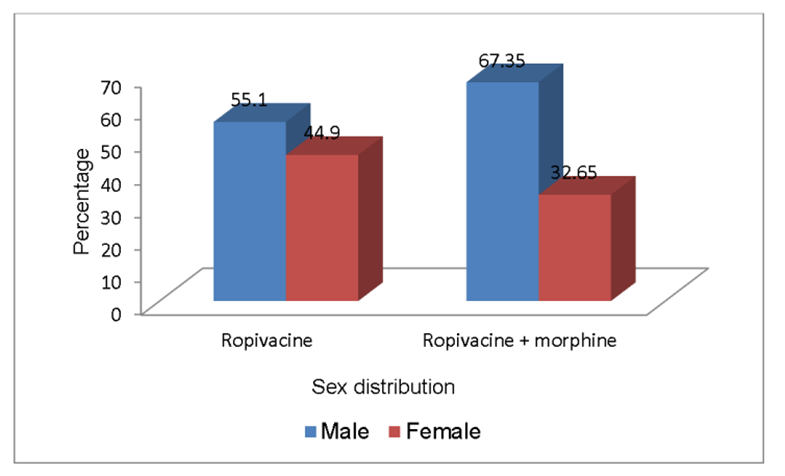
Graph 1: Gender distribution
The mean time to first analgesic requirement was significantly higher in the Ropivacaine + Morphine group compared to the Ropivacaine group (949.02 ± 60.26 vs 516.57 ± 31.68 minutes). This difference was statistically highly significant (t = -44.462, p < 0.001), indicating prolonged postoperative analgesia with the addition of morphine (table 1).
Table 1: Comparison of Time of First Analgesic Use Among Study Groups
|
Groups |
N |
Mean ± SD |
t-value |
p-value |
|
Ropivacaine |
49 |
516.57 ± 31.68 |
|
|
|
Ropivacaine + Morphine |
49 |
949.02 ± 60.26 |
-44.462 |
<0.001 |
The VAS scores were comparable at 0 and 2 hours postoperatively, although statistically significant differences were observed. From 4 hours onwards, VAS scores were significantly lower in the Ropivacaine + Morphine group compared to the Ropivacaine group, indicating superior and prolonged postoperative analgesia with the addition of morphine (p < 0.001 at most time intervals) as shown in table 2.
Table 2: Comparison of Visual Analog Score (VAS) Among Study Groups
|
Time Interval |
Ropivacaine (Mean ± SD) |
Ropivacaine + Morphine (Mean ± SD) |
t value |
p value |
|
VAS 0 hours |
3.08 ± 0.61 |
3.45 ± 0.58 |
3.065 |
0.003 |
|
VAS 2 hours |
2.00 ± 0.82 |
2.27 ± 0.45 |
1.996 |
0.049 |
|
VAS 4 hours |
2.86 ± 0.74 |
1.69 ± 0.65 |
8.281 |
<0.001 |
|
VAS 6 hours |
3.29 ± 0.58 |
1.43 ± 0.50 |
17.021 |
<0.001 |
|
VAS 12 hours |
4.49 ± 0.77 |
1.59 ± 0.54 |
21.665 |
<0.001 |
|
VAS 18 hours |
5.53 ± 0.77 |
4.22 ± 0.55 |
9.690 |
<0.001 |
|
VAS 24 hours |
6.41 ± 0.96 |
5.51 ± 0.89 |
4.807 |
<0.001 |
Patient satisfaction scores were significantly better in the Ropivacaine + Morphine group compared to the Ropivacaine group at all postoperative time intervals (p < 0.001). This indicates improved analgesic satisfaction when morphine was used as an adjuvant to ropivacaine in TAP block (table 3).
Table 3: Comparison of Patient Satisfaction Score (PSS) Among Study Groups
|
Time Interval |
Ropivacaine (Mean ± SD) |
Ropivacaine + Morphine (Mean ± SD) |
t value |
p value |
|
PSS 4 Hours |
2.45 ± 0.50 |
1.27 ± 0.57 |
10.912 |
<0.001 |
|
PSS 8 Hours |
3.92 ± 0.76 |
1.94 ± 0.52 |
15.088 |
<0.001 |
|
PSS 12 Hours |
5.08 ± 0.89 |
2.41 ± 0.54 |
18.065 |
<0.001 |
|
PSS 18 Hours |
6.37 ± 0.78 |
3.61 ± 0.70 |
18.350 |
<0.001 |
|
PSS 24 Hours |
6.63 ± 0.78 |
4.49 ± 0.71 |
14.190 |
<0.001 |
The baseline MAP values were comparable between both groups (p = 0.877). Significant differences in MAP were observed at 0 hours, 2 hours, 6 hours, 12 hours, and 24 hours postoperatively (p < 0.05). However, MAP values at 4 hours and 18 hours were comparable between the two groups, indicating no statistically significant difference at those time intervals (table 4).
Table 4: Comparison of Mean Arterial Pressure (MAP) Among Study Groups
|
Time Interval |
Ropivacaine (Mean ± SD) |
Ropivacaine + Morphine (Mean ± SD) |
t value |
p value |
|
MAP Pre-op |
97.88 ± 4.84 |
97.71 ± 5.55 |
0.155 |
0.877 |
|
MAP 0 Hours |
89.02 ± 6.03 |
101.14 ± 5.10 |
10.746 |
<0.001 |
|
MAP 2 Hours |
84.08 ± 4.34 |
79.06 ± 6.53 |
4.481 |
<0.001 |
|
MAP 4 Hours |
75.92 ± 4.56 |
74.73 ± 6.50 |
1.043 |
0.299 |
|
MAP 6 Hours |
75.59 ± 3.85 |
72.24 ± 6.16 |
3.225 |
0.002 |
|
MAP 12 Hours |
75.39 ± 2.80 |
71.59 ± 5.08 |
4.577 |
<0.001 |
|
MAP 18 Hours |
97.59 ± 4.36 |
98.65 ± 5.79 |
1.024 |
0.308 |
|
MAP 24 Hours |
85.82 ± 6.82 |
85.82 ± 6.82 |
8.495 |
<0.001 |
The incidence of nausea was slightly higher in the Ropivacaine + Morphine group (14.29%) compared to the Ropivacaine group (10.20%). However, the difference was not statistically significant (χ² = 1.964, p > 0.05), indicating comparable incidence of nausea between the two groups (graph 2).
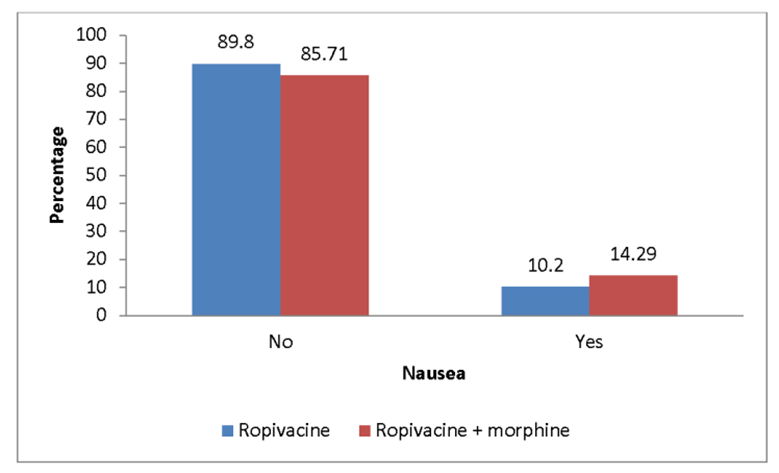
Graph 2: Incidence of Nausea among study groups
DISCUSSION:
In this study we observed that there was a significantly prolonged duration of postoperative analgesia when we use MORPHINE + ROPIVACAINE (Group M) in comparison to ROPIVACAINE (Group S) p<0.05, VAS score was significantly lower in MORPHINE + ROPIVACAINE (Group M) group as compared to ROPIVACAINE (Group S) after 6 hrs. Rescue analgesia that was required in ROPIVACAINE (Group S) was significantly earlier than MORPHINE + ROPIVACAINE (Group M).
Hemodynamic stability duration and patient satisfaction score was better in MORPHINE + ROPIVACAINE (Group M) as compared to ROPIVACAINE (Group S). There was no statistical difference in the incidence of nausea and vomiting in ROPIVACAINE (Group S) AND ROPIVACAINE + MORPHINE (Group M) group. In our study, the average duration of postoperative analgesia was 949.02±60.26 minutes in group ROPIVACAINE + MORPHINE (Group M) which was longer than it was in group ROPIVACAINE (Group S) 516 57±31.68 minutes.
Different adjuvants with ROPIVACAINE in the TAP block have their advantages and disadvantages many anaesthesiologists consider post-operative epidural analgesia or intravenous opioid for postoperative pain management. However, these methods of controlling post-operative pain have several disadvantages like for epidural analgesia we have to monitor blood pressure to prevent hypotension and proper care of epidural catheter to avoid its dislodgement, whereas intravenous opioids have their side effects like respiratory depression, constipation dependence, etc. Thus, considered the advantages of TAP block which bypassed all these side effects.
According to Chen et al9, the first request time for PCIA was significantly longer in the TAPDEX than in the TAP, TAP-FEN, and control groups (9.86±0.77, 7.86±0.56, 8.79±0.55, and 1.56±0.65 hours, respectively; P<0.01). The QoR-40 scores were highest in the TAP-DEX group. The mean PCIA bolus consumption in the first 24-48 hours was lowest in TAP-DEX group. VAS showed significant differences between TAP-DEX and TAP-FEN groups only at 6 hours. They concluded that the use of dexmedetomidine as an adjuvant to ТАР blocks could facilitate postoperative analgesia and improve the quality of recovery without increasing related complications.
In a study by Falia et al10, the average duration of analgesia with TAP bock for the overall study population was 316.15 minutes. The average VAS score in patients who received TAP with dexamethasone was 1.50 which is significantly lower than those who received clonidine. Further the duration of analgesia was 151 minutes longer in the first group who received dexamethasone TAP. In majority of the patients (84%) who received clonidine TAP, the analgesia persisted for 2-4 hours. While in patients who received dexamethasone addition, the analgesia persisted for 6-8 hours in 37%. They concluded that TAP block is a safe and effective way of relieving postoperative pain in LSCS patients. Addition of dexamethasone to bupivacaine significantly enhances its effect in terms of block quality and analgesia duration as compared to clonidine addition.
Bansal et al11 in their study showed that control group received TAP block with 3 mg/kg of ropivacaine. Time to initial onset of pain (6.6 vs. 5.03 h; P = 0.01) and time to first rescue analgesia (7.8 vs. 6.47 h; P = 0.03) were significantly longer in the test group compared with control group. They concluded that addition of dexmedetomidine to ropivacaine for TAP block in patients undergoing C-section prolonged the time to initial onset of pain and time to first rescue analgesia.
In a study by Amany et al12, time to first analgesia was significantly longer in the dexamethasone group (459.8 vs. 325.4 min, P=0.002), with lesser morphine requirements in the postoperative 48 h (4.9 vs. 21.2 mg, P=0.003) and lower incidence of nausea and vomiting (6 vs. 14, P=0.03). They concluded that addition of Dexamethasone to Bupivacaine in TAP block prolonged the duration of the block and decreased the incidence of nausea and vomiting.
Each study shows the benefits of Transverse Abdominas Plane Block in terms of duration and quality of analgesia. There is no significant study which shows the benefits of Ropivacaine (Less cardiotoxic) for Transverse Abdominas Plane Block.
There are various local anesthetic but Ropivacaine provides benefits in term of less cardiotoxicty. In this study; Morphine was taken as adjuvant which have long half-life so that duration of analgesia can be prolonged. There was no significant difference in side effects of Morphine was found in either groups. Morphine provides significant difference in duration of analgesia with safe side- effects profile.
Ropivacaine with morphine provides better postoperative analgesia and lesser VAS score, better patients satisfaction score. This study shows benefits in terms of duration and quality of analgesia with safe side-effects profile. Thus, this study concluded that TAP Block by ROPIVACAINE with morphine can be one of best drugs for postoperative analgesia.
CONCLUSION:
From our study, we conclude that morphine addition to local anesthetic Ropivacaine in ultrasound-guided TAP block for postoperative analgesia. Morphine prolongs the duration of postoperative analgesia, provides better pain control (VAS). TAP Block with Ropivacaine with adjuvant morphine can be part of a multimodal analgesia regimen for patients undergoing Laparoscopic cholecystectomy.
REFERENCES:
1. Kehlet H, Dahl JB. Anaesthesia, surgery, and challenges in postoperative recovery. Lancet. 2003;362:1921-28.
2. Gan TJ. Poorly controlled postoperative pain: prevalence, consequences, and prevention. J Pain Res. 2017;10:2287-98.
3. Hebbard P. Transversus abdominis plane (TAP) block. Anaesth Intensive Care. 2007;35(4):616-17.
4. Rafi AN. Abdominal field block: a new approach via the lumbar triangle. Anaesthesia. 2001;56:1024-26.
5. Niraj G, Kelkar A, Fox AJ. Ultrasound-guided transversus abdominis plane block. Anaesthesia. 2009;64:553-58.
6. McClure JH. Ropivacaine. Br J Anaesth. 1996;76:300-07.
7. Abdallah FW, Brull R. Adjuvants to local anesthetics for peripheral nerve blockade. Anesthesiology. 2013;118:1476-92.
8. Yaksh TL, Wallace MS. Opioids, analgesia and pain management. In: Brunton LL, editor. Goodman & Gilman’s The Pharmacological Basis of Therapeutics. 13th ed. New York: McGraw-Hill; 2018.
9. Chen K, Beckman Suurküla M, Blomberg S, Sjövall J, Edvardsson N. Central nervous and cardiovascular effects of i.v. infusions of ropivacaine, bupivacaine and placebo in volunteers. Br J Anaesth. 1997;78(5):507-514.
10. Falia JD, Barron FA, Grant S, et al. Plasma ropivacaine concentrations after ultrasound-guided transversus abdominis plane block. Br J Anaesth. 2010;105(6):853-856.
11. Bansal, Sakamoto A, Tanaka H, et al. Transversus abdominis plane block with 0.25 % levobupivacaine: a prospective, randomized, doubleblinded clinical study. J Anesth. 2015;29(4):557-561.
12. Knudsen K, Beckman Suurküla M, Blomberg S, Sjövall J, Edvardsson N. Central nervous and cardiovascular effects of i.v. infusions of ropivacaine, bupivacaine and placebo in volunteers. Br J Anaesth. 1997;78(5):507-514.