Study Linking Daily Screen Time Exposure to Language Development Milestones in Toddlers.
- Rakesh Kumar Soni , Senior Resident, Department of Paediatric, Esic Medical College and Hospital, Indore, Madhya Pradesh, India.
- Anil Malviya , Assistant Professor, Department of Paediatric, Esic Medical College and Hospital, Indore, Madhya Pradesh, India.
- Aniket Patel , Senior Resident, Department of Paediatric, Esic Medical College and Hospital, Indore, Madhya Pradesh, India.
- Richa Sisodia. , Senior Resident, BMT unit, Superspeciality Hospital, Indore, Madhya Pradesh, India.
Article Information:
Abstract:
Background: Language development in the first three years of life is an important part of children's cognitive and social development. Early language development is heavily reliant on environmental stimulation, including verbal interaction between caregivers and children. In recent years, the fast adoption of digital media devices such as televisions, cellphones, and tablets has resulted in increased screen exposure among toddlers. Excessive screen usage in early children may limit possibilities for social engagement and vocal communication, potentially impacting language development milestones. Objective: To investigate the relationship between daily screen time exposure and language development milestones in toddlers. Materials and Methods: A prospective observational study was done over a two-year period (January 2024 to December 2025) with 100 toddlers aged 12-36 months who visited a pediatric outpatient department. Data on daily screen exposure, device type, and parent-child interaction time were gathered using standardized questionnaires completed by parents. Language development milestones were tested using standardized checklists. Participants were divided into three groups depending on daily screen exposure: less than one hour, one to two hours, and more than two hours. The statistical analysis was carried out using SPSS software. The relationship between screen exposure and language development outcomes was investigated using descriptive statistics, the chi-square test, and Pearson correlation analysis. A p-value < 0.05 was considered statistically significant. Results: Out of the 100 toddlers in the study, 35% were exposed to more than two hours of screen exposure each day. Language delay was detected in 33% of participants, with a higher frequency among youngsters who had spent a lot of time in front of screens. Toddlers with more than two hours of screen time had significantly greater rates of delayed language milestones than those with less exposure (p = 0.003). Increased screen time was also linked to decreased expressive language and parent-child verbal contact. Conclusion: The current study found a significant connection between higher daily screen time exposure and delayed language development milestones in toddlers. Limiting screen time and encouraging caregiver-child connection may enhance optimum language development in early childhood.
Keywords:
Article :
INTRODUCTION:
Language development in early life is a critical component of cognitive and social development. The first three years of life are essential years in which children rapidly acquire vocabulary, develop expressive and receptive language abilities, and form communication patterns through interactions with caregivers. Adequate environmental stimulation and verbal interaction between parent and child are thought to be crucial for meeting adequate language development goals at this age [1,2]. Televisions, smartphones, tablets, and laptops have all become much more widely available and accessible in recent years. As a result, children are being exposed to screen media at an increasingly young age. Several studies have found that a considerable proportion of toddlers begin using digital devices before the age of two, frequently surpassing recommended screen exposure limits [3, 4].
Excessive screen time in early life has concerned pediatricians and researchers about its potential impact on developmental outcomes. Screen time may supplant activities that foster language development, such as parent-child connection, storytelling, and social conversation. Reduced exposure to conversational language may have a negative impact on children' vocabulary acquisition and expressive language development [5]. Previous study has found that increasing screen time may be linked to delayed speech development and lower language results in young children. Children who spend extended periods of time interacting with digital screens frequently have fewer opportunities for meaningful verbal exchanges with caregivers, which are critical for language learning in early childhood [6].
Furthermore, research indicates that the duration and context of screen exposure influence developmental outcomes. Passive consumption of digital information without parental engagement has been linked to lower language skills than interactive activities that include caregiver participation [7]. Recent longitudinal studies have also found that excessive screen time may impair children's exposure to adult words and impede conversational turn-taking, both of which are major predictors of language acquisition [8]. Thus, researching the relationship between daily screen exposure and language development milestones in toddlers is critical for setting suitable guidelines for early childhood media usage.
MATERIALS AND METHODS:
The current study was designed as a two-year prospective observational study, running from January 2024 to December 2025. The study comprised 100 toddlers aged 12 to 36 months who visited the pediatric outpatient department (OPD). Participants were chosen using a convenience sampling approach, and those who matched the eligibility requirements were recruited in the study after receiving informed consent from their parents or caregivers. The study sought to assess the relationship between daily screen time exposure and language development milestones among enrolled children.
Inclusion Criteria
• Toddlers aged 12–36 months
• Children attending pediatric OPD with parents willing to participate
• Children with regular exposure to digital devices (TV, smartphone, tablet)
• Parents willing to provide informed consent
Exclusion Criteria
• Children with hearing impairment
• Children diagnosed with developmental disorders (autism, cerebral palsy)
• Children with genetic or neurological disorders
• Premature infants (<34 weeks gestation)
• Children with previously diagnosed speech disorders
Data Collection
• Data were collected using a structured questionnaire including:
• Age and gender
• Type of screen device used
• Average daily screen exposure
• Parent-child interaction time
• Language milestone checklist
Screen exposure was categorized into three groups as follows
• <1 hour/day
• 1–2 hours/day
• >2 hours/day
Language development milestones were evaluated based on the following parameters
• expressive vocabulary
• response to verbal commands
• word combination ability
Statistical Analysis
All acquired data were entered and analyzed with the Statistical Package for the Social Sciences (SPSS) version 25. Descriptive statistics, such as mean and percentage, were utilized to characterize the participants' demographics and screen exposure patterns. The Chi-square test was used to examine the relationship between several categories of daily screen time exposure and language development outcomes. In addition, Pearson correlation analysis was used to determine the association between screen exposure time and language development scores. A p-value of <0.05 was judged statistically significant.
Ethical approval
The study protocol was reviewed and approved by the Institutional Ethics Committee. Written informed consent was obtained from the parents or guardians of all participating toddlers.
RESULTS:
The current study comprised 100 children aged 12 to 36 months who visited the pediatric outpatient department during the study period. Data on daily screen time exposure, the type of digital device used, and language development milestones were examined. The demographic characteristics of the participants, as well as the relationship between screen time exposure and language development results, are shown in the tables below.
Table 1: Age Distribution of Toddlers.
|
Age Group |
Number (n=100) |
Percentage |
|
12–18 months |
32 |
32% |
|
19–24 months |
28 |
28% |
|
25–30 months |
22 |
22% |
|
31–36 months |
18 |
18% |
Table 2: Daily Screen Time Exposure.
|
Screen Time |
Number |
Percentage |
|
<1 hour |
25 |
25% |
|
1–2 hours |
40 |
40% |
|
>2 hours |
35 |
35% |
Table 3: Language Delay According to Screen Time.
|
Screen Time |
Normal Language |
Delayed Language |
|
<1 hour |
22 |
3 |
|
1–2 hours |
30 |
10 |
|
>2 hours |
15 |
20 |
Chi-square test (χ²), p = 0.003
Table 4: Device Type Used.
|
Device |
Frequency |
Percentage |
|
Television |
42 |
42% |
|
Smartphone |
38 |
38% |
|
Tablet |
12 |
12% |
|
Multiple devices |
8 |
8% |
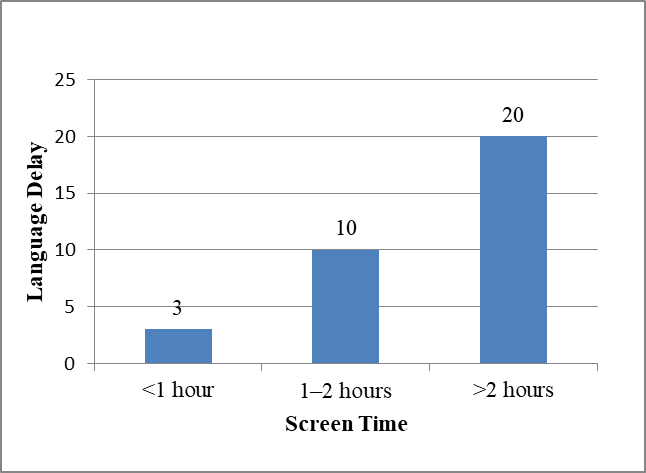
Figure 1: Screen Time vs Language Delay among toddlers.
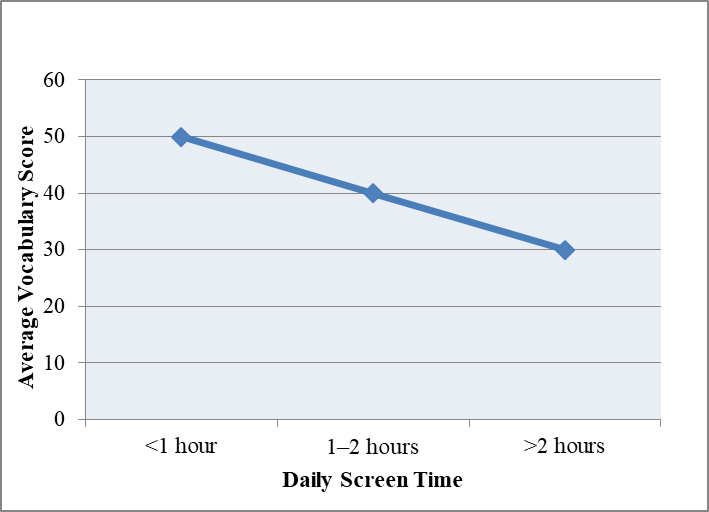
Figure 2: Relationship between daily screen time exposure and average vocabulary score among toddlers.
DISCUSSION:
The current study looked at the relationship between daily screen time exposure and language development milestones in children aged 12 to 36 months. The findings showed that toddlers who spent more time on screens each day were more likely to have delayed language development than children who had less exposure. These findings are similar with prior research, which found a negative connection between excessive digital media exposure and early language development [9]. One possible reason for this link is that prolonged screen time may limit opportunities for direct caregiver-child connection. Language development in early life is highly dependent on verbal communication, shared attention, and conversational interactions between caregivers and children. When screen media substitutes interactive experiences, children may acquire less verbal cues that are necessary for vocabulary development and expressive communication [10].
Similarly, a longitudinal study found that increasing screen exposure during infancy was associated with worse expressive vocabulary scores and delayed speech development in toddlers. The study proposed that early exposure to digital media may impact brain pathways involved in language acquisition [11]. Another research of young children's media use discovered that toddlers who spent more than two hours of screen time per day had considerably higher rates of speech delay than those who spent less time on screens. The authors proposed that passive screen viewing reduces opportunities for interactive communication, which is necessary for language learning [12].
Furthermore, research has shown that the type and context of media exposure might alter developmental outcomes. Interactive screen use with parental interaction may have a lower detrimental impact than passive viewing without engagement. However, excessive screen time in the absence of caregiver engagement may still cause developmental delays [13]. A systematic study of digital media use in early infancy found that excessive screen time may impair language acquisition by lowering social interaction and restricting exposure to spoken language. The review indicated that parent-child talk is still the most essential component supporting language development in early life [14].
Furthermore, data from neurodevelopmental studies suggests that early environmental stimulation, such as verbal communication and social contact, is critical in the development of brain circuits involved for language processing. Excessive screen exposure may reduce social contact and thus have a negative impact on language development results [15]. Overall, the present study's findings confirm previous research indicating that excessive screen time may contribute to delayed language milestones in toddlers, emphasizing the necessity of controlling digital media exposure during early infancy.
CONCLUSION:
The current study found a strong link between increased daily screen usage and delayed language development milestones in toddlers. Children who spent more than two hours per day on screens had a higher rate of delayed expressive and receptive language skills than children who spent less time on screens.
Excessive screen time may limit possibilities for meaningful caregiver-child interactions, which are critical for language development in early life.
To support healthy language development, parents and caregivers should be urged to minimize screen time and emphasize interactive activities with toddlers, such as reading, storytelling, and discussion.
REFERENCES:
1. Zimmerman FJ, Christakis DA. Associations between media viewing and language development in children. Pediatrics. 2010; 125(3):e582–e589.
2. Duch H, Fisher EM, Ensari I, Harrington A. Screen time use in children under 3 years old and its association with cognitive development. JAMA Pediatr. 2013; 167(5):1–7.
3. Madigan S, Browne D, Racine N, Mori C, Tough S. Association between screen time and children’s performance on developmental screening tests. JAMA Pediatr. 2019; 173(3):244–250.
4. Radesky JS, Schumacher J, Zuckerman B. Mobile and interactive media use by young children: The good, the bad, and the unknown. Pediatrics. 2016; 135(1):1–3.
5. Tomopoulos S, Dreyer BP, Berkule S, Fierman AH, Mendelsohn AL. Infant media exposure and toddler development. Pediatrics. 2010; 125(4):e821–e826.
6. Christakis DA. Interactive media use at younger than the age of 2 years: Time to rethink the American Academy of Pediatrics guideline? JAMA Pediatr. 2014; 168(5):399–400.
7. American Academy of Pediatrics Council on Communications and Media. Media and young minds. Pediatrics. 2016; 138(5):e20162591.
8. Brushe M, et al. Screen time and the early language environment of young children. JAMA Pediatr. 2024; 178(2):e235678.
9. Muppalla SK, Vuppalapati S, Reddy Pulliahgaru A, Sreenivasulu H. Effects of excessive screen time on child development: An updated review. Cureus. 2023; 15(2):e35105.
10. Karani NF, Sher J, Mophosho M. The influence of screen time on children’s language development: A scoping review. S Afr J Commun Disord. 2022; 69(1):1–7.
11. Lin LY, Cherng RJ, Chen YJ, Chen YJ, Yang HM. Effects of television exposure on developmental skills among young children. Infant Behav Dev. 2015; 38:20–26.
12. Sundqvist A, Koch FS, Birberg Thornberg U. Screen media exposure and vocabulary development in early childhood. Acta Paediatr. 2025; 114(1):45–52.
13. Swider-Cios E, Vermeij A, Sitskoorn MM. Young children and screen-based media: The impact on cognitive and language development. Front Psychol. 2023; 14:1035394.
14. McArthur BA, Browne D, Tough S, Madigan S. Screen time and developmental outcomes in early childhood: A systematic review. PLoS One. 2022; 17(10):e0275723.
15. Hutton JS, Dudley J, Horowitz-Kraus T, DeWitt T, Holland SK. Associations between home literacy environment and brain activation in preschool children. Pediatrics. 2020; 146(3):e20193778.