Exploring the Link Between Female Sexual Dysfunction, Depression and Marital Dissatisfaction; An Observational Study
- Riya Verma , Senior Resident, Department of Psychiatry, IHBAS Hospital, Delhi.
- Manushree Gupta , Professor, Department of Psychiatry, Safdarjung Hospital, Delhi
- Pankaj Verma. , Head and Professor, Department of Psychiatry, Safdarjung Hospital, Delhi.
Article Information:
Abstract:
Background: Aim: To determine the degree of sexual dysfunction in female subjects with depression. Material and Methods: The present cross-sectional study was conducted in the Department of Psychiatry, Vardhman Mahavir Medical College and Safdarjung hospital for a period of 18 months among 165 Drug naïve, sexually active female patients aged 18-45 year. Depressive Disorder according to International Classification of Diseases, WHO (ICD-10) criteria. A brief sociodemographic proforma was filled by the subjects. The tools administered to the subjects were MINI 7.02 (The Mini-International Neuropsychiatric Interview), Arizona Sexual Experiences Scale (ASEX): Arizona Sexual Experiences Scale (ASEX), Female Sexual Function Inventory (FSFI), Hamilton Depression Rating Scale (HDRS-17) and Enrich Marital Satisfaction Scale (EMSS). Results: The high prevalence of FSD found in this study (62.42% by ASEX and 64.85% by FSFI). Significant positive correlation was found between the severity of depression, as measured by the Hamilton Depression Rating Scale (HAM-D), and the level of sexual dysfunction (ASEX and FSFI). A significant proportion of participants (72.73%) were unemployed, which may have contributed to heightened psychological stress. Women with more severe sexual dysfunction reported lower marital satisfaction, with 60% of participants expressing dissatisfaction in their marriages. Conclusion: It can be concluded from the results that the high prevalence of FSD among women with depressive disorders and the profound impact this dysfunction has on marital satisfaction. The bidirectional relationship between sexual health, marital satisfaction, and depression suggests that comprehensive treatment approaches are necessary to improve outcomes.
Keywords:
Article :
INTRODUCTION:
Sexual health is a fundamental component of overall well-being, encompassing the complex interplay of physical, emotional, and social factors. Female sexual dysfunction (FSD) is a multifaceted condition marked by disturbances in sexual desire, arousal, orgasm, and pain, significantly impairing a woman's quality of life. The prevalence of FSD is notably high, particularly when it coexists with depressive disorders. Additionally, the interplay between FSD, depressive disorder, and marital satisfaction underscores the necessity for treatment strategies and improved patient outcomes. FSD affects many women across various age groups and cultural backgrounds. Epidemiological studies indicate that between 40% and 45% of women experience some form of sexual dysfunction during their lifetime (1,2). Women with FSD often report feelings of inadequacy, frustration, and distress, which can lead to strained relationships and diminished quality of life (3).
Depressive disorders, including major depressive disorder (MDD) and dysthymia, are characterized by persistent feelings of sadness, hopelessness, and lack of interest or pleasure in daily activities. Depression is a leading cause of disability worldwide, with over 264 million people affected globally (World Health Organization, 2021) (4). Women are disproportionately affected by depression, which can have a pervasive impact on all aspects of life, including work, social interaction, and physical health. The chronic nature of depression and its recurrent episodes contribute to its significant burden on individuals and society.
The relationship between depressive disorder and sexual dysfunction is bidirectional and complex. Depression can lead to sexual dysfunction through various mechanisms, including reduced libido, anhedonia, and adverse effects of antidepressant medications. Conversely, the presence of sexual dysfunction can exacerbate depressive symptoms by diminishing self-esteem and increasing emotional distress (5,6). Studies have consistently shown that women with depression. They are more likely to experience FSD, and the severity of sexual dysfunction is often correlated with the severity of depressive symptoms (7).
Recognizing and addressing the co-occurrence of FSD, depressive disorders, and marital dissatisfaction in clinical practice is essential for improving patient outcomes. Comprehensive assessment and individualized treatment plans that consider the multidimensional nature of these conditions are necessary. Therapeutic approaches may include pharmacological interventions, psychotherapy, and couple therapy aimed at enhancing sexual health, managing depressive symptoms, and improving marital satisfaction (8).
Female sexual dysfunction, depressive disorders, and marital satisfaction are interrelated conditions that significantly impact women's health and quality of life. By advancing our understanding of their interconnectedness and developing holistic, patient-centered treatment strategies, we can improve outcomes for women and their partners affected by these challenging conditions. Addressing the multidimensional nature of these issues requires a comprehensive and collaborative approach, integrating medical, psychological, and relational interventions to support women's sexual health, emotional well-being, and marital satisfaction. The objectives of the study are as follows:
Primary Objective: To determine the degree of sexual dysfunction in female subjects with depression.
Secondary objectives:
1. Assess the pattern of female sexual dysfunction in depression.
2. Assess the level of relationship satisfaction in partner of female subjects with depression
MATERIALS AND METHODS:
The present cross-sectional study was conducted in the Department of Psychiatry, Vardhman Mahavir Medical College and Safdarjung hospital for a period of 18 months after obtaining institutional ethical committee approval and written informed consent from the participant.
Sample Size Calculation: The sample for the present study has been obtained by using the following formula:
n = (z)2 p(1–p)/d2
𝛼 = 0.5, 95% CI P=46.6% Q=53.4% (100-P)
𝐿2=20% of P (8) relative error
Sample size came out to be 150, hence we add 10% error to it hence it led to a sample size of 165.
The sample size was calculated on the basis of reference study that was conducted by Reddy VM et al (9) with 270 participants including 135 cases and 135 control. The aim of the study was to assess the prevalence of sexual dysfunction in depressed female and compare them to non-depressed ones.
Inclusion Criteria
1. Drug naïve, sexually active female patients aged 18-45 year
2. Cohabiting with partner since last one year.
3. Depressive Disorder according to International Classification of Diseases, WHO (ICD-10) Criteria
Inclusion Criteria For Spouse
1. Should be cohabiting with the patient and should be sexually active from last 1 year.
2. Should not be having disorder affecting the sexual functioning of the patient.
Exclusion Criteria
1. Other psychiatric, neurological, or chronic physical illness disorder
2. Pregnant, lactating or menopausal women
3. Partners with significant physical, mental or sexual disorder as per provided history and those reporting significant relationship discord affecting sexual relationship with partners
Diagnosis and Screening: Sexually active females between the age of 18-45 years visiting the Psychiatry OPD were screened for Depressive Disorder as per the ICD-10 criteria and fulfilling the selection criteria was included in the study. The study subjects were explained in detail regarding all aspects of participation in the study. Those who were interested were informed and a written consent was obtained. A brief sociodemographic proforma was filled by the subjects. The following tools were administered to the subjects.
1. MINI 7.02 (The Mini-International Neuropsychiatric Interview): It is a short structured clinical interview which enables researchers to make diagnoses of psychiatric disorders according to DSM-5 or ICD-10. The administration time of the interview is approximately 15 minutes and has been designed for epidemiological studies. MINI has comparable reliability and validity in comparison to other popular scales like CIDI and SCID-P but takes lesser time for administration (10).
2. Arizona Sexual Experiences Scale (ASEX): Arizona Sexual Experiences Scale (ASEX), a five-item rating scale that quantifies sex drive, arousal, vaginal lubrication/penile erection, ability to reach orgasm, and satisfaction from orgasm. Possible total scores range from 5 to 30, with the higher scores indicating more sexual dysfunction. with a total ASEX score of > 19, any one item with a score of > 5, or any three items with a score of > 4 would have sexual dysfunction (11).
3. Female Sexual Function Inventory (FSFI): The FSFI is a widely-used measure of Female Sexual Dysfunction (FSD). It assesses 6 domains: desire; arousal; lubrication; orgasm; satisfaction; and pain. Validation studies in women aged 21 to 70 have demonstrated excellent internal consistency and 2–4-week test-retest reliability for each subscale. Discriminant validity was significant for all subscales, as well as the summary score. In the FSFI validation study, an analysis of sensitivity and specificity yielded a cut-off score of 26.55 for the identification of women with sexual dysfunction. It has been validated both in healthy women and women with chronic medical conditions. This instrument was developed to measure sexual function in women who were sexually active over the prior 4 weeks (12).
4. Hamilton Depression Rating Scale (HDRS-17): The HDRS is the most widely used clinician-administered depression assessment scale. The original version contains seventeen items (HDRS 17) pertaining to symptoms of depression experienced over the past week. It contains columns related to (depressed mood, feeling of guilt, suicide, insomnia, work and activities, retardation, agitation, anxiety, GI symptoms, hypochondriasis, loss of weight etc) it has 5-point rating from 0=mild to 4= very severe. this scale has a sensitivity 86.4% and specificity 86.4% (13).
5. Enrich Marital Satisfaction Scale (EMSS): The 15-item ENRICH (evaluation and nurturing relationship issues, communication and happiness) Marital Satisfaction (EMS) Scale. The scale is reliable and have strong correlations with other measures of marital satisfaction and moderate relationships with measures of family satisfaction and consideration of divorce. It provides a means to obtain both dyadic and individual satisfaction scores. Ten of the scale's items survey 10 domains of marital quality. The other 5 items compose a marital conventionalization scale to correct for the tendency to endorse unrealistically positive descriptions of the marriage (14).
The administration of the above tools took one hour for each study subjects. The date obtained were then entered in the master-chart prepared for the collection and tabulation of data.
Statistical analysis: Categorical variables were presented in number and percentage (%) and continuous variables will be presented as mean ± SD and median. Normality of data will be tested by Kolmogorov-Smirnov test. If the normality is rejected, non-parametric test will be used. Quantitative variables will be compared using Unpaired t-test/Mann-Whitney Test (when the data sets were not normally distributed) between the two groups. Qualitative variables will be compared using Chi-Square test /Fisher’s exact test. Pearson & Spearson rank correlation will be taken out. A p value of <0.05 will be considered statistically significant. The data will be entered in MS EXCEL spreadsheet and analysis will be done using Statistical Package for Social Sciences (SPSS) version 21.0.
RESULTS:
165 drug naïve, sexually active female patients aged 18-45 year with depressive disorder were included in the study. Mean age of the study subjects was 34.35 ± 6.9 years, with median (25th-75th percentile) of 35 (28-40) years. 120 cases (72.73%) were unemployed, 21 cases (12.73%) were skilled, 13 cases (7.88%) were semi-skilled, 7 cases (4.24%) were unskilled, and 4 cases (2.42%) were in Clerical/Shop/Farm occupations. 87 cases (52.73%) were from rural areas and 78 cases (47.27%) were from urban areas. 74 cases (44.85%) belonged to upper lower, 41 cases (24.85%) belonged to lower, 32 cases (19.39%) belonged to lower middle, 17 cases (10.30%) belonged to upper middle and 1 case (0.61%) belonged to upper class. Mean age of onset of depression among the study subjects was 32.99 ± 6.61 years, with median (25th-75th percentile) of 33 (27-38) years.
HAM-D score distribution among the cases was as follows: 90 cases (54.55%) had mild depression {8 to 16}, 66 cases (40.00%) had moderate depression {17 to 23} and 9 cases (5.45%) had severe depression {≥24}. Mean value of HAM-D score of the study subjects was 16.64 ± 4.23, with median (25th-75th percentile) of 16 (14-19) as shown in graph 1.
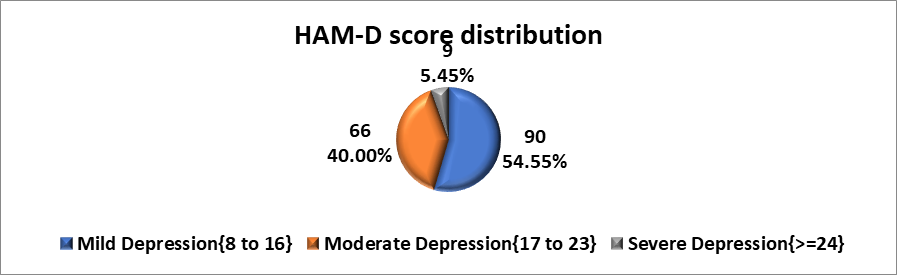
Graph 1: HAM-D score distribution
As per the ASEX criteria (total score >19); 103 cases (62.42%) had SD present (≥19) and 62 cases (37.58%) had SD absent (<19). According to FSFI scale; 107 cases (64.85%) had SD present {<26.55}, and 58 cases (35.15%) had SD absent {>26.55}. Mean value of Sexual Dysfunction (SD) as per FSFI of the study subjects was 23.09 ± 7.81, with median (25th-75th percentile) of 22.6 (18.1-31.7) as shown in table 1.
Table 1: Sexual dysfunction (SD) as per criteria- ASEX (total score >19) and FSFI distribution
|
SD as per criteria- ASEX, total score >19 |
Frequency=165 |
Percentage |
|
Present {>=19} |
103 |
62.42% |
|
Absent {<19} |
62 |
37.58% |
|
Sexual Dysfunction (SD) as per FSFI |
|
|
|
Present {<26.55} |
107 |
64.85% |
|
Absent {>26.55} |
58 |
35.15% |
|
Mean ± SD |
23.09 ± 7.81 |
|
|
Median (25th-75th percentile) |
22.6(18.1-31.7) |
|
|
Range |
9.1-34.4 |
|
As per ENRICH score {Marital Satisfaction; 99 cases (60.00%) had moderate dissatisfaction {37.5 to 56.24}, 50 cases (30.30%) had mild dissatisfaction {>56.25 to 75}, and 16 cases (9.70%) had severe dissatisfaction {<37.5} (Table 2).
Table 2: Sexual Dysfunction (SD) domains as per FSFI distribution and ENRICH score {Marital Satisfaction}
|
Sexual Dysfunction (SD) domains as per FSFI |
Present, N (%) |
Absent, N (%) |
|
Desire |
107 (64.85%) |
58 (35.15%) |
|
Arousal |
111 (67.27%) |
54 (32.73%) |
|
Lubrication |
146 (88.48%) |
19 (11.52%) |
|
Orgasm |
116 (70.30%) |
49 (29.70%) |
|
Satisfaction |
107 (64.85%) |
58 (35.15%) |
|
Pain |
116 (70.30%) |
49 (29.70%) |
|
ENRICH score {Marital Satisfaction} |
Frequency |
Percentage |
|
Mild dissatisfaction {>56.25 to 75} |
50 |
30.30% |
|
Moderate dissatisfaction {37.5 to 56.24} |
99 |
60.00% |
|
Severe dissatisfaction {<37.5} |
16 |
9.70% |
|
Total |
165 |
100.00% |
Desire SD was significantly higher in the severe group (100%) and moderate (87.88%) groups compared to the mild (8%) group (p value < 0.0001). Arousal SD was significantly higher in the moderate (91.92%) and severe (100%) groups compared to mild group (8%) (p value < 0.0001). Lubrication SD was significantly higher in moderate (96.97%) and severe (100%) groups compared to mild group (68%) (p value < 0.0001). Orgasm SD was significantly higher in the moderate (91.92%) and severe (100%) groups compared to mild group (18%) (p value < 0.0001). Satisfaction SD was significantly higher in severe group (100%) and moderate (87.88%) groups compared to the mild (8%) group (p value < 0.0001). Pain SD was significantly higher in the moderate (95.96%) and severe (100%) groups compared to the mild group (10%) (p value < 0.0001). Total score was significantly higher in the severe group (100%) and moderate (87.88%) groups compared to the mild (8%) group (p value < 0.0001) as shown in Table 3.
Table 3: Association of Sexual Dysfunction (SD) as well as its domains as per FSFI with ENRICH score
|
Sexual Dysfunction (SD) domains as per FSFI |
Mild {>56.25 to 75} (n=50) |
Moderate {37.5 to 56.24} (n=99) |
Severe {<37.5} (n=16) |
Total |
P value |
|
Desire |
|||||
|
Present {<4.28} |
4 (8%) |
87 (87.88%) |
16 (100%) |
107 (64.85%) |
<.0001† |
|
Absent {>4.28} |
46 (92%) |
12 (12.12%) |
0 (0%) |
58 (35.15%) |
|
|
Arousal |
|||||
|
Present {<5.08} |
4 (8%) |
91 (91.92%) |
16 (100%) |
111 (67.27%) |
<.0001† |
|
Absent {>5.08} |
46 (92%) |
8 (8.08%) |
0 (0%) |
54 (32.73%) |
|
|
Lubrication |
|||||
|
Present {<5.45} |
34 (68%) |
96 (96.97%) |
16 (100%) |
146 (88.48%) |
<.0001* |
|
Absent {>5.45} |
16 (32%) |
3 (3.03%) |
0 (0%) |
19 (11.52%) |
|
|
Orgasm |
|||||
|
Present {<5.05} |
9 (18%) |
91 (91.92%) |
16 (100%) |
116 (70.30%) |
<.0001* |
|
Absent {>5.05} |
41 (82%) |
8 (8.08%) |
0 (0%) |
49 (29.70%) |
|
|
Satisfaction |
|||||
|
Present {<5.04} |
4 (8%) |
87 (87.88%) |
16 (100%) |
107 (64.85%) |
<.0001† |
|
Absent {>5.04} |
46 (92%) |
12 (12.12%) |
0 (0%) |
58 (35.15%) |
|
|
Pain |
|||||
|
Present {<5.51} |
5 (10%) |
95 (95.96%) |
16 (100%) |
116 (70.30%) |
<.0001* |
|
Absent {>5.51} |
45 (90%) |
4 (4.04%) |
0 (0%) |
49 (29.70%) |
|
|
Sexual Dysfunction (SD) as per FSFI |
|
|
|
|
|
|
Present {<26.55} |
4 (8%) |
87 (87.88%) |
16 (100%) |
107 (64.85%) |
<.0001† |
|
Absent {>26.55} |
46 (92%) |
12 (12.12%) |
0 (0%) |
58 (35.15%) |
|
|
Total |
50 (100%) |
99 (100%) |
16 (100%) |
165 (100%) |
|
* Fisher's exact test, † Chi square test
Sexual Dysfunction (SD) as per FSFI was significantly higher in the moderate (92.42%) and severe (100%) groups compared to the mild group (41.11%) (p value < 0.0001). Proportion of patients with SD as per criteria - ASEX, total score >19 was significantly higher in the moderate (92.42%) and severe (100%) groups compared to the mild group (36.67%) (p value < 0.0001) as shown in table 4.
Table 4: Association of sexual Dysfunction (SD) as per FSFI and SEX with severity of depression
|
Sexual Dysfunction (SD) as per FSFI |
Mild Depression (n=90) |
Moderate Depression (n=66) |
Severe Depression (n=9) |
Total |
P value |
|
Present {<26.55} |
37 (41.11%) |
61 (92.42%) |
9 (100%) |
107 (64.85%) |
<.0001* |
|
Absent {>26.55} |
53 (58.89%) |
5 (7.58%) |
0 (0%) |
58 (35.15%) |
|
|
Total |
90 (100%) |
66 (100%) |
9 (100%) |
165 (100%) |
|
|
SD as per criteria- ASEX, total score >19 |
|
|
|
|
|
|
Present {>=19} |
33 (36.67%) |
61 (92.42%) |
9 (100%) |
103 (62.42%) |
<.0001* |
|
Absent {<19} |
57 (63.33%) |
5 (7.58%) |
0 (0%) |
62 (37.58%) |
|
|
Total |
90 (100%) |
66 (100%) |
9 (100%) |
165 (100%) |
* Fisher's exact test
Significant strong positive correlation was seen between ENRICH score (Marital Satisfaction) with total score (ASEX scoring) with correlation coefficient of 0.756. Significant strong negative correlation was seen between ENRICH score (Marital Satisfaction) with total score (FSFI scoring) with correlation coefficient of -0.753. Significant strong positive correlation was seen between HAM-D score with total score (ASEX scoring) with correlation coefficient of 0.704.
Significant strong negative correlation was seen between HAM-D score with total score (FSFI scoring) with correlation coefficient of -0.71.
Table 5: Correlation of ENRICH score (Marital Satisfaction), HAM-D score with Total score (ASEX scoring) and Total score (FSFI scoring)
|
Variables |
Total score (ASEX scoring) |
Total score (FSFI scoring) |
|
ENRICH score (Marital Satisfaction) |
||
|
Correlation coefficient |
0.756 |
-0.753 |
|
P value |
<0.0001 |
<0.0001 |
|
HAM-D score |
||
|
Correlation coefficient |
0.704 |
-0.710 |
|
P value |
<0.0001 |
<0.0001 |
DISCUSSION:
The study included 165 drug naïve, sexually active females, and they were assessed using the HAMD scale for the severity of depression and ASEX and FSFI for the severity of sexual dysfunction. Marital satisfaction was also evaluated by using the ENRICH marital satisfaction scale. Sexual dysfunction is prevalent but is often an underreported issue among women with depressive disorder, significantly impacting their quality of life. The correlation between sexual dysfunction and marital satisfaction forms a critical aspect of this study. Given the biopsychosocial interplay, depression not only exacerbates sexual dysfunction but also strains marital relations, which in turn perpetuates depressive symptoms.
In the current study, the mean age of females being assessed was 34.35 years, with most cases being within the age group of 28-40. In India, the study conducted by Reddy et al.(15) and Kendurkar et al.(16) reported similar results, with the mean age being 32 years and 35 years, respectively. The majority of the study participants were aged between 31-40 years (43.64%), followed by those between 21-30 years (34.55%) and 41-45 years (21.82%). This age group is significant as it represents women in the peak years of marital life and sexual activity, often associated with greater marital and familial responsibilities.
Educational attainment in the study population was modest, with 33.94% having completed high school and 2.42% being graduates, which is similar to the result shown by Sreelakshmy et al (17)., wherein 70% of the cases were educated up to high school and 10% have higher education (17). A similar result was also given by Abhivant et al (18).
It emerged from the study that 72.73% of females were unemployed, followed by 4.24% doing unskilled work, 7.88% semiskilled, and only 12.73% of them were involved in the skilled task, which is similar to the finding of Sreelakshmy et al (17)., having 90% cases as unemployed and Reddy et al (15). with 54% cases being unemployed. The fact that 72.73% were unemployed is particularly relevant, as financial dependence and lack of self-efficacy can augment the psychological distress associated with both depression and sexual dysfunction.
In this study, most participants belong to upper lower socioeconomic status, i.e., 44.85%. Socioeconomic struggles, coupled with the psychosocial burden of depression, can amplify marital discord and sexual dissatisfaction. For women in lower socioeconomic classes, their identity and sense of worth are tied to their roles as wives and mothers, and failure in the sexual domain can be particularly devastating. This result is comparable to the result of Arvind et al., who reported that depression is more prevalent in lower socioeconomic status (19).
Female Sexual Dysfunction is one of the underdiagnosed disorders across the world, especially in developing countries like India, with complex cultural barriers and taboos regarding open discussion about sexual health. In this study, sexual functioning was assessed by using FSFI and ASEX scales. After applying ASEX to the study population, the mean value of various parameters came out to be: sex drive 3.59, arousal 3.62, lubrication 3.59, orgasm 3.64, satisfaction 3.72, and mean total score was 18.15. It was seen that sexual dysfunction was present in 62.42% of the study population. It was similar to the result obtained in the study of Abhivant et al (18)., in which sexual dysfunction came out to be 67.34%. Similar findings were obtained from the results of various studies conducted by different people; as in the survey conducted by Roy et al (20)., the FSD was 73.3% on ASEX and 46.6% in the study done by Reddy et al., indicating a high prevalence of sexual dysfunction among depressed females.
When FSFI was applied, it was found the maximum score was obtained in lubrication, i.e., 88.48%, and the minimum score was present in the domain of satisfaction and pain at 29.70%, which is comparable to the study of Reddy et al (15)., where also it was seen that lubrication was most affected. From the result of FSFI, it was observed that 64.85% of females have sexual dysfunction, which was comparable to the study conducted by Roy et al (20)., where SD came out to be 70% on the same scale. Another study by Sreelakshmy et al (17). reported sexual dysfunction to be present in 90% of study participants, though it quoted a smaller sample size as a possible reason for the higher prevalence of SD in their study. A study conducted by Reddy et al (15). reported a 40% prevalence of SD, explained by the overrepresentation of mild and moderate depressive cases in their study sample as a probable reason for the slightly lower FSD in both ASEX and FSFI, which contradicts our study.
The present study found a significant positive correlation between HAM-D and ASEX score with a correlation coefficient of (0.704 & p = <0.0001). which was comparable to the study conducted by Thakurta et al with strong correlation of (0.817, p=<0.0001) (21). Another study was conducted by Muzawar et al (22). showed a positive correlation between SD and depression. Unlike the other studies, our research covers a broader spectrum by incorporating the psychological, sexual, and relational aspects of depressive disorder in females, making it more comprehensive (22). The incorporation of marital satisfaction as a variable in our study offers a unique perspective that the other studies may not have explored in depth, making our research particularly relevant for couple therapy and relational counseling.
A negative correlation was seen between HAM-D and FSFI (-0.710, p= <0.0001). These findings were similar to the study conducted by Muzawar et al (22). A subsequent study by Safarinejad et al (23), reinforced these findings, showing that women with depressive disorder had lower FSFI scores compared to controls, particularly in domains of sexual desire and satisfaction. Notably, the severity of depressive symptoms was found to be inversely proportional to the FSFI score, indicating that more severe depression was associated with more significant sexual dysfunction, which was also seen in our study. Similarly, Fava et al. 2006 conducted a survey utilizing the ASEX scale where the findings were that women with MDD have significantly higher ASEX scores, indicating a higher level of sexual dysfunction (24).
Our study found that 60% of the population reported marital dissatisfaction out of 165 recruited participants, close to 42 % seen in a survey conducted by Hirsch et al. 2017 (25). Montejo et al found a negative correlation between the ASEX score and the ENRICH score, which was also present in our study. The proportion of patients with sexual dysfunction scoring higher on the ASEX scale showed more marital dissatisfaction, and the result was significant (p = <0.0001) (26).
In our study, it came out that the severity of depressive symptoms was a mediating factor, further compounding both sexual dysfunction and marital dissatisfaction.
Limitations:
1. This is a cross-sectional study, which does not allow for establishment of causality.
2. The study has a small sample size, hence the result cannot be generalized to a larger population.
3. The lack of a control group of non-depressed sexually active females limits the ability to compare the extent of sexual dysfunction and marital dissatisfaction specifically related to depression.
Strengths:
1. Standardized tools were used to measure sexual dysfunction in depressed females and its correlation with marital satisfaction.
2. The psychiatric comorbidities which could add to the bias were ruled out.
3. It is one of the limited studies done to assess the sexual dysfunction and marital dissatisfaction in depressed females.
4. The study focuses on drug naive participants, the study eliminated the potential confounding effects of antidepressant medication on sexual functioning, providing a clearer picture of the relationship between depression and sexual dysfunction.
5. This study addressed a underreported issues, due to cultural taboos.
6. This study provides valuable insight in sociodemographic factor influencing the study topic.
CONCLUSION:
This study underscores the significant impact of depression on both sexual health and marital relationships in drug-naïve women, highlighting the critical need for early detection and intervention in this population. Sexual dysfunction is both a common and often underrecognized issue among women with depressive disorders. The high prevalence of FSD found in this study (62.42% by ASEX and 64.85% by FSFI) reaffirming the importance of identifying and addressing this condition in women suffering from depression. The overlap between depressive symptoms and FSD suggests a potential therapeutic benefit in treating both issues simultaneously, as alleviating one could improve the other, thereby enhancing overall quality of life. The study also found a significant positive correlation between the severity of depression, as measured by the Hamilton Depression Rating Scale (HAM-D), and the level of sexual dysfunction (ASEX and FSFI).
One of the key findings of this study is the clear connection between FSD and marital dissatisfaction. Women with more severe sexual dysfunction reported lower marital satisfaction, with 60% of participants expressing dissatisfaction in their marriages. This highlights the bidirectional relationship between sexual health and marital satisfaction: poor sexual function often leads to marital discord, which in turn worsens depressive symptoms, perpetuating a cycle of dissatisfaction and dysfunction. Tackling issues like communication, emotional intimacy, and sexual dissatisfaction may alleviate some of the marital discord that perpetuates depressive symptoms and sexual dysfunction.
Future research should focus on the long-term effects of depressive disorders on sexual health and marital satisfaction, especially in diverse cultural and socioeconomic contexts. Studies exploring intervention strategies that address both mental health and sexual function are needed to inform evidence-based treatments for FSD in women with depression.
REFERENCES:
1. Lewis RW, Fugl-Meyer KS, Bosch R, et al. Epidemiology/risk factors of sexual dysfunction. J Sex Med. 2020; 1(1): 35-9.
2. Shifren JL, Monz BU, Russo PA, et al. Sexual problems and distress in United States women: Prevalence and correlates. Obstet Gynecol. 2021; 112(5): 970-8.
3. Rosen RC, Bachmann GA, Leiblum SR, et al. Prevalence of sexual dysfunction in women: Results from a survey of 20,000 women attending primary care practices. J Sex Marital Ther. 2022; 28(2): 77-91.
4. World Health Organization. Depression and other common mental disorders: Global health estimates. Geneva: WHO; 2021. Available from: https://www.who.int/publications/i/item/depression-global-health-estimates.
5. Atlantis E, Sullivan T. Bidirectional association between depression and sexual dysfunction: A systematic review and meta-analysis. J Sex Med. 2012;9(6):1497-507.
6. Taylor MJ, Rudkin L, Bullemor-Day P, Lubin J, Chukwujekwu C, et al. Strategies for managing sexual dysfunction induced by antidepressant medication. Cochrane Database Syst Rev. 2020; 5: CD003382.
7. Laurent SM, Simons AD. Sexual dysfunction in depression and anxiety: Conceptualizing sexual dysfunction as part of an internalizing dimension. Clin Psychol Rev. 2020; 77: 101827.
8. American Psychiatric Association. Diagnostic and statistical manual of mental disorders. 5th ed. Arlington, VA: American Psychiatric Association; 2020.
9. Reddy VM, Chandrashekar CR. Prevalence of mental and behavioural disorders in India: A meta-analysis. Indian journal of psychiatry. 1998; 40(2): 149.
10. Sheehan DV, Lecrubier Y, Sheehan KH, et al. The Mini- International Neuropsychiatric Interview (M.I.N.I): the development and validation of a structured diagnostic psychiatric interview os DSM-IV and ICD-10. J Clin Psychiatry. 1998;59 suppl 20: 22-33; quiz 34-57.
11. Cynthia A. McGahuey, Alan J. Gelenberg, Cindi A. Laukes, et al. The Arizona Sexual Experience Scale (ASEX): Reliability and Validation, Journal of Sex & Marital Therapy 2000; 26(1): 25-40.
12. Rosen, C. Brown, J. Heiman, S. et al. The Female Sexual Function Index (FSFI): a multidimensional self-report instrument for the assessment of female sexual function. Journal of sex & marital therapy. 2000; 26(2): 191-208.
13. Obeid S, Hallit CA, Haddad C, et al. Validation of the Hamilton Depression Rating Scale (HDRS) and sociodemographic factors associated with Lebanese depressed patients. L'encephale. 2018; 44(5): 397-402
14. Fowers BJ, Olson DH. ENRICH Marital Satisfaction Scale: A brief research and clinical tool. Journal of Family psychology. 1993; 7(2): 176.
15. Reddy A, Menon V, Ranjith G, et al. Depressive disorder and sexual dysfunction: A case-controlled study. Indian J Psychiatry. 2017; 59(1): 63-67.
16. Kendurkar A, Kaur B, Reddy A. Depression and sexual dysfunction in married women. J Affect Disord. 2018; 234(1): 57-62.
17. Sreelakshmy K, Menon V, Reddy A, et al. The prevalence and correlates of sexual dysfunction in women with depression. Indian J Psychiatry. 2017; 59(1): 39-47.
18. Abhivant A, Sahoo M, Prakash O, et al. Sexual dysfunction and its correlation with depression in women: A study from a tertiary care hospital. Indian J Psychiatry. 2018; 60(2): 157-163.
19. Arvind BA, Gururaj G, Loganathan S, et al. Prevalence and socio-demographic correlates of depression among urban and rural populations in India. Indian J Public Health. 2019; 63(4): 282-286.
20. Roy A, Sahoo S, Anand N, et al. Sexual dysfunction in women with depression: A cross-sectional study from eastern India. J Psychosom Res. 2018; 112: 56-61.
21. Thakurta RG, Singh OP, Bhattacharya A, et al. Nature of sexual dysfunctions in major depressive disorder and its impact on quality of life. Indian journal of psychological medicine. 2012; 34(4): 365.
22. Muzawar I, Sandeep G, Gupta P, et al. Correlation of depression and sexual dysfunction in women: A study of 100 cases. Indian J Psychol Med. 2017; 39(3): 288-292.
23. Safarinejad MR. Female sexual dysfunction in a population-based study in Iran: prevalence and associated risk factors. International journal of impotence research. 2006; 18(4): 382-95.
24. Fava M & Rankin MA. Sexual functioning and selective serotonin reuptake inhibitors: A study of patients with major depressive disorder. J Clin Psychiatry. 2006; 67(4): 728-732.
25. Hirsch JK, Chang EC, Sirois FM, et al. Depressive symptoms and sexual satisfaction among married women: A longitudinal analysis. J Sex Marital Ther. 2017; 43(1): 14-28.
26. Montejo AL, Montejo L, Navarro-Cremades F. A study of the relationship between sexual dysfunction, marital satisfaction, and depressive symptoms in women treated with antidepressants. Eur Psychiatry. 2011; 26(3): 212-220.