Music-Based Interventions for Migraine: A Systematic Review of Randomized and Prospective Interventional Studies
- Manoj Eapen Mathew , Associate Professor Department of General Medicine. Government Medical College, Palakkad.
- Dr Aswathy P T , Assistant Professor, Department of General Medicine, Government Medical College, Palakkad.
Article Information:
Abstract:
Background: Migraine affects approximately 12–15% of the global population and represents one of the leading causes of years lived with disability worldwide¹². Despite advances in pharmacologic therapies—including calcitonin gene-related peptide (CGRP) monoclonal antibodies³⁴—many patients experience incomplete response, medication intolerance, or seek complementary non-pharmacologic approaches. Music-based interventions—including therapist-led music therapy, structured music listening protocols, smartphone-delivered music programs, and EEG-derived auditory modulation—have been proposed as potential adjunctive treatments. However, the clinical efficacy and certainty of evidence supporting these interventions remain unclear. Objective: To systematically evaluate the efficacy and safety of music-based interventions in the acute and preventive treatment of migraine. Methods: A systematic review was conducted according to the Preferred Reporting Items for Systematic Reviews and Meta-Analyses (PRISMA 2020) guidelines¹³. Randomized controlled trials and prospective interventional studies evaluating music-based interventions in individuals with migraine were included. Risk of bias was assessed using the Cochrane Risk of Bias 2 (RoB2) tool¹⁷. Certainty of evidence was evaluated using the GRADE framework¹⁸. Results: Five prospective interventional studies met inclusion criteria.A pediatric randomized controlled trial demonstrated significant preventive benefit of music therapy compared with placebo⁵.An adolescent attention-placebo-controlled trial found no superiority of music therapy over structured engagement⁶.An emergency department randomized trial demonstrated modest adjunctive benefit for acute migraine pain reduction when music listening was added to standard therapy⁷.Two adult prospective preventive studies suggested possible benefit but were at high risk of bias⁸⁹. Across studies, no serious adverse events were reported. Conclusions: Music-based interventions may provide modest adjunctive benefit in selected migraine populations, particularly in pediatric preventive contexts and acute care settings. However, the current evidence base is limited and heterogeneous. Larger, rigorously controlled randomized trials are required before music-based interventions can be recommended within standard migraine treatment guidelines.
Keywords:
Article :
INTRODUCTION:
Global Epidemiology and Burden
Migraine is one of the most prevalent and disabling neurological disorders worldwide. According to the Global Burden of Disease 2019 study, migraine ranks among the leading causes of years lived with disability globally¹. Among adults younger than 50 years, it is the leading cause of neurological disability².
Population-based studies estimate a lifetime prevalence of approximately 12–15%, with a marked sex difference: women are affected approximately three times more frequently than men¹²⁰. Migraine commonly begins during adolescence and peaks during the most productive years of adulthood²¹.
Beyond recurrent pain episodes, migraine is associated with substantial personal and societal burden. Individuals with migraine frequently experience, reduced occupational productivity,impaired quality of life, increased psychiatric comorbidity, elevated healthcare utilization and socioeconomic burden²²
Chronic migraine, defined as ≥15 headache days per month for more than three months, is associated with particularly severe disability and increased risk of medication overuse headache²⁵.
Given this substantial burden, improving both pharmacologic and non-pharmacologic treatment strategies remains an important clinical priority.
Contemporary Pathophysiology
Migraine is no longer considered a purely vascular disorder. Contemporary models conceptualize migraine as a disorder of sensory network dysfunction involving multiple brain regions¹¹²³.
Key mechanisms implicated in migraine pathophysiology include:activation of the trigeminovascular system,cortical spreading depolarization associated with aura, hypothalamic activation during the premonitory phase,impaired descending pain modulation pathways,thalamocortical dysrhythmia and cortical hyperexcitability¹¹²³,Electrophysiological studies demonstrate that individuals with migraine exhibit impaired habituation to repetitive sensory stimuli, a hallmark of abnormal sensory processing¹²²⁶. For example, visual and auditory evoked potential studies show enhanced cortical responses compared with healthy controls²⁶²⁷.
These abnormalities are thought to contribute to characteristic migraine symptoms including photophobia, phonophobia, and sensory hypersensitivity³²⁸.So migraine is increasingly seen as a disorder of dysregulated sensory amplification and abnormal central processing, rather than a condition driven primarily by vascular changes.
Limitations of Current Therapies
Current acute migraine treatments include, nonsteroidal anti-inflammatory drugs (NSAIDs),triptans,gepants,ditans. Preventive therapies include,beta-blockers,topiramate,valproate,onabotulinumtoxinA,calcitonin gene-related peptide (CGRP) monoclonal antibodies³⁴²⁹
Although CGRP-targeted therapies represent a major therapeutic advance, treatment response remains incomplete. Approximately 30–40% of patients fail to achieve a ≥50% reduction in monthly migraine days, even with preventive therapy³⁴.Additionally, several challenges remain,medication intolerance or adverse effects,risk of medication overuse headache,and limited preventive options in pediatric populations. So patients prefer for non-pharmacologic approaches. The interventions like behavioral therapies, including cognitive behavioral therapy (CBT) and biofeedback, demonstrate moderate evidence for migraine prevention, particularly in pediatric populations¹⁴³³. However, access to trained providers and implementation barriers may limit widespread availability.
These limitations have prompted growing interest in complementary neuromodulatory approaches, including music-based interventions.
Neurobiological Rationale for Music-Based Interventions
Music is a complex multisensory stimulus capable of engaging distributed neural networks involved in emotion, cognition, and pain modulation.Neuroimaging studies demonstrate that emotionally salient music activates several brain regions implicated in pain processing, including,anterior cingulate cortex,insular cortex,orbitofrontal cortex,amygdala,nucleus accumbens,periaqueductal gray¹⁵³⁶
The periaqueductal gray (PAG) plays a central role in endogenous pain modulation through descending inhibitory pathways¹⁰.Experimental studies have also demonstrated dopamine release within the nucleus accumbens during peak emotional responses to music, suggesting that music engages reward pathways associated with analgesia and emotional regulation¹⁵.
Music may additionally influence autonomic nervous system activity. Slow-tempo music (approximately 60–80 beats per minute) has been shown to increase parasympathetic activity, reduce cortisol levels, and modulate physiological stress responses¹⁶.Given that, stress is a common migraine trigger and autonomic dysregulation has been observed in migraine patients¹¹, these mechanisms provide a plausible neurobiological rationale for investigating music-based interventions in migraine management.
Furthermore, many structured music therapy programs incorporate behavioral components such as,emotional processing,relaxation techniques,guided imagery and structured engagement. These elements overlap conceptually with established behavioral migraine therapies¹⁴The Phonophobia Paradox
Despite the theoretical therapeutic potential of music, migraine is frequently associated with phonophobia, defined as increased sensitivity to sound during migraine attacks³.Migraine patients demonstrate enhanced auditory cortex responsiveness and impaired sensory habituation, even during the interictal period²⁶²⁷. Consequently, auditory stimulation could theoretically exacerbate symptoms rather than relieve them.
However, structured musical stimuli differ fundamentally from environmental noise,because music typically contains, predictable rhythmic patterns,structured harmonic progression, emotional valence. Predictable rhythmic stimuli may facilitate neural entrainment, a process in which cortical oscillations synchronize with external rhythmic input³⁵. This synchronization may stabilize thalamocortical networks and reduce sensory instability. Thus, structured musical stimulation may produce neuromodulatory effects distinct from the unpredictable auditory stimuli that often trigger phonophobia.
So understanding whether music can ameliorate or exacerbate sensory hypersensitivity in migraine remains an important question for clinical interpretation.
Rationale for the Present Review
Although several individual studies have evaluated music-based interventions in migraine⁵–⁹, the clinical evidence remains limited and heterogeneous. Previous reviews of music therapy in medicine have generally focused on broader outcomes such as pain, anxiety, or perioperative stress, rather than migraine-specific outcomes.Furthermore, few prior syntheses have, distinguished preventive versus acute treatment contexts, examined pediatric versus adult populations separately, evaluated methodological quality using contemporary frameworks such as RoB2¹⁷ and assessed overall certainty of evidence using GRADE methodology¹⁸.
So the aim of this systematic review is therefore to critically evaluate randomized and prospective interventional studies investigating music-based interventions in migraine, with particular attention to methodological quality, clinical context, and certainty of evidence.
MATERIALS AND METHODS:
Study Design and Reporting Framework
This systematic review was conducted and reported in accordance with the Preferred Reporting Items for Systematic Reviews and Meta-Analyses (PRISMA 2020) statement¹³.
The review question, eligibility criteria, and analytic strategy were defined prior to full-text assessment in order to minimize post-hoc decision bias. Because music-based interventions in migraine were anticipated to vary substantially in intervention format and clinical context, a qualitative evidence synthesis approach was prespecified.
A meta-analysis was planned only if at least two randomized controlled trials demonstrated sufficient clinical and methodological homogeneity in population, intervention, comparator, and outcome definitions. Ultimately, quantitative pooling was not performed due to substantial heterogeneity across included studies.
Eligibility Criteria (PICO Framework)
Eligibility criteria were defined according to the Population, Intervention, Comparator, Outcome (PICO) framework.
Population
Studies were eligible if they included, children, adolescents, or adults, diagnosed with migraine according to International Classification of Headache Disorders (ICHD) criteria³ or clearly defined clinical migraine diagnosis, episodic or chronic migraine, studies involving mixed primary headache populations were included if,migraine constituted the majority diagnosis, or migraine-specific outcomes were reported separately⁶
Studies exclusively involving tension-type headache, cluster headache, or secondary headache disorders were excluded.
Intervention
Eligible interventions included structured music-based therapeutic approaches, including, therapist-led music therapy involving active engagement, structured passive music listening interventions, smartphone-delivered music-based relaxation programs, EEG-derived individualized auditory therapy.
To qualify for inclusion, interventions were required to involve, deliberate therapeutic use of music, defined exposure duration, structured delivery protocol. Studies evaluating ambient background music without therapeutic framing were excluded.
Comparator
Eligible comparators included, placebo control, attention-matched active control, standard pharmacologic care. No comparator in prospective interventional cohort studies. Randomized controlled trials were prioritized during evidence synthesis due to their higher internal validity.
Outcomes
Studies were required to report quantifiable headache-related outcomes.
Primary outcomes included, monthly migraine days (MMD), migraine attack frequency, ≥50% responder rate, acute pain reduction (defined as ≥3-point reduction on pain scale or pain ≤2/10). Secondary outcomes included,attack duration, acute medication use, disability scores (e.g., MIDAS, HIT-6), psychological outcomes, adverse events. Studies that did not report measurable migraine outcomes were excluded.
Study Design
Eligible study designs included, randomized controlled trials, prospective interventional cohort studies
Excluded study types included, case reports, retrospective analyses, narrative reviews, editorials, conference abstracts without full data,qualitative studies without clinical outcome measures.
Information Sources
These electronic databases were searched, PubMed/MEDLINE,Embase, Cochrane Central Register of Controlled Trials (CENTRAL)
Searches were conducted from database inception through March 2026. Reference lists of eligible studies were also manually screened to identify additional relevant publications.No geographic restrictions were applied.
Search Strategy
Search strategies combined migraine-related and music-related terms using both controlled vocabulary and free-text keywords. A representative search string used in PubMed was:
("Migraine Disorders" OR migraine OR chronic migraine)
AND
("Music Therapy" OR "music intervention" OR "music medicine" OR "auditory therapy")
AND
(randomized OR controlled OR prospective OR clinical trial)
Search strategies were designed to capture studies across, pediatric and adult populations, acute and preventive treatment contexts, digital and app-based interventions.
Study Selection Process
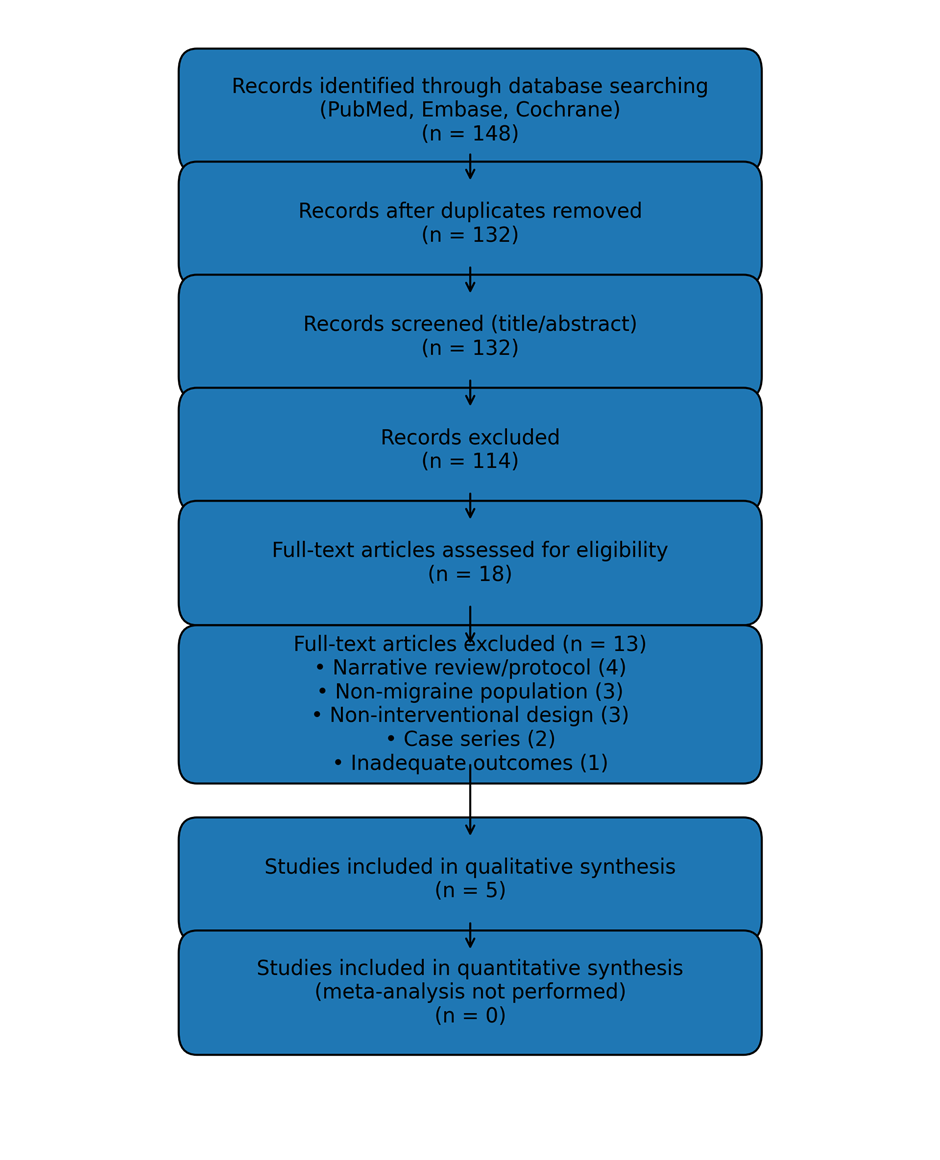
The database search identified 148 records.After removal of duplicates, 132 records underwent title and abstract screening, a total of 18 full-text articles were assessed for eligibility. Thirteen studies were excluded for the following reasons, narrative review or protocol (n = 4),non-migraine population (n = 3) non-interventional design (n = 3), case series without prospective structure (n = 2), inadequate outcome reporting (n = 1)
Five studies met eligibility criteria and were included in the qualitative synthesis (References 5–9). All other cited references provide epidemiologic, mechanistic, or methodological context and were not part of the interventional evidence synthesis.
Data Extraction
Data extraction was performed using a predefined standardized template.Extracted variables included are , study design,sample size, population demographics, diagnostic criteria, intervention characteristics, comparator details, outcome measures, statistical results,follow-up duration and adverse events. Special attention was given to, definition of responder outcomes, diary-based versus recall-based outcome measurement, blinding procedures and attrition rates. Full-text articles were reviewed independently to ensure accurate extraction of methodological details and outcome data.
Risk of Bias Assessment
Randomized controlled trials were evaluated using the Cochrane Risk of Bias 2 (RoB2) tool¹⁷. The domains were assessed include, randomization process,deviations from intended interventions, missing outcome data, measurement of outcome, selection of reported results
Each domain was classified as, low risk of bias, some concerns, high risk of bias. Because blinding participants to music-based interventions is inherently difficult, performance bias was anticipated and evaluated carefully.Prospective non-randomized studies were qualitatively assessed, recognizing increased susceptibility to, selection bias, regression to the mean, placebo effects and confounding.
Certainty of Evidence
The certainty of evidence for each outcome was evaluated using the GRADE framework¹⁸. Evidence was assessed across five domains, risk of bias, inconsistency, indirectness, imprecision and publication bias. Randomized controlled trials were initially rated as high certainty, whereas observational studies began as low certainty.Evidence was downgraded when limitations were identified.
Data Synthesis Strategy
Given substantial heterogeneity across included studies in terms of population age groups, preventive versus acute treatment contexts, intervention type (active music therapy versus passive listening) and outcome definitions. A structured qualitative synthesis was performed rather than a meta-analysis. Interpretation of findings integrated, effect magnitude, internal validity, risk-of-bias profile, certainty of evidence, biological plausibility. Greater interpretive weight was given to randomized trials with active comparator designs, which provide stronger evidence regarding intervention-specific effects.
RESULTS:
Overview of Included Studies
Five prospective interventional studies met the eligibility criteria and were included in the qualitative synthesis (References 5–9). These studies comprised, three randomized controlled trials⁵–⁷ and two prospective non-randomized interventional studies⁸⁹. Across all included studies, the total number of participants was 378.
The studies differed substantially in several important aspects,population age groups (children, adolescents, adults), clinical settings (preventive outpatient treatment versus acute emergency care), intervention type (therapist-led music therapy, passive music listening, smartphone-delivered music programs, EEG-derived auditory therapy), outcome definitions (attack frequency, pain reduction, subjective improvement). Because of this clinical and methodological heterogeneity, quantitative pooling of results was not considered appropriate. Instead, findings are presented according to clinical context and study design.
Pediatric Preventive Trial
(Oelkers-Ax et al., 2008⁵)
Study Design
This exploratory randomized parallel-group trial evaluated three treatment arms: butterbur extract, placebo, and structured music therapy. The pharmacologic arms (butterbur and placebo) were conducted under double-blind conditions, whereas blinding was not feasible for the music therapy intervention due to its behavioral nature. The treatment phase lasted 12 weeks, followed by a 6-month follow-up period. Notably, this study directly compared a behavioral therapeutic intervention with pharmacologic therapy and placebo, providing a unique perspective within the migraine prevention literature.
Population Characteristics
Participants were children aged 8–12 years who met diagnostic criteria for migraine according to the International Headache Society classification. Eligibility required a baseline frequency of at least two migraine attacks per month. A total of 71 children were enrolled, of whom 58 completed the treatment phase and were included in the final analysis. Baseline migraine frequency and clinical characteristics were broadly comparable across the treatment groups.
Intervention Description
The music therapy intervention consisted of a structured psychotherapeutic program delivered by trained therapists. The program included twelve weekly individual therapy sessions supplemented by monthly family sessions. Therapeutic components incorporated music-assisted relaxation techniques, emotional expression through musical role-play, body awareness training, and structured therapeutic rituals. Importantly, the intervention involved active therapeutic engagement with music, rather than passive music listening.
Primary Outcome
The primary outcome was reduction in migraine frequency, assessed over a four-week period using headache diaries. Treatment response was defined as a ≥50% reduction in migraine attack frequency, a commonly used responder criterion in migraine prevention trials.
Results
Post-treatment analyses demonstrated a 65.7% reduction in migraine frequency in the music therapy group, compared with a 28.8% reduction in the placebo group, representing a statistically significant difference (p = 0.005). The proportion of participants achieving responder status (≥50% reduction) was 70.6% in the music therapy group compared with 26.3% in the placebo group, which was also statistically significant (p = 0.010).
At six-month follow-up, the music therapy group maintained a 63.2% reduction in migraine frequency, whereas the placebo group showed a 31.4% reduction, and this difference remained statistically significant (p = 0.018). However, when a last-observation-carried-forward (LOCF) analysis was applied to account for missing outcome data, the statistical significance of these findings was attenuated.
Interpretation
This trial demonstrated the strongest apparent preventive effect of music therapy among the studies included in the review. Nevertheless, several methodological limitations warrant careful consideration. These include the relatively small sample size, the substantial placebo response (approximately 30%), the inability to blind the behavioral intervention, and the absence of an active behavioral comparator group.
Placebo responses are well recognized to be particularly pronounced in pediatric migraine trials. Furthermore, because the intervention incorporated multiple psychotherapeutic components, the observed clinical improvement may reflect a combination of music-specific effects, therapeutic engagement, expectancy effects, and non-specific therapist interaction. Consequently, the results should be interpreted with appropriate caution.
Risk of Bias Assessment
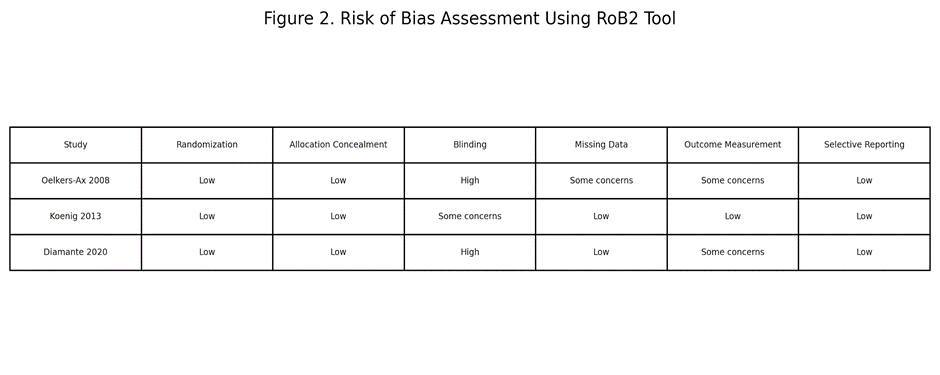
Risk of bias was evaluated using the Cochrane Risk of Bias Tool 2 (RoB 2). The randomization process and allocation concealment were judged to be at low risk of bias. However, blinding of participants and personnel was not feasible due to the nature of the music therapy intervention, resulting in a high risk of performance bias. Missing outcome data and outcome measurement raised some concerns, particularly because headache outcomes were primarily based on self-reported headache diaries. Overall, the study was judged to present some concerns regarding risk of bias. According to the GRADE (Grading of Recommendations Assessment, Development and Evaluation) framework, the overall certainty of evidence from this study was rated as low.
Adolescent Active-Control Trial
(Koenig et al., 2013⁶)
Adolescent Active-Control Trial (Koenig et al., 2013)
Study Design
This randomized controlled trial compared manualized music therapy with structured rhythm pedagogy, which served as an active control condition. The control intervention was designed to closely match the music therapy program in terms of session frequency, therapist contact time, group format, and overall engagement intensity. By aligning these elements, the investigators aimed to control for non-specific therapeutic factors such as attention, structured activity, and participant engagement.
Population Characteristics
The study included adolescents aged 12–17 years who were diagnosed with primary headache disorders, with migraine representing the predominant diagnosis. A total of 71 participants were randomized to the intervention or control group. Baseline headache frequency and other key clinical characteristics were comparable between the two groups, indicating balanced allocation at study entry.
Outcome Measures
The primary outcomes were headache frequency, measured as the number of headache days per 28-day period, pain intensity, assessed using a numeric rating scale, and headache-related functional impairment. Treatment response was defined as a ≥50% reduction in headache frequency, a commonly used responder criterion in headache research.
Results
Both intervention groups demonstrated modest improvement over the course of the study. However, there was no significant group-by-time interaction for headache frequency (p = 0.37). Immediately following treatment, responder rates were 17.5% in the music therapy group and 15.8% in the active control group. At follow-up, responder rates were 25% for music therapy and 36.8% for the active control intervention. No statistically significant between-group differences were observed for pain intensity, headache-related disability, or psychological outcomes.
Interpretation
This trial provides one of the methodologically strongest studies within the current evidence base. The use of a well-matched active control minimized the influence of expectancy effects and attention bias. The absence of superiority of music therapy over the structured rhythm program suggests that structured therapeutic engagement itself may account for much of the observed benefit. Consequently, these findings moderate the interpretation of positive results reported in earlier pediatric trials.
Risk of Bias
Risk of bias was assessed using the Cochrane Risk of Bias Tool 2 (RoB 2). The randomization process and outcome measurement were judged to be at low risk of bias, while some concerns were noted for performance bias because participants were aware of the intervention they received. Selective reporting was assessed as low risk. Overall, the study was considered to have a low-to-moderate risk of bias. According to the GRADE (Grading of Recommendations Assessment, Development and Evaluation) framework, the evidence from this trial provides moderate-certainty evidence indicating no clear superiority of music therapy over the active control condition.
Acute Emergency Department Trial(Diamante et al., 2020⁷)
Study Design
This randomized open-label parallel-group trial investigated whether music listening could enhance standard acute migraine treatment in the emergency department setting. Participants were randomly assigned to receive either standard pharmacologic therapy alone or standard therapy combined with 30 minutes of music listening. The trial was designed to determine whether a simple, non-pharmacological intervention could improve short-term pain outcomes during acute migraine management.
Population
The study enrolled 174 adults aged 18–60 years who presented to the emergency department with moderate-to-severe migraine attacks. All participants received standard abortive migraine therapy according to the clinical protocol used in the emergency department.
Primary Outcome
The primary outcome was adequate pain reduction at one hour, defined as either a reduction of at least 3 points on the pain scale or a pain intensity of ≤2 on a 10-point scale. A secondary outcome was complete headache relief at one hour following treatment.
Results
Adequate pain reduction at one hour was achieved in 94% of patients in the music intervention group compared with 85% in the control group, representing an absolute difference of 9%, which reached statistical significance (p = 0.037).
Complete headache relief at one hour occurred in 55% of patients receiving music listening compared with 42% in the control group, a difference that approached statistical significance (p = 0.05).
The mean pain score at one hour was 2.63 in the music group and 3.40 in the control group, with the difference also reaching statistical significance (p = 0.017).
Interpretation
The observed approximately 9% absolute improvement in pain reduction suggests a modest but potentially clinically relevant adjunctive benefit of music listening in the acute treatment of migraine. Several mechanisms may contribute to this effect, including reduction of anxiety and emotional distress, cognitive distraction from pain perception, and activation of descending pain inhibitory pathways.
However, the findings should be interpreted cautiously due to several methodological limitations, including the open-label design, the absence of an auditory placebo or sham control condition, and the short-term nature of the outcome assessment. According to the GRADE (Grading of Recommendations Assessment, Development and Evaluation) framework, the certainty of evidence from this study is considered low to moderate.
Adult Preventive Prospective Studies
Smartphone-Based Music Intervention (Parlongue et al., 2021⁸)
This prospective pilot study evaluated the feasibility and potential effectiveness of a smartphone-delivered music-based relaxation program for migraine prevention. The study included 20 adults with episodic migraine, and the intervention was implemented over a three-month period.
Following the intervention, participants experienced a mean reduction of 2.8 migraine attacks per month (p = 0.01). Approximately 50% of participants achieved a ≥50% reduction in migraine frequency, meeting the commonly used responder threshold in migraine prevention studies. Additional improvements were observed in attack duration and use of acute migraine medications, suggesting a potential reduction in overall migraine burden.
However, the interpretation of these findings is limited by several methodological constraints. The study lacked a control or comparator group, which makes it difficult to distinguish the true intervention effect from placebo response or natural fluctuation in migraine frequency. In addition, the small sample size reduces the reliability and generalizability of the results. The findings may also reflect regression to the mean or expectancy effects associated with participation in an intervention study. According to the GRADE (Grading of Recommendations Assessment, Development and Evaluation) framework, the certainty of evidence from this study is considered very low.
EEG-Derived Auditory Therapy
(Meister et al., 1999⁹)
This prospective observational cohort study evaluated EEG-derived individualized auditory therapy, commonly referred to as psychofonia, as a potential treatment approach for migraine. The study enrolled 55 adults with migraine, of whom 46 participants completed the follow-up assessment.
The intervention involved personalized auditory stimulation, in which participants listened to sound sequences generated from their individual electroencephalographic (EEG) recordings. This individualized auditory therapy was administered over a 12-month period.
At the end of the follow-up period, approximately 56% of participants reported a ≥50% improvement in migraine symptoms. Reported benefits included reductions in migraine attack frequency, pain intensity, and duration of attacks, suggesting a possible therapeutic effect.
However, several methodological limitations restrict the interpretability of these findings. The study lacked a comparator or control group, relied primarily on subjective outcome reporting, and did not employ standardized migraine outcome measures commonly used in modern clinical trials. Due to these limitations, the certainty of evidence was assessed as very low according to the GRADE (Grading of Recommendations Assessment, Development and Evaluation) framework.
Integrated Evidence Pattern
Across the five included studies⁵–⁹, the strongest apparent preventive signal was observed in the pediatric trial⁵, the most methodologically rigorous finding was the absence of superiority in the adolescent active-control trial⁶. The acute emergency trial demonstrated modest adjunctive benefit⁷. Adult preventive evidence remains highly uncertain⁸⁹. Importantly, the only study controlling for structured engagement⁶ did not demonstrate a specific effect of music therapy beyond therapist interaction. This observation significantly shapes interpretation of the overall evidence base.
Mechanistic Interpretation: How Might Music Influence Migraine?
Music-based interventions occupy an unusual position in migraine therapy because they involve sensory stimulation rather than pharmacologic modulation. Understanding how music interacts with migraine neurobiology requires considering the disorder as a condition of abnormal sensory processing, altered pain modulation, and dysregulated affective networks.
Migraine as a Disorder of Sensory Processing
Contemporary models conceptualize migraine as a disorder characterized by abnormal sensory gain and impaired cortical habituation¹¹¹². Electrophysiologic studies demonstrate that individuals with migraine frequently exhibit, enhanced visual evoked potentials, impaired habituation to repeated sensory stimulation and abnormal nociceptive blink reflex responses²⁷²⁸
In healthy individuals, repeated sensory stimulation leads to a progressive reduction in cortical response amplitude—a phenomenon known as habituation. In migraine, this attenuation fails to occur, resulting in persistent cortical hyperresponsiveness¹².
This abnormal sensory processing extends beyond visual stimuli. Auditory evoked potential studies demonstrate increased responsiveness of the auditory cortex even during interictal periods²⁶²⁷.
Such findings provide a neurophysiological basis for clinical symptoms such as phonophobia and sensory hypersensitivity.
The Phonophobia Paradox
Phonophobia, defined as increased sensitivity to sound, is a diagnostic feature of migraine attacks³. Migraine patients frequently report,intolerance to environmental noise, pain triggered by auditory stimuli and amplified perception of otherwise tolerable sounds. Because migraine is associated with abnormal auditory processing²⁸, auditory stimulation might theoretically exacerbate migraine symptoms. However, structured musical stimuli differ fundamentally from environmental noise.Music typically contains, predictable rhythmic structure, harmonic organization and emotional valence. These characteristics may produce neural entrainment, in which cortical oscillations synchronize with external rhythmic stimuli³⁵. Rhythmic entrainment may stabilize thalamocortical circuits involved in sensory gating and reduce network instability associated with migraine. Thus, the difference between structured music and unpredictable environmental sound may be neurophysiologically meaningful.
Music and the Descending Pain Modulatory System
The descending pain inhibitory system plays an important role in migraine pathophysiology. Key structures involved in this system include periaqueductal gray (PAG), rostroventral medulla, dorsal horn inhibitory circuits¹⁰. The PAG is a central node in endogenous analgesia and regulates descending inhibitory pathways that modulate nociceptive transmission.
Functional neuroimaging studies demonstrate that emotionally salient music activates several brain regions involved in pain processing, including, periaqueductal gray, anterior cingulate cortex, insular cortex, and orbitofrontal cortex¹⁵³⁶. These structures overlap with regions commonly referred to as the pain matrix³⁸³⁹. Activation of these networks may facilitate descending inhibition of trigeminovascular nociception, potentially explaining the modest analgesic effects observed in the emergency department trial⁷.
Dopamine and Reward Pathways
Music listening is strongly associated with activation of the brain’s dopaminergic reward system. Experimental studies using positron emission tomography have demonstrated dopamine release in the nucleus accumbens during peak emotional responses to music¹⁵. This dopaminergic activation may contribute to several potentially therapeutic effects, reduction of negative affect, enhancement of reward processing, and increased emotional resilience
Dopaminergic dysfunction has also been implicated in migraine pathophysiology. Premonitory symptoms such as yawning, mood changes, and food cravings suggest involvement of dopaminergic circuits¹¹. Music-induced dopamine release could therefore theoretically counteract dysregulated reward signaling observed in migraine. However, whether these effects translate into clinically meaningful migraine prevention remains uncertain.
Emotional Regulation and Stress Modulation
Stress is among the most frequently reported migraine triggers²². Neuroimaging studies demonstrate hypothalamic activation during the premonitory phase of migraine attacks, suggesting involvement of stress-related neuroendocrine pathways¹¹.
Stress-induced sympathetic activation may,increase cortical excitability, lower the threshold for trigeminovascular activation, and impair sensory habituation
Music therapy interventions frequently incorporate components that promote emotional regulation and relaxation, including guided imagery, relaxation techniques, and emotional expression through music. Slow-tempo music (approximately 60–80 beats per minute) has been shown to increase parasympathetic activity and reduce cortisol levels¹⁶. Improved autonomic balance may therefore contribute to reduced migraine susceptibility. This mechanism is consistent with the preventive signals observed in pediatric music therapy trials⁵.
Central Sensitization and Affective Pain Processing
Chronic migraine is associated with central sensitization, characterized by increased responsiveness of central nociceptive pathways²⁴.
This process contributes to symptoms such as, cutaneous allodynia, reduced pain thresholds and amplified pain perception. Pain perception includes both sensory-discriminative and affective components.
Brain regions involved in the affective dimension of pain include, insular cortex, anterior cingulate cortex, and limbic structures³⁸. Music may preferentially influence the affective dimension of pain, reducing distress and emotional amplification even without altering nociceptive signaling. Such modulation could explain modest reductions in perceived pain intensity during acute migraine attacks.
Why the Adolescent Trial Did Not Demonstrate Superiority
The randomized trial conducted by Koenig et al.⁶ provides important insight into the potential mechanisms of benefit. In this study, both groups received, structured sessions, therapist contact and rhythmic engagement. The only difference between groups was the specific therapeutic framing of music therapy. Because the study demonstrated no superiority of music therapy, the findings suggest that improvement may be driven by non-specific therapeutic factors, including,structured engagement, therapist attention, behavioral activation and social interaction. This interpretation aligns with the broader literature on behavioral migraine therapies, where structured coping strategies and stress management play important roles¹⁴³³.
Reconciling Positive and Negative Trial Signals
The apparent discrepancy between the positive pediatric trial⁵ and the negative adolescent trial⁶ may have several explanations. First, developmental neuroplasticity may influence responsiveness to behavioral interventions. Younger children may demonstrate greater adaptability of emotional and sensory regulatory networks. Second, the pediatric trial used a placebo comparator, whereas the adolescent trial employed an active behavioral control, which better controls for attention and expectancy effects. Third, the pediatric intervention included family involvement, which may enhance adherence and emotional support. Taken together, these factors suggest that the positive findings observed in children should be interpreted cautiously but may reflect a combination of developmental and contextual influences.
Acute Versus Preventive Mechanisms
The mechanisms underlying acute analgesic effects may differ from those involved in preventive interventions. In the emergency department trial⁷, music listening likely produced short-term effects through, cognitive distraction, reduction of anxiety and activation of descending inhibitory pathways. In contrast, preventive interventions may operate through longer-term processes such as stress reduction, emotional regulation and autonomic stabilization. Thus, music-based interventions may function primarily as neuromodulatory adjuncts rather than direct anti-migraine therapies.
Safety Considerations
Across all included studies⁵–⁹, no serious adverse events were reported. Nevertheless, theoretical concerns remain for individuals with severe phonophobia or sound-triggered migraine attacks. Tailoring interventions to include, moderate volume, predictable rhythm and gradual exposure may reduce the risk of sensory overstimulation. Importantly, no prospective study has demonstrated systematic worsening of migraine symptoms due to structured music therapy.
Mechanistic Summary
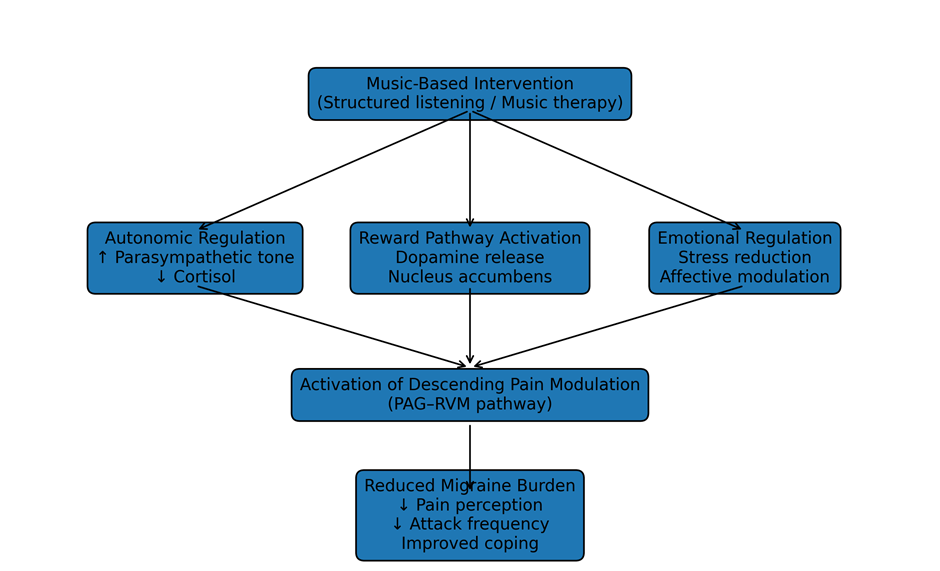
Music-based interventions may influence migraine through several potential pathways, activation of descending inhibitory pain pathways¹⁰³⁸,
dopaminergic reward system activation¹⁵, autonomic nervous system stabilization¹⁶, emotional regulation and stress reduction and cognitive modulation of pain perception. However, the current clinical evidence suggests that structured therapeutic engagement may account for a substantial proportion of observed benefit. Further research incorporating physiological and neuroimaging measures will be necessary to clarify the specific neurobiological mechanisms involved.
Clinical Contextualization and Comparative Interpretation
Music-based interventions should be interpreted within the broader landscape of established migraine treatments. Their clinical relevance depends on how their effect size, safety profile, and certainty of evidence compare with existing pharmacologic, behavioral, and neuromodulatory therapies.
Comparison With Pharmacologic Preventive Therapies
Established pharmacologic preventive therapies for migraine include, beta-blockers, Topiramate, Valproate,OnabotulinumtoxinA and Calcitonin gene-related peptide (CGRP) monoclonal antibodies³⁰³¹
Among these treatments, CGRP monoclonal antibodies represent a major recent therapeutic advance. Large randomized clinical trials have demonstrated that these agents produce ≥50% responder rates in approximately 50–60% of patients²⁶.
In comparison, the pediatric music therapy trial⁵ reported a 70% responder rate. However, several methodological limitations must be considered, small sample size, absence of active comparator, high placebo response rate, inability to blind participants. Consequently, the apparent magnitude of benefit observed in this exploratory study cannot be directly compared with the evidence base supporting pharmacologic therapies. Importantly, pharmacologic preventive trials typically involve large multicenter populations and rigorous blinding, whereas behavioral interventions often rely on smaller exploratory studies.
Nevertheless, music-based interventions may offer several potential advantages, minimal systemic adverse effects, absence of drug interactions, acceptability in pediatric populations and potential compatibility with existing treatments
For these reasons, music-based interventions may be best conceptualized as adjunctive strategies rather than replacements for pharmacologic therapy.
Comparison With Behavioral Therapies
Behavioral therapies represent a well-established non-pharmacologic approach to migraine prevention. Interventions with evidence of efficacy include cognitive behavioral therapy (CBT), relaxation training and biofeedback¹⁴³⁴ Meta-analytic evidence indicates that these interventions can produce clinically meaningful reductions in headache frequency and disability, particularly among pediatric patients¹⁴.
Music therapy shares several conceptual elements with these behavioral approaches, including, emotional regulation, structured coping strategies, relaxation techniques and behavioral activation. The adolescent randomized trial⁶ is particularly informative in this context. In that study, music therapy was compared with an active behavioral control intervention involving structured rhythmic engagement. Because both groups improved similarly, the findings suggest that structured therapeutic engagement may be the primary mechanism of benefit, rather than music-specific neuromodulation. This interpretation implies that music therapy may function as a specific format of behavioral therapy, rather than a distinct biological treatment modality.
Exercise and Lifestyle Interventions
Lifestyle modification is an important component of migraine management.
Recommended strategies commonly include, regular aerobic exercise, sleep regulation, stress management and dentification and avoidance of triggers²². Randomized studies have demonstrated that aerobic exercise programs can reduce migraine frequency and severity³⁵. Music-based interventions may support these lifestyle approaches by facilitating relaxation and stress reduction, behavioral activation and emotional coping. However, unlike exercise interventions, the dose–response relationship for music therapy has not yet been well characterized. Further research will be required to determine optimal intervention parameters.
Sensory Neuromodulation Therapies
Modern migraine management increasingly incorporates noninvasive neuromodulation devices, including external trigeminal nerve stimulation, noninvasive vagus nerve stimulation and single-pulse transcranial magnetic stimulation. These therapies target specific neural pathways involved in migraine pathophysiology²². Music-based interventions differ in that they provide indirect sensory neuromodulation through auditory stimulation and emotional processing.
Although music therapy lacks the mechanistic precision of device-based neuromodulation, it offers advantages in terms of, low cost, accessibility and scalability through digital platforms. Thus, music-based approaches may represent a low-intensity neuromodulatory strategy complementary to other therapies.
Acute Treatment Context
The emergency department trial⁷ demonstrated a 9% absolute improvement in adequate pain reduction at one hour when music listening was added to standard pharmacologic therapy. For comparison, triptan medications typically demonstrate therapeutic gains of approximately 20–30% over placebo in acute migraine trials. Thus, music listening appears to provide modest adjunctive benefit rather than primary abortive efficacy.
Nevertheless, music listening may offer several advantages in acute settings, reduction of anxiety and distress, improved patient comfort and noninvasive and low-cost implementation
These characteristics may make music listening a reasonable adjunctive intervention during acute migraine treatment.
Pediatric Clinical Context
The most prominent signal of preventive benefit was observed in the pediatric randomized trial⁵. Pediatric migraine management often prioritizes behavioral interventions, family-based therapies, non-pharmacologic approaches. Pharmacologic preventive options for children remain relatively limited compared with adult populations. In this context, structured music therapy programs may represent a potentially useful adjunctive strategy, particularly when integrated with broader behavioral interventions. However, replication in larger randomized trials with active comparators will be necessary before definitive recommendations can be made.
Adult Preventive Evidence
The evidence for adult preventive efficacy remains highly uncertain. The two available prospective studies⁸⁹ were limited by small sample sizes, absence of control groups and subjective outcome measures. Observed improvements may therefore reflect regression to the mean, placebo responses, or increased self-monitoring rather than true therapeutic effects. Randomized controlled trials evaluating music-based prevention in adults are currently lacking.
Safety and Risk–Benefit Profile
Across all included studies⁵–⁹ no serious adverse events were reported, no participants discontinued therapy due to adverse effects and no study documented worsening of migraine symptoms. Given the known association between migraine and phonophobia²⁸, theoretical concern regarding auditory stimulation exists. However, structured therapeutic music interventions typically involve controlled volume and predictable rhythmic structure, which may reduce the risk of sensory overstimulation. Overall, music-based interventions appear to have a favorable safety profile compared with pharmacologic preventive therapies.
Health Economics and Accessibility
Music-based interventions offer several potential advantages in terms of accessibility and scalability like low implementation cost, cultural adaptability and potential delivery through smartphone platforms. The smartphone-based intervention evaluated by Parlongue et al.⁸ illustrates the feasibility of digital delivery models. However, therapist-led music therapy programs require trained practitioners and may therefore involve greater resource utilization. Formal cost-effectiveness analyses have not yet been performed.
Overall Clinical Position
Based on the currently available evidence, music-based interventions may be considered as adjunctive preventive strategies in pediatric migraine⁵, supportive interventions during acute migraine management⁷ and complementary components of broader behavioral treatment programs. However, music-based interventions should not be considered stand-alone preventive therapies, nor should they replace established pharmacologic or behavioral treatments. Clinical recommendations should therefore remain conservative and evidence-aligned.
Certainty of Evidence and Risk-of-Bias Integration
GRADE Assessment Overview
The certainty of evidence for each outcome was evaluated using the GRADE (Grading of Recommendations Assessment, Development and Evaluation) framework¹⁸.
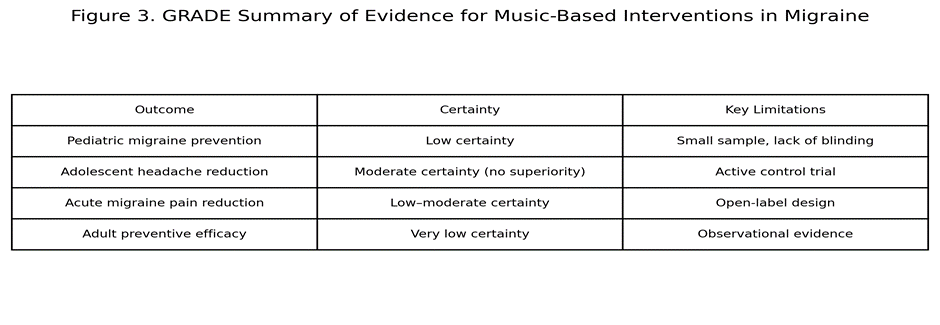
GRADE evaluates the strength of evidence across in the five domains of risk of bias, inconsistency of results, indirectness of evidence, imprecision of estimates and publication bias. Randomized controlled trials are initially rated as high certainty evidence, whereas observational studies begin as low certainty. Evidence may then be downgraded when limitations are identified. Across the included studies, the certainty of evidence ranged from moderate to very low, reflecting limitations in study design, sample size, and replication.
Pediatric Preventive Efficacy
Evidence for pediatric preventive efficacy derives from a single randomized controlled trial evaluating therapist-led music therapy⁵. Strengths of this study include randomized study design, clearly defined responder outcome and follow-up assessment at six months. However, several limitations led to downgrading of certainty, lack of participant blinding due to the behavioral intervention,small sample size,absence of an active behavioral comparator and potential expectancy effects. Because of these limitations, the certainty of evidence for pediatric preventive efficacy was rated as low. This indicates that the true effect may differ substantially from the observed estimate.
Adolescent Primary Headache Trial
The randomized trial conducted by Koenig et al.⁶ provides the methodologically strongest evidence within the current literature. Strengths include randomization with appropriate allocation procedures, use of an attention-matched active control intervention, predefined outcome measures and low attrition rates. Limitations include modest sample size, inclusion of mixed primary headache diagnoses rather than exclusively migraine. Despite these limitations, the study demonstrated no superiority of music therapy over structured engagement. Because the trial design effectively controlled for therapist attention and behavioral engagement, the findings provide moderate certainty evidence suggesting no specific advantage of music therapy in adolescents. This result carries considerable interpretive weight within the overall evidence synthesis.
Acute Migraine Adjunctive Treatment
Evidence for acute migraine treatment derives from a single randomized open-label trial evaluating music listening in the emergency department setting⁷. Strengths include randomized design, clearly defined pain reduction criteria and adequate sample size
However, several methodological limitations resulted in downgrading the study include open-label study design, lack of an auditory placebo comparator and short-term outcome assessment only. Because expectancy effects and contextual influences cannot be excluded, the certainty of evidence for acute adjunctive benefit was rated as low to moderate. Further randomized trials with blinded auditory comparators would be required to increase confidence in these findings.
Adult Preventive Interventions
Evidence for preventive efficacy in adults is derived from two prospective non-randomized studies⁸⁹. Both studies demonstrated reductions in migraine frequency or subjective symptom improvement. However, interpretation is limited by several methodological concerns like absence of control groups, small sample sizes, self-reported outcomes, potential regression to the mean, susceptibility to placebo effects. Because of these limitations, the certainty of evidence for adult preventive efficacy was rated as very low. This rating indicates that the true effect is highly uncertain and that the observed improvements may not represent a causal treatment effect.
Risk-of-Bias Integration
Across the randomized trials⁵–⁷, the most consistent methodological challenge was performance bias. Behavioral interventions such as music therapy cannot be easily blinded. Participants are typically aware of the intervention they receive, which increases the risk of expectancy effects, demand characteristics and therapeutic alliance influences. The adolescent trial⁶ attempted to mitigate these concerns by using an active control intervention that matched therapist contact and engagement intensity. Because this trial did not demonstrate superiority of music therapy, it suggests that non-specific therapeutic factors may account for much of the observed benefit in behavioral interventions. This finding reinforces the importance of active comparators in future trials.
Heterogeneity and Justification for Non-Pooling
Quantitative meta-analysis was not performed because the included studies differed substantially in several important aspects like population age groups (children, adolescents, adults), intervention formats (active therapy, passive listening, digital programs, EEG-derived sound), clinical context (preventive outpatient treatment versus acute emergency care) and outcome definitions (frequency reduction, pain reduction, subjective improvement). Pooling results across such heterogeneous designs would violate the assumptions of clinical and methodological comparability required for valid meta-analysis. Therefore, a structured qualitative synthesis was considered the most appropriate analytical approach.
Overall Evidence Interpretation
Taken together, the available evidence suggests possible preventive benefit in pediatric populations, no demonstrated superiority over structured engagement in adolescents, modest adjunctive benefit in acute migraine treatment and highly uncertain preventive efficacy in adults. The most internally valid study in the evidence base demonstrated no specific advantage of music therapy beyond structured engagement. Consequently, the current literature supports a cautious interpretation of therapeutic benefit, emphasizing the need for larger randomized trials with active control conditions.
CERTAINTY OF EVIDENCE AND RISK-OF-BIAS INTEGRATION:
GRADE Assessment Overview
The certainty of evidence for each outcome was evaluated using the GRADE (Grading of Recommendations Assessment, Development and Evaluation) framework¹⁸.
GRADE evaluates the strength of evidence across in the five domains of risk of bias, inconsistency of results, indirectness of evidence, imprecision of estimates and publication bias. Randomized controlled trials are initially rated as high certainty evidence, whereas observational studies begin as low certainty. Evidence may then be downgraded when limitations are identified. Across the included studies, the certainty of evidence ranged from moderate to very low, reflecting limitations in study design, sample size, and replication.
Pediatric Preventive Efficacy
Evidence for pediatric preventive efficacy derives from a single randomized controlled trial evaluating therapist-led music therapy⁵. Strengths of this study include randomized study design, clearly defined responder outcome and follow-up assessment at six months. However, several limitations led to downgrading of certainty, lack of participant blinding due to the behavioral intervention,small sample size,absence of an active behavioral comparator and potential expectancy effects. Because of these limitations, the certainty of evidence for pediatric preventive efficacy was rated as low. This indicates that the true effect may differ substantially from the observed estimate.
Adolescent Primary Headache Trial
The randomized trial conducted by Koenig et al.⁶ provides the methodologically strongest evidence within the current literature. Strengths include randomization with appropriate allocation procedures, use of an attention-matched active control intervention, predefined outcome measures and low attrition rates. Limitations include modest sample size, inclusion of mixed primary headache diagnoses rather than exclusively migraine. Despite these limitations, the study demonstrated no superiority of music therapy over structured engagement. Because the trial design effectively controlled for therapist attention and behavioral engagement, the findings provide moderate certainty evidence suggesting no specific advantage of music therapy in adolescents. This result carries considerable interpretive weight within the overall evidence synthesis.
Acute Migraine Adjunctive Treatment
Evidence for acute migraine treatment derives from a single randomized open-label trial evaluating music listening in the emergency department setting⁷. Strengths include randomized design, clearly defined pain reduction criteria and adequate sample size
However, several methodological limitations resulted in downgrading the study include open-label study design, lack of an auditory placebo comparator and short-term outcome assessment only. Because expectancy effects and contextual influences cannot be excluded, the certainty of evidence for acute adjunctive benefit was rated as low to moderate. Further randomized trials with blinded auditory comparators would be required to increase confidence in these findings.
Adult Preventive Interventions
Evidence for preventive efficacy in adults is derived from two prospective non-randomized studies⁸⁹. Both studies demonstrated reductions in migraine frequency or subjective symptom improvement. However, interpretation is limited by several methodological concerns like absence of control groups, small sample sizes, self-reported outcomes, potential regression to the mean, susceptibility to placebo effects. Because of these limitations, the certainty of evidence for adult preventive efficacy was rated as very low. This rating indicates that the true effect is highly uncertain and that the observed improvements may not represent a causal treatment effect.
Risk-of-Bias Integration
Across the randomized trials⁵–⁷, the most consistent methodological challenge was performance bias. Behavioral interventions such as music therapy cannot be easily blinded. Participants are typically aware of the intervention they receive, which increases the risk of expectancy effects, demand characteristics and therapeutic alliance influences. The adolescent trial⁶ attempted to mitigate these concerns by using an active control intervention that matched therapist contact and engagement intensity. Because this trial did not demonstrate superiority of music therapy, it suggests that non-specific therapeutic factors may account for much of the observed benefit in behavioral interventions. This finding reinforces the importance of active comparators in future trials.
Heterogeneity and Justification for Non-Pooling
Quantitative meta-analysis was not performed because the included studies differed substantially in several important aspects like population age groups (children, adolescents, adults), intervention formats (active therapy, passive listening, digital programs, EEG-derived sound), clinical context (preventive outpatient treatment versus acute emergency care) and outcome definitions (frequency reduction, pain reduction, subjective improvement). Pooling results across such heterogeneous designs would violate the assumptions of clinical and methodological comparability required for valid meta-analysis. Therefore, a structured qualitative synthesis was considered the most appropriate analytical approach.
Overall Evidence Interpretation
Taken together, the available evidence suggests possible preventive benefit in pediatric populations, no demonstrated superiority over structured engagement in adolescents, modest adjunctive benefit in acute migraine treatment and highly uncertain preventive efficacy in adults. The most internally valid study in the evidence base demonstrated no specific advantage of music therapy beyond structured engagement. Consequently, the current literature supports a cautious interpretation of therapeutic benefit, emphasizing the need for larger randomized trials with active control conditions.
LIMITATIONS, FUTURE RESEARCH DIRECTIONS, AND CONCLUSIONS:
Limitations of the Current Evidence Base
Several important limitations of the existing literature should be acknowledged. First, the number of prospective interventional studies evaluating music-based interventions for migraine is very limited. Only five studies met the predefined inclusion criteria of this review⁵–⁹, which restricts the strength and generalizability of the conclusions.
Second, there was substantial heterogeneity in intervention design across the included studies. The interventions ranged from therapist-led music therapy programs to passive music listening, smartphone-delivered relaxation applications, and EEG-derived individualized auditory stimulation. These approaches likely operate through different therapeutic mechanisms and therefore cannot be considered directly comparable.
Third, the study populations varied considerably with respect to age group, clinical setting, and migraine characteristics. The included studies encompassed pediatric, adolescent, and adult populations, and the interventions were applied in both preventive outpatient settings and acute emergency department contexts. Such variability further complicates cross-study comparisons.
Fourth, several studies were affected by methodological limitations, including small sample sizes, lack of blinding, and the absence of active comparator interventions. Behavioral interventions are particularly susceptible to expectancy effects and attention bias, which may contribute to the improvements observed in some trials.
Fifth, the biological mechanisms underlying music-based interventions remain largely theoretical. None of the included studies incorporated objective physiological or neurobiological endpoints such as autonomic measures, neuroimaging outcomes, or electrophysiological markers. Consequently, the neurobiological pathways through which music might influence migraine remain incompletely understood.
Finally, inconsistencies in outcome measurement further limit comparability across studies. While some trials reported migraine attack frequency, others focused on pain intensity, subjective improvement, or functional outcomes, making cross-study synthesis more challenging.
Implications for Future Research
Advancing the evidence base for music-based interventions in migraine will require methodologically rigorous clinical research addressing the limitations outlined above.
Large Randomized Controlled Trials
Future investigations should prioritize adequately powered randomized controlled trials, ideally enrolling at least 150 participants per treatment arm. Multicenter recruitment would improve the generalizability of findings and reduce the influence of local clinical practice patterns. Separate trials for pediatric and adult populations are also warranted, as developmental differences in neuroplasticity and behavioral responsiveness may influence treatment outcomes.
Active Comparator Interventions
A key methodological priority is the incorporation of active control conditions. Suitable comparators may include structured relaxation training, audiobook listening, neutral auditory stimulation, or other behavioral engagement programs. Such comparators can help distinguish music-specific therapeutic effects from non-specific influences such as therapist attention, participant expectancy, or structured engagement.
Standardized Outcome Measures
Future trials should adopt standardized migraine outcome measures to improve comparability across studies and facilitate future meta-analyses. Recommended endpoints include monthly migraine days, ≥50% responder rate, Headache Impact Test (HIT-6) scores, Migraine Disability Assessment (MIDAS) scores, and acute medication use. Longer follow-up periods, ideally 6–12 months, would also provide insight into the durability of treatment effects.
Mechanistic Substudies
Understanding the biological mechanisms underlying music-based interventions will require integration of physiological and neuroimaging assessments within clinical trials. Potential mechanistic endpoints include heart rate variability as a measure of autonomic regulation, functional MRI responses to music exposure, EEG measures of cortical habituation, auditory evoked potentials, and stress-related biomarkers such as cortisol levels. These approaches could help clarify whether music-based interventions exert direct neuromodulatory effects or primarily operate through psychological and behavioral pathways.
Phonophobia-Specific Research
Given the central role of sensory hypersensitivity in migraine, future studies should also examine the relationship between baseline phonophobia severity and treatment response. Stratified analyses may help identify which patients are most likely to benefit from auditory interventions and whether certain individuals might experience sensory overstimulation. Although no prospective study has demonstrated systematic worsening of migraine with structured music therapy, targeted investigation of this issue would provide valuable clinical insight.
Clinical Implications
Based on the currently available evidence, music-based interventions may have a role as adjunctive therapies within comprehensive migraine management strategies. Potential clinical applications include pediatric preventive treatment programs, supportive interventions during acute migraine management, and components of behavioral or stress-management therapies.
However, music-based interventions should not be considered substitutes for established pharmacologic or evidence-based behavioral treatments. Instead, they may be most appropriately integrated as complementary approaches within multidisciplinary migraine care.
Final Conclusions
This systematic review identified five prospective interventional studies evaluating music-based interventions in migraine⁵–⁹. The current evidence suggests a possible preventive benefit in pediatric populations, no clear superiority over structured engagement in adolescents, and a modest adjunctive benefit for acute migraine treatment in emergency settings. In contrast, the evidence supporting preventive efficacy in adults remains highly uncertain.
Overall, the certainty of evidence ranged from moderate to very low, reflecting limitations in study design, heterogeneity of interventions, and limited replication of findings. Although music-based interventions appear safe, low-cost, and biologically plausible, the current evidence remains insufficient to support guideline-level clinical recommendations.Given the limited number of trials and substantial heterogeneity, the current evidence should be considered hypothesis-generating rather than definitive. Future large, well-designed randomized trials incorporating active comparator interventions and mechanistic endpoints will be essential to determine the true therapeutic value of music-based interventions in migraine management.
Conflict of Interest
The author declares no conflicts of interest related to this work.
Funding
No external funding was received for this study.
Data Availability
No new datasets were generated for this review. All data were derived from previously published studies.
REFERENCES:
1. GBD 2019 Diseases and Injuries Collaborators. Global burden of neurological disorders, 1990–2019: a systematic analysis for the Global Burden of Disease Study 2019. Lancet Neurol. 2020;19(5):459-480. doi:10.1016/S1474-4422(20)30073-9
2. Burch RC, Loder S, Loder E, Smitherman TA. The prevalence and burden of migraine and severe headache in the United States: updated statistics from government health surveillance studies. Headache. 2015;55(1):21-34. doi:10.1111/head.12482
3. Headache Classification Committee of the International Headache Society. The International Classification of Headache Disorders, 3rd edition (ICHD-3). Cephalalgia. 2018;38(1):1-211. doi:10.1177/0333102417738202
4. Ailani J, Burch RC, Robbins MS. The American Headache Society consensus statement: update on integrating new migraine treatments into clinical practice. Headache. 2021;61(7):1021-1039. doi:10.1111/head.14153
5. Oelkers-Ax R, Leins A, Parzer P, Hillecke T, Bolay HV, Fischer J, et al. Butterbur root extract and music therapy in the prevention of childhood migraine: an explorative study. Eur J Pain. 2008;12(3):301-313. doi:10.1016/j.ejpain.2007.06.003
6. Koenig J, Oelkers-Ax R, Kaess M, Parzer P, Lenzen C, Hillecke TK, et al. Specific music therapy techniques in the treatment of primary headache disorders in adolescents: a randomized attention-placebo-controlled trial. J Pain. 2013;14(10):1196-1207. doi:10.1016/j.jpain.2013.05.006
7. Diamante PAB, Roxas AA Jr. Music medicine as a component of acute migraine attack management in the emergency room: a randomized controlled open-label trial. Ann Headache Med. 2020;9(3):4-12.
8. Parlongue G, Vuillaume-Cerdan E, Koenig J, Williams DP. Smartphone-based music intervention in the treatment of episodic migraine headaches: a pilot trial. Complement Ther Med. 2021;63:102779. doi:10.1016/j.ctim.2021.102779
9. Meister M, Einsle R, Brunner J, Rhyner K. Psychofonie – eine neurophysiologische Klangtherapie bei Migräne. Praxis (Bern). 1999;88:946-949.
10. Goadsby PJ, Holland PR, Martins-Oliveira M, Hoffmann J, Schankin C, Akerman S. Pathophysiology of migraine: a disorder of sensory processing. Physiol Rev. 2017;97(2):553-622. doi:10.1152/physrev.00034.2015
11. Charles A. The pathophysiology of migraine: implications for clinical management. Lancet. 2018;391(10127):1315-1330. doi:10.1016/S0140-6736(18)30475-X
12. Coppola G, Di Renzo A, Pierelli F, Schoenen J. Habituation and migraine. J Headache Pain. 2009;10(2):51-60. doi:10.1007/s10194-009-0110-5
13. Page MJ, McKenzie JE, Bossuyt PM, Boutron I, Hoffmann TC, Mulrow CD, et al. The PRISMA 2020 statement: an updated guideline for reporting systematic reviews. BMJ. 2021;372:n71. doi:10.1136/bmj.n71
14. Palermo TM, Eccleston C, Lewandowski AS, Williams AC, Morley S. Randomized controlled trials of psychological therapies for the management of chronic pain in children and adolescents: an updated meta-analytic review. Headache. 2010;50(8):1286-1298. doi:10.1111/j.1526-4610.2010.01777.x
15. Salimpoor VN, Benovoy M, Larcher K, Dagher A, Zatorre RJ. Anatomically distinct dopamine release during anticipation and experience of peak emotion to music. Nat Neurosci. 2011;14(2):257-262. doi:10.1038/nn.2726
16. Thoma MV, La Marca R, Brönnimann R, Finkel L, Ehlert U, Nater UM. The effect of music on the human stress response. Neuropsychobiology. 2013;67(3):146-154. doi:10.1159/000345327
17. Sterne JAC, Savović J, Page MJ, Elbers RG, Blencowe NS, Boutron I, et al. RoB2: a revised tool for assessing risk of bias in randomized trials. BMJ. 2019;366:l4898. doi:10.1136/bmj.l4898
18. Guyatt GH, Oxman AD, Vist GE, Kunz R, Falck-Ytter Y, Alonso-Coello P, et al. GRADE: an emerging consensus on rating quality of evidence and strength of recommendations. J Clin Epidemiol. 2011;64(4):380-382. doi:10.1016/j.jclinepi.2010.07.015
19. Lipton RB, Bigal ME, Diamond M, Freitag F, Reed ML, Stewart WF. Migraine prevalence, disease burden, and the need for preventive therapy. Neurology. 2007;68(5):343-349. doi:10.1212/01.wnl.0000252808.97649.21
20. Stewart WF, Wood C, Reed ML, Roy J, Lipton RB. Cumulative lifetime migraine incidence in women and men. Cephalalgia. 2008;28(11):1170-1178. doi:10.1111/j.1468-2982.2008.01611.x
21. Bigal ME, Lipton RB. The epidemiology, burden, and comorbidities of migraine. Neurol Clin. 2009;27(2):321-334. doi:10.1016/j.ncl.2008.11.011
22. Dodick DW. A phase-by-phase review of migraine pathophysiology. Headache. 2018;58(Suppl 1):4-16. doi:10.1111/head.13300
23. Burstein R, Noseda R, Borsook D. Migraine: multiple processes, complex pathophysiology. J Neurosci. 2015;35(17):6619-6629. doi:10.1523/JNEUROSCI.0373-15.2015
24. May A, Schulte LH. Chronic migraine: risk factors, mechanisms and treatment. Nat Rev Neurol. 2016;12(8):455-464. doi:10.1038/nrneurol.2016.93
25. Ashina M. Migraine. N Engl J Med. 2020;383(19):1866-1876. doi:10.1056/NEJMra1915327
26. Schoenen J, Wang W, Albert A, Delwaide PJ. Potentiation instead of habituation characterizes visual evoked potentials in migraine patients. Ann Neurol. 1995;37(4):529-533. doi:10.1002/ana.410370412
27. Di Clemente L, Coppola G, Magis D, Fumal A, De Pasqua V, Schoenen J. Interictal habituation deficit of the nociceptive blink reflex in migraine. Cephalalgia. 2005;25(7):499-505. doi:10.1111/j.1468-2982.2004.00879.x
28. Main A, Dowson A, Gross M. Photophobia and phonophobia in migraineurs between attacks. Headache. 1997;37(8):492-495. doi:10.1046/j.1526-4610.1997.3708492.x
29. Silberstein SD. Preventive migraine treatment. Continuum (Minneap Minn). 2015;21(4 Headache):973-989. doi:10.1212/CON.0000000000000199
30. Loder E, Burch R, Rizzoli P. The 2012 AHS/AAN guidelines for prevention of episodic migraine. Headache. 2012;52(6):930-945. doi:10.1111/j.1526-4610.2012.02185.x
31. Holroyd KA, Drew JB, Cottrell CK, Romanek KM, Heh V. Impaired functioning and quality of life in severe migraine. Cephalalgia. 2007;27(10):1156-1165. doi:10.1111/j.1468-2982.2007.01420.x
32. Martin PR. Behavioral management of migraine headache triggers. Curr Pain Headache Rep. 2010;14(3):221-227. doi:10.1007/s11916-010-0102-7
33. Nestoriuc Y, Rief W, Martin A. Meta-analysis of biofeedback for tension-type headache and migraine. Appl Psychophysiol Biofeedback. 2008;33(3):125-140. doi:10.1007/s10484-008-9060-3
34. Lemmens J, De Pauw J, Van Soom T, Michiels S, Versijpt J, Van Breda E. The effect of aerobic exercise on migraine frequency and severity. J Headache Pain. 2019;20(1):50. doi:10.1186/s10194-019-1006-8
35. Finnerty GT, Shadlen MN, Jazayeri M, Nobre AC, Buonomano DV. Time in cortical circuits. J Neurosci. 2015;35(41):13912-13916. doi:10.1523/JNEUROSCI.2654-15.2015
36. Koelsch S. Brain correlates of music-evoked emotions. Nat Rev Neurosci. 2014;15(3):170-180. doi:10.1038/nrn3666
37. Chanda ML, Levitin DJ. The neurochemistry of music. Trends Cogn Sci. 2013;17(4):179-193. doi:10.1016/j.tics.2013.02.007
38. Tracey I, Mantyh PW. The cerebral signature for pain perception and its modulation. Neuron. 2007;55(3):377-391. doi:10.1016/j.neuron.2007.07.012.