Learning Resource Preferences among First-Year MBBS Students in Anatomy: A Cross-Sectional Study Supporting Blended Learning in Competency-Based Medical Education
- Ashita Kaore , Associate Professor, Department of Anatomy, Government Medical College,Seoni (M.P).
- Ashish Kamdi , Associate Professor, Department of Anatomy, Government Medical College,Seoni (M.P).
- Tarkeshwar Golghate , Professor and HOD ,Department of Anatomy, Government Medical College, Bhandara ,Maharashtra.
Article Information:
Abstract:
Background: Anatomy education is undergoing transformation with the integration of blended learning approaches under Competency-Based Medical Education (CBME). Objective: To evaluate learning resource preferences among first-year MBBS students across different domains of anatomy. Methods: A cross-sectional questionnaire-based study was conducted among 150 first-year MBBS students. Data regarding preferred textbooks, video resources, and question banks were collected. Descriptive statistics were used, and chi-square goodness-of-fit test was applied. Results: Traditional textbooks dominated core subjects, with B.D. Chaurasia preferred for Gross and General Anatomy (88.7%) and Inderbir Singh for Histology (93.3%) and Embryology (92.7%). Neuroanatomy demonstrated a heterogeneous pattern. Gray’s Anatomy was preferred in Clinical Anatomy (61.3%). Digital resources were widely used, with Marrow (68.7%) and online video platforms (62.7%) being most common. Chi-square analysis showed statistically significant differences (p < 0.0001). Conclusion: A clear shift toward blended learning is evident, particularly in complex and clinical domains, supporting integration of digital tools within CBME.
Keywords:
Article :
INTRODUCTION:
Anatomy forms the cornerstone of medical education and is essential for developing clinical competence. Traditional teaching methods have relied heavily on textbooks and didactic lectures; however, the introduction of Competency-Based Medical Education (CBME) has shifted the focus toward student-centered and outcome-based learning.⁹
Blended learning, integrating traditional and digital methods, has emerged as a key strategy in modern medical education. Recent studies have demonstrated improved engagement, flexibility, and knowledge retention with blended approaches.¹,²
Technological advancements, including online platforms, virtual tools, and e-learning systems, have significantly transformed anatomy education.³, ⁴. These tools facilitate visualization and support self-directed learning.
Despite this transition, limited data exist regarding actual resource utilization patterns among MBBS students. Understanding these trends is essential for optimizing teaching strategies.
MATERIALS AND METHODS:
A cross-sectional, questionnaire-based study was conducted among first-year MBBS students at Government Medical College Seoni and Government Medical College Bhandara . The study was carried out over a defined academic period to assess students’ learning resource preferences in anatomy. The study was conducted following ethical principles for biomedical research. Informed consent was obtained from all participants, and confidentiality of responses was maintained.
Study Population and Sample Size
A total of 150 first-year MBBS students were included in the study. All eligible participants available during the data collection period were invited to participate.
Data Collection Tool
Data were collected using a pre-validated, structured questionnaire designed to assess the utilization of various learning resources in anatomy. The questionnaire comprised items related to:
• Use of standard textbooks across different anatomy domains
• Engagement with video-based learning resources
• Use of question banks and self-assessment tools
The questionnaire was reviewed for content validity by subject experts prior to administration.
Inclusion Criteria
• First-year MBBS students who provided informed consent
• Students who submitted complete responses to the questionnaire
Exclusion Criteria
• Students with incomplete or partially filled questionnaires
• Non-consenting students
Data Collection Procedure
The questionnaire was administered to participants in a controlled academic setting. Participation was voluntary, and anonymity was maintained to ensure unbiased responses.
Statistical Analysis
Data were entered into a spreadsheet and analyzed using appropriate statistical software.
• Descriptive statistics were used to summarize the data in terms of frequency and percentage.
• The Chi-square goodness-of-fit test was applied to assess the distribution of preferences across different learning resources.
• A p-value of < 0.05 was considered statistically significant.
RESULTS:
A total of 150 first-year MBBS students participated in the study. The analysis focused on identifying the most preferred learning resources across different domains of anatomy, along with statistical validation using the Chi-square goodness-of-fit test.
Table 1. Preferred Learning Resources across Anatomy Domains
|
Domain |
Most Preferred Resource |
Percentage (%) |
|
Gross Anatomy |
BDC |
88.7 |
|
General Anatomy |
BDC |
88.7 |
|
Histology |
Inderbir Singh |
93.3 |
|
Embryology |
Inderbir Singh |
92.7 |
|
Neuroanatomy |
Inderbir Singh |
39.3 |
|
Clinical Anatomy |
Gray’s |
61.3 |
|
Human Genetics |
G.P. Pal |
57.3 |
|
Video Resources |
Online Platforms |
62.7 |
|
Question Banks |
Marrow |
68.7 |
Interpretation:
Textbook preferences varied across domains. BDC was overwhelmingly preferred for gross and general anatomy (88.7%), whereas Inderbir Singh was the dominant choice for histology (93.3%) and embryology (92.7%). Neuroanatomy showed comparatively lower consensus (39.3%), suggesting variability in resource preference. For clinical anatomy, Gray’s Anatomy was preferred (61.3%), while G.P. Pal was favored for genetics (57.3%). Among digital tools, online video resources (62.7%) and Marrow question bank (68.7%) were commonly utilized.
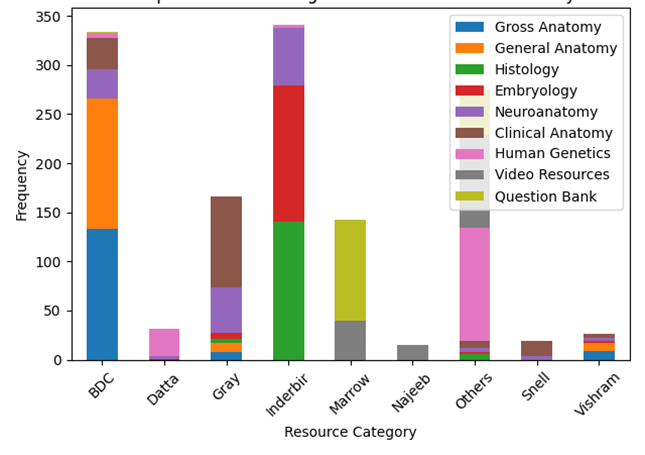
Figure 1: Stacked bar chart comparing all domains
Table 2. Chi-Square Goodness-of-Fit Analysis of Resource Preferences
|
Domain |
χ² Value |
p-value |
|
Gross Anatomy |
206.68 |
<0.0001 |
|
Histology |
243.04 |
<0.0001 |
|
Embryology |
495.53 |
<0.0001 |
|
Neuroanatomy |
159.87 |
<0.0001 |
|
Clinical Anatomy |
175.93 |
<0.0001 |
|
Human Genetics |
223.01 |
<0.0001 |
|
Question Bank |
146.03 |
<0.0001 |
Interpretation:
The Chi-square goodness-of-fit test demonstrated that the distribution of preferences across all domains was highly statistically significant (p < 0.0001). This indicates that students did not choose resources randomly; rather, there were strong and consistent preferences for specific learning resources in each domain.
Overall Findings
· There is a clear domain-specific preference pattern among students for anatomy learning resources.
· Traditional textbooks remain the cornerstone of learning, especially for gross anatomy and histology.
· Digital resources, including online videos and question banks, are widely used as supplementary tools, reflecting a shift toward blended learning.
· The highly significant Chi-square results confirm that these preferences are systematic and not due to chance.
DISCUSSION:
The present study provides important insights into the evolving learning behaviors of first-year MBBS students in anatomy within the framework of Competency-Based Medical Education (CBME). The findings demonstrate a clear coexistence of traditional textbook-based learning and digital resource utilization, reflecting a transition toward blended learning.
A key observation of this study is the continued dominance of standard textbooks in core anatomy subjects. B.D. Chaurasia and Inderbir Singh were overwhelmingly preferred in Gross Anatomy, Histology, and Embryology. This finding is consistent with contemporary literature, which emphasizes that traditional resources remain essential for building foundational knowledge due to their structured and curriculum-aligned content.⁶ Additionally, recent reviews on anatomy education highlight that conventional methods such as textbooks and dissection continue to form the backbone of medical training despite technological advancements.¹
However, Neuroanatomy demonstrated a heterogeneous pattern with no single dominant resource. Students utilized a combination of Inderbir Singh, Gray’s Anatomy, and B.D. Chaurasia. This variability reflects the intrinsic complexity of neuroanatomy, which requires integration of spatial understanding, clinical correlation, and conceptual clarity. Similar findings have been reported in recent studies, where blended and multi-resource learning approaches were found to be more effective in complex anatomical domains.²,³
The preference for Gray’s Anatomy in Clinical Anatomy observed in this study indicates a shift toward clinically oriented learning. This aligns with CBME objectives that emphasize integration of basic sciences with clinical application. Recent literature supports this trend, suggesting that students increasingly prefer clinically relevant and application-based resources over purely descriptive texts.¹
One of the most significant findings of this study is the widespread adoption of digital learning resources. A majority of students reported using online video platforms and application-based question banks such as Marrow. This trend is strongly supported by recent studies demonstrating high student acceptance of technology-enhanced learning tools in anatomy education.³
Furthermore, emerging evidence highlights the role of advanced technologies such as virtual reality and interactive simulations in improving engagement and understanding of anatomical concepts.⁴ These tools provide immersive and visual learning experiences, which are particularly beneficial in subjects requiring spatial orientation, such as neuroanatomy.
The findings of the present study are also consistent with recent multi-institutional research, which reported a strong preference for blended learning approaches among medical students.¹ Students in these studies highlighted flexibility, accessibility, and self-paced learning as key advantages of digital platforms.
Additionally, post-pandemic educational models have further accelerated the adoption of blended learning. Recent studies have shown that students not only adapted to online learning but also reported improved satisfaction and reduced stress due to flexible learning environments.⁵ This supports the growing integration of digital resources observed in the present study.
The statistically significant chi-square results across all domains (p < 0.0001) confirm that these preferences are structured and non-random. The extremely high chi-square value observed in Embryology reflects strong uniformity in resource selection, whereas the relatively lower (yet significant) values in Neuroanatomy indicate diversity in learning strategies. These findings reinforce the concept that learning preferences vary according to subject complexity and cognitive demand.
From an educational perspective, these findings strongly support the implementation of blended learning models in anatomy teaching. Modern medical education should integrate traditional textbooks with digital tools such as video-based learning, virtual simulations, and interactive platforms. Such integration enhances conceptual understanding, promotes active learning, and caters to diverse learning styles.
However, it is also important to recognize potential challenges associated with excessive reliance on digital resources. Some studies have cautioned that over-dependence on online learning may reduce hands-on experience and clinical exposure if not appropriately balanced.¹ Therefore, a structured and guided approach to blended learning is essential.
Faculty members play a crucial role in this transition. Educators should adapt teaching strategies to incorporate digital tools while maintaining the strengths of traditional methods. Structured guidance, curated resource recommendations, and integration of clinical correlations can help optimize learning outcomes.
Overall, the findings of this study, in conjunction with recent global evidence, highlight a paradigm shift in anatomy education from a purely traditional model to an integrated, technology-enhanced blended learning approach. The challenge for modern medical education lies not in replacing traditional methods, but in effectively harmonizing them with digital innovations to achieve optimal learning outcomes within the CBME framework.
CONCLUSION:
This study demonstrates a clear shift toward blended learning in anatomy education. While traditional textbooks remain foundational, digital resources play a crucial role, particularly in complex and clinical domains. Integration of these approaches is essential for effective implementation of CBME
REFERENCES:
1. Elzawawy EM, Elsayed HR, Mady MM, et al. Effectiveness of blended learning in anatomy education. BMC Med Educ. 2025; 25:1688.
2. Guraya SY, Dias JM. Simulation and e-learning integration. BMC Med Educ. 2026; 26:318.
3. Lee JWY, Ong DW, Soh RCC, et al. Student acceptance of digital tools. Clin Anat. 2025; 38:334–346.
4. Linkwinstar J, Ashraf I, Chaudhry KN, et al. Virtual learning in anatomy. Cureus. 2025; 17:e96534.
5. Recent advances in blended learning post-pandemic. MDPI Educ Sci. 2024; 14:112.
6. Ruiz JG, Mintzer MJ, Leipzig RM. Impact of e-learning. Acad Med. 2006; 81:207–212.
7. Cook DA, Levinson AJ. Internet-based learning. JAMA. 2008; 300:1181–1196.
8. Ellaway RH, Masters K. AMEE Guide 32. Med Teach. 2008; 30:455–473.
9. National Medical Commission. CBME Curriculum. 2019.
10. Prober CG, Khan S. Medical education reimagined. Acad Med. 2013; 88:1407–1410.
11. Harden RM. Outcome-based education. Med Teach. 2007; 29:625–629.
12. Means B, Toyama Y. Online learning effectiveness. Teach Coll Rec. 2013; 115:1–47.