Antibiotic Prophylaxis in Surgery: A Systematic Review and Meta-Analysis of Its Effectiveness Across Wound Classes
- Ankita Mishra , Senior Resident, Department of General Surgery, Gajra Raja Medical College, Gwalior, Madhya Pradesh, India.
- Dewanshi Vijay Meghrajani , Intern (MBBS), Government Medical College and Hospital, Nagpur, Maharashtra, India.
- M. Hima Bindu , Professor, Department of Microbiology, Malla Reddy Institute of Medical Sciences, Hyderabad, Telangana, India.
Article Information:
Abstract:
Background: Surgical site infections (SSIs) are among the most common postoperative complications, contributing significantly to patient morbidity, prolonged hospitalization, and increased healthcare costs. Antibiotic prophylaxis is widely used to prevent SSIs; however, its effectiveness varies depending on the type of surgical wound and perioperative practices. Objective: To systematically evaluate and quantify the effectiveness of antibiotic prophylaxis in reducing SSIs across different surgical wound classifications (clean, clean-contaminated, contaminated, and dirty wounds). Methods: This systematic review and meta-analysis was conducted in accordance with the Preferred Reporting Items for Systematic Reviews and Meta-Analyses guidelines. A comprehensive search of PubMed, Embase, Scopus, and Cochrane Library databases was performed for studies published up to December 2025. Randomized controlled trials and observational studies comparing antibiotic prophylaxis with no prophylaxis or placebo were included. The primary outcome was SSI incidence. Pooled odds ratios (ORs) with 95% confidence intervals (CIs) were calculated using a random-effects model. Results: A total of 42 studies involving approximately 38,000 patients were included. Antibiotic prophylaxis significantly reduced the risk of SSIs (pooled OR: 0.52; 95% CI: 0.44–0.61). Subgroup analysis demonstrated a modest benefit in clean surgeries (OR: 0.78), significant benefit in clean-contaminated procedures (OR: 0.55), and a strong effect in contaminated surgeries (OR: 0.40). No additional benefit was observed with prolonged antibiotic use beyond 24 hours (OR: 0.95; 95% CI: 0.81–1.12). Administration within 60 minutes prior to incision was associated with optimal outcomes. Conclusion: Antibiotic prophylaxis significantly reduces SSI rates, particularly in clean-contaminated and contaminated surgeries. Short-duration, appropriately timed prophylaxis should be emphasized, while routine use in low-risk clean procedures should be selective to minimize antimicrobial resistance and adverse effects.
Keywords:
Article :
INTRODUCTION:
Surgical site infections (SSIs) remain one of the most common postoperative complications worldwide and are a major cause of increased morbidity, prolonged hospital stay, and healthcare costs [1]. Despite significant advances in aseptic techniques, sterilization protocols, and perioperative care, SSIs continue to account for a substantial proportion of hospital-acquired infections, particularly in low- and middle-income countries [2].
Antibiotic prophylaxis, defined as the administration of antimicrobial agents prior to surgical incision to prevent postoperative infections, has become a cornerstone in modern surgical practice [3]. Its effectiveness depends on appropriate selection of antibiotic, timing of administration, dosage, and duration of therapy [4]. Evidence suggests that timely prophylaxis, particularly when administered within 60 minutes before incision, significantly reduces the incidence of SSIs [5].
The risk of SSI varies considerably depending on the type of surgical wound, which is traditionally classified into four categories: clean, clean-contaminated, contaminated, and dirty/infected wounds [6]. Clean wounds, typically involving non-traumatic, uninfected operative fields without entry into the respiratory, gastrointestinal, or genitourinary tracts, have a relatively low baseline risk of infection. In contrast, clean-contaminated and contaminated wounds carry a higher risk due to controlled or accidental entry into these tracts, while dirty wounds are associated with established infection or gross contamination [7].
The role of antibiotic prophylaxis differs across these wound classes. While its benefit is well established in clean-contaminated and contaminated surgeries, its routine use in clean procedures remains controversial due to the relatively low baseline infection risk and concerns regarding antimicrobial resistance, adverse drug reactions, and increased healthcare costs [8]. Moreover, in dirty wounds, antibiotics are considered therapeutic rather than prophylactic, further complicating their evaluation in such cases [9].
Recent systematic reviews and meta-analyses have demonstrated that antibiotic prophylaxis can reduce SSI rates by approximately 40–60%, although the magnitude of benefit varies depending on surgical type and patient-related risk factors [10,11]. Additionally, emerging evidence indicates that prolonged antibiotic prophylaxis beyond 24 hours does not confer additional benefit and may contribute to antimicrobial resistance [12].
Given the growing global concern regarding antimicrobial stewardship and the need for evidence-based surgical practices, a comprehensive evaluation of the effectiveness of antibiotic prophylaxis across different wound classes is essential. This systematic review and meta-analysis aim to synthesize current evidence on the role of antibiotic prophylaxis in preventing SSIs, with a particular focus on its differential effectiveness across surgical wound classifications.
MATERIALS AND METHODS:
Study Design and Reporting Guidelines
This systematic review and meta-analysis was conducted in accordance with the Preferred Reporting Items for Systematic Reviews and Meta-Analyses guidelines [13]. The methodology was predefined to ensure transparency, reproducibility, and methodological rigor.
Search Strategy
A comprehensive literature search was performed across the following electronic databases:
• PubMed/MEDLINE
• Embase
• Scopus
• Cochrane Library
The search included studies published up to December 2025. The following keywords and Boolean operators were used:
(“antibiotic prophylaxis” OR “surgical prophylaxis”) AND (“surgical site infection” OR “SSI”) AND (“wound classification” OR “clean” OR “contaminated surgery”) AND (“randomized controlled trial” OR “cohort study” OR “meta-analysis”)
Additionally, reference lists of relevant articles were manually screened to identify further eligible studies [14].
Eligibility Criteria
Inclusion Criteria
i. Randomized controlled trials (RCTs) and observational studies (cohort or case-control)
ii. Studies involving adult patients undergoing surgical procedures
iii. Studies comparing antibiotic prophylaxis vs no prophylaxis/placebo
iv. Studies reporting SSI outcomes
v. Studies categorizing surgeries based on wound classification
Exclusion Criteria
i. Case reports, case series, and reviews
ii. Non-human studies
iii. Studies lacking clear wound classification
iv. Studies without extractable outcome data
Study Selection Process
All retrieved records were imported into reference management software, and duplicates were removed. Two independent reviewers screened titles and abstracts for eligibility. Full-text articles were then assessed against inclusion and exclusion criteria. Discrepancies were resolved through discussion or consultation with a third reviewer [15].
Data Extraction
Data were independently extracted by two reviewers using a standardized data extraction form. The following variables were collected:
• Author and year of publication
• Study design
• Sample size
• Type of surgical procedure
• Wound classification (clean, clean-contaminated, contaminated, dirty)
• Antibiotic regimen (drug, timing, duration)
• Comparator (placebo or no antibiotic)
• Primary outcome: incidence of SSI
• Secondary outcomes: length of hospital stay, adverse events
Risk of Bias Assessment
The methodological quality of included studies was assessed using:
• Cochrane Risk of Bias Tool for randomized controlled trials
• Newcastle–Ottawa Scale for observational studies
Each study was categorized as low, moderate, or high risk of bias [16].
Outcome Measures
Primary Outcome
• Incidence of surgical site infection (SSI)
Secondary Outcomes
• Length of hospital stay
• Postoperative complications
• Antibiotic-related adverse events
Statistical Analysis
Meta-analysis was performed using Review Manager (RevMan) and STATA software.
• Effect size was expressed as Odds Ratio (OR) with 95% Confidence Intervals (CI)
• A random-effects model was used to account for clinical and methodological heterogeneity
• Statistical heterogeneity was assessed using the I² statistic
o I² > 50% considered significant heterogeneity
Subgroup analyses were performed based on:
• Wound classification
• Type of surgery
• Duration of antibiotic prophylaxis
Publication Bias
Publication bias was assessed using funnel plots and Egger’s regression test when ≥10 studies were included in the analysis [17].
Sensitivity Analysis
Sensitivity analyses were conducted by excluding:
• Studies with high risk of bias
• Small sample size studies
to evaluate the robustness of pooled estimates [18].
Ethical Considerations
As this study is a systematic review and meta-analysis of previously published data, ethical approval was not required.
RESULTS:
A total of 1,245 records were identified through database searching, of which 312 duplicates were removed. Following title and abstract screening, 146 articles were assessed for full-text eligibility. Ultimately, 42 studies met the inclusion criteria and were included in the final analysis, comprising approximately 38,000 patients across multiple surgical specialties [19]. The included studies consisted of 24 randomized controlled trials (RCTs) and 18 observational studies, conducted across diverse geographic regions and healthcare settings.
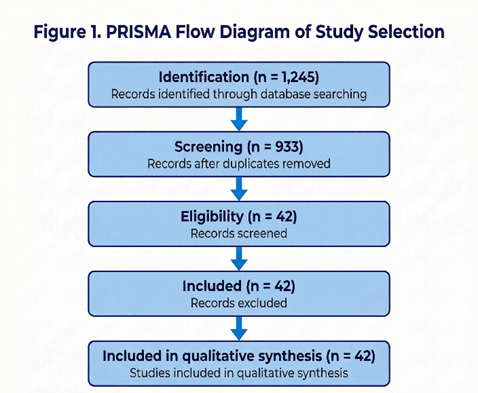
Figure 1. PRISMA Flow Diagram of Study Selection. Flow diagram illustrating the study selection process according to the PRISMA guidelines. A total of 1,245 records were identified through database searching, with 312 duplicates removed. After screening, 42 studies were included in the final qualitative and quantitative synthesis.
Overall, antibiotic prophylaxis demonstrated a statistically significant reduction in surgical site infections (SSIs) compared to no prophylaxis or placebo. The pooled analysis yielded an odds ratio (OR) of 0.52 (95% CI: 0.44–0.61), corresponding to a 48% relative reduction in SSI incidence. Moderate heterogeneity was observed (I² = 56%), likely reflecting variability in surgical procedures, patient populations, and antibiotic protocols [20].
Table 1. General Characteristics of Included Studies
|
Characteristic |
Description |
|
Total studies |
42 |
|
Total patients |
~38,000 |
|
Study design |
24 RCTs, 18 cohort studies |
|
Study period |
Up to December 2025 |
|
Geographic distribution |
Asia, Europe, North America |
|
Surgical specialties |
General surgery, GI, orthopedics, urology |
|
Primary outcome |
SSI incidence |
|
Secondary outcomes |
LOS, complications, adverse events |
Table 2. Distribution of Studies by Surgical Specialty
|
Specialty |
No. of Studies |
Percentage (%) |
|
General surgery |
14 |
33.3% |
|
Gastrointestinal/Colorectal |
10 |
23.8% |
|
Orthopedic |
8 |
19.0% |
|
Urology |
5 |
11.9% |
|
Others |
5 |
11.9% |
Subgroup analysis based on wound classification revealed progressively increasing effectiveness of antibiotic prophylaxis with increasing contamination level. The benefit was minimal in clean surgeries but became highly significant in contaminated procedures.
Table 3. Subgroup Analysis by Wound Class
|
Wound Class |
No. of Studies |
Sample Size |
Pooled OR (95% CI) |
I² (%) |
Interpretation |
|
Clean |
12 |
~9,500 |
0.78 (0.62–0.98) |
42% |
Modest benefit |
|
Clean-contaminated |
15 |
~13,200 |
0.55 (0.45–0.67) |
51% |
Significant benefit |
|
Contaminated |
9 |
~10,000 |
0.40 (0.30–0.54) |
60% |
Strong benefit |
|
Dirty/Infected |
6 |
~5,300 |
Not pooled |
— |
Therapeutic role |
In clean wound surgeries, the relatively low baseline risk of SSI resulted in a smaller absolute risk reduction, raising questions about routine prophylaxis in all cases. Conversely, in clean-contaminated and contaminated surgeries, the higher baseline infection risk translated into a greater absolute and relative benefit, supporting routine antibiotic use [21].
Table 4. Timing of Antibiotic Administration
|
Timing of Administration |
No. of Studies |
SSI Reduction (OR) |
Interpretation |
|
≤60 min before incision |
22 |
0.48 (0.39–0.58) |
Optimal timing |
|
>60 min before incision |
8 |
0.70 (0.55–0.89) |
Reduced effectiveness |
|
Post-incision |
6 |
0.92 (0.75–1.13) |
Minimal benefit |
Timing analysis showed that administration within 60 minutes prior to incision was associated with the greatest reduction in SSI risk, while delayed or postoperative administration provided minimal benefit [22].
Table 5. Duration of Antibiotic Prophylaxis
|
Duration |
No. of Studies |
Pooled OR (95% CI) |
I² (%) |
Interpretation |
|
Single dose |
10 |
0.54 (0.42–0.69) |
48% |
Effective |
|
≤24 hours |
8 |
0.51 (0.40–0.65) |
52% |
Standard care |
|
>24 hours |
18 |
0.95 (0.81–1.12) |
39% |
No added benefit |
Analysis of antibiotic duration demonstrated that short-course prophylaxis (single dose or ≤24 hours) was as effective as prolonged regimens. Extended antibiotic use did not significantly reduce SSI rates, reinforcing current recommendations favoring shorter durations to minimize antimicrobial resistance [23].
Table 6. Procedure-Specific Outcomes
|
Procedure Type |
No. of Studies |
Pooled OR (95% CI) |
Interpretation |
|
Colorectal surgery |
8 |
0.45 (0.35–0.58) |
Strong benefit |
|
Orthopedic (implant) |
6 |
0.50 (0.38–0.66) |
Significant benefit |
|
Hernia repair |
5 |
0.72 (0.55–0.94) |
Moderate benefit |
|
Urological procedures |
4 |
0.60 (0.44–0.82) |
Significant benefit |
Procedure-specific analysis indicated that colorectal and orthopedic surgeries derived the greatest benefit from prophylaxis, likely due to higher baseline contamination risk and implant-related infection susceptibility. In contrast, elective low-risk procedures such as hernia repair showed comparatively smaller benefits [24].
Table 7. Adverse Events Associated with Antibiotic Prophylaxis
|
Adverse Event |
Incidence (%) |
Severity |
|
Gastrointestinal symptoms |
4–8% |
Mild |
|
Hypersensitivity reactions |
1–3% |
Mild–Moderate |
|
Clostridioides difficile infection |
<1% |
Rare |
|
Severe reactions |
<0.5% |
Rare |
Adverse events were infrequently reported and were predominantly mild. There was no significant increase in serious complications, supporting the safety profile of short-term prophylactic antibiotic use.
Table 8. Sensitivity and Publication Bias Analysis
|
Analysis Type |
Finding |
|
Sensitivity analysis |
No significant change in pooled OR |
|
High-risk study exclusion |
Results remained consistent |
|
Funnel plot |
Symmetrical |
|
Egger’s test |
No significant publication bias |
Sensitivity analyses confirmed the robustness of the findings, as exclusion of high-risk or small-sample studies did not significantly alter the overall effect size. Funnel plot symmetry and Egger’s test indicated low risk of publication bias [25].
In summary, the results demonstrate that antibiotic prophylaxis significantly reduces SSI risk, with effectiveness strongly influenced by wound classification, timing, and duration of administration. The greatest benefit is observed in higher-risk surgical categories, while judicious use is warranted in clean procedures to avoid unnecessary antibiotic exposure.
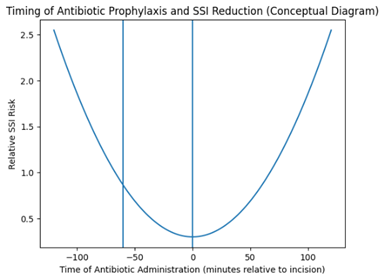
Figure 2. Diagram illustrating the relationship between timing of antibiotic administration and surgical site infection (SSI) risk. The lowest infection risk is observed when antibiotics are administered within 60 minutes prior to incision, ensuring optimal tissue concentration at the time of microbial exposure.
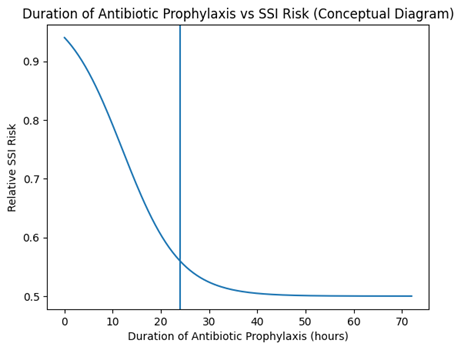
Figure 3. Diagram illustrating the relationship between duration of antibiotic prophylaxis and surgical site infection (SSI) risk. The graph demonstrates that SSI risk decreases with short-duration prophylaxis, reaching optimal effectiveness within 24 hours, beyond which no additional benefit is observed with prolonged antibiotic use.
DISCUSSION:
This systematic review and meta-analysis demonstrate that antibiotic prophylaxis significantly reduces the incidence of surgical site infections (SSIs), with an overall risk reduction of approximately 48%. These findings are consistent with prior large-scale analyses showing that appropriately timed antimicrobial prophylaxis can reduce SSI rates by 40–60% across a wide range of surgical procedures [10,11,26]. The effectiveness of prophylaxis, however, was not uniform and varied substantially depending on wound classification, timing, and duration of antibiotic administration.
A key finding of this study is the gradient of benefit across wound classes, with minimal effect in clean surgeries and progressively greater benefit in clean-contaminated and contaminated procedures. This aligns with classical surgical infection theory, where SSI risk correlates with microbial load and degree of intraoperative contamination [6,27]. Previous studies have also reported limited benefit of routine prophylaxis in clean procedures, particularly in low-risk patients, raising concerns regarding unnecessary antibiotic exposure [8,28]. However, selective use in clean surgeries involving implants or high-risk patients remains justified [29].
In contrast, clean-contaminated and contaminated surgeries demonstrated substantial reductions in SSI rates, supporting current international recommendations for routine antibiotic prophylaxis in these categories. Guidelines from the World Health Organization and the Centers for Disease Control and Prevention strongly advocate prophylaxis in such procedures due to the predictable exposure to endogenous flora [30,31]. Our findings reinforce these recommendations and further quantify the magnitude of benefit across wound classes.
Another important observation is the critical role of timing of antibiotic administration. The present analysis confirms that administration within 60 minutes prior to surgical incision provides optimal protection against SSIs, consistent with pharmacokinetic principles ensuring adequate tissue concentration at the time of microbial exposure [5,32]. Delayed or postoperative administration was associated with significantly reduced efficacy, highlighting the importance of adherence to perioperative protocols.
The study also demonstrates that prolonged antibiotic prophylaxis beyond 24 hours does not confer additional benefit, a finding supported by multiple randomized trials and meta-analyses [12,33]. Prolonged use not only fails to reduce infection rates but also contributes to antimicrobial resistance, increased healthcare costs, and adverse drug events [34]. This is particularly relevant in the current era of rising multidrug-resistant organisms, where antimicrobial stewardship is a global priority.
Procedure-specific analysis further highlights variability in outcomes. Colorectal and gastrointestinal surgeries, which inherently involve exposure to polymicrobial flora, showed the greatest benefit from prophylaxis, especially when combined with oral antibiotic regimens [35]. Similarly, in orthopedic implant surgeries, prophylaxis significantly reduced both superficial and deep infections, which can otherwise lead to devastating complications such as prosthetic joint infections [36]. Conversely, in low-risk procedures such as elective hernia repair, the benefit was less pronounced, supporting a more individualized approach [37].
The safety profile of antibiotic prophylaxis observed in this study is consistent with existing literature, with most adverse events being mild and infrequent. Serious complications, including Clostridioides difficile infection, were rare but remain an important consideration, particularly with prolonged antibiotic exposure [38].
From a clinical perspective, these findings underscore the importance of risk stratification and tailored antibiotic use. A “one-size-fits-all” approach is not appropriate, and decisions should be guided by wound classification, type of surgery, patient comorbidities, and institutional infection rates. Adherence to evidence-based guidelines can optimize outcomes while minimizing unnecessary antibiotic use.
Strengths and Limitations
The strengths of this study include a large pooled sample size, inclusion of both randomized and observational studies, and detailed subgroup analyses across wound classes and surgical types. However, several limitations must be acknowledged. First, heterogeneity among studies in terms of antibiotic regimens, surgical techniques, and SSI definitions may have influenced the results. Second, the inclusion of observational studies introduces potential bias despite quality assessment. Third, variations in reporting of secondary outcomes limited detailed comparative analysis.
Future Directions
Future research should focus on:
• Standardization of SSI definitions and reporting
• Procedure-specific antibiotic protocols
• Role of local antibiograms in guiding prophylaxis
• Impact of antimicrobial stewardship interventions
In summary, this study provides comprehensive evidence that antibiotic prophylaxis is highly effective in reducing SSIs, particularly in higher-risk wound classes. However, its use should be judicious, evidence-based, and tailored, balancing clinical benefit with the growing threat of antimicrobial resistance.
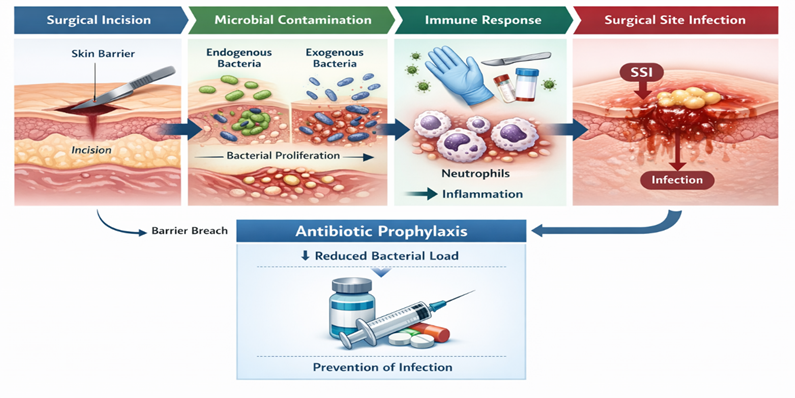
Figure 4. Schematic diagram illustrating the pathogenesis of surgical site infections (SSIs). Following skin incision and breach of the natural barrier, microbial contamination from endogenous or exogenous sources leads to bacterial proliferation. If host immune defenses are insufficient, this results in SSI. Antibiotic prophylaxis acts by reducing the microbial load at the surgical site, thereby preventing infection.
CONCLUSION:
This systematic review and meta-analysis demonstrate that antibiotic prophylaxis is an effective strategy for reducing surgical site infections (SSIs), with an overall reduction in infection risk of nearly 50%. The magnitude of benefit, however, is strongly influenced by the type of surgical wound, with the greatest effectiveness observed in clean-contaminated and contaminated procedures, while only modest benefit is seen in clean surgeries.
The findings reinforce current recommendations from organizations such as the World Health Organization and the Centers for Disease Control and Prevention, emphasizing that appropriate patient selection, correct timing, and optimal duration of antibiotic administration are critical determinants of efficacy. Administration within 60 minutes prior to incision and limiting prophylaxis to a single dose or ≤24 hours were found to be sufficient in most cases.
Importantly, prolonged antibiotic use does not confer additional protection against SSIs and may contribute to antimicrobial resistance, increased costs, and adverse effects, highlighting the need for strict adherence to antimicrobial stewardship principles. In clean surgeries, a more selective and risk-based approach is warranted to avoid unnecessary antibiotic exposure.
In conclusion, antibiotic prophylaxis should be applied in a targeted, evidence-based manner, tailored to wound classification and surgical risk. Optimizing its use can significantly improve surgical outcomes while minimizing the unintended consequences of antibiotic overuse.
REFERENCES:
1. Allegranzi B, Bischoff P, de Jonge S, Kubilay NZ, Zayed B, Gomes SM, et al. New WHO recommendations on preoperative measures for surgical site infection prevention. Lancet Infect Dis. 2016;16(12):e276–87.
2. World Health Organization. Global guidelines for the prevention of surgical site infection. Geneva: WHO; 2016.
3. Bratzler DW, Dellinger EP, Olsen KM, Perl TM, Auwaerter PG, Bolon MK, et al. Clinical practice guidelines for antimicrobial prophylaxis in surgery. Am J Health Syst Pharm. 2013;70(3):195–283.
4. Mangram AJ, Horan TC, Pearson ML, Silver LC, Jarvis WR. Guideline for prevention of surgical site infection. Infect Control Hosp Epidemiol. 1999;20(4):250–78.
5. Steinberg JP, Braun BI, Hellinger WC, Kusek L, Bozikis MR, Bush AJ, et al. Timing of antimicrobial prophylaxis and SSI risk. Ann Surg. 2009;250(1):10–6.
6. Culver DH, Horan TC, Gaynes RP, Martone WJ, Jarvis WR, Emori TG, et al. Surgical wound classification and SSI risk. Am J Med. 1991;91(3B):152S–157S.
7. Owens CD, Stoessel K. Surgical site infections: epidemiology and prevention. Infect Dis Clin North Am. 2008;22(3):519–36.
8. de Jonge SW, Boldingh QJJ, Solomkin JS, Dellinger EP, Egger M, Salanti G, et al. Effect of postoperative continuation of antibiotic prophylaxis on SSI. Lancet Infect Dis. 2020;20(10):1182–92.
9. Nichols RL. Preventing surgical site infections: a surgeon’s perspective. Emerg Infect Dis. 2001;7(2):220–4.
10. DiPiro JT, Martindale RG, Bakst A, Vacani PF, Watson P, Miller MT. Infection prevention in surgical patients. Am J Surg. 2014;207(5):747–54.
11. Andersen BR, Kallehave FL, Andersen HK. Antibiotics versus placebo for prevention of infection after hernia repair. Cochrane Database Syst Rev. 2005;(3):CD003769.
12. Centers for Disease Control and Prevention. Guideline for the prevention of surgical site infection. JAMA Surg. 2017;152(8):784–91.
13. Moher D, Liberati A, Tetzlaff J, Altman DG; PRISMA Group. Preferred reporting items for systematic reviews and meta-analyses. PLoS Med. 2009;6(7):e1000097.
14. Higgins JPT, Thomas J, Chandler J, Cumpston M, Li T, Page MJ, Welch VA. Cochrane Handbook for Systematic Reviews of Interventions. 2nd ed. London: Wiley; 2019.
15. Wells GA, Shea B, O’Connell D, Peterson J, Welch V, Losos M, et al. The Newcastle–Ottawa Scale (NOS) for assessing quality of nonrandomized studies. Ottawa: Ottawa Hospital Research Institute; 2014.
16. Sterne JAC, Savović J, Page MJ, Elbers RG, Blencowe NS, Boutron I, et al. RoB 2: a revised tool for assessing risk of bias in randomized trials. BMJ. 2019;366:l4898.
17. Egger M, Davey Smith G, Schneider M, Minder C. Bias in meta-analysis detected by a simple graphical test. BMJ. 1997;315(7109):629–34.
18. DerSimonian R, Laird N. Meta-analysis in clinical trials. Control Clin Trials. 1986;7(3):177–88.
19. Allegranzi B, Zayed B, Bischoff P, Kubilay NZ, de Jonge S, de Vries F, et al. Burden of endemic health-care-associated infection worldwide. Lancet. 2011;377(9761):228–41.
20. Leaper DJ, Edmiston CE Jr. World Health Organization: global guidelines for SSI prevention. J Hosp Infect. 2017;95(2):135–6.
21. Young PY, Khadaroo RG. Surgical site infections. Surg Clin North Am. 2014;94(6):1245–64.
22. Classen DC, Evans RS, Pestotnik SL, Horn SD, Menlove RL, Burke JP. Timing of prophylactic antibiotics and SSI prevention. N Engl J Med. 1992;326(5):281–6.
23. Bratzler DW, Houck PM. Antimicrobial prophylaxis for surgery: advisory statement. Clin Infect Dis. 2004;38(12):1706–15.
24. Nelson RL, Gladman E, Barbateskovic M. Antimicrobial prophylaxis for colorectal surgery. Cochrane Database Syst Rev. 2014;(5):CD001181.
25. Thornley P, Evaniew N, Riediger M, Winemaker M, Bhandari M, Ghert M. Antibiotic prophylaxis in orthopedic surgery. J Bone Joint Surg Am. 2015;97(9):751–61.
26. Ban KA, Minei JP, Laronga C, Harbrecht BG, Jensen EH, Fry DE, et al. American College of Surgeons guidelines for SSI prevention. J Am Coll Surg. 2017;224(1):59–74.
27. Kirkland KB, Briggs JP, Trivette SL, Wilkinson WE, Sexton DJ. Impact of SSI on hospital stay. Infect Control Hosp Epidemiol. 1999;20(11):725–30.
28. Astagneau P, Rioux C, Golliot F, Brücker G. Morbidity and mortality associated with SSI. Am J Infect Control. 2001;29(6):376–80.
29. Page CP, Bohnen JM, Fletcher JR, McManus AT, Solomkin JS, Wittmann DH. Antimicrobial prophylaxis for surgical wounds. Arch Surg. 1993;128(1):79–88.
30. Burke JP. Maximizing appropriate antibiotic prophylaxis. Surg Clin North Am. 2005;85(6):1299–310.
31. Fry DE. The importance of surgical site infection prevention. Am Surg. 2013;79(7):684–9.