Clinico - Microbiological Profile of Biofilm Forming Uropathogens Isolated from Catheterized Patients (CAUTI)
- Kosanam Ramya Sree , Assistant Professor, Department of Microbiology, Govt. Medical College, Paderu, ASR District, India.
- B. Anji Naik , Professor, Department of Urology, Konaseema Institute of Medical Sciences and Research Foundation (KIMS & RF), Amalapuram, Dr. B. R. Ambedkar Konaseema District, India.
- Viveka Vardhini Maddala , Assistant Professor, Department of Community Medicine, Govt. Medical College, Paderu. ASR District, India.
Article Information:
Abstract:
Background: Catheter-associated urinary tract infections (CAUTIs) constitute a major proportion of hospital-acquired infections, with biofilm formation on indwelling catheters playing a critical role in persistent infection and antimicrobial resistance. Objectives: To determine the incidence of biofilm-associated CAUTI, identify associated risk factors, and evaluate the antimicrobial resistance patterns of uropathogens. Methods: A prospective study was conducted among 112 catheterized patients meeting standard CAUTI criteria. Urine samples were collected aseptically and processed using conventional microbiological methods. Biofilm formation was detected using the tube adherence method. Antimicrobial susceptibility testing was performed using the Kirby–Bauer disc diffusion method in accordance with CLSI guidelines. Statistical analysis was performed using SPSS, with p ≤ 0.05 considered significant. Results: Biofilm formation was observed in 58% of isolates. Escherichia coli (32.1%) was the most common pathogen, while Klebsiella pneumoniae demonstrated the highest biofilm-forming ability (70%). Biofilm production was significantly associated with male gender, prolonged catheterization (>4 days), and use of latex catheters. Biofilm-producing isolates exhibited markedly higher resistance to commonly used antibiotics, particularly ampicillin (100%) and ciprofloxacin (90%). In contrast, fosfomycin demonstrated the lowest resistance (12%), followed by carbapenems. Conclusion: Biofilm formation is highly prevalent in CAUTI and is strongly associated with increased antimicrobial resistance. Strategies such as minimizing catheter duration, preferential use of silicone catheters, and rational antibiotic selection—particularly the use of fosfomycin—may help improve clinical outcomes and reduce resistance.
Keywords:
Article :
INTRODUCTION:
UTI is considered as the most common Hospital Acquired Infection (HAI) worldwide, accounting for up to 40% of nosocomial infections. Out of these 70-80% cases involve Catheter Associated Urinary Tract Infections (CAUTIs)1. CAUTI is associated with high morbidity, high mortality, increased length of hospital stay, and increased cost of treatment2-3. Inanimate surfaces such as the catheter surface represent a perfect media for micro organisms to adhere and start biofilm formation4. Biofilm producing uropathogens are more resistant to antibiotics. Extremes of age and prolonged duration of catheterization were significantly associated with biofilm formation. Biofilms pose a serious threat because of their higher propensity to cause device related infections that are not only difficult to treat but also often persistent and recurrent5. Understanding the nature of biofilm and their components, their possible linkage with bacteriuria, antibiotic resistance patterns as well as the risk factors would help to apply preventive measures and effective management in the hospital.
AIMS AND OBJECTIVES
1. To determine the incidence of biofilm based CAUTIs and to identify risk factors associated with biofilm production.
2. To identify bacterial pathogens and antibiotic resistance patterns among catheterised patients.
MATERIALS AND METHODS:
STUDY GROUP
This is a prospective study conducted in all medical and surgical departments in KONASEEMA INSTITUTE OF MEDICAL SCIENCES AND RESEARCH FOUNDATION, Amalapuram, Andhra Pradesh. All catheterized patients irrespective of gender and age between 12 and 70 years who met the criteria of CAUTI were included in the study.
CRITERIA OF CAUTI: (table 1)
Catheter-associated urinary tract infection (CAUTI) criteria6
|
All patients who had an indwelling urinary catheter in place for >2 calendar days, with day of device placement being day 1, and catheter was in place on the date of event |
|
At least 1 of the following signs or symptoms: fever (>38°C); suprapubic tenderness, costovertebral angle pain, or tenderness |
|
At least 1 of the following findings: positive nitrite, pyuria (urine specimen with ≥10 white blood cells/mm3 unspun urine or >5 white blood cells/high power field spun urine) or microorganisms seen on Gram stain of unspun urine. |
|
A positive urine culture of ≥103 and <105 CFU/mL and with no more than 2 species microorganisms |
INCLUSION CRITERIA
All the catheterised patients irrespective of gender and age between 12-70 years who met the criteria of CAUTI (Table-1) were included in the study.
EXCLUSION CRITERIA
Non catheterised patients those who already diagnosed with UTI, those who are immunocompromised, those taking antibiotics prophylaxis before catheterisation were excluded.
STUDY PERIOD
20th October 2022 to 31st December 2023
SPECIMEN COLLECTION
Urine samples were collected aseptically from catheter tubing and transported to laboratory without any delay. Sample was taken day 0, i.e. when a catheter is inserted to rule out previous UTI. Urine cultures were done in all the patients developing signs and symptoms of UTI like fever, supra pubic tenderness, costo-vertebral angle pain / tenderness after 48 hours of catheterisation.
URINALYSIS AND CULTURE
Urine samples were examined macroscopically for colour and turbidity. Wet mount examination was done to detect pyuria. Urine Samples were inoculated to CLED agar, MacConkey agar and Blood agar using calibrated loop (0.01ml) and incubated for 37⁰C for 24 hours overnight. The isolated organisms were identified on the basis of colony morphology, Gram stain and biochemical tests.
ANTIBIOTIC SUSCEPTIBILITY TESTING
Antimicrobial resistance of the isolate was carried out by using Kirby Bauer Disc Diffusion method. The zones of inhibition were interpreted according to CLSI guidelines7. Resistance patterns of 5 groups of antibiotics i.e. β lactams, Quinolones, Cotrimoxazole, Aminoglycosides, Carbapenems were compared between biofilm producers and non biofilm producers.
DETECTION OF BIOFILM FORMATION:
The detection of the biofilm was done by the tube adherence method. About 10ml of Trypticase Soy Broth with 1% glucose was inoculated with a loopful of bacterial culture and incubated at 37⁰C for 48 hours. Culture broths were decanted, washed with PBS and stained with 0.1% crystal violet. Slime formation was considered positive when a visible film lined the inner wall of the tube. Ring formation at the liquid air interface was considered as negative. The tube adherence method can be used as a general screening method for detection of biofilm8.
STATISTICS AND DATA ANALYSIS
Descriptive statistics were calculated using SPSS version 21 (IBM SPSS Inc, Armonk, NY). Stratification was done and poststratification χ2 test was applied to observe the effect of modifiers on outcome. P values ≤ .05 were considered significant.
RESULTS:
A total of 112 urine samples from CAUTI patients were studied. Among them 87 (77.7%) were men and 25 (22.3%) were women. Most patients were from Urology department n=53(47.3%), Surgical wards n =14(12.5%), Gynaecology wards n =11(9.8%), Nephrology department n=11(9.8%), Medical wards n=10(8.9%), Neurology department =7(6.25%), and ICUs n=6(5.3%) respectively. The major indications for which a catheter was inserted in study population were obstructive uropathy (60%) followed by cerebrovascular events(18%), multiple traumatic injuries (14%) and Gynaecology surgeries (8%) respectively.
The incidence of biofilm based CAUTI was 58%. A Latex catheter was used in 66 patients (58.9%), where as Silicone catheter was used in 46 patients (41%), Stratification of biofilm was done according to type of catheter. Out of 66 patients catheterized with latex catheter biofilm was detected in 52 i.e 78.7%, out of 46 patients with silicone catheter biofilm was detected in 24 i.e, 52.1%.
Escherichia coli (n=36) 32.1% was found to be the most common pathogen isolated, Klebsiella pneumoniae exhibited highest biofilm production accounting for 36.9%(Table2).
Table 2: Biofilm formation according to pathogens(n=112)
|
|
Biofilm producers (n=65) |
Biofilm non producers (n=47) |
|
||
|
Organisms |
n |
% |
n |
% |
Total(n=112) |
|
Acinetobacter spp |
3 |
50 |
3 |
50 |
6 |
|
Enterobacter spp |
7 |
63.6 |
4 |
36.4 |
11 |
|
Enterococcus spp |
4 |
50 |
4 |
50 |
8 |
|
Escherichia coli |
19 |
52 |
17 |
48 |
36 |
|
Klebsiella pneumoniae |
24 |
70 |
10 |
30 |
34 |
|
Pseudomonas aeruginosa |
5 |
41.6 |
7 |
58.4 |
12 |
|
Others |
3 |
60 |
2 |
40 |
5 |
The resistance pattern of Ampicillin, Amoxicillin Clavulanate, Ceftriaxone, Imipenem, Meropenem, Cotrimoxazole, Gentamicin, Ciprofloxacin and Fosfomycin was compared between biofilm producers and non biofilm producers, and results showed that high resistance was observed in biofilm producers. Among biofilm producers high resistance was observed Ampicillin 100%, Ciprofloxacin 90%, whereas Fosfomycin exhibited lowest resistance 12%. Among biofilm producers resistance to Ampicillin, Amoxicillin Clavulanate, Ceftriaxone, Imipenem, Meropenem, Cotrimoxazole, Gentamicin, Ciprofloxacin and Fosfomycin was 100%, 82%, 80%, 15%, 16%, 81%, 68%, 90%, 12% respectively. Low resistance among bio film non producers, Ampicillin, Amoxicillin Clavulanate, Ceftriaxone, Imipenem, Meropenem, Cotrimoxazole, Gentamicin, Ciprofloxacin and Fosfomycin 72.7%, 46%, 49%, 6%, 5%,52.6%, 22%, 40%, 4.8% resistance respectively. Fosfomycin exhibited low resistance among both biofilm producers (12%) and non-biofilm producers (4.8%).(fig 1)
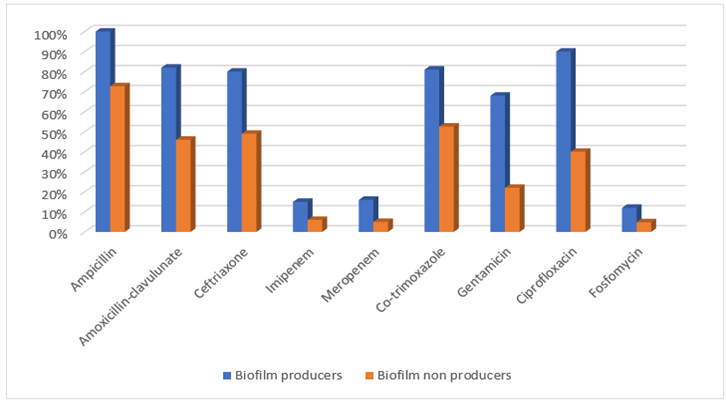
Figure 1: Comparison of antibiotic resistance between biofilm producers and non producers
Stratification of biofilm was done according to gender, age, duration of catheterization and type of catheterization to observe the effect of these modifiers. The detailed results of associations are presented in risk of biofilm production is greatly increased by male gender, increased duration of catheterization, and by use of a latex catheter.
Table 3: Risk factors for biofilm production
|
Variables |
Biofilm producers (n=65) |
Biofilm non producers (n=47) |
Total (n=112) |
|
Gender -Male |
42 |
32 |
74 |
|
-Female |
23 |
15 |
38 |
|
Age group: ≤25 y |
4 |
6 |
10 |
|
26-50 y |
20 |
16 |
36 |
|
>50 y |
41 |
25 |
66 |
|
Duration of catheterization: ≤ 4d |
25 |
17 |
42 |
|
>4d |
40 |
30 |
70 |
|
Type of catheter -Latex |
52 |
14 |
66 |
|
-silicone |
24 |
22 |
46 |
DISCUSSION:
Our study determined the effect of various variables on biofilm formation exclusively in patients with CAUTI.
In our study, the frequency of CAUTI was greater in men compared with women, 77.7% patients were men and 22.3% of patients were women. Similar results were shown by Kazi et al.3.The frequency may be attributed to increased frequency of catheterization in men due to obstructive uropathies in our setup. Biofilm production in our study, accounts for 58% compared with previous studies conducted by Niveditha et al.9(60%). This difference might result from the fact that our study was conducted only in catheterized patients. Moreover, high biofilm production may also due to poor hand hygiene during catheter insertion and catheter care. Lowest biofilm production was observed in ICUs (5.3%) due to high degree of compliance with infection control guidelines. It is already well established that duration of catheterization is directly related to the risk of developing biofilm11. Stickler et al.12 reported biofilm production within 7 days in short-term catheterization and 28 days in long- term catheterization. Contrary results were obtained in our study, in which biofilm was detected within 4 days of catheterization. Early detection of biofilm in our study may be related to poor technique of catheter insertion and lack of proper catheter care for both short term or long term catheters. CAUTI and biofilm formation can sometime be prevented in patients who are catheterized for <2 weeks with the use of sterile closed collecting system by paying attention to aseptic techniques during the insertion and care of catheters, and by taking measures to minimize cross-infections.
In our study it was observed that CAUTI was more common in patients with latex indwelling catheter accounting for 58.9% where it was only 41% in patients with silicone indwelling catheters. Similar results were shown by Huang et al.13,Singh et al. 14 who also concluded that compared with silicone catheters, latex catheter caused more irritation of urinary mucosa. In our study biofilm detection was significantly high in latex catheters, accounting for 78.7% compared with silicone catheters accounting for only 52.1%. Latex catheter had rough surface that could enhance biofilm formation in comparison to smooth surface of silicone catheter.
Escherichia coli was the most common isolated pathogen, accounting for 32.1% followed by K.pneumoniae accounting for 30.3%, corroborating the results from previous studies by Eshwarappa et al.15and Ronald et al.16. Highest biofilm production was observed in K. pneumonia (36.9%). Similar results were observed in R Ramadan et al. 17. In disagreement with results of our study, Alves et al.18 reported Acinetobacter and Citrobacter freundii to be highest biofilm forming isolates.
It is well established that biofilm increases drug resistance by delayed penetration, altered growth rate, and resistance phenotype. Regarding antibiotic resistance, high resistance was observed in biofilm producers compared with non biofilm producers. In our study, highest resistance was observed with ampicillin(100%) followed by ciprofloxacin(90%) among biofilm producers. Our results were concordant with findings of Alves et al. 18 ,who also showed highest resistance of ampicillin(62%) followed by ciprofloxacin(43.1%) among biofilm producers. The unexpectedly high resistance of ciprofloxacin may be due to injudicious and overuse of this drug in our setup because it is used as first line drug in treatment of patients with CAUTI. In this way, our study highlights the importance of antibiotic stewardship because irrational use of antibiotics not only leads to treatment failure, but also increases antibiotic resistance. Our study concluded that both carbapenems and fosfomycin were effective antibiotics and exhibited low resistance of 15% and12% respectively, among biofilm producing strains. In our study, Fosfomycin exhibited low resistance among both biofilm producers 12% and biofilm non producers 4.8% and hence is a good therapeutic option for patients with CAUTI. This results agreed with others who found that Carbapenems and Fosfomycin were effective antibiotics and exhibited low resistance among biofilm producing strains.6 This finding was contradictory to Sara et al.19 whose study recommends Macrolides as first line treatment in biofilm associated UTI. Fosfomycin has shown promising activity against multi drug resistance urinary pathogens, as reported by Neuner et al. 20. Further data regarding use of Fosfomycin in biofilm producing strains of CAUTI are needed.
CONCLUSION:
In conclusion, K. pneumoniae represented the highest biofilm producer among catheterised patients. Therefore, minimizing the duration of catheterization as much as possible and the usage of silicone catheter instead of latex are recommended. Using Fosfomycin in treatment of biofilm-dependent CAUTI should be considered
REFERENCE:
1. Syed MA, Manzoor U, Shah I, Bukhari SH. Antibacterial effects of tungsten nanoparticles on the Escherichia coli strains isolated from catheterized urinary tract infections (UTI) cases and Staphylococcus aureus. New Microbiol 2010;33:329-35.
2. Chant C, Smith DM, Marshall JC, Friedrich JO. Relationship of catheter-associated urinary tract infection to mortality and length of stay in critically ill patients: a systematic review and meta-analysis. Ann Intern Med 2013;159:401-10.
3. Kazi MM, Harshe A, Sale H, Mane D, Yande M, Chabukswar S. Catheter-associated urinary tract infections and antibiotic sensitivity pattern from confirmed cases of CAUTI in a tertiary care hospital: a prospective study. J Clin Microbiol 2015;193:doi:10.4172/2327-5073.1000193.
4. Gilmore, B. F., & Carson, L. Bioactive biomaterials for controlling biofilms. In L. Barnes, & I. Cooper (Eds.), Biomaterials and Medical Device-Associated Infections (1st ed.). [Chapter 8] Woodhead 2014. p. 281
5. Rodney MD. Biofilm formation; a clinically relevant microbiological process. Clin Infect Dis 2001;33:1387-92
6. Sabir N, Ikram A, Zaman G, et al. Bacterial biofilm-based catheter-associated urinary tract infections: causative pathogens and antibiotic resistance. Am J Infect Control. 2017;45 (10):1101–1105.
7. Clinical and Laboratory Standards Institute (CLSI). Performance standards for antimicrobial susceptibility testing; Twenty fourth informational supplement M 100-S24. Wayne, A:CLSI; 2014.
8. Satish JV, Ram Mohan RK, Pavan S. Tube adherence test as a screening tool for detection of biofilm formation among Staphylococcus. Indian J Microbiol Res 2017;4:44-7
9. Niveditha S, Pramodhini S, Umadevi S, Kumar S, Stephen S. The isolation and biofilm formation of uropathogens in the patients with catheter associated urinary tract infections (CAUTI). J Clin Diagn Res 2012;6:1478-82.
10. Talaat M, Hafez S, Saied T, Elfeky R, El-Shoubary W, Pimentel G. Surveillance of catheter- associated urinary tract infection in 4 intensive care units at Alexandria university hospitals in Egypt. Am J Infect Control 2010;38:222-8
11. Stickler DJ. The bacterial biofilms and the encrustation of the urethral catheters. Biofouling 1996;94:293-305.
12. Huang WY, Wei LP, Ji YG, Xu DX, Mo JK. Effect of silicon and latex urinary catheters: a comparative study. Di Yi Jun Yi Da Xue Xue Bao 2005;25:1026-8.
13. Singh D, Umrao PD, Kaistha SD Multiple antibiotic resistance and biofilm formation of catheter associated urinary tract infection causing microorganisms. 2018
14. Eshwarappa M, Dosegowda R, Aprameya I, Khan MW, Kumar P, Kempegowda P. Clinico- microbiological profile of urinary tract infection in South India. Indian J Nephrol 2011;21:30-6.
15. Ronald A. The etiology of urinary tract infection: traditional and emerging pathogens. Am J Med 2002;113:14-9.
16. Reham Ramadan, Nesrene Omar, Mohamed Dawaba & Dalia Moemen (2021) Bacterial biofilm dependent catheter associated urinary tract infections: Characterization, antibiotic resistance pattern and risk factors, Egyptian Journal of Basic and Applied Sciences, 8:1, 64-74
17. Alves MJ, Barreira JC, Carvalho I, Trinta L, Parreira L, Ferreira IC, et al. Propensity for biofilm formation by clinical isolates from urinary tract infections: developing a multifactorial predictive model to improve the antibiotherapy. J Med Microbiol 2014;63: 471-7.
18. Soto SM. Importance of biofilm in urinary tract infections: new therapeutic approaches. Adv Biol 2014;article ID 543974: 13.
19. Neuner E, Sekeres J, Hall G, Duin D. Experience with fosfomycin for treatment of urinary tract infections due to multidrug-resistant organisms. Antimicrob Agents Chemother 2012;56: 5744-8.