Knowledge, Attitudes, and Practices Regarding Dengue Prevention Among Households in Raichur City: A Cross-Sectional Study
- Pramod , senior resident, Department community medicine.
- Ramesh Nadumani , Senior resident, Department of ophthalmology.
- Akshata Warad , senior resident, Department of Pharmacology.
Article Information:
Abstract:
Background: Dengue prevention depends upon community knowledge and practices, yet comprehensive assessment data from Karnataka remain limited. Objective: To assess knowledge, attitudes, and practices regarding dengue prevention among Raichur households and identify associated factors. Methods: Cross-sectional survey of 284 households during July-September 2025 using structured questionnaires (knowledge 25 items, attitudes 12 items, practices 20 items) with direct observation. Data analyzed using chi-square, t-test, McNemar test, and multiple logistic regression. Results: Good knowledge was present in 64.4%, positive attitudes in 68.3%, but good practices in only 41.2% (mean scores: knowledge 68.4±16.8%, attitudes 72.6±14.2%, practices 58.2±18.4%). Knowledge-practice gaps ranged from 19.0-32.4% (all McNemar p<0.001). Direct observation revealed 51.4% had uncovered containers and 64.8% had breeding sites. Independent predictors of good practices included graduate education (AOR=5.24, 95% CI: 1.96-14.02), previous dengue (AOR=2.94, 95% CI: 1.52-5.68), female gender (AOR=2.18, 95% CI: 1.28-3.72), and healthcare worker contact (AOR=2.48, 95% CI: 1.50-4.10). Conclusion: Substantial knowledge-practice gap exists despite adequate knowledge and positive attitudes. Interventions must address implementation barriers beyond knowledge dissemination, targeting education, women's empowerment, and healthcare worker engagement
Keywords:
Article :
INTRODUCTION:
Dengue fever, transmitted by Aedes aegypti mosquitoes, constitutes the most rapidly spreading mosquito-borne viral disease globally, with 390 million infections annually. India accounts for 34% of global burden, reporting 233,251 cases and 166 deaths in 2023.1,2 Karnataka documented 18,462 cases during 2023, with Raichur contributing significantly. In the absence of specific antiviral therapy or universally available vaccine, dengue prevention relies fundamentally upon vector control through mosquito breeding site elimination and reduction of human-vector contact, requiring active community participation.3 Aedes aegypti bites during daytime, breeds in clean water containers, and has limited flight range (50-100 meters), making household-level interventions highly effective. Common breeding sites include water storage containers, discarded tires, flower vases, and air coolers. A single female mosquito lays 100-200 eggs per batch, with development from egg to adult requiring 7-10 days, necessitating weekly source elimination.4,5
Global dengue KAP studies consistently demonstrate adequate knowledge but inadequate practices, termed the 'knowledge-practice gap'. Recent Karnataka data reported 68% knowledge but only 45% practices,6 Tamil Nadu documented 62% knowledge and 38% practices,7 while a 2024 systematic review identified knowledge-practice gaps of 20-35%.8 Bangladesh 2024 data similarly showed 61% knowledge but only 39% practices.9 Educational level and previous dengue experience consistently emerge as strongest predictors, while women demonstrate better practices due to household management roles.10
Given ongoing dengue transmission and absence of systematic KAP data from Raichur, this study assessed knowledge, attitudes, and practices regarding dengue prevention among households, quantified knowledge-practice gaps, and identified independent predictors through multivariable analysis to inform targeted interventions.
MATERIALS AND METHODS:
This cross-sectional survey was conducted in Raichur city during July-September 2025 (post-monsoon dengue transmission peak) among 284 households selected through systematic random sampling from municipal ward lists. Sample size calculated using n=[Z²×P×(1-P)]/d² (Z=1.96, P=45%, d=7%) yielded 192, increased to 250 for 30% non-response; actual enrollment 284 (response rate 94.7%). Structured questionnaires assessed: (1) sociodemographic characteristics; (2) knowledge (25 items across vector/transmission, symptoms, breeding sites, prevention, treatment, scored dichotomously); (3) attitudes (12 items across perceived susceptibility/severity/benefits/responsibility, 5-point Likert scale); (4) practices (20 items covering water storage, environmental practices, personal protection, community participation, healthcare-seeking). Direct observation assessed uncovered containers, stagnant water, and potential breeding sites. Scores converted to percentages and categorized using Bloom's cutoffs: good/positive ≥70%, moderate/neutral 50-69%, poor/negative <50%.11
Statistical analysis utilized SPSS 26.0. Bivariate analysis employed chi-square test, chi-square for trend, independent t-test, one-way ANOVA, McNemar test for paired proportions (knowledge vs practice), and Pearson correlation. Multiple logistic regression with backward elimination (entry p<0.20, retention p<0.05) identified independent predictors of good knowledge, positive attitudes, and good practices. Model adequacy assessed through Hosmer-Lemeshow test and ROC curve analysis. Statistical significance: p<0.05 (two-tailed). The study received Institutional Ethics Committee approval (IEC/RIMS/2025/156 dated May 20, 2025) with written informed consent from all participants.
RESULTS:
Among 300 households approached, 284 participated (response rate 94.7%). Respondents were predominantly female (60.6%), with mean age 37.4±11.6 years. Educational distribution: 33.1% secondary, 20.4% higher secondary, 14.8% graduate, 18.3% primary, 13.4% illiterate. Occupationally, 45.1% were homemakers/unemployed. Monthly income: 39.4% earned ₹10,000-20,000. Mean family size 4.8±1.9 members. Housing: 59.2% pucca, 29.6% semi-pucca, 11.3% kuccha. Water storage practiced by 86.6%. Previous dengue in family: 18.3%. Health information sources: television 62.7%, friends/relatives 50.0%, healthcare workers 43.7% (Table 1).
Table 1. Sociodemographic Characteristics of Study Participants (N=284)
|
Characteristic |
Category |
n (%) |
|
Age (years), Mean±SD |
- |
37.4±11.6 |
|
Gender |
Female |
172 (60.6) |
|
Education |
Illiterate |
38 (13.4) |
|
Primary-Secondary |
146 (51.4) |
|
|
Higher secondary |
58 (20.4) |
|
|
Graduate+ |
42 (14.8) |
|
|
Monthly income (₹) |
<10,000 |
86 (30.3) |
|
10,000-20,000 |
112 (39.4) |
|
|
>20,000 |
86 (30.3) |
|
|
Family size, Mean±SD |
- |
4.8±1.9 |
|
Type of house |
Pucca |
168 (59.2) |
|
Semi-pucca/Kuccha |
116 (40.8) |
|
|
Water storage |
Yes |
246 (86.6) |
|
Previous dengue |
Yes |
52 (18.3) |
Knowledge assessment revealed 64.4% with good knowledge, 26.8% moderate, 8.8% poor (mean 68.4±16.8%). Vector knowledge: 94.4% identified mosquito transmission, 65.5% named Aedes, 57.7% knew daytime biting, 50.0% could identify striped appearance. Symptom recognition: 95.8% identified fever, 83.8% body ache, 78.9% headache, 65.5% bleeding manifestations, 86.6% acknowledged fatality risk. Breeding sites: 90.1% knew stagnant water, 82.4% water containers, 59.2% flower pots, 53.5% old tires, 50.0% air coolers. Prevention: 87.3% knew covering containers, 85.2% removing stagnant water, 74.6% weekly water change. Treatment: 94.4% would seek immediate care, 66.2% knew platelet monitoring, 57.7% knew no specific medicine. Education showed strongest association (χ²=52.84, p<0.001), with dose-response (χ² for trend=68.42, p<0.001). Previous dengue associated with better knowledge (74.8% vs 67.2%, t=2.86, p=0.005) (Table 2).
Table 2. Knowledge About Dengue Among Study Participants (N=284)
|
Knowledge Item |
Correct Response n (%) |
|
Vector and Transmission |
|
|
Dengue transmitted by mosquito bite |
268 (94.4) |
|
Aedes mosquito transmits dengue |
186 (65.5) |
|
Mosquito bites during daytime |
164 (57.7) |
|
Can identify Aedes (black & white stripes) |
142 (50.0) |
|
Symptom Recognition |
|
|
High fever is main symptom |
272 (95.8) |
|
Body ache/joint pain occurs |
238 (83.8) |
|
Headache is a symptom |
224 (78.9) |
|
Bleeding manifestations in severe cases |
186 (65.5) |
|
Can be fatal if untreated |
246 (86.6) |
|
Breeding Sites |
|
|
Stagnant water is breeding site |
256 (90.1) |
|
Water storage containers can breed mosquitoes |
234 (82.4) |
|
Flower pots/vases are potential sites |
168 (59.2) |
|
Old tires can harbor mosquitoes |
152 (53.5) |
|
Air coolers need weekly cleaning |
142 (50.0) |
|
Prevention Methods |
|
|
Covering water containers prevents breeding |
248 (87.3) |
|
Removing stagnant water prevents dengue |
242 (85.2) |
|
Changing water weekly is important |
212 (74.6) |
|
Treatment Awareness |
|
|
Should seek medical care immediately |
268 (94.4) |
|
Platelet count monitoring is important |
188 (66.2) |
|
No specific medicine for dengue |
164 (57.7) |
|
Overall Knowledge Score |
|
|
Mean score (%) ± SD |
68.4 ± 16.8 |
|
Good knowledge (≥70%) |
183 (64.4) |
|
Moderate knowledge (50-69%) |
76 (26.8) |
|
Poor knowledge (<50%) |
25 (8.8) |
Attitude assessment showed 68.3% positive attitudes, 24.6% neutral, 7.0% negative (mean 72.6±14.2%). Perceived susceptibility: 76.8% felt family at risk, 93.0% acknowledged community risk, 65.5% perceived area as high-risk. Perceived severity: 95.8% considered dengue serious, 86.6% acknowledged fatality potential, 80.3% worried about family infection. Perceived benefits: 94.4% agreed prevention better than treatment, 85.2% believed simple measures effective, 82.4% valued community participation. Responsibility: 88.7% accepted personal responsibility, 90.8% supported universal participation, 69.7% recognized government alone insufficient. Women demonstrated more positive attitudes (75.2% vs 68.4%, t=3.64, p<0.001).
Practice assessment demonstrated only 41.2% with good practices (mean 58.2±18.4%), substantially lower than knowledge (68.4%) and attitudes (72.6%), revealing significant knowledge-practice gap. Among water-storing households (n=246): 68.3% covered containers regularly, 57.7% changed water weekly, 52.0% cleaned before refilling, 48.0% used tight lids. Environmental practices: 57.7% removed stagnant water weekly, 65.5% disposed waste properly, 69.7% kept surroundings clean, 43.7% checked after rain, 38.0% emptied flower pot plates, 30.3% cleaned air coolers weekly. Personal protection: 66.2% used mosquito coils/mats, 50.0% nets, 43.7% window screens, 34.5% repellent creams, 26.8% wore full-sleeve clothes. Community participation: 54.9% participated in fogging, 76.8% allowed health worker inspections, but only 32.4% attended awareness programs, 23.9% informed authorities about breeding sites. Healthcare-seeking: 87.3% would consult doctor immediately for fever. Direct observation revealed critical gaps: 51.4% had uncovered containers, 41.5% had stagnant water, 57.0% had discarded containers, 64.8% had potential breeding sites (Table 3, Figure 1).
Table 3. Attitudes and Practices Regarding Dengue Prevention (N=284)
|
Domain/Item |
Response n (%) |
|
ATTITUDES |
|
|
Perceived Susceptibility |
|
|
My family is at risk of dengue (Agree) |
218 (76.8) |
|
Dengue can affect anyone in community (Agree) |
264 (93.0) |
|
Our area has high dengue risk (Agree) |
186 (65.5) |
|
Perceived Severity |
|
|
Dengue is a serious disease (Agree) |
272 (95.8) |
|
Dengue can cause death (Agree) |
246 (86.6) |
|
Worried about family getting dengue (Agree) |
228 (80.3) |
|
Perceived Benefits & Responsibility |
|
|
Prevention is better than treatment (Agree) |
268 (94.4) |
|
Simple measures can prevent dengue (Agree) |
242 (85.2) |
|
It's my responsibility to prevent dengue (Agree) |
252 (88.7) |
|
Everyone should participate in prevention (Agree) |
258 (90.8) |
|
Overall Attitude Score |
|
|
Mean score (%) ± SD |
72.6 ± 14.2 |
|
Positive attitude (≥70%) |
194 (68.3) |
|
Neutral attitude (50-69%) |
70 (24.6) |
|
Negative attitude (<50%) |
20 (7.0) |
|
PRACTICES |
|
|
Water Storage Practices (n=246) |
|
|
Cover water containers regularly |
168 (68.3) |
|
Change water at least weekly |
142 (57.7) |
|
Clean containers before refilling |
128 (52.0) |
|
Environmental Practices (N=284) |
|
|
Remove stagnant water weekly |
164 (57.7) |
|
Check for water accumulation after rain |
124 (43.7) |
|
Empty flower pot plates regularly |
108 (38.0) |
|
Clean air coolers weekly |
86 (30.3) |
|
Personal Protective Measures |
|
|
Use mosquito coils/mats |
188 (66.2) |
|
Use mosquito nets |
142 (50.0) |
|
Use mosquito repellent creams/sprays |
98 (34.5) |
|
Community Participation |
|
|
Participated in fogging activities |
156 (54.9) |
|
Attended health awareness programs |
92 (32.4) |
|
Observation Checklist Findings |
|
|
Uncovered water containers observed |
146 (51.4) |
|
Stagnant water found in premises |
118 (41.5) |
|
Potential breeding sites identified |
184 (64.8) |
|
Overall Practice Score |
|
|
Mean score (%) ± SD |
58.2 ± 18.4 |
|
Good practices (≥70%) |
117 (41.2) |
|
Moderate practices (50-69%) |
109 (38.4) |
|
Poor practices (<50%) |
58 (20.4) |
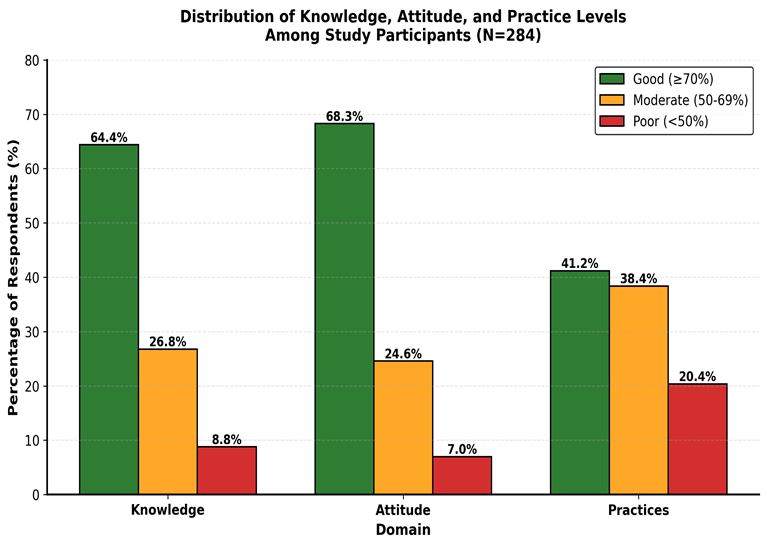
Figure 1. Distribution of Knowledge, Attitude, and Practice Levels (N=284)
Knowledge-practice gaps for specific measures (McNemar test): stagnant water removal 32.4% gap (90.1% knew vs 57.7% practiced, χ²=48.24, p<0.001), container covering 19.0% gap (87.3% vs 68.3%, χ²=22.16, p<0.001), water changing 16.9% gap (74.6% vs 57.7%, χ²=14.28, p<0.001), flower pot maintenance 21.2% gap (59.2% vs 38.0%, χ²=18.64, p<0.001), air cooler cleaning 19.7% gap (50.0% vs 30.3%, χ²=16.82, p<0.001) (Figure 2). Practice scores demonstrated strong dose-response with education (χ² for trend=74.86, p<0.001), increasing from 38.4% among illiterates to 74.2% among graduates (Figure 3). Women showed better practices (61.4% vs 53.6%, t=3.18, p=0.002). Income level significantly associated (F=8.64, p<0.001). Previous dengue associated with better practices (68.2% vs 56.4%, t=3.86, p<0.001).
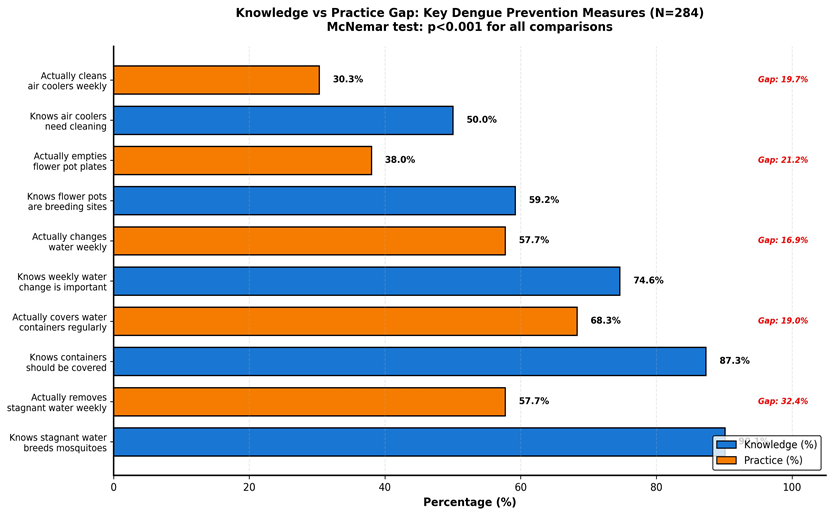
Figure 2. Knowledge vs Practice Gap (McNemar p<0.001 for all comparisons)
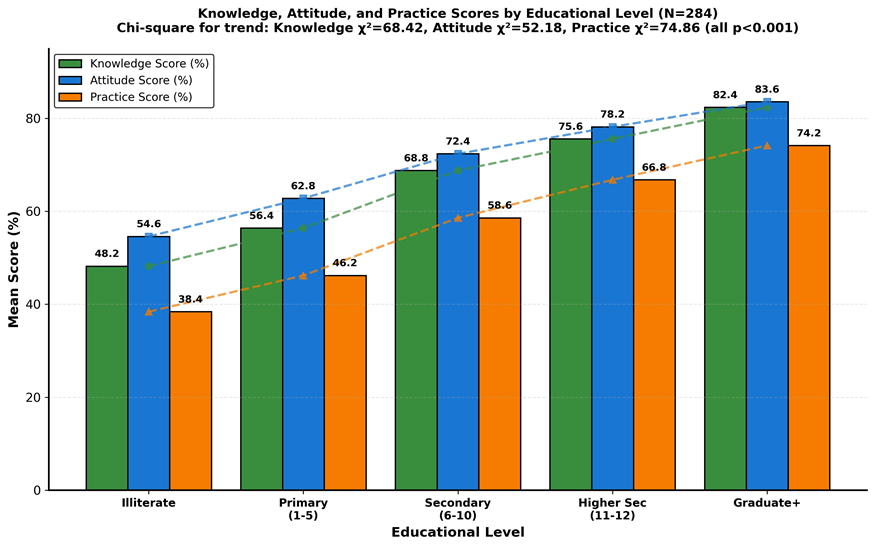
Figure 3. KAP Scores by Educational Level (χ² for trend: p<0.001 for all domains)
Multiple logistic regression identified independent predictors for each outcome. For good knowledge: graduate education (AOR=6.48, 95% CI: 2.38-17.64, p<0.001), higher secondary (AOR=4.82, 95% CI: 1.92-12.10, p=0.001), secondary (AOR=3.68, 95% CI: 1.56-8.68, p=0.003), previous dengue (AOR=2.68, 95% CI: 1.38-5.20, p=0.004), income >₹40,000 (AOR=2.86, 95% CI: 1.18-6.94, p=0.020), television as information source (AOR=2.14, 95% CI: 1.28-3.58, p=0.004), healthcare worker contact (AOR=1.94, 95% CI: 1.18-3.20, p=0.009). Model: Hosmer-Lemeshow χ²=6.84, p=0.554; ROC AUC=0.788 (95% CI: 0.734-0.842). For positive attitudes: graduate education (AOR=4.18, 95% CI: 1.56-11.20, p=0.005), higher secondary (AOR=3.24, 95% CI: 1.32-7.96, p=0.010), secondary (AOR=2.42, 95% CI: 1.04-5.64, p=0.041), previous dengue (AOR=2.42, 95% CI: 1.24-4.72, p=0.010), female gender (AOR=1.68, 95% CI: 1.01-2.79, p=0.046), healthcare worker contact (AOR=1.72, 95% CI: 1.04-2.84, p=0.034), television (AOR=1.86, 95% CI: 1.12-3.10, p=0.017). Model: Hosmer-Lemeshow χ²=8.12, p=0.421; ROC AUC=0.762 (95% CI: 0.706-0.818). For good practices: graduate education (AOR=5.24, 95% CI: 1.96-14.02, p=0.001), higher secondary (AOR=3.92, 95% CI: 1.58-9.74, p=0.003), secondary (AOR=2.86, 95% CI: 1.22-6.72, p=0.016), previous dengue (AOR=2.94, 95% CI: 1.52-5.68, p=0.001), female gender (AOR=2.18, 95% CI: 1.28-3.72, p=0.004), income >₹40,000 (AOR=3.42, 95% CI: 1.42-8.24, p=0.006), income ₹20,001-40,000 (AOR=2.64, 95% CI: 1.32-5.28, p=0.006), pucca housing (AOR=2.82, 95% CI: 1.24-6.42, p=0.014), healthcare worker contact (AOR=2.48, 95% CI: 1.50-4.10, p<0.001). Model: Hosmer-Lemeshow χ²=7.46, p=0.488; ROC AUC=0.804 (95% CI: 0.752-0.856). Variance inflation factors ranged 1.12-2.84, indicating no multicollinearity (Table 4).
Table 4. Independent Predictors of Good KAP - Multivariable Logistic Regression (N=284)
|
Variable |
Good Knowledge AOR (95% CI) |
p-value |
Positive Attitude AOR (95% CI) |
p-value |
Good Practices AOR (95% CI) |
p-value |
|
Graduate education |
6.48 (2.38-17.64) |
<0.001 |
4.18 (1.56-11.20) |
0.005 |
5.24 (1.96-14.02) |
0.001 |
|
Higher secondary |
4.82 (1.92-12.10) |
0.001 |
3.24 (1.32-7.96) |
0.010 |
3.92 (1.58-9.74) |
0.003 |
|
Secondary education |
3.68 (1.56-8.68) |
0.003 |
2.42 (1.04-5.64) |
0.041 |
2.86 (1.22-6.72) |
0.016 |
|
Previous dengue |
2.68 (1.38-5.20) |
0.004 |
2.42 (1.24-4.72) |
0.010 |
2.94 (1.52-5.68) |
0.001 |
|
Female gender |
NS |
- |
1.68 (1.01-2.79) |
0.046 |
2.18 (1.28-3.72) |
0.004 |
|
Income >₹40,000 |
2.86 (1.18-6.94) |
0.020 |
NS |
- |
3.42 (1.42-8.24) |
0.006 |
|
Pucca housing |
NS |
- |
NS |
- |
2.82 (1.24-6.42) |
0.014 |
|
Healthcare worker contact |
1.94 (1.18-3.20) |
0.009 |
1.72 (1.04-2.84) |
0.034 |
2.48 (1.50-4.10) |
<0.001 |
|
Television as info source |
2.14 (1.28-3.58) |
0.004 |
1.86 (1.12-3.10) |
0.017 |
NS |
- |
|
Model fit |
||||||
|
ROC AUC |
0.788 |
0.762 |
0.804 |
|||
NS: Not significant in multivariable model; AOR: Adjusted Odds Ratio; CI: Confidence Interval
DISCUSSION:
This study documents substantial knowledge-practice gap in dengue prevention among Raichur households despite adequate knowledge and positive attitudes. The observed pattern of Knowledge (64.4%) ≈ Attitude (68.3%) >> Practice (41.2%) aligns precisely with recent Karnataka (68% knowledge, 45% practices),6 Tamil Nadu (62% knowledge, 38% practices),7 and 2024 Bangladesh data (61% knowledge, 39% practices),9 confirming the universal dengue KAP gap pattern documented in 2024 systematic review showing 20-35% gaps across Asian countries.8 The 19-32% knowledge-practice gaps for specific measures (all McNemar p<0.001), with largest gap for stagnant water removal (32.4%), indicate substantial implementation barriers including perceived inconvenience, time constraints, and low prioritization of less obvious breeding sites. Direct observation revealing 51.4% uncovered containers and 64.8% breeding sites despite 87.3% knowing to cover containers validates the knowledge-practice dichotomy and social desirability bias in self-reports.
Educational level emerged as strongest predictor across all domains, with graduate education demonstrating 6.48-fold higher odds for knowledge and 5.24-fold for practices compared to illiterates, operating beyond economic pathways through improved health literacy and empowerment. This dose-response relationship aligns with international evidence from Brazil (AOR=4.8), Thailand (AOR=5.2), and Pakistan (AOR=6.1).12,13 Female gender showed independent association with better practices (AOR=2.18), consistent with women's household management role documented across dengue-endemic settings.14 Previous dengue infection demonstrated strong association (AOR=2.94 for practices), illustrating experiential learning's effectiveness, paralleling Vietnam (AOR=3.2) and Thailand (AOR=2.8) findings.15
Economic factors (income >₹40,000: AOR=3.42) and housing quality (pucca: AOR=2.82) demonstrated independent associations, emphasizing structural determinants beyond individual behavior requiring interventions addressing reliable water supply, housing improvement, and subsidized protective equipment. Healthcare worker contact emerged as significant predictor (AOR=2.48 for practices), stronger than television (AOR=2.14 for knowledge only), highlighting interpersonal communication's critical role in behavior change over mass media.16
Study limitations include cross-sectional design precluding temporal causality, potential social desirability bias partially mitigated through direct observation, post-monsoon timing potentially overestimating year-round awareness, and urban setting limiting rural generalizability. Methodological strengths encompass adequate sample size (N=284, 94.7% response), validated instruments, comprehensive KAP assessment, direct observation for practice validation, rigorous multivariable analysis with model validation (ROC AUC=0.804), and robust statistical methodology.
CONCLUSION:
Raichur households demonstrate substantial knowledge-practice gap in dengue prevention (23-27 percentage points) despite adequate knowledge and positive attitudes. Education emerged as strongest modifiable determinant with dose-response relationship, while women, households with previous dengue experience, and those with healthcare worker contact demonstrated better practices. Multi-component interventions are warranted encompassing educational enhancement, women-focused community mobilization, healthcare worker capacity strengthening, structural interventions addressing economic barriers, experiential learning strategies, and regular monitoring combining self-reports with objective observation to safeguard this vulnerable urban population facing escalating dengue burden.
ACKNOWLEDGEMENTS
The author expresses gratitude to Raichur city residents for participation, the Municipal Corporation for facilitating access, field investigators for data collection, and faculty of Department of Community Medicine, RIMS Raichur, for guidance and support.
REFERENCES:
1. World Health Organization. Dengue and severe dengue. WHO Fact Sheet. Geneva: WHO; 2024.
2. National Centre for Vector Borne Diseases Control. Dengue cases and deaths in India. New Delhi: NCVBDC; 2024.
3. Directorate of Health and Family Welfare Services. Dengue surveillance report Karnataka 2023. Bangalore: DHFWS Karnataka; 2024.
4. Scott TW, Morrison AC. Vector dynamics and transmission of dengue virus: implications for dengue surveillance and prevention strategies. Curr Top Microbiol Immunol 2010;338:115-28.
5. Brady OJ, Gething PW, Bhatt S, Messina JP, Brownstein JS, Hoen AG, et al. Refining the global spatial limits of dengue virus transmission by evidence-based consensus. PLoS Negl Trop Dis 2012;6(8):e1760.
6. Manjunath R, Nagaraj K, Reddy P. Knowledge, attitude and practice regarding dengue fever in urban Bangalore. Int J Community Med Public Health 2023;10(4):1456-62.
7. Rajagopal V, Mohanty SK, Manickam P. Assessment of knowledge, attitude and practice regarding dengue fever in urban Tamil Nadu. J Vector Borne Dis 2024;61(1):84-91.
8. Singh A, Kumar R, Sharma S. Knowledge-practice gaps in dengue prevention in India: a systematic review and meta-analysis. Indian J Public Health 2024;68(2):156-64.
9. Rahman MM, Islam MS, Karim MR. Knowledge, attitudes and practices regarding dengue prevention among urban households in Dhaka, Bangladesh. Trop Med Health 2024;52:18.
10. Harapan H, Rajamoorthy Y, Anwar S, Bustamam A, Radiansyah A, Angraini P, et al. Knowledge, attitude, and practice regarding dengue virus infection among inhabitants of Aceh, Indonesia. BMC Infect Dis 2018;18:96.
11. Naing L, Winn T, Rusli BN. Practical issues in calculating the sample size for prevalence studies. Arch Orofacial Sci 2006;1:9-14.
12. Alyousefi TA, Abdul-Ghani R, Mahdy MA, Al-Eryani SM, Al-Mekhlafi AM, Raja YA, et al. A household-based survey of knowledge, attitudes and practices towards dengue fever in Taiz, Yemen. BMC Infect Dis 2016;16:543.
13. Swaddiwudhipong W, Lerdlukanavonge P, Khumklam P, Koonchote S, Nguntra P, Chaovakiratipong C. Knowledge, attitude and practice of dengue hemorrhagic fever prevention in Thailand. Southeast Asian J Trop Med Public Health 1992;23(2):207-11.
14. Gunasekara TD, Velathanthiri VG, Weerasekara MM, Fernando SS, Peelawattage M, Guruge D, et al. Knowledge, attitudes and practices regarding dengue fever in suburban Sri Lanka. Galle Med J 2012;17(1):10-7.
15. Kumaran E, Doum D, Keo V, Sokha L, Sam B, Chan V, et al. Dengue knowledge, attitudes and practices and their impact on community-based vector control in rural Cambodia. PLoS Negl Trop Dis 2018;12(2):e0006268.
16. Heintze C, Velasco Garrido M, Kroeger A. What do community-based dengue control programmes achieve? A systematic review of published evaluations. Trans R Soc Trop Med Hyg 2007;101(4):317-25.