Occupational Health Problems and Respiratory Morbidity Among Rice Mill Workers in Raichur District, Karnataka: A Cross-Sectional Study
- Pramod , senior resident, Department community medicine
- Akshata Warad , senior resident, Department of Pharmacology
- Ramesh Nadumani , Senior resident, Department of ophthalmology
Article Information:
Abstract:
Background: Rice milling operations generate substantial organic dust containing bioaerosols, resulting in diverse occupational health hazards. Comprehensive health assessment data remain limited in Karnataka. Objective: To determine prevalence of occupational health problems and respiratory morbidity among rice mill workers in Raichur district, and identify independent risk factors. Methods: A cross-sectional study among 242 workers from five rice mills during January-April 2025 employed structured questionnaires, clinical examination, and spirometry conforming to ATS/ERS guidelines. Statistical analysis utilized chi-square test, t-test, and multiple logistic regression. Results: Mean age was 34.6±10.8 years with mean exposure duration 9.8±6.4 years. Respiratory symptoms manifested in 55.4%, with spirometric abnormalities in 29.4% (restrictive pattern 20.2%). Musculoskeletal disorders affected 64.5%, ocular problems 46.3%. Personal protective equipment utilization was critically low (18.6%). Respiratory morbidity demonstrated dose-response relationship with exposure duration (p<0.001). Independent predictors included work duration >15 years (AOR=5.32, 95% CI: 1.96-14.44), non-use of PPE (AOR=3.86, 95% CI: 1.82-8.18), current smoking (AOR=2.64, 95% CI: 1.44-4.84), and working >10 hours daily (AOR=1.92, 95% CI: 1.06-3.48). Conclusion: Rice mill workers demonstrate substantial burden of occupational health problems with inadequate preventive measures, warranting urgent interventions including mandatory PPE usage and periodic health surveillance.
Keywords:
Article :
INTRODUCTION:
Rice (Oryza sativa) constitutes the primary dietary staple for approximately 3.5 billion individuals globally. India ranks second in global rice production, contributing 116 million metric tons annually (22% of world production).1 The Indian rice milling industry encompasses approximately 100,000 processing units, with Karnataka housing over 2,500 facilities employing millions of workers, predominantly from lower socioeconomic strata. Rice milling operations generate substantial organic dust containing respirable particulate matter (0.5-10 μm diameter), fungal spores, bacterial endotoxins, and crystalline silica from rice husks. Occupational exposure frequently exceeds the permissible limit of 4 mg/m³, with measured concentrations ranging from 5-20 mg/m³.2,3 Chronic inhalation initiates complex immunological responses including toll-like receptor activation, pro-inflammatory cytokine release, and progressive pulmonary fibrosis, culminating in restrictive ventilatory defects.4 Beyond respiratory hazards, workers encounter ergonomic risks from manual handling of grain sacks (50-75 kg), noise exposure exceeding 85 dB, and dermal contact with allergens.
International investigations document respiratory morbidity prevalence of 40-65% among grain workers, with restrictive spirometric patterns predominating.5,6 Zuskin et al. reported 48% respiratory symptoms among Croatian grain workers,6 while Memon et al. documented 58.4% symptoms and 27.3% spirometric abnormalities among Pakistani rice mill workers.7 Recent 2024 data from Bangladesh reported 62% work-related respiratory symptoms with significant association with inadequate ventilation.8 Indian regional studies remain limited. Mandal and Majumdar documented 51.8% respiratory symptoms in West Bengal,9 while a 2024 systematic review highlighted substantial knowledge gaps regarding occupational health assessment in Indian rice processing facilities.10
Raichur district represents a major rice processing hub, yet no systematic epidemiological investigation has characterized the occupational health profile of rice mill workers here. This study was undertaken to determine prevalence of occupational health problems, particularly respiratory morbidity and to assess pulmonary function through standardized spirometry; examine dose-response relationships between exposure duration and health outcomes; and identify independent predictors of respiratory morbidity through multivariable analysis, thereby generating evidence for targeted preventive interventions
MATERIALS AND METHODS:
This cross-sectional study was conducted among 242 workers from five rice mills in Raichur district, Karnataka, during January-April 2025. Rice mills were selected through systematic random sampling from the District Industries Office registry. Workers aged 18-60 years with minimum one-year employment were included; those with pre-existing chronic respiratory diseases, acute infections, recent surgery, or spirometry contraindications were excluded. Sample size was calculated using n=[Z²×P×(1-P)]/d², where Z=1.96 (95% confidence), P=45% (expected respiratory morbidity prevalence), and d=7% (precision), yielding 192, increased to 230 for 20% non-response.11 Final enrollment of 242 participants yielded 96.8% response rate. Data collection employed structured questionnaires covering sociodemographics, occupational characteristics (duration, job category, working hours, PPE utilization), personal habits (tobacco, alcohol), and medical history. Respiratory symptoms were assessed using modified British Medical Research Council questionnaire. Chronic bronchitis was defined as chronic productive cough for ≥3 months annually during two consecutive years. All participants underwent clinical examination and pulmonary function testing using calibrated portable spirometer (Spirobank II, MIR Italy) following ATS/ERS standardization.12 Parameters measured included FVC, FEV1, FEV1/FVC ratio, and PEFR, with predicted values calculated using Indian population equations. Spirometric patterns were classified as: Normal (FVC ≥80%, FEV1/FVC ≥0.70), Restrictive (FVC <80%, FEV1/FVC ≥0.70), Obstructive (FEV1/FVC <0.70), or Mixed (FVC <80%, FEV1/FVC <0.70).
Statistical analysis utilized SPSS version 26.0. Continuous variables were expressed as mean±SD, categorical as frequencies with percentages. Bivariate analysis employed chi-square test and independent t-test. Multiple logistic regression identified independent predictors of respiratory morbidity (chronic symptoms or spirometric abnormalities), incorporating variables with p<0.20 in bivariate analysis. Adjusted odds ratios with 95% confidence intervals were calculated. Model adequacy was evaluated through Hosmer-Lemeshow goodness-of-fit test and receiver operating characteristic curve analysis. Statistical significance was set at p<0.05 (two-tailed). The study received Institutional Ethics Committee approval (IEC/RIMS/2024/312 dated December 15, 2024). Written informed consent was obtained from all participants, and workers with identified health abnormalities received appropriate counseling and referral.
RESULTS:
Among 250 rice mill workers approached, 242 provided informed consent (response rate 96.8%). The study cohort comprised predominantly male workers (95.9%) with mean age 34.6±10.8 years (range: 18-58 years). Mean occupational exposure duration was 9.8±6.4 years (range: 1-28 years). Educational attainment was limited, with 76.9% having completed only primary or secondary education, and 68.2% belonged to lower socioeconomic status. Personal protective equipment utilization was critically low, with merely 18.6% reporting regular use, 36.4% occasional use, and 45.0% never using protective equipment. Current tobacco consumption was reported by 42.1% of participants, while 35.1% worked >10 hours daily (Table 1).
Table 1. Demographic and Occupational Characteristics of Study Participants (N=242)
|
Characteristic |
Category |
n (%) |
|
Age (years), Mean±SD |
- |
34.6±10.8 |
|
Gender |
Male |
232 (95.9) |
|
Work duration (years), Mean±SD |
- |
9.8±6.4 |
|
Education |
Primary/Secondary |
186 (76.9) |
|
Socioeconomic status |
Lower |
165 (68.2) |
|
PPE use |
Regular |
45 (18.6) |
|
Occasional |
88 (36.4) |
|
|
Never |
109 (45.0) |
|
|
Current tobacco use |
Yes |
102 (42.1) |
|
Working >10 hours/day |
Yes |
85 (35.1) |
Respiratory symptoms were present in 134 workers (55.4%). The most common manifestations included cough (48.8%), breathlessness on exertion (40.5%), chest tightness (32.6%), and phlegm production (35.5%). Chronic cough (lasting >3 months) affected 28.9% of workers, while chronic phlegm production was present in 24.4%. Wheezing was reported by 24.0%, with 14.5% experiencing frequent episodes. Based on clinical criteria, chronic bronchitis was diagnosed in 52 workers (21.5%), bronchial asthma in 24 workers (9.9%), and COPD in 18 workers (7.4%). The prevalence of respiratory symptoms demonstrated significant dose-response relationship with work duration, escalating from 35.3% in workers with <5 years exposure to 86.7% in those with >15 years exposure (χ² for trend=34.56, p<0.001) (Table 2, Figure 1).
Table 2. Prevalence of Respiratory Symptoms by Duration of Work (N=242)
|
Respiratory Symptom |
<5 years (n=68) |
5-10 years (n=92) |
11-15 years (n=52) |
>15 years (n=30) |
p-value |
|
Any respiratory symptom |
24 (35.3) |
48 (52.2) |
36 (69.2) |
26 (86.7) |
<0.001 |
|
Chronic cough |
10 (14.7) |
24 (26.1) |
18 (34.6) |
18 (60.0) |
<0.001 |
|
Breathlessness |
16 (23.5) |
32 (34.8) |
28 (53.8) |
22 (73.3) |
<0.001 |
|
Wheezing |
8 (11.8) |
18 (19.6) |
16 (30.8) |
16 (53.3) |
<0.001 |
|
Chronic bronchitis |
4 (5.9) |
16 (17.4) |
18 (34.6) |
14 (46.7) |
<0.001 |
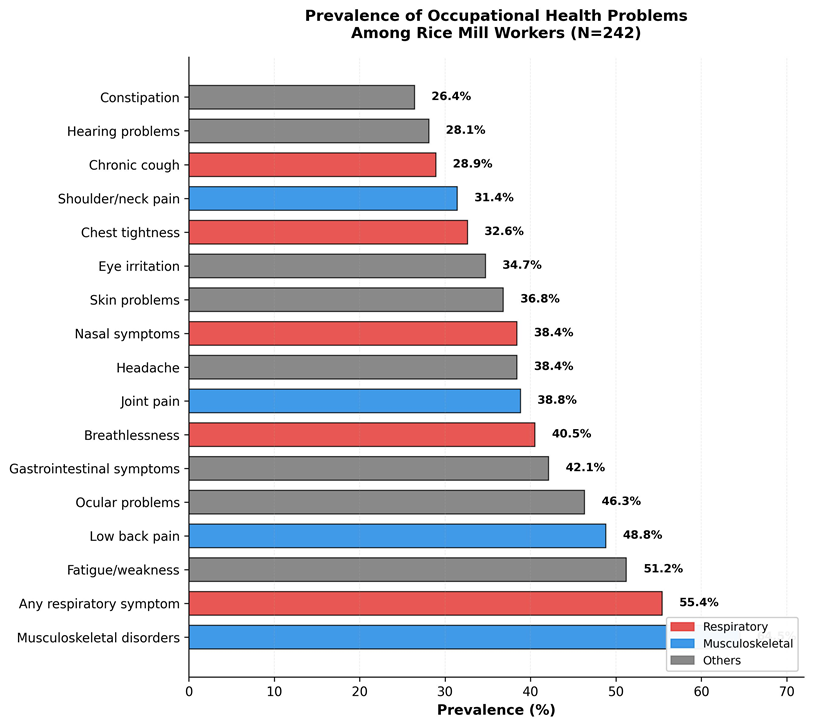
Figure 1. Prevalence of Occupational Health Problems Among Rice Mill Workers (N=242)
Valid spirometry was obtained from 238 workers (98.3%); four workers could not perform the procedure adequately. Overall, 168 workers (70.6%) demonstrated normal spirometry, while 70 workers (29.4%) showed abnormal patterns. Among spirometric abnormalities, restrictive pattern was most common, affecting 48 workers (20.2%), followed by obstructive pattern in 14 workers (5.9%) and mixed pattern in 8 workers (3.4%). The mean FVC was 87.4±14.6% predicted, with mean FEV1 of 86.8±15.2% predicted. Pulmonary function parameters demonstrated significant decline with increasing exposure duration. Workers employed >15 years had mean FVC of 76.2±16.8% predicted compared to 92.8±11.4% in those working <5 years (p<0.001). The prevalence of abnormal spirometry increased significantly from 16.4% in <5 years group to 51.7% in >15 years group (χ² for trend=32.67, p<0.001), demonstrating clear dose-response relationship (Table 3, Figures 2-3).
Table 3. Spirometry Findings by Duration of Work (N=238)
|
Spirometry Parameter |
<5 years (n=67) |
5-10 years (n=90) |
11-15 years (n=52) |
>15 years (n=29) |
p-value |
|
FVC % predicted (Mean±SD) |
92.8±11.4 |
88.2±13.2 |
83.4±15.8 |
76.2±16.8 |
<0.001 |
|
FEV1 % predicted (Mean±SD) |
91.6±12.2 |
87.8±14.6 |
82.8±16.4 |
75.4±18.2 |
<0.001 |
|
Normal spirometry |
56 (83.6) |
66 (73.3) |
32 (61.5) |
14 (48.3) |
<0.001 |
|
Restrictive pattern |
8 (11.9) |
16 (17.8) |
14 (26.9) |
10 (34.5) |
<0.001 |
|
Obstructive pattern |
2 (3.0) |
4 (4.4) |
4 (7.7) |
4 (13.8) |
0.048 |
|
Mixed pattern |
1 (1.5) |
4 (4.4) |
2 (3.8) |
1 (3.4) |
0.651 |
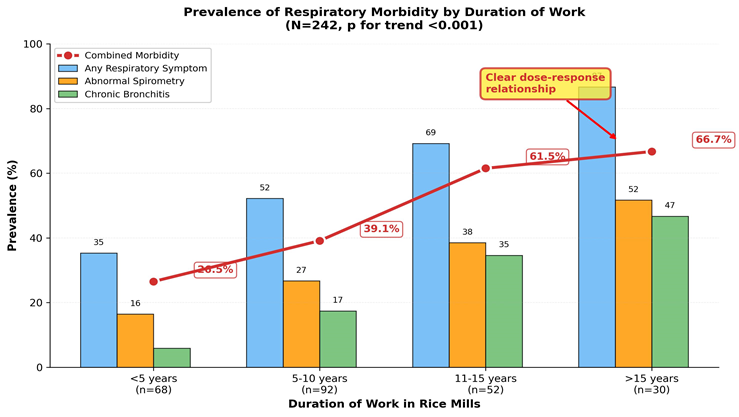
Figure 2. Dose-Response Relationship Between Work Duration and Respiratory Morbidity (p<0.001)
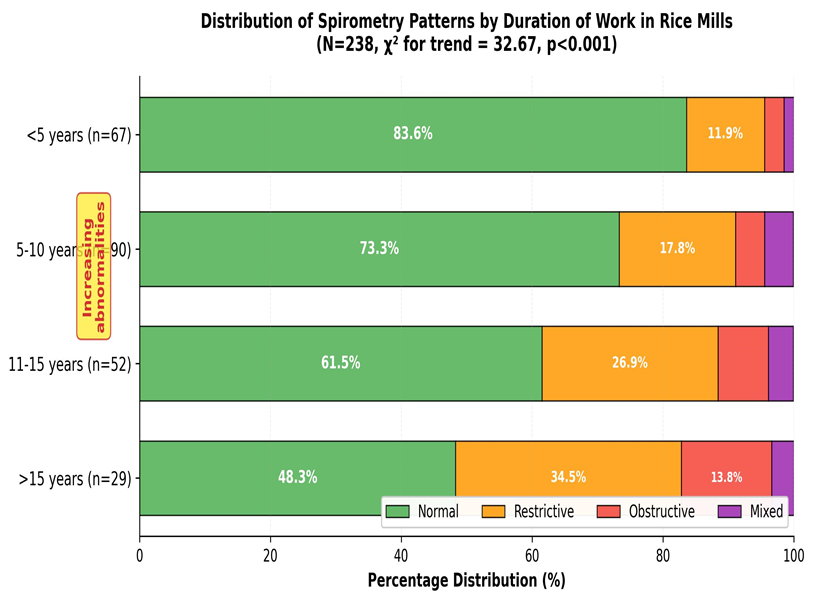
Figure 3. Distribution of Spirometry Patterns by Duration of Work (χ²=32.67, p<0.001)
Beyond respiratory pathology, workers experienced multiple other occupational health problems. Musculoskeletal disorders constituted the most prevalent non-respiratory problem, affecting 156 workers (64.5%), with low back pain reported by 48.8%, joint pain by 38.8%, and shoulder/neck pain by 31.4%. Ocular problems were present in 112 workers (46.3%), predominantly eye irritation and redness (34.7%) and watering (28.1%). Skin problems affected 89 workers (36.8%), mainly allergic dermatitis (22.3%) and dry skin (18.2%). Hearing problems including tinnitus and reduced hearing were reported by 68 workers (28.1%). General symptoms included headache (38.4%), fatigue (51.2%), and sleep disturbances (28.9%). The mean number of health problems per worker was 2.8±1.6, with workers having longer employment duration experiencing significantly more health problems (Pearson correlation r=0.424, p<0.001) (Table 4).
Table 4. Distribution of Occupational Health Problems Among Study Participants (N=242)
|
Health Problem Category |
Frequency n (%) |
|
Any respiratory symptom |
134 (55.4) |
|
Musculoskeletal disorders |
156 (64.5) |
|
Low back pain |
118 (48.8) |
|
Joint pain |
94 (38.8) |
|
Shoulder/neck pain |
76 (31.4) |
|
Ocular problems |
112 (46.3) |
|
Eye irritation/redness |
84 (34.7) |
|
Watering |
68 (28.1) |
|
Skin problems |
89 (36.8) |
|
Allergic dermatitis |
54 (22.3) |
|
Dry skin/itching |
44 (18.2) |
|
Hearing problems |
68 (28.1) |
|
Gastrointestinal symptoms |
102 (42.1) |
|
General symptoms (headache, fatigue) |
124 (51.2) |
Multiple logistic regression analysis identified several independent predictors of respiratory morbidity. Work duration emerged as the strongest predictor, with workers employed >15 years demonstrating 5.32-fold higher odds (AOR=5.32, 95% CI: 1.96-14.44, p=0.001) and those working 11-15 years showing 4.28-fold higher odds (AOR=4.28, 95% CI: 1.88-9.74, p=0.001) compared to workers with <5 years employment. Non-utilization of PPE exhibited strong independent association, with workers never using protective equipment having 3.86-fold higher odds (AOR=3.86, 95% CI: 1.82-8.18, p<0.001) compared to regular users. Current smoking remained a significant predictor (AOR=2.64, 95% CI: 1.44-4.84, p=0.002), as did working >10 hours daily (AOR=1.92, 95% CI: 1.06-3.48, p=0.032). Higher educational attainment emerged as a protective factor (AOR=0.54, 95% CI: 0.31-0.94, p=0.029). The final regression model demonstrated good fit with Hosmer-Lemeshow χ²=8.92 (p=0.349), ROC AUC of 0.812 (95% CI: 0.756-0.868), and overall classification accuracy of 74.8% (Table 5).
Table 5. Independent Predictors of Respiratory Morbidity - Multiple Logistic Regression Analysis (N=242)
|
Variable |
Adjusted Odds Ratio |
95% Confidence Interval |
p-value |
|
Work duration >15 years (vs <5 years) |
5.32 |
1.96 - 14.44 |
0.001 |
|
Work duration 11-15 years (vs <5 years) |
4.28 |
1.88 - 9.74 |
0.001 |
|
Work duration 5-10 years (vs <5 years) |
2.18 |
1.12 - 4.24 |
0.022 |
|
Never use PPE (vs regular use) |
3.86 |
1.82 - 8.18 |
<0.001 |
|
Occasional PPE use (vs regular use) |
2.14 |
1.08 - 4.24 |
0.029 |
|
Current smoking |
2.64 |
1.44 - 4.84 |
0.002 |
|
Working >10 hours daily |
1.92 |
1.06 - 3.48 |
0.032 |
|
Higher education (protective) |
0.54 |
0.31 - 0.94 |
0.029 |
Model fit statistics: Hosmer-Lemeshow χ²=8.92 (p=0.349), ROC AUC=0.812 (95% CI: 0.756-0.868), Classification accuracy=74.8%
DISCUSSION:
The present investigation documents substantial burden of occupational health problems among rice mill workers in Raichur district, Karnataka. The observed respiratory symptom prevalence of 55.4% demonstrates concordance with international epidemiological data. Memon et al. reported 58.4% prevalence among Pakistani rice mill workers,7 while our findings marginally exceed those documented by Mandal and Majumdar (51.8%) in West Bengal.9 Recent 2024 data from Bangladesh similarly reported 62% work-related respiratory symptoms,8 corroborating the consistency of occupational respiratory hazards across South Asian rice processing facilities. The chronic cough prevalence of 28.9% aligns closely with Vietnamese grain worker data (27.6%),13 while chronic bronchitis prevalence (21.5%) falls within the anticipated 18-24% range characteristic of organic dust-exposed populations.14 These consistent findings across diverse geographical settings underscore the universal nature of organic dust-induced respiratory pathology in grain processing environments.
Spirometric abnormalities were detected in 29.4% of participants, demonstrating consistency with Memon's findings (27.3%)7 and exceeding Mandal's observations (22.4%).9 The predominance of restrictive ventilatory pattern (20.2%) over obstructive abnormalities (5.9%) represents a pathognomonic feature of organic dust pneumoconiosis. This pattern aligns precisely with Chan-Yeung et al.'s seminal observation that 65-70% of grain worker spirometric abnormalities manifest restrictive characteristics.15 In our cohort, restrictive abnormalities constituted 68.6% of total spirometric defects (48/70), demonstrating remarkable concordance. The pathophysiological mechanism underlying this restrictive pattern involves chronic exposure to organic dust triggering inflammatory cascades, resulting in interstitial pneumonitis, progressive fibrosis, alveolar wall thickening, and consequent reduction in lung compliance. The mean FVC of 87.4±14.6% predicted approximates findings from Middle Eastern grain workers (85.3%),16 further validating our observations within the broader international context.
The demonstration of significant dose-response relationship between occupational exposure duration and respiratory morbidity prevalence, escalating from 26.5% in workers with <5 years exposure to 66.7% in those with >15 years exposure (p<0.001), provides compelling evidence supporting occupational causation. This gradient remarkably parallels Christiani et al.'s longitudinal observations in cotton textile workers (30% to 62%),17 and Post et al.'s demonstration of progressive FVC decline in grain handlers (42 mL/year versus 28 mL/year in unexposed controls).18 Such dose-response relationships satisfy Bradford Hill's biological gradient criterion for causality inference, substantiating the occupational etiology of observed respiratory pathology. The high prevalence of musculoskeletal disorders (64.5%) reflects ergonomic hazards inherent to manual grain handling, consistent with 58-72% prevalence documented among agricultural workers in developing nations.19 Similarly, ocular symptom prevalence (46.3%) approximates Egyptian grain worker data (48.2%),20 attributable to direct irritant effects of airborne particulate matter on conjunctival surfaces.
The protective efficacy of personal protective equipment, evidenced by 3.86-fold increased odds of respiratory morbidity among non-users, corroborates intervention trial data demonstrating 80-95% reduction in respiratory particle exposure with properly fitted respirators.21 However, the critically low PPE utilization rate (18.6%) substantially lags behind 32-45% observed in other Indian industrial settings,22 indicating urgent necessity for regulatory enforcement and health education interventions. Study limitations include cross-sectional design precluding definitive temporal causality establishment, potential healthy worker survivor effect, absence of unexposed control population, lack of quantitative environmental dust sampling, and single-timepoint assessment without longitudinal follow-up. Methodological strengths encompass adequate sample size with high response rate (96.8%), multi-facility sampling ensuring heterogeneity, objective spirometric assessment with 98.3% valid measurements, comprehensive multi-system health evaluation, and rigorous multivariable statistical modeling with model validation procedures (ROC AUC=0.812).
CONCLUSION:
Rice mill workers in Raichur district demonstrate substantial burden of occupational respiratory and non-respiratory health problems characterized by inadequate implementation of preventive measures. The observed dose-response relationship between exposure duration and respiratory morbidity, coupled with identification of modifiable risk factors, provides actionable targets for intervention strategies. Multi-level interventions encompassing regulatory enforcement of mandatory personal protective equipment provision and utilization, establishment of periodic health surveillance programs incorporating spirometric screening, implementation of engineering controls for dust suppression, restriction of working hours, comprehensive health education initiatives, and inclusion within national occupational health frameworks are urgently warranted to safeguard this vulnerable occupational cohort.
ACKNOWLEDGEMENTS
The author expresses gratitude to the rice mill proprietors and workers for their cooperation and participation. Appreciation is extended to the District Industries Office, Raichur, for facilitating institutional access. The author acknowledges the faculty and technical staff of the Department of Community Medicine, RIMS Raichur, for their assistance in data collection and spirometry training. Thanks are due to the Institutional Ethics Committee for ethical oversight and approval
REFERENCES:
1. Food and Agriculture Organization. World Food and Agriculture – Statistical Yearbook 2023. Rome: FAO; 2023.
2. Rylander R, Jacobs RR. Organic Dusts: Exposure, Effects, and Prevention. Boca Raton: CRC Press; 1994.
3. Heederik D, Kromhout H, Burema J, Biersteker K, Kromhout D. Occupational exposure and 25-year incidence rate of non-specific lung disease: the Zutphen Study. Int J Epidemiol 1990;19(4):945-52.
4. Poole JA, Romberger DJ. Immunological and inflammatory responses to organic dust in agriculture. Curr Opin Allergy Clin Immunol 2012;12(2):126-32.
5. Ghosh T, Gangopadhyay S, Das B. Prevalence of respiratory symptoms and disorders among rice mill workers in India. Environ Health Prev Med 2014;19(3):226-33.
6. Zuskin E, Schachter EN, Mustajbegovic J, Pucarin-Cvetkovic J, Doko-Jelinic J, Mucic-Pucic B. Respiratory function in organic dust-exposed workers. Am J Ind Med 1995;27(1):67-79.
7. Memon I, Panhwar A, Rohra DK, Ahmed S. Occupational hazards among rice mill workers. Pak J Med Sci 2017;33(3):581-5.
8. Rahman MM, Sarkar PK, Khan SA. Work-related respiratory symptoms among rice mill workers in Bangladesh: a cross-sectional study. Int J Environ Health Res 2024;34(2):1456-68.
9. Mandal A, Majumdar KK. Pulmonary function study in rice mill workers in West Bengal. Int J Occup Environ Health 2014;20(2):115-20.
10. Singh A, Kumar P, Sharma R. Occupational health hazards in Indian agricultural processing industries: a systematic review. Indian J Occup Environ Med 2024;28(1):12-24.
11. Naing L, Winn T, Rusli BN. Practical issues in calculating the sample size for prevalence studies. Arch Orofacial Sci 2006;1:9-14.
12. Miller MR, Hankinson J, Brusasco V, Burgos F, Casaburi R, Coates A, et al. Standardisation of spirometry. Eur Respir J 2005;26(2):319-38.
13. Huy TQ, Umberger R, Breedveld S, Huan VT, Toan NK, van Hoang T, et al. Respiratory symptoms in Vietnamese grain workers. Ind Health 2014;52(1):46-53.
14. Dayal SK, Srivastava SK, Singh MP. Respiratory function in grain workers. Toxicol Ind Health 2009;25(9-10):667-72.
15. Chan-Yeung M, Dimich-Ward H, Enarson DA, Kennedy SM. Five cross-sectional studies of grain elevator workers. Am J Epidemiol 1992;136(12):1269-79.
16. Ahmed HO, Abdullah AA. Dust exposure and respiratory symptoms among grain mill workers. Ind Health 2012;50(3):214-22.
17. Christiani DC, Ye TT, Zhang S, Wegman DH, Eisen EA. Cotton dust exposure and long-term decline in lung function: results of a 15-year longitudinal study. Am J Respir Crit Care Med 1999;159(5):1530-5.
18. Post W, Heederik D, Houba R. Decline in lung function related to exposure and selection processes among workers in the grain processing and animal feed industry. Occup Environ Med 1998;55(5):349-55.
19. Gangopadhyay S, Dev S, Ghosh T. An ergonomics study on the prevalence of musculoskeletal disorders among Indian agricultural workers. Int J Occup Saf Ergon 2015;21(4):507-15.
20. Soliman AM, Eldabah NS. Occupational health hazards among grain mill workers in Egypt. J Egypt Public Health Assoc 2019;94(1):15.
21. MacIntyre CR, Wang Q, Seale H, Yang P, Shi W, Gao Z, et al. A randomized clinical trial of three options for N95 respirators and medical masks in health workers. Am J Respir Crit Care Med 2013;187(9):960-6.
22. Lakhani R, Sengupta D. Awareness and practice of personal protective equipment usage among industrial workers in India. Indian J Occup Environ Med 2010;14(3):74-7.