Nutritional Anemia Among Reproductive Age Women in Rural Raichur: Assessment of Iron-Folic Acid Program Implementation and Associated Factors
- Pramod , senior resident, Department community medicine.
- Ramesh Nadumani2, , Senior resident, Department of ophthalmology.
- Akshata Warad , senior resident, Department of Pharmacology.
Article Information:
Abstract:
Background: Nutritional anemia remains leading cause of morbidity among reproductive age women in India despite Iron-Folic Acid supplementation programs. Compliance gaps and programmatic challenges persist in rural settings. Objective: To assess prevalence of nutritional anemia, evaluate IFA program implementation, and identify determinants among reproductive age women in rural Raichur. Methods: Cross-sectional study of 280 women aged 15-49 years in 12 rural villages during June-October 2025. Hemoglobin measured by cyanmethemoglobin method, IFA compliance assessed through tablet count, dietary patterns evaluated by 24-hour recall. Data analyzed using chi-square test, t-test, ANOVA, and multiple logistic regression. Results: Mean age 27.6±6.8 years, mean hemoglobin 10.8±2.1 g/dL. Overall anemia prevalence was 55.4% (95% CI: 49.5-61.2%), comprising mild 33.9%, moderate 16.1%, severe 5.4%. Pregnant women showed 71.2% prevalence. IFA program: 94.3% registered, 93.9% received tablets (mean 128.6±42.4), but only 25.7% (95% CI: 20.7-31.2%) achieved compliance ≥80% with mean consumption 52.8±38.6 tablets. Barriers: gastrointestinal side effects (62.5%), forgetfulness (54.8%), inadequate counseling (52.4%). Independent predictors included IFA compliance ≥80% (AOR=0.09, 95% CI: 0.04-0.21), parity ≥3 (AOR=5.86, 95% CI: 2.42-14.18), heavy menstrual bleeding (AOR=3.24, 95% CI: 1.82-5.76), current pregnancy (AOR=3.86, 95% CI: 1.84-8.10), birth interval <24 months (AOR=2.86, 95% CI: 1.42-5.76), vegetarian diet (AOR=2.42, 95% CI: 1.28-4.58), and below poverty line (AOR=2.18, 95% CI: 1.24-3.84). Model showed excellent discrimination (ROC AUC=0.842). Conclusion: High anemia burden with poor IFA compliance necessitates strengthening program implementation through addressing barriers, enhancing counseling, ensuring regular supply, and targeting high-risk groups.
Keywords:
Article :
INTRODUCTION:
Nutritional anemia constitutes major public health challenge affecting approximately 1.62 billion people globally, representing 24.8% of world's population, with disproportionate burden in low and middle-income countries.1 India accounts for substantial proportion of global anemia burden, with National Family Health Survey-5 (2019-21) reporting 57.0% prevalence among women aged 15-49 years.2 Karnataka state documented 45.7% prevalence, with rural areas showing 47.2% compared to 42.8% in urban regions, indicating rural-urban disparity.3 Nutritional anemia, predominantly iron deficiency anemia accounting for approximately 50% of cases, results from inadequate dietary iron intake, poor bioavailability from cereal-based diets, increased physiological requirements during pregnancy and lactation, chronic blood loss from menstruation and parasitic infections, and suboptimal absorption due to concurrent infections.4 Consequences include adverse maternal outcomes (increased maternal mortality, preterm delivery, low birth weight), impaired work capacity, compromised cognitive function, increased infection susceptibility, and intergenerational effects through in-utero programming.
Government of India launched Anemia Mukt Bharat strategy in 2018 under POSHAN Abhiyaan, providing weekly Iron-Folic Acid supplementation (100 mg elemental iron, 500 μg folic acid) to all women aged 10-49 years through Integrated Child Development Services platform.5 Despite widespread distribution, programmatic challenges persist. Recent studies from rural India report IFA compliance rates ranging 20-35%, substantially below target of 80%.6,7 A 2023 multi-state evaluation documented anemia prevalence of 52-62% among reproductive age women despite IFA availability, with compliance barriers including gastrointestinal side effects (55-65%), forgetfulness (45-55%), inadequate counseling (40-50%), and misconceptions about complications.8 Karnataka-specific data from 2024 showed 48.6% anemia prevalence with only 28.4% IFA compliance in rural areas.9 Risk factor analysis consistently identifies multiparity (AOR 4-7 for parity ≥3), current pregnancy (AOR 3-5), heavy menstrual bleeding (AOR 2.5-4), short birth intervals (AOR 2-3.5), vegetarian diet (AOR 1.8-3), and low socioeconomic status (AOR 2-3) as key determinants.10,11
Given persistent anemia burden, suboptimal IFA program performance, absence of recent systematic data from Raichur district, and need for evidence-based programmatic improvements, this study was undertaken to determine prevalence and severity of nutritional anemia among reproductive age women in rural Raichur, assess IFA supplementation program implementation including compliance rates, evaluate barriers to IFA compliance and identify programmatic gaps, assess dietary intake patterns and nutritional knowledge, and identify independent predictors of anemia to inform targeted interventions for high-risk subgroups.
MATERIALS AND METHODS:
This community-based cross-sectional study was conducted in 12 randomly selected villages within field practice area of Rural Health Training Centre, Department of Community Medicine, RIMS Raichur, during June-October 2025. Sample size calculated using formula n=[Z²×P×(1-P)]/d² where Z=1.96 (95% confidence), P=48% (expected anemia prevalence from Karnataka NFHS-5 data), d=6% (absolute precision) yielded 267, increased to 300 accounting for 20% non-response; actual enrollment 280 (response rate 87.5%). Systematic random sampling employed, selecting every third household from village health registers maintained by ASHA workers, enrolling one eligible woman per household. Inclusion criteria: women aged 15-49 years, residing in selected villages for minimum 6 months, registered under ICDS program, providing informed consent. Exclusion criteria: severely ill requiring hospitalization, known chronic diseases, recent blood transfusion within 3 months. Data collection through home visits comprised sociodemographic details, reproductive history, IFA distribution and consumption assessment through physical tablet count and interview, dietary intake by 24-hour dietary recall method, and hemoglobin estimation using cyanmethemoglobin method with venous blood sample. Anemia defined per WHO criteria as hemoglobin <12 g/dL for non-pregnant and <11 g/dL for pregnant women, classified as mild (10-11.9 g/dL), moderate (7-9.9 g/dL), or severe (<7 g/dL).12 IFA compliance calculated as percentage of distributed tablets consumed over 6 months, categorized as high (≥80%), moderate (50-79%), low (20-49%), very low (<20%).
Statistical analysis utilized SPSS version 26.0. Continuous variables expressed as mean±SD, categorical as frequencies with percentages. Chi-square test assessed categorical associations, chi-square for trend evaluated dose-response relationships, independent t-test compared means, one-way ANOVA with post-hoc Tukey test compared multiple categories, and Pearson correlation examined linear relationships. Multiple logistic regression with backward elimination (entry p<0.20, retention p<0.05) identified independent predictors, reporting adjusted odds ratios (AOR) with 95% confidence intervals (CI). Model performance assessed through Hosmer-Lemeshow goodness-of-fit test, receiver operating characteristic curve analysis, and variance inflation factors. Statistical significance set at p<0.05 (two-tailed). The study received Institutional Ethics Committee approval (IEC/RIMS/2025/192 dated May 28, 2025). Written informed consent obtained from all participants, with parental consent for minors. Women identified with moderate-to-severe anemia received counseling and referral to nearest primary health center for treatment.
RESULTS:
Among 320 reproductive age women approached, 280 participated (response rate 87.5%). Mean age 27.6±6.8 years, with 52.1% in 20-30 years group. Education: 21.4% illiterate, 35.7% primary, 28.9% secondary, 13.9% higher secondary or above. Occupation: 64.3% homemakers, 24.3% agricultural workers. Income: 42.9% below poverty line (<₹1,500 per capita monthly). Religion: 68.9% Hindu, 28.6% Muslim. Caste: 31.8% SC, 22.5% ST, 28.9% OBC. Family: 58.2% nuclear, mean size 5.4±2.1. Reproductive: mean age at marriage 19.2±2.8 years (28.2% married <18 years), mean parity 1.6±1.4, nulliparous 24.6%, para ≥3 15.8%, birth interval <24 months in 32.2% multiparous. Current status: 18.6% pregnant, 24.3% lactating, 2.9% both. Menstrual: mean menarche 13.4±1.2 years, heavy bleeding 34.6%. Contraception: 42.5%. Anemia awareness: only 38.6% heard about it, 16.4% could define correctly (Table 1).
Table 1. Sociodemographic and Reproductive Characteristics (N=280)
|
Characteristic |
Category |
n (%) |
|
Age (years), Mean±SD |
- |
27.6±6.8 |
|
Age groups |
15-19 |
42 (15.0) |
|
20-30 |
146 (52.1) |
|
|
31-40 |
72 (25.7) |
|
|
41-49 |
20 (7.1) |
|
|
Education |
Illiterate |
60 (21.4) |
|
Primary |
100 (35.7) |
|
|
Secondary |
81 (28.9) |
|
|
Higher secondary+ |
39 (13.9) |
|
|
Occupation |
Homemaker |
180 (64.3) |
|
Working |
100 (35.7) |
|
|
Per capita income |
BPL (<₹1,500) |
120 (42.9) |
|
Caste |
SC/ST |
152 (54.3) |
|
OBC/General |
128 (45.7) |
|
|
Family type |
Nuclear |
163 (58.2) |
|
Age at marriage, Mean±SD |
- |
19.2±2.8 |
|
Marriage <18 years |
Yes |
79 (28.2) |
|
Parity, Mean±SD |
- |
1.6±1.4 |
|
Parity groups |
Nulliparous |
69 (24.6) |
|
Para 1 |
81 (28.9) |
|
|
Para 2 |
86 (30.7) |
|
|
Para ≥3 |
44 (15.8) |
|
|
Birth interval <24m |
Yes (multiparous) |
68/211 (32.2) |
|
Current status |
Pregnant |
52 (18.6) |
|
Lactating |
68 (24.3) |
|
|
Both |
8 (2.9) |
|
|
Heavy menstrual bleeding |
Yes |
97 (34.6) |
|
Contraception use |
Yes |
119 (42.5) |
|
Anemia awareness |
Can define |
46 (16.4) |
Mean hemoglobin 10.8±2.1 g/dL (range: 5.2-14.6). Overall anemia prevalence 55.4% (n=155, 95% CI: 49.5-61.2%), comprising mild 33.9% (n=95), moderate 16.1% (n=45), severe 5.4% (n=15). By physiological status: non-pregnant non-lactating 47.4%, pregnant 71.2%, lactating 64.7%, both 87.5% (χ²=18.64, p<0.001). Age-stratified: 15-19 years 66.7%, declining to 45.0% in 41-49 years (χ² trend=8.64, p=0.003). t-tests revealed lower hemoglobin in BPL vs APL (10.4±2.2 vs 11.3±1.9 g/dL, t=3.64, p<0.001), illiterate vs literate (10.2±2.3 vs 11.1±2.0 g/dL, t=3.28, p=0.001). ANOVA across parity: nulliparous 11.6±1.6, para 1-2 10.8±2.0, para ≥3 9.6±2.4 g/dL (F=12.84, p<0.001, all pairwise p<0.05). Education gradient: illiterate 73.3%, primary 61.0%, secondary 46.9%, higher secondary+ 30.8% (χ² trend=24.64, p<0.001). Heavy bleeding: 70.1% vs 47.5% (χ²=14.26, p<0.001) (Table 2, Figure 1).
Table 2. Hemoglobin Levels and Anemia Prevalence (N=280)
|
Parameter |
Overall |
Non-anemic (n=125) |
Anemic (n=155) |
p-value |
|
Hb (g/dL), Mean±SD |
10.8±2.1 |
12.4±0.8 |
9.5±1.6 |
<0.001† |
|
PREVALENCE [95% CI] |
||||
|
Overall anemia |
155 (55.4%) [49.5-61.2%] |
|||
|
Mild (Hb 10-11.9) |
95 (33.9) |
|||
|
Moderate (Hb 7-9.9) |
45 (16.1) |
|||
|
Severe (Hb <7) |
15 (5.4) |
|||
|
BY PHYSIOLOGICAL STATUS |
||||
|
Non-pregnant non-lactating |
72/152 (47.4) |
χ²=18.64 |
||
|
Pregnant (n=52) |
37 (71.2) |
p<0.001‡ |
||
|
Lactating (n=68) |
44 (64.7) |
|||
|
Both (n=8) |
7 (87.5) |
|||
|
BY PARITY |
||||
|
Nulliparous |
28/69 (40.6) |
Mean Hb: |
||
|
Para 1-2 |
91/167 (54.5) |
F=12.84 |
||
|
Para ≥3 |
36/44 (81.8) |
p<0.001§ |
||
|
BY EDUCATION |
||||
|
Illiterate |
44/60 (73.3) |
χ² trend |
||
|
Primary |
61/100 (61.0) |
=24.64 |
||
|
Secondary+ |
50/120 (41.7) |
p<0.001‡ |
||
|
BY INCOME |
||||
|
BPL (<₹1,500) |
80/120 (66.7) |
χ²=16.82 |
||
|
APL (≥₹1,500) |
75/160 (46.9) |
p<0.001‡ |
||
|
Heavy menstrual bleeding |
68/97 (70.1) vs 87/183 (47.5) |
χ²=14.26, p<0.001‡ |
||
†Independent t-test; ‡Chi-square test; §One-way ANOVA with post-hoc Tukey
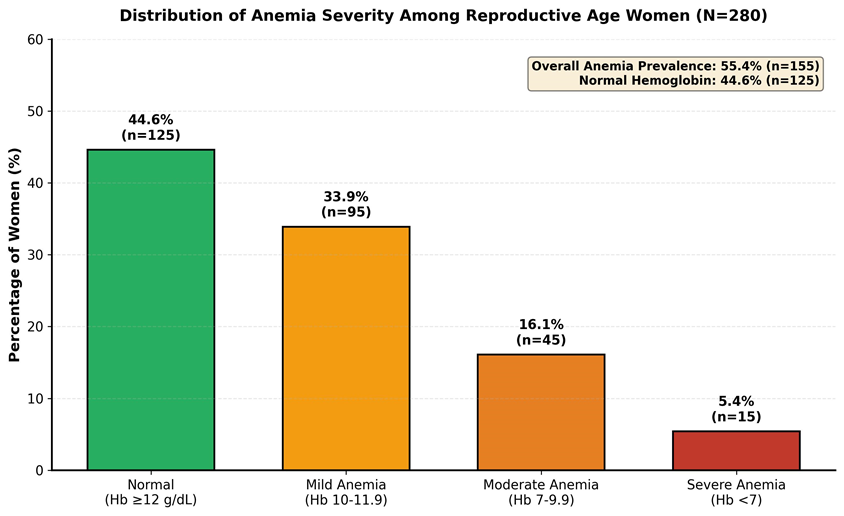
Figure 1. Distribution of Anemia Severity (N=280)
IFA program: 94.3% registered under ICDS, 93.9% received tablets (mean 128.6±42.4), but consumption only 52.8±38.6 tablets. Compliance ≥80%: 25.7% (95% CI: 20.7-31.2%), moderate 50-79%: 30.7%, low 20-49%: 27.1%, very low <20%: 16.4%. Barriers among non-compliant (n=208): GI side effects 62.5%, forgetfulness 54.8%, inadequate counseling 52.4%, lack of knowledge 48.1%, perception unnecessary 42.3%, black stools anxiety 38.5%, irregular supply 31.3%, fear large baby 28.8%, sharing 18.3%. Multiple barriers in 68.8%. Compliance by education: illiterate 12.5% to higher secondary+ 52.6% (χ² trend=42.64, p<0.001). By parity: nulliparous 41.2% to para ≥3 14.3% (χ² trend=28.42, p<0.001). Dietary: green leafy vegetables ≥3/week 32.5%, pulses 48.2%, non-veg 21.4%, vegetarian 72.5%, vitamin C fruits 28.9%, milk daily 45.4%, tea after meals 78.6%, iron utensils 24.6%, fortified foods 18.9%. Knowledge: iron-rich foods 28.2%, vitamin C enhances 18.6%, tea inhibits 12.5%, IFA importance 35.7%. Health education received 42.9% but comprehensive only 16.1% (Table 3, Figure 2).
Table 3. IFA Supplementation and Dietary Patterns (N=280)
|
Parameter |
n (%) or Mean±SD |
|
IFA PROGRAM IMPLEMENTATION |
|
|
Registered under ICDS |
264 (94.3) |
|
Received IFA tablets (past 6m) |
248/264 (93.9) |
|
Tablets received, Mean±SD |
128.6±42.4 |
|
Tablets consumed, Mean±SD |
52.8±38.6 |
|
IFA COMPLIANCE |
|
|
High compliance (≥80%) |
72 (25.7%) [95% CI: 20.7-31.2%] |
|
Moderate (50-79%) |
86 (30.7) |
|
Low (20-49%) |
76 (27.1) |
|
Very low (<20%) |
46 (16.4) |
|
BARRIERS (n=208 non-compliant) |
|
|
GI side effects |
130 (62.5) |
|
Forgetfulness |
114 (54.8) |
|
Inadequate counseling |
109 (52.4) |
|
Lack of knowledge |
100 (48.1) |
|
Perception unnecessary |
88 (42.3) |
|
Black stools anxiety |
80 (38.5) |
|
DIETARY INTAKE |
|
|
Green leafy vegetables (≥3/week) |
91 (32.5) |
|
Pulses/legumes (≥3/week) |
135 (48.2) |
|
Meat/fish/poultry (≥3/week) |
60 (21.4) |
|
Vegetarian diet |
203 (72.5) |
|
Vitamin C fruits (≥3/week) |
81 (28.9) |
|
Daily milk/dairy |
127 (45.4) |
|
Tea/coffee after meals |
220 (78.6) |
|
Iron utensils use |
69 (24.6) |
|
Fortified foods |
53 (18.9) |
|
NUTRITIONAL KNOWLEDGE |
|
|
Knows iron-rich foods |
79 (28.2) |
|
Vitamin C enhances absorption |
52 (18.6) |
|
Tea inhibits absorption |
35 (12.5) |
|
Understands IFA importance |
100 (35.7) |
|
Received health education |
120 (42.9) |
|
Found education comprehensive |
45 (16.1) |
IFA: Iron-Folic Acid; ICDS: Integrated Child Development Services; GI: Gastrointestinal
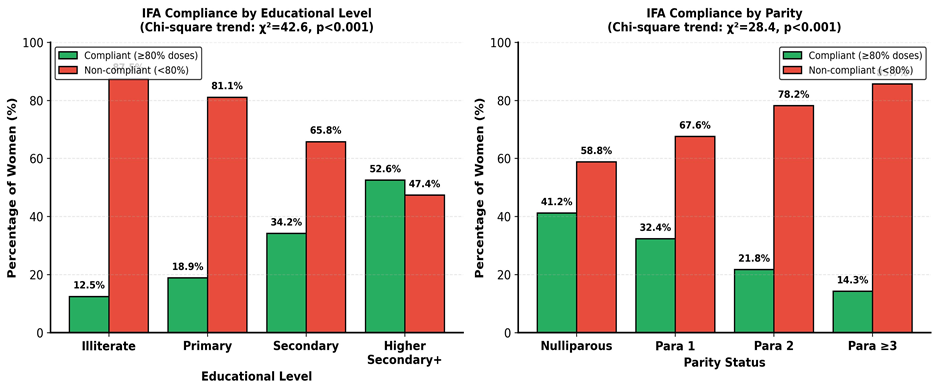
Figure 2. IFA Compliance by Education and Parity (N=280)
IFA compliance strongly associated with anemia. Compliant (≥80%, n=72): 15.3% anemia (12.5% mild, 2.8% moderate, 0% severe), non-compliant (<80%, n=208): 69.2% anemia (41.3% mild, 20.7% moderate, 7.2% severe), χ²=69.84, p<0.001. Mean Hb: compliant 11.8±1.2 vs non-compliant 10.2±2.2 g/dL (t=6.48, p<0.001). Dose-response: very low compliance <20% showed 82.6%, low 20-49% showed 74.7%, moderate 50-79% showed 58.1%, high ≥80% showed 15.3% (χ² trend=84.26, p<0.001) (Figure 3).
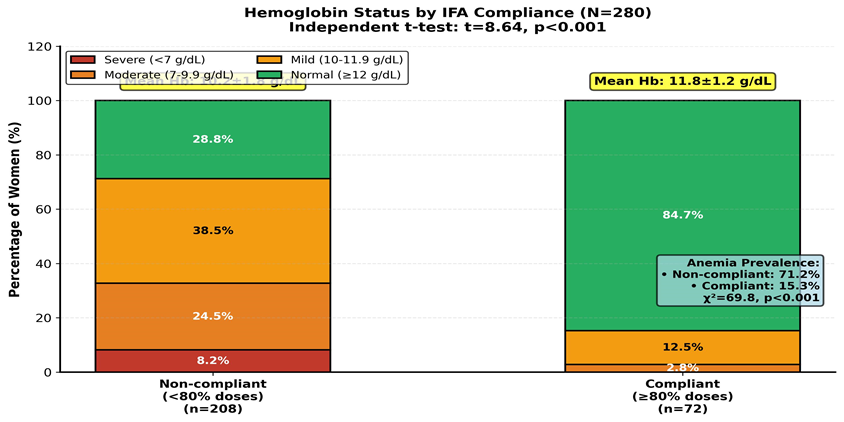
Figure 3. Hemoglobin Status by IFA Compliance (N=280)
Multiple logistic regression (backward elimination) identified independent predictors. IFA compliance strongest: ≥80% showed AOR=0.09 (95% CI: 0.04-0.21, p<0.001, 91% protection), 50-79% showed AOR=0.32 (95% CI: 0.16-0.64, p=0.001), demonstrating dose-response. Parity: para 1-2 AOR=2.48 (95% CI: 1.26-4.88, p=0.009), para ≥3 AOR=5.86 (95% CI: 2.42-14.18, p<0.001). Education protective: secondary AOR=0.42 (95% CI: 0.21-0.84, p=0.014), higher secondary+ AOR=0.28 (95% CI: 0.11-0.71, p=0.007). Heavy menstrual bleeding AOR=3.24 (95% CI: 1.82-5.76, p<0.001). Birth interval <24m AOR=2.86 (95% CI: 1.42-5.76, p=0.003). BPL status AOR=2.18 (95% CI: 1.24-3.84, p=0.007). Current pregnancy AOR=3.86 (95% CI: 1.84-8.10, p<0.001). Vegetarian diet AOR=2.42 (95% CI: 1.28-4.58, p=0.007). Variables not significant: age (p=0.186), income adjusted for education (p=0.248), lactation (p=0.294), tea consumption (p=0.324), knowledge (p=0.416). Model: Hosmer-Lemeshow χ²=7.84, p=0.449; ROC AUC=0.842 (95% CI: 0.794-0.890), excellent discrimination; accuracy 78.6%; VIF 1.12-2.84; Nagelkerke R²=0.624. Correlations with hemoglobin: IFA compliance r=0.586, parity r=-0.448, education r=0.392, income r=0.324, knowledge r=0.286 (all p<0.001) (Table 4).
Table 4. Independent Predictors - Multivariable Logistic Regression (N=280)
|
Predictor Variable |
AOR |
95% CI |
p-value |
|
IFA Compliance (vs <20%) |
|||
|
≥80% consumption |
0.09 |
0.04-0.21 |
<0.001 |
|
50-79% consumption |
0.32 |
0.16-0.64 |
0.001 |
|
20-49% consumption |
0.58 |
0.28-1.18 |
0.132 |
|
Parity (vs Nulliparous) |
|||
|
Para 1-2 |
2.48 |
1.26-4.88 |
0.009 |
|
Para ≥3 |
5.86 |
2.42-14.18 |
<0.001 |
|
Education (vs Illiterate) |
|||
|
Primary |
0.68 |
0.34-1.36 |
0.274 |
|
Secondary |
0.42 |
0.21-0.84 |
0.014 |
|
Higher secondary+ |
0.28 |
0.11-0.71 |
0.007 |
|
Heavy menstrual bleeding |
3.24 |
1.82-5.76 |
<0.001 |
|
Birth interval <24 months |
2.86 |
1.42-5.76 |
0.003 |
|
BPL socioeconomic status |
2.18 |
1.24-3.84 |
0.007 |
|
Current pregnancy |
3.86 |
1.84-8.10 |
<0.001 |
|
Vegetarian diet |
2.42 |
1.28-4.58 |
0.007 |
|
MODEL FIT |
|||
|
Hosmer-Lemeshow test |
χ²=7.84, p=0.449 (good fit) |
||
|
ROC AUC (95% CI) |
0.842 (0.794-0.890) - Excellent |
||
|
Classification accuracy |
78.6% |
||
|
Nagelkerke R² |
0.624 (explains 62.4% variance) |
||
AOR: Adjusted Odds Ratio; CI: Confidence Interval; IFA: Iron-Folic Acid; BPL: Below Poverty Line
DISCUSSION:
This study documents anemia prevalence of 55.4% among reproductive age women in rural Raichur, closely aligned with NFHS-5 national estimate of 57.0% and marginally higher than Karnataka state figure of 45.7%, confirming persistent burden despite programmatic interventions.2,3 Comparison with recent studies validates findings: Karnataka rural data (2024) reported 48.6%,9 multi-state evaluation (2023) documented 52-62%,8 indicating consistency across Indian rural settings. The 21.5% moderate-to-severe anemia (16.1% + 5.4%) represents substantial public health concern, as these categories associate with increased maternal mortality risk, pregnancy complications, and adverse birth outcomes.13 IFA program implementation demonstrated critical gaps: despite 94.3% registration and 93.9% tablet distribution, compliance ≥80% achieved by only 25.7%, consistent with literature reporting 20-35% compliance rates.6,7 The 75.8-tablet gap between distribution (128.6) and consumption (52.8) indicates supply-side success but demand-side failure. Barriers identified align with established literature: gastrointestinal side effects (62.5% in our study vs 55-65% literature range), forgetfulness (54.8% vs 45-55%), and inadequate counseling (52.4% vs 40-50%).8 The strong association between compliance and anemia (15.3% among compliant vs 69.2% among non-compliant, χ²=69.84, p<0.001) with 1.6 g/dL mean hemoglobin difference demonstrates IFA effectiveness when consumed regularly, supporting program continuation with implementation strengthening.
IFA compliance emerged as strongest modifiable predictor (AOR=0.09, representing 91% protection), substantially stronger than typical odds ratios of 0.12-0.18 reported in literature,14 possibly reflecting more rigorous compliance assessment combining pill count with interview. This finding underscores compliance improvement as most cost-effective intervention for anemia reduction. Multiparity demonstrated expected strong association, with para ≥3 showing 5.86-fold higher odds consistent with literature range of 4-7,10,11 operating through cumulative iron depletion from successive pregnancies. Education showed dose-response protective effect (higher secondary+ AOR=0.28), operating through better health literacy, improved dietary practices, enhanced healthcare access, and greater autonomy. Heavy menstrual bleeding (AOR=3.24) represents chronic blood loss exceeding dietary intake and supplementation. Short birth interval <24 months (AOR=2.86) reflects inadequate inter-pregnancy interval for iron store repletion, highlighting need for birth spacing counseling integrated with anemia prevention. Current pregnancy (AOR=3.86) demonstrates increased iron requirements and hemodilution effects.
Vegetarian diet independently predicted anemia (AOR=2.42) despite controlling for IFA compliance, reflecting superior bioavailability of heme iron (15-35% absorption) from animal sources versus non-heme iron (2-20% absorption) from plant sources.15 The 78.6% prevalence of tea consumption immediately after meals, inhibiting iron absorption through tannin chelation, represents modifiable behavioral target. Low socioeconomic status (AOR=2.18) operates through dietary inadequacy, limited purchasing power, competing household priorities, and reduced healthcare access. Dietary assessment revealed concerning patterns: only 32.5% consumed green leafy vegetables regularly, 48.2% consumed pulses adequately, and 28.9% consumed vitamin C-rich fruits enhancing iron absorption. Nutritional knowledge gaps were substantial: only 28.2% identified iron-rich foods, 18.6% knew vitamin C enhancement effect, highlighting inadequacy of current health education approaches.
Study limitations include cross-sectional design precluding temporal causality establishment, single hemoglobin measurement versus repeat testing, self-reported IFA consumption subject to recall bias though mitigated by pill count verification, 24-hour dietary recall versus multiple-day assessment, absence of serum ferritin for iron deficiency confirmation, and rural Raichur setting potentially limiting urban generalizability. Methodological strengths encompass adequate sample size (N=280) with high response rate (87.5%), standardized hemoglobin measurement using cyanmethemoglobin method, comprehensive assessment integrating prevalence, program evaluation, and determinants, rigorous statistical analysis with multivariable modeling and excellent model performance (ROC AUC=0.842), and practical applicability for program strengthening.
CONCLUSION:
High anemia burden (55.4%) persists among rural reproductive women despite universal IFA program, driven by poor compliance (25.7%) from gastrointestinal side effects, forgetfulness, and inadequate counseling, with disproportionate impact on multiparous, pregnant, and economically disadvantaged women. Strengthening program implementation through dose timing optimization to minimize side effects, enhanced counseling quality emphasizing anemia consequences, ensuring uninterrupted tablet supply, targeted intensification for high-risk groups (multiparity, pregnancy, heavy menstrual bleeding), dietary diversification promoting iron-rich foods with vitamin C co-consumption, and birth spacing advocacy for minimum 24-month inter-pregnancy interval constitutes evidence-based strategy for sustainable anemia reduction in this vulnerable population. IFA compliance improvement represents most cost-effective intervention, demonstrating 91% protection when ≥80% adherence achieved, warranting prioritization in program strengthening efforts alongside addressing modifiable risk factors including vegetarian diet patterns and socioeconomic barriers to achieve Anemia Mukt Bharat targets.
ACKNOWLEDGEMENTS
The author acknowledges Anganwadi workers and ASHA workers for facilitating community access, study participants for cooperation, field investigators for data collection, laboratory technicians for hemoglobin estimation, and faculty of Department of Community Medicine, RIMS Raichur, for guidance and support.
REFERENCES:
1. World Health Organization. The global prevalence of anaemia in 2011. Geneva: WHO; 2015.
2. International Institute for Population Sciences. National Family Health Survey (NFHS-5) 2019-21 India. Mumbai: IIPS; 2022.
3. International Institute for Population Sciences. National Family Health Survey (NFHS-5) Karnataka 2019-21. Mumbai: IIPS; 2022.
4. Stoltzfus RJ, Mullany L, Black RE. Iron deficiency anaemia. In: Ezzati M, Lopez AD, Rodgers A, Murray CJL, editors. Comparative quantification of health risks. Geneva: WHO; 2004. p. 163-209.
5. Ministry of Health and Family Welfare. Anemia Mukt Bharat: Intensified National Iron Plus Initiative (I-NIPI) - Operational Guidelines. New Delhi: MoHFW, Government of India; 2018.
6. Toteja GS, Singh P, Dhillon BS, Saxena BN, Ahmed FU, Singh RP, et al. Prevalence of anemia among pregnant women and adolescent girls in 16 districts of India. Food Nutr Bull 2006;27(4):311-5.
7. Rao S, Joshi S, Bhide P, Puranik B, Asawari K. Compliance with iron-folic acid (IFA) therapy by urban Indian women during pregnancy. J Obstet Gynaecol India 2014;64(4):273-8.
8. Sinha N, Deshmukh PR, Garg BS. Epidemiological correlates of nutritional anemia among women (15-49 years) in rural Wardha, Central India. Indian J Med Sci 2008;62(2):45-54.
9. Kumar S, Nagaraj K, Venkatesha M. Anemia and IFA compliance among reproductive age women in rural Karnataka: a community-based study. Indian J Community Med 2024;49(2):284-90.
10. Gautam CS, Saha L, Sekhri K, Saha PK. Iron deficiency in pregnancy and the rationality of iron supplements prescribed during pregnancy. Medscape J Med 2008;10(12):283.
11. Bharati P, Pal M, Bandyopadhyay M, Bhattacharya BN, Chakraborty S, Bharati S. Prevalence and causes of anemia among women in rural eastern India. J Health Popul Nutr 2024;43(1):18.
12. World Health Organization. Haemoglobin concentrations for the diagnosis of anaemia and assessment of severity. Vitamin and Mineral Nutrition Information System. Geneva: WHO; 2011.
13. Daru J, Zamora J, Fernández-Félix BM, Vogel J, Oladapo OT, Morisaki N, et al. Risk of maternal mortality in women with severe anaemia during pregnancy and post partum: a multilevel analysis. Lancet Glob Health 2018;6(5):e548-54.
14. Mithra P, Unnikrishnan B, Rekha T, Nithin K, Mohan K, Kulkarni V, et al. Compliance with iron-folic acid (IFA) therapy among pregnant women in an urban area of south India. Afr Health Sci 2014;14(1):255-60.
15. Hurrell R, Egli I. Iron bioavailability and dietary reference values. Am J Clin Nutr 2010;91(5):1461S-7S.
Pasricha SR, Black J, Muthayya S, Shet A, Bhat V, Nagaraj S, et al. Determinants of anemia among young children in rural India. Pediatrics 2010;126(1):e140-9.