Evaluation of Various Surgical Approaches in the Management of Inferior Turbinate Hypertrophy: A Prospective Comparative Study
- M.Rama Sridhar , Professor and Head of Department, Department of Otorhinolaryngology, Rajiv Gandhi Institute of Medical Sciences (RIMS), Adilabad, Telangana, India.
- Sai Teja Pippalapally , Resident, Department of Otorhinolaryngology, Rajiv Gandhi Institute of Medical Sciences (RIMS), Adilabad, Telangana, India.
- Shambhavi Sharanam , Resident, Department of Otorhinolaryngology, Rajiv Gandhi Institute of Medical Sciences (RIMS), Adilabad, Telangana, India.
- Niharika S , Resident, Department of Otorhinolaryngology, Rajiv Gandhi Institute of Medical Sciences (RIMS), Adilabad, Telangana, India.
Article Information:
Abstract:
Background: Inferior turbinate hypertrophy (ITH) is a leading cause of chronic nasal obstruction, often refractory to medical management. Multiple surgical techniques exist, yet no consensus has been reached regarding the optimal procedure. This study compares four surgical approaches for ITH in a tertiary care setting. Methods: A prospective comparative study was conducted at the Department of Otorhinolaryngology, Rajiv Gandhi Institute of Medical Sciences (RIMS), Adilabad, over 18 months. One hundred patients (aged 18–65 years) with ITH refractory to at least six weeks of medical therapy were enrolled and allocated to four surgical groups: partial inferior turbinectomy (n=32), submucous resection (n=22), submucous diathermy (n=25), and powered inferior turbinectomy (n=21). Primary outcomes were Visual Analogue Scale (VAS) for nasal obstruction and endoscopic turbinate grading assessed preoperatively and at three months postoperatively. Secondary outcomes included Lund-Mackay scores, complications, and patient satisfaction. Statistical analysis employed chi-square tests and one-way ANOVA (p<0.05 significant). Results: The mean VAS score decreased significantly from 8.06±1.41 preoperatively to 3.57±1.79 postoperatively (mean improvement 4.49±1.10). Powered turbinectomy demonstrated the greatest VAS improvement (4.81±1.08), followed by submucous resection (4.65±1.09), partial turbinectomy (4.38±1.02), and submucous diathermy (4.12±1.15); however, intergroup differences were not statistically significant (p=0.165). Turbinate grade improved significantly (p=0.003), with 42% achieving Grade I postoperatively. Postoperative complications occurred in 17% of patients (epistaxis 10%, crusting 5%, anosmia 1%, paradoxical obstruction 1%). Significant associations were found between Lund-Mackay scores and postoperative VAS severity (p=0.002) and between patient satisfaction and VAS improvement (p<0.001). Conclusions: All four surgical techniques produced clinically meaningful improvement in nasal obstruction with comparable efficacy and acceptable safety profiles. Powered inferior turbinectomy showed a non-significant trend toward greater symptomatic relief. Lund- Mackay scores may serve as a useful predictor of postoperative outcomes. The choice of surgical technique should be guided by individual patient factors, surgeon expertise, and resource availability.
Keywords:
Article :
INTRODUCTION:
Nasal obstruction is one of the most prevalent complaints in otorhinolaryngology practice, significantly impairing quality of life, sleep, and daily functioning. Inferior turbinate hypertrophy (ITH) is a principal structural cause of chronic nasal obstruction, arising from mucosal, submucosal, periosteal, or bony enlargement of the inferior turbinate [1,2]. The inferior turbinates serve crucial physiological roles including humidification, filtration, and thermoregulation of inspired air; however, when pathologically enlarged, they obstruct the nasal airway and contribute to a constellation of symptoms including nasal blockage, rhinorrhoea, sneezing, and impaired olfaction [3].
Conservative management with topical corticosteroids, antihistamines, and decongestants remains the first-line approach. However, a substantial proportion of patients experience inadequate relief, necessitating surgical intervention [4,5]. Over 13 distinct surgical techniques have been described for ITH, ranging from total turbinectomy to more tissue- conserving approaches such as submucous resection, submucosal diathermy, radiofrequency ablation, laser reduction, and powered (microdebrider-assisted) turbinoplasty [6,7]. Each technique offers a unique balance of efficacy, mucosal preservation, complication risk, and long-term symptom control.
Despite extensive literature, no single technique has emerged as the definitive gold standard. A landmark comparative trial by Passali et al. evaluating six techniques over six years demonstrated that submucosal resection yielded the best long-term objective and subjective outcomes, yet subsequent studies have reported varying conclusions depending on follow-up duration, outcome measures, and surgical expertise [8]. More recently, powered (microdebrider-assisted) techniques have gained favour for their precision and tissue conservation [9,10]. Systematic reviews and meta-analyses have highlighted the overall efficacy of surgical intervention but have consistently noted the difficulty of establishing superiority of any single technique, largely due to heterogeneous study designs and outcome measures [11,12].
This study was designed to compare four commonly performed surgical techniques for ITH—partial inferior turbinectomy, submucous resection, submucous diathermy, and powered inferior turbinectomy—in a prospective, comparative framework at a tertiary care centre, using both subjective (VAS) and objective (endoscopic grading, Lund-Mackay scores) outcome measures.
MATERIALS AND METHODS:
Study Design and Setting
This was a prospective comparative study conducted at the Department of Otorhinolaryngology, Rajiv Gandhi Institute of Medical Sciences (RIMS), Adilabad, Telangana, India. The study was approved by the Institutional Ethics Committee of RIMS, Adilabad, and conducted in accordance with the Declaration of Helsinki. Written informed consent was obtained from all participants prior to enrolment.
Study Population
One hundred patients aged 18–65 years presenting with clinical and radiological evidence of inferior turbinate hypertrophy and persistent nasal obstruction despite a minimum of six weeks of medical management (topical decongestants and oral antihistamines) were enrolled over an 18-month study period. Patients were allocated to one of four surgical groups by purposive sampling with random allocation.
Inclusion criteria: Age 18–65 years; clinical and radiological diagnosis of ITH; persistent symptoms despite at least six weeks of medical management with topical decongestants and antihistamines; with or without concomitant septal deviation.
Exclusion criteria: Sinonasal polyposis; fungal sinusitis; benign or malignant nasal
neoplasms; primary chronic sinusitis without ITH.
Surgical Groups
Patients were allocated to four groups: Group 1, partial inferior turbinectomy (n=32); Group 2, submucous resection of the inferior turbinate (n=22); Group 3, submucous diathermy (n=25); and Group 4, powered (microdebrider-assisted) inferior turbinectomy (n=21). Septoplasty was performed concurrently when indicated.
Outcome Measures
The primary outcome measures were: (1) Visual Analogue Scale (VAS) for nasal obstruction, scored 0–10 (0=no obstruction, 10=complete obstruction), assessed preoperatively and at three months postoperatively; and (2) endoscopic turbinate grading (Grade I: mild, Grade II: moderate, Grade III: severe) at the same time points.
Secondary outcomes included: demographic and clinical characteristics; presenting symptoms; comorbidities; nasal septal status; Lund-Mackay computed tomography (CT) scores; postoperative endoscopic findings (polyps, discharge, crusting, scarring, oedema); postoperative complications (epistaxis, crusting, anosmia, paradoxical nasal obstruction); and patient satisfaction scores (1–10).
Statistical Analysis
Data were analysed using the Statistical Package for Social Sciences (SPSS). Descriptive statistics (mean, standard deviation, frequencies, percentages) were computed for all variables. Inferential analyses included the chi-square test for categorical associations and one-way analysis of variance (ANOVA) for continuous variables. A p-value of <0.05 was considered statistically significant.
RESULTS:
Baseline Demographics and Clinical Characteristics
The study enrolled 100 patients with a mean age of 40.92±14.05 years (range 18–65). Males constituted 59% (n=59) and females 41% (n=41). All patients (100%) presented with nasal obstruction, while sneezing (78%), nasal discharge (71%), post-nasal drip (58%), facial pain (52%), loss of smell (28%), and epistaxis (22%) were additional presenting complaints. Common comorbidities included asthma (28%), hypertension (20%), and diabetes mellitus (16%). Regarding personal habits, 29% were smokers, 17% consumed alcohol, and 14% used chewing tobacco.The majority of patients (64%) had severe preoperative VAS scores (8–10), and 82% had Grade III turbinate hypertrophy on endoscopic examination. Nasal septal deviation was present in 67% of patients (right deviation 40%, left deviation 27%)
Table 1. Distribution of patients by surgical procedure.
|
Surgical Procedure |
n |
% |
|
Partial inferior turbinectomy |
32 |
32.0 |
|
Submucous resection |
22 |
22.0 |
|
Submucous diathermy |
25 |
25.0 |
|
Powered inferior turbinectomy |
21 |
21.0 |
|
Total |
100 |
100.0 |
Primary Outcomes: VAS Scores
The overall mean VAS score decreased from 8.06±1.41 preoperatively to 3.57±1.79 at three months postoperatively, representing a mean improvement of 4.49±1.10 (Table 2). Among the four groups, powered inferior turbinectomy demonstrated the greatest mean improvement (4.81±1.08), followed by submucous resection (4.65±1.09), partial inferior turbinectomy (4.38±1.02), and submucous diathermy (4.12±1.15). However, these intergroup differences did not reach statistical significance (p=0.165, one-way ANOVA).
Table 2. Preoperative and postoperative VAS scores by surgical procedure.
|
Procedure |
Preop VAS (Mean±SD) |
Postop VAS (Mean±SD) |
Improvement (Mean±SD) |
|
Partial inferior turbinectomy |
8.06±1.41* |
3.69±1.79* |
4.38±1.02 |
|
Submucous resection |
8.06±1.41* |
3.41±1.79* |
4.65±1.09 |
|
Submucous diathermy |
8.06±1.41* |
3.94±1.79* |
4.12±1.15 |
|
Powered turbinectomy |
8.06±1.41* |
3.25±1.79* |
4.81±1.08 |
|
Overall |
8.06±1.41 |
3.57±1.79 |
4.49±1.10 |
*Group-specific preop and postop values are overall means; improvement values are group-specific. p=0.165 (one-way ANOVA) for intergroup comparison of VAS improvement. Postoperatively, 52% of patients achieved mild VAS scores (1–3), 39% had moderate scores (4–5), and only 9% remained in the severe category (6–10).
Endoscopic Turbinate Grading
A significant improvement in turbinate grade was observed postoperatively (Table 3). Among patients with preoperative Grade III hypertrophy, 36.6% improved to Grade I, 39.0% to Grade II, and 24.4% remained Grade III. The association between pre- and postoperative turbinate grading was statistically significant (χ²=11.920, p=0.003). Comparison of surgical procedure versus postoperative turbinate grade did not reach significance (χ²=4.380, p=0.625), although powered turbinectomy achieved the highest proportion of Grade I outcomes (52.4%).
Table 3. Preoperative and postoperative turbinate grading.
|
Turbinate Grade |
Preoperative n (%) |
Postoperative n (%) |
|
Grade I |
0 (0) |
42 (42) |
|
Grade II |
18 (18) |
38 (38) |
|
Grade III |
82 (82) |
20 (20) |
Association between pre- and postoperative turbinate grade: χ²=11.920, p=0.003.
Lund-Mackay Scores and Postoperative Outcomes
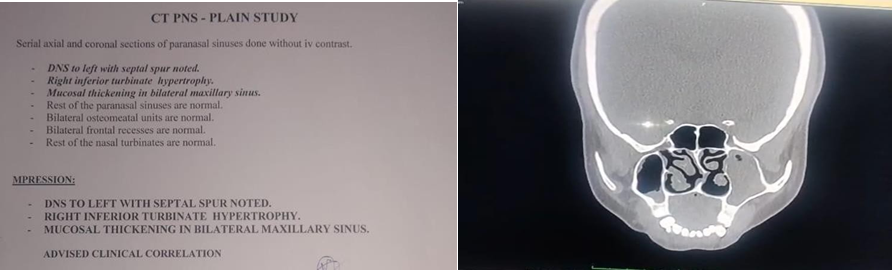
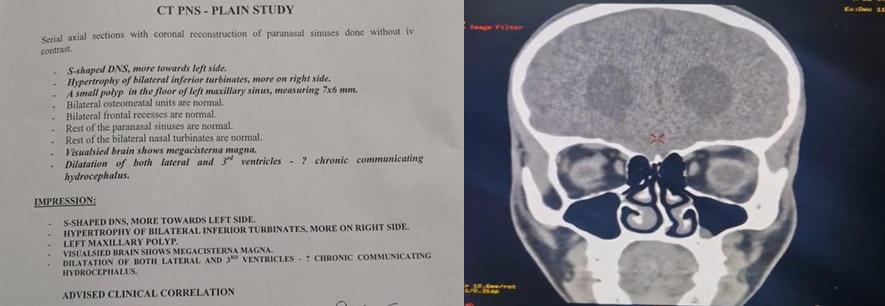
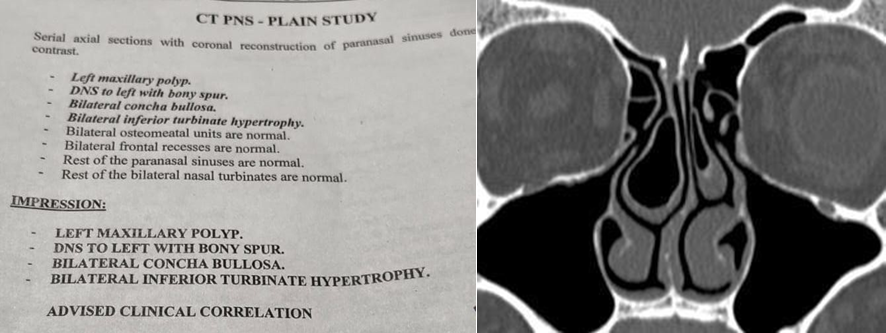
A significant association was identified between postoperative Lund-Mackay CT scores and VAS severity (χ²=16.740, p=0.002). Among patients with Lund-Mackay scores of 0–1, 76.5% achieved mild postoperative VAS scores and none had severe VAS, whereas among those with scores of 4–6, only 30% achieved mild VAS and 25% remained severe. This suggests that the degree of sinonasal mucosal disease influences surgical outcomes.
Complications
The overall complication rate was 17% (Table 4). Crusting was the most common complication (10%), followed by scanty blood tinged discharge (5%), decreased sense of smell (1%), and synechiae (1%). The association between surgical procedure and complications was not statistically significant (χ²=5.120, p=0.164). Submucous resection had the lowest complication rate (4.5%), while submucous diathermy had the highest (24.0%).
Table 4. Postoperative complications.
|
Complication |
n |
% |
|
None |
83 |
83.0 |
|
Crusting |
10 |
10.0 |
|
Scanty blood tinged discharge |
5 |
5.0 |
|
Decreased sense of smell |
1 |
1.0 |
|
Synechiae |
1 |
1.0 |
Patient Satisfaction
Patient satisfaction was high, with 77% reporting scores of 7–10. A highly significant association was found between satisfaction scores and VAS improvement (F=9.460, p<0.001). Patients with satisfaction scores of 10 had the highest mean VAS improvement (5.02±1.04), compared with 4.61±0.96 for scores 8–9 and 3.92±0.88 for scores 6–7
Septal Deviation and Outcomes
Nasal septal deviation status (right, left, or absent) was not significantly associated with VAS improvement (F=0.180, p=0.835), suggesting that concurrent septal pathology did not meaningfully influence the degree of symptomatic relief from turbinate surgery.
DISCUSSION:
This prospective comparative study demonstrates that all four surgical techniques for inferior turbinate hypertrophy—partial inferior turbinectomy, submucous resection, submucous diathermy, and powered inferior turbinectomy—produce clinically significant improvement in nasal obstruction, as measured by VAS scores and endoscopic turbinate grading. The
overall reduction in VAS from 8.06±1.41 to 3.57±1.79 (improvement of 4.49±1.10) is consistent with the established efficacy of turbinate surgery reported in the literature [1,6].
The finding that no single technique achieved statistically superior outcomes (p=0.165) aligns with the conclusions of several landmark studies. Passali et al. [8], in a six-year comparative trial of six techniques involving 382 patients, demonstrated that while submucosal resection performed best on objective measures, all techniques improved nasal airflow. Similarly, Hol and Huizing [13], in a comprehensive review, concluded that no technique had been convincingly shown to be superior. More recently, a systematic review by Singh et al. [14] and a meta-analysis by Zhang et al. [12] reinforced the concept that different techniques offer comparable overall efficacy, with technique-specific advantages in specific domains such as mucosal preservation or haemostasis.
Powered (microdebrider-assisted) turbinectomy demonstrated the highest numerical VAS improvement (4.81±1.08) in our study, consistent with the growing body of evidence supporting this technique. Lee and Lee [9] reported superior long-term outcomes with
microdebrider turbinoplasty compared with radiofrequency, and Sapci et al. [15] found that powered techniques offered better mucosal healing. The precision of the microdebrider allows selective tissue removal while preserving the mucosal surface, potentially leading to faster recovery and reduced crusting [10]. However, the non-significant intergroup difference in our study underscores that marginal advantages may not translate to clinically meaningful superiority.
The significant association between Lund-Mackay scores and postoperative VAS severity (p=0.002) is a notable finding. Higher Lund-Mackay scores, indicating greater sinonasal mucosal disease burden, were associated with poorer postoperative outcomes. This observation has important clinical implications: it suggests that comprehensive assessment of sinonasal status, rather than isolated evaluation of turbinate size, should inform surgical planning and prognostication. Bhandarkar and Smith [16] similarly emphasized the importance of preoperative CT scoring in predicting surgical outcomes.
The complication profile in our study (17% overall) is within the range reported in the literature. Epistaxis (10%) was the most frequent complication, consistent with the findings of Passali et al. [8] and Farmer and Eccles [17]. The complication rates did not differ significantly between techniques (p=0.164), supporting the comparable safety of all four approaches. Notably, submucous resection had the lowest complication rate (4.5%), possibly reflecting the tissue-conserving nature of this technique.
The strong correlation between patient satisfaction and VAS improvement (p<0.001) validates the VAS as a meaningful patient-centred outcome measure and highlights the importance of subjective symptom relief in determining surgical success. Patients with greater objective improvement reported correspondingly higher satisfaction, suggesting alignment between clinical and patient-reported outcomes.
The absence of a significant association between septal deviation and VAS improvement (p=0.835) suggests that concurrent septoplasty, while addressing coexisting septal pathology, does not confound the assessment of turbinate surgery outcomes in this cohort. This finding supports the independent contribution of turbinate reduction to symptom improvement.
Limitations
Several limitations merit acknowledgment. This was a single-centre study with a relatively modest sample size of 100 patients, which may limit generalizability and statistical power to detect smaller intergroup differences. The follow-up period of three months is relatively short; long-term outcomes beyond one year are needed to assess the durability of improvement and rates of symptom recurrence, as turbinate regrowth is a recognized phenomenon [6]. Objective airflow measurements such as rhinomanometry and acoustic rhinometry were not employed, and the unequal group sizes reflect purposive allocation rather than strict randomization. Future multicentre studies with larger samples, longer follow-up, and objective airflow assessments would strengthen the evidence base.
CONCLUSION:
All four surgical techniques for inferior turbinate hypertrophy—partial inferior turbinectomy, submucous resection, submucous diathermy, and powered inferior turbinectomy— demonstrated clinically significant improvement in nasal obstruction with acceptable complication rates. While powered turbinectomy showed a non-significant trend toward greater symptomatic improvement, no single technique achieved clear superiority. Lund- Mackay CT scores were identified as a significant predictor of postoperative outcomes, highlighting the importance of comprehensive preoperative assessment. The choice of technique should be individualized based on patient anatomy, disease severity, surgeon expertise, and institutional resources.
DECLARATIONS
Funding: None.
Conflict of interest: The authors declare no conflict of interest.
Ethical approval: Obtained from the Institutional Ethics Committee, Rajiv Gandhi Institute of Medical Sciences, Adilabad, Telangana, India.
Informed consent: Written informed consent was obtained from all participants.
REFERENCES:
1. Moore M, Eccles R. Objective evidence for the efficacy of surgical management of the deviated septum as a treatment for chronic nasal obstruction: a systematic review. Clin Otolaryngol. 2011;36(2):106-113.
2. Eccles R. A role for the nasal cycle in respiratory defence. Eur Respir J. 1996;9(2):371-376.
3. Dahl R, Mygind N. Anatomy, physiology and function of the nasal cavities in health and disease. Adv Drug Deliv Rev. 1998;29(1-2):3-12.
4. Cingi C, Ure B, Cakli H, Ozudogru E. Microdebrider-assisted versus radiofrequency-assisted inferior turbinoplasty: a prospective study with objective and subjective outcome measures. Acta Otorhinolaryngol Ital. 2010;30(3):138-143.
5. Berger G, Hammel I, Berger R, Avraham S, Ophir D. Histopathology of the inferior turbinate with compensatory hypertrophy in patients with deviated nasal septum. Laryngoscope. 2000;110(12):2100-2105.
6. Passali D, Passali FM, Damiani V, Passali GC, Bellussi L. Treatment of inferior turbinate hypertrophy: a randomized clinical trial. Ann Otol Rhinol Laryngol. 2003;112(8):683-688.
7. Nease CJ, Krempl GA. Radiofrequency treatment of turbinate hypertrophy: a randomized, blinded, placebo-controlled clinical trial. Otolaryngol Head Neck Surg. 2004;130(3):291-299.
8. Passali D, Lauriello M, Anselmi M, Bellussi L. Treatment of hypertrophy of the inferior turbinate: long-term results in 382 patients randomly assigned to therapy. Ann Otol Rhinol Laryngol. 1999;108(6):569-575.
9. Lee JY, Lee JD. Comparative study on the long-term effectiveness between submucosal turbinectomy and microdebrider-assisted inferior turbinoplasty. Laryngoscope. 2006;116(5):729-734.
10. Porter MW, Hales NW, Nease CJ, Krempl GA. Long-term results of inferior turbinate hypertrophy with radiofrequency treatment: a new standard of care? Laryngoscope. 2006;116(4):554-557.
11. Singh K, Goyal A, Gupta D. Surgical management of inferior turbinate hypertrophy: a review. Ear Nose Throat J. 2020;99(3 Suppl):23S-30S.
12. Zhang X, Wang L, Chen Y, et al. Effectiveness and safety of surgical interventions for inferior turbinate hypertrophy: a systematic review and meta-analysis. Int Forum Allergy Rhinol. 2023;13(6):1106-1122.
13. Hol MK, Huizing EH. Treatment of inferior turbinate pathology: a review and critical evaluation of the different techniques. Rhinology. 2000;38(4):157-166.
14. Abdullah B, Singh S. Surgical interventions for inferior turbinate hypertrophy: a comprehensive review of current techniques and outcomes. Indian J Otolaryngol Head Neck Surg. 2021;73(2):240- 248.
15. Sapci T, Sahin B, Karavus A, Akbulut UG. Comparison of the effects of radiofrequency tissue ablation, CO2 laser ablation, and partial turbinectomy applications on nasal mucociliary functions. Laryngoscope. 2003;113(3):514-519.
16. Bhandarkar ND, Smith TL. Outcomes of surgery for inferior turbinate hypertrophy. Curr Opin Otolaryngol Head Neck Surg. 2010;18(1):49-53.
17. Farmer SE, Eccles R. Chronic inferior turbinate enlargement and the implications for surgical intervention. Rhinology. 2006;44(4):256-263.