ROLE OF SERUM URIC ACID LEVELS WITH ESSENTIAL HYPERTENSION AND ITS METABOLIC PARAMETERS – A CASE CONTROL STUDY
- Kartick Biswas , Assistant professor, MD.(Med.PGI.Chandigarh), Department of General Medicine, East West Institute of Medical Sciences & Research P.S. & Dist, Burdwan, Suri Rd, P.O, Talit, Amar, West Bengal 713104.
- Atanu Kundu , Assistant Professor, MBBS, MD ( Medicine), Department of General Medicine , East West Institute of Medical Sciences & Research , P.S. & Dist, Burdwan, Suri Rd, P.O, Talit, Amar, West Bengal 713104.
- Ritesh Chakraborty. , Assistant Professor, MBBS MD, Department of General Medicine , East West Institute of Medical Sciences & Research , P.S. & Dist, Burdwan, Suri Rd, P.O, Talit, Amar, West Bengal 713104.
Article Information:
Abstract:
Background: Essential hypertension is a major cardiovascular risk factor. Serum uric acid has been implicated in the pathogenesis of hypertension and associated metabolic abnormalities. Aims and Objectives: To evaluate the role of serum uric acid in patients with essential hypertension and its association with metabolic parameters such as BMI, lipid profile, and blood pressure. Materials and Methods: This case-control study included 50 patients with essential hypertension and 50 age- and gender-matched healthy controls. Clinical and biochemical parameters such as BMI, blood pressure, lipid profile, serum uric acid, and hyperuricemia were assessed. Data were analyzed using t-tests, chi-square tests, and Pearson correlation, with p < 0.05 considered significant. Results: Hypertensive patients had significantly higher BMI (27.8 ± 3.5 vs 24.6 ± 2.8 kg/m²; p < 0.001) and elevated blood pressure (SBP 152.4 ± 11.2 vs 118.6 ± 9.4 mmHg; DBP 94.8 ± 7.6 vs 76.2 ± 6.1 mmHg; p < 0.001) compared to controls. Dyslipidemia was observed in cases, with lower HDL (39.8 ± 7.2 mg/dL) and higher LDL (132.4 ± 25.6 mg/dL), TG (180.2 ± 38.4 mg/dL), and TC (210.5 ± 30.2 mg/dL) (p < 0.001). Serum uric acid was elevated in cases (7.2 ± 1.1 vs 5.4 ± 0.9 mg/dL; p < 0.001), with hyperuricemia present in 64% of cases versus 16% of controls (p < 0.001). Uric acid showed positive correlations with SBP (r = 0.48; p < 0.001) and BMI (r = 0.39; p = 0.004). Conclusion: Serum uric acid was significantly elevated in patients with essential hypertension and was associated with higher blood pressure, BMI, and adverse lipid profiles. Hyperuricemia may therefore serve as a biomarker and potential therapeutic target in these patients.
Keywords:
Article :
INTRODUCTION:
Hypertension is one of the most prevalent non-communicable diseases worldwide and a leading cause of cardiovascular morbidity and mortality. It is estimated that over 1.3 billion adults globally suffer from elevated blood pressure, with the majority having essential (primary) hypertension [1]. Essential hypertension is a multifactorial disorder resulting from complex interactions between genetic predisposition, environmental influences, and metabolic abnormalities. Despite advances in understanding its pathophysiology, the exact mechanisms underlying the development and progression of essential hypertension remain incompletely understood. Recent research has focused on the role of metabolic and biochemical factors in the development of hypertension, among which serum uric acid has gained significant attention. Uric acid is the final oxidation product of purine metabolism in humans and acts as a pro-oxidant in vascular tissue under certain conditions. Hyperuricemia, defined as elevated serum uric acid levels, has been associated with endothelial dysfunction, activation of the renin-angiotensin system, and increased oxidative stress, all of which are key contributors to the pathogenesis of hypertension [2,3].
Several epidemiological studies have suggested a positive association between elevated uric acid levels and both the incidence and severity of hypertension, independent of traditional risk factors such as age, gender, and obesity [4,5]. In addition to its potential role in blood pressure regulation, hyperuricemia has been linked with several components of metabolic syndrome, including central obesity, dyslipidemia, insulin resistance, and impaired glucose tolerance. Elevated uric acid levels have been reported to correlate positively with body mass index (BMI), triglycerides, total cholesterol, and low-density lipoprotein cholesterol, while showing an inverse relationship with high-density lipoprotein cholesterol [6,7]. These associations suggest that uric acid may not only contribute to hypertension but also serve as a marker of broader metabolic disturbances that increase cardiovascular risk. The pathophysiological mechanisms linking uric acid and hypertension are multifaceted. Experimental studies indicate that uric acid can induce vascular smooth muscle cell proliferation, stimulate inflammation in the vascular endothelium, and reduce nitric oxide bioavailability, leading to increased vascular resistance and elevated blood pressure [8,9].
Furthermore, uric acid may activate the renin-angiotensin system, promoting sodium retention and renal vasoconstriction, thereby further contributing to hypertension [10]. These mechanisms provide a plausible biological explanation for the observed clinical associations between serum uric acid and blood pressure. Despite accumulating evidence, there remain gaps in understanding the clinical significance of uric acid in essential hypertension, particularly in relation to other metabolic parameters. While several cross-sectional and cohort studies have reported an association between hyperuricemia and hypertension, data on its correlation with BMI, lipid profile, and other cardiovascular risk factors in specific populations remain limited. This information is clinically relevant, as identifying patients with both elevated uric acid and metabolic abnormalities could improve risk stratification and guide preventive or therapeutic interventions.
Therefore, this study was designed as a case-control investigation to evaluate the role of serum uric acid in patients with essential hypertension and to assess its correlation with key metabolic parameters, including BMI, lipid profile, and blood pressure indices. Understanding these relationships may provide insights into the complex interplay between uric acid, hypertension, and metabolic disturbances, and may support the consideration of uric acid as both a biomarker and a potential therapeutic target in hypertensive patients. To evaluate the role of serum uric acid levels in patients with essential hypertension and assess their association with metabolic parameters such as BMI, lipid profile, and blood pressure.
MATERIALS AND METHODS:
Study design: Case-control study.
Study population:
Cases: 50 patients with essential hypertension
Controls: 50 age- and gender-matched healthy individuals
Inclusion criteria:
Adults aged 30–70 years with essential hypertension.
Exclusion criteria:
Secondary hypertension, renal disease, gout, pregnancy, chronic illness affecting uric acid.
Parameters studied:
Age, gender, BMI, stage and duration of hypertension, SBP, DBP, smoking, HDL, LDL, TG, TC, serum uric acid, hyperuricemia status.
Data collection:
Clinical evaluation, blood tests, standardized measurements.
Statistical analysis:
Mean ± SD, t-test, chi-square, Pearson correlation, p <0.05 considered significant.
RESULTS:
Table 1: Baseline Characteristics of Cases and Controls
|
Parameter |
Cases (n=50) |
Controls (n=50) |
p-value |
|
Age (years) |
52.6 ± 8.4 |
51.2 ± 7.9 |
0.42 |
|
Gender (M/F) |
28 / 22 |
27 / 23 |
0.84 |
|
BMI (kg/m²) |
27.8 ± 3.5 |
24.6 ± 2.8 |
<0.001 |
|
Smoking (Y/N) |
18 / 32 |
12/38 |
0.18 |
|
Duration of HTN (yrs) |
6.4 ± 3.1 |
- |
- |
Table 2: Blood Pressure and Hypertension Stage
|
Parameter |
Cases (n=50) |
Controls (n=50) |
p-value |
|
SBP (mmHg) |
152.4 ± 11.2 |
118.6 ± 9.4 |
<0.001 |
|
DBP (mmHg) |
94.8 ± 7.6 |
76.2 ± 6.1 |
<0.001 |
|
Stage of HTN I / II |
30 / 20 |
- |
- |
Table 3: Lipid Profile Comparison
|
Parameter |
Cases (Mean ± SD) |
Controls (Mean ± SD) |
p-value |
|
HDL (mg/dL) |
39.8 ± 7.2 |
50.1 ± 6.8 |
<0.001 |
|
LDL (mg/dL) |
132.4 ± 25.6 |
112.7 ± 20.3 |
<0.001 |
|
TG (mg/dL) |
180.2 ± 38.4 |
142.6 ± 30.1 |
<0.001 |
|
TC (mg/dL) |
210.5 ± 30.2 |
182.3 ± 28.7 |
<0.001 |
Table 4: Serum Uric Acid and Hyperuricemia
|
Parameter |
Cases (n=50) |
Controls (n=50) |
p-value |
|
Serum uric acid (mg/dL) |
7.2 ± 1.1 |
5.4 ± 0.9 |
<0.001 |
|
Hyperuricemia (n, %) |
32 (64%) |
8 (16%) |
<0.001 |
|
Correlation with SBP |
r = 0.48 |
- |
<0.001 |
|
Correlation with BMI |
r = 0.39 |
- |
0.004 |
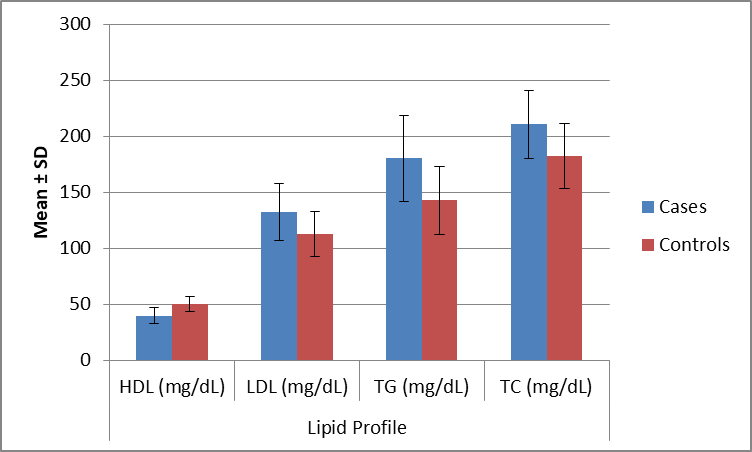
Figure 1: Lipid Profile Comparison
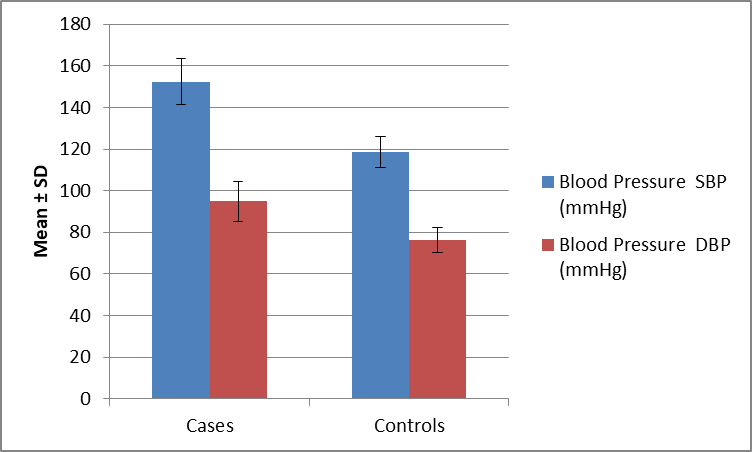
Figure 2: Comparison of Systolic and Diastolic Blood Pressure Between Cases and Controls
Baseline Characteristics
The study included 50 patients with essential hypertension and 50 age- and gender-matched healthy controls. The mean age of hypertensive patients was 52.6 ± 8.4 years, while that of the control group was 51.2 ± 7.9 years, showing no statistically significant difference (p = 0.42). The distribution of gender was comparable between cases and controls, with 28 males and 22 females in the hypertensive group and 27 males and 23 females in the control group (p = 0.84). Body mass index (BMI) was significantly higher in hypertensive patients (27.8 ± 3.5 kg/m²) compared to controls (24.6 ± 2.8 kg/m²; p <0.001), indicating a trend toward overweight and obesity among hypertensive individuals. Smoking prevalence was slightly higher in cases (18/50) compared to controls (12/50), but this difference was not statistically significant (p = 0.18). The mean duration of hypertension in cases was 6.4 ± 3.1 years, while controls, by definition, had no history of hypertension. These findings suggest that the study groups were well-matched for age and gender, while hypertensive patients had higher BMI, a known cardiovascular risk factor.
Blood Pressure and Hypertension Stage
Systolic and diastolic blood pressure values were significantly elevated in the hypertensive group compared to controls. The mean systolic blood pressure (SBP) among cases was 152.4 ± 11.2 mmHg, while controls had a mean SBP of 118.6 ± 9.4 mmHg (p <0.001). Similarly, mean diastolic blood pressure (DBP) was significantly higher in cases (94.8 ± 7.6 mmHg) compared to controls (76.2 ± 6.1 mmHg; p <0.001). Among hypertensive patients, 30 individuals (60%) were classified as Stage I hypertension and 20 individuals (40%) as Stage II, indicating a substantial proportion with moderately severe blood pressure elevation. These results confirm the presence of significantly elevated blood pressure in the case group and validate the classification of essential hypertension in the study population.
Lipid Profile Comparison
Hypertensive patients demonstrated an atherogenic lipid profile compared to controls. High-density lipoprotein cholesterol (HDL-C) was significantly lower in cases (39.8 ± 7.2 mg/dL) than in controls (50.1 ± 6.8 mg/dL; p <0.001). Conversely, low-density lipoprotein cholesterol (LDL-C) was elevated in hypertensive patients (132.4 ± 25.6 mg/dL) compared to controls (112.7 ± 20.3 mg/dL; p <0.001). Triglycerides were also higher in cases (180.2 ± 38.4 mg/dL) than in controls (142.6 ± 30.1 mg/dL; p <0.001). Total cholesterol followed a similar pattern, with a mean of 210.5 ± 30.2 mg/dL in cases versus 182.3 ± 28.7 mg/dL in controls (p <0.001). These findings indicate that patients with essential hypertension not only have elevated blood pressure but also a more unfavorable lipid profile, which may contribute to increased cardiovascular risk.
Serum Uric Acid and Hyperuricemia
Serum uric acid levels were significantly higher in hypertensive patients compared to controls. The mean serum uric acid concentration in cases was 7.2 ± 1.1 mg/dL, whereas controls had a mean of 5.4 ± 0.9 mg/dL (p <0.001). Hyperuricemia, defined as serum uric acid >7 mg/dL in men and >6 mg/dL in women, was observed in 32 cases (64%) compared to only 8 controls (16%; p <0.001). Pearson correlation analysis revealed a moderate positive correlation between serum uric acid and systolic blood pressure (r = 0.48; p <0.001), indicating that higher uric acid levels were associated with elevated SBP. Similarly, serum uric acid demonstrated a positive correlation with BMI (r = 0.39; p = 0.004), suggesting that increased body mass is associated with higher uric acid levels. These findings highlight the potential contributory role of hyperuricemia in the pathogenesis of hypertension and its metabolic complications.
DISCUSSION:
The present case-control study evaluated serum uric acid levels and metabolic parameters in 50 patients with essential hypertension and 50 age- and gender-matched healthy controls. The study findings demonstrated that hypertensive patients had significantly elevated BMI, blood pressure, dyslipidemia, and serum uric acid levels compared to controls. Hyperuricemia was observed in 64% of cases, whereas only 16% of controls exhibited elevated uric acid levels, emphasizing the association between uric acid and essential hypertension. Furthermore, serum uric acid showed a moderate positive correlation with both systolic blood pressure (r = 0.48, p <0.001) and BMI (r = 0.39, p = 0.004), highlighting its potential role as a metabolic and cardiovascular risk factor.
Baseline Characteristics and Metabolic Risk
The mean age of hypertensive patients was 52.6 ± 8.4 years, similar to 51.2 ± 7.9 years in controls, with no significant difference (p = 0.42). Gender distribution was also comparable between cases and controls, indicating effective matching for confounding variables (p = 0.84). BMI was significantly higher in hypertensive patients (27.8 ± 3.5 kg/m²) compared to controls (24.6 ± 2.8 kg/m²; p <0.001). Elevated BMI in hypertensive patients is consistent with previous studies showing that obesity is a strong risk factor for both elevated blood pressure and hyperuricemia [11]. Increased adiposity may contribute to elevated uric acid through enhanced purine metabolism, insulin resistance, and decreased renal excretion [12]. Smoking prevalence was slightly higher among hypertensives (18/50) compared to controls (12/50), though this difference was not statistically significant (p = 0.18), suggesting that smoking was not a major confounder in this cohort.
Blood Pressure and Hypertension Stage
As expected, both systolic and diastolic blood pressure were significantly elevated in cases (SBP: 152.4 ± 11.2 mmHg; DBP: 94.8 ± 7.6 mmHg) compared to controls (SBP: 118.6 ± 9.4 mmHg; DBP: 76.2 ± 6.1 mmHg; p <0.001). These findings validate the selection of the hypertensive cohort. Stage I hypertension was present in 60% of patients, and Stage II in 40%, highlighting that a substantial proportion had moderate-to-severe hypertension. Elevated blood pressure in combination with higher BMI and metabolic abnormalities underscores the clustering of cardiovascular risk factors in essential hypertension, consistent with prior epidemiological evidence [13].
Lipid Profile
Hypertensive patients demonstrated a significantly atherogenic lipid profile compared to controls. HDL was lower in cases (39.8 ± 7.2 mg/dL) versus controls (50.1 ± 6.8 mg/dL; p <0.001), while LDL (132.4 ± 25.6 mg/dL vs. 112.7 ± 20.3 mg/dL; p <0.001), triglycerides (180.2 ± 38.4 mg/dL vs. 142.6 ± 30.1 mg/dL; p <0.001), and total cholesterol (210.5 ± 30.2 mg/dL vs. 182.3 ± 28.7 mg/dL; p <0.001) were higher. These results indicate a dyslipidemic pattern among hypertensive patients, which may compound cardiovascular risk. Previous studies have consistently demonstrated that hyperuricemia is associated with dyslipidemia, potentially due to insulin resistance, oxidative stress, and impaired lipid metabolism [14]. The concurrence of dyslipidemia and hyperuricemia suggests that these metabolic derangements may act synergistically to exacerbate vascular dysfunction.
Serum Uric Acid and Hyperuricemia
Serum uric acid was significantly elevated in hypertensive patients (7.2 ± 1.1 mg/dL) compared to controls (5.4 ± 0.9 mg/dL; p <0.001). Hyperuricemia was present in 64% of cases compared to 16% of controls (p <0.001). These findings are consistent with prior literature demonstrating a strong association between elevated uric acid and hypertension. Uric acid may contribute to the development of hypertension by promoting endothelial dysfunction, increasing oxidative stress, and activating the renin-angiotensin system. Similarly, individuals with elevated serum uric acid had a higher incidence of hypertension over time, independent of traditional risk factors [15].
In our study, serum uric acid positively correlated with SBP (r = 0.48; p <0.001) and BMI (r = 0.39; p = 0.004), suggesting that hyperuricemia is not only linked with elevated blood pressure but also with obesity-related metabolic risk. These correlations support the hypothesis that uric acid may be both a marker and a mediator of metabolic dysfunction in hypertensive patients. Experimental studies have demonstrated that uric acid can induce vascular smooth muscle proliferation, reduce nitric oxide bioavailability, and stimulate inflammatory pathways, leading to increased vascular resistance and elevated blood pressure [16].
Clinical Implications
The present findings have several clinical implications. First, screening for serum uric acid in hypertensive patients may help identify individuals at higher risk for metabolic syndrome and cardiovascular events. Second, interventions targeting uric acid, such as lifestyle modification or pharmacologic urate-lowering therapy, may have potential benefits in reducing blood pressure and improving metabolic profiles. While the causative role of uric acid in hypertension remains debated, accumulating evidence suggests that uric acid-lowering strategies may complement conventional antihypertensive therapy in selected patients [17].
CONCLUSION:
In summary, this study demonstrates that patients with essential hypertension exhibit significantly elevated serum uric acid levels, higher BMI, elevated blood pressure, and a dyslipidemic profile compared to healthy controls. Serum uric acid showed positive correlations with SBP and BMI, supporting its role as both a biomarker and potential contributor to metabolic and cardiovascular risk. These findings highlight the importance of assessing uric acid levels in hypertensive patients and suggest that interventions targeting hyperuricemia may complement the management of essential hypertension. Future multicenter, longitudinal studies are warranted to further elucidate the causal relationship and therapeutic potential of uric acid reduction in hypertension
REFERENCES:
1. World Health Organization. Global brief on hypertension: silent killer, global public health crisis. Geneva: WHO; 2013.
2. Feig DI, Kang DH, Johnson RJ. Uric acid and cardiovascular risk. N Engl J Med. 2008;359(17):1811–1821.
3. Grayson PC, Kim SY, LaValley M, Choi HK. Hyperuricemia and incident hypertension: a systematic review and meta-analysis. Arthritis Care Res (Hoboken). 2011;63(1):102–110.
4. Johnson RJ, Kang DH, Feig D, et al. Is there a pathogenetic role for uric acid in hypertension and cardiovascular and renal disease? Hypertension. 2003;41(6):1183–1190.
5. Mellen PB, Bleyer AJ, Erlinger TP, et al. Serum uric acid predicts incident hypertension in adults. J Hypertens. 2006;24(6):1121–1127.
6. Li M, Hou W, Zhang X, et al. Hyperuricemia and risk of hypertension: a meta-analysis of prospective observational studies. PLoS One. 2014;9(12):e114259.
7. Ndrepepa G. Uric acid and cardiovascular disease. Clin Chim Acta. 2018;484:150–163.
8. Kang DH, Nakagawa T, Feng L, et al. A role for uric acid in the progression of renal disease. J Am Soc Nephrol. 2002;13(12):2888–2897.
9. Kanbay M, Segal M, Afsar B, et al. The role of uric acid in the pathogenesis of human cardiovascular disease. Heart. 2013;99(11):759–766.
10. Sanchez-Lozada LG, Tapia E, Santamaria J, et al. Effects of uric acid on the kidney. Curr Opin Nephrol Hypertens. 2006;15(1):43–49.
11. World Health Organization. Global brief on hypertension: silent killer, global public health crisis. Geneva: WHO; 2014.
12. Li M, Hou W, Zhang X, et al. Hyperuricemia and risk of hypertension: a meta-analysis of prospective observational studies. PLoS One. 2014;9(12):e114259.
13. Sautin YY, Johnson RJ. Uric acid: the oxidant-antioxidant paradox. Nucleosides Nucleotides Nucleic Acids. 2008;27(6–7):608–619.
14. Whelton PK, Carey RM, Aronow WS, et al. 2017 ACC/AHA guideline for hypertension. J Am Coll Cardiol. 2018;71:e127–248.
15. Chobanian AV, Bakris GL, Black HR, et al. Seventh report of the Joint National Committee. Hypertension. 2003;42:1206–1252.
16. Ndrepepa G. Uric acid and cardiovascular disease. Clin Chim Acta. 2018;484:150–163.
17. Kanbay M, Segal M, Afsar B, et al. The role of uric acid in the pathogenesis of human cardiovascular disease. Heart. 2.