SOCIODEMOGRAPHIC AND EPIDEMIOLOGICAL PROFILE OF PATIENTS WITH CHOLELITHIASIS ADMITTED IN A TERTIARY CARE HOSPITAL OF TRIPURA
- Sambit Debbarman , Assistant Professor, MBBS, MS(General Surgery), Department of General Surgery, Agartala Government Medical College and Govind Ballav Pant Hospital, Kunjaban, Agartala, Tripura, India
- Shreyoshi Bandyopadhyay , Senior Resident, MBBS, MS(General Surgery), Department of General Surgery, Agartala Government Medical College and Govind Ballav Pant Hospital, Kunjaban, Agartala, Tripura, India.
- Damodar Chatterjee , Professor and Head of the department of General Surgery, MBBS, MS (General Surgery), Santiniketan Medical College, Ranirkhamar, Agartala, Tripura ,India.
- G. Adarsha , MBBS, MS (General Surgery), MCh (Neurosurgery), Department of Neurosurgery, Nizam’s Institute of Medical Sciences, Punjagutta, Hyderabad, India.
Article Information:
Abstract:
Background: Cholelithiasis is one of the most common hepatobiliary disorders encountered in clinical practice, with a rising incidence due to changing lifestyle patterns, dietary habits, and increasing prevalence of metabolic risk factors. It contributes significantly to morbidity and healthcare burden, particularly in developing regions. Understanding the sociodemographic and epidemiological profile of patients is essential for early detection, prevention, and effective management. Aims: To study the sociodemographic characteristics and epidemiological profile of patients with cholelithiasis admitted in a tertiary care hospital of Tripura. Materials and Methods: This study was a hospital-based cross-sectional observational study conducted in the Department of General Surgery at Agartala Government Medical College and Hospital over a period of one year. The study included all patients diagnosed with cholelithiasis and admitted during the study period, with a total sample size of 400 patients. Results: Among the identified risk factors, sedentary lifestyle was the most common, observed in 208 (52.0%) patients. Dyslipidemia was present in 120 (30.0%) patients, while diabetes mellitus was found in 96 (24.0%) patients. A positive family history of gallstone disease was noted in 72 (18.0%) patients. Additionally, among female patients, 80 (20.0% of total cases) reported a history of oral contraceptive use. Conclusion: Cholelithiasis predominantly affects the elderly population and is closely associated with metabolic and lifestyle-related risk factors. The findings highlight the importance of early screening, lifestyle modification, and management of comorbid conditions to reduce disease burden and complications. Understanding the sociodemographic and epidemiological profile can aid in developing targeted preventive and therapeutic strategies in this region.
Keywords:
Article :
INTRODUCTION:
Cholelithiasis, commonly referred to as gallstone disease, is one of the most prevalent disorders affecting the hepatobiliary system worldwide. It is characterized by the formation of calculi within the gallbladder due to imbalances in the composition of bile, particularly involving cholesterol, bile salts, and bilirubin. The global burden of cholelithiasis has been steadily increasing, largely due to changes in lifestyle, dietary patterns, and the rising prevalence of metabolic disorders. Epidemiological studies suggest that the prevalence of gallstones varies widely across populations, ranging from 5% to 25%, depending on geographic region, ethnicity, and socioeconomic factors (1). In Western countries, the prevalence is relatively higher, whereas in Asian countries, including India, the incidence has shown a rising trend over recent decades (2).
The development of cholelithiasis is multifactorial, involving a complex interplay of genetic, environmental, and metabolic factors. Among the well-established risk factors are age, gender, obesity, and reproductive history. The incidence of gallstones increases with advancing age, particularly after the fourth decade of life (3). Females are more commonly affected than males, which has been attributed to hormonal influences, especially estrogen, which increases cholesterol saturation in bile (4). This gender disparity is further accentuated during pregnancy and with the use of oral contraceptive pills. Obesity is another significant risk factor, as it is associated with increased cholesterol secretion and decreased gallbladder motility, promoting stone formation (5).
Socioeconomic and lifestyle factors also play a crucial role in the epidemiology of cholelithiasis. Diets rich in fats and refined carbohydrates and low in fiber have been strongly associated with an increased risk of gallstone formation (6). Sedentary lifestyle, increasingly common in urban populations, further contributes to this risk. Rapid urbanization and westernization of dietary habits in developing countries like India have led to a noticeable shift in disease patterns, including a higher prevalence of gallstones (7). Additionally, certain occupations and levels of physical activity have been linked to variations in gallstone risk, highlighting the importance of sociodemographic determinants.
Ethnicity and geographic distribution are important epidemiological considerations. Certain populations, such as Native Americans and individuals of Hispanic descent, have a higher prevalence of gallstones, suggesting a genetic predisposition (8). In India, regional variations have been documented, with higher incidence reported in northern states compared to southern regions, possibly due to differences in diet, genetics, and environmental factors. These variations underscore the importance of studying local population characteristics to better understand disease patterns.
Comorbid conditions such as diabetes mellitus, dyslipidemia, and metabolic syndrome have also been closely linked with cholelithiasis. These conditions alter lipid metabolism and contribute to bile supersaturation, thereby increasing the risk of gallstone formation (9). Additionally, rapid weight loss, prolonged fasting, and certain medications can predispose individuals to gallstones. The role of these factors further emphasizes the need for a comprehensive epidemiological approach to understanding the disease.
Clinically, cholelithiasis may remain asymptomatic in a significant proportion of individuals and is often detected incidentally during imaging studies. However, when symptomatic, it can present with biliary colic, characterized by severe pain in the right upper quadrant of the abdomen, often radiating to the back or shoulder. Complications such as acute cholecystitis, choledocholithiasis, and pancreatitis may arise if left untreated (10). These complications contribute significantly to morbidity and healthcare burden, making early identification and management essential.
Understanding the sociodemographic and epidemiological profile of patients with cholelithiasis is crucial for developing targeted preventive and management strategies. It helps identify high-risk groups, facilitates early diagnosis, and informs public health policies aimed at reducing disease burden. In a country like India, where healthcare resources may be limited and disease patterns are rapidly evolving, such studies are particularly valuable. They provide insights into regional variations, risk factors, and trends, thereby aiding clinicians and policymakers in designing effective interventions.
The present study aims to evaluate the sociodemographic and epidemiological profile of patients diagnosed with cholelithiasis in a tertiary care hospital setting. The primary objective is to analyze the distribution of patients with respect to age, gender, socioeconomic status, dietary habits, and lifestyle factors, thereby identifying patterns and high-risk groups associated with gallstone disease. In addition, the study seeks to assess the prevalence of various risk factors such as obesity, diabetes mellitus, dyslipidemia, and reproductive history among the affected individuals. It also aims to examine the clinical presentation and associated comorbidities to understand the disease burden more comprehensively. Furthermore, the study intends to explore regional and environmental influences that may contribute to the development of cholelithiasis. Through this analysis, the objective is to generate data that can aid in early identification, prevention strategies, and improved management of patients with gallstone disease in similar healthcare settings.
MATERIALS AND METHODS:
Study design:
This study is a hospital-based cross-sectional observational study
Study place:
Department General Surgery, Institution Agartala Government Medical College and Hospital.
Study duration: 1 year
Study population:
The study population included all patients diagnosed with cholelithiasis and admitted to the Department of General Surgery during the study period.
Sample size: 400 patients
Inclusion criteria:
Patients aged 18 years and above diagnosed with cholelithiasis based on clinical evaluation and ultrasonographic findings and willing to participate in the study were included.
Exclusion criteria:
Patients with complications of gallstone disease requiring emergency intervention (such as gallbladder perforation), patients with a previous history of cholecystectomy, those with malignancy of the hepatobiliary system, and patients unwilling to give consent were excluded from the study.
Ethical approval:
The study was approved by the Institutional Ethics Committee.
Funding:
This study did not receive any external funding.0
Conflict of interest: Nil
Statistical analysis:
For statistical analysis data were entered into a Microsoft excel spreadsheet and then analyzed by SPSS (version 27.0; SPSS Inc., Chicago, IL, USA) and GraphPad Prism version 5. Data had been summarized as mean and standard deviation for numerical variables and count and percentages for categorical variables. Two-sample t-tests for a difference in mean involved independent samples or unpaired samples. Paired t-tests were a form of blocking and had greater power than unpaired tests. A chi-squared test (χ2 test) was any statistical hypothesis test wherein the sampling distribution of the test statistic is a chi-squared distribution when the null hypothesis is true. Without other qualification, 'chi-squared test' often is used as short for Pearson's chi-squared test. Unpaired proportions were compared by Chi-square test or Fischer’s exact test, as appropriate.
Explicit expressions that can be used to carry out various t-tests are given below. In each case, the formula for a test statistic that either exactly follows or closely approximates a t-distribution under the null hypothesis is given. Also, the appropriate degrees of freedom are given in each case. Each of these statistics can be used to carry out either a one-tailed test or a two-tailed test.
Once a t value is determined, a p-value can be found using a table of values from Student's t-distribution .If the calculated p-value is below the threshold chosen for statistical significance (usually the 0.10, the 0.05, or 0.01 level), then the null hypothesis is rejected in favour of the alternative hypothesis.
P-value ≤ 0.05 was considered for statistically significant.
RESULTS:
Table 1: Distribution of Patients by Age Group
|
Age Group (years) |
Number of Patients |
Percentage (%) |
|
18–30 |
72 |
18 |
|
31–40 |
104 |
26 |
|
41–50 |
112 |
28 |
|
51–60 |
64 |
16 |
|
>60 |
48 |
12 |
|
Total |
400 |
100 |
Table 2: Gender Distribution
|
Gender |
Number of Patients |
Percentage (%) |
|
Male |
128 |
32 |
|
Female |
272 |
68 |
|
Total |
400 |
100 |
Table 3: Distribution by Socioeconomic Status
|
Socioeconomic Status |
Number of Patients |
Percentage (%) |
|
Lower |
136 |
34 |
|
Middle |
184 |
46 |
|
Upper |
80 |
20 |
|
Total |
400 |
100 |
Table 4: Distribution by BMI (Body Mass Index)
|
BMI Category |
Number of Patients |
Percentage (%) |
|
Underweight |
32 |
8 |
|
Normal |
144 |
36 |
|
Overweight |
136 |
34 |
|
Obese |
88 |
22 |
|
Total |
400 |
100 |
Table 5: Distribution of Risk Factors
|
Risk Factor |
Number of Patients |
Percentage (%) |
|
Diabetes Mellitus |
96 |
24 |
|
Dyslipidemia |
120 |
30 |
|
Oral Contraceptive Use (Females) |
80 |
20 |
|
Sedentary Lifestyle |
208 |
52 |
|
Family History |
72 |
18 |
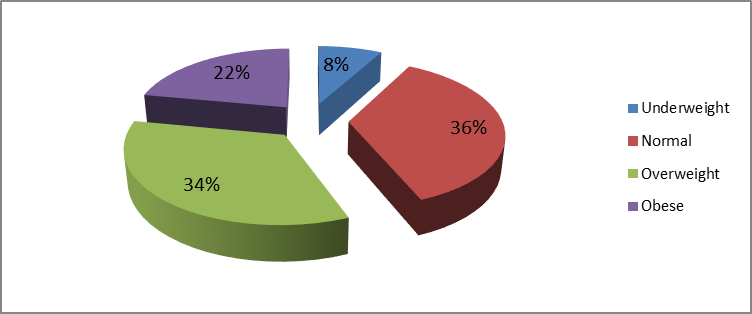
Figure 1 : Distribution by BMI (Body Mass Index)
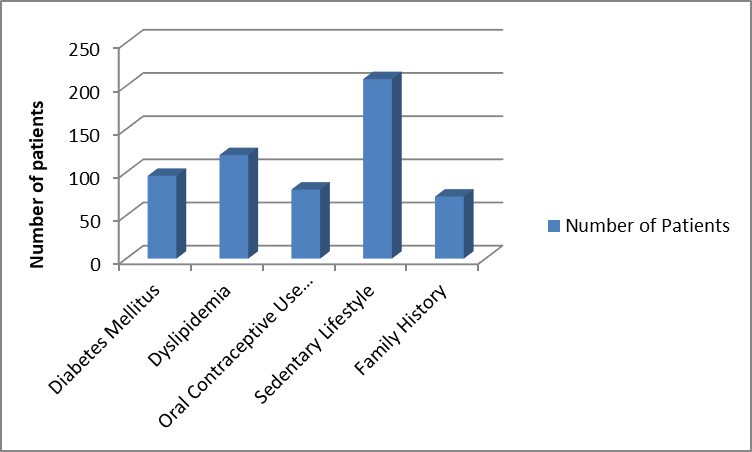
Figure 2 : Distribution of Risk Factors
Age Distribution of Patients
In the present study of 400 patients with cholelithiasis, the majority of patients belonged to the 41–50 years age group, accounting for 112 (28.0%) patients. This was followed by the 31–40 years age group with 104 (26.0%) patients. A total of 72 (18.0%) patients were in the 18–30 years age group, while 64 (16.0%) patients were between 51–60 years. The least number of patients, 48 (12.0%), were above 60 years of age.
Gender Distribution
Out of the 400 patients studied, females constituted the majority with 272 (68.0%) cases, whereas males accounted for 128 (32.0%) cases.
Socioeconomic Status
In terms of socioeconomic status, most patients belonged to the middle class, comprising 184 (46.0%) individuals. The lower socioeconomic group included 136 (34.0%) patients, while 80 (20.0%) patients belonged to the upper socioeconomic class.
Body Mass Index (BMI) Distribution
Assessment of BMI revealed that 144 (36.0%) patients had normal BMI, while 136 (34.0%) were overweight. Obesity was observed in 88 (22.0%) patients, and 32 (8.0%) patients were underweight.
Distribution of Risk Factors
Among the identified risk factors, sedentary lifestyle was the most common, observed in 208 (52.0%) patients. Dyslipidemia was present in 120 (30.0%) patients, while diabetes mellitus was found in 96 (24.0%) patients. A positive family history of gallstone disease was noted in 72 (18.0%) patients. Additionally, among female patients, 80 (20.0% of total cases) reported a history of oral contraceptive use.
DISCUSSION:
In the present study of 400 patients with cholelithiasis, the majority of patients belonged to the 41–50 years age group (28.0%), followed by the 31–40 years age group (26.0%), indicating a higher prevalence in the middle-aged population. These findings are comparable with those reported by Shaffer EA, who observed that the incidence of gallstone disease increases significantly with age, particularly after the fourth decade due to metabolic and biliary changes (11). Similar observations were made by Barbara L et al., who reported a peak incidence in the fifth decade of life (12). In an Indian context, Khuroo MS et al. also documented a higher prevalence in middle-aged individuals, which is in agreement with our findings (13).
A marked female predominance (68.0%) was observed in the present study, which is consistent with previous literature. Bennion LJ and Grundy SM explained that estrogen increases hepatic cholesterol secretion, thereby promoting gallstone formation (14). Likewise, Novacek G reported that female gender, pregnancy, and hormonal factors significantly increase the risk of cholelithiasis (15). These studies support our observation of female predominance.
With respect to socioeconomic status, the majority of patients in our study belonged to the middle class (46.0%), followed by the lower class (34.0%). This is comparable to the findings of Misra A et al., who reported that lifestyle changes, dietary patterns, and reduced physical activity in middle-income populations contribute to metabolic disorders and gallstone formation (16). Additionally, Angelico F et al. found that socioeconomic transitions and westernized diets are associated with increased prevalence of gallstones (17).
In the present study, a significant proportion of patients were overweight (34.0%) or obese (22.0%), highlighting the role of BMI in gallstone disease. This finding is supported by Attili AF et al., who demonstrated a strong association between obesity and gallstone formation (18). Similarly, Everhart JE et al. reported that increased body weight is a major risk factor for gallstone disease due to increased cholesterol saturation in bile (19).
Furthermore, oral contraceptive use among females (20.0%) in our study is consistent with findings by Thijs C, who demonstrated an increased risk of gallstones with estrogen exposure (20). A positive family history (18.0%) in our study supports the genetic predisposition described by Lammert F et al., who identified genetic susceptibility as an important factor in gallstone disease (21).
CONCLUSION:
The present study demonstrates that cholelithiasis is a common condition predominantly affecting middle-aged individuals, with the highest incidence observed in the 41–50 years age group. A clear female predominance was noted, highlighting the influence of hormonal factors in the development of gallstone disease. Most patients belonged to the middle socioeconomic class, suggesting that lifestyle changes, dietary habits, and urbanization may contribute significantly to its occurrence. A substantial proportion of patients were either overweight or obese, indicating a strong association between increased body mass index and gallstone formation. Additionally, sedentary lifestyle, dyslipidemia, and diabetes mellitus emerged as major risk factors, emphasizing the role of metabolic and lifestyle determinants in disease pathogenesis. The presence of oral contraceptive use among females and a positive family history in some patients further supports the contribution of hormonal and genetic factors. Overall, the findings highlight the multifactorial nature of cholelithiasis and underscore the importance of early identification of high-risk groups, along with preventive strategies such as weight control, healthy diet, and increased physical activity, to reduce the burden of the disease and improve patient outcomes.
REFERENCES:
1. Stinton LM, Shaffer EA. Epidemiology of gallbladder disease: cholelithiasis and cancer. Gut. 2012;61(1):165–176.
2. Acalovschi M. Cholesterol gallstones: from epidemiology to prevention. Postgrad Med J. 2001;77(906):221–229.
3. Portincasa P, Moschetta A, Palasciano G. Cholesterol gallstone disease. Lancet. 2006;368(9531):230–239.
4. Everson GT. Pregnancy and gallstones. Hepatology. 1993;17(1):159–161.
5. Méndez-Sánchez N, Chavez-Tapia NC, Motola-Kuba D, Sanchez-Lara K, Ponciano-Rodríguez G, Baptista H, Ramos MH, Uribe M. Metabolic syndrome as a risk factor for gallstone disease. World journal of gastroenterology: WJG. 2005 Mar 21;11(11):1653.
6. Tsai CJ, Leitzmann MF, Hu FB, Willett WC, Giovannucci EL. A prospective cohort study of nut consumption and the risk of gallstone disease in men. American Journal of epidemiology. 2004 Nov 15;160(10):961-8..
7. Malhotra SL. Epidemiology of gallstones in India. Indian J Med Res. 1968;56(4):493–503.
8. Diehl AK. Epidemiology and natural history of gallstone disease. Gastroenterol Clin North Am. 1991;20(1):1–19.
9. Ahmed A, Cheung RC, Keeffe EB. Management of gallstones and their complications. Am Fam Physician. 2000;61(6):1673–1680.
10. Friedman GD. Natural history of asymptomatic and symptomatic gallstones. Am J Surg. 1993;165(4):399–404.
11. Shaffer EA. Epidemiology of gallbladder disease. Best Pract Res Clin Gastroenterol. 2006;20:981–996.
12. Barbara L, Sama C, Morselli Labate AM, et al. A population study on gallstone disease. Hepatology. 1987;7:913–917.
13. Khuroo MS, Mahajan R, Zargar SA, Javid G, Sapru S. Prevalence of biliary tract disease in India: a sonographic study in adult population in Kashmir. Gut. 1989 Feb 1;30(2):201-5.
14. Bennion LJ, Grundy SM. Risk factors for gallstones. N Engl J Med. 1978;299:1221–1227.
15. Novacek G. Gender and gallstone disease. Wien Med Wochenschr. 2006;156:527–533.
16. Misra A, Khurana L. Obesity and metabolic syndrome in developing countries. J Clin Endocrinol Metab. 2008;93:S9–S30.
17. Angelico F, Del Ben M, Barbato A, Conti R, Urbinati G. Ten-year incidence and natural history of gallstone disease in a rural population of women in central Italy. The Rome Group for the Epidemiology and Prevention of Cholelithiasis (GREPCO). Italian journal of gastroenterology and hepatology. 1997 Jun 1;29(3):249-54.
18. Attili AF, Capocaccia R, Carulli N, et al. Factors associated with gallstone disease. Hepatology. 1995;21:655–660.
19. Everhart JE, Khare M, Hill M, Maurer KR. Prevalence of gallstones in the US. Hepatology. 1999;29:1185–1191.
20. Thijs C, Knipschild P. Oral contraceptives and gallstone risk. Am J Public Health. 1993;83:1113–1120.
21. Lammert F, Sauerbruch T. Genetics of gallstone disease. Gastroenterology. 2005;128:2012–2024.