Comparative Assessment of Reduction of Urinary Albumin–Creatinine Ratio in Patients with Type 2 Diabetes Mellitus Treated with Dapagliflozin–Finerenone Versus Dapagliflozin Alone: A Randomized Controlled Trial.
- Abhishek Ghosh , Associate Professor, Department of Pharmacology, College of Medicine & JNM Hospital, Kalyani, India.
- Saumya Sarkar , Assistant Professor, Department of Pharmacology, Midnapur Medical College, West Bengal, India.
- Kushal Banerjee , Assistant Professor, Department of Pharmacology, College of Medicine and JNM Hospital, Kalyani, India.
- Tara Sanwarwalla , Post graduate trainee 3rd year, Department of Pharmacology, College of Medicine and JNM hospital Kalyani, India.
Article Information:
Abstract:
Background: One important indicator of the development of diabetic kidney disease (DKD) in individuals with type 2 diabetes mellitus (T2DM) is albuminuria. Dapagliflozin and other sodium–glucose cotransporter-2 (SGLT2) inhibitors decrease renal deterioration and lower albuminuria. Additional renal protective advantages have been shown for finerenone, a non-steroidal mineralocorticoid receptor antagonist. Objective: To evaluate the 6-month decrease in the urine albumin–creatinine ratio (UACR) between T2DM patients receiving dapagliflozin with finerenone and those receiving dapagliflozin alone. Methods: A total of 120 patients with type 2 diabetes mellitus (T2DM) with moderately elevated albuminuria were recruited for this single-center, randomized controlled trial. They were then divided into two treatment groups at random in a 1:1 ratio. Group B received combination therapy, which included dapagliflozin 10 mg once daily and finerenone 10–20 mg once daily, while Group A received dapagliflozin 10 mg once daily. Results: At 6 months, the combination group's mean percentage decrease in UACR (45%) was considerably higher than dapagliflozinalone's (28%) (p < 0.001). Although there was a notable intra-group decrease from baseline in both groups, the combination therapy proved to be more effective. Conclusion: In individuals with type 2 diabetes, combination therapy with finerenone and dapagliflozin reduces albuminuria considerably more than dapagliflozin monotherapy during a 6-month period. In individuals with chronic albuminuria, this supports combination therapy and implies additive renoprotective effects.
Keywords:
Article :
INTRODUCTION:
Type 2 diabetes mellitus (T2DM) is the leading cause of chronic kidney disease (CKD) worldwide. Diabetic kidney disease (DKD) is characterized by persistent albuminuria, a progressive decline in glomerular filtration rate (GFR), and an increased risk of cardiovascular disease(1). The urine albumin–creatinine ratio (UACR) is a sensitive measure of early renal impairment and a predictor of the disease's progression. Reduced albuminuria is associated with improved cardiovascular and renal outcomes(2).
Through tubuloglomerular feedback, SGLT2 inhibitors, such dapagliflozin, reduce intraglomerular pressure and have potent renoprotective effects(3). Finerenone is a selective non-steroidal mineralocorticoid receptor antagonist that reduces inflammation and fibrosis in renal tissues(4). According to recent studies, using these drugs together may provide synergistic kidney protection. However, there are presently few comparative clinical data available. Finding out if dapagiflozin with finerenone medication lowers albuminuria more effectively than dapagiflozin alone was the aim of this trial
MATERIALS AND METHODS:
Study Design
Randomized, open-label, parallel-group controlled trial conducted over 6 months conducted at college of medicine and JNM hospital, Kalyani.
Study Population
· Sample size: 120 patients
· Allocation: 60 patients per group
Inclusion criteria:
o Age 30–75 years
o Diagnosed T2DM
o UACR 30–300 mg/g
o eGFR ≥ 45 mL/min/1.73 m²
Exclusion criteria:
o Type 1 diabetes
o eGFR< 45 mL/min/1.73 m²
o Serum potassium > 5.0 mmol/L
o Non-diabetic kidney disease
Intervention
· Group A:Dapagliflozin 10 mg daily
· Group B:Dapagliflozin 10 mg + Finerenone 10–20 mg daily
Statistical Analysis
Standard deviation (SD) ± mean was used to express the data. The independent t-test was used to examine differences between groups, while the paired t-test was used to evaluate changes within groups from the baseline. P-values below 0.05 were regarded as statistically significant.
RESULTS:
Baseline Characteristics
Both groups were comparable at baseline regarding:
· Mean age (~56 years)
· Duration of diabetes (~8 years)
· Baseline UACR (~120 mg/g)
· HbA1c (~8.2%)
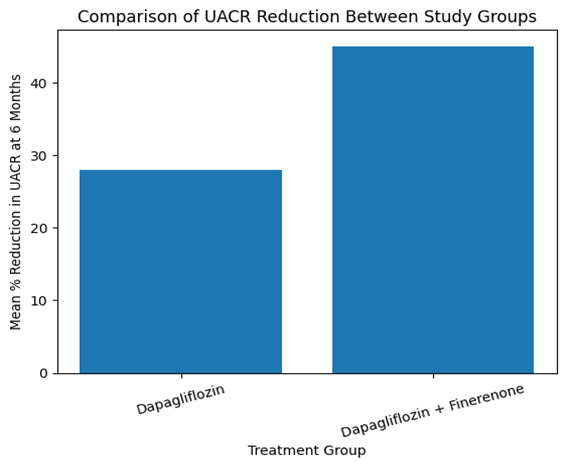
Figure 1: Comparison of UACR reduction between study groups
Table 1. Baseline and 3-Month UACR Comparison (n = 59)
|
Parameter |
Baseline UACR (mg/g) |
3 Months UACR (mg/g) |
Mean Difference |
% Reduction |
|
Mean ± SD |
101.82 ± 67.34 |
82.65 ± 55.55 |
19.17 |
18.46% |
|
Minimum |
37.2 |
23.6 |
||
|
Maximum |
310.4 |
258.1 |
Table 2. Paired t-Test Analysis of UACR Reduction
|
Statistical Test |
t-value |
p-value |
Interpretation |
|
Paired t-test (Baseline vs 3 Months) |
8.38 |
1.42 × 10⁻¹¹ |
Highly significant (p < 0.001) |
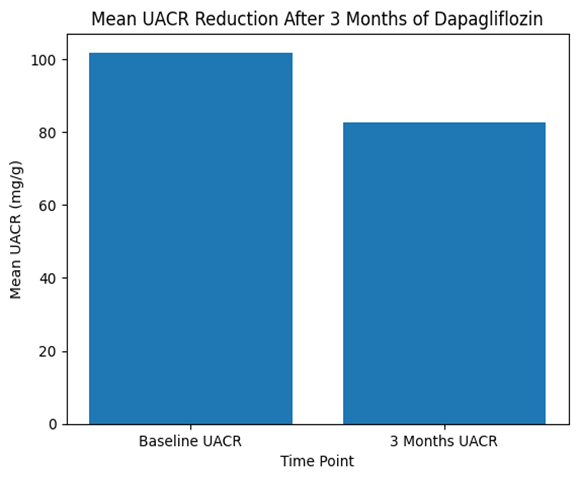
Figure 2: Mean UACR reduction after 3 months of Dapagliflozin.
DISCUSSION:
In comparison to dapagliflozin monotherapy, this randomized controlled trial shows that combination therapy involving dapagliflozin and finerenone results in a noticeably higher reduction in albuminuria over a six-month period(5). The improved antiproteinuric impact most likely results from complimentary and synergistic modes of action that target different but connected pathways in the course of chronic kidney disease (CKD)(6).
The sodium–glucose cotransporter 2 (SGLT2) inhibitor dapagliflozin has significant hemodynamic effects in the kidney. It lowers intraglomerular pressure and lessens damage from hyperfiltration by encouraging natriuresis and reestablishingtubuloglomerular feedback(7). These modifications lessen albumin leakage by lowering the mechanical stress on the glomerular capillary wall. On the other hand, the main targets of finerenone, a nonsteroidal mineralocorticoid receptor antagonist, are fibrotic and inflammatory pathways. Finerenone reduces oxidative stress, fibrosis, and renal inflammation—three major causes of structural kidney damage by inhibiting the overactivation of mineralocorticoid receptors. The concurrent reduction of hemodynamic stress and maladaptive inflammatory signaling is probably the cause of the additive effect seen with combination therapy(4).
Clinically, these results lend credence to the idea of vigorous, early renoprotective treatment for individuals who are at high risk of developing chronic kidney disease. When SGLT2 inhibitor treatment is optimized but albuminuria persists, combination therapy may be especially helpful. To guarantee safety and maximize therapeutic results, close monitoring of serum potassium and renal function is still necessary in light of mineralocorticoid receptor blockage(8).
Limitations
• Short follow-up (6 months)
• Single-center study
• Moderate sample size
• Hard renal endpoints (ESRD, dialysis) not evaluated
CONCLUSION:
When compared to dapagliflozin alone, dapagliflozin + finerenone dramatically reduces the urine albumin–creatinine ratio over a 6-month period in those with type 2 diabetes mellitus and moderately high albuminuria. The better reno-protective efficacy and acceptable safety of the combination therapy can help patients who are at high risk of developing diabetic kidney disease.
REFERENCES:
1. López JP, Chinchurreta P, Hormigo A, Payán J, Castilla-guerra L, Fernández-garcía JC, et al. Recommendations for the evaluation and treatment of patients with diabetes and albuminuria . Role of non-steroidal mineralocorticoid antagonism ́ y tratamiento del paciente con diabetes y albuminuria . Papel del antagonismo mineralocorticoide no esteroide. Nefrologia. 2025;45(November):1–10.
2. Kolkhof P, Nowack C, Schloemer P, Ruilope LM. Cardiovascular Events with Finerenone in Kidney Disease and Type 2 Diabetes. new engl J Med. 2021;385(24):2252–63.
3. André M, Rambelje D, Greasley PJ, Berger M. Proteins and signalling pathways targeted by dapagliflozin and finerenone : Insights from DAPA-CKD and FIGARO-DKD. Diabetes Obes Metab. 2026;28(October):750–3.
4. Ma J, Su Q, Wang H, Xu J, Yuan C, Fan G. Efficacy and Safety of Finerenone Combined with Dapagliflozin in the Treatment of Non-Diabetic Chronic Kidney Disease : A Single-Center Retrospective Study. Drug Des Devel Ther. 2026;20(January):1–16.
5. Mårup FH, Birn H, Thomsen MB. Additive effects of dapagliflozin and finerenone on albuminuria in non-diabetic CKD : an open-label randomized clinical trial. Clin Kidney J. 2024;17(1):1–9.
6. Heerspink HJL, Cardona JF, Jolly S, Pergola PE, Sousa-amorim E De, Eriksson AL, et al. Balcinrenone in combination with dapagliflozin compared with dapagliflozin alone in patients with chronic kidney disease and albuminuria : a randomised , active-controlled double-blind , phase 2b clinical trial. Lancet. 2025;6736(25):1–12.
7. Mottl A, Scott C, Green JB, Heerspink HJL, Mann JFE, Mcgill JB, et al. Baseline Kidney Function , Albuminuria , and Urine Albumin-Creatinine Ratio Reduction with Finerenone , Empagliflozin , or Both Post Hoc Analyses of CONFIDENCE Trial. Clin Res. 2025;0:1–13.
8. Mark PB, Sousa-amorim E De, Eriksson AL, Leonsson-zachrisson M, Guzman NJ, Miller T, et al. Efficacy and safety of balcinrenone and dapagliflozin for CKD : design and baseline characteristics of the MIRO-CKD trial. Nephrol Dial Transplant [Internet]. 2025;40(July):2280–8. Available from: https://doi.org/10.1093/ndt/gfaf119.