Levothyroxine Over-Replacement and Subclinical Thyrotoxicosis: Risk of Atrial Fibrillation.
- Riddhi Patel , Department of General Medicine, Dharpur Medical College, Gujrat, India.
- Anuj Patel , PG 3rd year, Department of General Medicine, Katihar Medical College, Katihar, Bihar, India .
Article Information:
Abstract:
Background: Levothyroxine is commonly prescribed for hypothyroidism and is typically safe when administered at the correct dosage. Excessive replacement may inhibit thyroid-stimulating hormone (TSH) levels, resulting in subclinical thyrotoxicosis. This illness, while frequently asymptomatic, has been progressively linked to detrimental effects on the cardiovascular system and an increased risk of arrhythmias such as atrial fibrillation. Objective: the effects of levothyroxine over-replacement on the cardiovascular system and the incidence of atrial fibrillation (AF) in individuals receiving thyroid hormone therapy. Methods: A prospective observational research was undertaken with 110 individuals on levothyroxine therapy for a duration of 9 months. Participants were categorised into two groups according to their TSH levels: euthyroid (TSH 0.4–4.0 mIU/L) and subclinical thyrotoxicosis (TSH <0.4 mIU/L). The cardiac rhythm was assessed with electrocardiography (ECG) and continuous monitoring to identify instances of atrial fibrillation. Statistical analysis was conducted to compare outcomes between the two groups, with a p-value of <0.05 considered statistically significant. Results: Among the overall cohort, 42 patients (38.2%) exhibited subclinical thyrotoxicosis during the study period. The prevalence of atrial fibrillation was significantly greater in the thyrotoxic cohort (19.0% vs 4.4%, p=0.01), demonstrating a robust correlation between diminished TSH levels and elevated cardiovascular risk. Conclusion: Excessive levothyroxine replacement resulting in subclinical thyrotoxicosis is linked to an elevated risk of atrial fibrillation. These findings highlight the necessity of meticulous dose titration and consistent monitoring of thyroid function to prevent potential problems and enhance patient outcomes.
Keywords:
Article :
INTRODUCTION:
Atrial fibrillation (AF) is the most frequent heart arrhythmia seen in clinical practice. Associated with diseases such as heart failure and valvular heart disease, AF is a major cause of ischemic stroke and is strongly associated with increased mortality(1). Atrial fibrillation (AF) is quite common, affecting around one in every 3-5 people over the age of 45. Between 2010 and 2019, the global prevalence of AF increased significantly, from 33.5 million to 59 million people living with it. Early identification of AF and effective treatment may lower the frequency of problems associated with AF. International AF management guidelines encourage opportunistic and systematic AF screening; however, more data are needed(2).
Atrial fibrillation (AF) is fast growing as a major public health concern in India, owing to demographic shifts, rising cardiovascular risk factors, and improving survival from acute cardiac events. Traditionally thought to be uncommon in South Asia, recent epidemiological data show that AF prevalence is steadily increasing, particularly among older adults and those with comorbidities such as hypertension, diabetes mellitus, obesity, and coronary artery disease. This changing picture has significant therapeutic implications, as AF accounts for roughly one-third of cardioembolic strokes, the majority of which result in severe disability or death(3).
In India, community studies suggest an AF prevalence of 0.1%-1.6% in the general adult population, rising to around 5% among older rural adults, whereas registry and hospital data show that approximately two-thirds of Indian AF patients have chronic (persistent or permanent) AF, with permanent AF in 35%-45% of cases. Routine pulse examinations in outpatient settings are limited, handheld or ambulatory electrocardiography (ECG) equipment are underutilised, and there is a lack of public awareness about arrhythmia symptoms(3). Given that paroxysmal AF is often asymptomatic, opportunistic screening in primary care is critical. Wearable technologies show great promise in India, particularly as a first-line screening tool for AF in at-risk and symptomatic individuals(4).
Levothyroxine is among the most frequently recommended pharmaceuticals for the treatment of hypothyroidism, with the objective of restoring and sustaining a euthyroid condition. When provided in suitable dosages, it efficiently regulates thyroid hormone levels and mitigates symptoms (5). Excessive dose or insufficient monitoring may cause suppression of thyroid-stimulating hormone (TSH), resulting in subclinical thyrotoxicosis. This condition is marked by low or undetectable TSH levels alongside normal thyroid hormone concentrations and is frequently asymptomatic, complicating detection without routine biochemical evaluation (6).
Recent research indicates that subclinical thyrotoxicosis is not a trivial illness and may entail considerable systemic repercussions. subclinical thyrotoxicosis has been associated with negative cardiovascular outcomes, notably an elevated incidence of atrial fibrillation (AF). This danger seems to be particularly significant in older persons, as even slight excesses of thyroid hormone can lead to arrhythmias and associated problems (8).
Notwithstanding these connections, there exists a significant scarcity of prospective research that quantify these risks in actual clinical environments. This study is to assess the effects of levothyroxine over-replacement on the cardiovascular system and the occurrence of atrial fibrillation throughout a 9-month follow-up period (9).
MATERIALS AND METHODS:
Study Design
• Prospective observational study
• Duration: 9 months
• Sample size: 110 patients
Inclusion Criteria
• Adults (≥18 years) on levothyroxine therapy
• Stable dose for ≥3 months
Exclusion Criteria
• Known hyperthyroidism
• Cardiac arrhythmias prior to study
Group Classification
• Euthyroid group: TSH 0.4–4.0 mIU/L
• Subclinical thyrotoxicosis group: TSH <0.4 mIU/L
Assessments
• TSH levels: every 3 months
• AF detection: ECG + Holter monitoring
Statistical Analysis
• Continuous variables: Mean ± SD
• Categorical variables: Chi-square test
• Significance level: p < 0.05
RESULTS:
Table 1: Baseline Characteristics
|
Variable |
Euthyroid (n=68) |
Thyrotoxic (n=42) |
p-value |
|
Age (years) |
47.2 ± 10.1 |
49.5 ± 9.8 |
0.21 |
|
Female (%) |
72% |
76% |
0.65 |
|
BMI (kg/m²) |
24.8 ± 3.2 |
25.1 ± 3.5 |
0.58 |
|
Baseline BMD (g/cm²) |
1.02 ± 0.12 |
1.01 ± 0.11 |
0.72 |
Table 2: Atrial Fibrillation Incidence
|
Outcome |
Euthyroid |
Thyrotoxic |
p-value |
|
AF cases (%) |
4.4% |
19.0% |
0.01 |
|
Mean HR (bpm) |
72 ± 8 |
86 ± 10 |
<0.001 |
|
Palpitations (%) |
10.3% |
35.7% |
<0.001 |
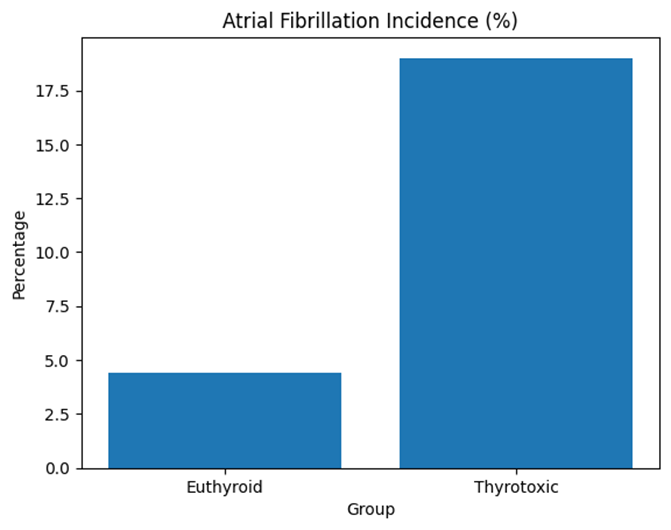
Figure 1: Atrial fibrillation incidence (%)
DISCUSSION:
This prospective investigation indicates that excessive levothyroxine replacement, leading to subclinical thyrotoxicosis, is linked to considerable detrimental consequences on the cardiovascular systems. Subclinical thyrotoxicosis, while frequently regarded as clinically mild or asymptomatic, seems to have discernible physiological effects that could lead to long-term morbidity if not properly addressed (10).
The prevalence of atrial fibrillation was significantly elevated in patients with subclinical thyrotoxicosis from a cardiovascular standpoint. Atrial fibrillation is clinically significant due to its association with elevated risks of stroke, heart failure, and overall mortality (13). Moreover, patients in the thyrotoxic cohort demonstrated elevated resting heart rates and a greater incidence of symptoms like palpitations, indicating enhanced sympathetic activity and augmented cardiac excitability (14).
The clinical ramifications of these discoveries are substantial. They emphasise that even slight suppression of TSH, frequently disregarded in standard therapy, might produce significant negative consequences (5). This highlights the necessity of meticulous dose titration of levothyroxine and consistent monitoring of thyroid function tests to prevent unintentional over-replacement. Our findings align with the current literature, which has repeatedly shown a greater prevalence of atrial fibrillation in those with low TSH levels. These findings clearly underscore the necessity for increased clinical vigilance in the management of patients on thyroid hormone therapy.
Limitations
• Short duration (9 months)
• Single-center study
CONCLUSION:
Excessive levothyroxine replacement leading to subclinical thyrotoxicosis is linked to a markedly elevated risk of atrial fibrillation. Suppressed TSH levels can negatively impact cardiovascular stability, even in the absence of overt hyperthyroid symptoms. Extended exposure may render individuals susceptible to clinically relevant arrhythmias. These findings underscore the significance of personalised therapy, with meticulous dose adjustment informed by routine thyroid function assessments. Regular assessment of TSH levels is crucial to maintain patients within the ideal therapeutic range and to avert issues related to unintentional over-replacement
REFERENCES:
1. Raad M, Lewis C, Ramzi M, Makki T, Refaat M, Khan A, et al. Atrial fibrillation prevalence and management patterns in a Middle Eastern community in the United States : A retrospective study. Am Hear J Plus Cardiol Res Pract [Internet]. 2022;23(September):1–5.
2. Connor G. Oltman, Taehyung P. Kim, James W.Y. Lee, John D. Lupu, Ruoqing Zhu IDM. Prevalence, Management, and Comorbidities of Adults With Atrial Fibrillation in the United States, 2019 to 2023. JACC AD V A N C E S. 2024;3(11):1–11.
3. Rai PJ, Chandra S. Rising Prevalence of Atrial Fibrillation in India : An Urgent Need for Early Diagnosis and Stroke Prevention. ndian J Clin Cardiol. 2026;7(1):94–5.
4. Linz D, Gawalko M, Betz K, Hendriks JM, Lip GYH, Vinter N, et al. Atrial Fibrillation Atrial fi brillation : epidemiology , screening and digital health. Lancet Reg Heal - Eur [Internet]. 2024;37(February):1–20.
5. Chung M, Ng W, Med MF, Loo YX, Poon ZM. Subclinical Thyroid Disorders : Clinical Significance and When to Treat ? Proc Singapore Healthc. 2014;23(3):226–40.
6. Moisescu-pop C, Maxim A, Benea H. The Influence of Thyroid Pathology on Osteoporosis and Fracture Risk : A Review. diagnostics. 2020;10(149):1–11.
7. Reddy PA, Harinarayan C V, Sachan A, Suresh V, Rajagopal G. Bone disease in thyrotoxicosis. Indian J Med Res. 2012;135(March):277–86.
8. Brancatella A, Marcocci C. TSH suppressive therapy and bone. Endocr Connect. 2020;9:R158–72.
9. Koutroumpi S, Stratigou T, Vlassopoulou V. Impact of subclinical hyperthyroidism on bone. J Res Pract Musculoskelet Syst. 2019;3(2):1–7.
10. Poudel P, Chalasani R, Goonathilake MR, Waqar S, George S. Effect of Thyroxine and Thyrotropin on Bone Mineral Density in Postmenopausal Women : A Systematic Review Methods. Cureus. 2022;4(6):1–14.
11. Zhao C, Wang Y, Xiao L, Li L. Effect of Levothyroxine on Older Patients With Subclinical Hypothyroidism : A Systematic Review and Meta-Analysis. Front Endocrinol. 2022;13(July):1–10.
12. Ko Y, Kim JY, Lee J, Song H, Kim J, Choi N, et al. Levothyroxine Dose and Fracture Risk According to the Osteoporosis Status in Elderly Women. J Prev Med Public Heal. 2014;47:36–46.
13. Einspieler H, Walter C, Hacker M, Karanikas G, Tamandl D. Effects of short ‑ and long ‑ term TSH suppression on lumbar bone mineral density in both genders using PET / CT. Sci Rep [Internet]. 2023;13(22640):1–8.
Mammen JS, Mcgready J, Oxman R, Chia CW, Ladenson PW, Simonsick EM. Thyroid Hormone Therapy and Risk of Thyrotoxicosis in Community-Resident Older Adults : Findings from the Baltimore Longitudinal Study of Aging. THYROID. 2015;25(9):979–86.