Correlation of Percentage Body Weight Changes with Baseline BMI in Patients of Heart failure After 6 Months of Dapagliflozin Use: A Study from a Tertiary Care Centre in Eastern India
- Abhishek Ghosh , Associate Professor, Department of Pharmacology, Medicine OPD and Diabetes and Lifestyle OPD, College of Medicine & JNM Hospital, Kalyani, India.
- Tara Sanwarwalla , Post graduate trainee, Medicine OPD and Diabetes and Lifestyle OPD, College of Medicine & JNM Hospital, Kalyani, India.
- Ankit Mondal , Post Graduate Trainee, Department of Pharmacology, College of Medicine and JNM Hospital, Kalyani, India.
- Partha Guha. , Post Graduate Trainee, Department of Pharmacology, College of Medicine and JNM Hospital, Kalyani, India.
Article Information:
Abstract:
Background: The sodium-glucose cotransporter-2 (SGLT2) inhibitor dapagliflozin has been shown to improve metabolism and cardiovascular health in heart failure patients. Modest weight loss is one of its known consequences. Body mass index (BMI) at baseline may have an impact on how much weight changes after treatment. Objective: To assess the relationship between a patient's initial BMI and the percentage change in body weight following six months of dapagliflozin treatment for heart failure patients. Methods: 100 heart failure patients participated in a 12-month prospective observational study in a tertiary care facility in Eastern India. Elevated NT-proBNP levels and ECG results were used to make the diagnosis. Patients were divided into three groups based on their baseline BMI: normal, overweight, and obese. The percentage change in body weight was measured six months after starting dapagliflozin. ANOVA was used for the statistical analysis, and p <0.05 was deemed significant. Results: Patients with normal BMI (−1.45 ± 0.68%), overweight patients (−2.42 ± 0.69%), and obese patients (−3.74 ± 0.59%) had the largest mean weight decrease. There was a statistically significant difference between the BMI groups (p <0.001). Conclusion: Weight loss with dapagliflozin medication is strongly influenced by baseline BMI. Greater percentage body weight reduction was seen in patients with higher BMIs, suggesting that dapagliflozin has an extra metabolic benefit for patients with heart failure who are overweight or obese.
Keywords:
Article :
INTRODUCTION:
Heart failure (HF) is a serious worldwide health issue that has a high rate of morbidity and death. HF still places a heavy burden on healthcare systems despite advancements in pharmaceutical therapy. Dapagliflozin and other sodium–glucose cotransporter-2 (SGLT2) inhibitors were first created to treat type 2 diabetes(1). Nonetheless, regardless of diabetes status, patients with heart failure have shown notable cardiovascular benefits from groundbreaking research trials. Dapagliflozin has been shown to improve cardiovascular outcomes and cause a slight reduction in body weight by enhanced excretion of glucose in the urine and osmotic diuresis(2). Body weight has a significant impact on metabolic health and cardiovascular risk. The degree of weight reduction seen during SGLT2 inhibitor medication may be influenced by the baseline body mass index (BMI)(3).
Clinicians may be better able to forecast the therapeutic benefits in various patient populations if they have a better understanding of the association between BMI and weight loss. Thus, the purpose of this study was to assess the relationship between baseline BMI and the percentage change in body weight following six months of dapagliflozin therapy in patients with heart failure receiving treatment at a tertiary care facility in Eastern India(4).
ATERIALS AND METHODS:
Study Design
Prospective observational study conducted over 12 months.
Study Setting
Medicine OPD, college of medicine and JNM hospital, Kalyani.
Study Population
A total of 100 patients with heart failure were included.
Inclusion Criteria
• Age >18 years
• Diagnosed heart failure
• Elevated NT-proBNP levels
• ECG evidence suggestive of HF
• Patients receiving dapagliflozin therapy
Exclusion Criteria
• Severe renal impairment
• Acute decompensated heart failure
• Pregnancy
• Patients lost to follow-up
Statistical Analysis
The mean ± standard deviation (SD) was used to express continuous variables. To examine the differences between BMI groups, analysis of variance (ANOVA) was used. Statistical significance was defined as a p-value of less than 0.05.
RESULTS:
Table 1. Distribution of Patients by BMI Category
|
BMI Category |
Number of Patients |
Percentage |
|
Normal BMI |
28 |
28% |
|
Overweight |
49 |
49% |
|
Obese |
23 |
23% |
Table 2. Percentage Body Weight Change After 6 Months
|
BMI Category |
N |
Mean % Weight Change |
SD |
p value |
|
Normal BMI |
28 |
-1.45 |
0.68 |
|
|
Overweight |
49 |
-2.42 |
0.69 |
|
|
Obese |
23 |
-3.74 |
0.59 |
<0.001 |
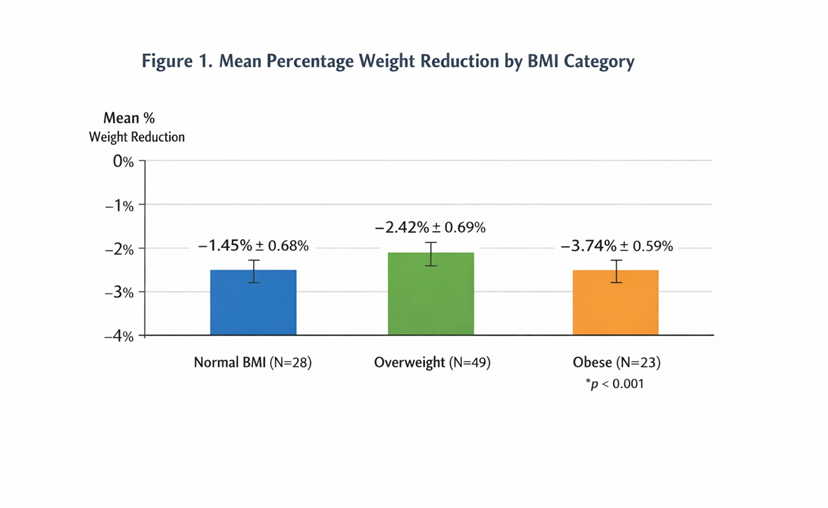
Figure 1: mean percentage weight reduction by BMI category.
Table 3. Distribution of Patients by BMI Category
|
BMI Category |
N |
Percentage |
|
Overweight |
24 |
48% |
|
Normal |
14 |
28% |
|
Obese |
12 |
24% |
Table 4. Percentage Body Weight Reduction by BMI Category
|
BMI Category |
Mean % Weight Reduction |
SD |
N |
|
Normal |
6.09 |
1.64 |
14 |
|
Overweight |
3.67 |
1.56 |
24 |
|
Obese |
2.50 |
1.09 |
12 |
DISCUSSION:
During a six-month follow-up, the current study assessed the correlation between the patients' baseline BMI and the percentage of body weight loss while taking dapagliflozin. The results show that weight reduction varies statistically significantly between BMI groups.
The majority of patients in this study were overweight (48%), followed by patients with normal BMI (28%), and patients who were obese (24%). Patients with normal BMI had the largest mean weight decrease (6.09 ± 1.64%), followed by overweight patients (3.67 ± 1.56%), and obese patients (2.50 ± 1.09%), according to an analysis of percentage body weight reduction. ANOVA testing revealed a significantly significant difference between the BMI groups (F = 20.35, p < 0.001).
The mechanism of action of the sodium–glucose cotransporter-2 (SGLT2) inhibitor dapagliflozin may be responsible for the reported decrease in body weight. Dapagliflozincauses glucosuria, which results in calorie loss and osmotic diuresis, by preventing glucose reabsorption in the proximal renal tubules(5). This procedure helps people with heart failure lose a little weight and retain less fluid. It's interesting to note that, when compared to people who were overweight or obese, patients with normal BMI showed the largest percentage weight loss. This could be brought on by variances in body composition among BMI categories, food patterns, fluid balance, or metabolic response. Furthermore, obese patients can have a greater reserve of adipose tissue, which could restrict the relative percentage decrease in body weight over a shorter course of treatment(6).
These results are in line with earlier clinical research showing that SGLT2 inhibitors result in a little but significant decrease in body weight. Regardless of diabetic condition, dapagliflozin improves heart failure outcomes, according to large clinical trials like DAPA-HF(7). It also has additional metabolic benefits, such as weight loss and better glycemic control.
Individual differences in response to dapagliflozin medication were also indicated by the box plot analysis in this trial, which showed diversity in weight reduction across BMI groups. A number of variables, including dietary consumption, physical activity, concurrent medications, comorbid conditions, and baseline metabolic status, may have an impact on this variability(8).
The current study does have certain drawbacks, though. The results may not be as broadly applicable as they may be because of the limited sample size and the fact that the study was only carried out at one tertiary care facility(9). Furthermore, variables like food patterns, levels of physical activity, and therapy compliance were not tightly regulated. More thorough information on the long-term metabolic effects of dapagliflozin across various BMI categories would be provided by longer follow-up studies with bigger multi-center cohorts(10).
CONCLUSION:
In conclusion, following six months of treatment, dapagliflozin therapy was linked to a considerable decrease in patients' body weight. Significant differences were in the amount of weight loss between BMI groups; patients with normal BMIs had the largest percentage reduction, followed by those who were overweight or obese. These results corroborate dapagliflozin's function in improving weight-related outcomes in patients undergoing this treatment and demonstrate its advantageous metabolic effects beyond glycemic control. To confirm these results and gain a better understanding of the long-term link between baseline BMI and weight loss with SGLT2 inhibitor medication, further extensive research is needed.
REFERENCES:
1. Moustafa R, Adawi A, Jassim Z, Elgaily D, Abdelaziz H, Sree B, et al. Assessment of Dapagliflozin Effectiveness as Add-on Therapy for the Treatment of Type 2 Diabetes Mellitus in a Qatari Population. Sci Rep. 2019;9(October):6–11.
2. Morales C, Bellido V, Tejera C, Go F, Sevillano C, Bellido D, et al. DAPA-RWE : a retrospective multicenter study comparing dapagliflozin and sitagliptin in patients with Type 2 diabetes treated under routine clinical practice in Spain. J Comp Eff Res. 2021;10(10):815–21.
3. Mcgurnaghan SJ, Brierley L, Caparrotta TM, Mckeigue PM, Blackbourn LAK, Wild SH, et al. The effect of dapagliflozin on glycaemic control and other cardiovascular disease risk factors in type 2 diabetes mellitus : a real-world observational study. Diabetologia. 2019;62:621–32.
4. Haddad F, Dokmak G, Bader M, Karaman R. A Comprehensive Review on Weight Loss Associated with Anti-Diabetic Medications. Life. 2023;13(1012):1–36.
5. Sugiyama S, Jinnouchi H, Kurinami N, Hieshima K, Yoshida A. Dapagliflozin Reduces Fat Mass without Affecting Muscle Mass in Type 2 Diabetes. J Atheroscler Thromb. 2018;25:467–76.
6. Brown RE, Gupta N, Aronson R. Effect of Dapagliflozin on Glycemic Control, Weight, and Blood Pressure in Patients with Type 2 Diabetes Attending a Specialist Endocrinology Practice in Canada: A Retrospective Cohort Analysis. DIABETES Technol Ther. 2017;19(11):1–7.
7. Ahmed R, Choudhury SR, Sanyal D, Majumder A. Addition of SGLT2 inhibitors in type 2 diabetes is associated with persistent and significant weight loss : a real-world study from Eastern India. Clin Diabetol. 2022;11(1):26–32.
8. Di U, Gatti A, Rosaria M, Tubili C. Dapagliflozin Add-On Therapy Improves Body Composition and Metabolic Parameters in Overweight Type 2 Diabetic Patients : A Pilot Study. J Endocrinol Metab. 2019;9(4):90–4.
9. Kim H, Lee S, Lee H, Yim HW, Cho J, Yoon K, et al. Blood glucose levels and bodyweight change after dapagli fl ozin administration. J Diabetes Investig. 2021;12(9):1–9.
10. Elena M, Cimino V, Bernasconi D, Gandolfi A, Silvia P, Tinari C, et al. Type 2 diabetes mellitus pharmacological remission with dapagliflozin plus. Pharmacol Res [Internet]. 2024;199(November):107040. Available from: https://doi.org/10.1016/j.phrs.2023.107040.