SUBCLINICAL HYPOTHYROIDISM IN NEWLYDIAGNOSED HYPERTENSIVE PATIENTS
- M.Bathragiri , Assistant professor, department of general medicine, government Kilpauk medical College & hospital, Chennai
- AJAY. V, MD , General Medicine, Asst. Surgeon, Govt. Thiruvottiyur Hospital, Chennai
Article Information:
Abstract:
Background: Subclinical hypothyroidism (SCH) is characterized by elevated thyroid-stimulating hormone levels with normal thyroid hormone levels and has been increasingly associated with cardiovascular risk factors, including hypertension. Aim: The study aims to determine the prevalence of subclinical hypothyroidism in newly diagnosed hypertensive patients. It also seeks to evaluate the association between hypertension and thyroid function status, thereby identifying potential correlations and emphasizing the clinical importance of early thyroid assessment in this patient population. Materials and Methods: A cross-sectional study was conducted among 321 newly diagnosed hypertensive patients aged 19–65 years at Government Kilpauk Medical College and Hospital, Chennai, over 6 months. Patients with known thyroid disorders and pregnant females were excluded. Clinical evaluation and biochemical assessment including serum TSH, Free T3, and Free T4 were performed. Data were analyzed using SPSS version 23.0, and statistical significance was considered at p < 0.05. Results: The prevalence of SCH was 9.0%. A significant association was observed between SCH and age (p = 0.008), with the highest prevalence in patients >61 years (23.8%). Although SCH was more common in females, overweight individuals, and diabetic patients, these associations were not statistically significant. This study suggests that p16 expression is directly proportional to presence of HPV A high number of SCCVs are related to HPV infection and may be identified by immunohistochemistry for p16. Furthermore, studies combining testing for HPV and p16 in vaginal cancer might also prove useful in the prognostication, as has been shown in tonsillar and base of tongue cancer. Such knowledge could potentially contribute to a more personalized and targeted treatment for vaginal cancer, as is being investigated in head and neck cancer, thereby maximizing treatment effectiveness. Conclusion: SCH is relatively common in newly diagnosed hypertensive patients, particularly in older age groups. Routine screening may aid in early detection and improved cardiovascular risk management
Keywords:
Article :
INTRODUCTION:
Subclinical hypothyroidism (SCH) is a common endocrine disorder characterized by elevated serum thyroid-stimulating hormone (TSH) levels with normal circulating free thyroxine (FT4) concentrations. It is frequently encountered in clinical practice, particularly among middle-aged and elderly populations, with a higher prevalence in females [1]. Although often considered a mild or early form of thyroid dysfunction, SCH has gained increasing attention due to its potential association with cardiovascular risk factors, including hypertension. Hypertension remains one of the leading modifiable causes of cardiovascular morbidity and mortality worldwide, and understanding its underlying contributors is crucial for improving patient outcomes [2].
The relationship between thyroid function and cardiovascular physiology is well established. Thyroid hormones play a vital role in regulating cardiac output, systemic vascular resistance, and arterial stiffness. Even subtle alterations in thyroid hormone levels, as seen in SCH, can lead to hemodynamic changes such as increased peripheral vascular resistance and reduced endothelial function [3]. These changes may contribute to the development or exacerbation of hypertension, particularly diastolic hypertension. Furthermore, SCH has been linked with impaired nitric oxide availability and increased arterial stiffness, both of which are important determinants of blood pressure regulation [4].
Emerging evidence suggests that SCH may not be a benign condition, especially in patients with newly diagnosed hypertension. Several studies have demonstrated a higher prevalence of SCH among hypertensive individuals compared to normotensive populations [5]. Additionally, SCH has been associated with other metabolic abnormalities such as dyslipidemia, insulin resistance, and obesity, which further increase cardiovascular risk [6]. These metabolic derangements may act synergistically with hypertension, accelerating the progression of atherosclerosis and increasing the likelihood of adverse cardiovascular events.
In newly diagnosed hypertensive patients, early identification of SCH is particularly important, as it may influence both the management and prognosis of the disease. Screening for thyroid dysfunction in this population could help identify patients who may benefit from closer monitoring or targeted therapeutic interventions. Some studies have suggested that treatment of SCH with levothyroxine may lead to modest reductions in blood pressure and improvement in lipid profiles, although the evidence remains inconclusive and somewhat controversial [7]. Nonetheless, recognizing SCH as a potential contributor to hypertension provides an opportunity for a more comprehensive and individualized approach to patient care.
Moreover, the pathophysiological mechanisms linking SCH and hypertension are multifactorial. These include alterations in the renin–angiotensin–aldosterone system, increased sympathetic activity, and endothelial dysfunction [8]. Chronic low-grade inflammation and oxidative stress have also been implicated in both conditions, further supporting a possible causal relationship [9]. Despite these associations, the exact nature of the relationship between SCH and hypertension remains to be fully elucidated, and whether SCH is a cause or a consequence of hypertension continues to be debated
Given the growing burden of hypertension and the increasing recognition of SCH as a potential cardiovascular risk factor, it is essential to explore their association in newly diagnosed patients. Understanding this relationship may provide valuable insights into early risk stratification and management strategies. Therefore, the present study aims to evaluate the prevalence of subclinical hypothyroidism in newly diagnosed hypertensive patients and to analyze its clinical significance in this population [10].
The study aims to determine the prevalence of subclinical hypothyroidism in newly diagnosed hypertensive patients. It also seeks to evaluate the association between hypertension and thyroid function status, thereby identifying potential correlations and emphasizing the clinical importance of early thyroid assessment in this patient population.
MATERIALS AND METHODS:
Study Design: A hospital-based cross-sectional study.
Study Population: Newly diagnosed hypertensive patients aged 19–65 years attending the outpatient department (OPD).
Sample Size: A total of 321 patients, calculated using Master Software Version 2.0 based on a previous prevalence of 8.2%, with 95% confidence interval (α = 0.05) and 3% precision.
Study Duration: 6 months.
Study Place: Government Kilpauk Medical College and Hospital, Chennai.
Inclusion Criteria:
• Newly diagnosed hypertensive patients as per ISH 2020 guidelines
• Age between 19 and 65 years
• Patients attending OPD and willing to participate
Exclusion Criteria:
• Known cases of hypothyroidism or hyperthyroidism
• Pregnant females
Statistical Analysis: We put the data into Microsoft Excel and then used SPSS software version 27.0 (SPSS Inc., Chicago, IL, USA) and GraphPad Prism version 5 to look at it. Mean ± standard deviation was used to show continuous variables, and frequencies and percentages were used to show categorical variables. The unpaired t-test was utilized to examine continuous variables between independent groups, whereas the paired t-test was employed for comparisons within the same group. The Chi-square test or Fisher's exact test was used to look at categorical variables, depending on which one was better. A p-value of less than 0.05 was seen to be statistically important.
RESULTS:
Table 1: Demographic Characteristics of Study Population (n = 321)
|
Variable |
Category |
Frequency (n) |
Percentage (%) |
|
Age Group (years) |
<30 |
8 |
2.5 |
|
31–40 |
93 |
29 |
|
|
41–50 |
84 |
26.2 |
|
|
51–60 |
94 |
29.3 |
|
|
>61 |
42 |
13.1 |
|
|
Gender |
Female |
144 |
44.9 |
|
Male |
177 |
55.1 |
|
|
Total |
321 |
100 |
|
Table 2: Clinical Profile of Patients (BMI, DM, SCH) (n = 321)
|
Variable |
Category |
Frequency (n) |
Percentage (%) |
|
BMI |
Normal Weight |
160 |
49.8 |
|
Overweight |
148 |
46.1 |
|
|
Obese |
13 |
4 |
|
|
DM |
No |
232 |
72.3 |
|
Yes |
89 |
27.7 |
|
|
SCH |
No |
292 |
91 |
|
Yes |
29 |
9 |
|
|
Total |
321 |
100 |
|
Table 3: Association of SCH with Age Group
|
Age Group (years) |
SCH No n (%) |
SCH Yes n (%) |
Total (n) |
P-value |
|
<30 |
8 (100.0%) |
0 (0.0%) |
8 |
0.008 |
|
31–40 |
85 (91.4%) |
8 (8.6%) |
93 |
|
|
41–50 |
79 (94.0%) |
5 (6.0%) |
84 |
|
|
51–60 |
88 (93.6%) |
6 (6.4%) |
94 |
|
|
>61 |
32 (76.2%) |
10 (23.8%) |
42 |
|
|
Total |
292 (91.0%) |
29 (9.0%) |
321 |
Table 4: Association of SCH with Gender and BMI
|
Variable |
Category |
SCH No n (%) |
SCH Yes n (%) |
Total (n) |
P-value |
|
Gender |
Female |
127 (88.2%) |
17 (11.8%) |
144 |
0.118 |
|
Male |
165 (93.2%) |
12 (6.8%) |
177 |
||
|
BMI |
Normal Weight |
149 (93.1%) |
11 (6.9%) |
160 |
0.364 |
|
Overweight |
131 (88.5%) |
17 (11.5%) |
148 |
||
|
Obese |
12 (92.3%) |
1 (7.7%) |
13 |
||
|
Total |
292 (91.0%) |
29 (9.0%) |
321 |
||
Table 5: Association of SCH with Diabetes Mellitus
|
DM Status |
SCH No n (%) |
SCH Yes n (%) |
Total (n) |
P-value |
|
No |
213 (91.8%) |
19 (8.2%) |
232 |
0.394 |
|
Yes |
79 (88.8%) |
10 (11.2%) |
89 |
|
|
Total |
292 (91.0%) |
29 (9.0%) |
321 |
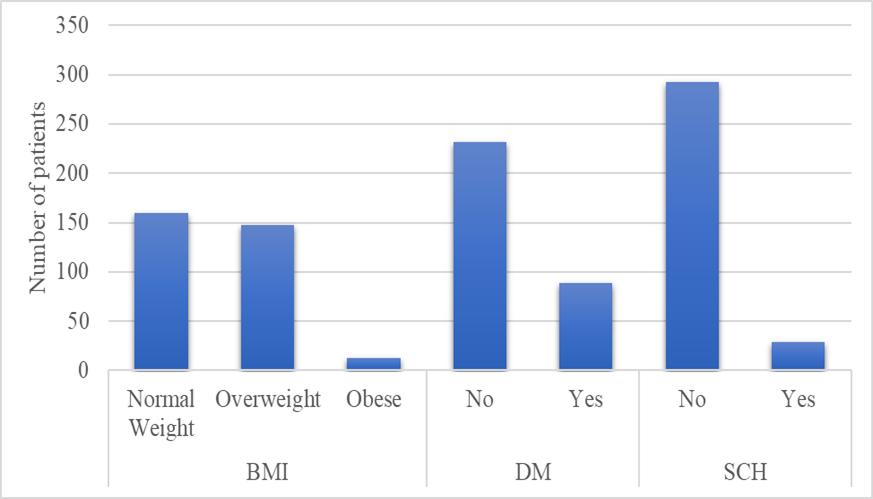
Figure: 1. Clinical Profile of Patients (BMI, DM, SCH)
Table 1: Demographic Characteristics of Study
In the present study comprising 321 newly diagnosed hypertensive patients, the majority belonged to the age group of 51–60 years (94 patients, 29.3%), closely followed by 31–40 years (93 patients, 29.0%) and 41–50 years (84 patients, 26.2%). Patients aged >61 years constituted 13.1% (42 patients), while only 2.5% (8 patients) were below 30 years. Gender distribution showed a slight male predominance, with 177 males (55.1%) and 144 females (44.9%)
Table 2: Clinical Profile of Patients (BMI, DM, SCH).
Regarding BMI distribution, nearly half of the patients had normal weight (160 patients, 49.8%), while 148 patients (46.1%) were overweight and only 13 patients (4.0%) were obese. Diabetes mellitus was present in 89 patients (27.7%), whereas the majority, 232 patients (72.3%), were non-diabetic. The prevalence of subclinical hypothyroidism (SCH) in the study population was 9.0% (29 patients), while 292 patients (91.0%) had normal thyroid function
Table 3: Association of SCH with Age Group
A statistically significant association was observed between SCH and age group (p = 0.008). The highest prevalence of SCH was noted in patients aged >61 years, where 10 out of 42 patients (23.8%) had SCH. In comparison, SCH prevalence was lower in other age groups: 8.6% in 31–40 years, 6.0% in 41–50 years, and 6.4% in 51–60 years, while no cases of SCH were observed in patients below 30 years
Table 4: Association of SCH with Gender and BMI
Although SCH was more common among females (17 out of 144, 11.8%) compared to males (12 out of 177, 6.8%), the association between gender and SCH was not statistically significant (p = 0.118). Similarly, SCH prevalence was slightly higher in overweight individuals (11.5%) compared to those with normal weight (6.9%) and obesity (7.7%); however, this association was also not statistically significant (p = 0.364)
Table 5: Association of SCH with Diabetes Mellitus
Among non-diabetic patients, 19 out of 232 (8.2%) had SCH, whereas in diabetic patients, 10 out of 89 (11.2%) had SCH. Although SCH appeared more prevalent in diabetic individuals, the association between diabetes mellitus and SCH was not statistically significant (p = 0.394)
DISCUSSION:
In the present study, the majority of newly diagnosed hypertensive patients belonged to the age group of 51–60 years (29.3%), followed closely by 31–40 years (29.0%) and 41–50 years (26.2%). This age predominance is consistent with the findings of Singhai et al. [11], who reported a higher prevalence of hypertension in middle-aged and older individuals, attributing it to age-related vascular stiffness and metabolic changes. Similarly, Gupta et al. [12] observed that the incidence of hypertension increases significantly after the fourth decade of life, supporting the current study’s age distribution pattern.
A male predominance (55.1%) was observed in the present study, which aligns with the observations of Prasad et al. [13], who reported a higher prevalence of hypertension among males, possibly due to lifestyle factors such as smoking, alcohol consumption, and occupational stress. However, some studies, such as that by Deshmukh et al. [14], have shown a relatively higher prevalence of thyroid dysfunction among females, suggesting a gender-specific predisposition to endocrine abnormalities despite differences in hypertension prevalence
In terms of clinical profile, nearly half of the study population had normal BMI (49.8%), while a significant proportion were overweight (46.1%). This finding is comparable to that of Sharma et al. [15], who demonstrated a strong association between increased BMI and hypertension, emphasizing the role of obesity as a modifiable risk factor. Additionally, the prevalence of diabetes mellitus in the present study was 27.7%, which is similar to the findings of Reddy et al. [16], who reported a high coexistence of diabetes and hypertension due to shared pathophysiological mechanisms such as insulin resistance and endothelial dysfunction.
The prevalence of subclinical hypothyroidism (SCH) in the present study was 9.0%, which is comparable to the findings of Singhai et al. [11], who reported a prevalence of 8.2% among hypertensive patients. Similarly, Chaker et al. [17] reported that SCH is relatively common in cardiovascular risk populations and may contribute to adverse outcomes. This similarity reinforces the relevance of screening for thyroid dysfunction in hypertensive individuals
A statistically significant association between SCH and age group (p = 0.008) was observed in the present study, with the highest prevalence seen in patients aged >61 years (23.8%). This finding is in agreement with the study by Hollowell et al. [18], who demonstrated that the prevalence of SCH increases with advancing age, particularly in elderly populations. The age-related decline in thyroid function and increased autoimmune activity may explain this association.
Although SCH was more prevalent among females (11.8%) compared to males (6.8%) in the present study, the association was not statistically significant (p = 0.118). This trend is consistent with the findings of Vanderpump et al. [19], who reported a higher prevalence of thyroid dysfunction in females, though not always reaching statistical significance in smaller sample sizes. Similarly, the association between BMI and SCH was not significant (p = 0.364), which is comparable to the findings of Ruhla et al. [20], who reported inconsistent associations between body weight and thyroid function, suggesting that other metabolic factors may play a more dominant role.
Furthermore, the present study found a higher prevalence of SCH among diabetic patients (11.2%) compared to non-diabetics (8.2%), although the association was not statistically significant (p = 0.394). This observation is in line with the study by Díez and Iglesias [18], who reported an increased frequency of thyroid dysfunction in diabetic individuals but highlighted that the association may not always be statistically significant. The coexistence of these conditions may be explained by shared autoimmune and metabolic pathways.
Overall, the findings of the present study are largely consistent with previous literature, emphasizing that SCH is relatively prevalent among hypertensive patients, particularly in older age groups. While significant associations were observed with age, other factors such as gender, BMI, and diabetes did not show statistically significant relationships, indicating the multifactorial nature of SCH in hypertension.
CONCLUSION:
The present study demonstrates that subclinical hypothyroidism (SCH) is relatively prevalent (9.0%) among newly diagnosed hypertensive patients, highlighting its potential clinical significance in this population. A statistically significant association was observed between SCH and advancing age, with the highest prevalence seen in individuals above 60 years, indicating the need for increased vigilance in elderly hypertensive patients. Although SCH was more commonly observed in females, overweight individuals, and patients with diabetes mellitus, these associations were not statistically significant, suggesting a multifactorial interplay of risk factors. The findings emphasize the importance of routine thyroid function screening in newly diagnosed hypertensive patients, particularly in older age groups, for early detection and appropriate management. Identifying SCH at an early stage may help in better cardiovascular risk stratification and could potentially improve long-term outcomes through timely therapeutic interventions and comprehensive patient care.
REFERENCES:
1. Vanderpump MPJ. The epidemiology of thyroid disease. Br Med Bull. 2011;99:39–51.
2. Mills KT, Stefanescu A, He J. The global epidemiology of hypertension. Nat Rev Nephrol. 2020;16(4):223–37.
3. Klein I, Danzi S. Thyroid disease and the heart. Circulation. 2007;116(15):1725–35.
4. Taddei S, et al. Endothelial function and hypertension in thyroid disorders. J Clin Endocrinol Metab. 2006;91(12):4741–6.
5. Asvold BO, et al. Thyroid function and blood pressure: a population-based study. J Clin Endocrinol Metab. 2007;92(3):841–5.
6. Pearce EN. Update in lipid alterations in subclinical hypothyroidism. J Clin Endocrinol Metab. 2012;97(2):326–33.
7. Razvi S, et al. Levothyroxine treatment and cardiovascular outcomes. J Clin Endocrinol Metab. 2010;95(4):1734–40.
8. Fommei E, Iervasi G. The role of thyroid hormone in blood pressure regulation. J Endocrinol Invest. 2002;25(10):883–92.
9. Duntas LH. Thyroid disease and inflammation. Thyroid. 2008;18(11):1235–40.
10. Biondi B, Cooper DS. Subclinical thyroid disease. Lancet. 2008;379(9821):1142–54.
11. Singhai A, et al. A study of systemic hypertension with subclinical hypothyroidism. Int J Med Res Health Sci. 2016;5(10):198–199.
12. Gupta R, et al. Epidemiology of hypertension in India. J Hum Hypertens. 2012;26(3):163–72.
13. Prasad DS, et al. Prevalence and risk factors of hypertension. Indian J Med Res. 2014;139(3):318–25.
14. Deshmukh PR, et al. Gender differences in hypertension and thyroid disorders. J Assoc Physicians India. 2015;63(7):12–16.
15. Sharma AK, et al. Obesity and hypertension: a clinical study. Int J Med Sci Public Health. 2013;2(3):555–60.
16. Reddy KS, et al. Diabetes and hypertension: a dual burden. Lancet. 2011;378(9786):123–31.
17. Chaker L, et al. Thyroid function and cardiovascular disease. Lancet Diabetes Endocrinol. 2017;5(7):493–505.
18. Hollowell JG, et al. Serum TSH distribution in the US population. J Clin Endocrinol Metab. 2002;87(2):489–99.
19. Vanderpump MPJ, et al. The incidence of thyroid disorders. Clin Endocrinol (Oxf). 1995;43(1):55–68.
20. Ruhla S, et al. Relationship between thyroid function and body weight. Eur J Endocrinol. 2010;162(6):1167–74.