Serum Magnesium as a Prognostic Indicator in Critical Illness: Experience from a Tertiary Care ICU.
- Mukesh K Sarna , Professor & Unit Head, Department of General Medicine, Mahatma Gandhi Medical College & Hospital, Jaipur.
- Akash Aggarwal , Junior Resident, Department of General Medicine.
- Manish Pahadia , Professor, Department of General Medicine.
- Saurabh Singh , Junior Resident, Department of General Medicine.
- Ankit Beniwal , Junior Resident, Department of General Medicine.
- Nirbhaydan Gadhvi , Junior Resident, Department of General Medicine.
- Ravi Shaniyara , Junior Resident, Department of General Medicine.
- Sudha Sarna , Professor and Head, Department of Palliative Medicine.
Article Information:
Abstract:
Background: Aim: To evaluate the association between serum magnesium levels and disease severity as well as prognosis in critically ill patients admitted to the Intensive Care Unit (ICU). Objectives: 1To determine the prevalence of hypomagnesemia in critically ill patients. 2To assess the relationship between serum magnesium levels and disease severity using APACHE II score. 3To evaluate the association between serum magnesium levels and clinical outcomes, including duration of mechanical ventilation. Material and Methods : This observational study was conducted in the ICU of a tertiary care hospital over a period of 18 months (April 2024 to September 2025). A total of 205 critically ill patients aged between 18 and 65 years were included. Serum magnesium levels were measured within 24 hours of ICU admission. Disease severity was assessed using the APACHE II scoring system. Statistical analysis was performed using correlation analysis, chi-square test, and comparison of means. Results: Hypomagnesemia was observed in 49.3% of patients. A significant negative correlation was found between serum magnesium levels and APACHE II score (r = –0.332, p = 0.001), indicating that lower magnesium levels were associated with higher disease severity. Hypomagnesemia was most prevalent in severe cases (89.5%), followed by moderate (43.5%) and mild cases (0%), with a statistically significant association (p = 0.001). A significant negative correlation was also observed between serum magnesium levels and duration of mechanical ventilation (r = –0.442, p = 0.001). Conclusion: Hypomagnesemia is highly prevalent among critically ill patients and is significantly associated with increased disease severity and poorer clinical outcomes. Serum magnesium may serve as a useful prognostic biomarker in ICU settings.
Keywords:
Article :
INTRODUCTION:
Critical illness is a complex clinical state characterized by multi-organ dysfunction requiring intensive monitoring and therapeutic support in the intensive care unit (ICU). Electrolyte imbalances are frequently encountered in such patients and play a crucial role in determining disease severity and outcomes. Among these, magnesium is an essential intracellular cation involved in numerous physiological processes including energy metabolism, protein synthesis, neuromuscular conduction, and cardiovascular stability (1,2).
Magnesium acts as a cofactor for over 300 enzymatic reactions and is vital for maintaining cellular homeostasis. It plays an important role in regulating ion channels, particularly calcium and potassium, thereby influencing cardiac rhythm and vascular tone (3). Despite its significance, magnesium is often overlooked in routine ICU evaluation compared to other electrolytes such as sodium and potassium.
Hypomagnesemia is commonly observed in critically ill patients, with reported prevalence ranging from 20% to 60% (4). The etiology is multifactorial, including inadequate intake, gastrointestinal losses, renal wasting, medications (such as diuretics and aminoglycosides), and redistribution during stress conditions like sepsis (5,6).
Clinically, hypomagnesemia has been associated with arrhythmias, increased vasopressor requirement, neuromuscular irritability, and impaired respiratory muscle function (7). Several studies have demonstrated a correlation between low magnesium levels and increased disease severity scores such as APACHE II and SOFA, as well as higher mortality rates (8,9).
However, data from Indian ICU settings remain limited. Therefore, this study was undertaken to evaluate the association between serum magnesium levels, disease severity, and prognosis in critically ill patients.
MATERIALS AND METHODS:
This hospital-based observational study was conducted in the ICU of Mahatma Gandhi Medical College & Hospital, Jaipur, over 18 months (April 2024–September 2025).
A total of 205 critically ill patients aged 18–65 years were included after obtaining informed consent. Patients with known conditions affecting magnesium balance (chronic diarrhea, renal failure requiring dialysis, recent magnesium therapy, or drugs affecting magnesium levels) were excluded.
Serum magnesium levels were measured within 24 hours of ICU admission. Disease severity was assessed using the APACHE II scoring system. Patients were followed until discharge, death, or leaving against medical advice.
Statistical analysis was performed using SPSS version 23. Pearson correlation, chi-square test, and independent t-test were applied. A p-value < 0.05 was considered statistically significant.
RESULTS:
Table 1: Demographic, Clinical, and Serum Magnesium Profile of Critically Ill Patients (n = 205)
|
Variable |
Category |
n (%) |
Mean ± SD (Range) |
|
Age (years)
|
≤50 years |
66 (32.1) |
48.2 ± 11.20 (21–67) |
|
>50 years |
139 (67.9) |
|
|
|
Gender
|
Male |
113 (55.2) |
|
|
Female |
92 (44.8) |
|
|
|
Locality
|
Urban |
134 (65.4) |
|
|
Rural |
71 (34.6) |
|
|
|
APACHE II Score |
Overall |
205 (100) |
16.07 ± 4.79 (4–20) |
|
Disease Severity
|
Mild (0–9) |
33 (16.1) |
|
|
Moderate (10–19) |
115 (56.1) |
|
|
|
Severe (20–29) |
57 (27.8) |
|
|
|
Serum Magnesium
|
Hypomagnesemia |
101 (49.3) |
1.73 ± 0.23 (1.3–2.0) |
|
Normomagnesemia |
104 (50.7) |
|
|
|
Cause of ICU Admission
|
Sepsis |
56 (27.3) |
|
|
Acute Kidney Injury |
54 (26.3) |
|
|
|
Chronic Liver Disease |
41 (20.0) |
|
|
|
COPD |
38 (18.5) |
|
|
|
Meningitis |
16 (7.8) |
|
Table1 : The study population was predominantly above 50 years with a slight male predominance and majority urban residence. Most patients had moderate disease severity based on APACHE II score. Hypomagnesemia was present in nearly half of the patients (49.3%). Sepsis and acute kidney injury were the most common causes of ICU admission.
Table 2: Association of Serum Magnesium with Disease Severity, Clinical Parameters, and Outcomes (n = 205)
|
Variable |
Category |
n (%) |
Mean ± SD (Range) |
|
Correlation with APACHE II Score |
All patients |
205 (100) |
r = –0.332, p = 0.001 |
|
Correlation with ICU Stay |
All patients |
205 (100) |
r = –0.027, p = 0.701 |
|
Correlation with Oxygen Requirement |
All patients |
205 (100) |
r = –0.010, p = 0.891 |
|
Correlation with CPAP Duration |
All patients |
205 (100) |
r = 0.016, p = 0.820 |
|
Correlation with Ventilation Duration |
All patients |
205 (100) |
r = –0.442, p = 0.001 |
|
Disease Severity
|
Mild |
0 (0%) |
|
|
Moderate |
50 (43.5%) |
|
|
|
Severe |
51 (89.5%) |
p = 0.001 |
|
|
Cause of Admission
|
COPD |
18 (~47%) |
|
|
Acute Kidney Injury |
26 (~48%) |
|
|
|
Chronic Liver Disease |
21 (~51%) |
|
|
|
Meningitis |
9 (~56%) |
|
|
|
Sepsis |
27 (~48%) |
p ≈ 0.669 |
|
|
Outcome
|
Death |
61 (29.8) |
1.61 ± 0.20 |
|
Discharge |
83 (40.5) |
1.82 ± 0.18 |
|
|
LAMA |
61 (29.8) |
1.70 ± 0.22 |
|
|
Hypomagnesemia in Death Cases
|
Present |
44 (72%) |
|
|
Absent |
17 (28%) |
|
|
|
Severity among Death Cases
|
Mild |
0 (0%) |
|
|
Moderate |
6 (10%) |
|
|
|
Severe |
55 (90%) |
|
|
|
Cause of Death
|
Acute Kidney Injury |
18 (29.5%) |
|
|
Sepsis |
13 (21.3%) |
|
|
|
Meningitis |
13 (21.3%) |
|
|
|
Chronic Liver Disease |
12 (19.7%) |
|
|
|
COPD |
4 (6.6%) |
|
Table2: Serum magnesium levels showed a significant inverse correlation with disease severity (APACHE II score). Hypomagnesemia increased with worsening severity and was highest in severe cases. Lower magnesium levels were also associated with prolonged mechanical ventilation, while no significant association was found with ICU stay or oxygen requirement. Hypomagnesemia was more common among patients with poor outcomes.
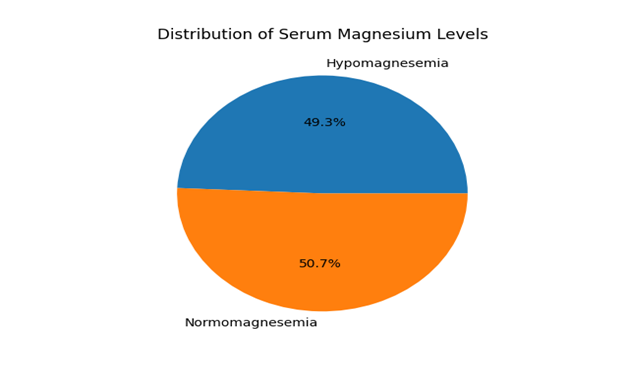
Figure1: This pie chart shows the distribution of serum magnesium levels among critically ill patients. Hypomagnesemia was observed in 49.3% of patients, while 50.7% had normal magnesium levels, indicating a nearly equal distribution with a high prevalence of magnesium imbalance in the ICU population.
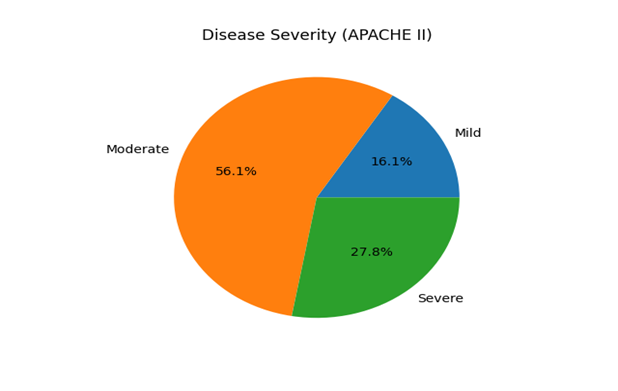
Figure 2: This pie chart represents disease severity among the study population. The majority of patients had moderate disease (56.1%), followed by severe (27.8%) and mild (16.1%) categories.
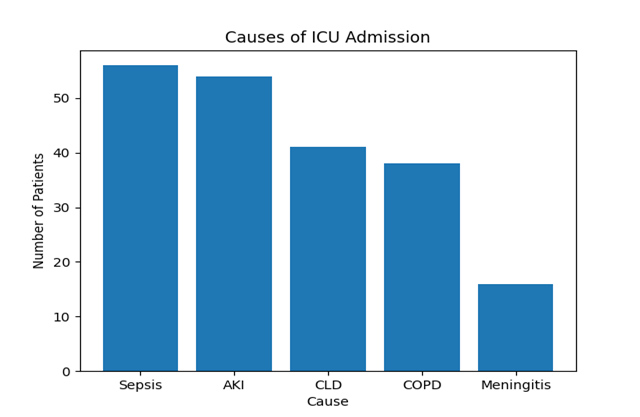
Figure 3: This bar diagram shows the distribution of causes of ICU admission. Sepsis was the most common cause (56 cases), followed closely by acute kidney injury (54 cases). Chronic liver disease and COPD were also significant contributors, while meningitis was the least common.
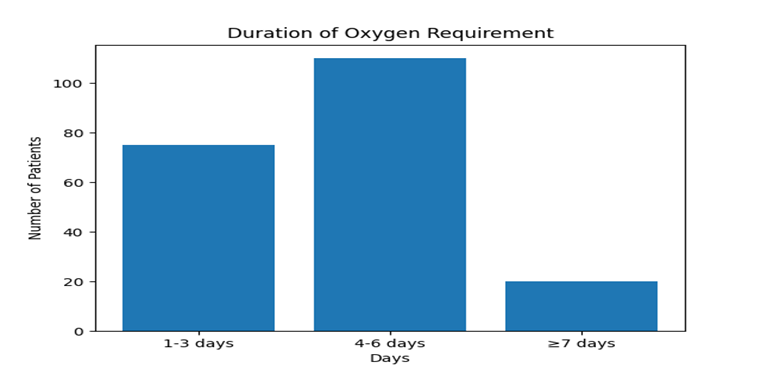
Figure 4: This bar diagram illustrates the duration of oxygen therapy among ICU patients. Most patients required oxygen for 4–6 days, followed by 1–3 days, while only a small proportion required prolonged oxygen support (≥7 days).
DISCUSSION:
The present study demonstrated a high prevalence of hypomagnesemia (49.3%) among critically ill patients, which is consistent with previous studies reporting magnesium deficiency in ICU populations (4,6). This high prevalence reflects the complex interplay of factors such as systemic inflammation, renal dysfunction, poor nutritional status, and medication effects in critically ill patients.
A significant inverse correlation was observed between serum magnesium levels and disease severity as assessed by APACHE II score. Patients with lower magnesium levels had higher severity scores, indicating more severe illness. Similar findings have been reported in earlier studies, where hypomagnesemia was associated with increased physiological derangement and higher severity indices (8,10). The underlying mechanism may involve increased inflammatory cytokines, impaired cellular energy metabolism, and dysregulation of ion transport systems.
In this study, hypomagnesemia increased progressively with worsening disease severity, being absent in mild cases and highly prevalent in severe cases. This suggests that magnesium may serve as an important marker of disease progression. Comparable trends have been observed in studies evaluating electrolyte disturbances in critically ill patients, reinforcing the role of magnesium as a severity indicator (9,11).
The study also found a significant association between low magnesium levels and prolonged duration of mechanical ventilation. Magnesium deficiency can impair respiratory muscle function and reduce diaphragmatic contractility, leading to difficulty in weaning from ventilatory support (7,12). This finding highlights the importance of magnesium in respiratory physiology and its potential impact on ICU management.
However, no significant association was found between serum magnesium levels and duration of ICU stay, oxygen requirement, or CPAP duration. This suggests that magnesium levels may reflect acute disease severity rather than the overall duration of hospitalization, a finding consistent with previous literature (10).
Although hypomagnesemia was observed across different causes of ICU admission, no statistically significant association was found with specific etiologies. This indicates that magnesium imbalance is a generalized phenomenon in critical illness rather than disease-specific.
Furthermore, magnesium levels were lower among patients with poor outcomes, and hypomagnesemia was more prevalent among death cases. This supports previous evidence suggesting that magnesium deficiency is associated with increased mortality in critically ill patients (9,13). The mechanisms may include cardiovascular instability, arrhythmogenesis, and impaired immune response.
Overall, the findings of this study reinforce the importance of serum magnesium as a marker of disease severity and prognosis in critically ill patients.
CONCLUSION:
Hypomagnesemia is a common electrolyte abnormality in critically ill patients and is significantly associated with increased disease severity and adverse clinical outcomes. Lower serum magnesium levels correlate with higher APACHE II scores and prolonged mechanical ventilation, indicating greater physiological derangement.
Serum magnesium measurement is simple, cost-effective, and readily available, making it a valuable prognostic biomarker in ICU settings. Early identification and appropriate management of magnesium imbalance may contribute to improved patient outcomes.
Further large-scale studies are recommended to establish the role of magnesium correction in reducing morbidity and mortality in critically ill patients.
REFERENCES:
1. Elin RJ. Magnesium metabolism in health and disease. Dis Mon. 1988;34:161–218.
2. de Baaij JHF, Hoenderop JGJ, Bindels RJM. Magnesium in man: implications for health and disease. Physiol Rev. 2015;95:1–46.
3. Romani AM. Magnesium in health and disease. Met Ions Life Sci. 2013;13:49–79.
4. Ryzen E, Wagers PW, Singer FR, et al. Magnesium deficiency in critically ill patients. Crit Care Med. 1985;13:19–21.
5. Tong GM, Rude RK. Magnesium deficiency in critical illness. J Intensive Care Med. 2005;20:3–17.
6. Chernow B, Zaloga GP, McFadden ER Jr, et al. Hypomagnesemia in patients in postoperative intensive care. Crit Care Med. 1982;10:848–851.
7. Soliman HM, Mercan D, Lobo SS, et al. Development of ionized hypomagnesemia is associated with higher mortality rates. Crit Care Med. 2003;31:1082–1087.
8. Safavi M, Honarmand A. Admission hypomagnesemia—impact on mortality. Acta Anaesthesiol Taiwan. 2007;45:149–153.
9. Limaye CS, Londhey VA, Nadkart MY, et al. Hypomagnesemia in critically ill patients. Indian J Crit Care Med. 2011;15:203–207.
10. Kumar S, Honmode A, Jain S, et al. Evaluation of serum magnesium levels in ICU patients. Indian J Clin Biochem. 2015;30:414–418.
11. Guerin C, Cousin C, Mignot F, et al. Serum and erythrocyte magnesium in critically ill patients. Intensive Care Med. 1996;22:724–727.
12. Zafar MS, Wani JI, Karim R, et al. Significance of magnesium in critically ill patients. Int J Appl Basic Med Res. 2014;4:34–37.
13. Guérin C, Cousin C, Mignot F, et al. Serum magnesium and mortality in ICU patients. Intensive Care Med. 1996;22:724–727.