Vitamin B12 Status as a Marker of Glycemic Control in Type 2 Diabetes Mellitus: A Cross-Sectional Study of 100 Patients.
- Mukesh K Sarna , Professor & Unit Head, Department of General Medicine, Mahatma Gandhi Medical College & Hospital, Jaipur. Junior Resident, Department of General Medicine.
- Saurabh Singh , Junior Resident, Department of General Medicine.
- Manish Pahadia , Associate Professor, Department of General Medicine.
- Ankit Beniwal , Professor, Department of General Medicine.
- Aakash aggarwal , Junior Resident, Department of General Medicine.
- Jaswant Yadav , Junior Resident, Department of General Medicine.
- Shubham Sharma , Junior Resident, Department of General Medicine.
- Abheet Sonkhya , Junior Resident, Department of General Medicine
- Sudha Sarna , Professor and Head, Department of Palliative Medicine.
Article Information:
Abstract:
Background: Type 2 diabetes mellitus (T2DM) is a chronic metabolic disorder in which glycemic control is essential for preventing complications. Emerging evidence suggests a possible association between Vitamin B12 deficiency and metabolic status in diabetic patients. Objectives: To evaluate the relationship between serum Vitamin B12 levels and glycemic control (HbA1c) in patients with T2DM. Materials and Methods: This cross-sectional study included 100 patients with T2DM. Patients on metformin therapy and Vitamin B12 supplementation were excluded. Clinical evaluation and laboratory investigations, including HbA1c, fasting plasma glucose, 2-hour oral glucose tolerance test (OGTT), and serum Vitamin B12 levels, were performed. Statistical analysis was conducted to assess associations. Results: A statistically significant increase in HbA1c levels was observed with worsening glycemic control (p = 0.041). Mean Vitamin B12 levels showed a declining trend with increasing HbA1c, indicating an inverse relationship. However, categorical comparison of Vitamin B12 levels was not statistically significant (p = 0.41). Vegetarian patients had lower Vitamin B12 levels compared to non-vegetarians. Conclusion: Vitamin B12 deficiency may be associated with poor glycemic control in patients with T2DM. Further large-scale studies are needed to establish a definitive relationship.
Keywords:
Article :
INTRODUCTION:
Type 2 diabetes mellitus (T2DM)¹˒² is a rapidly escalating global health burden characterized by chronic hyperglycemia resulting from a combination of insulin resistance and progressive pancreatic β-cell dysfunction. The prevalence of T2DM has increased dramatically over recent decades, particularly in developing countries such as India, due to urbanization, sedentary lifestyles, and dietary transitions⁴. The long-term complications of diabetes—including retinopathy, nephropathy, neuropathy, and cardiovascular disease—are closely linked to both the degree and duration of hyperglycemia. Glycated hemoglobin (HbA1c) remains the most reliable and widely accepted biomarker for assessing long-term glycemic control², reflecting average plasma glucose levels over the preceding 2–3 months. Despite significant advances in pharmacological therapies and management strategies, achieving and maintaining optimal glycemic control continues to be a major clinical challenge.
In recent years, there has been growing interest in the role of micronutrients in glucose metabolism and the pathogenesis of diabetes-related complications. Among these, Vitamin B12 (cobalamin) has emerged as a potentially important but often under-recognized factor³˒⁵. Vitamin B12 is a water-soluble vitamin essential for DNA synthesis, erythropoiesis, and proper neurological function⁵. It also plays a critical role in cellular metabolism, particularly in methylation reactions and mitochondrial energy production. Deficiency of Vitamin B12 is relatively common and may go undetected due to its nonspecific clinical presentation⁵. Emerging evidence suggests that Vitamin B12 deficiency may influence insulin sensitivity, glucose metabolism, and overall metabolic health in patients with T2DM⁷.
The pathophysiological mechanisms linking Vitamin B12 deficiency with poor glycemic control are multifactorial. Deficiency of Vitamin B12 leads to elevated homocysteine levels, which in turn contribute to endothelial dysfunction, oxidative stress, and impaired microvascular circulation⁷. These alterations may exacerbate insulin resistance and worsen glycemic control. Several factors predispose individuals with T2DM to Vitamin B12 deficiency, including dietary habits (particularly vegetarian diets)⁶, gastrointestinal malabsorption, and certain medications⁸˒⁹. In the present study, patients on metformin therapy were excluded to eliminate a major confounding factor⁸. This study aims to evaluate the relationship between serum Vitamin B12 levels and glycemic control, as assessed by HbA1c, in patients with T2DM.
MATERIALS AND METHODS:
This cross-sectional observational study was conducted in the Department of General Medicine at Mahatma Gandhi Medical College & Hospital, Jaipur, over a period from April 2024 to September 2025. A total of 100 patients diagnosed with type 2 diabetes mellitus and aged above 18 years were included in the study. Patients receiving metformin therapy, Vitamin B12 supplementation, or those with chronic liver disease, renal failure, or malabsorption syndromes were excluded to minimize confounding factors. After obtaining informed consent, detailed clinical history including dietary habits and medication adherence was recorded. Laboratory investigations were performed for all participants, including glycated hemoglobin (HbA1c), fasting plasma glucose (FPG), 2-hour oral glucose tolerance test (OGTT), and serum Vitamin B12 levels. Statistical analysis was carried out using appropriate methods, with results expressed as mean ± standard deviation. Analysis of variance (ANOVA) and Chi-square tests were applied where applicable, and a p-value of less than 0.05 was considered statistically significant.
RESULTS:
A total of 100 patients with type 2 diabetes mellitus were analyzed. A statistically significant increase in HbA1c levels was observed with worsening glycemic control (p = 0.041). Serum Vitamin B12 levels showed a declining trend with increasing HbA1c levels, suggesting an inverse relationship.
Table 1: Glycemic Status and Vitamin B12 Levels
|
Glycemic Status |
HbA1c (%) |
Vitamin B12 (pg/ml) |
|
Mild |
8.64 ± 1.46 |
343.68 ± 173.48 |
|
Moderate |
9.07 ± 1.48 |
308.84 ± 148.10 |
|
Severe |
9.21 ± 1.31 |
266.93 ± 76.74 |
|
Poor Control |
9.93 ± 1.37 |
230.08 ± 27.58 |
HbA1c levels increased progressively with worsening glycemic status, while Vitamin B12 levels showed a declining trend, indicating an inverse relationship.
Table 2: Distribution of Parameters
|
Parameter |
Category |
Number (%) |
|
Vitamin B12 |
<200 pg/ml |
13% |
|
Vitamin B12 |
>200 pg/ml |
87% |
|
Diet |
Vegetarian |
42% |
|
Diet |
Non-Vegetarian |
58% |
|
Adherence |
Good |
25% |
|
Adherence |
Moderate |
62% |
|
Adherence |
Poor |
13% |
Vitamin B12 deficiency was observed in a minority of patients but was more frequent in those with poor glycemic control. Vegetarian diet was associated with lower Vitamin B12 levels, and moderate medication adherence was the most common pattern.
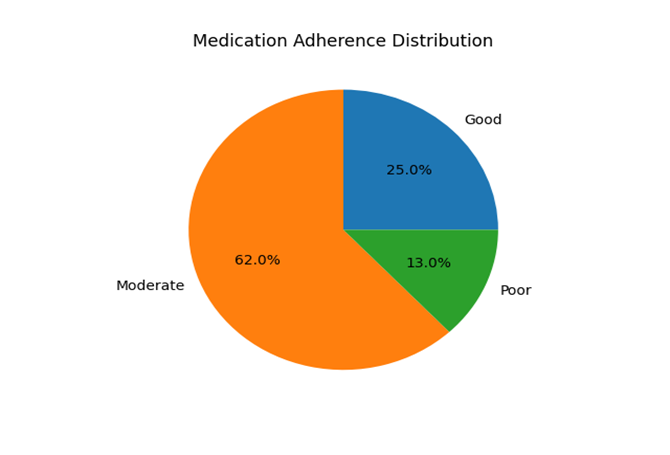
Figure 1: Medication Adherence Distribution
The majority of patients demonstrated moderate adherence (62%), which may contribute to suboptimal glycemic control.
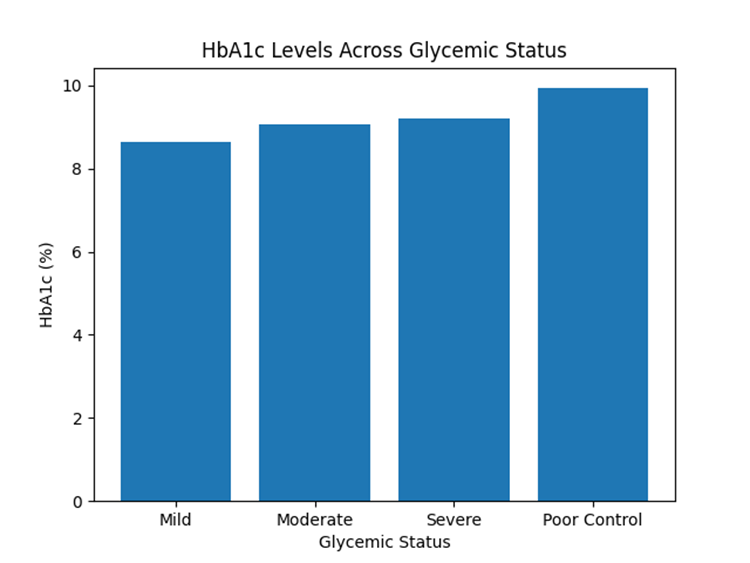
Figure 2: HbA1c Across Glycemic Status
The bar chart illustrates a progressive increase in HbA1c levels across worsening glycemic categories, reinforcing the trend observed in the study.
DISCUSSION:
Type 2 diabetes mellitus (T2DM)¹˒² is a rapidly escalating global health burden characterized by chronic hyperglycemia resulting from a combination of insulin resistance and progressive pancreatic β-cell dysfunction. The prevalence of T2DM has increased dramatically over recent decades, particularly in developing countries such as India, due to urbanization, sedentary lifestyles, and dietary transitions⁴. The long-term complications of diabetes—including retinopathy, nephropathy, neuropathy, and cardiovascular disease—are closely linked to both the degree and duration of hyperglycemia. Glycated hemoglobin (HbA1c) remains the most reliable and widely accepted biomarker for assessing long-term glycemic control², reflecting average plasma glucose levels over the preceding 2–3 months. Despite significant advances in pharmacological therapies and management strategies, achieving and maintaining optimal glycemic control continues to be a major clinical challenge.
In recent years, there has been growing interest in the role of micronutrients in glucose metabolism and the pathogenesis of diabetes-related complications. Among these, Vitamin B12 (cobalamin) has emerged as a potentially important but often under-recognized factor³˒⁵. Vitamin B12 is a water-soluble vitamin essential for DNA synthesis, erythropoiesis, and proper neurological function⁵. It also plays a critical role in cellular metabolism, particularly in methylation reactions and mitochondrial energy production. Deficiency of Vitamin B12 is relatively common and may go undetected due to its nonspecific clinical presentation⁵. Emerging evidence suggests that Vitamin B12 deficiency may influence insulin sensitivity, glucose metabolism, and overall metabolic health in patients with T2DM⁷.
The pathophysiological mechanisms linking Vitamin B12 deficiency with poor glycemic control are multifactorial. Deficiency of Vitamin B12 leads to elevated homocysteine levels, which in turn contribute to endothelial dysfunction, oxidative stress, and impaired microvascular circulation⁷. These alterations may exacerbate insulin resistance and worsen glycemic control. Several factors predispose individuals with T2DM to Vitamin B12 deficiency, including dietary habits (particularly vegetarian diets)⁶, gastrointestinal malabsorption, and certain medications⁸˒⁹. In the present study, patients on metformin therapy were excluded to eliminate a major confounding factor⁸. This study aims to evaluate the relationship between serum Vitamin B12 levels and glycemic control, as assessed by HbA1c, in patients with T2DM.
CONCLUSION:
This study demonstrate that vitamin b12 levels effects glycemic control adversely in patients with type 2 diabetes mellitus. Lower Vitamin B12 levels were consistently observed in individuals with higher HbA1c values, suggesting a potential contributory role of micronutrient deficiency in poor metabolic regulation. While HbA1c remains the cornerstone for assessing long-term glycemic control, the findings of this study indicate that Vitamin B12 may serve as a valuable adjunct biomarker in the comprehensive evaluation of diabetic patients.
Furthermore, dietary factors, particularly vegetarianism, were identified as significant determinants of Vitamin B12 status, emphasizing the need for routine nutritional assessment in this population. Although statistical significance was not achieved in categorical comparisons, the observed trends carry important clinical implications. Incorporating Vitamin B12 screening into standard diabetes care protocols may facilitate early detection and correction of deficiency, potentially improving overall metabolic outcomes.
Future research should focus on large-scale prospective studies to establish causality and to evaluate the therapeutic impact of Vitamin B12 supplementation on glycemic control. In conclusion, a multidimensional approach that includes both metabolic and nutritional assessment may enhance the management and prognosis of patients with type 2 diabetes mellitus.
REFERENCES:
1. American Diabetes Association. Classification and diagnosis of diabetes. Diabetes Care. 2024;47(Suppl 1):S16–S33.
2. American Diabetes Association. Glycemic targets. Diabetes Care. 2024;47(Suppl 1):S97–S110.
3. O’Leary F, Samman S. Vitamin B12 in health and disease. Nutrients. 2010;2(3):299–316.
4. World Health Organization. Global report on diabetes. Geneva: WHO; 2016.
5. Stabler SP. Vitamin B12 deficiency. N Engl J Med. 2013;368:149–160.
6. Allen LH. Causes of vitamin B12 deficiency. Food Nutr Bull. 2008;29(Suppl 2):S20–S34.
7. Herrmann W, Obeid R. Homocysteine and diabetes. Clin Chem Lab Med. 2011;49(3):435–443.
8. Reinstatler L, et al. Vitamin B12 deficiency associated with metformin use. Diabetes Care. 2012;35(2):327–333.
9. Pflipsen MC, et al. Vitamin B12 deficiency in type 2 diabetes. J Am Board Fam Med. 2009;22(5):528–534.
10. Green R, et al. Vitamin B12 deficiency. Nat Rev Dis Primers. 2017;3:17040.