COMPARISON OF ROX INDEX AND MODIFIED ROX INDEX IN PREDICTING EFFICACY OF HIGH FLOW NASAL CANNULA IN PATIENTS ADMITTED TO THE INTENSIVE CARE UNIT OF A TERTIARY CARE CENTRE: A PROSPECTIVE OBSERVATIONAL STUDY.
- Greeshma R , Consultant, Department of Critical Care Medicine, GG Hospital, Trivandrum, Kerala, India.
- Anvar M Ahammed , Consultant, Department of Critical Care Medicine, GG Hospital, Trivandrum, Kerala, India.
- Jithu K V , Consultant, Department of Critical Care Medicine, GG Hospital, Trivandrum, Kerala, India.
- T P Madhusudanan , Professor and Head of the Department, Critical Care Medicine, GG Hospital, Trivandrum, Kerala, India.
Article Information:
Abstract:
Background: High-flow nasal cannula (HFNC) therapy is increasingly used in the management of acute hypoxemic respiratory failure (AHRF). Early identification of patients likely to fail HFNC is essential to avoid delayed intubation and associated adverse outcomes. The ROX index has been widely used to predict HFNC success; however, its predictive accuracy may be influenced by hemodynamic status. The modified ROX (mROX) index, which incorporates heart rate, has been proposed as a potentially superior predictor. Aim: To compare the predictive performance of the ROX index and mROX index in determining HFNC outcomes among adult ICU patients with AHRF. Methods: This prospective observational cohort study included 92 adult ICU patients with AHRF initiated on HFNC therapy. The ROX and mROX indices were calculated at initiation of HFNC and subsequently at 1, 2, 4, 6, 8, 10, 12, 18, 24, and 48 hours. HFNC success was defined as clinical improvement without the need for endotracheal intubation, whereas HFNC failure was defined as the requirement for invasive mechanical ventilation. The diagnostic performance of both indices was evaluated using the area under the receiver operating characteristic curve (AUROC), along with determination of optimal cut-off values, sensitivity, specificity, positive predictive value, and negative predictive value. Results: A total of 92 patients were included, with HFNC success in 67.4% and failure in 32.6%. Both ROX and mROX indices were significantly higher in the success group, demonstrating good predictive performance from initiation (AUC >0.7). The mROX index showed superior predictive accuracy, with higher AUC values at most time points, particularly at 6 hours (0.909 vs 0.806, p = 0.004). HFNC failure was associated with higher APACHE II scores, increased vasopressor requirement, longer ICU stay, and higher mortality (33.3% vs 12.9%). Conclusion: mROX index demonstrated better predictive accuracy than the ROX index for determining HFNC outcomes in adult ICU patients with AHRF. It may serve as a simple bedside tool for early identification of HFNC failure and timely escalation of respiratory support.
Keywords:
Article :
INTRODUCTION:
Acute hypoxemic respiratory failure (AHRF) is a common indication for intensive care unit admission and is frequently seen in conditions such as pneumonia, sepsis, aspiration, and acute lung injury. It is characterized by impaired oxygenation, increased work of breathing, and, in severe cases, reduced PaO₂/FiO₂ ratios. The Berlin definition of acute respiratory distress syndrome classifies hypoxemia severity using the PaO₂/FiO₂ ratio, with values ≤300 mmHg indicating significant hypoxemia in the appropriate clinical context [1].
HFNC oxygen therapy has emerged as an important non-invasive respiratory support modality for adults with AHRF. HFNC delivers heated and humidified oxygen at high flow rates, ensures reliable delivery of FiO₂, reduces anatomical dead-space rebreathing, provides a low level of positive airway pressure, and decreases the work of breathing [2]. The FLORALI trial demonstrated that, although HFNC did not significantly reduce intubation rates compared with standard oxygen therapy or non-invasive ventilation, it was associated with improved 90-day survival in patients with non-hypercapnic AHRF [3]. Current evidence-based guidelines also support the use of HFNC over conventional oxygen therapy and, in selected patients, over non-invasive ventilation for hypoxemic respiratory failure [4].
Despite these benefits, HFNC failure remains clinically significant, as delayed recognition may postpone intubation and adversely affect patient outcomes. Kang et al. reported that delayed intubation following HFNC failure was associated with increased mortality, highlighting the importance of early identification of treatment failure and timely escalation of respiratory support [5]. Consequently, reliable bedside predictors of HFNC outcome are essential in critical care practice.
The respiratory rate–oxygenation (ROX) index was developed as a simple bedside tool to predict HFNC outcomes. Calculated as the ratio of SpO₂/FiO₂ to respiratory rate, the ROX index incorporates both oxygenation status and respiratory effort. Roca et al. initially demonstrated that a ROX index ≥4.88 at 12 hours after HFNC initiation was associated with HFNC success in patients with pneumonia-related acute respiratory failure [6]. Subsequent studies further validated the utility of serial ROX measurements at 2, 6, and 12 hours in predicting the need for intubation [7].
However, the conventional ROX index does not account for heart rate, which may reflect physiological stress, sepsis, shock, respiratory distress, or impending clinical deterioration. To overcome this limitation, a modified ROX (mROX) index incorporating heart rate has been proposed. Goh et al. evaluated the mROX index, calculated by dividing the ROX index by heart rate and multiplying by 100, and found it to be a promising predictor of early HFNC failure in patients with AHRF and post-extubation respiratory support [8].
Although both ROX and mROX indices utilize simple, non-invasive bedside parameters, their predictive performance may vary depending on patient population, clinical setting, and timing of assessment. Serial monitoring is particularly important, as patients who respond successfully to HFNC generally demonstrate progressive improvement in oxygenation and respiratory parameters, whereas those who fail therapy tend to show persistently low or worsening index values. Therefore, the present prospective observational study was undertaken to compare the predictive accuracy of the ROX and modified ROX indices in determining HFNC outcomes among adult ICU patients with acute hypoxemic respiratory failure, using AUROC, optimal cut-off values, sensitivity, specificity, positive predictive value, and negative predictive value at initiation and at serial time points following HFNC initiation.
Aim
To compare the predictive performance of the ROX index and modified ROX (mROX) index in determining the outcome of HFNC therapy among adult ICU patients with AHRF.
Objectives
1. To compare the diagnostic performance of the ROX Index and the mROX Index including sensitivity, specificity, positive predictive value (PPV), negative predictive value (NPV), and area under the receiver operating characteristic (AUROC) curve —in predicting the success or failure of HFNC therapy in adult patients with AHRF.
2. To evaluate the temporal trends of ROX and mROX Index at different time intervals (1 h, 2h, 4 h, 6 h, 8 h, 10 h, 12 h, 18 h, 24 h, 48 h) and correlate with patient outcomes.
3. To compare the HFNC therapy outcomes in different clinical subgroups (e.g., age groups, gender, comorbidities, vasopressor requirement).
METHODS:
Study design and setting
This prospective observational cohort study was conducted in the Department of Critical Care Medicine at GG Hospital, a 166-bed tertiary care centre with 22 intensive care unit beds. The study was carried out over a period of 18 months, from August 2023 to February 2025, following approval from the Institutional Ethics Committee. Written informed consent was obtained from all patients or their legally authorised representatives prior to enrolment in the study.
Study population
Adult patients admitted to the intensive care unit with acute hypoxemic respiratory failure and initiated on HFNC therapy as part of routine clinical management were screened for eligibility. Patients meeting the predefined inclusion and exclusion criteria were consecutively enrolled until the desired sample size was attained.
Eligibility criteria
Patients were eligible for inclusion if they were aged 18 years or older, had acute hypoxemic respiratory failure with a respiratory rate >25 breaths/min, a PaO₂/FiO₂ ratio ≤300 mmHg, and PaCO₂ ≤45 mmHg, with no documented history of chronic respiratory failure. Eligible patients were initiated on HFNC therapy as part of routine clinical management, and informed consent was obtained from the patient or a legally authorised representative.
Patients were excluded if they were younger than 18 years, had hypercapnic respiratory failure (PaCO₂ >45 mmHg), acute exacerbation of chronic obstructive pulmonary disease, or obesity hypoventilation syndrome. Additional exclusion criteria included altered sensorium impairing airway protection (Glasgow Coma Scale score <8), cardiogenic pulmonary edema, requirement for immediate intubation or non-invasive ventilation at presentation, do-not-intubate or palliative care orders, pregnancy, epistaxis, recent facial or nasal surgery, and transfer out or discharge within 12 hours of HFNC initiation.
Sample size and sampling
The sample size was calculated using an expected sensitivity of 60% for prediction of HFNC outcome, a precision of 10% and a 95% confidence level. Using the formula N = Z² × S(1 − S)/d², the minimum required sample size was 92 patients. A non-probability consecutive sampling technique was used, and all eligible patients were included until the target sample size was reached.
HFNC protocol and clinical monitoring
HFNC therapy was initiated following initial stabilisation in the ICU. Treatment was commenced with a minimum flow rate of 40 L/min, and FiO₂ was titrated to maintain a target peripheral oxygen saturation of 92–94%. The flow rate was increased in increments of 5–10 L/min, up to a maximum of 60 L/min, in patients with persistent respiratory distress or inadequate improvement in oxygenation. Patients were continuously monitored during HFNC therapy until successful weaning following clinical improvement or deterioration necessitating escalation of respiratory support.
Data collection
Demographic and clinical data were prospectively collected, including age, sex, primary diagnosis, comorbidities, vasopressor requirement, heart rate, respiratory rate, APACHE II score, ICU length of stay, in-hospital mortality, and HFNC outcome. The APACHE II score was calculated within the first 24 hours of ICU admission. Heart rate, respiratory rate, SpO₂, and FiO₂ were recorded at the time of HFNC initiation and subsequently at 1, 2, 4, 6, 8, 10, 12, 18, 24, and 48 hours, and these parameters were used to calculate the ROX and mROX indices at each respective time point.
Calculation of ROX and mROX indices
The ROX Index was calculated as the ratio of oxygenation to respiratory rate using the formula:
ROX Index = (SpO₂/FiO₂) / Respiratory Rate
The modified ROX Index incorporated heart rate into the original ROX Index. For numerical reporting, the mROX value was scaled by a factor of 100 to facilitate bedside interpretation and to maintain consistency with the reported index values:
mROX Index = [(SpO₂/FiO₂) / (Respiratory Rate × Heart Rate)] × 100
SpO₂ was recorded from pulse oximetry, FiO₂ was recorded from the HFNC device at the corresponding time point, respiratory rate was measured in breaths/min, and heart rate was recorded in beats/min.
Outcome definitions
The primary outcome measure was the outcome of HFNC therapy, categorised as either success or failure. HFNC success was defined as clinical improvement with HFNC support without the need for escalation to non-invasive or invasive mechanical ventilation during the observation period. HFNC failure was defined as worsening respiratory status necessitating escalation of respiratory support and, in the present cohort, was operationally defined as the requirement for endotracheal intubation and invasive mechanical ventilation. Clinical indicators of failure included worsening hypoxemia, increasing respiratory rate, increased work of breathing, and altered mental status.
Study outcomes
The primary analysis compared the predictive performance of the ROX and mROX indices for determining HFNC outcomes at initiation and at predefined serial time points. Diagnostic accuracy was evaluated using the AUROC, optimal cut-off values, sensitivity, specificity, PPV, and NPV.
Secondary analyses assessed the temporal trends in ROX and mROX values among patients with HFNC success and failure, and compared demographic characteristics, physiological parameters, and clinical outcomes between the two groups.
Table 1. Study measurements and assessment schedule
|
Time point |
Variables recorded |
|
Initiation |
HR, RR, SpO₂, FiO₂, ROX, mROX, baseline clinical variables |
|
1 h |
HR, RR, SpO₂, FiO₂, ROX, mROX |
|
2 h |
HR, RR, SpO₂, FiO₂, ROX, mROX |
|
4 h |
HR, RR, SpO₂, FiO₂, ROX, mROX |
|
6 h |
HR, RR, SpO₂, FiO₂, ROX, mROX |
|
8 h |
HR, RR, SpO₂, FiO₂, ROX, mROX |
|
10 h |
HR, RR, SpO₂, FiO₂, ROX, mROX |
|
12 h |
HR, RR, SpO₂, FiO₂, ROX, mROX |
|
18 h |
HR, RR, SpO₂, FiO₂, ROX, mROX |
|
24 h |
HR, RR, SpO₂, FiO₂, ROX, mROX |
|
48 h |
HR, RR, SpO₂, FiO₂, ROX, Mrox |
|
ICU/hospital course |
HFNC outcome, HFNC duration, ICU length of stay, in-hospital mortality |
Statistical analysis
Data were entered into Microsoft Excel and analysed using IBM SPSS Statistics version 26. Continuous variables were expressed as mean ± standard deviation or median with interquartile range, as appropriate, while categorical variables were presented as frequencies and percentages. Comparisons between the HFNC success and failure groups were performed using the independent samples t-test for continuous variables and the chi-square test for categorical variables.
Receiver operating characteristic (ROC) curve analysis was carried out for both ROX and mROX indices at each predefined time point, and the corresponding area under the receiver operating characteristic curve (AUROC) values were calculated. Optimal cut-off values were determined, and sensitivity, specificity, positive predictive value, and negative predictive value were computed for each index. AUROC values of ROX and mROX were compared at corresponding time points. A p value <0.05 was considered statistically significant.
RESULTS:
Study population and baseline characteristics
A total of ninety two adult ICU patients with AHRF initiated on HFNC therapy were included in the study. The mean age of the study population was 67.55 ± 17.27 years, with 52 patients (56.5%) aged above 70 years. There were 49 males (53.3%) and 43 females (46.7%). Community-acquired pneumonia was the most common underlying diagnosis (85.9%), followed by aspiration pneumonia (7.6%), tropical fever (5.4%), and pleural effusion (1.1%). Systemic hypertension and type 2 diabetes mellitus were the most frequently observed comorbidities.
HFNC therapy was successful in 62 patients (67.4%), while 30 patients (32.6%) required endotracheal intubation. Among patients with HFNC failure, the median time to intubation was 12 hours (IQR: 8–48 hours). Overall in-hospital mortality was 19.6%, accounting for 18 patients.
Table 1. Baseline characteristics and clinical outcomes according to HFNC outcome
|
Variable |
Overall cohort |
HFNC success |
HFNC failure |
p value |
|
Age, years |
67.55 ± 17.27 |
66.45 ± 18.18 |
69.90 ± 14.99 |
0.418 |
|
Male sex |
49 (53.3) |
32 (51.6) |
17 (56.6) |
0.724 |
|
APACHE II score |
— |
11.55 ± 3.29 |
18.83 ± 3.77 |
<0.0001 |
|
Vasopressor support |
56 (60.9) |
27 (43.5) |
29 (96.7) |
<0.0001 |
|
Heart rate at initiation, beats/min |
— |
93.21 ± 7.21 |
107.83 ± 8.17 |
<0.0001 |
|
Respiratory rate at initiation, breaths/min |
— |
27.00 ± 1.84 |
28.30 ± 1.86 |
0.002 |
|
HFNC duration, h |
— |
60.19 ± 15.13 |
19.80 ± 13.10 |
<0.0001 |
|
ICU length of stay, days |
— |
3.39 ± 0.78 |
5.07 ± 1.55 |
<0.0001 |
|
In-hospital mortality |
18 (19.6) |
8 (12.9) |
10 (33.3) |
0.027 |
Data are presented as mean ± standard deviation or n (%). HFNC, high-flow nasal cannula; ICU, intensive care unit.
Diagnostic performance of ROX and mROX indices
Analysis demonstrated that both the ROX and mROX indices showed good predictive accuracy for HFNC outcomes (AUC >0.7) from the time of HFNC initiation. Overall, both indices exhibited high discriminatory ability; however, the mROX index generally demonstrated higher AUC values and greater sensitivity across most time points.
The difference between the two indices was statistically significant at 2 hours (p = 0.03), indicating better early predictive performance of the ROX index at this isolated time point. However, from 6 hours onward, the mROX index consistently demonstrated superior predictive performance compared to the ROX index, with a statistically significant difference in AUC observed at 6 hours (p = 0.004).
Table 2. Diagnostic performance of ROX and mROX indices for prediction of HFNC outcome
|
Time |
Index |
AUROC |
Cut-off |
Sensitivity |
Specificity |
PPV |
NPV |
p value* |
|
Initiation |
ROX |
0.797 |
5.18 |
64.52 |
93.33 |
95.24 |
56.00 |
0.46 |
|
Initiation |
mROX |
0.839 |
4.87 |
79.03 |
73.33 |
85.96 |
62.86 |
0.46 |
|
1 h |
ROX |
0.775 |
5.38 |
61.30 |
93.30 |
95.00 |
53.80 |
0.21 |
|
1 h |
mROX |
0.846 |
5.46 |
61.30 |
96.70 |
97.40 |
54.70 |
0.21 |
|
2 h |
ROX |
0.947 |
5.62 |
88.70 |
96.70 |
98.20 |
80.60 |
0.03 |
|
2 h |
mROX |
0.861 |
5.45 |
93.50 |
66.70 |
85.30 |
83.30 |
0.03 |
|
4 h |
ROX |
0.719 |
6.11 |
50.00 |
93.30 |
93.90 |
47.50 |
0.08 |
|
4 h |
mROX |
0.704 |
7.12 |
48.40 |
90.00 |
90.90 |
45.80 |
0.08 |
|
6 h |
ROX |
0.806 |
6.29 |
77.40 |
96.70 |
98.00 |
67.40 |
0.004 |
|
6 h |
mROX |
0.909 |
6.76 |
79.00 |
96.70 |
98.00 |
69.00 |
0.004 |
|
8 h |
ROX |
0.856 |
6.66 |
80.60 |
96.70 |
98.00 |
70.70 |
0.07 |
|
8 h |
mROX |
0.920 |
6.78 |
88.70 |
96.70 |
98.20 |
80.60 |
0.07 |
|
10 h |
ROX |
0.897 |
6.58 |
87.10 |
96.70 |
98.20 |
78.40 |
0.49 |
|
10 h |
mROX |
0.921 |
6.84 |
90.30 |
96.70 |
98.20 |
82.90 |
0.49 |
|
12 h |
ROX |
0.904 |
6.53 |
90.30 |
95.20 |
98.20 |
76.90 |
0.50 |
|
12 h |
mROX |
0.931 |
7.21 |
90.30 |
95.20 |
98.20 |
76.90 |
0.50 |
|
18 h |
ROX |
0.941 |
6.78 |
93.50 |
93.30 |
98.30 |
77.80 |
0.80 |
|
18 h |
mROX |
0.945 |
7.20 |
91.90 |
93.30 |
98.30 |
73.70 |
0.80 |
|
24 h |
ROX |
0.938 |
7.12 |
93.50 |
93.30 |
98.30 |
77.80 |
0.32 |
|
24 h |
mROX |
0.966 |
6.98 |
95.20 |
93.30 |
98.30 |
82.40 |
0.32 |
|
48 h |
ROX |
0.952 |
7.74 |
91.90 |
96.80 |
98.50 |
28.60 |
0.50 |
|
48 h |
mROX |
0.960 |
7.94 |
91.90 |
96.80 |
98.50 |
28.60 |
0.50 |
*p value compares AUROC values of ROX and mROX at each corresponding time point. PPV, positive predictive value; NPV, negative predictive value; AUROC, area under the receiver operating characteristic curve.
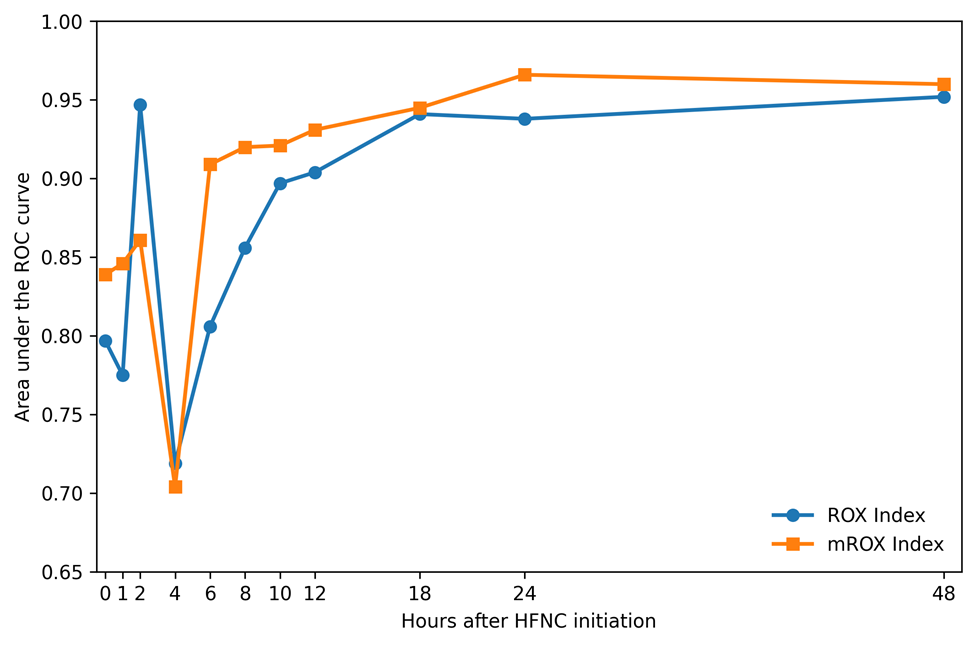
Figure 1. AUROC values of ROX and mROX indices at prespecified time points after HFNC initiation.
Temporal trends of ROX and mROX indices
At all measured time points, both the ROX and mROX indices were higher in patients with successful HFNC therapy compared to those who experienced HFNC failure. As the modified ROX index was the primary variable of interest and demonstrated a more distinct early differentiation between the outcome groups, its temporal trend is presented in Figure 2.
Table 3. Temporal trends of ROX and mROX indices according to HFNC outcome
|
Time |
ROX success |
ROX failure |
p value |
mROX success |
mROX failure |
p value |
|
Initiation |
5.27 ± 0.51 |
4.71 ± 0.45 |
0.543 |
5.31 ± 0.63 |
4.52 ± 0.42 |
0.011 |
|
1 h |
5.48 ± 0.53 |
4.96 ± 0.36 |
0.001 |
5.54 ± 0.59 |
4.76 ± 0.42 |
0.020 |
|
2 h |
5.90 ± 0.38 |
4.82 ± 0.46 |
0.133 |
6.07 ± 0.49 |
5.43 ± 0.40 |
0.004 |
|
4 h |
6.06 ± 0.57 |
5.62 ± 0.29 |
<0.0001 |
7.05 ± 0.66 |
6.59 ± 0.51 |
0.016 |
|
6 h |
6.96 ± 0.83 |
6.06 ± 0.36 |
<0.0001 |
7.92 ± 1.10 |
6.30 ± 0.47 |
<0.0001 |
|
8 h |
7.39 ± 0.74 |
6.38 ± 0.38 |
<0.0001 |
8.46 ± 1.18 |
6.59 ± 0.45 |
<0.0001 |
|
10 h |
8.14 ± 0.97 |
6.32 ± 0.49 |
<0.0001 |
9.21 ± 1.56 |
6.55 ± 0.91 |
<0.0001 |
|
12 h |
8.62 ± 1.37 |
6.06 ± 1.01 |
0.008 |
9.89 ± 1.89 |
6.29 ± 0.88 |
<0.0001 |
|
18 h |
9.65 ± 1.61 |
6.30 ± 1.02 |
0.010 |
10.84 ± 2.20 |
6.62 ± 1.21 |
0.003 |
|
24 h |
11.26 ± 2.26 |
6.45 ± 1.59 |
0.018 |
13.27 ± 3.05 |
6.67 ± 1.59 |
0.004 |
|
48 h |
13.84 ± 3.11 |
6.89 ± 0.50 |
0.002 |
15.54 ± 3.75 |
7.08 ± 1.11 |
0.002 |
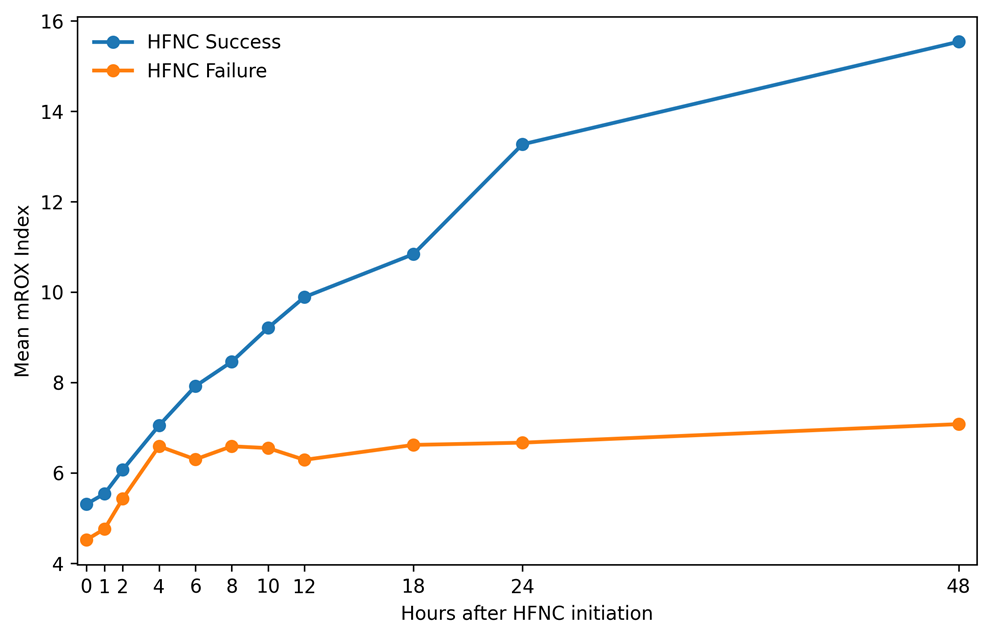
Figure 2. Temporal trend of modified ROX Index among patients with HFNC success and HFNC failure.
Clinical variables associated with HFNC failure
Patients who experienced HFNC failure had significantly greater illness severity and hemodynamic instability compared to those with successful HFNC therapy. The mean APACHE II score was significantly higher in the failure group than in the success group (18.83 ± 3.77 vs 11.55 ± 3.29; p<0.0001). Vasopressor requirement was also substantially higher among patients with HFNC failure (96.7% vs 43.5%; p<0.0001). In addition, patients in the failure group had higher heart rates at initiation (107.83 ± 8.17 vs 93.21 ± 7.21 beats/min; p<0.0001) and higher respiratory rates (28.30 ± 1.86 vs 27.00 ± 1.84 breaths/min; p=0.002). Age and sex were not significantly associated with HFNC outcomes.
HFNC failure was further associated with shorter duration of HFNC therapy and poorer clinical outcomes. The mean duration of HFNC therapy was significantly lower in the failure group compared to the success group (19.80 ± 13.10 h vs 60.19 ± 15.13 h; p<0.0001). Patients with HFNC failure also had a longer ICU stay (5.07 ± 1.55 days vs 3.39 ± 0.78 days; p<0.0001) and higher in-hospital mortality (33.3% vs 12.9%; p=0.027).
DISCUSSION:
The present prospective observational cohort study evaluated and compared the predictive performance of the ROX index and mROX index in determining the outcome of HFNC therapy among adult ICU patients with AHRF. The study demonstrated that both indices had good discriminatory ability for predicting HFNC outcomes from the time of initiation itself, with AUROC values exceeding 0.7 at most serial time points. However, the mROX index consistently showed superior predictive performance compared to the conventional ROX index, particularly during the early phase of HFNC therapy.
HFNC has become an increasingly important modality in the management of AHRF because it provides heated and humidified oxygen at high flow rates, improves oxygenation, reduces anatomical dead-space rebreathing, and decreases work of breathing. Nevertheless, delayed recognition of HFNC failure may result in delayed intubation and worse clinical outcomes. Hence, early identification of patients likely to fail HFNC remains a major clinical priority in critical care practice.
In the present study, HFNC therapy was successful in 67.4% of patients, while 32.6% required endotracheal intubation. These findings are comparable with previous studies evaluating HFNC outcomes in AHRF. The median time to intubation among patients with HFNC failure was 12 hours, highlighting the importance of close monitoring during the initial hours following HFNC initiation.
The ROX index, calculated using SpO₂/FiO₂ and respiratory rate, was developed as a simple bedside predictor of HFNC success. Roca et al. initially demonstrated that higher ROX values were associated with reduced need for intubation in patients with pneumonia-related acute respiratory failure. Similar findings were observed in the present study, where ROX values were consistently higher among patients with successful HFNC therapy compared to those with treatment failure. Furthermore, serial assessment improved predictive performance, supporting the concept that dynamic monitoring is more clinically useful than reliance on a single baseline measurement.
An important finding of the present study was the superior performance of the modified ROX index. By incorporating heart rate into the conventional ROX formula, the mROX index may better reflect the physiological stress response associated with worsening respiratory failure, sepsis, or impending clinical deterioration. In this study, the mROX index demonstrated significantly better discrimination between HFNC success and failure groups from the time of initiation and across most subsequent time points. Although the ROX index showed slightly better predictive performance at 2 hours, the mROX index consistently outperformed the ROX index from 6 hours onward, with statistically significant differences in AUROC values.
The temporal trends observed in this study also have important clinical implications. Patients who responded successfully to HFNC demonstrated progressive increases in both ROX and mROX values over time, whereas persistently low or worsening values were observed among patients who failed therapy. Notably, the mROX index showed clearer early separation between outcome groups, suggesting that incorporation of heart rate may improve early bedside recognition of treatment failure. Such early identification may facilitate timely escalation to invasive mechanical ventilation and potentially reduce complications associated with delayed intubation.
The findings of the present study are in agreement with previous studies evaluating modified ROX indices incorporating heart rate. Goh et al. reported that the mROX index may improve prediction of HFNC failure in patients with acute hypoxemic respiratory failure and post-extubation respiratory support. The present study further strengthens existing evidence by demonstrating the utility of serial mROX assessment in a prospective ICU cohort.
This study has several strengths. It employed a prospective design with serial assessment of physiological variables at predefined time intervals, allowing evaluation of dynamic changes in ROX and mROX indices over time. In addition, the study assessed multiple measures of diagnostic performance, including AUROC, sensitivity, specificity, positive predictive value, and negative predictive value.
However, certain limitations should be acknowledged. This was a single-centre study conducted in a tertiary care ICU, which may limit the generalisability of the findings to other settings. The sample size was relatively modest, and the majority of patients had community-acquired pneumonia, which may have influenced the observed predictive performance. Furthermore, clinical decisions regarding intubation were made by treating physicians and may have been influenced by individual clinical judgement.
In conclusion, both the ROX and mROX indices were useful bedside predictors of HFNC outcomes in adult ICU patients with acute hypoxemic respiratory failure. However, the modified ROX index demonstrated superior predictive accuracy and earlier discrimination between HFNC success and failure. Serial monitoring of the mROX index may therefore aid in early identification of patients at risk of HFNC failure and support timely escalation of respiratory support in critically ill patients.
CONCLUSION:
Both the ROX and mROX indices were effective bedside tools for predicting HFNC outcomes in adult ICU patients with AHRF. However, the mROX index demonstrated superior predictive accuracy and earlier discrimination between HFNC success and failure compared to the conventional ROX index. Serial monitoring of the mROX index may facilitate early identification of HFNC failure and timely escalation of respiratory support.
REFERENCES:
1. ARDS Definition Task Force; Ranieri VM, Rubenfeld GD, Thompson BT, Ferguson ND, Caldwell E, Fan E, et al. Acute respiratory distress syndrome: the Berlin Definition. JAMA. 2012;307(23):2526–2533. doi:10.1001/jama.2012.5669.
2. Nishimura M. High-flow nasal cannula oxygen therapy in adults. J Intensive Care. 2015;3:15. doi:10.1186/s40560-015-0084-5.
3. Frat JP, Thille AW, Mercat A, Girault C, Ragot S, Perbet S, et al. High-flow oxygen through nasal cannula in acute hypoxemic respiratory failure. N Engl J Med. 2015;372(23):2185–2196. doi:10.1056/NEJMoa1503326.
4. Oczkowski S, Ergan B, Bos L, Chatwin M, Ferrer M, Gregoretti C, et al. ERS clinical practice guidelines: high-flow nasal cannula in acute respiratory failure. Eur Respir J. 2022;59(4):2101574. doi:10.1183/13993003.01574-2021.
5. Kang BJ, Koh Y, Lim CM, Huh JW, Baek S, Han M, et al. Failure of high-flow nasal cannula therapy may delay intubation and increase mortality. Intensive Care Med. 2015;41(4):623–632. doi:10.1007/s00134-015-3693-5.
6. Roca O, Messika J, Caralt B, García-de-Acilu M, Sztrymf B, Ricard JD, et al. Predicting success of high-flow nasal cannula in pneumonia patients with hypoxemic respiratory failure: the utility of the ROX index. J Crit Care. 2016;35:200–205. doi:10.1016/j.jcrc.2016.05.022.
7. Roca O, Caralt B, Messika J, Samper M, Sztrymf B, Hernández G, et al. An index combining respiratory rate and oxygenation to predict outcome of nasal high-flow therapy. Am J Respir Crit Care Med. 2019;199(11):1368–1376. doi:10.1164/rccm.201803-0589OC.
8. Goh KJ, Chai HZ, Ong TH, Sewa DW, Phua GC, Tan QL. Early prediction of high-flow nasal cannula therapy outcomes using a modified ROX index incorporating heart rate. J Intensive Care. 2020;8:41. doi:10.1186/s40560-020-00458-z.
9. Ferrer S, Sancho J, Bocigas I, Bures E, Mora H, Maza M, et al. ROX index as predictor of high-flow nasal cannula therapy success in acute respiratory failure due to SARS-CoV-2. Respir Med. 2021;189:106638. doi:10.1016/j.rmed.2021.106638.
10. Chandel A, Patolia S, Brown AW, Collins AC, Sahjwani D, Khangoora V, et al. High-flow nasal cannula therapy in COVID-19: using the ROX index to predict success. Respir Care. 2021;66(6):909–919. doi:10.4187/respcare.08631.
11. Duan J, Zeng J, Deng P, Ni Z, Lu R, Xia W, et al. High-flow nasal cannula for COVID-19 patients: a multicenter retrospective study in China. Front Mol Biosci. 2021;8:639100. doi:10.3389/fmolb.2021.639100.
12. Poopipatpab S, Nuchpramool P, Phairatwet P, Lertwattanachai T, Trongtrakul K. The use of respiratory rate-oxygenation index to predict failure of high-flow nasal cannula in patients with coronavirus disease 2019-associated acute respiratory distress syndrome: A retrospective study. PLoS One. 2023 Jun 21;18(6):e0287432. doi: 10.1371/journal.pone.0287432. PMID: 37343046; PMCID: PMC10284391.
13. Sarkar AG, Sharma A, Kothari N, Goyal S, Meshram T, Kumari K, Mohammed S, Bhatia P. Comparison of Modified ROX Index Score and ROX Index Score for Early Prediction of High Flow Nasal Oxygen Therapy Outcome in Patients with Acute Respiratory Failure: A Prospective Observational Cohort Study. Indian J Crit Care Med. 2024 Sep;28(9):842-846. doi: 10.5005/jp-journals-10071-24792. Epub 2024 Aug 31. PMID: 39360206; PMCID: PMC11443257.
14. Ceylan İ, Sayan HE, Ökmen K, Öylevi U. The role of ROX and mROX indices in predicting intubation in COVID-19 patients treated with high-flow nasal oxygen in intensive care unit. J Clin Med Kaz. 2021;18(3):18–22. doi:10.23950/jcmk/10932.
15. Gutta S, Ong WJD, Sajeed SM, Chern BZH, Gulati Kansal M, Khan FA, Kansal A. Comparison of ROX index with modified indices incorporating heart rate, flow rate, and PaO2/FiO2 ratio for early prediction of outcomes among patients initiated on post-extubation high-flow nasal cannula therapy. Eur J Med Res. 2025 Mar 14;30(1):166. doi: 10.1186/s40001-025-02402-z. PMID: 40083017; PMCID: PMC11907874.