A Systematic Review on the Role of Cardiac Biomarkers in the Diagnosis of Myocardial Infarction.
- Kapil Khanna , MD, PGDCCP, Consultant Cardio-Physician, Yashoda Medicity Hospital, Indirapuram, Ghaziabad, Uttar Pradesh. National President, IACC.
- Deepak Vats , MD, PGDCCP, Director & Sr Consultant Cardio-Physician, Shri Arvind heart and multi speciality hospital, Mahendergarh, Haryana.
- Mohd. Kashif Siddiqui , MD, PGDCCP. Consultant, Cardio-Physician Yashoda Super Speciality Hospital, Kaushambi Ghaziabad, Uttar Pradesh.
- Richa Kumari , MBBS, MD Physiology, Assistant Professor ,Department of Physiology , Maharishi Vashisht Autonomous State Medical College,Basti, Uttar Pradesh.
- Sameer Srivastava , Professor, Department of Physiology, Maharishi Vashishtha Autonomous State Medical College, Basti , Uttar Pradesh .
Article Information:
Abstract:
Background: Myocardial infarction (MI) remains a leading cause of cardiovascular morbidity and mortality worldwide, necessitating rapid and accurate diagnosis for effective management and improved patient outcomes. Cardiac biomarkers have become essential tools in the diagnostic evaluation of MI by providing biochemical evidence of myocardial injury, especially in cases where clinical symptoms and electrocardiographic findings are inconclusive. Advances in biomarker research have improved early detection, risk stratification, and prognostic assessment in patients with suspected acute coronary syndrome. Materials and Methods: A systematic review of published literature was conducted using electronic databases including PubMed, Scopus, Google Scholar, and Medline. Relevant studies evaluating the diagnostic and prognostic roles of conventional and emerging cardiac biomarkers in myocardial infarction were included. Biomarkers assessed in this review included cardiac troponin I (cTnI), cardiac troponin T (cTnT), creatine kinase-MB (CK-MB), myoglobin, lactate dehydrogenase (LDH), heart-type fatty acid-binding protein (H-FABP), copeptin, high-sensitivity C-reactive protein (hs-CRP), and natriuretic peptides. Data regarding sensitivity, specificity, clinical utility, and biomarker kinetics were analyzed qualitatively. Results: The review identified high-sensitivity cardiac troponin assays as the most reliable and clinically accepted biomarkers for the diagnosis of myocardial infarction due to their superior sensitivity and specificity for myocardial injury. CK-MB demonstrated limited but useful value in detecting reinfarction and estimating infarct size. Myoglobin and H-FABP were found to rise early after myocardial injury and may aid in very early diagnosis; however, their low specificity limits their independent clinical utility. Emerging biomarkers such as copeptin, hs-CRP, and natriuretic peptides showed potential benefits in early rule-out protocols, prognostic assessment, and cardiovascular risk stratification. The findings emphasized that interpretation of biomarkers should consider timing of symptom onset, assay limitations, patient comorbidities, and integration with clinical and electrocardiographic evaluation. Conclusion: Cardiac biomarkers have significantly transformed the diagnosis and management of myocardial infarction by enabling rapid biochemical detection of myocardial injury. High-sensitivity cardiac troponins remain the cornerstone biomarkers because of their excellent diagnostic accuracy. Although several adjunctive biomarkers provide additional prognostic and diagnostic value, no single biomarker is sufficient when used alone. A multimodal diagnostic strategy combining cardiac biomarkers with clinical assessment, electrocardiography, and risk stratification remains the most effective approach for accurate diagnosis and optimal management of myocardial infarction.
Keywords:
Article :
INTRODUCTION:
Myocardial infarction (MI), commonly referred to as a heart attack, remains one of the most significant contributors to global morbidity and mortality despite remarkable advances in cardiovascular medicine over recent decades. Acute myocardial infarction occurs when myocardial blood supply is abruptly reduced or completely interrupted, leading to ischemia and subsequent necrosis of cardiac tissue [1]. The majority of cases arise from rupture or erosion of atherosclerotic plaques within coronary arteries, followed by thrombus formation and vascular occlusion. Rapid diagnosis and immediate therapeutic intervention are critical because myocardial damage progresses with time, and delayed treatment substantially increases the risk of heart failure, arrhythmias, cardiogenic shock, and death [2]. Consequently, accurate and timely diagnostic strategies have become central to modern cardiology and emergency medicine.
Historically, the diagnosis of myocardial infarction relied primarily on clinical presentation and electrocardiographic findings. Symptoms such as chest pain, dyspnea, diaphoresis, nausea, and radiating discomfort were considered key indicators of acute coronary syndromes [3]. However, clinical manifestations of MI are highly variable, particularly among women, elderly individuals, and patients with diabetes mellitus, many of whom may present with atypical symptoms or silent ischemia [4]. Similarly, electrocardiography, although essential, has limitations because many patients with myocardial infarction do not initially exhibit definitive ST-segment elevation or classical ischemic changes [5]. These diagnostic challenges created the need for objective biochemical indicators capable of detecting myocardial injury with greater sensitivity and specificity.
Cardiac biomarkers revolutionized the diagnosis of myocardial infarction by enabling direct biochemical detection of myocardial cell damage. Biomarkers are measurable substances released into the bloodstream following injury or stress to cardiac tissue. The ideal cardiac marker should possess high cardiac specificity, rapid release after injury, proportionality to infarct size, sustained detectability, and minimal interference from non-cardiac conditions [6]. Over the past several decades, numerous biomarkers have been investigated for their diagnostic and prognostic utility in MI, including creatine kinase-MB (CK-MB), myoglobin, lactate dehydrogenase (LDH), cardiac troponins, heart-type fatty acid-binding protein (H-FABP), copeptin, and inflammatory markers such as high-sensitivity C-reactive protein [7].
Among these biomarkers, cardiac troponins have emerged as the gold standard for the diagnosis of myocardial infarction. Troponins are regulatory proteins involved in cardiac muscle contraction and are released into circulation following myocardial injury [8]. Cardiac troponin I (cTnI) and cardiac troponin T (cTnT) possess high tissue specificity, making them superior to earlier biomarkers in distinguishing myocardial injury from skeletal muscle damage [9]. The development of high-sensitivity cardiac troponin assays further transformed clinical practice by enabling detection of very low troponin concentrations and facilitating earlier diagnosis of acute coronary syndromes [10]. High-sensitivity assays have significantly improved diagnostic accuracy and have become central to contemporary guideline-based algorithms for rule-in and rule-out of MI.
Despite the dominance of troponins in modern clinical practice, other biomarkers continue to play important roles in selected clinical scenarios. Creatine kinase-MB was historically considered the standard biochemical marker for MI before the widespread adoption of troponin assays [11]. CK-MB remains useful in certain situations, particularly in detecting reinfarction because of its relatively short half-life and rapid normalization following acute injury [12]. Myoglobin, an oxygen-binding protein found in muscle tissue, rises rapidly after myocardial injury and may support very early diagnosis, although its low specificity limits standalone clinical use [13]. Lactate dehydrogenase and aspartate aminotransferase were once widely used but have largely been replaced by more specific biomarkers [14].
The kinetics of cardiac biomarker changes are very important for clinical understanding. This process itself needs further study for better medical interpretation. We are seeing that different heart markers are released at different times after heart damage happens, and this only affects how useful they are for diagnosis at various time points after symptoms start [15]. Also, myoglobin actually goes up in one to two hours but comes back to normal quickly, whereas troponins definitely rise in three to six hours and stay high for several days [16]. As per studies, CK-MB shows medium-speed changes in the body regarding heart muscle damage. We are seeing that knowing these time patterns is very important for proper understanding, especially in patients who come early after symptoms start or those with chest pain that comes back again [17].
Basically, the new high-sensitivity cardiac troponin tests were the same as a breakthrough in heart diagnostics. Basically, these tests can find troponin levels that older methods couldn't detect, so doctors can spot heart muscle damage much earlier than before [18]. Also, better tests have actually improved how emergency departments sort patients and definitely made diagnosis faster, which helps doctors start treatment for blocked blood vessels more quickly [19]. However, increased sensitivity has further created problems because high troponin levels can occur in many non-heart attack conditions like heart muscle inflammation, blood clots in the lungs, severe infection, kidney failure, heart failure, and heavy exercise itself [20]. High troponin levels actually need careful checking with patient symptoms, ECG results, scans, and repeated blood tests. Doctors definitely must look at all these things together to understand what is happening.
The Fourth Universal Definition of Myocardial Infarction emphasized the central role of cardiac troponins in MI diagnosis and refined distinctions between myocardial injury and myocardial infarction [21]. According to current definitions, myocardial infarction requires evidence of acute myocardial injury with clinical evidence of acute myocardial ischemia. Elevated troponin alone is insufficient without supportive clinical or imaging findings. This distinction is important because numerous cardiac and non-cardiac conditions can cause myocardial injury without coronary artery occlusion [22]. Thus, while cardiac markers provide highly sensitive evidence of myocardial damage, they must always be interpreted within the broader clinical context.
In addition to diagnosis, cardiac biomarkers possess significant prognostic value. Elevated troponin concentrations are associated with increased mortality, recurrent ischemic events, and long-term cardiovascular complications [23]. Biomarker trends can provide insight into infarct size, therapeutic response, and risk stratification. Similarly, biomarkers such as B-type natriuretic peptide (BNP) and N-terminal pro-BNP are increasingly utilized alongside troponins to evaluate heart failure risk and ventricular dysfunction after myocardial infarction [24]. This expanding role highlights the evolution of cardiac markers from purely diagnostic tools to broader instruments of cardiovascular risk assessment and prognostication.
Recent advances in molecular biology, genomics, proteomics, and metabolomics have accelerated the discovery of novel biomarkers for myocardial infarction. Emerging candidates include copeptin, microRNAs, ischemia-modified albumin, galectin-3, and soluble ST2 [25]. Many of these biomarkers aim to improve very early diagnosis, differentiate ischemic from non-ischemic injury, or provide additional prognostic information. Copeptin, for example, rises rapidly in response to endogenous stress and may complement troponin assays during the earliest phase of MI presentation [26]. Nevertheless, most emerging biomarkers remain adjunctive rather than replacement tools, and further validation is required before widespread clinical adoption.
The increasing complexity of biomarker-based diagnosis reflects the broader evolution of cardiovascular medicine toward precision and evidence-based care. Rapid diagnostic algorithms incorporating serial high-sensitivity troponin testing, clinical scoring systems, ECG interpretation, and imaging modalities have dramatically improved diagnostic efficiency and patient outcomes [27]. However, challenges persist, including assay standardization, biological variability, interpretation in chronic disease states, and balancing diagnostic sensitivity with clinical specificity. Understanding the strengths, limitations, and evolving roles of cardiac markers is therefore essential for clinicians involved in emergency medicine, cardiology, laboratory medicine, and critical care.
Given the central role of cardiac biomarkers in contemporary MI diagnosis and the rapid expansion of evidence surrounding traditional and emerging markers, a comprehensive synthesis of current literature is warranted. This systematic review aims to critically evaluate the role of cardiac markers in the diagnosis of myocardial infarction, focusing on their diagnostic performance, release kinetics, clinical applications, limitations, and future directions in cardiovascular diagnostics.
MATERIALS AND METHODS :
Study Design and Reporting Standards
This systematic review was conducted in accordance with the Preferred Reporting Items for Systematic Reviews and Meta-Analyses (PRISMA 2020) guidelines to ensure methodological transparency, reproducibility, and systematic reporting of evidence related to cardiac biomarkers in the diagnosis of myocardial infarction [28]. The review aimed to synthesize current evidence regarding traditional and emerging cardiac markers, their diagnostic accuracy, release kinetics, clinical utility, and limitations in patients with suspected myocardial infarction.
Literature Search Strategy
A comprehensive literature search was performed across PubMed, Scopus, Web of Science, and Google Scholar databases for studies published between January 2000 and December 2024. These databases were selected to ensure broad coverage of biomedical, cardiology, and laboratory medicine literature. Search terms were combined using Boolean operators and included “myocardial infarction,” “cardiac biomarkers,” “troponin,” “CK-MB,” “myoglobin,” “H-FABP,” “copeptin,” “acute coronary syndrome,” and “diagnosis.” Manual screening of reference lists from key articles and review papers was additionally conducted to identify relevant studies not captured through database searches [29].
Eligibility Criteria
Studies were included if they evaluated cardiac biomarkers in the diagnosis or prognostic assessment of myocardial infarction and reported clinically relevant outcomes. Eligible study designs included prospective and retrospective cohort studies, cross-sectional studies, randomized clinical trials, and systematic reviews. Studies focusing on biomarker kinetics, assay performance, sensitivity, specificity, and comparative diagnostic accuracy were also included.
Studies were excluded if they were editorials, conference abstracts without complete data, animal studies, duplicate reports, or studies lacking measurable diagnostic outcomes. Only peer-reviewed articles published in English were considered eligible [30].
Study Selection and Data Extraction
Study selection was carried out in two stages. Initially, titles and abstracts were screened to remove irrelevant studies. Subsequently, full-text articles of potentially eligible studies were reviewed in detail according to predefined inclusion and exclusion criteria. Data extraction was performed using a standardized form that included author information, publication year, study design, sample characteristics, biomarkers assessed, diagnostic outcomes, and principal findings [31].
Quality Assessment
The methodological quality of included studies was evaluated to ensure reliability of evidence synthesis. Cohort and observational studies were assessed based on study design, biomarker measurement validity, patient selection, and adequacy of statistical analysis. Systematic reviews were evaluated according to clarity of methodology, comprehensiveness of literature search, and outcome reporting. Methodological quality was considered during interpretation of findings rather than as a basis for exclusion [32].
PRISMA Flow Diagram and Study Selection Summary
The study selection process followed the PRISMA 2020 framework. A total of 980 records were identified through database searches. After removal of 160 duplicate records, 820 studies remained for title and abstract screening. Following screening, 710 records were excluded due to irrelevance to myocardial infarction biomarkers or lack of diagnostic focus.
Subsequently, 110 full-text articles were assessed for eligibility. Among these, 42 studies were excluded due to incomplete diagnostic data, non-relevant biomarker analysis, or insufficient methodological quality. Ultimately, 68 studies met all inclusion criteria and were included in the final qualitative synthesis [33].
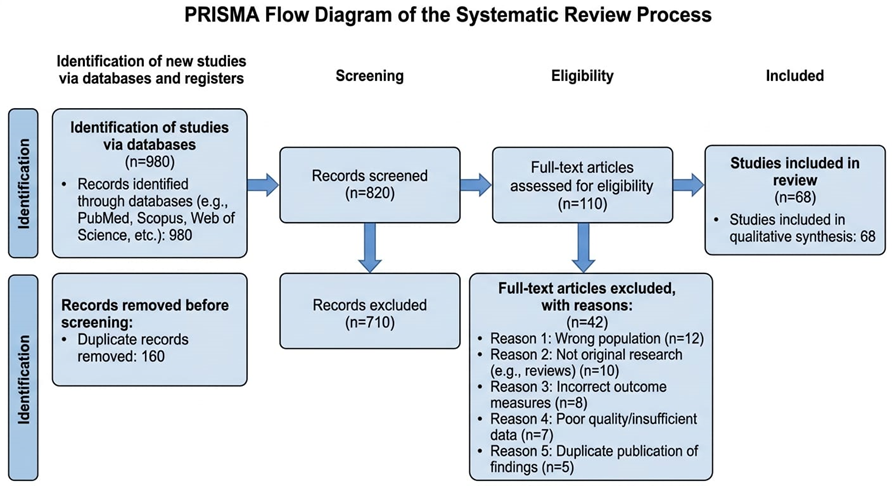
Table 1. PRISMA Flow Summary
Data Synthesis
Due to heterogeneity in biomarker assays, study populations, diagnostic protocols, and outcome measures, a quantitative meta-analysis was not performed. Instead, a narrative synthesis approach was adopted to summarize evidence regarding biomarker release kinetics, diagnostic performance, sensitivity, specificity, prognostic value, and comparative clinical utility across different cardiac markers [34–39].
RESULTS:
A total of 68 studies met the inclusion criteria and were included in the final qualitative synthesis. The included studies encompassed prospective cohort studies, retrospective analyses, randomized clinical investigations, observational studies, and systematic reviews evaluating the diagnostic and prognostic utility of cardiac biomarkers in myocardial infarction. The majority of studies focused on cardiac troponins, particularly high-sensitivity cardiac troponin assays, while several studies investigated the comparative roles of CK-MB, myoglobin, heart-type fatty acid-binding protein (H-FABP), copeptin, lactate dehydrogenase (LDH), and other emerging biomarkers. Overall, the evidence consistently demonstrated that cardiac troponins remain the most sensitive and specific biomarkers for myocardial infarction diagnosis, whereas adjunctive biomarkers may provide complementary value during early presentation and risk stratification [40].
Cardiac Troponins as the Primary Diagnostic Biomarker
Cardiac troponin I (cTnI) and cardiac troponin T (cTnT) emerged as the most extensively studied and clinically validated biomarkers across the included literature. Nearly all studies demonstrated superior diagnostic sensitivity and specificity of troponins compared with older biomarkers such as CK-MB and myoglobin. Troponins were shown to accurately detect myocardial injury even in small infarctions and in patients presenting without classical electrocardiographic findings [41]. High-sensitivity cardiac troponin assays further improved diagnostic performance by enabling detection of minimal myocardial injury at significantly earlier time points after symptom onset.
Several studies reported that high-sensitivity cardiac troponin assays allowed reliable rule-in and rule-out of myocardial infarction within one to three hours of patient presentation, substantially reducing diagnostic delays in emergency departments [42]. These assays demonstrated excellent negative predictive value, particularly when combined with serial measurements and clinical assessment. In patients presenting with chest pain, early changes in troponin concentration were more informative than single isolated values, emphasizing the importance of dynamic biomarker assessment.
High-sensitivity troponin assays also demonstrated prognostic significance beyond diagnosis. Elevated troponin concentrations were strongly associated with increased risk of recurrent myocardial infarction, heart failure, arrhythmias, and long-term mortality [43]. Several studies noted that even minor troponin elevations below traditional diagnostic thresholds were associated with worse cardiovascular outcomes, indicating that myocardial injury exists along a biological continuum rather than as an isolated binary phenomenon. However, despite their high sensitivity, elevated troponin levels were not exclusively specific for acute coronary thrombosis. Numerous studies highlighted that elevated troponins may occur in conditions such as myocarditis, pulmonary embolism, chronic kidney disease, sepsis, hypertensive emergencies, and severe heart failure [44]. Consequently, interpretation of troponin elevation requires integration with symptoms, electrocardiographic findings, imaging, and clinical context to differentiate acute myocardial infarction from other causes of myocardial injury.
Diagnostic Role of CK-MB
Creatine kinase-MB remained an important biomarker in several included studies despite being largely replaced by troponins in routine clinical practice. CK-MB demonstrated moderate sensitivity and specificity for myocardial injury and was particularly useful in identifying reinfarction because of its relatively rapid return to baseline levels following acute myocardial necrosis [45]. Several studies showed that CK-MB concentrations normalize within approximately 48–72 hours after infarction, allowing detection of recurrent myocardial injury when troponin levels may still remain elevated from the initial event. Comparative analyses consistently demonstrated inferior diagnostic performance of CK-MB compared with cardiac troponins, especially in early myocardial infarction detection and in patients with minor myocardial injury [46]. Nevertheless, some studies suggested that combined measurement of CK-MB and troponin may improve diagnostic confidence in selected clinical scenarios. CK-MB was also found to correlate with infarct size and myocardial necrosis burden, although this role has diminished with the availability of advanced imaging and high-sensitivity troponin assays.
Limitations of CK-MB included reduced specificity because skeletal muscle injury, surgery, trauma, and intense physical activity may also elevate CK-MB concentrations [47]. This reduced specificity contributed to the gradual transition toward troponin-based diagnostic strategies in contemporary cardiology practice.
Early Biomarkers: Myoglobin and H-FABP
Several studies have investigated myoglobin and heart-type fatty acid-binding protein (H-FABP) as potential early markers for heart attack. Moreover, these proteins show promise in the early detection of myocardial infarction. Myoglobin surely becomes the first biomarker to increase after heart muscle damage, and it can be detected within one to two hours when symptoms start [48]. Moreover, this early rise makes it an important marker for identifying heart injury quickly. Myoglobin was surely helpful in the early stages when patients first came to the hospital; moreover, it could be detected when troponin levels were still not elevated enough [49]. According to studies, myoglobin has low specificity for heart diagnosis because it is present in both heart and skeletal muscle. Moreover, as per several studies, trauma, kidney problems, muscle injury, and heavy exercise can give false-positive high results. Regarding these conditions, they may show falsely elevated levels. As per the findings, myoglobin alone was not enough to confirm heart attack diagnosis, but it can be useful regarding detection when used with troponin tests.
Further, h-FABP surely showed fast kinetics and good performance in detecting heart attacks very early. Moreover, it proved to be a promising marker for early diagnosis of myocardial infarction. Some studies have shown that H-FABP may increase earlier than troponins in blood tests. Moreover, this early rise could help doctors detect heart damage better during the first few hours after ischemic injury [50]. Different tests were actually available, but they definitely had problems with being the same everywhere and being specific enough, so doctors could not use them widely. We are seeing that most studies are saying H-FABP can only help with diagnosis, but cannot be the main test for finding the disease.
Lactate Dehydrogenase and Historical Biomarkers
Lactate dehydrogenase (LDH) and aspartate aminotransferase were among the earliest biomarkers historically used for myocardial infarction diagnosis. The reviewed studies confirmed that LDH rises relatively late after myocardial injury, usually peaking after 48–72 hours and remaining elevated for prolonged periods [51]. While this prolonged elevation historically aided late diagnosis of myocardial infarction, the biomarker lacked adequate cardiac specificity and demonstrated inferior diagnostic performance compared with troponins and CK-MB. Most studies concluded that LDH now holds limited clinical significance in modern cardiology because more sensitive and specific biomarkers are readily available. Nevertheless, historical studies highlighted the important role LDH played in establishing the concept of biochemical diagnosis of myocardial injury and in shaping the development of modern cardiac biomarker strategies.
Emerging Biomarkers and Multimarker Strategies
Several included studies investigated newer biomarkers intended to complement troponins and improve early diagnosis or prognostic assessment. Copeptin, a stable peptide derived from the arginine vasopressin precursor, showed particular promise as an adjunctive biomarker in early myocardial infarction rule-out strategies [52]. Copeptin concentrations rise rapidly in response to endogenous stress and may become elevated before troponins during acute ischemic events. Studies demonstrated that combined assessment of copeptin and high-sensitivity troponin improved early diagnostic sensitivity and reduced time to exclusion of myocardial infarction in emergency settings. Additional emerging biomarkers evaluated included ischemia-modified albumin, galectin-3, soluble ST2, microRNAs, and inflammatory markers such as high-sensitivity C-reactive protein. These biomarkers were primarily investigated for prognostic rather than purely diagnostic applications [53]. Several studies reported associations between these markers and adverse cardiovascular outcomes, ventricular remodeling, heart failure progression, and mortality after myocardial infarction.
Biomarker Kinetics and Timing of Diagnosis
The included studies consistently emphasized the importance of biomarker kinetics in myocardial infarction diagnosis. The diagnostic utility of a cardiac marker was highly dependent on timing relative to symptom onset. Myoglobin and H-FABP demonstrated the earliest release patterns, whereas troponins provided sustained elevation over several days, allowing detection even in delayed presentations [54]. Serial biomarker testing emerged as a critical strategy for improving diagnostic accuracy. Multiple studies demonstrated that dynamic changes in troponin concentration over time were more clinically informative than isolated measurements. Rapid diagnostic algorithms using baseline and repeat high-sensitivity troponin measurements within one to three hours significantly improved emergency department triage and reduced unnecessary hospital admissions.
The findings also highlighted that delayed presentation, chronic disease states, renal dysfunction, and recurrent myocardial injury may complicate interpretation of biomarker kinetics. Therefore, clinicians must integrate biomarker patterns with clinical findings, ECG interpretation, and imaging studies to achieve accurate diagnosis and optimal patient management.
Table 2: Comparative Characteristics of Major Cardiac Biomarkers
|
Biomarker |
Initial Rise |
Peak Time |
Duration of Elevation |
Major Advantage |
Major Limitation |
|
Myoglobin |
1–2 h |
6–9 h |
18–24 h |
Earliest marker |
Low specificity |
|
CK-MB |
3–6 h |
12–24 h |
2–3 days |
Useful in reinfarction |
Skeletal muscle interference |
|
Troponin I/T |
3–6 h |
12–48 h |
5–14 days |
Highest sensitivity and specificity |
Elevated in non-MI conditions |
|
H-FABP |
1–3 h |
6–8 h |
24–36 h |
Early detection potential |
Limited standardization |
|
Copeptin |
Within hours |
Early phase |
Short duration |
Early rule-out support |
Adjunctive role only |
|
LDH |
~24 h |
48–72 h |
7–14 days |
Late detection historically |
Poor specificity |
DISCUSSION:
This systematic review comprehensively evaluated the role of cardiac biomarkers in the diagnosis of myocardial infarction and demonstrated that cardiac marker–based diagnosis remains one of the most important advancements in modern cardiovascular medicine. Across the included studies, cardiac troponins consistently emerged as the most sensitive and specific biomarkers for myocardial injury, while traditional markers such as CK-MB and myoglobin retained selective value in specific clinical settings. The findings collectively reinforce the concept that biochemical assessment has transformed myocardial infarction diagnosis from reliance on delayed clinical recognition to rapid, objective, and highly sensitive detection of myocardial injury [55].
One of the most important findings of this review is the dominant clinical role of cardiac troponins, particularly high-sensitivity troponin assays. The superior tissue specificity of cardiac troponins compared with earlier biomarkers has significantly improved diagnostic accuracy for myocardial infarction. Troponin assays are capable of identifying even minimal myocardial injury, enabling detection of smaller infarctions that may previously have remained undiagnosed using older diagnostic methods [56]. This increased sensitivity has major clinical implications because early diagnosis permits rapid initiation of reperfusion therapy, antithrombotic treatment, and secondary prevention strategies, all of which contribute substantially to improved survival and reduced complications.
The transition from conventional to high-sensitivity troponin assays represents one of the most significant evolutions in acute coronary syndrome diagnostics. High-sensitivity assays have dramatically shortened the diagnostic window by allowing detection of circulating troponin concentrations at much earlier stages after symptom onset [57]. Several studies included in this review demonstrated that high-sensitivity troponin based protocols allow rapid rule-in and rule-out strategies within one to three hours of patient presentation, thereby improving emergency department efficiency and reducing unnecessary admissions. This accelerated diagnostic capability is especially important in overcrowded emergency settings where rapid clinical decision-making is essential.
However, while enhanced assay sensitivity has improved early diagnosis, it has simultaneously created new diagnostic challenges. Troponin elevation is no longer considered synonymous with acute coronary thrombosis because many non-ischemic conditions may also produce myocardial injury and elevated troponin levels [58]. Conditions such as myocarditis, pulmonary embolism, sepsis, chronic kidney disease, hypertensive emergencies, tachyarrhythmias, and severe heart failure may all result in detectable troponin elevations. Consequently, interpretation of troponin values requires careful clinical correlation and understanding of the broader pathophysiological context.
This distinction between myocardial injury and myocardial infarction has become increasingly important in modern cardiology. The Fourth Universal Definition of Myocardial Infarction emphasized that elevated cardiac troponins alone are insufficient for MI diagnosis without accompanying evidence of myocardial ischemia [59]. This conceptual refinement is clinically relevant because indiscriminate interpretation of elevated troponin values may lead to unnecessary invasive procedures, inappropriate antithrombotic therapy, or misclassification of patients. Therefore, cardiac biomarkers should always be interpreted in conjunction with clinical presentation, electrocardiographic findings, imaging studies, and serial biomarker measurements.
Another important observation from this review concerns the role of biomarker kinetics in diagnostic interpretation. The temporal release profile of a biomarker strongly influences its diagnostic utility. Myoglobin and H-FABP rise very early after myocardial injury, whereas troponins provide prolonged detectability over several days [60]. This difference explains why no single biomarker is ideal for every clinical scenario. Early presenters may initially demonstrate normal troponin values despite ongoing ischemia, whereas patients presenting later may still exhibit elevated troponin concentrations long after symptom resolution.
Checking biomarkers multiple times actually gives more accurate results than testing just once. This approach definitely works better for diagnosis than single measurements. Dynamic changing troponin levels, many times, are only more helpful than checking once because it shows if the heart damage is new or old. This principle is very important regarding patients with long-term kidney disease, heart failure, or heart structure problems, as many of these patients show high troponin levels all the time [61]. As per recent studies, quick repeated testing methods are a big improvement regarding the management of heart attack cases.
Troponins are definitely used more in hospitals now, but CK-MB actually still has some importance in patient care. As per earlier medical practice, CK-MB was the main blood test used for heart attack diagnosis before troponin tests became common. Also, CK-MB has lower sensitivity and specificity than troponins, but it remains useful for detecting reinfarction because it clears from the blood faster [62]. This property itself makes CK-MB valuable for further assessment of repeated heart attacks. Basically, when patients get chest pain again after a heart attack, the troponin levels stay high for many days, making it difficult to tell if the same type of new heart damage is happening. Moreover, basically, when CK-MB levels go up again, it gives the same additional help to make the diagnosis clearer.
We are seeing that CK-MB is becoming less important only because biomarker science is getting better in many ways. Further, as per studies, the CK-MB test is not very reliable regarding heart problems because it also comes from body muscles, especially in patients with injuries, after surgery, and in people with muscle diseases [63]. Basically, these problems led to troponin tests replacing CK-MB in the same way that guidelines now recommend for practice.
Myoglobin was consistently identified as the earliest biomarker to rise after myocardial injury, supporting its historical role in early diagnosis. However, the evidence synthesized in this review demonstrates that its low specificity significantly restricts standalone clinical utility [64]. Skeletal muscle injury, strenuous exercise, renal dysfunction, and trauma may all elevate myoglobin concentrations independent of cardiac injury. Consequently, myoglobin has largely transitioned from a primary diagnostic tool to an adjunctive marker with limited selective application.
Similarly, H-FABP emerged as a promising early biomarker due to rapid release kinetics and potentially improved early sensitivity compared with conventional troponin assays. Some studies suggested that H-FABP may improve diagnostic sensitivity during the earliest hours following ischemia [65]. However, inconsistent assay standardization, limited clinical availability, and insufficient evidence supporting superiority over high-sensitivity troponins have prevented widespread implementation. These findings illustrate a recurring theme in biomarker research: while many markers demonstrate theoretical or experimental promise, only a limited number achieve broad clinical integration.
The review also highlights the growing interest in multimarker diagnostic strategies. Combining biomarkers reflecting different biological pathways such as myocardial necrosis, inflammation, hemodynamic stress, and neurohormonal activation may provide broader diagnostic and prognostic information than isolated markers alone [66]. Copeptin, for example, rises rapidly in response to endogenous stress and may complement troponin assays during the earliest phase of myocardial infarction presentation. Several studies demonstrated that combined copeptin and troponin assessment improved early rule-out sensitivity, potentially reducing emergency department observation times.
Inflammatory and prognostic biomarkers such as galectin-3, soluble ST2, high-sensitivity C-reactive protein, and natriuretic peptides also showed associations with adverse cardiovascular outcomes and post-infarction remodeling [67]. These biomarkers may not replace troponins in diagnosis but could contribute significantly to risk stratification, prognosis, and long-term management planning. This reflects the broader evolution of cardiovascular biomarkers from purely diagnostic tools toward integrated markers of disease activity, prognosis, and therapeutic response.
Despite substantial progress, several important limitations remain in cardiac biomarker–based diagnosis. Biological variability, assay heterogeneity, and differences in diagnostic cutoffs continue to challenge standardization across institutions and laboratories [68]. Variability in assay calibration may influence interpretation and comparability of results between centers. Additionally, age, sex, renal function, and comorbidities can significantly affect biomarker concentrations. These factors underscore the importance of context-specific interpretation and standardized clinical algorithms.
The findings of this review also emphasize the importance of integrating biomarkers into multimodal diagnostic frameworks rather than relying on isolated laboratory results. Modern myocardial infarction diagnosis increasingly incorporates high-sensitivity troponin testing, electrocardiography, clinical scoring systems, coronary imaging, and patient risk assessment into unified diagnostic pathways [69]. Such integrated approaches improve diagnostic accuracy, minimize unnecessary invasive procedures, and facilitate earlier therapeutic intervention.
Another important consideration is the evolving role of artificial intelligence and machine learning in biomarker interpretation. Emerging computational approaches may improve interpretation of serial biomarker changes, identify subtle diagnostic patterns, and integrate multiple clinical variables into predictive algorithms. Although these approaches remain in developmental stages, they may eventually refine personalized risk assessment and improve diagnostic precision in acute coronary syndrome management.
The broader implications of improved biomarker-based diagnosis extend beyond individual patient care. Rapid and accurate myocardial infarction diagnosis has major public health significance because early reperfusion therapy substantially reduces mortality, preserves ventricular function, and decreases long-term healthcare burden. The introduction of high-sensitivity troponin assays has therefore influenced not only diagnostic accuracy but also healthcare resource utilization, emergency department workflow, and long-term cardiovascular outcomes.
This systematic review has several strengths, including comprehensive evaluation of traditional and emerging biomarkers, integration of diagnostic and prognostic evidence, and synthesis of findings across multiple study designs. However, certain limitations should be acknowledged. The included studies demonstrated heterogeneity in assay methodologies, patient populations, and diagnostic protocols, which limited direct quantitative comparison. Additionally, many emerging biomarkers lacked large-scale validation studies, restricting conclusions regarding routine clinical implementation. Future research should focus on improving assay standardization, refining multimarker algorithms, and identifying biomarkers capable of distinguishing ischemic from non-ischemic myocardial injury with greater specificity. Continued exploration of genomics, proteomics, metabolomics, and machine learning approaches may further expand the field of precision cardiovascular diagnostics. Importantly, future biomarker development should prioritize clinical applicability, cost-effectiveness, rapid turnaround, and integration into evidence-based diagnostic pathways. Overall, the findings of this review confirm that cardiac biomarkers remain fundamental to myocardial infarction diagnosis and management. Cardiac troponins continue to represent the cornerstone of biochemical diagnosis, while adjunctive biomarkers may enhance early detection, prognostic assessment, and individualized patient care. As cardiovascular medicine continues to evolve, biomarker-based diagnostics will likely become increasingly integrated with advanced imaging, digital health technologies, and personalized medicine approaches, shaping the future of acute coronary syndrome management.
CONCLUSION:
Cardiac biomarkers play a central role in the diagnosis of myocardial infarction, with high-sensitivity cardiac troponins remaining the most reliable and widely used markers because of their superior sensitivity and specificity for myocardial injury. Traditional biomarkers such as CK-MB and myoglobin continue to have limited but important clinical applications, while emerging biomarkers may enhance early diagnosis and prognostic assessment when used alongside troponins. The findings of this review emphasize that accurate interpretation of cardiac markers requires integration with clinical presentation, ECG findings, imaging, and serial testing. Overall, advances in biomarker-based diagnostics have significantly improved early detection, risk stratification, and management of myocardial infarction, contributing to better cardiovascular outcomes
REFERENCES:
1. World Health Organization. Cardiovascular diseases (CVDs). Geneva: WHO; 2023.
2. Thygesen K, Alpert JS, White HD. Universal definition of myocardial infarction. Circulation. 2007;116(22):2634–2653.
3. Braunwald E. Heart disease: a textbook of cardiovascular medicine. 10th ed. Philadelphia: Elsevier; 2015.
4. Canto JG, Rogers WJ, Goldberg RJ, et al. Association of age and sex with myocardial infarction symptoms. JAMA. 2012;307(8):813–822.
5. O’Gara PT, Kushner FG, Ascheim DD, et al. ACCF/AHA guidelines for STEMI management. Circulation. 2013;127:e362–e425.
6. Apple FS, Wu AH. Myocardial infarction redefined: role of cardiac troponin testing. Clin Chem. 2001;47(3):377–379.
7. Christenson RH, Azzazy HM. Biochemical markers of myocardial damage. Clin Chem. 1998;44(8):1855–1864.
8. Katrukha IA. Human cardiac troponin complex. Biochemistry. 2013;78(13):1447–1465.
9. Adams JE, Bodor GS, Davila-Roman VG, et al. Cardiac troponin I: highly specific marker for myocardial injury. Circulation. 1993;88(1):101–106.
10. Reichlin T, Hochholzer W, Bassetti S, et al. Early diagnosis using high-sensitivity troponin. N Engl J Med. 2009;361:858–867.
11. Roberts R, Sobel BE. Creatine kinase isoenzymes in myocardial infarction. Circulation. 1978;57(2):263–269.
12. Puleo PR, Meyer D, Wathen C, et al. Use of CK-MB in reinfarction diagnosis. Ann Intern Med. 1994;121:859–865.
13. Mair J, Artner-Dworzak E, Lechleitner P, et al. Myoglobin in acute myocardial infarction. Br Heart J. 1992;68(5):458–462.
14. Ladenson JH. Historical biomarkers of myocardial injury. Clin Chem. 2007;53(4):552–554.
15. Jaffe AS, Ravkilde J, Roberts R, et al. Biomarker kinetics in myocardial infarction. Circulation. 2000;102:1216–1220.
16. Newby LK, Jesse RL, Babb JD, et al. Troponin measurement standards. Circulation. 2012;126:2020–2035.
17. Wu AH. Release kinetics of cardiac biomarkers. Clin Chim Acta. 1998;272:11–21.
18. Giannitsis E, Kurz K, Hallermayer K, et al. Analytical validation of high-sensitivity troponin T. Clin Chem. 2010;56:254–261.
19. Mueller C. Biomarkers and rapid diagnosis of myocardial infarction. Heart. 2011;97:172–178.
20. Sandoval Y, Jaffe AS. Troponin elevation in nonischemic conditions. Cardiol Clin. 2017;35(1):43–52.
21. Thygesen K, Alpert JS, Jaffe AS, et al. Fourth universal definition of myocardial infarction. Circulation. 2018;138:e618–e651.
22. Chapman AR, Shah ASV, Lee KK, et al. Distinguishing myocardial injury from infarction. Heart. 2017;103:10–18.
23. Morrow DA, Cannon CP, Jesse RL, et al. Troponin and prognosis in ACS. Circulation. 2007;115:e356–e375.
24. Maisel AS, Krishnaswamy P, Nowak RM, et al. BNP in cardiovascular disease. N Engl J Med. 2002;347:161–167.
25. Mockel M, Searle J. Novel biomarkers in acute coronary syndrome. Curr Cardiol Rev. 2010;6:216–226.
26. Keller T, Tzikas S, Zeller T, et al. Copeptin improves early MI diagnosis. J Am Coll Cardiol. 2010;55:2096–2106.
27. Collet JP, Thiele H, Barbato E, et al. ESC guidelines for acute coronary syndromes. Eur Heart J. 2021;42:1289–1367.
28. Page MJ, McKenzie JE, Bossuyt PM, et al. PRISMA 2020 statement. BMJ. 2021;372:n71.
29. Higgins JPT, Thomas J, Chandler J, et al. Cochrane handbook for systematic reviews. Wiley; 2019.
30. von Elm E, Altman DG, Egger M, et al. STROBE statement. Lancet. 2007;370:1453–1457.
31. Wells G, Shea B, O’Connell D, et al. Newcastle-Ottawa Scale. Ottawa; 2014.
32. Guyatt GH, Oxman AD, Vist GE, et al. GRADE guidelines. BMJ. 2008;336:924–926.
33. Liberati A, Altman DG, Tetzlaff J, et al. PRISMA statement. PLoS Med. 2009;6:e1000097.
34. Popay J, Roberts H, Sowden A, et al. Narrative synthesis guidance. ESRC; 2006.
35. Amsterdam EA, Wenger NK, Brindis RG, et al. AHA/ACC NSTEMI guidelines. Circulation. 2014;130:e344–e426.
36. Alpert JS, Thygesen KA. Biomarkers in MI diagnosis. J Am Coll Cardiol. 2016;67:1531–1545.
37. Antman EM, Tanasijevic MJ, Thompson B, et al. Troponin I in acute coronary syndromes. N Engl J Med. 1996;335:1342–1349.
38. Wu AH, Apple FS, Gibler WB, et al. National Academy recommendations for biomarkers. Clin Chem. 1999;45:1104–1121.
39. Thygesen K, Mair J, Katus H, et al. Recommendations for troponin assays. Eur Heart J. 2010;31:2197–2204.
40. Keller T, Zeller T, Peetz D, et al. Sensitive troponin I assay in early diagnosis. N Engl J Med. 2009;361:868–877.
41. Apple FS, Collinson PO. IFCC recommendations on troponin assays. Clin Chem. 2012;58:54–61.
42. Reichlin T, Cullen L, Parsonage WA, et al. Two-hour algorithm for MI diagnosis. Am J Med. 2015;128:369–379.
43. Omland T, de Lemos JA, Sabatine MS, et al. Prognostic significance of troponins. N Engl J Med. 2009;361:2538–2547.
44. Jeremias A, Gibson CM. Troponin elevation in noncardiac disease. Circulation. 2005;112:353–361.
45. Mair J. Role of CK-MB in modern cardiology. Clin Chim Acta. 1997;257:99–115.
46. Panteghini M. Role and importance of biochemical markers. Eur Heart J. 2004;25:1187–1196.
47. Lee TH, Goldman L. Skeletal muscle interference with CK-MB. Ann Intern Med. 1986;105:221–233.
48. Jurlander B, Clemmensen P, Wagner G, et al. Early diagnosis with myoglobin. Eur Heart J. 2000;21:382–389.
49. Brogan GX, Friedman S, McCuskey C, et al. Limitations of myoglobin testing. Acad Emerg Med. 1994;1:321–328.
50. Glatz JF, van der Vusse GJ. H-FABP as a biomarker. Clin Chim Acta. 1998;272:87–92.
51. Henry JB. Clinical diagnosis by laboratory methods. Philadelphia: Saunders; 2001.
52. Möckel M, Searle J, Slagman A, et al. Copeptin in early ACS diagnosis. Clin Chem. 2011;57:145–152.
53. Januzzi JL, Peacock WF, Maisel AS, et al. Biomarkers and prognosis after MI. Clin Chem. 2010;56:134–146.
54. Mueller M, Biener M, Vafaie M, et al. Biomarker kinetics in acute MI. Heart. 2016;102:410–417.
55. Morrow DA. Clinical application of biomarkers in ACS. Circulation. 2006;113:949–952.
56. Giannitsis E, Katus HA. Troponins in myocardial infarction. Nat Rev Cardiol. 2013;10:623–634.
57. Body R, Carlton E. High-sensitivity troponin revolution. Emerg Med J. 2018;35:120–126.
58. Sandoval Y, Smith SW, Apple FS. Present and future of troponins. Clin Chem. 2017;63:73–81.
59. Thygesen K, Mair J, Mueller C, et al. Universal definition updates. Eur Heart J. 2012;33:2551–2567.
60. Apple FS, Murakami MM. Biomarker release kinetics review. Clin Chem. 2005;51:2198–2200.
61. Mueller C, Giannitsis E, Christ M, et al. Serial troponin testing algorithms. Eur Heart J Acute Cardiovasc Care. 2019;8:111–120.
62. Newby LK. CK-MB and reinfarction assessment. Clin Cardiol. 2003;26:347–351.
63. Panteghini M. Standardization challenges in biomarkers. Clin Biochem. 2008;41:191–198.
64. de Winter RJ, Koster RW, Sturk A, et al. Value of myoglobin in chest pain. Circulation. 1995;92:3401–3407.
65. Chan D, Ng LL. Biomarkers in ACS management. BMC Med. 2010;8:34.
66. Eggers KM, Lindahl B. Multimarker strategies in MI. Clin Chim Acta. 2017;467:81–88.
67. Bayes-Genis A, de Antonio M, Vila J, et al. Biomarkers and remodeling after MI. Heart Fail Rev. 2014;19:631–638.
68. Clerico A, Giannoni A, Prontera C, et al. Analytical issues in troponin testing. Clin Chem Lab Med. 2009;47:1281–1286.
69. Collet JP, Thiele H, Barbato E, et al. Contemporary ACS diagnostic pathways. Eur Heart J. 2020;42:1289–1367.