NT PRO BNP IS A KEY BIO MARKER RULE IN OR RULE OUT IN ACUTE DENOVO HEART FAILURE IN THE EMERGENCY DEPARTMENT.
- J. Sudha Rani , Associate Professor, Department of Biochemistry, Malla Reddy Medical College for Women, Malla Reddy Vishwavidyapeeth (Deemed to be University) Suraram, Hyderabad, 500055, India.
Article Information:
Abstract:
Background: Diagnosing heart failure is often difficult due to the non-specific nature of symptoms, which can be caused by a range of medical conditions. NT-proBNP have been recognized as important biomarkers for diagnosing heart failure. Most studies to date have focused on the diagnostic utility of NT-proBNP a marker with great diagnostic and prognostic power for CHF. The concentrations of NT-proBNP vary according to the patient profile and the clinical scenario, cut-points are provided to rule in or rule out acute heart failure in the emergency department. when NT-proBNP levels are elevated in an asymptomatic patient with risk factors for heart failure i.e. diabetes, hypertension, coronary artery disease underlying the development of cardiac dysfunction and further increased risk. understanding and utilizing NT-proBNP levels will lead to earlier and more accurate diagnoses of heart failure ultimately improving patient outcomes and reducing healthcare costs. Aim: This study aims to estimate NT-pro-BNP levels and correlate them with the severity of heart failure.The concentrations of NT-pro-BNP vary according to the patient profile and the clinical scenario, cut-points are provided to rule in or rule out acute heart failure in the emergency department Methods: This was a retrospective cross-sectional study based on clinical records collected from Malla Reddy Narayana Multi speciality hospital lab A total of 560 medical records were included in the analysis, of which 380 corresponded to the year 2025 and 180 to the year 2026. Statistical significance was measured with Z test and statistical significance measured where p value is <0.0001) Conclusion: NT-proBNP is clearly useful for diagnosis and prognosis of AHF, and may be useful for monitoring and guiding therapy to improve such potential risk.
Keywords:
Article :
INTRODUCTION:
Diagnosing heart failure is often difficult due to the non-specific nature of symptoms, The identification of patients with acute stroke in the emergency department (ED) is necessary1 in order to deliver therapies with time-limited treatment, including intravenous and intra-arterial tissue plasminogen activator (tPA)2-7 which can be caused by a range of medical conditions, the most common symptoms are shortness of breath, fatigue, tachycardia and oedema with major and adverse effects on quality of life .
Heart Failure is caused by a structural and/or functional cardiac abnormality, and De novo HF (DNHF) defined as new onset heart failure in patients who have no previous history of heart failure. It is characterized by the sudden appearance of symptoms related to heart failure, distinguishing it from acute decompensated chronic heart failure, where patients have a prior diagnosis of heart failure that worsens. DNHF often presents with acute symptoms and can lead to significant morbidity and mortality as new onset heart failure in patients who have no previous history of heart failure. It is characterized by the sudden appearance of symptoms related to heart failure, distinguishing it from acute decompensated chronic heart failure, where patients have a prior diagnosis of heart failure that worsens. DNHF often presents with acute symptoms and can lead to significant morbidity and mortality. Heart failure treatments reduce hospitalizations and death; early diagnosis is essential. Stroke biomarkers can revolutionize the way that stroke patients are diagnosed, monitored, and how they recover. 8-10
Over the past decades, B-type natriuretic peptide(BNP) and its derivative N-terminalpro-BNP(NT-proBNP) have been increasing ly investigated and highlighted as significant cardiovascular biomarkers, especially for heart failure (HF) and recently also for stroke. 11,12
In the field of heart failure (HF), N-terminal pro-B-type natriuretic peptide (NT-proBNP) has become an important biomarker, providing information on diagnosis, prognosis, and treatment monitoring. Both BNP and NT-proBNP are established as HF biomarkers and recommended by international guidelines. 13,14
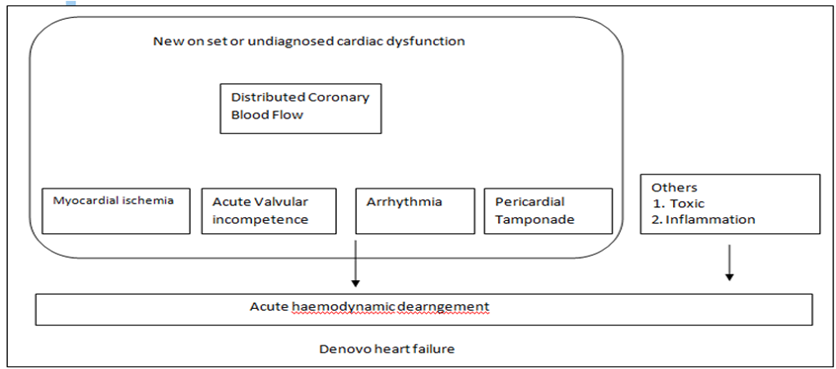
Mechanism of Denovo Heart Failure Fig.1 15
Table 1: Characteristics of Denovo Heart Failure 16
|
1 |
Patient characteristic’s |
No history of heart failure |
|
2 |
Co-morbidities |
Less frequent |
|
3 |
Tigger events |
Cardiac ischaemia or valvular incompetence (acute MI, acute mitral regulation), inflammatory (viral myocarditis) and toxic (drug-induced) insults |
|
4 |
Clinical presentation |
Cardiogenic shock and Acute pulmonary oedema |
|
5 |
Main pathophysiology |
Acute haemodynamic derangement caused by LV systolic dysfunction |
|
6 |
Mortality |
Lower mortality rates compared with ADCHF (acute decompensated chronic heart failure) |
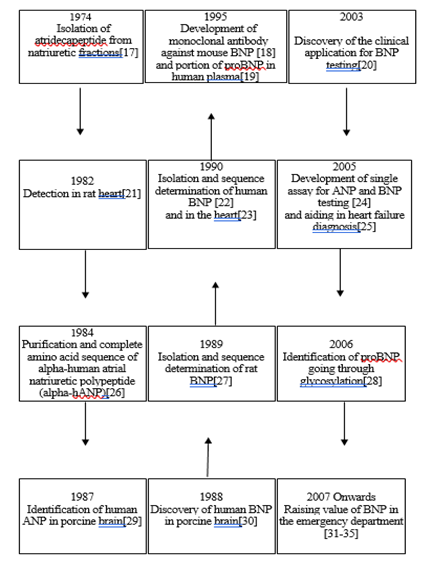
Figure 2: Time line of the research developments on natriuretic peptides (17-35)
The biology of the natriuretic peptide (NP) system is complex, The natriuretic peptides are a family of molecules consisting of several structurally-related hormones. At present, the natriuretic peptide family includes atrial natriuretic peptide (ANP), B-type (or brain) natriuretic peptide (BNP), C-type natriuretic peptide (CNP), and dendroaspis natriuretic peptide (DNP). Biologically, these neuro hormones affect body fluid homeostasis (through natriuresis and diuresis) and vascular tone (through decreased angiotensin II, norepinephrine synthesis), both essential components in the pathophysiology of CHF.36 B-type natriuretic peptides are produced initially as a 134 amino acid pre-pro-peptide,
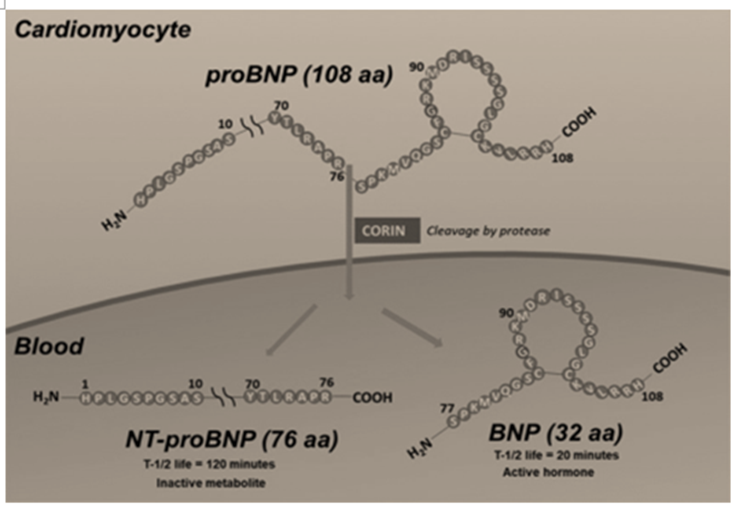
Figure 3 shows cleavage of proBNP 37
B-type natriuretic peptides are produced initially as a 134 amino acid pre-pro-peptide, which is cleaved into proBNP108, a precursor molecule stored in secretory granules in myocytes (see Figure3) Upon release, proBNP108 is cleaved by a protease known as furin into N-terminal (NT)-proBNP (a 76 amino acid biologically-inert portion), and BNP (which is biologically active).
Corin and furin are the possible proBNP activating enzymes produced in the cardiomyocytes and both are soluble circulating and membrane-bound forms may be involved in proBNP processing38 proBNP isdegradedintoNT
proBNPandBNPina1:1ratio.39
In humans, NT-proBNP and BNP are found in largest concentration in the left ventricular (LV) myocardium, but are also detectable in atrial tissue as well as in the myocardium of the right ventricle. The half-life of BNP is only 18 minutes. NT-proBNP is dramatically more stable than BNP, with very little variation in the level of the marker after collection for at least 72 hours, and probably longer.40
MATERIALS AND METHODS:
Materials
This was a retrospective cross-sectional study based on clinical records collected from Malla Reddy Narayana Multi speciality hospital (NABL accreditation) labA total of 1120medical records were included in the analysis, of which 760 corresponded to the year 2025 and 360 to the year 2026. Statistical significance was measured with Z test and statistical significance measured where p value is <0.0001
Sampling technique: Convenient Sampling from the patients who are attending cardiology department
Inclusion criteria: The materials of this study was included 560 patients with definite evidence of new onset or undiagnosed cardiac dysfunction and 560 normal healthy individuals as control.
Exclusion criteria: Acute myocardial infarction (with in three months), Cardiogenic shock, severe valvular disease, severe renal dysfunction.
Analytical issues: NT-proBNP2 (PBN2) is an automated quantitative test for use on the instruments of the VIDAS (immuno diagnostic assay system). The VIDAS NT-proBNP2 (PBN2) test is used as an aid in the diagnosis of suspected heart failure.
Study Methodology: Ethical Committee approval was obtained. Patients who are eligible to the study are included and patients NT-proBNP2 values measured with VIDAS (immuno diagnostic assay system) was recorded and data was compared with control group.
Statistical Techniques: The quantitative data was expressed with mean and standard deviation statistical significance was measured with Z test and statistical significance measured where p value is <0.0001.
Methods
Estimation of NT-proBNP2 levels measured by VIDAS (immuno diagnostic assay system)
Principle
The assay principle combines a one-step immunoassay sandwich method with a final fluorescent detection(ELFA).
The Solid Phase Receptacle (SPR), serves as the solid phase as well as the pipetting device. Reagents for the assay are ready-to-use and pre-dispensed in the strip. All of the assay steps are performed automatically by the instrument.
The sample is transferred into the well containing alkaline phosphatase-labeled anti-NT-proBNP antibody (conjugate). The sample/conjugate mixture is cycledin and out of the SPR several times. This operation enables the antigen to bind with the immunoglobulins fixed to the interior wall of the SPR and to the conjugate to form a sandwich. Unbound compounds are eliminated during washing steps.
Two detection steps are performed successively. During each step, the substrate(4-Methyl-umbelliferylphosphate) is cycled in and out of the SPR. The conjugate enzyme catalyzes the hydrolysis of this substrate in to a fluorescent product (4-Methyl-umbelliferone) the fluorescence of which is measured at 450 nm. The intensity of the fluorescence is proportional to the concentration of antigen present in the sample.
RESULTS:
Table 2: NT-proBNP2 levels in de-novoheart failure patients and Controls
|
Groups |
NT ProBNP Mean±SD |
Z Value |
p value |
|
Control |
161.46 ± 75.05 |
36.55
|
<0.0001 |
|
de-novoheart failure patients |
3393.66 ± 1975.53
|
|
|
|
|
|
|
|
The NTpro BNP levels were determined by VIDAS (immuno diagnostic assay system) . Table 1 presents the mean serum NT ProBNP levels in a sample of 1120 individuals, including both males and females. The data indicates that the mean serum NT ProBNP levels in the cases are greater compared to the mean levels observed in the control group. The observed rise exhibits statistical significance.
DISCUSSION:
This was a retrospective cross-sectional study based on clinical records collected from Malla Reddy Narayana Multi speciality hospital (NABL accreditation) Lab A total of 1120records were included in the analysis, of which 760 corresponded to the year 2025 and 360 to the year 2026. Statistical significance was measured with Z test and statistical significance measured where p value is <0.0001.This increase (NT ProBNP<0.0001) is statistically highly significant Patients with de-novo heart failure patients.
It is often difficult to make a differential diagnosis in patients admitted to the emergency department with the complaint of shortness of breath. Echocardiography is still the gold standard diagnostic method of heart failure, although its use in emergency departments is limited in terms of both cost and accessibility. 41,42 Therefore, NT-proBNP have become routine tests in emergency departments in recent years because they are reliable, easy to use and low-cost laboratory tests.43 American College of Emergency Physicians and European Society of Cardiology recommended the clinical use of natriuretic peptide measurements as an aid in the diagnosis or exclusion of acute heart failure.44
Maisel et al. wrote a review about using natriuretic peptide levels in clinical practice and recommended cut points of NT-proBNP for heart failure diagnosis. In case of NT-proBNP higher levels were reported. They have also stressed age dependent variations of NT-proBNP.45 While a cut point of 300 pg/ml is proposed to rule out the diagnosis of heart failure, for patients younger than 50 years old, between 50-75 and above 75 NT-proBNP levels respectively > 450 pg/ml, > 900 pg/ml, and > 1800 pg/ml have high likelihood of heart failure. 46 NT-proBNP measurements also give clues about the disease process of heart failure more than excluding the diagnosis.
Januzzi et al. studied the cut points of NT-proBNP in the diagnosis of heart failure and the relationship between disease severity and NT-proBNP levels. They found that levels above 1000 pg/ml were associated with severe heart failure and adverse prognosis.47 Natriuretics also give information about future prognosis of heart failure patients. Previous studies all give linear correlations NT-proBNP levels and disease severity. However, to our knowledge, the decision of hospitalization for heart failure paitents does not have a known cut point of NT-proBNP. In this study, we aimed to evaluate the general profile of the patients with a preliminary diagnosis of CHF admitted to emergency room with the complaint of shortness of breath. We also compared these properties with NT-proBNP to assess whether it can be used reliably for the decision of hospitalization among these patients.
Our study did not provide a clear answer to the question whether there is any limit value in NT-proBNP for hospitalization. When the data were evaluated, minimum value of NT-proBNP was found to be 1000 pg/ml for clinically hospitalized patients and 245 pg/ml, for outpatients. Thus, this study has not determined a certain cut-off value of NT-proBNP for hospitalization decision.
CONCLUSION:
NT-proBNP has been shown as an easy diagnostic method among routine emergency service tests in the most recent guidelines on CHF. However, it is not currently included among the classic criteria for hospitalization. A certain cut-off value may be determined in further multi-centre controlled trials conducted with larger patient groups. As a result, doctors working in emergency departments would have a very practical helper method in terms of approaches to diagnosis and treatment of CHF. Such a method would also prevent unnecessary hospital admissions and high costs of treatment. It would also prevent many secondary problems that may develop in elderly patients with concomitant illnesses due to hospitalizations. However, at present, the main determinant of the follow-up method should be clinical characteristics of the patient. The evidence supports the routine adoption of N-terminal pro Btype natriuretic peptide (NTproBNP) measurement to rule-in and rule-out acute heart failure in adults presenting to the emergency department in whom there is clinical suspicion of this diagnosis Natriuretics also give information about future in adults presenting to the emergency department in whom there is clinical suspicion of this diagnosis Natriuretics also give information about future prognosis of heart failure patients.
REFERENCES:
1. European journal of heart failure (2023)25,1981-1998doic 10.1002/ejhf.3036
2. Hacke, W.; Kaste, M.; Bluhmki, E.; Brozman, M.; Davalos, A.; Guidetti, D.; et al.Thrombolysis with alteplase 3 to 4.5 hours after acute ischemic stroke.N. Engl.J. Med. 2008, 359, 1317–1329.
3. Sandercock, P.; Wardlaw, J.M.; Lindley, R.I.; Dennis, M.; Cohen, G.; Murray, G.; et al., The benefits and harms of intravenous thrombolysis with recombinant tissue plasminogen activator within 6 h of acute ischaemic stroke (the third international stroke trial [IST-3]): A randomised controlled trial. Lancet 2012, 379, 2352–2363.
4. Kuhrij, L.S.; Marang-van de Mheen, P.J.; van den Berg-Vos, R.M.; de Leeuw, F.-E.; Nederkoorn, P.J. Determinants of extended door-to-needle time in acute ischemic stroke and its influence on in-hospital mortality: Results of a nationwide Dutch clinical audit. BMC Neurol. 2019, 19, 265.
5. National Institute of Neurological Disorders; Strokert- PA Stroke Study Group. Tissue Plasminogen Activator for Acute Ischemic Stroke. N. Engl. J. Med. 1995, 333, 1581–1588.
6. Adams,H.P.,Jr.; DelZoppo,G.; Alberts,M.J.; Bhatt,D.L.; Brass,L.; Furlan,A.; et al Guidelines for the early management of adults with ischemic stroke: A guideline from the American Heart Association /American Stroke Association Stroke Council, Clinical Cardiology Council, Cardiovascular Radiology and Intervention Council, and the Atherosclerotic Peripheral Vascular Disease and Quality of Care Outcomes in Research Interdisciplinary Working Groups: The American Academy of Neurology affirms the value of this guideline as an educational tool for neurologists.Stroke 2007, 38, 1655–1711.
7. Sukumaran,M.; Cantrell,D.R.; Ansari,S.A.; Huryley,M.; Shaibani,A.; Potts,M.B. Stroke patient work flow optimization. Endovasc Today 2019, 18, 46–50.
8. Harpaz, D.; Eltzov, E.; Seet, R.; Marks, R.S.; Tok, A.I.Y. Point-of-care-testing in acute stroke management: An unmet need ripe for technological harvest. Biosensors 2017, 7, 30.
9. Quinn,T.J.; Drozdowska,B.A. Stroke prediction and the future of prognosis research. Nat.Rev.Neurol. 2019,15,311–312.
10. Cata,J.P.; Abdelmalak,B.; Farag,E. Neurological biomarkers in the perioperative period . Br.J.Anaesth. 2011,107,844–858.
11. Lee,N.S.; Daniels,L.B. Natriuretic peptide use in screening in the community. In Cardiac Biomarkers; Springer: Berlin/Heidelberg, Germany, 2016; pp. 181–193.
12. Balion, C.; McKelvie, R.; Don-Wauchope, A.C.; Santaguida, P.L.; Oremus, M.; Keshavarz, H.; et al, .B-type natriuretic peptide – guided therapy: Asystematic review. Heart Fail. Rev. 2014, 19, 553–564.
13. Thygesen, K., Mair, J., Mueller, C., Huber, K., Weber, M., Plebani, M., et al. Recommendations for the use of natriuretic peptides in acute cardiac care: a position statement from the Study Group on Biomarkers in Cardiology of the ESC Working Group on Acute Cardiac Care. Eur. Heart J. 2012, 33, 2001–2006.
14. Fu, S., Ping, P., Wang, F., and Luo, L.. Synthesis, secretion, function, metabolism and application of natriuretic peptides in heart failure. J. Biol. Eng. 2018,12:2.
15. Raffaello WM, Henrina J, Huang I, Lim MA, Suciadi LP, Siswanto BB, et al., Clinical Characteristics of De Novo Heart Failure and Acute Decompensated Chronic Heart Failure: Are They Distinctive Phenotypes That Contribute to Different Outcomes? Card Fail Rev. 2021 Feb 19;7:e02.
16. Younis A, Mulla W, Goldkorn R, et al. Differences in mortality of new-onset (de-novo) acute heart failure versus acute decompensated chronic heart failure. Am J Cardiol 2019;124:554–9.
17. Sedlakova, E.; Prusik, Z.; Škopková, J.; Barth, T.; Kluh, I.; Cort, J.H. Isolation of a tridecapeptide from natriuretic fractions of bovine posterior pituitary. Eur. J. Clin. Investig. 1974, 4, 285–292.
18. Nakagawa,M.;Tanaka,I.; Suga,S.I.; Ogawa,Y.; Tamura,N.; Goto,M.; et al., Preparation of amonoclonal anti body against mouse brain natriuretic peptide(BNP) and tissue distribution of BNP in mice. Clin. Exp. Pharmacol. Physiol. 1995, 22, S186–S187.
19. Hunt, P.J.; Yandle, T.G.; Nicholls, M.G.; Richards, A.M.; Espiner, E.A. The amino-terminal portion of pro-brain natriuretic peptide (Pro-BNP) circulates in human plasma.Biochem.Biophys.Res.Commun.1995, 214, 1175–1183.
20. Cowie, M.R.; Jourdain, P.; Maisel, A.; Dahlstrom, U.; Follath, F.; Isnard, R.; et al., Clinical applications of B-type natriuretic peptide (BNP)testing. Eur. HeartJ. 2003, 24, 1710–1718.
21. De Bold, A.J. Atrial natriuretic factor of the rat heart.Studies on isolation and properties.Proc.Soc.Exp. Biol. Med. 1982, 170, 133–138.
22. Kambayashi,Y.; Nakao,K.; Mukoyama,M.; Saito,Y.; Ogawa,Y.; Shiono,S.; et al., Isolation and sequence determination of human brain natriuretic peptide in human atrium. FEBSLet. 1990, 259, 341–345.
23. Hino,J.; Tateyama,H.; Minamino,N.; Kangawa,K.; Matsuo,H. Isolation and identification of human brain natriuretic peptides in cardiac atrium. Biochem. Biophys. Res. Commun. 1990, 167, 693–700.
24. Ala-Kopsala,M.; Ruskoaho,H.; Leppaluoto,J.; Seres,L.; Skoumal,R.; Toth,M.; et al., Single assay for amino-terminal fragments of cardiac A-and B-type natriuretic peptides. Clin. Chem. 2005, 51, 708–718.
25. Lewin, J.; Ledwidge, M.; O’Loughlin, C.; McNally, C.; McDonald, K. Clinical deterioration in established heart failure: What is the value of BNP and weight gain in aiding diagnosis? Eur.J. Heart Failure 2005, 7, 953–957.
26. Kangawa, K.; Matsuo, H. Purification and complete amino acid sequence of α-human atrial natriuretic polypeptide (α-hANP). Biochem. Biophys. Res. Commun. 1984, 118, 131–139.
27. Kambayashi, Y.; Nakao, K.; Itoh, H.; Hosoda, K.; Saito, Y.; Yamada, T.; et al., Isolation and sequence determination of rat cardiac natriuretic peptide. Biochem.Biophys. Res. Commun. 1989, 163, 233–240.
28. Schellenberger, U.; O’Rear, J.; Guzzetta, A.; Jue, R.A.; Protter, A.A.; Pollitt, N.S. The precursor to B-type natriuretic peptide is an O-linked glycoprotein. Arch. Biochem. Biophys. 2006, 451, 160–166.
29. Ueda, S.; Sudoh, T.; Fukuda, K.; Kangawa, K.; Minamino, N.; Matsuo, H. Identification of alpha atrial natriuretic peptide and in porcine brain. Biochem. Biophys. Res. Commun. 1987,149,1055–1062.
30. Sudoh,T.; Kangawa,K.; Minamino,N.; Matsuo,H. A new natriuretic peptide in porcine brain.Nature1988,332, 78–81.
31. Kreiger,G. A basic guide to under standing plasma B-type natriuretic peptide in the diagnosis of congestive heart failure. Medsurg Nurs. 2007, 16, 75–79.
32. Ray,P.; Delerme,S.; Jourdain,P.; Chenevier-Gobeaux,C. Differential diagnosis of acute dyspnea: The value of B natriuretic peptides in the emergency department. QJM Int.J. Med.2008, 101, 831–843.
33. Andritsos, M.; Singh, N.; Patel, P.; Sinha, A.; Fassl, J.; Wyckoff, T.; et al. The year in cardiothoracic and vascular anesthesia:Selected highlights from 2010. J.Cardiothorac.Vasc.Anesth.2011,25,6–15.
34. Cowie,M.R. Recent developments in the management of heart failure. Practitioner 2012, 256,25–30.
35. Oremus, M.; McKelvie, R.; Don-Wauchope, A.; Santaguida, L.P.; Ali, U.; Balion, C.; et al. A systematic review of BNPand NT-proBNP in the management of heart failure: Overview and methods. Heart Fail. Rev. 2014, 19, 413–419.
36. Levin E R, Gardner D G and Samson W K,"Natriuretic peptides", N. Eng. J. Med. (1998), 339: p. 321.
37. Kim YS, et al. Appl Microbiol Biotechnol. 2019
38. Clerico, A., Giannoni, A., Vittorini, S., and Passino, C. Thirty years of the heart as an endocrine organ : physiological role and clinical utility of cardiac natriuretic hormones. Am. J. Physiol. HeartCirc.Physiol.2011, 301,H12–H20.
39. Bayes-Genis, A., Santalo-Bel, M., Zapico-Muniz, E., Lopez, L., Cotes, C., Bellido, J., et al.. N-terminal probrain natriuretic peptide (NT-proBNP) in the emergency diagnosis and in-hospital monitoring of patients with dyspnoea and ventricular dysfunction. Eur. J. Heart Fail. 2004, 6, 301–308.
40. Heart. 2006 Jun;92(6):843–849.
41. Hunt SA, Abraham WT, Chin MH, Feldman AM, Francis GS, Ganiats TG, et al. ACC/AHA 2005 Guideline Update for the Diagnosis and Management of Chronic Heart Failure in the Adult: a report of the American College of Cardiology/American Heart Association Task Force on Practice Guidelines (Writing Committee to Update the 2001 Guidelines for the Evaluation and Management of Heart Failure): developed in collaboration with the American College of Chest Physicians and the International Society for Heart and Lung Transplantation: endorsed by the Heart Rhythm Society. Circulation. 2005; 112 (12): e154–e235.
42. Oh JK. Echocardiography in heart failure: beyond diagnosis. Eur J Echocardiogr. 2007;8(1):4–14.
43. Mueller C, Laule-Kilian K, Schindler C, Klima T, Frana B, Rodriguez D, et al. Cost-effectiveness of B-type natriuretic peptide testing in patients with acute dyspnea. Arch Intern Med. 2006;166(10):1081–7.
44. Peacock WF. Congestive heart failure and acute pulmonary edema. In: Tintinalli JE, Stapczynski JS, Ma OJ, Cline DM, Cydulka RK, Meckler GD, editors. Tintinalli's Emergency Medicine: A Comprehensive Study Guide. 7th ed. New York: McGraw Hill; 2011. pp. 405-15.
45. Maisel A, Hollander JE, Guss D, McCullough P, Nowak R, Green G, et al. Primary results of the Rapid Emergency Department Heart Failure Outpatient Trial (REDHOT): A multicenter study of B-type natriuretic peptide levels, emergency department decision making, and outcomes in patients presenting with shortness of breath. J Am Coll Cardiol. 2004;44(6):1328-33.
46. Maisel A, Mueller C, Adams K, Jr, Anker SD, Aspromonte N, Cleland JG, et al. State of the art: using natriuretic peptide levels in clinical practice. Eur J Heart Fail. 2008;10(9):824-39.
47. Januzzi JL, Jr, Camargo CA, Anwaruddin S, Baggish AL, Chen AA, Krauser DG, et al.The N-terminal Pro-BNP investigation of dyspnea in the emergency department (PRIDE) study. Am J Cardiol. 2005;95(8):948-54.