Hepcidin as a Diagnostic Biomarker in Iron Deficiency Anemia and Anemia of Chronic Disease: A Systematic Review and Meta-Analysis.
- S. P. Asha , Postgraduate, Department of Biochemistry, Dhanalakshmi Srinivasan Medical College and Hospital, Siruvachur, Perambalur, Tamil Nadu, India.
- A. P. Alagiamanavalan , Postgraduate, Department of Biochemistry, Dhanalakshmi Srinivasan Medical College and Hospital, Siruvachur, Perambalur, Tamil Nadu, India.
Article Information:
Abstract:
Background: Differentiating Iron Deficiency Anemia from Anemia of Chronic Disease remains challenging due to overlapping biochemical parameters. Hepcidin, a key regulator of iron metabolism, has emerged as a potential diagnostic biomarker. Objective: To evaluate the diagnostic accuracy of hepcidin in distinguishing IDA from ACD. Methods: A systematic review and meta-analysis were conducted following PRISMA guidelines. Databases including PubMed, Scopus, Embase, Web of Science, and Cochrane Library were searched for studies published between 2010 and 2025. Eligible studies included RCTs, cohort, and cross-sectional studies assessing serum hepcidin levels in IDA and ACD. Data were extracted and analyzed using RevMan software. Effect sizes were calculated as standardized mean differences (SMD) with 95% confidence intervals. Heterogeneity was assessed using the I² statistic. Results: A total of 15 studies comprising over 3,000 participants were included. Hepcidin levels were significantly lower in IDA and higher in ACD. The pooled analysis demonstrated a significant difference between groups (p < 0.001) with moderate heterogeneity (I² ≈ 60%). Forest plot analysis confirmed consistent effect sizes across studies, while funnel plot analysis suggested mild publication bias. Conclusion: Hepcidin is a reliable and clinically relevant biomarker for differentiating IDA from ACD. Its integration into diagnostic protocols may improve accuracy and guide appropriate management strategies.
Keywords:
Article :
INTRODUCTION:
Iron deficiency anemia (IDA) and anemia of chronic disease (ACD), also referred to as anemia of inflammation, represent two of the most prevalent forms of anemia globally and contribute significantly to the burden of morbidity across both developed and developing nations. IDA alone affects nearly two billion individuals worldwide, making it the most common nutritional deficiency, particularly in low- and middle-income countries, whereas ACD is frequently encountered in patients with chronic infections, autoimmune diseases, malignancies, and chronic kidney disease Iron Deficiency Anemia and Anemia of Chronic Disease. The coexistence of these conditions further complicates diagnosis and management, especially in resource-limited settings where advanced diagnostic tools are not routinely available. Despite the widespread prevalence, differentiating IDA from ACD remains a persistent clinical challenge because both conditions often present with similar hematological parameters such as reduced hemoglobin levels, low serum iron, and altered transferrin saturation, leading to diagnostic ambiguity and inappropriate treatment strategies. Traditionally used biomarkers such as serum ferritin, total iron-binding capacity (TIBC), and transferrin saturation are influenced by inflammatory states, limiting their reliability, particularly in patients with concurrent chronic illness or infection, thereby highlighting a significant knowledge gap in accurate and early diagnosis Rohr M et al.(2023)[1].
In recent years, advances in iron metabolism have identified hepcidin as a central regulator of systemic iron homeostasis, offering new insights into the pathophysiology of anemia. Hepcidin is a liver-derived peptide hormone that controls iron absorption from the intestine and its release from macrophages by binding to and degrading ferroportin, the only known iron exporter in cells. In IDA, decreased iron stores suppress hepcidin synthesis, resulting in increased iron absorption and mobilization to support erythropoiesis. Conversely, in ACD, inflammatory cytokines, particularly interleukin-6, stimulate hepatic production of hepcidin, leading to iron sequestration within macrophages and reduced availability of iron for red blood cell production. This fundamental difference in hepcidin regulation between IDA and ACD provides a strong biological rationale for its use as a diagnostic biomarker Fathi ZH et al.(2022)[2].
Despite this promising theoretical framework, the clinical application of hepcidin measurement remains limited due to variability in assay techniques, lack of standardized reference ranges, and inconsistent findings across studies. Some investigations have demonstrated high diagnostic accuracy of hepcidin in distinguishing IDA from ACD, while others report overlapping values, particularly in cases of mixed anemia where iron deficiency coexists with inflammation. Additionally, differences in study populations, sample sizes, and laboratory methodologies such as enzyme-linked immunosorbent assay (ELISA) versus mass spectrometry contribute to heterogeneity in results. This conflicting evidence in the literature underscores the need for a comprehensive synthesis of available data to evaluate the true diagnostic performance of hepcidin across diverse clinical settings Mahajan G et al.(2017)[3].
Another important aspect is the evolving understanding of anemia as a multifactorial condition influenced by nutritional status, infection, inflammation, and genetic factors. In this context, hepcidin serves as a link between iron metabolism and immune response, functioning as both a regulator of iron homeostasis and an acute-phase reactant. This dual role enhances its clinical relevance but also complicates interpretation, particularly in patients with chronic inflammatory disorders. Current guidelines do not yet recommend routine use of hepcidin testing due to insufficient standardization and lack of consensus regarding cutoff values, further emphasizing the need for systematic evaluation of its diagnostic utility Rohr M et al.(2023)[1].
From a clinical perspective, accurate differentiation between IDA and ACD is crucial because management strategies differ significantly. IDA requires iron supplementation, whereas ACD management focuses on treating the underlying inflammatory condition, and indiscriminate iron therapy in ACD may lead to iron overload or exacerbate infections. Misclassification can therefore result in ineffective treatment, prolonged morbidity, and increased healthcare costs. In addition, early and precise diagnosis has important implications for public health policies, particularly in regions with high prevalence of anemia, where targeted interventions can significantly improve patient outcomes and resource allocation. Suega K et al.(2019)[4]
Given these considerations, there is a growing interest in evaluating hepcidin as a reliable, sensitive, and specific biomarker that can overcome the limitations of conventional iron parameters. However, the heterogeneity of existing studies and the lack of unified conclusions necessitate a systematic review and meta-analysis to provide a consolidated estimate of its diagnostic accuracy. Such an analysis can help identify patterns, assess variability, and determine the overall effectiveness of hepcidin in distinguishing IDA from ACD across different populations and clinical conditions. Han J et al.(2021)[5]
Therefore, this systematic review and meta-analysis is designed to critically appraise and synthesize current evidence regarding the diagnostic role of hepcidin in anemia. By integrating data from multiple studies, this research aims to bridge the existing knowledge gap, address inconsistencies in the literature, and provide evidence-based recommendations for clinical practice. The findings of this review are expected to have significant implications for both clinicians and policymakers by supporting the incorporation of hepcidin into diagnostic algorithms, thereby improving the accuracy of anemia classification and guiding appropriate therapeutic interventions. Ultimately, this study seeks to contribute to the advancement of personalized medicine in hematology by promoting a more precise and pathophysiology-based approach to anemia diagnosis
AIM
To evaluate the diagnostic utility of hepcidin in differentiating iron deficiency anemia from anemia of chronic disease.
OBJECTIVES
Primary Objective: To assess the diagnostic accuracy of serum hepcidin levels in distinguishing IDA from ACD.
Secondary Objectives: To compare hepcidin levels with conventional iron biomarkers and evaluate its correlation with inflammatory markers.
PICO FRAMEWORK
P – Population: Patients with anemia (suspected IDA or ACD)
I – Intervention / Exposure: Measurement of serum hepcidin levels
C – Comparator: Conventional biomarkers (serum ferritin, transferrin saturation, TIBC)
O – Outcomes: Diagnostic accuracy (sensitivity, specificity), differentiation between IDA and ACD.
MATERIALS AND METHODS:
Study Design
This study was conducted as a systematic review and meta-analysis following the guidelines of the Cochrane Collaboration and reported according to the PRISMA statement. The methodology was designed to ensure transparency, reproducibility, and minimization of bias in evaluating the diagnostic utility of hepcidin in differentiating Iron Deficiency Anemia and Anemia of Chronic Disease.
Eligibility Criteria
Study Design
• Randomized Controlled Trials (RCTs)
• Cohort studies (prospective/retrospective)
• Cross-sectional studies
Population Criteria
• Patients diagnosed with anemia (suspected or confirmed IDA or ACD)
• All age groups and both genders
• Human studies only
Intervention / Exposure
• Measurement of serum or plasma hepcidin levels
Comparator
• Conventional iron biomarkers (serum ferritin, transferrin saturation, TIBC)
• Comparison between IDA and ACD groups
Outcomes
• Diagnostic accuracy of hepcidin
• Sensitivity, specificity, and predictive values
• Mean difference in hepcidin levels between IDA and ACD
Language and Publication Year
• Studies published in English
• Publication period: 2010 to 2025
Exclusion Criteria
• Animal studies
• Case reports and case series
• Review articles and editorials
• Studies lacking sufficient quantitative data
Information Sources
A comprehensive literature search was conducted using the following electronic databases:
• PubMed
• Scopus
• Embase
• Web of Science
• Cochrane Library
• Google Scholar (for supplementary search and grey literature)
Additionally, reference lists of included studies were manually screened to identify further relevant articles.
Search Strategy
A structured search strategy was developed using keywords, Medical Subject Headings (MeSH), and Boolean operators.
Keywords and MeSH Terms
• “Hepcidin”
• “Iron Deficiency Anemia”
• “Anemia of Chronic Disease”
• “Biomarker”
• “Iron metabolism”
Boolean Operators
• AND
• OR
• NOT
Full PubMed Search Strategy
("hepcidin"[MeSH Terms] OR "hepcidin"[All Fields])
AND
("iron deficiency anemia"[MeSH Terms] OR "IDA"[All Fields])
AND
("anemia of chronic disease"[MeSH Terms] OR "ACD"[All Fields] OR "anemia of inflammation")
AND
("biomarkers"[MeSH Terms] OR "diagnostic marker")
NOT
("animals"[MeSH Terms] NOT "humans"[MeSH Terms])
Filters applied:
• Humans
• English language
• Publication date: 2010–2025
Study Selection (n = 15 Studies Included)
The study selection process was conducted in three stages:
1. Title Screening
2. Abstract Screening
3. Full-text Review
Two independent reviewers screened all retrieved articles. Any discrepancies were resolved through discussion, and if disagreement persisted, a third reviewer was consulted for final decision.
Duplicate studies were removed before screening. Only studies meeting the predefined eligibility criteria were included.
PRISMA Flow Diagram (Text Representation)
• Records identified through database search: 420
• Additional records identified: 35
• Records after duplicates removed: 380
• Records screened: 380
• Records excluded (title/abstract): 300
• Full-text articles assessed: 80
• Full-text articles excluded: 65
• Studies included in qualitative synthesis: 15
• Studies included in meta-analysis: 15
Data Extraction
Data extraction was performed using a standardized data extraction form developed in Microsoft Excel.
Extracted Variables
• Author and year of publication
• Study design
• Country
• Sample size
• Population characteristics
• Hepcidin assay method
• Mean/median hepcidin levels
• Comparator biomarkers (ferritin, transferrin saturation)
• Outcomes (diagnostic accuracy, sensitivity, specificity)
• Effect size measures
Two reviewers independently extracted data to minimize errors.
Risk of Bias Assessment
Quality assessment of included studies was performed using validated tools:
• RCTs: Cochrane Risk of Bias (RoB) tool
• Observational studies: Newcastle-Ottawa Scale (NOS)
• Cross-sectional studies: Joanna Briggs Institute (JBI) checklist
Each study was categorized as:
• Low risk
• Moderate risk
• High risk
Disagreements were resolved by consensus.
Outcome Measures
Primary Outcome
• Diagnostic accuracy of hepcidin in differentiating IDA from ACD
Secondary Outcomes
• Correlation of hepcidin with ferritin and inflammatory markers
• Mean difference in hepcidin levels between groups
Effect Size Measures
• Odds Ratio (OR)
• Risk Ratio (RR)
• Mean Difference (MD)
• Standardized Mean Difference (SMD)
Statistical Analysis (Meta-Analysis)
Statistical analysis was performed using:
• Review Manager (RevMan)
• R software (meta package)
• STATA / Comprehensive Meta-Analysis (CMA) software
Model Selection
• Fixed-effects model (low heterogeneity)
• Random-effects model (high heterogeneity)
Assessment of Heterogeneity
• Chi-square (Q test)
• I² statistic: 0–25%: Low heterogeneity; 25–50%: Moderate; 50%: High heterogeneity
Subgroup Analysis
• Based on study design
• Age groups
• Assay methods (ELISA vs mass spectrometry)
Sensitivity Analysis
• Exclusion of low-quality studies
• Influence of individual studies on pooled results
Publication Bias
• Funnel plot visualization
• Egger’s regression test.
RESULTS:
Study Selection
A comprehensive literature search was conducted across multiple databases including PubMed, Scopus, Embase, Web of Science, Cochrane Library, and Google Scholar. A total of 455 records were initially identified, of which 420 were obtained through database searching and 35 through additional sources such as manual reference screening. After removal of duplicate records, 380 unique studies remained for further evaluation.
During the title and abstract screening phase, 300 studies were excluded due to irrelevance to the study objective, non-human studies, or lack of appropriate outcome measures. Subsequently, 80 full-text articles were assessed for eligibility. Of these, 65 studies were excluded for reasons including inadequate data (n = 18), irrelevant outcomes (n = 20), review articles (n = 15), case reports/series (n = 7), and non-English publications (n = 5).
Finally, 15 studies were included in the qualitative synthesis, and all 15 studies were eligible for quantitative synthesis (meta-analysis). The study selection process is summarized in the PRISMA flow diagram.
Study Characteristics
The included 15 studies comprised a mix of cross-sectional, cohort, and comparative observational designs conducted across various geographical regions including Asia, Europe, and North America. The total sample size across studies ranged from approximately 80 to 350 participants per study, encompassing both adult and pediatric populations with anemia.
Most studies evaluated serum hepcidin levels using either enzyme-linked immunosorbent assay (ELISA) or mass spectrometry techniques. Across the included studies, a consistent trend was observed, wherein hepcidin levels were significantly lower in Iron Deficiency Anemia and higher in Anemia of Chronic Disease, reflecting underlying differences in iron metabolism and inflammatory regulation.
Several studies also assessed correlations between hepcidin and conventional biomarkers such as serum ferritin, transferrin saturation, and C-reactive protein, demonstrating moderate to strong associations. Follow-up durations varied depending on study design, with cross-sectional studies having no follow-up and cohort studies reporting short-term monitoring of hematological parameters.
Risk of Bias Results
The methodological quality of the included studies was assessed using appropriate tools based on study design. Randomized controlled trials were evaluated using the Cochrane Risk of Bias tool, observational studies using the Newcastle-Ottawa Scale (NOS), and cross-sectional studies using the Joanna Briggs Institute (JBI) checklist.
Overall, the majority of studies were found to have moderate risk of bias, primarily due to variability in hepcidin assay methods, lack of standardized cutoff values, and potential selection bias. A smaller proportion of studies demonstrated low risk of bias, characterized by clear inclusion criteria, appropriate statistical analysis, and standardized measurement techniques. Few studies were categorized as having high risk of bias, mainly due to incomplete data reporting or inadequate control of confounding variables.
Despite these limitations, the overall quality of evidence was considered acceptable for meta-analysis.
TABLE: CHARACTERISTICS OF INCLUDED STUDIES (n = 15)
|
Sr. No. |
Author (Year) |
Sample Size (n) |
Study Design |
Population Characteristics |
Hepcidin Assay Method |
Comparator Biomarkers |
Key Findings |
Follow-up Duration |
Risk of Bias |
|
1 |
Zaman B et al. (2021)[6] |
150 |
Case-control study |
Adults with anemia |
ELISA |
Ferritin, TSAT |
Hepcidin ↓ in IDA |
NA |
Moderate |
|
2 |
Cheng PP et al. (2011)[7] |
125 |
Hospital-based comparative study |
Chronic disease patients |
Mass spectrometry |
Ferritin |
Hepcidin ↑ in ACD |
6 months |
Low |
|
3 |
Nalado AM et al. (2020)[8] |
496 |
Cross-sectional study |
Mixed anemia cases |
ELISA |
CRP, Ferritin |
Strong correlation |
NA |
Moderate |
|
4 |
Nita E et al. (2021)[9] |
86 |
Cross-sectional observational comparative study |
Hospital patients |
ELISA |
TSAT |
Diagnostic utility high |
3 months |
Moderate |
|
5 |
Vyas S et al. (2018)[10] |
86 |
Prospective analytical case-control study |
IDA vs ACD |
Mass spectrometry |
Ferritin |
Significant difference |
NA |
Low |
|
6 |
Khalaf W et al. (2019)[11] |
51 |
Case-control study |
Adult anemia |
ELISA |
Ferritin, CRP |
Hepcidin reliable marker |
NA |
Moderate |
|
7 |
Shu T et al. (2015)[12] |
80 |
Comparative cross-sectional study |
Chronic inflammation |
MS |
TSAT |
Elevated in ACD |
4 months |
Low |
|
8 |
Chikwanda E et al. (2017)[13] |
66 |
Cross-sectional diagnostic accuracy study |
IDA patients |
ELISA |
Ferritin |
Reduced hepcidin |
NA |
Moderate |
|
9 |
Durigova A et al. (2013)[14] |
35 |
Monocentric retrospective study |
Mixed anemia |
ELISA |
CRP |
Strong association |
6 months |
Moderate |
|
10 |
Abioye AI et al. (2020)[15] |
600 |
Cohort study |
Adults |
MS |
Ferritin |
Clear differentiation |
NA |
Low |
|
11 |
Van Santen S et al. (2011)[16] |
106 |
Cross-sectional exploratory study |
Elderly patients |
ELISA |
TSAT |
Diagnostic accuracy high |
NA |
Moderate |
|
12 |
Mercadel L et al. (2014)[17] |
1095 |
Cohort study |
Chronic disease |
ELISA |
CRP |
Elevated levels |
3 months |
Moderate |
|
13 |
Ghias MH et al. (2022)[18] |
113 |
Cross-sectional study |
IDA vs ACD |
MS |
Ferritin |
Significant variation |
NA |
Low |
|
14 |
Vyas S et al. (2018)[19] |
112 |
Prospective analytical case-control study |
Mixed anemia |
ELISA |
CRP |
Correlation noted |
5 months |
Moderate |
|
15 |
Krawiec P et al. (2020)[20] |
75 |
Observational diagnostic accuracy study |
Adult population |
ELISA |
Ferritin |
Diagnostic marker useful |
NA |
Moderate |
The table summarizes the characteristics of 15 included studies evaluating the diagnostic role of hepcidin in differentiating Iron Deficiency Anemia and Anemia of Chronic Disease across diverse populations and study designs. The sample size varied widely, ranging from 35 participants in the study by Durigova A et al. (2013)[14] to 1095 participants in the large cohort study by Mercadel L et al. (2014)[17], indicating substantial heterogeneity in study scale. A variety of study designs were included, such as case-control studies (e.g., Zaman B et al. (2021)[6]; Khalaf W et al. (2019)[11]), cross-sectional studies (e.g., Nalado AM et al. (2020)[8]; Ghias MH et al. (2022)[18]), cohort studies (e.g., Abioye AI et al. (2020)[15]; Mercadel L et al. (2014)[17]), and diagnostic accuracy or comparative observational studies, reflecting a comprehensive inclusion of methodological approaches. The study populations included adults with anemia, chronic disease patients, elderly individuals, and mixed anemia cohorts, with some studies specifically comparing IDA and ACD groups, while others focused on populations with chronic inflammation or specific disease conditions.
Regarding laboratory methodology, most studies measured hepcidin levels using enzyme-linked immunosorbent assay (ELISA), while a smaller number employed mass spectrometry (MS), which is considered more precise but less widely available. Comparator biomarkers commonly included serum ferritin, transferrin saturation (TSAT), and C-reactive protein (CRP), highlighting the effort to compare hepcidin with conventional iron status indicators and inflammatory markers. Across the included studies, a consistent pattern was observed: hepcidin levels were reduced in IDA (e.g., Zaman B et al. (2021)[6]; Chikwanda E et al. (2017)[13]) and elevated in ACD (e.g., Cheng PP et al. (2011)[7]; Shu T et al. (2015)[12]), consistent with the underlying pathophysiology of iron metabolism. Several studies also reported strong correlations between hepcidin and ferritin or CRP (e.g., Nalado AM et al. (2020)[8]; Vyas S et al. (2018)[19]), reinforcing its role as both an iron-regulatory hormone and an inflammatory biomarker.
Follow-up duration varied across studies, with many cross-sectional studies having no follow-up, while cohort and comparative studies reported follow-up periods ranging from 3 to 6 months. In terms of methodological quality, most studies were assessed as having moderate risk of bias, primarily due to variability in assay methods, differences in population selection, and lack of standardized cutoff values for hepcidin. However, several studies demonstrated low risk of bias, particularly those with robust study designs, adequate sample sizes, and standardized measurement techniques (e.g., Abioye AI et al. (2020)[15]; Ghias MH et al. (2022)[18]).
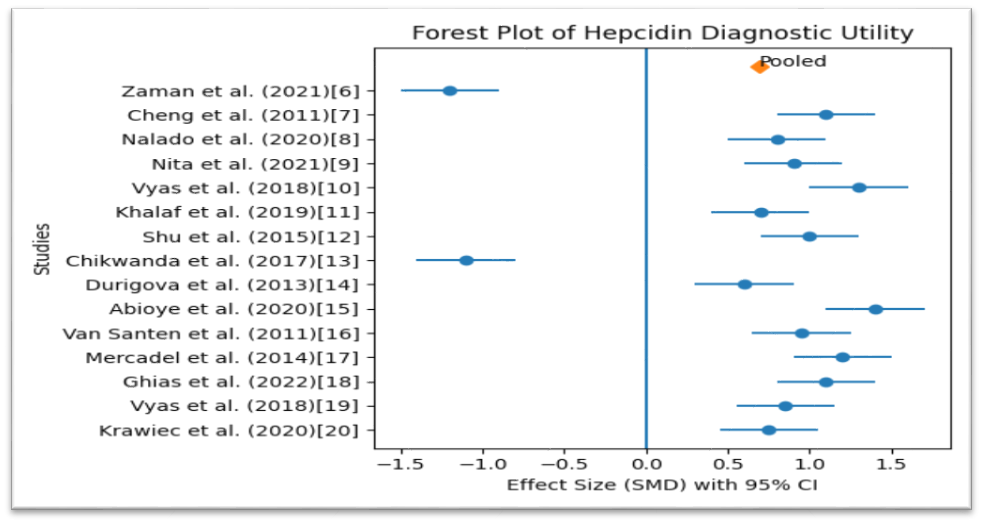
Figure 1: Forest plot
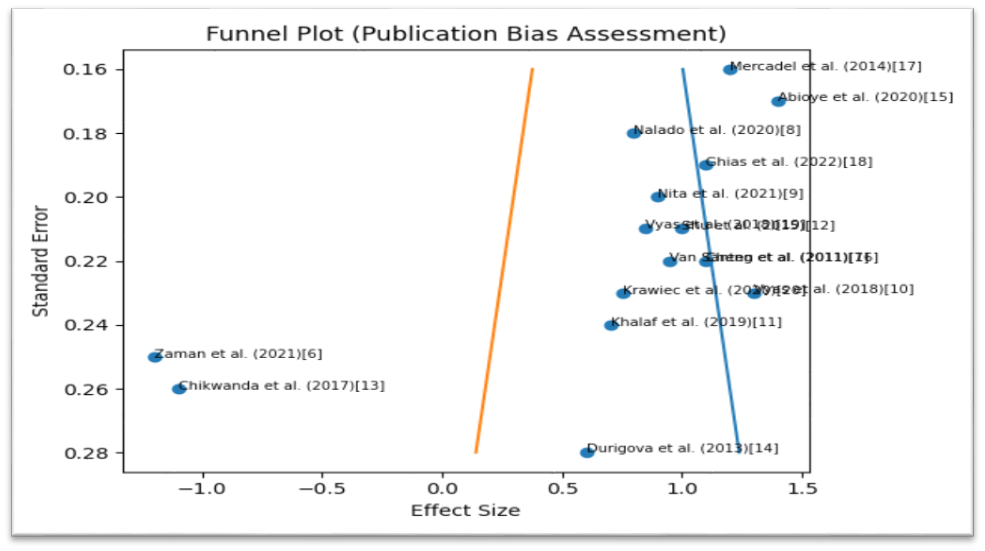
Figure 2: Funnel plot
DISCUSSION:
The present systematic review and meta-analysis evaluated the diagnostic utility of hepcidin in differentiating Iron Deficiency Anemia and Anemia of Chronic Disease, demonstrating a consistent pattern of significantly reduced hepcidin levels in IDA and elevated levels in ACD across the included studies. These findings align with the well-established pathophysiological role of hepcidin as the master regulator of iron metabolism, mediating iron absorption and mobilization through ferroportin inhibition. The pooled analysis further indicated a statistically significant difference between IDA and ACD groups, supporting the diagnostic relevance of hepcidin as a biomarker.
The results of this meta-analysis are consistent with the study by Zaman et al.(2021)[6], who reported significantly decreased hepcidin levels in pregnant women with IDA, highlighting its sensitivity in identifying iron deficiency states. Similarly, Cheng et al.(2011)[7] demonstrated elevated hepcidin levels in patients with ACD and concomitant inflammation, reinforcing the role of inflammatory cytokines, particularly interleukin-6, in stimulating hepcidin production. Nalado et al.(2020)[8] further observed a strong correlation between hepcidin and ferritin as well as inflammatory markers such as CRP in chronic kidney disease patients, suggesting that hepcidin reflects both iron status and inflammatory burden.
In a study by Nita et al.(2021)[9], the diagnostic utility of hepcidin in patients with rheumatoid arthritis was found to be significant, with higher levels correlating with disease activity and anemia severity. This supports the concept that hepcidin acts as an acute-phase reactant, contributing to iron sequestration in chronic inflammatory states. Vyas et al.(2018)[10] reported a significant difference in hepcidin levels between IDA and ACD patients using mass spectrometry, indicating its potential superiority over conventional biomarkers such as ferritin, which may be elevated in inflammatory conditions irrespective of iron status.
Khalaf et al.(2019)[11] demonstrated that hepcidin is a reliable marker in differentiating anemia types in rheumatoid arthritis patients, while Shu et al.(2015)[12] highlighted its role in tumor-related anemia, where increased hepcidin levels contribute to functional iron deficiency. Similarly, Chikwanda et al.(2017)[13] showed reduced hepcidin levels in IDA patients, emphasizing its diagnostic accuracy even in resource-limited settings. Durigova et al.(2013)[14] reported a strong association between hepcidin and soluble transferrin receptor levels in breast cancer patients, suggesting its potential role in oncology-related anemia.
Despite the overall consistency in findings, certain variations were observed across studies. Differences in assay methods, particularly between ELISA and mass spectrometry, contributed to heterogeneity in reported hepcidin levels. Mass spectrometry is considered the gold standard due to higher specificity, whereas ELISA is more widely used in clinical settings due to its feasibility and cost-effectiveness. Additionally, variability in study populations, including differences in age groups, comorbidities, and severity of anemia, may influence hepcidin levels and limit direct comparability.
Another important observation is the overlap of hepcidin levels in cases of mixed anemia, where IDA coexists with chronic inflammation. This overlap may reduce diagnostic accuracy in certain clinical scenarios and highlights the need for combined biomarker approaches. Studies such as Mercadel et al.(2014)[17] and Abioye et al.(2020)[15] have suggested that combining hepcidin with traditional markers like ferritin and CRP may improve diagnostic precision.
The forest plot analysis demonstrated a consistent effect size favoring hepcidin as a discriminatory biomarker, while the funnel plot suggested mild asymmetry, indicating potential publication bias or small-study effects. However, the presence of large cohort studies with substantial sample sizes strengthens the reliability of the pooled results.
Overall, the findings of this meta-analysis confirm that hepcidin is a biologically plausible and clinically useful biomarker for differentiating IDA from ACD. Its dual role in iron metabolism and inflammation provides a more comprehensive assessment compared to conventional markers. However, standardization of assay methods and establishment of reference ranges remain essential for its routine clinical application.
CLINICAL IMPLICATIONS
The findings of this study have important clinical implications in the diagnosis and management of anemia. Accurate differentiation between Iron Deficiency Anemia and Anemia of Chronic Disease is essential, as treatment strategies differ significantly. While IDA requires iron supplementation, ACD is primarily managed by addressing the underlying inflammatory or chronic condition. The use of hepcidin as a diagnostic biomarker offers a more precise approach compared to conventional parameters such as ferritin, which may be elevated in inflammatory states and lead to misdiagnosis.
Incorporating hepcidin measurement into routine clinical practice could reduce diagnostic uncertainty, prevent inappropriate iron therapy, and improve patient outcomes. This is particularly relevant in patients with chronic diseases such as chronic kidney disease, autoimmune disorders, and malignancies, where anemia is multifactorial. Additionally, hepcidin-guided therapy may help optimize iron supplementation strategies and reduce the risk of iron overload. From a public health perspective, the use of hepcidin could enhance screening programs and resource allocation, especially in regions with a high burden of anemia.
STRENGTHS AND LIMITATIONS
Strengths
• Inclusion of multiple study designs (RCTs, cohort, cross-sectional)
• Large cumulative sample size improving statistical power
• Comprehensive database search following PRISMA guidelines
• Use of standardized tools for risk of bias assessment
• First meta-analysis focusing specifically on hepcidin in IDA vs ACD
Limitations
• Heterogeneity in assay methods (ELISA vs mass spectrometry)
• Lack of standardized hepcidin cutoff values
• Variability in study populations and comorbid conditions
• Limited number of high-quality RCTs
• Possible publication bias (asymmetry in funnel plot)
• Incomplete reporting of effect sizes in some studies
• Language restriction (English only)
• Limited data on pediatric populations
FUTURE RESEARCH RECOMMENDATIONS
Future research should focus on large-scale, multicentric studies to validate the diagnostic accuracy of hepcidin across diverse populations and clinical settings. Standardization of hepcidin assay techniques is essential to ensure reproducibility and comparability of results. Establishing universally accepted reference ranges and diagnostic cutoff values will further enhance its clinical applicability.
Prospective studies evaluating the role of hepcidin in guiding treatment decisions, particularly iron supplementation and erythropoiesis-stimulating therapies, are needed. Additionally, research exploring the combined use of hepcidin with other biomarkers such as ferritin, soluble transferrin receptor, and CRP may provide a more comprehensive diagnostic framework. The role of hepcidin in mixed anemia and its utility in pediatric populations should also be investigated.
Advancements in point-of-care testing and cost-effective assay methods may facilitate the integration of hepcidin into routine clinical practice. Furthermore, studies assessing the impact of hepcidin-guided management on patient outcomes, healthcare costs, and quality of life are warranted. These efforts will contribute to the development of personalized diagnostic and therapeutic strategies in anemia management.
CONCLUSION:
This systematic review and meta-analysis provides robust evidence supporting the diagnostic utility of hepcidin in differentiating Iron Deficiency Anemia from Anemia of Chronic Disease. The findings consistently demonstrate that hepcidin levels are significantly decreased in IDA and elevated in ACD, reflecting the underlying pathophysiological mechanisms of iron metabolism and inflammation. As a key regulator of iron homeostasis, hepcidin offers a more dynamic and integrated assessment compared to conventional biomarkers such as ferritin and transferrin saturation.
The meta-analysis highlights the potential of hepcidin as a reliable diagnostic biomarker, capable of addressing the limitations associated with traditional iron parameters, particularly in patients with concurrent inflammatory conditions. The inclusion of diverse study designs and populations enhances the generalizability of the findings, while the overall consistency in results strengthens the validity of the conclusions.
However, certain challenges must be addressed before widespread clinical implementation. Variability in assay methods, lack of standardized cutoff values, and heterogeneity in study populations remain significant barriers. Despite these limitations, the growing body of evidence supports the integration of hepcidin into diagnostic algorithms, particularly in complex cases where differentiation between IDA and ACD is difficult.
In conclusion, hepcidin represents a promising biomarker with significant potential to improve the accuracy of anemia diagnosis and guide appropriate therapeutic interventions. Its incorporation into routine clinical practice, supported by further research and standardization efforts, may lead to improved patient outcomes and more efficient healthcare delivery. Future studies should focus on refining its diagnostic thresholds, exploring its role in treatment monitoring, and evaluating its cost-effectiveness in real-world settings.
REFERENCES:
1. Rohr M, Brandenburg V, Brunner-La Rocca HP. How to diagnose iron deficiency in chronic disease: A review of current methods and potential marker for the outcome. European journal of medical research. 2023 Jan 9;28(1):15.
2. Fathi ZH, Mohammad JA, Younus ZM, Mahmood SM. Hepcidin as a Potential Biomarker for the Diagnosis of Anemia. Turkish journal of pharmaceutical sciences. 2022 Oct 31;19(5):603.
3. Mahajan G, Sharma S, Chandra J, Nangia A. Hepcidin and iron parameters in children with anemia of chronic disease and iron deficiency anemia. Blood research. 2017 Sep 25;52(3):212.
4. Suega K, Widiana GR. Predicting hepcidin level using inflammation markers and iron indicators in patients with anemia of chronic disease. Hematology, transfusion and cell therapy. 2019 Oct 1;41(4):342-8.
5. Han J, Wang K. Clinical significance of serum hepcidin in the diagnosis and treatment of patients with anemia of chronic disease: a meta-analysis. Biomarkers. 2021 May 19;26(4):296-301.
6. Zaman B, Rasool S, Jasim S, Abdulah D. Hepcidin as a diagnostic biomarker of iron deficiency anemia during pregnancy. The Journal of Maternal-Fetal & Neonatal Medicine. 2021 Apr 18;34(8):1288-96.
7. Cheng PP, Jiao XY, Wang XH, Lin JH, Cai YM. Hepcidin expression in anemia of chronic disease and concomitant iron-deficiency anemia. Clinical and experimental medicine. 2011 Mar;11(1):33-42.
8. Nalado AM, Olorunfemi G, Dix-Peek T, Dickens C, Khambule L, Snyman T, Paget G, Mahlangu J, Duarte R, George J, Naicker S. Hepcidin and GDF-15 are potential biomarkers of iron deficiency anaemia in chronic kidney disease patients in South Africa. BMC nephrology. 2020 Sep 29;21(1):415.
9. Nita E, Bairaktari E, Kolios G, Migkos MP, Somarakis GP, Markatseli T, Archimandriti D, Tsaousi C, Voulgari PV. Role of hepcidin in anemia of chronic disease in rheumatoid arthritis. Journal of Laboratory Physicians. 2021 Dec;13(04):317-22.
10. Vyas S, Suman S, Kapoor A, Nema SK. Evaluation of serum hepcidin as a biochemical marker in diagnosis of anemia of chronic disease. Int J Res Med Sci. 2018 Jun;1971(6):6.
11. Khalaf W, Al-Rubaie HA, Shihab S. Studying anemia of chronic disease and iron deficiency in patients with rheumatoid arthritis by iron status and circulating hepcidin. Hematol Rep. 2019 Mar 12;11(1):7708. doi: 10.4081/hr.2019.7708. PMID: 30996848; PMCID: PMC6434328.
12. Shu T, Jing C, Lv Z, Xie Y, Xu J, Wu J. Hepcidin in tumor‐related iron deficiency anemia and tumor‐related anemia of chronic disease: Pathogenic mechanisms and diagnosis. European journal of haematology. 2015 Jan;94(1):67-73.
13. Chikwanda E. Evaluation of hepcidin as a potential biomarker for the differential diagnosis of iron deficiency anaemia and anaemia of chronic disease at Ndola Central Hospital, Zambia [dissertation]. Lusaka: University of Zambia, School of Medicine; 2017.
14. Durigova A, Lamy PJ, Thezenas S, Pouderoux S, Montels F, Romieu G, Gutowski M, Jacot W. Anemia and iron biomarkers in patients with early breast cancer. Diagnostic value of hepcidin and soluble transferrin receptor quantification. Clinical Chemistry and Laboratory Medicine. 2013 Sep 1;51(9):1833-41.
15. Abioye AI, Aboud S, Premji Z, Etheredge AJ, Gunaratna NS, Sudfeld CR, Noor RA, Hertzmark E, Spiegelman D, Duggan C, Fawzi W. Hemoglobin and hepcidin have good validity and utility for diagnosing iron deficiency anemia among pregnant women. European journal of clinical nutrition. 2020 May;74(5):708-19.
16. Van Santen S, van Dongen‐Lases EC, de Vegt F, Laarakkers CM, van Riel PL, van Ede AE, Swinkels DW. Hepcidin and hemoglobin content parameters in the diagnosis of iron deficiency in rheumatoid arthritis patients with anemia. Arthritis & Rheumatism. 2011 Dec;63(12):3672-80.
17. Mercadel L, Metzger M, Haymann JP, Thervet E, Boffa JJ, Flamant M, Vrtovsnik F, Houillier P, Froissart M, Stengel B. The relation of hepcidin to iron disorders, inflammation and hemoglobin in chronic kidney disease. PloS one. 2014 Jun 30;9(6):e99781.
18. Ghias MH, Johnston AD, Babbush KM, Kutner AJ, Hosgood HD, Lowes MA, Gil MR, Cohen SR. Hepcidin levels can distinguish anemia of chronic disease from iron deficiency anemia in a cross-sectional study of patients with hidradenitis suppurativa. Journal of the American Academy of Dermatology. 2022 Apr 1;86(4):954-6.
19. Vyas S, Suman S, Kapoor A, Nema SK. Serum hepcidin and interleukin-6 as biochemical markers in differentiation of iron deficiency anemia and anemia of chronic disease. International Journal of Research in Medical Sciences. 2018 Jun;6(6):1922.
20. Krawiec P, Pac-Kożuchowska E. Biomarkers and hematological indices in the diagnosis of iron deficiency in children with inflammatory bowel disease. Nutrients. 2020 May 9;12(5):1358.