Role of Cutaneous Microbiota in the Pathogenesis of Acne Vulgaris A Microbiological and Clinical Correlation Study.
- Namratha Chintakula , Consultant, Dr A & N Lung Skin Clinic Pvt Ltd, Hyderabad, Telangana, India.
- Shrutica Tamrakar , Assistant Professor, Department of Microbiology, Abhishek I Mishra Memorial Medical College and Research, Bhilai, Durg, Chhattisgarh, India.
- P. Anusha , Associate Professor, Department of Microbiology, Chandulal Chandrakar Memorial Government Medical College, Durg, Chhattisgarh, India.
Article Information:
Abstract:
Background: Acne vulgaris is a chronic inflammatory disorder of the pilosebaceous unit in which alterations in the cutaneous microbiota have emerged as an important pathogenic factor. Disturbance in the balance of resident skin flora may contribute to inflammation and progression of acne lesions. Aim: To evaluate the role of cutaneous microbiota in acne vulgaris and to correlate microbiological findings with clinical severity. Materials and Methods: A prospective observational study was conducted among 120 participants including 90 patients with acne vulgaris and 30 healthy controls. Clinical grading was performed using the Global Acne Grading System (GAGS). Skin swab samples were collected from lesions and analyzed microbiologically. Statistical analysis was performed using SPSS version 25.0. Results: Cutibacterium acnes was isolated significantly more frequently in acne patients compared to controls. Increased colonization with Staphylococcus aureus was observed in severe acne, whereas Staphylococcus epidermidis predominated among healthy individuals. Significant association was found between microbial dysbiosis and acne severity (p<0.001). Conclusion: Alterations in cutaneous microbiota play a significant role in the pathogenesis and severity of acne vulgaris. Understanding microbial imbalance may help in developing targeted microbiome-based therapeutic approaches.
Keywords:
Article :
INTRODUCTION:
Acne vulgaris is a frequently encountered inflammatory skin disorder that commonly affects adolescents and young adults and has a considerable impact on quality of life. It is characterized by comedones, papules, pustules, nodules, and in severe cases, permanent scarring. The disease is multifactorial in origin and involves increased sebum secretion, follicular hyperkeratinization, microbial colonization, and inflammation.[1]
The skin surface contains a complex microbial ecosystem composed of bacteria, fungi, and viruses that contribute to maintenance of cutaneous homeostasis. Under normal conditions, these microorganisms exist in balance with the host immune system. Alteration in this balance, known as microbial dysbiosis, has recently been implicated in inflammatory skin disorders including acne vulgaris.[2] Among the microorganisms associated with acne, Cutibacterium acnes is considered the principal organism involved in disease pathogenesis. Although it forms part of normal skin flora, certain pathogenic strains produce lipases, proteases, and inflammatory mediators that stimulate cytokine release and follicular inflammation.[3]
Current microbiome research indicates that acne development is influenced not only by bacterial proliferation but also by disturbances in the balance of resident skin microorganisms. Reduction in beneficial bacteria such as Staphylococcus epidermidis may facilitate proliferation of inflammatory strains of C. acnes.[4] Studies using molecular sequencing techniques have demonstrated significant differences in microbial composition between healthy skin and acne lesions. Such findings have generated interest in microbiome-modulating therapies including probiotics, bacteriophage therapy, and targeted antimicrobial peptides.[5,6]
Despite increasing evidence regarding the role of skin microbiota in acne, limited microbiological correlation studies have been conducted in the Indian population. Therefore, the present study was undertaken to evaluate the cutaneous microbiota in acne vulgaris and correlate microbial findings with clinical severity.
MATERIALS AND METHODS:
This prospective observational study was conducted in the Departments of Dermatology and Microbiology at a tertiary care teaching hospital over a period of one year. A total of 120 participants were included in the study, comprising 90 clinically diagnosed patients of acne vulgaris and 30 healthy age- and sex-matched controls. All participants were evaluated clinically, and microbiological analysis of skin samples was performed to assess the relationship between cutaneous microbiota and acne severity.
Inclusion Criteria
• Patients aged between 15 and 35 years
• Clinically diagnosed cases of acne vulgaris
• Patients willing to provide informed consent
• Both male and female participants
Exclusion Criteria
• Patients receiving systemic or topical antibiotics within the previous four weeks
• Patients on isotretinoin therapy
• Presence of other chronic dermatological disorders
• Immunocompromised individuals
• Pregnant and lactating women
Clinical Assessment
Detailed history and dermatological examination were performed. Acne severity was graded using the Global Acne Grading System (GAGS) into mild, moderate, and severe categories.
Sample Collection and Microbiological Analysis
Sterile cotton swabs were collected from inflammatory lesions under aseptic precautions. Samples from controls were obtained from sebaceous areas of facial skin. Specimens were cultured aerobically and anaerobically on appropriate media. Organisms were identified by colony morphology, Gram staining, and biochemical reactions.
Statistical Analysis
Data were entered into Microsoft Excel and analyzed using SPSS version 25.0. Categorical variables were expressed as percentages and continuous variables as mean ± standard deviation. Chi-square test and ANOVA were used for comparison. A p-value <0.05 was considered statistically significant.
RESULTS:
A total of 120 participants were included in the present study, comprising 90 patients with acne vulgaris and 30 healthy controls. Detailed clinical evaluation and microbiological assessment were performed in all participants. The collected data were evaluated to assess the relationship between microbial colonization patterns and clinical severity of acne.
Table 1: Demographic Characteristics of Study Participants
|
Variable |
Acne Cases (n=90) |
Controls (n=30) |
|
Mean Age (years) |
22.1 ± 4.3 |
21.8 ± 3.7 |
|
Male |
49 (54.4%) |
17 (56.7%) |
|
Female |
41 (45.6%) |
13 (43.3%) |
|
Urban Residence |
61 (67.8%) |
18 (60.0%) |
Most study participants were young adults with slight male predominance. Demographic variables were comparable between the two groups. (Table 1)
Table 2: Distribution of Bacterial Isolates among Study Groups
|
Organism Isolated |
Acne Cases (n=90) |
Controls (n=30) |
p-value |
|
Cutibacterium acnes |
68 (75.6%) |
7 (23.3%) |
<0.001 |
|
Staphylococcus aureus |
33 (36.7%) |
4 (13.3%) |
0.012 |
|
Staphylococcus epidermidis |
20 (22.2%) |
16 (53.3%) |
<0.001 |
Cutibacterium acnes and Staphylococcus aureus were isolated more commonly among acne patients, while Staphylococcus epidermidis predominated in healthy controls. (Table 2)
Table 3: Correlation between Acne Severity and Cutibacterium acnes Isolation
|
Acne Severity |
Total Cases |
C. acnes Positive |
Percentage |
|
Mild |
27 |
15 |
55.6% |
|
Moderate |
40 |
31 |
77.5% |
|
Severe |
23 |
22 |
95.7% |
Isolation of Cutibacterium acnes increased progressively with increasing severity of acne vulgaris. (Table 3)
Table 4: Association between Inflammatory Lesions and Bacterial Colonization
|
Type of Lesion |
Number of Patients |
Predominant Organism |
|
Comedones |
21 |
S. epidermidis |
|
Papules |
32 |
C. acnes |
|
Pustules |
24 |
C. acnes + S. aureus |
|
Nodules |
13 |
S. aureus |
Inflammatory lesions such as pustules and nodules showed greater association with pathogenic bacterial colonization. (Table 4)
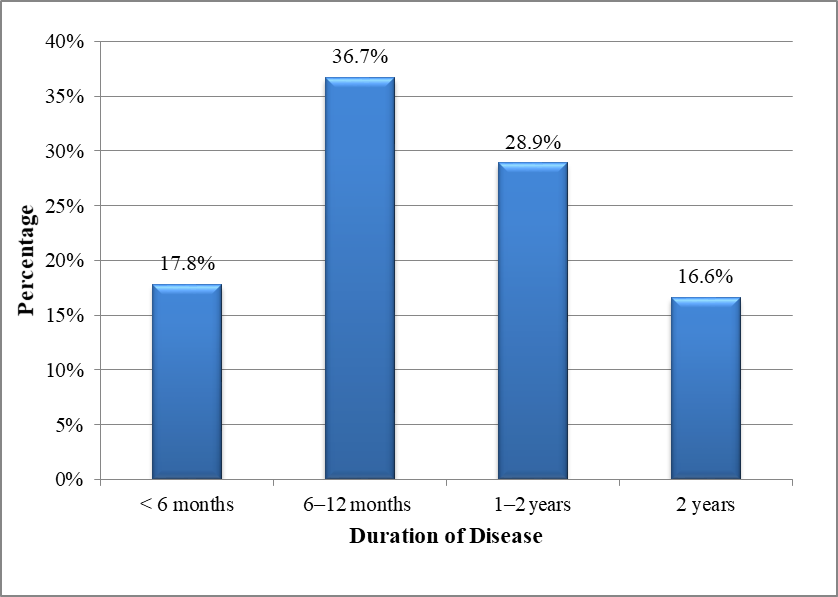
Figure 1: Distribution of Acne According to Duration of Disease
Most patients had acne duration between 6 months and 1 year, indicating that acne vulgaris commonly presents as a persistent condition requiring long-term management. (Figure 1)
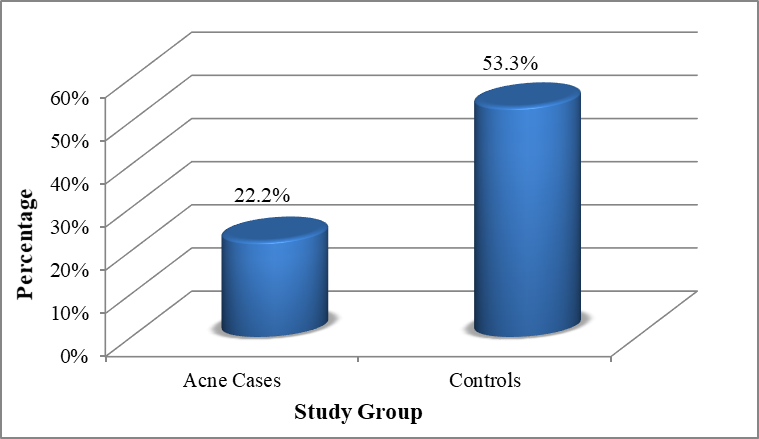
Figure 2: Comparison of Staphylococcus epidermidis Isolation in Cases and Controls
Healthy controls showed significantly higher colonization with Staphylococcus epidermidis, suggesting its protective role in maintaining skin microbial balance. (Figure 2)
DISCUSSION:
Findings from the present study indicate a strong relationship between alterations in skin microbiota and acne severity. Cutibacterium acnes was isolated more frequently among acne patients compared to healthy controls, suggesting its important contribution to follicular inflammation and lesion progression. Similar findings were described by Lee et al., who highlighted the role of microbial imbalance and strain variability of C. acnes in acne pathogenesis.[7] In our study, the frequency of C. acnes isolation increased progressively with disease severity, with severe acne cases showing the highest colonization rates. These findings suggest that increased microbial colonization may contribute to progression of inflammation within pilosebaceous units. Barnard et al. also reported that imbalance in the skin microbiome and predominance of certain C. acnes phylotypes are associated with acne severity and inflammation.[8]
The present study also found a greater prevalence of Staphylococcus aureus in inflammatory lesions such as pustules and nodules. The presence of this organism in severe inflammatory lesions suggests that secondary bacterial colonization may further aggravate tissue inflammation and contribute to persistence of acne lesions. Ferček et al. similarly observed that disruption of normal skin microbiota and increased colonization with pathogenic organisms are associated with inflammatory skin disorders.[9] An important finding of this study was the comparatively lower isolation of Staphylococcus epidermidis among acne patients, whereas healthy controls showed higher colonization with this commensal organism. S. epidermidis is considered beneficial for maintenance of skin homeostasis because it can inhibit the growth of pathogenic bacteria and regulate local immune responses.
Reduced levels of protective commensal flora may therefore promote microbial dysbiosis and contribute to inflammatory acne lesions. Podwojniak et al. also emphasized the importance of microbial diversity and balance in maintaining healthy skin physiology.[10] Recent advances in microbiome research suggest that acne vulgaris is not solely related to increased bacterial load but rather to alterations in microbial diversity and host–microbe interactions. Modern sequencing studies have demonstrated distinct microbial patterns in acne lesions compared with healthy skin.[11] These findings have increased interest in microbiome-based therapeutic approaches aimed at restoring microbial balance without excessive antibiotic exposure.
Recently, considerable attention has been directed toward microbiome-based therapies including probiotics, bacteriophage therapy, and selective antimicrobial agents.[12] Such approaches may help reduce antibiotic resistance while improving long-term disease control. The findings of the present study further support the growing evidence that cutaneous microbiota plays a central role in acne pathogenesis and severity.
CONCLUSION:
The findings of this study highlight the important role of cutaneous microbial imbalance in acne vulgaris. Increased colonization with Cutibacterium acnes and Staphylococcus aureus, along with reduced protective commensal flora, was associated with inflammatory acne lesions. These findings support the potential role of microbiome-targeted therapies in improving acne management and reducing antibiotic dependence.
REFERENCES:
1. Vasam M, Korutla S, Bohara RA. Acne vulgaris: A review of the pathophysiology, treatment, and recent nanotechnology based advances. Biochem Biophys Rep. 2023 Nov 23;36:101578. doi: 10.1016/j.bbrep.2023.101578.
2. Byrd AL, Belkaid Y, Segre JA. The human skin microbiome. Nat Rev Microbiol. 2018 Mar;16(3):143-155. doi: 10.1038/nrmicro.2017.157.
3. Dréno B, Pécastaings S, Corvec S, Veraldi S, Khammari A, Roques C. Cutibacterium acnes (Propionibacterium acnes) and acne vulgaris: a brief look at the latest updates. J Eur Acad Dermatol Venereol. 2018 Jun;32 Suppl 2:5-14. doi: 10.1111/jdv.15043.
4. O'Neill AM, Gallo RL. Host-microbiome interactions and recent progress into understanding the biology of acne vulgaris. Microbiome. 2018 Oct 2;6(1):177. doi: 10.1186/s40168-018-0558-5.
5. Xu H, Li H. Acne, the Skin Microbiome, and Antibiotic Treatment. Am J Clin Dermatol. 2019 Jun;20(3):335-344. doi: 10.1007/s40257-018-00417-3.
6. Moradi Tuchayi S, Makrantonaki E, Ganceviciene R, Dessinioti C, Feldman SR, Zouboulis CC. Acne vulgaris. Nat Rev Dis Primers. 2015 Sep 17;1:15029. doi: 10.1038/nrdp.2015.29.
7. Lee YB, Byun EJ, Kim HS. Potential Role of the Microbiome in Acne: A Comprehensive Review. J Clin Med. 2019 Jul 7;8(7):987. doi: 10.3390/jcm8070987.
8. Barnard E, Shi B, Kang D, Craft N, Li H. The balance of metagenomic elements shapes the skin microbiome in acne and health. Sci Rep. 2016 Dec 21;6:39491. doi: 10.1038/srep39491. Erratum in: Sci Rep. 2020 Apr 2;10(1):6037. doi: 10.1038/s41598-020-62764-8.
9. Ferček I, Lugović-Mihić L, Tambić-Andrašević A, Ćesić D, Grginić AG, Bešlić I, et al. Features of the Skin Microbiota in Common Inflammatory Skin Diseases. Life (Basel). 2021 Sep 14;11(9):962. doi: 10.3390/life11090962.
10. Podwojniak A, Tan IJ, Sauer J, Neubauer Z, Rothenberg H, Ghani H, Parikh AK, Cohen B. Acne and the cutaneous microbiome: A systematic review of mechanisms and implications for treatments. J Eur Acad Dermatol Venereol. 2025 Apr;39(4):793-805. doi: 10.1111/jdv.20332.
11. Oh J, Voigt AY. The human skin microbiome: from metagenomes to therapeutics. Nat Rev Microbiol. 2025 Dec;23(12):771-787. doi: 10.1038/s41579-025-01211-9.
12. Niedźwiedzka A, Micallef MP, Biazzo M, Podrini C. The Role of the Skin Microbiome in Acne: Challenges and Future Therapeutic Opportunities. Int J Mol Sci. 2024 Oct 24;25(21):11422. doi: 10.3390/ijms252111422.