Treatment Outcomes in Patients of Proximal Gastric Adenocarcinoma Treated with Radical Surgery: Experience from North-East India.
- Deep Jyoti Kalita , Professor, Department of Surgical Oncology, BBCI, Guwahati, Assam.
- Ashutosh Sahewalla , Assistant Professor, State Cancer Institute, Gauhati Medical College and Hospital.
- Manthan Thakkar , Ad-hoc Assistant Professor, Department of Surgical Oncology, BBCI, Guwahati, Assam.
- Abhijit Talukdar , Professor and Head of Departmemt, Department of Surgical Oncology, BBCI, Guwahati, Assam.
- Gaurav Das , Professor, Department of Surgical Oncology, BBCI, Guwahati, Assam.
- Dibyajyoti Deka , Assistant Professor, Department of Surgical Oncology, BBCI, Guwahati, Assam.
Article Information:
Abstract:
Background: Proximal gastric adenocarcinoma presents unique clinical challenges due to its aggressive nature and complex surgical management. This study analyzed the perioperative complications, recurrence patterns, disease-free survival (DFS) and overall survival (OS) in patients with proximal gastric adenocarcinoma who underwent total gastrectomy, providing insights into outcomes in a North-East Indian population. Methods: This retrospective study included all patients aged 18 to 70 with non-metastatic proximal gastric adenocarcinoma who underwent total gastrectomy at Dr. Bhubaneswar Borooah Cancer Institute from January 2016 to December 2021. Data on complications, recurrence patterns, DFS and OS were extracted from case record files and electronic medical records. Statistical analyses were performed using SPSS version 29, and survival analysis was conducted using Kaplan-Meier estimates. Results: A total of 32 patients met the inclusion criteria. Median age was 53 with M:F ratio 2:1. Post-operative morbidity was 12.5%. Median OS was 827 days (95% CI: 374.839–1279.161), with males showing higher OS (932 days) compared to females (239 days), though this difference was not statistically significant (p = 0.768). Age under 60 had a median OS of 1057 days, while those over 60 had a median OS of 594 days (p = 0.397). Stage IB patients showed the highest OS at 1210 days, with decreasing survival observed in advanced stages, but without statistical significance (p = 0.676). Median DFS across the cohort was 729 days (95% CI: 124.526–1571.474), with males (1023 days) exhibiting a longer DFS than females (370 days), though not statistically significant (p = 0.433). Age and stage also showed trends in DFS without reaching statistical significance. Conclusion: This study has post-operative outcomes that were comparable to existing literature. This study highlighted survival trends in patients undergoing total gastrectomy for proximal gastric adenocarcinoma, with OS and DFS variations observed across gender, age, and stage groups. The absence of statistically significant differences suggests that total gastrectomy may yield similar outcomes across diverse patient profiles, though early diagnosis remains essential for improved survival.
Keywords:
Article :
INTRODUCTION:
Proximal gastric adenocarcinoma, a malignancy in the upper part of the stomach, has shown a rising incidence worldwide, correlating with shifts in dietary habits, lifestyle, and Helicobacter pylori infection rates (1). This form of gastric cancer presents unique challenges due to its proximity to the esophagus and the gastroesophageal junction, complicating surgical treatment and influencing outcomes. Proximal gastric adenocarcinoma (PGA) has demonstrated aggressive behavior with early metastasis to regional lymph nodes and high recurrence rates (2). Radical surgery, often involving total gastrectomy or proximal gastrectomy, has shown promising outcomes in improving survival, though the prognosis remains guarded due to the anatomical and biological nature of the disease (3). This study aims to provide an in-depth analysis of treatment outcomes in patients with PGA undergoing radical surgery in the North-east region of India, where the unique population dynamics and healthcare limitations may impact clinical outcomes.
The choice of surgical approach for PGA has been an area of active research, with studies demonstrating both benefits and complications associated with total and proximal gastrectomy (4). Total gastrectomy, which involves the removal of the entire stomach, has been associated with higher postoperative morbidity but provides the advantage of a complete resection margin, potentially reducing recurrence rates (5). Proximal gastrectomy, which preserves part of the stomach, has shown better postoperative nutritional outcomes but poses an increased risk of reflux esophagitis and anastomotic strictures (6). Reconstruction techniques, including double-tract reconstruction, have been suggested to mitigate some of these issues by reducing postoperative complications, which are crucial for maintaining the quality of life in these patients (7).
The epidemiology of gastric cancer in the North-east region of India is distinct, with a higher prevalence observed in comparison to other regions, likely due to a combination of genetic susceptibility, dietary habits, and lifestyle factors prevalent in this population (8). Tobacco use, consumption of preserved foods, and certain dietary practices, including the intake of smoked and salted foods, have been correlated with an increased risk of gastric cancer in this region (9). Helicobacter pylori infection, a well-known risk factor for gastric cancer, also shows a high prevalence in the North-East, which may contribute to the increased incidence of PGA in this population (10). In light of these regional risk factors, the study of treatment outcomes specific to this population is vital for tailoring surgical approaches and postoperative care.
Lymphadenectomy is an essential component of radical surgery for PGA, aiming to prevent the spread of cancer and improve survival rates (11). The extent of lymphadenectomy, however, remains debated. Some studies advocate for D2 lymphadenectomy, which includes more extensive lymph node removal, while others suggest that D1 lymphadenectomy may suffice, particularly in early-stage cancers (12). D2 lymphadenectomy has been associated with improved survival rates, especially in East Asian countries, but it also carries a higher risk of complications, including pancreatic fistula and anastomotic leakage (13). This aspect of surgical management is particularly significant in the context of North-East India, where healthcare infrastructure and access to specialized surgical expertise may be limited, affecting the feasibility of extensive lymphadenectomy (14).
Postoperative morbidity and mortality are significant concerns following radical surgery for PGA, with studies showing complications in a substantial proportion of patients (15). Postoperative outcomes can vary based on the surgical technique, the patient’s nutritional status, and the presence of comorbidities. Studies have shown that malnutrition, commonly observed in patients with advanced gastric cancer, can adversely affect postoperative recovery and increase complication rates (16). Nutritional support before and after surgery is crucial to mitigate these risks and improve patient outcomes. Enhanced recovery protocols, including preoperative nutritional assessments and postoperative feeding strategies, have been implemented in several centers worldwide to improve the postoperative course and reduce hospital stay (17). However, in resource-limited settings like North-East India, these protocols may not be consistently available, potentially impacting the recovery of patients after radical surgery (18).
Long-term survival following radical surgery for PGA remains variable, with five-year survival rates ranging from 30% to 50% in various studies (19). Factors influencing survival include tumor stage, lymph node involvement, and surgical margin status. Achieving a negative resection margin (R0 resection) is critical for long-term survival, as positive margins (R1 resection) have been associated with a higher risk of local recurrence and decreased overall survival (20). Studies have highlighted the importance of perioperative chemotherapy in improving outcomes for patients with PGA, as it may downstage tumors and increase the likelihood of achieving R0 resection (21). Perioperative chemotherapy has become a standard component of treatment for locally advanced PGA, particularly in regions with access to comprehensive cancer care facilities.
Quality of life (QoL) following radical surgery for PGA is an essential consideration, given the impact of total or proximal gastrectomy on digestion, nutritional intake, and overall well-being (22). Studies have reported that QoL decreases initially following surgery due to factors like dumping syndrome, weight loss, and malabsorption, but it gradually improves over time, particularly in patients who undergo proximal gastrectomy with adequate reconstruction (23). Nevertheless, the long-term impact on QoL remains substantial, necessitating ongoing support and monitoring for patients post-surgery.
The study of treatment outcomes in North-East India’s population is critical, as previous studies have predominantly focused on Western and East Asian populations with distinct genetic and environmental risk factors. Limited research exists on gastric cancer outcomes in India, particularly for PGA, which calls for region-specific studies to address the unique challenges faced by patients and healthcare providers in this area. This study aims to fill this gap by providing comprehensive data on the treatment outcomes of PGA patients treated with radical surgery in North-East India. The findings of this study could guide surgical practice and postoperative management strategies tailored to this population, ultimately improving patient outcomes and survival rates.
MATERIALS AND METHODS:
Study Design
The study was designed as a retrospective observational analysis to evaluate the treatment outcomes, complications, and recurrence patterns in patients with proximal gastric adenocarcinoma who had undergone total gastrectomy. This design was chosen to assess historical data from medical records, allowing for a thorough investigation of real-world outcomes in a structured setting without the need for new interventions or experimental procedures.
Study Setting
The study took place in the Department of Surgical Oncology at Dr. Bhubaneswar Borooah Cancer Institute (BBCI), Guwahati. BBCI is a well-established cancer care centre serving a significant population in the North-East region of India. The institute’s specialized surgical oncology department provided a suitable setting for the study, as it held comprehensive medical records and patient follow-up data required for retrospective analysis.
Study Duration
The study covered cases from January 2016 to December 2021. This period allowed for a sufficient number of cases to be reviewed, ensuring adequate sample size and variation in patient demographics, disease progression, and outcomes. Data collection and analysis were conducted after the study period had concluded, with all data being reviewed in retrospect.
Participants - Inclusion and Exclusion Criteria
Inclusion criteria-
• Age ≥ 18 years and <70years
• Underwent total gastrectomy at BBCI for non-metastatic
proximal gastric adenocarcinoma
Exclusion criteria-
• Patients with metastatic disease
• Patients who underwent any other type of gastrectomy
• Age <18 years and >70 years
Study Sampling
All eligible patients who met the inclusion criteria and had undergone total gastrectomy for proximal gastric adenocarcinoma within the defined period were included in the sample. This non-randomized, comprehensive sampling approach maximized the sample size and represented the full scope of treatment outcomes observed at the institute, strengthening the study's internal validity.
Study Sample Size
The sample size comprised all patients meeting the inclusion criteria from January 2016 to December 2021. Given the retrospective nature, the sample size depended on the availability of eligible cases in medical records rather than predetermined statistical calculations. This approach allowed the study to leverage all available data within the period, ensuring a robust representation of the target patient population.
Study Groups
This study did not include separate treatment or control groups, as it was a single-cohort observational study focusing solely on patients who had undergone total gastrectomy for proximal gastric adenocarcinoma. The absence of distinct groups was appropriate for examining outcomes and recurrence patterns within this specific cohort.
Study Parameters
The study evaluated primary and secondary parameters to capture both survival outcomes and surgical impacts. The primary parameter was disease-free survival (DFS) at 18 months post-surgery. Secondary parameters included overall survival (OS), patterns of recurrence (location and timing), and perioperative complications such as infection, bleeding, and anastomotic leaks. These parameters were chosen to give a holistic view of the surgery's impact on survival and quality of life.
Study Procedure
The study followed a structured procedure to identify and analyze eligible cases. First, all medical records from the hospital database were screened to select cases matching the inclusion criteria. Demographic, clinical, and follow-up data were then extracted, focusing on variables related to surgical outcomes, recurrence patterns, and perioperative complications. Each patient’s data was documented according to predefined parameters to maintain uniformity in reporting and facilitate data comparison across cases.
Study Data Collection
Data were collected from the electronic medical records system maintained at BBCI. This involved reviewing detailed records of patient demographics, preoperative evaluation, surgical details, postoperative outcomes, and follow-up notes. Information regarding recurrence and survival was obtained from follow-up records. Data were extracted systematically to ensure accuracy and completeness, with each entry being cross-verified by a designated team member.
Data Analysis
Data analysis was conducted using Microsoft Excel and SPSS version 29 (IBM Corporation, Armonk, NY, USA). Descriptive statistics were used to present demographic information, incidence of complications, and survival outcomes. Kaplan-Meier survival analysis was performed to estimate disease-free and overall survival rates, while recurrence patterns were analyzed descriptively to identify trends. Results were presented using tables, graphs, and pie diagrams to facilitate clear understanding and interpretation.
Ethical Considerations
Ethical considerations were carefully addressed throughout the study. Approval was obtained from the Institutional Ethics Committee at Dr. Bhubaneswar Borooah Cancer Institute before data collection began. All patient information was anonymized to maintain confidentiality, with data stored securely and accessed only by authorized personnel involved in the study. Since the study involved retrospective analysis of existing medical records, it posed minimal risk to participants, and consent waivers were deemed appropriate.
RESULTS:
|
Total patients (N) |
32 |
|
Median age |
53 (28-70) |
|
M:F |
2:1 |
|
NACT |
17 (53%) |
Post-operative outcome:
Median ICU stay was 2 days (1-9) and median hospital stay was 11 days (8-25).
Morbidity:
|
CLAVIEN DINDO SCORE |
Frequency |
Percentage |
|
1 |
0 |
0 |
|
2 |
1 |
25% |
|
3a |
0 |
0 |
|
3b |
1 |
25% |
|
4a |
0 |
0 |
|
4b |
0 |
0 |
|
5 |
2 |
50% |
One patient developed superficial wound infection which was managed conservatively by sensitive antibiotic.
One patient in post-operative period developed bile leak. On re-exploration, jejuno-jejunal anastomotic leak found which was repaired and rest post-operative cause was uneventful.
Two patients (6.25%) died in post-operative period.
Histopathological evaluation:
Stage of disease:
|
Sr. Number |
Pathological stage |
Number |
|
1 |
CPR |
1 |
|
2 |
1b |
2 |
|
3 |
2a |
6 |
|
4 |
2b |
3 |
|
5 |
3a |
12 |
|
6 |
3b |
4 |
|
7 |
3c |
4 |
*CPR= Complete pathological response
Lymph node yield:
· The median lymph node yield in our study was 21.
· Out of 32, 8 patients (25%) has lymph node yield less than 16.
· Out of 32, 10 patients (31.25%) had no lymph node positivity in the final histopathology report.
Margin positivity:
· In the post-operative histopathology report, 2 patients (6.25%) had a positive proximal surgical margin, 1 patient (3.12%) had a positive distal margin while 1 patient (3.12%) had both margins positive.
· Three out of four (75%) patients with margin positivity received adjuvant chemotherapy while 1 patient defaulted after surgery. None of these four patients received adjuvant radiotherapy.
LVI/PNI positivity:
In our study, 7 patients (22%) had perineural invasion (PNI) present, 3 patients (9%) had lymphovascular invasion (LVI) present and 2 patients (6.25%) had both LVI and PNI positivity.
Recurrence:
|
Type of recurrence |
Frequency |
|
Anastomotic site |
1 |
|
Liver metastasis |
1 |
|
Peritoneal disease |
1 |
|
Anastomotic site + Liver |
1 |
· Four patients developed recurrence either at local or distant sites.
· Median disease-free survival was 18 months (2-31 months).
Overall Survival (OS):
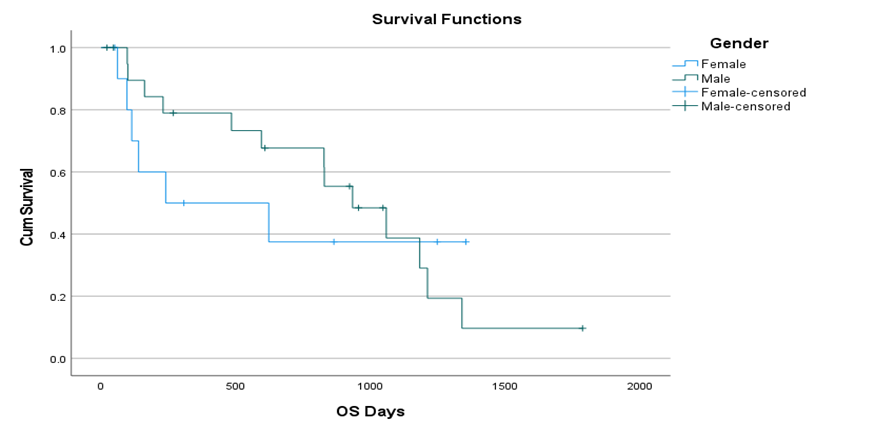
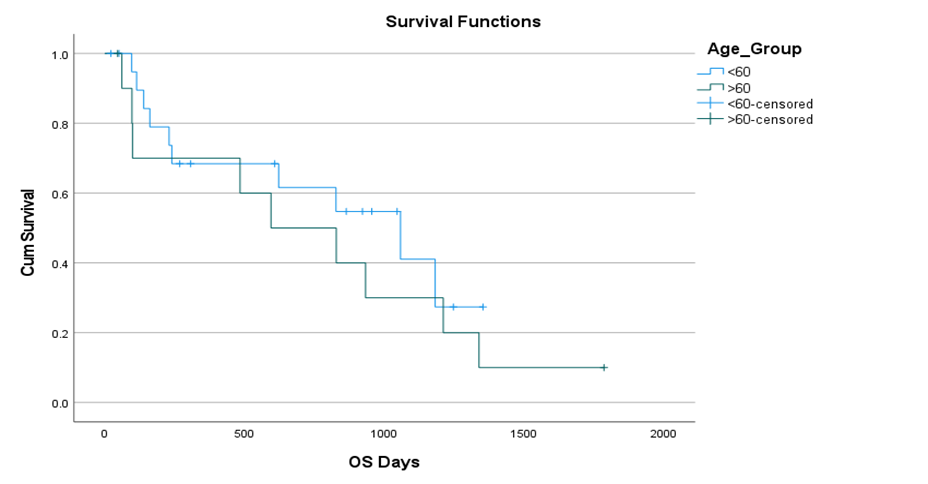
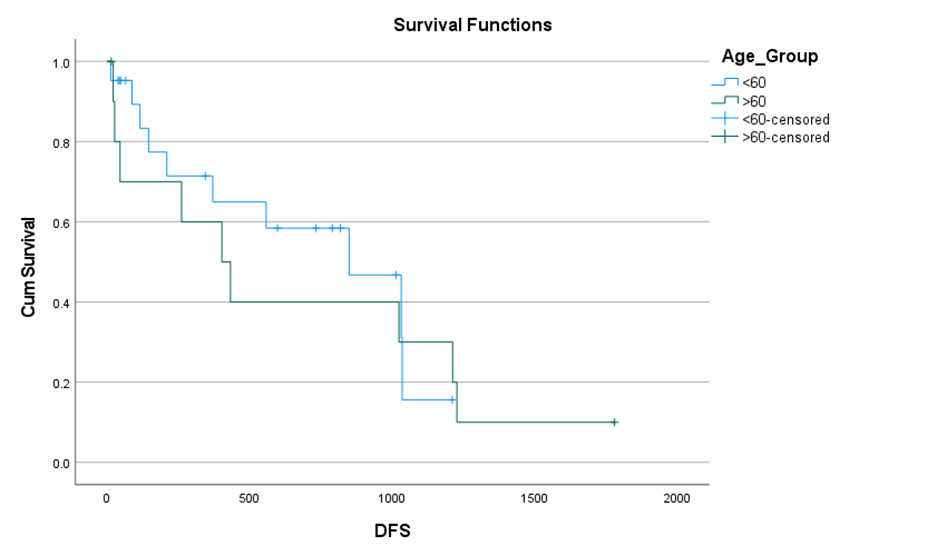
The overall survival (OS) analysis showed differences in median survival across gender, age groups, and cancer stages, but none of these differences reached statistical significance, as indicated by p-values above 0.05. Males demonstrated a higher median OS at 932 days (95% CI: 599.373–1264.627) compared to females, who had a median OS of 239 days (95% CI: 0–904.259), though this was not statistically significant (p = 0.768). Age-wise, patients under 60 had a median OS of 1057 days (95% CI: 434.578–1679.422), whereas those over 60 had a median OS of 594 days (95% CI: 60.966–1127.034), with a p-value of 0.397.
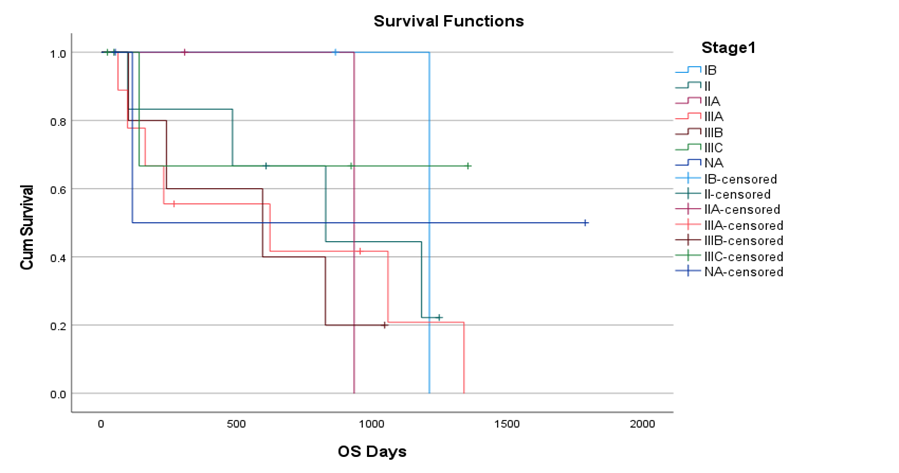
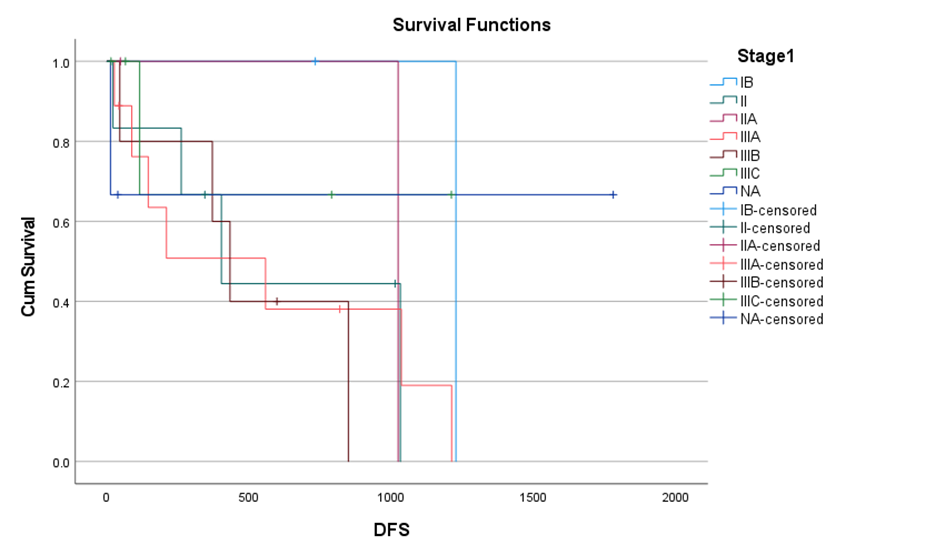
Across cancer stages, survival tended to decrease as the stage advanced, with stage IB showing the longest median OS (1210 days), followed by stage II (827 days) and IIA (932 days). Due to insufficient events in certain stages, however, no definitive conclusion on stage-based OS could be drawn (p = 0.676). The overall median OS for the entire cohort was 827 days, suggesting trends in survival but without significant differentiation among groups.
Overall survival
|
|
|
Median survival in Days |
95% Confidence Interval |
p-value |
|||
|
Gender |
Female |
239 |
(0- 904.259) |
|
|||
|
Male |
932 |
(599.373- 1264.627) |
0.768 |
||||
|
Age Group |
<60 |
1057 |
(434.578 - 1679.422) |
|
|||
|
>60 |
594 |
(60.966- 1127.034) |
0.397 |
||||
|
Stage |
IB |
1210 |
* |
|
|||
|
II |
827 |
(152.76-1501.24) |
|
||||
|
IIA |
932 |
* |
|
||||
|
IIIA |
621 |
(0-1577.551) |
|
||||
|
IIIB |
594 |
(0-1356.211) |
|
||||
|
IIIC |
|
* |
0.676 |
||||
|
LVI |
Positive |
921 |
* |
|
|||
|
Negative |
1045 |
(726.606- 1366.394) |
0.227 |
||||
|
PNI |
Positive |
1045 |
(527.619- 1517.381) |
|
|||
|
Negative |
1352 |
0.194 |
|||||
|
Margin |
Free |
1352 |
(726.768-1977.232) |
|
|||
|
Positive |
607 |
(0-1391.653) |
0.161 |
||||
|
Overall survival |
827 |
(374.839- 1279.161) |
|
||||
*Insufficient number of events.
Disease-Free Survival (DFS)
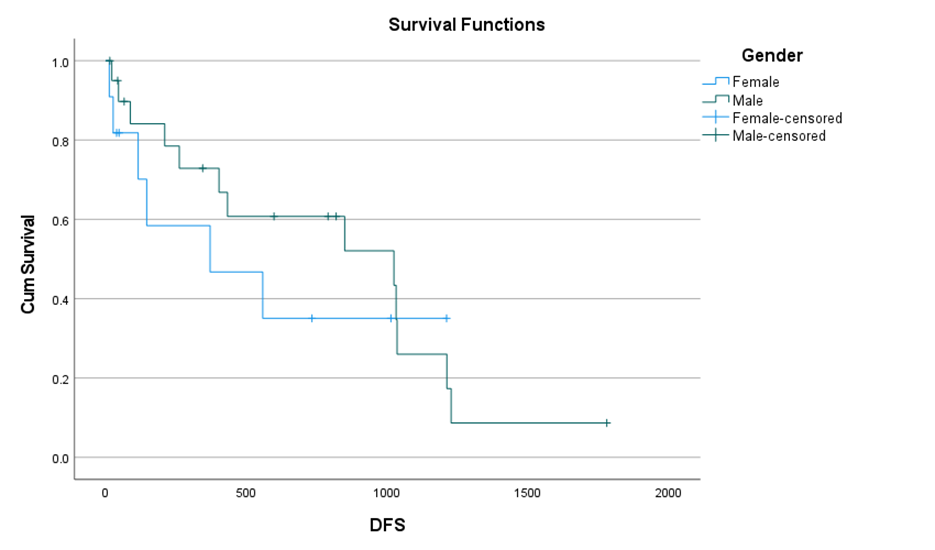
The analysis of disease-free survival (DFS) highlighted median differences across gender, age groups, and cancer stages; however, none were statistically significant, with p-values exceeding 0.05. Males had a longer median DFS of 1023 days (95% CI: 134.51–1911.49) compared to females at 370 days (95% CI: 0–946.334), though this difference was not statistically meaningful (p = 0.433). Patients below 60 years showed a median DFS of 848 days (95% CI: 361.224–1334.776), while those over 60 had a median of 402 days (95% CI: 137.033–666.967), with a p-value of 0.773, indicating no significant age-related difference. For cancer stages, stage IB showed the longest DFS at 1226 days, followed by stages IIA (1023 days) and II (402 days). With limited event occurrences in certain stages, the p-value of 0.523 confirmed no statistically significant DFS variance by stage. The cohort’s overall median DFS was 729 days, indicating general DFS trends without conclusive stage- or demographic-based significance.
Disease Free Survival:
|
|
|
Median disease-free survival in Days |
95% Confidence Interval |
p-value |
|
Gender |
Female |
370 |
(0-946.334) |
|
|
Male |
1023 |
(134.51-1911.49) |
0.433 |
|
|
Age Group |
<60 |
848 |
(361.224-1334.776) |
|
|
>60 |
402 |
(137.033-666.967) |
0.773 |
|
|
Stage |
IB |
1226 |
* |
|
|
II |
402 |
(125.64-678.36) |
|
|
|
IIA |
1023 |
* |
|
|
|
IIIA |
557 |
(9.42-1104.58) |
|
|
|
IIIB |
432 |
(298.882-565.118) |
|
|
|
IIIC |
. |
* |
0.523 |
|
|
LVI |
Positive |
789 |
(0-1872.81) |
|
|
Negative |
1012 |
(570.277- 1453.723) |
0.785 |
|
|
PNI |
Positive |
789 |
(224.592- 1353.408) |
|
|
Negative |
1210 |
(618.631-1801.369) |
0.098 |
|
|
Margin |
Free |
1210 |
(691.3-1728.7) |
|
|
Positive |
344 |
(0-996.027) |
0.143 |
|
|
Overall survival |
729 |
(124.526-1571.474) |
|
|
DISCUSSION:
The study aimed to evaluate treatment outcomes, focusing on overall survival (OS) and disease-free survival (DFS) in patients who underwent total gastrectomy for proximal gastric adenocarcinoma. The findings provided insights into the survival patterns across different demographics and cancer stages. However, no statistically significant differences were found in OS or DFS across gender, age, or stage groups.
In recent times, there is an increase in the incidence of proximal gastric cancer in younger population. The median age of diagnosis in our study was 53, which was younger than in other studies, in which the median age of presentation was in the 60s (24). The M:F ratio in our study was 2:1, which was comparable to other studies.
Radical surgery for gastric cancer is associated with significant post-operative morbidity. In our study, 2 patients (6.25%) died in the post-operative period. This mortality rate is slightly higher than other published literature in which the mortality rate is below 5% (25). Two patients (6.25%) had post-operative morbidity out of which 1 patient need re-operation. This low morbidity rate can be attributed to retrospective design of study.
Pathological staging is the single most important prognostic factor for survival in gastric cancer like any other cancer. Depending upon pathological staging, patients receive adjuvant treatment to decrease recurrence (26). In our study, most patients had advanced disease in final histopathology which required adjuvant treatment.
Lymph node yield is an important prognostic marker in gastric cancer (27). As per NCCN, the minimum lymph node to be retrieved is 16. Patients who receive neo-adjuvant chemotherapy can have less number of lymph nodes retrieved, but there is no separate guideline for this group of patients (28). The median number of lymph nodes harvested in our study was 21, with 8 patients (25%) having less than 16 lymph nodes in the final histopathology report.
Margin positivity post total gastrectomy is a known risk factor for local recurrence and poor overall survival. In our study, 4 patients (12.5%) patients had positive surgical margin which was comparable to other studies (29). In our study, OS and DFS comparison between margin-positive and margin-negative resection yielded no statistically significant difference.
The presence of lymphovascular invasion (LVI) and perineural invasion (PNI) in surgical specimens is a proven independent risk factor for overall survival in gastric cancer (30). In our study, 3 patients (9.33%) had LVI positivity, 7 patients (22%) had PNI positivity and 2 patients (6.25%) had both LVI and PNI positivity. The OS and DFS differences between LVI/PNI-positive and LVI/PNI-negative cases does not reach a statistically significant difference in our study.
Recurrence even after curative surgery is common in gastric cancer. Both local and distant failures are seen post-treatment (31). In our study, 2 patients (6.25%) developed liver metastasis, 2 patients (6.25%) developed anastomotic site recurrence and 1 patient developed peritoneal disease. Recurrence is associated with poor survival and patients planned for palliative treatment on most occasions.
In examining overall survival, male patients demonstrated a higher median survival of 932 days (95% CI: 599.373–1264.627) compared to females, whose median survival was only 239 days (95% CI: 0–904.259). However, this difference was not statistically significant (p = 0.768), indicating that gender may not play a decisive role in survival outcomes post-surgery. These results align with prior studies suggesting that gender differences in survival rates can vary depending on other factors, including tumour biology and treatment response.
The higher median survival in male patients might be due to differing biological responses to treatment or potential variances in the underlying health status of male and female patients at the time of surgery. Additionally, male patients may have presented with less aggressive tumor characteristics or comorbidities that could favourably influence OS. However, as gender-based survival differences were not significant, further investigation into biological and behavioural factors in male and female patients is warranted to provide a clearer understanding of these observations.
Age-wise, the results showed that patients younger than 60 years had a longer median OS of 1057 days (95% CI: 434.578–1679.422) compared to older patients (over 60), who had a median OS of 594 days (95% CI: 60.966–1127.034). The p-value of 0.397 indicated no statistically significant difference between these age groups. This lack of significant difference could be attributed to variations in treatment response or the impact of comorbidities, which are more common in older patients and could complicate post-surgical recovery. Younger patients might benefit from a generally better overall health status, potentially aiding their resilience to surgery and enhancing their OS. Nonetheless, the fact that age did not significantly affect survival outcomes suggests that total gastrectomy might be equally beneficial for patients across different age groups, provided that they are well-selected and appropriately managed perioperatively.
When analyzing survival by cancer stage, it was observed that median OS decreased with advancing stages, though no statistically significant differences were observed (p = 0.676). Patients with stage IB cancer exhibited the highest median OS at 1210 days, while patients in stage II, IIA, and IIIA had median OS values of 827 days, 932 days, and 621 days, respectively. Patients with stage IIIB had the lowest median OS at 594 days. The gradual decline in median OS with advancing stage aligns with the known progression and increasing aggressiveness of gastric adenocarcinoma. It is understood that patients in more advanced stages often experience greater tumor burden and higher risks of metastasis, which can compromise survival outcomes.
The results are consistent with prior research demonstrating that stage of disease is a critical determinant of survival, even though statistical significance was not reached in this study due to insufficient event occurrences in some stages. The overall median OS for the study cohort was 827 days (95% CI: 374.839–1279.161), reflecting survival expectations for patients with proximal gastric adenocarcinoma undergoing total gastrectomy. This finding underscores the importance of early detection and staging in enhancing survival prospects.
In assessing disease-free survival, male patients again had a longer median DFS of 1023 days (95% CI: 134.51–1911.49) than females, who showed a median DFS of 370 days (95% CI: 0–946.334). Although this difference was notable in magnitude, it did not reach statistical significance (p = 0.433). The relatively longer DFS in male patients may suggest that they had a slower disease progression or a less aggressive recurrence pattern, though these findings must be interpreted cautiously given the lack of statistical significance. Similar to OS findings, this trend might indicate underlying biological or lifestyle-related factors that could influence recurrence patterns in male patients more favorably. The results suggest that while male patients might experience a longer period without disease recurrence, this outcome is not guaranteed and would benefit from further exploration to determine the factors influencing recurrence-free intervals by gender.
Age comparisons for DFS revealed that patients under 60 had a median DFS of 848 days (95% CI: 361.224–1334.776), while those over 60 had a median DFS of 402 days (95% CI: 137.033–666.967). However, this difference was also not statistically significant (p = 0.773), suggesting that age does not significantly impact DFS in this cohort. These results are consistent with the notion that gastric adenocarcinoma’s recurrence patterns might be less influenced by age than by other clinical factors such as tumor biology and the adequacy of surgical margins achieved during gastrectomy. While younger patients generally have better overall health, which could theoretically reduce recurrence risk, the similar DFS outcomes across age groups in this study imply that both younger and older patients face comparable recurrence risks post-surgery.
Stage-wise analysis of DFS showed a similar trend to OS, with stage IB patients experiencing the longest DFS at 1226 days, followed by stage IIA at 1023 days and stage II at 402 days. Patients with stages IIIA and IIIB had median DFS values of 557 days (95% CI: 9.42–1104.58) and 432 days (95% CI: 298.882–565.118), respectively. The p-value of 0.523 indicated no statistically significant differences across stages. These findings suggest that, although early-stage patients tend to experience longer periods without disease recurrence, the progression from stage II to stage III introduces a marked decline in DFS. These results are in line with the existing literature, which generally finds that patients with more advanced stages of gastric adenocarcinoma are at greater risk for recurrence. While statistical significance was not achieved, possibly due to the limited sample size, the observed DFS trend emphasizes the impact of disease stage on recurrence risk and underscores the potential benefits of early-stage diagnosis and timely intervention.
The overall median DFS for the entire cohort was calculated at 729 days (95% CI: 124.526–1571.474). This value, which reflects the general DFS expectation for patients undergoing total gastrectomy, highlights that the majority of patients can expect a significant period without disease recurrence post-surgery. However, the wide confidence intervals observed across groups suggest variability in DFS outcomes, likely due to individual differences in tumor behavior, surgical success, and postoperative care quality. The absence of statistically significant differences in DFS across demographic and stage categories could indicate that, while certain trends are observable, the recurrence risk may be influenced by a complex interplay of factors beyond the ones evaluated in this study.
The results of this study have practical implications for clinicians managing proximal gastric adenocarcinoma. The lack of significant survival differences across gender, age, and stage suggests that total gastrectomy may offer comparable outcomes across diverse patient groups, provided they meet selection criteria. However, the trends observed, particularly regarding the decrease in survival and DFS with advancing stage, reinforce the importance of early-stage diagnosis and potentially stage-specific postoperative strategies to mitigate recurrence. Additionally, the observed trends in gender differences, although not statistically significant, warrant further exploration, as they could unveil gender-specific factors that might influence treatment response and recurrence patterns.
One of the primary limitations of the study is the retrospective design, which is inherently constrained by the accuracy and completeness of medical records. Additionally, the relatively short follow-up period restricts the ability to evaluate long-term survival and recurrence outcomes, which are particularly relevant in cancer studies. Insufficient event occurrences in certain stages also limited the statistical power, preventing definitive conclusions regarding the impact of stage on survival and DFS. Future studies with larger sample sizes and extended follow-up periods could provide more robust data to further clarify the observed trends and potentially reach statistical significance.
CONCLUSION:
In conclusion, this study has post-operative outcomes that were comparable to existed literature. This study highlighted the trends in overall and disease-free survival following total gastrectomy for proximal gastric adenocarcinoma, with observed differences across gender, age, and stage that were not statistically significant.
REFERENCES:
1. Siemerink E, Schaapveld M, Plukker J, Mulder N, Hospers G. Effect of hospital characteristics on outcome of patients with gastric cancer: a population based study in North-East Netherlands. Eur J Surg Oncol. 2010;36(5):449-55.
2. Seay T, Blute M, Zincke H. Long-term outcome in patients with pTxN+ adenocarcinoma of prostate treated with radical prostatectomy and early androgen ablation. J Urol. 1998;159(2):357-64.
3. Purkayastha J, Yadav J, Talukdar A, Das G, Pegu N, Madhav S, Singh P, Mamidala V. Radical Gastrectomy: Still the Gold Standard Treatment for Gastric Cancer—Our Experience from a Tertiary Care Center from Northeast India. Indian J Surg Oncol. 2019;11:66-70.
4. Schuhmacher C, Gretschel S, Lordick F, et al. Neoadjuvant chemotherapy compared with surgery alone for locally advanced cancer of the stomach and cardia: European Organisation for Research and Treatment of Cancer randomized trial 40954. J Clin Oncol. 2010;28(35):5210-8.
5. Marano L, Rondelli F, Bartoli A, Testini M, Castagnoli G, Ceccarelli G. Oncologic Effectiveness and Safety of Splenectomy in Total Gastrectomy for Proximal Gastric Carcinoma: Meta-analysis of Randomized Controlled Trials. Anticancer Res. 2018;38:3609-17.
6. Tang S, Liu F, Li Y, Zhao L, Wang X, Khan S, Chen Y, Zhang Y. Treatment Selection and Survival Outcomes in Locally Advanced Proximal Gastric Cancer: A National Cancer Data Base Analysis. Front Oncol. 2020;10.
7. Wang Y, Cummings B, Catton P, Dawson L, Kim JJ, Ringash J, Wong R, Yi Q, Brierley J. Primary radical external beam radiotherapy of rectal adenocarcinoma: long term outcome of 271 patients. Radiother Oncol. 2005;77(2):126-32.
8. Ma F, Guo D, Zhang B, Zhang Y, Peng L, Ma Q, Ji S, Chai J, Hua Y, Chen X, Wang H, Xu S, Luo S. Short and long-term outcomes after proximal gastrectomy with double tract reconstruction for Siewert type III adenocarcinoma of the esophagogastric junction: a propensity score matching study from a 10-year experience in a high-volume hospital. J Gastrointest Oncol. 2020;11(6):1261-73.
9. Rafi M, Kumar R, Thomas KC, George N, George P, Ramadas K. Treatment Outcomes of Adenoid Cystic Carcinomas of the Head and Neck Region—A Single-Institution Experience. South Asian J Cancer. 2022.
10. Noh J, Park W, Kim YS, Kim JY, Kim H, Kim JH, Yoon M, Choi J, Yoon W, Kim JY, Huh S. Comparison of clinical outcomes of adenocarcinoma and adenosquamous carcinoma in uterine cervical cancer patients receiving surgical resection followed by radiotherapy: a multicenter retrospective study (KROG 13-10). Gynecol Oncol. 2014;132(3):618-23.
11. Lekakos L, Triantafillopoulos JK, Milingos N, Sfikakis P. Adenocarcinoma of the Gastric Cardia: Treatment via a Left Thoracoabdominal Approach. Am Surg. 2002;68:584-90.
12. Fontana E, Smyth E, Cunningham D, et al. Improved survival in resected oesophageal and gastric adenocarcinomas over a decade: the Royal Marsden experience 2001–2010. Gastric Cancer. 2016;19:1114-24.
13. Gordon N, Dawson A, Bennett B, Innes G, Eremin O, Jones P. Outcome in colorectal adenocarcinoma: two seven-year studies of a population. Br Med J. 1993;307(6906):707-10.
14. Huang YT, Wang CC, Tsai C, Lai C, Chang T, Chou H, Lee SP, Hong JH. Clinical behaviors and outcomes for adenocarcinoma or adenosquamous carcinoma of cervix treated by radical hysterectomy and adjuvant radiotherapy or chemoradiotherapy. Int J Radiat Oncol Biol Phys. 2012;84(2):420-7.
15. Schuhmacher C, Schlag P, Lordick F, et al. Neoadjuvant chemotherapy versus surgery alone for locally advanced adenocarcinoma of the stomach and cardia: Randomized EORTC phase III trial #40954. J Clin Oncol. 2016;27(15_suppl):4510.
16. Yoo C, Sohn B, Han W, Pae W. Long-term results of proximal and total gastrectomy for adenocarcinoma of the upper third of the stomach. Cancer Res Treat. 2004;36(1):50-5.
17. Slagter A, Jansen E, van Laarhoven HV, et al. CRITICS-II: a multicentre randomised phase II trial of neo-adjuvant chemotherapy followed by surgery versus neo-adjuvant chemotherapy and subsequent chemoradiotherapy followed by surgery versus neo-adjuvant chemoradiotherapy followed by surgery in resectable gastric cancer. BMC Cancer. 2018;18.
18. Papachristou DN, Fortner J. Selection of gastrectomy for adenocarcinomas arising in the gastric fundus. J Surg Oncol. 1982;21.
19. Schuhmacher C, Gretschel S, Lordick F, et al. European Organisation for Research and Treatment of Cancer randomized trial 40954: Neoadjuvant chemotherapy versus surgery alone for gastric and cardia cancer. J Clin Oncol. 2010;28(35):5210-8.
20. Park J, Kim D, Kim J, Kim Y, Kim Y, Nam J. Outcomes after radical hysterectomy in patients with early-stage adenocarcinoma of the uterine cervix. Br J Cancer. 2010;102:1692-8.
21. Twu N, Ou Y, Liao C, et al. Prognostic factors and adjuvant therapy on survival in early-stage cervical adenocarcinoma/adenosquamous carcinoma after primary radical surgery: A Taiwanese Gynecologic Oncology Group (TGOG) study. Surg Oncol. 2016;25(3):229-35.
22. Tang S, Liu F, Li Y, Zhao L, Wang X, Khan SA, Chen Y, Zhang Y. Treatment Selection and Survival Outcomes in Locally Advanced Proximal Gastric Cancer: A National Cancer Data Base Analysis. Front Oncol. 2020 Sep 25;10:537051.
23. Li SS, Costantino CL, Mullen JT. Morbidity and Mortality of Total Gastrectomy: a Comprehensive Analysis of 90-Day Outcomes. J Gastrointest Surg. 2019 Jul;23(7):1340-1348.
24. Kim HD, Ryu MH, Kang YK. Adjuvant treatment for locally advanced gastric cancer: an Asian perspective. Gastric Cancer. 2024 May;27(3):439-450.
25. Li W, Shao X, Ma F, Wang B, Xue L, Hu H, Kang W, Xiong J, Tian Y. Total Lymph Node Yield Is Associated with Prolonged Survival after Neoadjuvant Chemotherapy in ypN0 Gastric Cancer Patients. Oncol Res Treat. 2023;46(7-8):287-295.
26. Phillips AW, Lagarde SM, Navidi M, Disep B, Griffin SM. Impact of Extent of Lymphadenectomy on Survival, Post Neoadjuvant Chemotherapy and Transthoracic Esophagectomy. Ann Surg. 2017 Apr;265(4):750-756.
27. Juez LD, Barranquero AG, Priego P, Cuadrado M, Blázquez L, Sánchez-Picot S, Fernández-Cebrián JM, Galindo J. Influence of positive margins on tumour recurrence and overall survival after gastrectomy for gastric cancer. ANZ J Surg. 2021 Jul;91(7-8):E465-E473.
28. Blumenthaler AN, Newhook TE, Ikoma N, Estrella JS, Blum Murphy M, Das P, Minsky BD, Ajani JA, Mansfield PF, Badgwell BD. Concurrent lymphovascular and perineural invasion after preoperative therapy for gastric adenocarcinoma is associated with decreased survival. J Surg Oncol. 2021 Mar;123(4):911-922.
29. Lui SA, Tan WB, Tai BC, Yong WP, Mu YS, Ti TK, Shabbir A, So J. Predictors of survival outcome following radical gastrectomy for gastric cancer. ANZ J Surg. 2019 Jan;89(1-2):84-89.