Evaluation of Immune Response to Hepatitis B Vaccine in Healthcare Workers at a Tertiary Care Hospital of Central India.
- Arpita Soni , Postgraduate Resident, Department of Microbiology, Chirayu Medical College & Hospital, Bhopal, Madhya Pradesh, India.
- Saurabh G. Agarwal , Professor and Head, Department of Microbiology, Chirayu Medical College & Hospital, Bhopal, Madhya Pradesh, India.
- Rajdeep Paul , Assistant Professor, Department of Microbiology, Chirayu Medical College & Hospital, Bhopal, Madhya Pradesh, India.
- Satakshi Manwani , Assistant Professor, Department of Microbiology, Chirayu Medical College & Hospital, Bhopal, Madhya Pradesh, India.
- Akshaya Khattri , Postgraduate Resident, Department of Microbiology, Chirayu Medical College & Hospital, Bhopal, Madhya Pradesh, India.
Article Information:
Abstract:
Background: Healthcare workers (HCWs) are at increased risk of occupational exposure to hepatitis B virus (HBV). Although Hepatitis B vaccination is highly effective, a subset of vaccinated individuals fails to achieve adequate seroprotection. This study evaluated the immune response to Hepatitis B vaccination among fully vaccinated healthcare workers and identified factors associated with vaccine non-response. Methods: A hospital-based cross-sectional analytical study was conducted at a tertiary care teaching hospital in Central India from February to December 2025. A total of 187 healthcare workers who had completed the standard three-dose Hepatitis B vaccination schedule were included. Serum anti-hepatitis B surface antibody (anti-HBs) titres were quantified using a standardized enzyme-linked fluorescent assay. Seroprotection was defined as anti-HBs ≥10 mIU/mL. Associations between demographic and clinical variables and non-response (<10 mIU/mL) were analyzed using Chi-square or Fisher’s exact test. Results: Overall, 182 (97.3%) participants achieved protective anti-HBs titres (95% CI: 93.9%-99.1%), while 5 (2.7%) were classified as non-responders. Among responders, 158 (84.5%) were good responders (>100 mIU/mL) and 24 (12.8%) were low responders (10-100 mIU/mL). Increasing age (>40 years), elevated body mass index (>25 kg/m²), and smoking were significantly associated with non-response (p <0.05). Diabetes mellitus was not significantly associated with reduced seroprotection. Conclusion: Hepatitis B vaccination achieved high seroprotection among fully vaccinated healthcare workers; however, a small but clinically relevant proportion lacked protective immunity. Routine post-vaccination anti-HBs titre assessment, particularly in high-risk subgroups, may strengthen occupational infection prevention strategies.
Keywords:
Article :
INTRODUCTION:
Hepatitis B virus (HBV) infection remains a major global public health challenge despite the availability of a safe and effective vaccine. An estimated 296 million individuals worldwide are living with chronic HBV infection, contributing to approximately 820,000 deaths annually due to cirrhosis and hepatocellular carcinoma². The World Health Organization (WHO) has identified viral hepatitis elimination as a global health priority, emphasizing universal vaccination as the cornerstone of prevention strategies⁴.
HBV remains endemic in several low- and middle-income countries, including India, where hepatitis B surface antigen (HBsAg) prevalence ranges between 2-7% in intermediate endemic regions³. In such epidemiological settings, prevention of occupational transmission within healthcare facilities assumes particular importance.
Healthcare workers (HCWs) are at increased risk of HBV exposure due to frequent contact with blood and body fluids. The risk of transmission following percutaneous exposure to hepatitis B e antigen (HBeAg)-positive blood may reach up to 30% in unvaccinated individuals⁵. Consequently, international guidelines strongly recommend complete Hepatitis B vaccination for all healthcare personnel as a fundamental component of occupational health policy⁶, ²².
The standard three-dose Hepatitis B vaccination schedule (0-1-6 months) induces protective anti-hepatitis B surface antibodies (anti-HBs) in approximately 90-95% of healthy adults¹, ⁸. Seroprotection is defined as anti-HBs titres ≥10 mIU/mL, a threshold established as a correlate of protection against clinical infection and chronic carriage⁶, ¹¹. Long-term studies have demonstrated durable immune memory following complete vaccination, even when measurable antibody levels decline over time²⁷.
Despite high vaccine efficacy, a subset of vaccinated individuals fails to mount adequate immune responses and are classified as non-responders⁹. Vaccine hyporesponsiveness is multifactorial and influenced by host-related determinants. Increasing age has been consistently associated with reduced immunogenicity due to immunosenescence, characterized by diminished naïve T-cell output and impaired antigen presentation¹³, ¹⁴. Obesity has been shown to alter cytokine signaling and impair humoral immune responses¹⁵, ¹⁶, while smoking has been identified as an independent predictor of reduced vaccine responsiveness through mechanisms involving oxidative stress and immune modulation¹⁸, ¹⁹. Metabolic disorders such as diabetes mellitus may further influence seroconversion rates²⁴, ²⁵.
Although international guidelines recommend post-vaccination serological testing in high-risk occupational groups⁵, ⁶ routine implementation remains inconsistent across healthcare institutions. Regional data regarding seroprotection rates and determinants of vaccine non-response among healthcare workers in Central India remain limited.
Given these considerations, the present study was undertaken to evaluate the immune response to Hepatitis B vaccination among fully vaccinated healthcare workers at a tertiary care teaching hospital in Central India and to identify host-related factors associated with vaccine non-response.
METHODOLOGY:
Study Design and Setting: A hospital-based cross-sectional analytical study was conducted at a tertiary care teaching hospital in Central India from February 2025 to December 2025 to evaluate the immune response to Hepatitis B vaccination among healthcare workers (HCWs).
Study Population: The study population comprised healthcare workers including doctors, nurses, laboratory personnel, technicians, and housekeeping staff. Participants were eligible if they had completed the standard three-dose Hepatitis B vaccination schedule (0-1-6 months).
Inclusion Criteria
i. Completed the three-dose Hepatitis B vaccination schedule, with at least two months elapsed since the final dose
ii. Provided written informed consent
Exclusion Criteria
i. Known hepatitis B surface antigen (HBsAg) positivity
ii. History of chronic liver disease
iii. Current immunosuppressive therapy
Sample Size Calculation: Sample size was calculated using the single-proportion formula for estimation of seroprotection rate. Assuming an expected seroprotection prevalence of 90%, a 95% confidence level (Z = 1.96), and a 5% margin of error, the minimum required sample size was 139 participants. To enhance statistical precision and strengthen subgroup analysis, 187 fully vaccinated healthcare workers were included in the final analysis.
Data Collection: A structured, pre-validated questionnaire was administered to collect demographic and clinical information, including:
• Age
• Sex
• Occupational category
• Smoking status
• History of diabetes mellitus
• Vaccination status
Anthropometric measurements were obtained using standardized instruments. Height was measured to the nearest 0.1 cm and weight to the nearest 0.1 kg. Body mass index (BMI) was calculated as weight (kg) divided by height squared (m²).
Laboratory Procedures
Specimen Collection and Handling: 3mL of venous blood was collected under aseptic precautions. Serum was separated by centrifugation at 3000 RPM for 15 mins and processed immediately.
Anti-HBs Quantification: Serum anti-hepatitis B surface antibody (anti-HBs) titres were measured using the VIDAS® Anti-HBs Total II (AHBS) assay (bioMérieux, France) performed on the VIDAS® automated immunoassay system. The assay is a quantitative enzyme-linked fluorescent assay (ELFA) based on a sandwich immunoassay principle. The solid phase receptacle is coated with recombinant hepatitis B surface antigen (HBsAg). Anti-HBs antibodies present in the sample bind to the coated antigen, forming immune complexes that are subsequently detected via enzymatic fluorescence. The fluorescence intensity is directly proportional to anti-HBs concentration.
Results were automatically calculated using a 4-parameter logistic calibration curve and expressed in milli-international units per milliliter (mIU/mL). The assay is calibrated against the WHO Second International Standard (07/164) for anti-HBs immunoglobulin.
Analytical Performance
According to manufacturer specifications:
• Measurement range: 3-500 mIU/mL
• Limit of Detection (LoD): 1.03 mIU/mL
• Diagnostic sensitivity: 99%
• Diagnostic specificity: 99%
Internal quality control samples were run routinely to ensure assay reliability.
Interpretation of Results
Manufacturer interpretation criteria:
• <8 mIU/mL → Negative
• 8-12 mIU/mL → Equivocal
• ≥12 mIU/mL → Positive
However, consistent with international vaccination guidelines and established correlates of protection, anti-HBs titres ≥10 mIU/mL were considered indicative of protective immunity in the present study (WHO, 2023⁶; CDC, 2020²²; Plotkin et al., 2020¹¹).
For analytical classification:
• ≥10 mIU/mL → Protective
• 10-100 mIU/mL → Low responder
• >100 mIU/mL → Good responder
• <10 mIU/mL → Non-responder
Equivocal samples were retested using repeat specimens.
Outcome Measures
Primary outcome: Seroprotection defined as anti-HBs ≥10 mIU/mL.
Secondary outcome: Identification of host-related factors associated with non-response (<10 mIU/mL).
Statistical Analysis: Data were analyzed using SPSS version 26.0 (IBM Corp., Armonk, NY, USA). Continuous variables were expressed as mean ± standard deviation or median as appropriate. Categorical variables were expressed as frequency and percentage. Associations between categorical variables were assessed using the Chi-square test or Fisher’s exact test where appropriate. Independent t-test or Wilcoxon rank-sum test was used for comparison of continuous variables where applicable. A two-tailed p-value <0.05 was considered statistically significant.
Ethical Considerations: Ethical approval for the study was obtained from the Institutional Human Ethics Committee (Ref No: CMCH/IEC/2025/10; Dated-19th February 2025). Informed consent was obtained from all participants prior to enrollment. Confidentiality and anonymity were maintained throughout the study in accordance with ethical research principles.
RESULTS:
A total of 187 fully vaccinated healthcare workers (HCWs) were included in the final analysis. The mean age of participants was 32.6 ± 8.1 years, with 44 (23.5%) aged above 40 years. Females constituted 102 (54.5%) of the cohort. The mean body mass index (BMI) was 24.4 ± 3.6 kg/m², and 57 (30.5%) participants had BMI >25 kg/m². Thirty-two (17.1%) were current smokers, and 13 (7.0%) had diabetes mellitus.
Table 1. Demographic and Clinical Characteristics of Study Participants (n = 187)
|
Variable |
n (%) or mean ± SD |
|
Total participants |
187 (100%) |
|
Age, mean ± SD (years) |
32.6 ± 8.1 |
|
Age > 40 years |
44 (23.5%) |
|
Sex - Female |
102 (54.5%) |
|
Sex - Male |
85 (45.5%) |
|
BMI, mean ± SD (kg/m²) |
24.4 ± 3.6 |
|
BMI > 25 kg/m² |
57 (30.5%) |
|
Smoking (current) |
32 (17.1%) |
|
Diabetes mellitus |
13 (7.0%) |
|
Doctors |
52 (27.8%) |
|
Nurses |
68 (36.4%) |
|
Laboratory staff |
26 (13.9%) |
|
Housekeeping/others |
41 (21.9%) |
Seroprotection Status
Serological evaluation demonstrated that 182 (97.3%) participants achieved protective anti-HBs titres (≥10 mIU/mL), while 5 (2.7%) were classified as non-responders (<10 mIU/mL).
Among responders:
- 158 (84.5%) were good responders (>100 mIU/mL)
- 24 (12.8%) were low responders (10-100 mIU/mL)
The overall seroprotection rate was 97.3% (95% CI: 93.9%-99.1%).
Table 2. Distribution of Anti-HBs Response Categories (n = 187)
|
Response Category |
n (%) |
|
Good responders (>100 mIU/mL) |
158 (84.5%) |
|
Low responders (10-100 mIU/mL) |
24 (12.8%) |
|
Non-responders (<10 mIU/mL) |
5 (2.7%) |
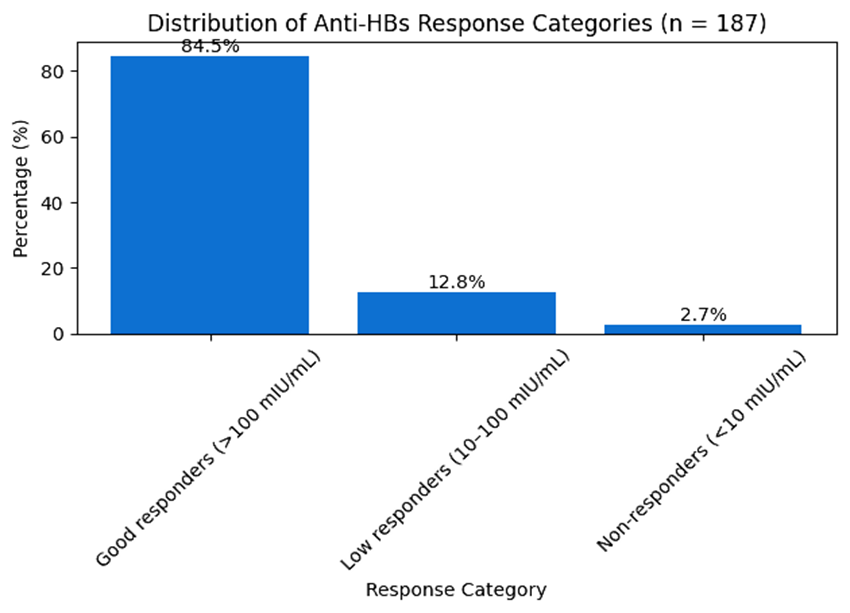
Figure 1. Distribution of Anti-Hepatitis B Surface Antibody Response Categories Among Fully Vaccinated Healthcare Workers (n = 187).
Bivariate Analysis of Factors Associated with Non-Response
Healthcare workers aged >40 years demonstrated a significantly higher proportion of non-response compared to those ≤40 years (9.1% vs 0.7%; p = 0.03). Participants with BMI >25 kg/m² had a greater non-response rate compared to those with BMI ≤25 kg/m² (8.8% vs 0.8%; p = 0.02). Current smokers showed significantly higher non-response rates than non-smokers (12.5% vs 0.7%; p = 0.01). Diabetes mellitus was not significantly associated with non-response (p = 0.21).
Table 3. Bivariate Associations with Non-Response (<10 mIU/mL)
|
Factor |
Non-response n/N (%) |
p-value |
|
Age ≤40 years |
1/143 (0.7%) |
0.03 |
|
Age >40 years |
4/44 (9.1%) |
|
|
BMI ≤25 kg/m² |
1/130 (0.8%) |
0.02 |
|
BMI >25 kg/m² |
4/57 (8.8%) |
|
|
Non-smoker |
1/155 (0.7%) |
0.01 |
|
Smoker |
4/32 (12.5%) |
|
|
Diabetes |
1/13 (7.7%) |
0.21 |
Protective immunity following completion of the three-dose Hepatitis B vaccination schedule was observed in 97.3% of healthcare workers. Non-response was identified in a small but clinically relevant subgroup (2.7%), with increasing age, elevated BMI, and smoking showing significant associations.
DISCUSSION:
The present study demonstrated a high overall seroprotection rate of 97.3% among fully vaccinated healthcare workers, reaffirming the effectiveness of structured institutional immunization programs in occupational settings. This rate is slightly higher than the historically reported 90-95% seroconversion rates observed among healthy adults following the standard three-dose schedule (Shepard et al., 2020¹; Leuridan & Van Damme, 2020⁸). The finding aligns with contemporary institutional studies among healthcare personnel reporting protection rates exceeding 95% when vaccination schedules are completed and cold-chain integrity is maintained (Frison et al., 2023⁷; Tafuri et al., 2021²¹).
Despite the high overall protection, 2.7% of participants were identified as non-responders, representing a small but clinically relevant subgroup. In healthcare environments where exposure to blood and body fluids is frequent, even a small proportion of susceptible individuals may pose a risk for occupational transmission. Current recommendations from the World Health Organization (WHO, 2023⁶) and the Centers for Disease Control and Prevention (CDC, 2020²²) emphasize the importance of documenting seroprotection following vaccination in healthcare personnel. The findings of this study support the practice of post-vaccination serological verification rather than reliance solely on vaccination history.
Increasing age was significantly associated with vaccine non-response in this cohort. Healthcare workers aged >40 years demonstrated a substantially higher proportion of non-response compared to younger participants. Age-related decline in vaccine responsiveness has been attributed to immunosenescence, characterized by reduced naïve T-cell production, diminished B-cell diversity, and impaired antigen presentation (Weinberger & Grubeck-Loebenstein, 2020¹³; Crooke et al., 2020¹⁴). A systematic review by Wang et al., 2021²⁴ confirmed age as a consistent determinant of hepatitis B vaccine hyporesponsiveness. These findings are particularly relevant in healthcare systems with an aging workforce, underscoring the need for targeted immune monitoring in older personnel.
Elevated body mass index (BMI >25 kg/m²) was also significantly associated with reduced seroprotection. Obesity has been shown to impair immune responses through chronic low-grade inflammation, altered cytokine signaling, and dysregulated adaptive immunity (Painter et al., 2022¹⁵; Frasca & Blomberg, 2021¹⁶). Clinical evidence demonstrates diminished antibody responses to vaccination among overweight individuals (Sheridan et al., 2020¹⁷). Given the increasing prevalence of overweight and obesity among healthcare workers globally, this association carries important occupational health implications.
Smoking demonstrated the strongest association with vaccine non-response among evaluated modifiable risk factors. Tobacco exposure adversely affects both humoral and cell-mediated immunity through oxidative stress, impaired antigen presentation, and altered cytokine production (Sopori, 2021¹⁸; Zimmermann & Curtis, 2021¹⁹). The significantly higher non-response rate observed among smokers highlights the importance of integrating smoking cessation counseling within institutional occupational health programs.
In contrast, diabetes mellitus was not significantly associated with non-response in the present study. Although previous literature suggests that metabolic disorders may impair vaccine responsiveness (Wang et al., 2021²⁴; Cooper & Mackie, 2020²⁵), the relatively small number of diabetic participants in this cohort may have limited statistical power to detect a meaningful association.
The overall seroprotection rate observed in this study is comparable to previously reported Indian institutional data and global modeling estimates demonstrating improved vaccine coverage and protection (Polaris Observatory Collaborators, 2022²; WHO, 2022⁴). Strict adherence to the complete vaccination schedule and use of standardized quantitative assays calibrated against international reference standards may have contributed to the high protection rate observed.
From a policy perspective, these findings reinforce existing occupational health recommendations advocating serological confirmation of immunity among healthcare personnel (Schillie et al., 2020⁵; WHO, 2023⁶). Targeted monitoring of individuals with identified risk factors may further enhance infection prevention strategies within healthcare institutions.
The strengths of this study include the inclusion of only fully vaccinated individuals, standardized quantitative antibody measurement using a WHO-calibrated automated immunoassay, and evaluation of clinically relevant host determinants. However, certain limitations must be acknowledged. The single-center design may limit generalizability. The relatively small number of non-responders restricted advanced multivariable modeling. Cellular immune responses were not assessed, and long-term persistence of antibody titres was not evaluated. Additionally, the duration since completion of vaccination was not stratified, which may influence measured antibody levels.
In summary, the present study confirms excellent seroprotection among fully vaccinated healthcare workers while identifying a small but clinically meaningful subgroup lacking protective immunity. Targeted surveillance and structured occupational health policies remain essential to ensure sustained protection against hepatitis B virus infection in healthcare settings.
CONCLUSION:
lacked protective immunity despite completion of the standard schedule. Increasing age, elevated body mass index, and smoking were significantly associated with non-response. These findings support routine post-vaccination anti-HBs titre assessment, particularly in high-risk subgroups, to ensure documented protection and strengthen occupational infection control strategies.
CONFLICT OF INTEREST: The authors declare that there are no conflicts of interest related to this study. No external funding was received for this research. The study was conducted independently without influence from vaccine manufacturers or diagnostic assay providers.
ACKNOWLEDGMENTS: The authors thank the Department of Microbiology and the participating healthcare workers for their cooperation in this study.
RECOMMENDATIONS: Based on the findings of the present study, the following recommendations are proposed:
1. Routine Post-Vaccination Serological Testing: Healthcare institutions should implement mandatory anti-HBs titre assessment following completion of the three-dose Hepatitis B vaccination schedule among healthcare workers to ensure documented seroprotection.
2. Targeted Monitoring of High-Risk Subgroups: Healthcare workers aged >40 years, those with elevated BMI, and smokers should undergo prioritized immune status evaluation due to their increased likelihood of vaccine non-response.
3. Strict Adherence to Complete Vaccination Schedule: Completion of the full three-dose schedule should be ensured for all healthcare personnel to achieve optimal and durable immune protection.
4. Health Promotion Strategies: Occupational health programs should integrate smoking cessation counseling and lifestyle interventions aimed at weight management to enhance vaccine responsiveness.
5. Institutional Record Maintenance: Hospitals should maintain centralized digital records of vaccination and serological status to ensure compliance with national and international occupational safety guidelines.
REFERENCES:
1. Shepard CW, Simard EP, Finelli L, Fiore AE, Bell BP. Hepatitis B virus infection: epidemiology and vaccination. Epidemiol Rev. 2020;42(1):45-62.
2. Polaris Observatory Collaborators. Global prevalence, treatment, and prevention of hepatitis B virus infection in 2022: a modelling study. Lancet Gastroenterol Hepatol. 2022;7(9):796-808.
3. Batham A, Narula D, Toteja T, Sreenivas V, Puliyel JM. Systematic review and meta-analysis of prevalence of hepatitis B in India. Indian Pediatr. 2007;44(9):663-674.
4. World Health Organization. Global hepatitis report 2022. Geneva: WHO; 2022.
5. Schillie S, Vellozzi C, Reingold A, et al. Prevention of hepatitis B virus infection in the United States: recommendations of the Advisory Committee on Immunization Practices. MMWR Recomm Rep. 2020;69(5):1-64.
6. World Health Organization. Hepatitis B vaccines: WHO position paper - 2023 update. Wkly Epidemiol Rec. 2023;98(16):153-172.
7. Frison F, Lopalco PL, Tafuri S. Hepatitis B vaccination coverage and serologic status among healthcare workers: a multicenter study. Int J Infect Dis. 2023;132:101-108.
8. Leuridan E, Van Damme P. Hepatitis B and the need for booster vaccination. Clin Infect Dis. 2020;70(2):259-264.
9. Ijaz S, Szmaragd C, Tedder RS. Long-term protection after hepatitis B vaccination in healthcare workers. J Viral Hepat. 2022;29(4):281-289.
10. Liu J, Zhang S, Wang Q, Shen H, Zhang M. Immunogenicity of incomplete hepatitis B vaccination schedules in adults. Vaccine. 2021;39(15):2105-2111.
11. Plotkin SA, Orenstein WA, Offit PA. Correlates of vaccine-induced protection: methods and implications. Clin Infect Dis. 2020;71(10):e623-e628.
12. Poland GA, Ovsyannikova IG, Kennedy RB. Personalized vaccinology and predictors of vaccine response. Vaccine. 2021;39(30):4078-4084.
13. Weinberger B, Grubeck-Loebenstein B. Vaccines for the elderly: current use and future challenges. Clin Microbiol Infect. 2020;26(2):154-162.
14. Crooke SN, Ovsyannikova IG, Poland GA, Kennedy RB. Immunosenescence and human vaccine immune responses. Immun Ageing. 2020;17:25.
15. Painter SD, Ovsyannikova IG, Poland GA. The weight of obesity on vaccine responses. Vaccine. 2022;40(5):699-708.
16. Frasca D, Blomberg BB. The impact of obesity on immune responses. Curr Opin Immunol. 2021;71:59-65.
17. Sheridan PA, Paich HA, Handy J, et al. Obesity and impaired immune responses to vaccination. Int J Obes. 2020;44(5):1236-1244.
18. Sopori M. Effects of cigarette smoke on the immune system. Nat Rev Immunol. 2021;21(6):377-389.
19. Zimmermann P, Curtis N. Factors influencing vaccine responses. Clin Microbiol Rev. 2021;34(3):e00084-19.
20. Alrowaily MA, Abou-Taleb HA. Hepatitis B vaccine response among healthcare workers: determinants of seroprotection. Hum Vaccin Immunother. 2022;18(6):2053452.
21. Tafuri S, Gallone MS, Cappelli MG, et al. Hepatitis B vaccination status and immune response in healthcare workers. BMC Infect Dis. 2021;21:1110.
22. Centers for Disease Control and Prevention. Updated U.S. Public Health Service guidelines for the management of occupational exposures to HBV. MMWR Morb Mortal Wkly Rep. 2020;69(6):1-20.
23. European Centre for Disease Prevention and Control. Hepatitis B vaccination and serological testing in healthcare workers. Stockholm: ECDC; 2022.
24. Wang J, Chen R, Zhang H, et al. Determinants of hepatitis B vaccine non-response: a systematic review and meta-analysis. Vaccine. 2021;39(42):6113-6124.
25. Cooper CL, Mackie D. Hepatitis B virus vaccination: immune response and booster strategies. J Infect Dis. 2020;221(5):683-691.
26. Middleman AB, Baker CJ, Kozinetz CA. Duration of immunity after hepatitis B vaccination. Pediatrics. 2020;146(2):e20193247.
27. Jilg W. Long-term efficacy of hepatitis B vaccination. J Hepatol. 2021;75(Suppl 1):S54-S63.