Impact of Chronic Sleep Deprivation on Subclinical Neurological Function Among Adolescents: A Cross-Sectional Study from Bareilly, India.
- Mukesh Dube , Associate Professor, Department of Medicine, Rajshree Medical Research Institute (RMRI), Bareilly, Uttar Pradesh
- Sayan Bhattacharjee , Senior Resident, Department of Medicine, Rajshree Medical Research Institute (RMRI), Bareilly, Uttar Pradesh
- Prayas Misra , Senior Resident, Department of Medicine, Rajshree Medical Research Institute (RMRI), Bareilly, Uttar Pradesh
- Abhishek Singh , Professor, Department of Community Medicine, SHKM Govt. Medical College, Nuh, Haryana.
Article Information:
Abstract:
Background: To assess the prevalence of chronic sleep deprivation (SD) among adolescents attending schools in Bareilly and to examine its association with subclinical neurological, cognitive, and emotional dysfunction. Methods: A total of 365 adolescents aged 13–19 years were enrolled through convenience sampling. Data were collected using a structured self-administered questionnaire initially developed in English and subsequently translated into Hindi using a forward–backward translation method. Responses pertaining to sleep patterns, cognitive symptoms, motor dysfunction, and emotional regulation were captured. Pearson's chi-square test and Fisher's exact test were employed for bivariate analyses. Results: Only 12.3% of participants reported sleeping more than 8 hours on school nights, while 45.5% slept less than 6 hours. Sleep deprivation was significantly associated with mood swings and irritability, forgetfulness, impaired concentration, difficulty in decision-making, balance deficits, delayed reaction time, microsleep episodes, and involuntary tremors (p < 0.05 for all associations). Conclusion: Chronic sleep deprivation is highly prevalent among adolescents in Bareilly and is significantly associated with adverse neurological, cognitive, and emotional outcomes. Targeted school-based screening programmes and parental awareness initiatives are warranted to mitigate the long-term consequences of insufficient sleep during this critical developmental perio, as is being investigated in head and neck cancer, thereby maximizing treatment effectiveness.
Keywords:
Article :
INTRODUCTION:
The National Sleep Foundation recommends that individuals aged 13–19 years obtain between 8 and 10 hours of sleep per night; however, a substantial proportion of adolescents worldwide habitually fall below this threshold.1 Chronic sleep deprivation (SD) in this age group has been associated with a broad spectrum of neurocognitive impairments, including diminished attention, reduced working memory capacity, and compromised executive function. SD is operationally defined as a sustained reduction in total sleep duration below the individual's baseline physiological requirement.2
Emerging evidence from randomised controlled trials has demonstrated that even short-term sleep restriction imposed over one academic week produces progressive deterioration in sustained attention, mood stability, and psychomotor speed among adolescent participants.3-5 Furthermore, subclinical neurological manifestations—such as postural instability, fine motor slowing, and involuntary tremors—may precede formally diagnosable neurological disorders and yet remain largely undetected in routine clinical encounters.6,7 Self-reported screening instruments capable of identifying these subclinical features at a community level therefore represent a practical and low-cost public health tool.
Although a growing body of literature has characterised the relationship between chronic SD and neurocognitive dysfunction in Western and East Asian adolescent populations,8 data pertaining specifically to adolescents in northern India remain sparse. Against this backdrop, the present study was designed to determine the prevalence of chronic SD among adolescents enrolled in schools affiliated with Rajshree Medical Research Institute, Bareilly, and to delineate its associations with self-reported subclinical neurological, cognitive, and emotional dysfunction.
MATERIALS AND METHODS:
Study Design and Setting: A descriptive study was conducted at Department of Medicine, Rajshree Medical Research Institute, Bareilly, between January 2023 and December 2024. RMRI is a tertiary care teaching institution with extensive outreach to secondary schools in the Bareilly division.
Study Participants: Adolescents aged 13–19 years residing in Bareilly and enrolled in schools affiliated with or in proximity to RMRI were eligible for inclusion. Participants were recruited using a convenience sampling strategy between February 2023 and November 2024. Individuals who declined to participate or did not fulfil the eligibility criteria were excluded from the study. Prior to enrolment, written informed consent was obtained from participants aged ≥18 years, and parental/guardian consent accompanied by adolescent assent was secured for participants aged <18 years.
Sample Size: The minimum required sample size was estimated at 186 participants, calculated on the basis of a 95% confidence level, a 5% margin of error, and a conservatively estimated prevalence of chronic SD of approximately 14% among Indian adolescents.9 A total of 452 adolescents responded to the survey; 87 were excluded owing to incomplete responses or age ineligibility, yielding a final analytical sample of 365 participants.
Study Instrument: Data were collected using a structured self-administered questionnaire comprising 24 items distributed across four sections: (i) sociodemographic and clinical characteristics; (ii) sleep patterns and SD assessment; (iii) self-reported subclinical neurological symptoms; and (iv) objective neurological function indicators.
Operational Definitions: Chronic SD was defined as obtaining fewer than 8 hours of sleep per night on school days, consistent with established adolescent sleep recommendations. This binary classification facilitated comparisons between sleep-deprived and non-sleep-deprived groups and permitted examination of associations with neurological symptoms, lifestyle variables, and cognitive and emotional outcomes.
Statistical Analysis: Data were entered into Microsoft Excel and analysed using IBM SPSS Statistics version 28.0. Categorical variables were summarised as frequencies and percentages. Pearson's chi-square test was employed for bivariate analysis of associations between categorical variables, and Fisher's exact test was applied where expected cell counts were fewer than five. A p-value of <0.05 was considered statistically significant throughout.
RESULTS:
Of the 452 adolescents who initially responded to the survey, 87 were excluded due to incomplete data or age ineligibility, leaving a final analytical sample of 365 participants. The majority of participants were aged 14–17 years (n = 183, 50.1%). Female participants constituted a greater proportion of the sample (n = 259, 70.9%).
Additionally, 10.4% (n = 38) reported taking medications known to affect sleep. Regarding sleep duration on school nights, 45.5% (n = 166) reported sleeping fewer than 6 hours, while only 12.3% (n = 45) reported sleeping more than 8 hours. Sleep duration was markedly longer on weekends, with 55.1% (n = 201) sleeping more than 8 hours.
Self-reported sleep deprivation during school days was endorsed by 40.0% (n = 146) of participants, while 43.0% (n = 157) reported feeling deprived only sometimes, and 17.0% (n = 62) denied sleep deprivation (Figure 1).
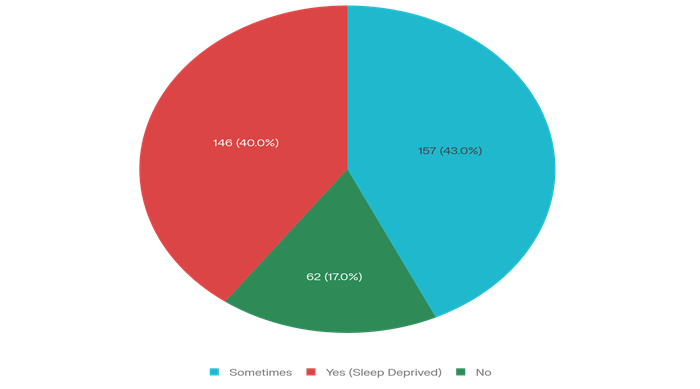
Figure 1: Self-reported sleep deprivation on school days (n=365)
Daytime napping was reported as occurring 'sometimes' by 40.5% (n = 148). Difficulty in initiating sleep was experienced by 40.5% of participants. Approximately 30.7% (n = 112) never felt refreshed upon waking. Balance difficulties were reported by 47.1% (n = 172), and slowed reaction time was not noted by 53.2% (n = 194). (Table 1).
Table 1. Distribution of sleep-related symptoms and functional impairments among participants (n = 365)
|
Items |
Frequency (N) |
Percentage (%) |
|
Daytime napping frequency |
||
|
Never |
89 |
24.4 |
|
Sometimes |
148 |
40.5 |
|
Often |
73 |
20.0 |
|
Always |
55 |
15.1 |
|
Difficulty sleeping |
||
|
Never |
113 |
30.9 |
|
Sometimes |
148 |
40.5 |
|
Often |
65 |
17.8 |
|
Always |
39 |
10.7 |
|
Wake up feeling refreshed |
||
|
Never |
112 |
30.7 |
|
Sometimes |
131 |
35.9 |
|
Often |
87 |
23.8 |
|
Always |
35 |
9.6 |
|
Feel unbalanced/stumble while walking |
||
|
Never |
193 |
52.9 |
|
Sometimes |
95 |
26.0 |
|
Often |
46 |
12.6 |
|
Always |
31 |
8.5 |
|
Slower reaction times in daily tasks |
||
|
Never |
194 |
53.2 |
|
Sometimes |
105 |
28.8 |
|
Often |
41 |
11.2 |
|
Always |
25 |
6.8 |
|
Excessive daytime sleepiness/sleep attacks |
||
|
Never |
131 |
35.9 |
|
Sometimes |
121 |
33.2 |
|
Often |
59 |
16.2 |
|
Always |
54 |
14.8 |
|
Difficulty with fine motor tasks (e.g., writing) |
||
|
Yes |
71 |
19.5 |
|
No |
294 |
80.5 |
|
Episodes of microsleep |
||
|
Yes |
117 |
32.1 |
|
No |
248 |
67.9 |
|
Involuntary muscle movements (tremors/shaking) |
||
|
Yes |
191 |
52.3 |
|
No |
174 |
47.7 |
Cognitive and emotional outcomes stratified by self-reported sleep deprivation status are presented in Table 2. Forgetfulness was significantly more prevalent among sleep-deprived participants, with 22.6% reporting that they always forgot things, compared with only 5.3% among those not sleep-deprived (p < 0.001).
Table 2. Association between sleep deprivation and cognitive/emotional outcomes (n = 365)
|
Variable |
Total N (%) |
Sleep Deprived – Yes |
Sleep Deprived – Sometimes |
Not Sleep Deprived |
p-value |
|
Forgetfulness |
|||||
|
Never |
73 (20.0) |
18 (12.3) |
33 (21.0) |
22 (35.5) |
0.001* |
|
Sometimes |
168 (46.0) |
58 (39.7) |
80 (51.0) |
30 (48.4) |
|
|
Often |
69 (18.9) |
37 (25.3) |
26 (16.6) |
6 (9.7) |
|
|
Always |
55 (15.1) |
33 (22.6) |
18 (11.5) |
4 (6.5)→(5.3%) |
|
|
Difficulty concentrating |
|||||
|
Never |
113 (30.9) |
23 (15.8) |
53 (33.8) |
37 (59.7) |
0.001*^ |
|
Sometimes |
141 (38.6) |
60 (41.1) |
63 (40.1) |
18 (29.0) |
|
|
Often |
82 (22.5) |
46 (31.5) |
29 (18.5) |
7 (11.3) |
|
|
Always |
29 (7.9) |
17 (11.6) |
12 (7.6) |
0 (1.0→0.0) |
|
|
Difficulty in decision-making |
|||||
|
Never |
134 (36.7) |
41 (28.1) |
58 (36.9) |
35 (56.5) |
0.001* |
|
Sometimes |
147 (40.3) |
63 (43.2) |
65 (41.4) |
19 (30.6) |
|
|
Often |
57 (15.6) |
27 (18.5) |
26 (16.6) |
4 (6.5) |
|
|
Always |
27 (7.4) |
15 (10.3) |
8 (5.1) |
3 (5.3→4.8%) |
|
|
Mood swings/irritability |
|||||
|
Never |
74 (20.3) |
17 (11.6) |
31 (19.7) |
26 (41.9) |
0.001* |
|
Sometimes |
133 (36.4) |
41 (28.1) |
69 (43.9) |
23 (37.1) |
|
|
Often |
72 (19.7) |
36 (24.7) |
29 (18.5) |
7 (11.3) |
|
|
Always |
86 (23.6) |
52 (35.6) |
28 (17.8) |
6 (10.5→9.7%) |
|
P: Pearson χ² test; ^: Fisher's exact test; *p < 0.05 (significant).
Physical and motor functioning was also significantly impaired in the sleep-deprived group. Balance difficulties were always reported by 12.3% of sleep-deprived participants versus 2.1% of non-deprived participants (p < 0.001). (Table 3).
Table 3. Association between sleep deprivation and daily physical functioning (n = 365)
|
Daily Life Activity |
Total N (%) |
Sleep Deprived – Yes |
Sleep Deprived – Sometimes |
Not Sleep Deprived |
p-value |
|
Balance difficulty while walking |
|||||
|
Never |
193 (52.9) |
61 (41.8) |
87 (55.4) |
45 (72.6) |
0.001* |
|
Sometimes |
95 (26.0) |
41 (28.1) |
43 (27.4) |
11 (17.7) |
|
|
Often |
46 (12.6) |
26 (17.8) |
16 (10.2) |
4 (6.5) |
|
|
Always |
31 (8.5) |
18 (12.3) |
11 (7.0) |
1 (2.1→1.6%) |
|
|
Slower reaction times |
|||||
|
Never |
194 (53.2) |
57 (39.0) |
94 (59.9) |
43 (69.4) |
0.001* |
|
Sometimes |
105 (28.8) |
53 (36.3) |
39 (24.8) |
13 (21.0) |
|
|
Often |
41 (11.2) |
23 (15.8) |
14 (8.9) |
4 (6.5) |
|
|
Always |
25 (6.8) |
13 (8.9) |
10 (6.4) |
1 (2.1→1.6%) |
|
|
Excessive daytime sleepiness |
|||||
|
Never |
131 (35.9) |
32 (21.9) |
63 (40.1) |
36 (58.1) |
0.001* |
|
Sometimes |
121 (33.2) |
43 (29.5) |
57 (36.3) |
21 (33.9) |
|
|
Often |
59 (16.2) |
35 (24.0) |
22 (14.0) |
2 (3.2) |
|
|
Always |
54 (14.8) |
36 (24.7) |
15 (9.6) |
2 (3.2→3.2%) |
|
|
Fine motor task difficulty |
|||||
|
Yes |
71 (19.5) |
45 (30.8) |
22 (14.0) |
4 (6.5→6.3%) |
0.001*^ |
|
No |
294 (80.5) |
101 (69.2) |
135 (86.0) |
58 (93.5→93.7%) |
|
|
Microsleep episodes |
|||||
|
Yes |
117 (32.1) |
59 (40.4) |
51 (32.5) |
8 (12.9) |
0.001*^ |
|
No |
248 (67.9) |
87 (59.6) |
106 (67.5) |
54 (87.1) |
|
|
Involuntary muscle movements |
|||||
|
Yes |
191 (52.3) |
97 (66.4) |
79 (50.3) |
14 (23.1→22.6%) |
0.001*^ |
|
No |
174 (47.7) |
49 (33.6) |
78 (49.7) |
47 (76.9→75.8%) |
|
P: Pearson χ² test; ^: Fisher's exact test; *p < 0.05 (significant).
With respect to lifestyle and sleep pattern associations presented in Table 4, participants who reported always feeling sleep-deprived were significantly more likely to carry a diagnosis of a sleep disorder (58.3% vs. 9.8% among non-deprived; p = 0.039). Similarly, 69.2% of sleep-deprived participants were taking sleep-affecting medications compared with 6.9% among the non-deprived group (p = 0.001).
Table 4. Association between sleep deprivation and lifestyle/sleep pattern variables (n = 365)
|
Sleep Pattern / Variable |
Sleep Deprived – Yes N (%) |
Sleep Deprived – Sometimes N (%) |
Not Sleep Deprived N (%) |
p-value |
|
Diagnosed with a sleep disorder |
||||
|
Yes |
16 (59.3) |
9 (33.3) |
3 (9.8→11.1%) |
0.039* |
|
No |
130 (38.5) |
148 (43.8) |
60 (17.8) |
|
|
Taking sleep-affecting medications |
||||
|
Yes |
26 (68.4) |
8 (21.1) |
4 (10.5→6.9%) |
0.001*^ |
|
No |
120 (36.7) |
149 (45.6) |
58 (17.7) |
|
|
Sleep hours during school nights |
||||
|
<6 hours |
95 (57.2) |
60 (36.1) |
11 (6.6) |
0.001* |
|
7–8 hours |
35 (22.7) |
77 (50.0) |
42 (27.3) |
|
|
>8 hours |
16 (35.6) |
21 (46.7) |
8 (17.8→6.5%) |
|
|
Sleep hours during weekends |
||||
|
<6 hours |
14 (37.8) |
17 (45.9) |
6 (16.2) |
0.337 |
|
7–8 hours |
46 (36.2) |
54 (42.5) |
27 (21.3) |
|
|
>8 hours |
86 (42.8) |
86 (42.8) |
29 (14.4) |
|
P: Pearson χ² test; ^: Fisher's exact test; *p < 0.05 (significant).
DISCUSSION:
A marked discrepancy in sleep duration between school nights and weekends was observed, with 55.1% of participants reporting more than 8 hours of sleep on weekends. This 'weekend catch-up sleep' phenomenon has been well documented among adolescents in Sweden, the United States, and East Asian nations, where its potential to offset neurocognitive deficits accrued during weekdays remains debated in the literature.10 The persistence of cognitive and motor impairments in the current sample despite this compensatory pattern suggests that episodic recovery sleep may not fully restore neurological function once a chronic debt has been established.
A substantial proportion of participants (75% of those with any sleep disorder diagnosis) reported anxiety as the primary co-diagnosis. This finding aligns with evidence from a large Korean cohort study that identified a robust bidirectional association between short sleep duration and generalised anxiety disorder (GAD) among adolescents.11 Moreover, a 2024 Chinese multi-centre study corroborated the role of SD as an independent risk factor for anxiety symptomatology in student populations, noting gender-differential effects.12
Cognitive impairment in the sleep-deprived group manifested principally as forgetfulness, difficulty concentrating, and impaired decision-making—all reported at significantly higher frequencies than in the non-deprived group. These findings are consistent with a rigorously controlled randomised trial, which demonstrated that even partial sleep restriction to five hours per night over five consecutive nights produced progressive and cumulative decrements in sustained attention, working memory, and executive function in adolescents aged 15–19 years.7 The underlying neurobiological mechanism involves adenosine accumulation in the prefrontal cortex, impairing top-down cognitive control.3
Motor impairment attributable to SD was also substantiated in the present cohort. Balance difficulties were endorsed by 47.1% of participants overall, and the association with sleep deprivation status was highly significant. Slowed reaction time, fine motor difficulty, and microsleep episodes were all markedly more prevalent among sleep-deprived participants. A systematic review demonstrated that SD and poor sleep quality increase postural instability by reducing proprioceptive feedback and impairing cerebellar function.8 Microsleep episodes—brief involuntary sleep intrusions during wakefulness—pose particular safety risks in contexts such as road-crossing and machinery operation, underscoring the real-world significance of these findings.
Emotional dysregulation was another prominent feature in the sleep-deprived group, with 35.6% reporting frequent mood swings or irritability. An experimental study conducted in Australia demonstrated that adolescents restricted to 5 hours of sleep exhibited significantly elevated scores for depression, confusion, and anger relative to those sleeping 7.5 or 10 hours.13 The amygdala–prefrontal connectivity model posits that sleep loss preferentially disrupts top-down regulatory pathways, thereby increasing amygdala reactivity and emotional lability.5
The public health implications of these findings are considerable within the Indian context. Adolescents in urban and semi-urban northern India face a unique confluence of academic competition, late-evening tuition schedules, and widespread smartphone use—all of which conspire against recommended sleep duration. School-based sleep literacy programmes informed by culturally adapted Hindi-language materials—such as the translated instrument deployed in the present study—represent a feasible and scalable first step. Parental education initiatives and advocacy for revised school start times
CONCLUSION:
Chronic sleep deprivation is widespread among adolescents in Bareilly and is significantly associated with a broad spectrum of adverse neurological, cognitive, and emotional outcomes. Sleep-deprived adolescents demonstrated significantly higher rates of forgetfulness, impaired concentration, difficulty in decision-making, mood instability, balance deficits, slowed reaction time, fine motor impairment, microsleep episodes, and involuntary tremors compared with their adequately rested peers. Given that adolescence represents a critical period for neurocognitive maturation, these findings underscore the imperative of prioritising sleep health as a public health objective. Implementation of culturally tailored, Hindi-language sleep education programmes in schools, alongside targeted healthcare screening for at-risk adolescents, is strongly recommen.
REFERENCES:
1. Hirshkowitz M, Whiton K, Albert SM, Alessi C, Bruni O, DonCarlos L, et al. National Sleep Foundation's sleep time duration recommendations: methodology and results summary. Sleep Health. 2015;1(1):40–3.
2. Seton C, Fitzgerald DA. Chronic sleep deprivation in teenagers: practical ways to help. Paediatr Respir Rev. 2021;40:73–9.
3. Bishir M, Bhat A, Essa MM, Ekpo O, Ihunwo AO, Veeraraghavan VP, et al. Sleep deprivation and neurological disorders. BioMed Res Int. 2020;2020:5764017.
4. Giedd JN. The amazing teen brain. Sci Am. 2015;312(6):32–7.
5. Walker MP. Why We Sleep: Unlocking the Power of Sleep and Dreams. New York: Scribner; 2017.
6. Nasim M, Saade M, AlBuhairan F. Sleep deprivation: prevalence and associated factors among adolescents in Saudi Arabia. Sleep Med. 2019;53:165–71.
7. Lo JC, Ong JL, Leong RLF, Gooley JJ, Chee MWL. Cognitive performance, sleepiness, and mood in partially sleep-deprived adolescents: the need for a sleep study. Sleep. 2016;39(3):687–98.
8. Umemura GS, Furtado F, Santos FCD, Gonçalves BDSB, Forner-Cordero A. Is balance control affected by sleep deprivation? A systematic review of the impact of sleep on the control of balance. Front Neurosci. 2022;16:779086.
9. AlBuhairan FS. Adolescents in Saudi Arabia: their status of health [dissertation]. Maastricht: Maastricht University; 2022.
10. Kim J, Noh JW, Kim A, Kwon YD. The impact of weekday-to-weekend sleep differences on health outcomes among adolescent students. Children. 2022;9(1):52.
11. Ko AJ, Kim J, Park EC. Association of sleep and generalised anxiety disorder in Korean adolescents. BMC Public Health. 2024;24:2045.
12. Bao C, Han L. Gender difference in anxiety and related factors among adolescents. Front Public Health. 2025;12:1410086.
13. Booth SA, Carskadon MA, Young R, Short MA. Sleep duration and mood in adolescents: an experimental study. Sleep. 2021;44(5):zsaa253.
14. Lemke T, Hökby S, Wasserman D, Carli V, Hadlaczky G. Associations between sleep habits, quality, chronotype, and depression in a large cross-sectional sample of Swedish adolescents. PLoS One. 2023;18(11):e0293580.
15. Huang Z, Tong C, Cheng R, Tian K, Jiang Y. Sleep status and its association with dietary habits among children and adolescents in Shandong Province, China: a cross-sectional study. BMC Public Health. 2025;25:1142.