Comparative Analgesic Efficacy of Adding Magnesium Sulphate to Bupivacaine in Serratus Anterior Plane Block to Reduce Pain after Mastectomy.
- Kaushal Kishore , Senior Resident, Department of Anaesthesia, MGM Medical College and Hospital, Jharkhand, India.
- Manisha Bhagat , Associate Professor, Department of Anaesthesia, Pain and Critical Care, Rajendra Institute Of Medical Sciences, Ranchi, Jharkhand, India.
- Ramesh K Kharwar , Associate Professor, Department of Anaesthesia, Pain and Critical Care, Rajendra Institute Of Medical Sciences, Ranchi, Jharkhand, India.
- Ekramul Haque , Professor, Department of Anaesthesia, Pain and Critical care, Rajendra Institute Of Medical Sciences , Ranchi, Jharkhand, India
- Shio Priye , Professor & HOD, Department of Anaesthesia, Pain and Critical care, Rajendra Institute Of Medical Sciences, Ranchi, Jharkhand, India.
- Manpreet Raj , Post Graduate, Department of Anaesthesia, Pain and Critical care, Rajendra Institute Of Medical Sciences, Ranchi, Jharkhand, India
- Supratik Ganguly , Senior Resident, Department of Anaesthesia, Pain and Critical care, Rajendra Institute Of Medical Sciences, Ranchi, Jharkhand, India.
Article Information:
Abstract:
Background: Patients' recuperation, mobility, and quality of life are all greatly impacted by postoperative pain after mastectomy. An efficient localised anaesthetic method for postoperative analgesia after breast surgeries is serratus anterior plane block (SAPB). When used as an adjuvant with local anaesthetics, magnesium sulphate's N-Methyl-D-Aspartate (NMDA) receptor antagonistic qualities may extend the duration of analgesia. Aim: To compare the analgesic efficacy of bupivacaine alone versus bupivacaine with magnesium sulphate in serratus anterior plane block for postoperative pain management after mastectomy. Materials and Methods: This prospective randomized study was conducted at MGM Medical College and Hospital over a period of 1 year including 50 patients undergoing mastectomy under general anesthesia. Patients were randomly divided into two groups: Group B (20 mL 0.25% bupivacaine) and Group BM (20 mL 0.25% bupivacaine with 150 mg magnesium sulphate), with 25 patients in each group. Postoperative pain was assessed using Visual Analog Scale (VAS) scores at 1, 4, 8, 12, and 24 hours. Duration of analgesia, total rescue analgesic consumption, and adverse effects were recorded. Statistical analysis was performed using Student’s t-test and Chi-square test. p < 0.05 was considered statistically significant. Results: Group BM demonstrated significantly lower VAS scores at 8, 12, and 24 hours postoperatively compared to Group B (p < 0.05). Group BM experienced a substantially longer mean duration of analgesia (11.6 ± 2.1 hours) than Group B (7.9 ± 1.8 hours) (p < 0.001). Group BM also showed a substantial decrease in rescue analgesic intake (78 ± 22 mg vs. 132 ± 30 mg; p < 0.001). There was no discernible difference in the negative effects between the groups. Conclusion: Addition of magnesium sulphate to bupivacaine in serratus anterior plane block significantly improves postoperative analgesia following mastectomy by prolonging analgesic duration and reducing analgesic requirement without increasing complications.
Keywords:
Article :
INTRODUCTION:
Mastectomy is still a crucial surgical treatment option for breast cancer, which is still one of the most frequent cancers in women globally. Postoperative pain following mastectomy is still a significant clinical problem, despite improvements in perioperative treatment. A prolonged hospital stay, decreased respiratory function, decreased shoulder mobility, and the emergence of chronic post-mastectomy pain syndrome are all consequences of inadequate pain management. Thus, enhancing patient outcomes and satisfaction requires effective multimodal analgesia.
As part of improved recovery regimens for breast surgery, regional anaesthetic treatments have grown in favour. Among these methods, serratus anterior plane block (SAPB), which was initially reported by Blanco et al., has become a reliable and safe way to provide analgesia to the anterolateral thoracic wall. SAPB reduces postoperative pain after breast surgeries by blocking the thoracic intercostal nerves' lateral cutaneous branches. Compared to neuraxial blocks, the procedure has a better safety profile and is very simple to execute under ultrasound guidance(1).
Because of its potent sensory blocking and extended duration of action, bupivacaine is frequently utilised in SAPB. However, the duration of analgesia with local anaesthetics alone may still be limited, requiring the postoperative administration of additional analgesics.
To improve the effectiveness and longevity of regional blocks, a number of adjuvants have been studied. Because of its antinociceptive qualities, magnesium sulphate has gained interest as an adjuvant in regional anaesthesia. It mainly modulates pain transmission and central sensitisation by blocking NMDA receptors and controlling calcium influx into cells. When used with local anaesthetics in peripheral nerve blocks, magnesium sulphate has been shown in prior research to extend analgesia and decrease postoperative opioid intake(2).
The current prospective randomised study was conducted at MGM Medical College and Hospital to assess the relative analgesic effectiveness of combining magnesium sulphate with bupivacaine in serratus anterior plane block for postoperative pain management after mastectomy. The purpose of the study was to evaluate the duration of analgesia, the need for rescue analgesics, postoperative pain scores, and any negative consequences related to this combination.
MATERIALS AND METHODS:
Study Design
Prospective randomized comparative study.
Study Setting
Department of Anesthesiology, MGM Medical College and Hospital.
Study Duration
1 year.
Sample Size
50 patients undergoing elective mastectomy.
Inclusion Criteria
• Female patients aged 30–70 years
• ASA grade I and II
• Patients undergoing unilateral mastectomy
• Patients willing to participate and provide informed consent
Exclusion Criteria
• Allergy to study drugs
• Coagulopathy
• Infection at injection site
• Severe hepatic or renal disease
• Chronic opioid use
• Psychiatric illness
Grouping
Patients were randomly allocated into:
• Group B (n=25): 20 mL of 0.25% bupivacaine
• Group BM (n=25): 20 mL of 0.25% bupivacaine + 150 mg magnesium sulphate
Statistical Analysis
Data were analyzed using SPSS software version 25. Continuous variables were expressed as mean ± SD and analyzed using Student’s t-test. Categorical variables were compared using Chi-square test. p < 0.05 was considered statistically significant.
RESULTS:
Table 1: Demographic Characteristics
|
Parameter |
Group B (n=25) |
Group BM (n=25) |
p-value |
|
Mean Age (years) |
51.4 ± 8.2 |
52.1 ± 7.9 |
0.74 |
|
Mean Weight (kg) |
61.3 ± 6.5 |
60.8 ± 7.1 |
0.81 |
|
ASA I/II |
15/10 |
14/11 |
0.77 |
|
Duration of Surgery (min) |
118 ± 14 |
121 ± 16 |
0.49 |
Table 2: Postoperative VAS Scores
|
Time Interval |
Group B |
Group BM |
p-value |
|
1 hour |
2.1 ± 0.6 |
1.9 ± 0.5 |
0.24 |
|
4 hours |
3.4 ± 0.8 |
2.8 ± 0.7 |
0.03 |
|
8 hours |
5.2 ± 1.0 |
3.7 ± 0.9 |
<0.001 |
|
12 hours |
5.8 ± 1.1 |
4.0 ± 0.8 |
<0.001 |
|
24 hours |
4.3 ± 0.9 |
3.1 ± 0.7 |
<0.001 |
Table 3: Analgesic Outcomes
|
Parameter |
Group B |
Group BM |
p-value |
|
Duration of Analgesia (hours) |
7.9 ± 1.8 |
11.6 ± 2.1 |
<0.001 |
|
Rescue Analgesic Consumption (mg) |
132 ± 30 |
78 ± 22 |
<0.001 |
|
Time to First Analgesic Request (hours) |
6.8 ± 1.4 |
10.2 ± 1.9 |
<0.001 |
Table 4: Adverse Effects
|
Complication |
Group B |
Group BM |
p-value |
|
Nausea/Vomiting |
4 |
3 |
0.67 |
|
Hypotension |
1 |
1 |
1.00 |
|
Bradycardia |
1 |
0 |
0.31 |
|
Local Complications |
0 |
0 |
NS |
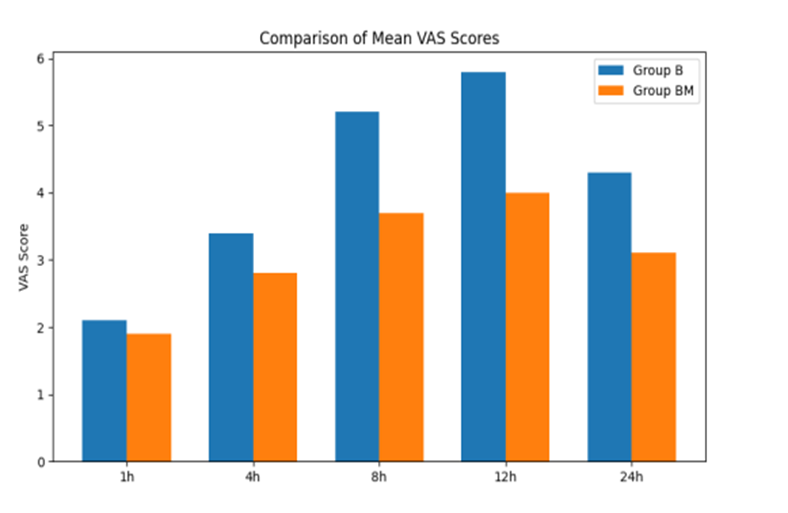
Figure 1: Comparison of mean VAS scores
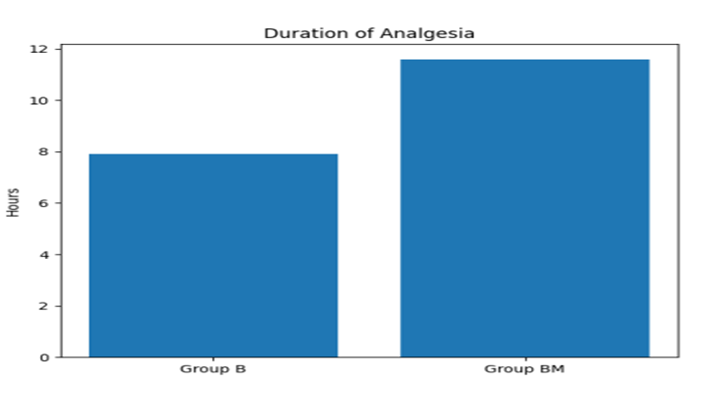
Figure 2: Duration of analgesic
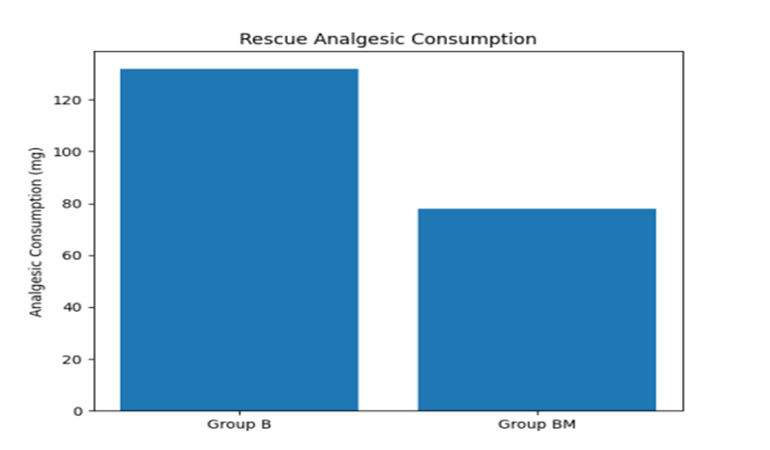
Figure 3: Rescue analgesic consumption
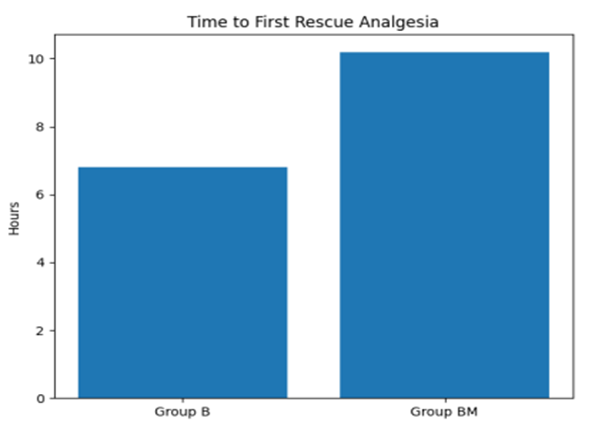
Figure 4: Time to first rescue analgesic
DISCUSSION:
Improving patient comfort, early mobilisation, respiratory function, and overall recovery after a mastectomy all depend on effective postoperative pain management. The current study assessed the effectiveness of combining magnesium sulphate with bupivacaine in serratus anterior plane block and found that patients who received magnesium sulphate had significantly better postoperative analgesia. The study population was homogeneous and there were few confounding variables because the demographic features of the two research groups were statistically comparable. Differences in postoperative outcomes were predominantly attributable to the study intervention because of similarities in age, weight, ASA status, and length of operation(3). The magnesium sulphate group in the current study had significantly reduced postoperative VAS scores at 4, 8, 12, and 24 hours following surgery. These results imply that adding magnesium sulphate improves and prolongs analgesic efficacy. NMDA receptor antagonism, which lessens central sensitisation and pain transmission, may be the mechanism underlying this improvement. Additionally, magnesium contributes to antinociceptive effects via controlling calcium input into nerve cells(4).
In comparison to Group B, Group BM's analgesic duration was noticeably longer. Magnesium sulphate-treated patients reported analgesia for about 11.6 hours as opposed to the control group's 7.9 hours. Because extended analgesia lessens patient suffering and minimises the need for further analgesics during the immediate postoperative period, this discovery is clinically significant. The magnesium group consumed much less rescue analgesics. Better pain management is indicated by a lower need for analgesics, which may also lessen opioid-related side effects such drowsiness, nausea, vomiting, and respiratory depression. Improved analgesia may also help patients feel better and be mobilised sooner after surgery.
The current study's results align with earlier research assessing magnesium sulphate as an adjuvant in peripheral nerve blocks. Magnesium administered to local anaesthetics in regional anaesthesia procedures has been shown by several researchers to prolong analgesia and minimise postoperative analgesic usage. For breast procedures, similar advantages have also been noted using thoracic plane blocks and paravertebral blocks(5).
Crucially, there was no discernible increase in negative effects when magnesium sulphate was added. The frequency of bradycardia, hypotension, nausea, and vomiting was similar in both groups. Magnesium sulphate is a safe adjuvant when used in the right dosages, as evidenced by the lack of local problems like hematoma or infection. The serratus anterior plane block itself has grown in popularity because of its safety profile and ease of use. SAPB has a lower incidence of pneumothorax, hypotension, and neuraxial sequelae than thoracic epidural and paravertebral blocks. The use of SAPB in multimodal analgesia protocols for breast operations is further improved by the addition of magnesium sulphate(6).
Nevertheless, there were some limitations to the current study. The investigation was carried out at one location, and the sample size was somewhat small. Chronic post-mastectomy pain syndrome and other long-term effects were not assessed. To validate these results, greater sample sizes and long-term follow-up are advised for future multicentric investigations.
Overall, the study shows that magnesium sulphate is a safe and useful adjuvant to bupivacaine in serratus anterior plane block for analgesic after mastectomy(7).
CONCLUSION:
The current prospective randomised investigation showed that postoperative pain management after mastectomy is considerably improved when magnesium sulphate is added to bupivacaine in serratus anterior plane block. Compared to patients receiving bupivacaine alone, those receiving magnesium sulphate had lower postoperative VAS scores, longer analgesia duration, a delayed need for rescue analgesia, and lower total analgesic consumption. The magnesium sulphate group's analgesic effects can be explained by its modulation of calcium-mediated nociceptive pathways and NMDA receptor antagonistic action. Crucially, magnesium sulphate's safety as an adjuvant in regional anaesthesia was confirmed by the fact that its usage did not raise the frequency of side effects.
For breast procedures, serratus anterior plane block is already known to be an efficient and somewhat safe regional anaesthetic method. Its effectiveness is further increased and its integration into multimodal analgesic regimens for patients undergoing mastectomy is supported by the addition of magnesium sulphate. The results of the study indicate that magnesium sulphate could be a useful adjuvant for enhancing patient comfort, analgesic quality, and postoperative recovery following breast surgery. To determine the best dosage regimens and evaluate long-term advantages, such as the avoidance of chronic postoperative pain, more extensive multicentric research is advised.
REFERENCES:
1. Singh S, Singh R, Mala J. Magnesium Sulfate As An Adjuvant In Serratus Anterior Plane Block For Postoperative Pain Management In Modified Radical Mastectomy. Int J Curr Pharm Rev Res. 2025;17(2):1353–6.
2. Gupta PK, Kumar D, Tiwari PS. Comparative Analgesic Efficacy of Adding Magnesium Sulphate to Bupivacaine in Serratus Anterior Plane Block to Reduce Pain After Mastectomy. Int J Curr Pharm Rev Res. 2025;17(2):1111–5.
3. Das P. Comparative Analgesic Efficacy of Using Magnesium Sulphate with Bupivacaine in Serratus Anterior Plane Block to Alleviate Postoperative Pain Following Mastectomy. Int J Curr Pharm Rev Res. 2025;17(7):1289–93.
4. Abdelkhalek U, Abdelgwad A. Magnesium sulfate as an adjuvant in serratus anterior plane block for postoperative pain management in modified radical mastectomy : A randomized controlled trial. Int J Med Anesthesiol. 2024;7(4):83–90.
5. A Alshawadfy, ME Abdel-Ghaffar NM. Comparative analgesic efficacy of adding magnesium sulphate to bupivacaine in serratus anterior plane block to reduce pain after mastectomy. South Afr J Anaesth Analg. 2022;28(6):235–9.
6. Abou D, Kassim E, Mohammed AR, Abd S, Basset E, Nafady HA. Efficacy of Serratus Anterior Plane Block Using Bupivacaine / Magnesium Sulfate Versus Bupivacaine / Nalbuphine for Mastectomy : A Randomized , Double-Blinded Comparative Study. Anesth Pain Med. 2020;10(3):1–7.
7. El-aziz RAEA, Asal MF, Maaly AM. Effectiveness of adding magnesium sulfate to bupivacaine in ultrasound guided serratus anterior plane block in patients undergoing modified radical mastectomy. Egypt J Anaesth [Internet]. 2023;39(1):100–6. Available from: https://doi.org/10.1080/11101849.2023.2168856.