Cervical cancer Awareness and Practice of Pap Smear Test Among Women with Gynaecological problems
- Sushma Shet , Assistant Professor, Dept of Obstetrics and Gynaecology, Dr Chandramma Dayananda Sagar Institute of Medical Education and Research CDSIMER.
- Priyanka B Reddy , Assistant Professor, Dept of Obstetrics and Gynaecology, Dr Chandramma Dayananda Sagar Institute of Medical Education and Research CDSIMER.
- Sheela HS , Professor and Head, Dept of Obstetrics and Gynaecology, Dr Chandramma Dayananda Sagar Institute of Medical Education and Research CDSIMER.
- Ritimukta Panda , Assistant Professor, Dept of Obstetrics and Gynaecology, Dr Chandramma Dayananda Sagar Institute of Medical Education and Research CDSIMER.
Article Information:
Abstract:
Background: Cervical cancer is one of the leading causes of cancer-related morbidity and mortality among women worldwide, particularly in developing countries such as India. Early detection through Pap smear screening plays a crucial role in preventing cervical cancer. However, awareness and utilization of screening services remain inadequate among many women. Aim: To assess the awareness regarding cervical cancer and the practice of Pap smear test among women with gynaecological problems attending a tertiary care hospital. Materials and Methods: A hospital-based cross-sectional descriptive study was conducted among 100 women attending the gynaecology outpatient department of a tertiary care hospital. Data were collected using a predesigned and pretested semi-structured questionnaire assessing socio-demographic details, awareness regarding cervical cancer, knowledge about Pap smear testing, and screening practices. Data were analysed using SPSS software. Categorical variables were expressed as frequency and percentage. Chi-square test was used to assess associations between variables. A p-value of <0.05 was considered statistically significant. Results: Among the study participants, 68% had heard about cervical cancer, while only 40% were aware of Pap smear testing. Awareness regarding HPV infection and HPV vaccination was observed in 28% and 24% of women respectively. Only 32% of participants had previously undergone Pap smear screening. A statistically significant association was observed between educational status and awareness regarding Pap smear testing (p=0.002). Urban women demonstrated significantly better Pap smear practice compared to rural women (p=0.011). Conclusion: The study demonstrated inadequate awareness and poor practice of Pap smear screening among women with gynaecological problems. Educational status and residence significantly influenced awareness and screening practices. Strengthening health education, increasing awareness regarding cervical cancer prevention, and improving accessibility to screening services are essential to enhance early detection and reduce cervical cancer burden
Keywords:
Article :
Introduction:
Cervical cancer is one of the most common malignancies affecting women worldwide and continues to be a major public health problem, particularly in low- and middle-income countries. It is a preventable and potentially curable disease when detected at an early stage through effective screening and timely treatment. Persistent infection with high-risk types of Human Papillomavirus (HPV), especially HPV 16 and HPV 18, has been identified as the primary etiological factor for the development of cervical cancer. Despite advances in preventive strategies such as HPV vaccination and cervical screening programs, cervical cancer remains a leading cause of cancer-related morbidity and mortality among women globally. ¹
According to the World Health Organization, cervical cancer is the fourth most common cancer among women worldwide. In 2020, approximately 604,000 new cases and 342,000 deaths were reported globally, with nearly 90% of deaths occurring in low- and middle-income countries.² The burden is disproportionately high in developing nations due to inadequate awareness, poor access to screening facilities, low socioeconomic status, limited healthcare infrastructure, cultural barriers, and lack of organized national screening programs.³ The WHO has launched the “90–70–90” global strategy aiming to eliminate cervical cancer as a public health problem through HPV vaccination, cervical screening, and appropriate treatment of precancerous lesions and invasive cancer.²
India contributes a substantial proportion of the global cervical cancer burden. Cervical cancer is currently the second most common cancer among Indian women and one of the leading causes of cancer-related deaths in females. Recent estimates suggest that India accounts for nearly one-fourth of the global cervical cancer deaths. ⁴ The age-standardized incidence rate remains high, especially among women residing in rural areas where awareness regarding cervical cancer prevention and screening practices is poor. Lack of education, poverty, early marriage, multiparity, poor genital hygiene, and limited healthcare utilization further increase the risk among Indian women. ⁵
The Papanicolaou (Pap) smear test is a simple, cost-effective, and widely accepted screening tool for detecting premalignant and malignant cervical lesions. Regular Pap smear screening has significantly reduced the incidence and mortality of cervical cancer in developed countries. ⁶ However, in developing countries including India, the utilization of Pap smear screening remains inadequate due to insufficient awareness, fear, embarrassment, misconceptions, lack of symptoms, and limited accessibility to healthcare services. Women with gynaecological problems represent a particularly important target group for cervical cancer screening because many of them attend healthcare facilities with symptoms that may be associated with underlying cervical pathology. ⁷
Awareness regarding cervical cancer and screening practices plays a crucial role in early diagnosis and prevention. Studies conducted in various parts of India have demonstrated inadequate knowledge regarding risk factors, symptoms, HPV infection, availability of vaccines, and Pap smear testing among women attending gynaecology outpatient departments. ⁵ Women often seek medical care only after the onset of advanced symptoms, resulting in delayed diagnosis and poor prognosis. Therefore, assessment of awareness and practice related to Pap smear testing among women with gynaecological problems is essential for planning effective educational interventions and strengthening screening programs. ⁶
Improving awareness, promoting routine Pap smear screening, and ensuring accessibility to screening services can substantially reduce the burden of cervical cancer and improve women’s reproductive health outcomes. Early detection through Pap smear testing enables identification and treatment of precancerous lesions before progression to invasive cancer, thereby reducing morbidity and mortality associated with the disease. ⁷ Hence, the present study aims to assess the awareness regarding cervical cancer and the practice of Pap smear testing among women with gynaecological problems attending a tertiary care hospital.
AIM
To assess the awareness regarding cervical cancer and the practice of Pap smear test among women with gynaecological problems attending a tertiary care hospital.
OBJECTIVES
1. To evaluate the level of awareness regarding cervical cancer, its risk factors, symptoms, prevention, and screening methods among women with gynaecological problems.
To assess the practice and utilization of Pap smear testing among women with gynaecological problems and determine the factors associated with its uptake
Materials and Methods:
Study Design
The present study will be a hospital-based cross-sectional descriptive study.
Study Setting
The study will be conducted in the Department of Obstetrics and Gynaecology at a tertiary care teaching hospital.
Study Population
Women attending the gynaecology outpatient department with various gynaecological complaints during the study period will constitute the study population.
Sample Size
The sample size will be calculated using the formula for estimation of proportion:

Where:
• n= Required sample size
• Z= Standard normal deviate at 95% confidence interval = 1.96
• p= Prevalence of awareness/practice of Pap smear test from previous studies
• q=1-P
• d= Absolute precision
Assuming prevalence of adequate awareness regarding cervical cancer and Pap smear screening as 50% for maximum sample size estimation and allowable error of 10%:
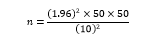
The calculated sample size is approximately 96. Considering possible non-response and incomplete questionnaires, the final sample size will be rounded to 100 participants.
Sampling Technique
Consecutive sampling method will be used to recruit eligible participants attending the gynaecology outpatient department during the study period until the required sample size is achieved.
Inclusion Criteria
• Women aged 21–65 years attending the gynaecology outpatient department.
• Women presenting with gynaecological complaints.
• Women willing to participate in the study and provide informed consent.
Exclusion Criteria
• Women previously diagnosed with cervical cancer.
• Pregnant women.
• Women who are critically ill or unable to respond to the questionnaire.
• Women unwilling to participate in the study.
Study Tools
Data will be collected using a predesigned, pretested, semi-structured questionnaire consisting of the following sections:
1. Socio-demographic details
• Age
• Educational status
• Occupation
• Socioeconomic status
• Marital status
• Residence
2. Clinical and reproductive history
• Parity
• Age at marriage
• Menstrual history
• Presenting gynaecological complaints
3. Awareness regarding cervical cancer
• Knowledge about cervical cancer
• Risk factors
• Symptoms
• Preventive measures
• HPV vaccination
• Awareness regarding Pap smear test
4. Practice regarding Pap smear test
• Previous history of Pap smear screening
• Frequency of screening
• Source of information
• Barriers to undergoing Pap smear testing
Study Procedure
After obtaining approval from the Institutional Ethics Committee, eligible women attending the gynaecology outpatient department will be approached and informed about the purpose of the study. Written informed consent will be obtained from all participants prior to enrolment.
A face-to-face interview will be conducted using the structured questionnaire in the local language whenever necessary. Confidentiality and privacy of the participants will be maintained throughout the study.
Information regarding awareness of cervical cancer and Pap smear testing practices will be collected and documented systematically. Participants identified with inadequate awareness will be educated regarding cervical cancer prevention and the importance of regular screening.
Operational Definitions
Awareness regarding Cervical Cancer
Women who have heard about cervical cancer and possess knowledge regarding its risk factors, symptoms, prevention, or screening methods will be considered aware.
Practice of Pap Smear Test
Women who have undergone Pap smear screening at least once previously will be considered to have practiced Pap smear screening.
Statistical Analysis
The collected data will be entered into Microsoft Excel and analysed using Statistical Package for Social Sciences (SPSS) software version 25. Categorical variables will be expressed as frequency and percentage. Continuous variables will be expressed as mean ± standard deviation. Association between awareness/practice and socio-demographic variables will be analysed using Chi-square test or Fisher’s exact test wherever applicable. A p-value of <0.05 will be considered statistically significant.
Results:
A total of 100 women with gynaecological problems attending the gynaecology outpatient department were included in the present study to assess awareness regarding cervical cancer and practice of Pap smear test.
Table 1. Socio-demographic characteristics of study participants (n = 100)
|
Variable |
Category |
Frequency (n) |
Percentage (%) |
|
Age group (years) |
21–30 |
28 |
28.0 |
|
31–40 |
34 |
34.0 |
|
|
41–50 |
24 |
24.0 |
|
|
>50 |
14 |
14.0 |
|
|
Educational status |
Illiterate |
18 |
18.0 |
|
Primary school |
24 |
24.0 |
|
|
Secondary school |
36 |
36.0 |
|
|
Graduate and above |
22 |
22.0 |
|
|
Residence |
Rural |
62 |
62.0 |
|
Urban |
38 |
38.0 |
|
|
Marital status |
Married |
88 |
88.0 |
|
Unmarried/Widowed |
12 |
12.0 |
Interpretation
Among the 100 study participants, the majority belonged to the age group of 31–40 years (34%). Most women had secondary school education (36%), and 62% were from rural areas. Married women constituted 88% of the study population.
Table 2. Awareness regarding cervical cancer among study participants
|
Awareness variable |
Yes n (%) |
No n (%) |
|
Heard about cervical cancer |
68 (68.0%) |
32 (32.0%) |
|
Aware of risk factors |
46 (46.0%) |
54 (54.0%) |
|
Aware that cervical cancer is preventable |
52 (52.0%) |
48 (48.0%) |
|
Aware of HPV infection |
28 (28.0%) |
72 (72.0%) |
|
Aware of HPV vaccination |
24 (24.0%) |
76 (76.0%) |
|
Aware of Pap smear test |
40 (40.0%) |
60 (60.0%) |
Interpretation
The present study showed that 68% of women had heard about cervical cancer. However, awareness regarding HPV infection (28%), HPV vaccination (24%), and Pap smear testing (40%) was comparatively low, indicating inadequate knowledge regarding cervical cancer prevention and screening methods among the study participants.
Table 3. Practice of Pap smear test among study participants (n = 100)
|
Practice variable |
Frequency (n) |
Percentage (%) |
|
Previously underwent Pap smear test |
32 |
32.0 |
|
Never underwent Pap smear test |
68 |
68.0 |
|
Regular screening among those tested (n=32) |
12 |
37.5 |
|
Irregular screening among those tested (n=32) |
20 |
62.5 |
Interpretation
Only 32% of women had undergone Pap smear screening previously, while 68% had never undergone the test. Among women who had undergone screening, irregular screening practices were more common (62.5%) than regular screening practices (37.5%).
Table 4. Association between educational status and awareness regarding Pap smear test
|
Educational status |
Aware of Pap smear test n (%) |
Not aware n (%) |
Total |
P value |
|
Illiterate |
2 (11.1%) |
16 (88.9%) |
18 |
0.002 |
|
Primary school |
6 (25.0%) |
18 (75.0%) |
24 |
|
|
Secondary school |
18 (50.0%) |
18 (50.0%) |
36 |
|
|
Graduate and above |
14 (63.6%) |
8 (36.4%) |
22 |
|
|
Total |
40 |
60 |
100 |
Interpretation
A statistically significant association was observed between educational status and awareness regarding Pap smear testing (p=0.002). Awareness regarding Pap smear test increased significantly with higher levels of education. Women who were graduates and above demonstrated better awareness compared to illiterate women.
Table 5. Association between residence and practice of Pap smear test
|
Residence |
Undergone Pap smear n (%) |
Not undergone n (%) |
Total |
P value |
|
Rural |
14 (22.6%) |
48 (77.4%) |
62 |
0.011 |
|
Urban |
18 (47.4%) |
20 (52.6%) |
38 |
|
|
Total |
32 |
68 |
100 |
Interpretation
A statistically significant association was found between residence and practice of Pap smear screening (p=0.011). Urban women showed better utilization of Pap smear testing compared to rural women, indicating disparities in access to healthcare services and awareness regarding cervical cancer screening.
Discussion:
The present hospital-based cross-sectional study was conducted among 100 women with gynaecological problems attending a tertiary care hospital to assess awareness regarding cervical cancer and practice of Pap smear testing. Cervical cancer remains a major public health challenge in developing countries including India despite being largely preventable through effective screening and early intervention.
In the present study, the majority of participants belonged to the age group of 31–40 years (34%), followed by 21–30 years (28%). Similar findings were observed by Aswathy et al., who reported that most women attending gynaecology clinics were within the reproductive age group, where awareness regarding cervical cancer screening remains inadequate. ⁸ Women in this age group are particularly important targets for cervical cancer screening because precancerous lesions are commonly identified during these years.
The present study showed that 68% of women had heard about cervical cancer, while only 40% were aware of the Pap smear test. Awareness regarding HPV infection and HPV vaccination was observed in only 28% and 24% of participants respectively. These findings indicate inadequate knowledge regarding cervical cancer prevention among women with gynaecological complaints. Similar observations were reported by Bansal et al., who found that although many women had heard about cervical cancer, detailed knowledge regarding Pap smear screening and HPV vaccination was poor among Indian women. ⁹ Shrestha et al. also reported low awareness regarding HPV infection and cervical cancer screening among women attending tertiary hospitals, emphasizing the need for improved health education programs. ¹⁰
In the present study, only 32% of women had previously undergone Pap smear screening, while 68% had never undergone the test. Among screened women, irregular screening practices were more common than regular screening practices. These findings reflect poor utilization of cervical cancer screening services. Similar findings were documented by Nene et al., who reported low uptake of Pap smear screening among Indian women due to fear, embarrassment, lack of awareness, and poor accessibility to screening services. ¹¹ Another study conducted by Siddharthar et al. demonstrated that despite availability of screening facilities, utilization remained poor due to sociocultural barriers and misconceptions regarding the procedure. ¹²
Educational status showed a statistically significant association with awareness regarding Pap smear testing in the present study (p=0.002). Awareness increased progressively with higher educational status, with graduates demonstrating better knowledge compared to illiterate women. Comparable findings were reported by Raychaudhuri and Mandal, who observed significantly better awareness and screening practices among educated women compared to women with lower educational levels. ¹³ Education improves women’s understanding regarding disease prevention, healthcare utilization, and the importance of early diagnosis.
The present study also demonstrated a statistically significant association between residence and Pap smear practice (p=0.011). Urban women showed better utilization of Pap smear screening compared to rural women. Similar findings were observed by Varughese et al., who reported that rural women had lower awareness and poorer screening practices due to limited healthcare access, low literacy, financial constraints, and lack of organized screening programs. ¹⁴ Rural populations continue to face disparities in preventive healthcare services, contributing to delayed diagnosis of cervical cancer.
The low awareness regarding HPV vaccination observed in the present study is concerning because HPV vaccination plays a vital role in primary prevention of cervical cancer. Similar findings were reported by Patel et al., who demonstrated poor knowledge and acceptance regarding HPV vaccination among Indian women and emphasized the need for community-based awareness programs. ¹⁵ Increasing awareness regarding vaccination and screening can substantially reduce the future burden of cervical cancer.
Overall, the findings of the present study highlight inadequate awareness and poor practice of Pap smear screening among women with gynaecological problems. The results emphasize the urgent need for structured educational interventions, opportunistic screening during hospital visits, community awareness campaigns, and strengthening of national cervical cancer screening programs. Similar conclusions were drawn by Basu et al., who stressed that improving awareness and accessibility to screening services is essential for reducing cervical cancer-related morbidity and mortality in India. ¹⁶
Conclusion:
The present study revealed that awareness regarding cervical cancer among women with gynaecological problems was moderate; however, detailed knowledge regarding HPV infection, HPV vaccination, and Pap smear screening was inadequate. The practice of Pap smear testing was found to be poor, with the majority of women never having undergone cervical cancer screening. Educational status and place of residence showed significant association with awareness and utilization of Pap smear testing. Higher educational levels and urban residence were associated with better awareness and screening practices.
The findings of the study highlight the urgent need for strengthening cervical cancer awareness programs, improving accessibility to screening services, and promoting routine Pap smear screening among women attending gynaecology outpatient departments. Opportunistic screening and health education at healthcare facilities can play a vital role in early detection and prevention of cervical cancer, thereby reducing associated morbidity and mortality.
References:
1. Arbyn M, Weiderpass E, Bruni L, de Sanjosé S, Saraiya M, Ferlay J, et al. Estimates of incidence and mortality of cervical cancer in 2018: a worldwide analysis. Lancet Glob Health. 2020;8(2):e191-e203. doi:10.1016/S2214-109X(19)30482-6.
2. Singh D, Vignat J, Lorenzoni V, Eslahi M, Ginsburg O, Lauby-Secretan B, et al. Global estimates of incidence and mortality of cervical cancer in 2020: a baseline analysis of the WHO Global Cervical Cancer Elimination Initiative. Lancet Glob Health. 2023;11(2):e197-e206. doi:10.1016/S2214-109X(22)00501-0.
3. Gopalkrishnan K, Small W Jr. Addressing global disparities in cervical cancer burden. Curr Oncol Rep. 2025;27(2):45-58. doi:10.1007/s11912-025-00727-2. (Springer)
4. Bruni L, Albero G, Serrano B, Mena M, Gómez D, Muñoz J, et al. Human Papillomavirus and Related Diseases in India. ICO/IARC Information Centre on HPV and Cancer (HPV Information Centre). 2023.
5. Singh K, Gupta S, Kumari R. Cervical cancer burden in India: a descriptive epidemiological review. Indian J Gynecol Oncol. 2025;23(1):12-20. doi:10.1007/s40944-025-00921-7. (PMC)
6. Bansal AB, Pakhare AP, Kapoor N, Mehrotra R, Kokane AM. Knowledge, attitude, and practices related to cervical cancer among adult women: A hospital-based cross-sectional study. J Nat Sci Biol Med. 2015;6(2):324-328. doi:10.4103/0976-9668.159993.
7. Goyal LD, Verma R, Sharma M. The current status of cervical cancer awareness and HPV screening practices among women attending gynecology clinics. J Cancer Res Ther. 2025;21(1):44-50. doi: 10.4103/jcrt.jcrt_1023_24. (journals.lww.com)
8. Aswathy S, Quereshi MA, Kurian B, Leelamoni K. Cervical cancer screening: Current knowledge & practice among women in a rural population of Kerala, India. Indian J Med Res. 2012;136(2):205-210.
9. Bansal AB, Pakhare AP, Kapoor N, Mehrotra R, Kokane AM. Knowledge, attitude, and practices related to cervical cancer among adult women: A hospital-based cross-sectional study. J Nat Sci Biol Med. 2015;6(2):324-328. doi:10.4103/0976-9668.159993.
10. Shrestha J, Saha R, Tripathi N. Knowledge, attitude and practice regarding cervical cancer screening amongst women visiting tertiary centre in Nepal. Nepal J Med Sci. 2013;2(2):85-90. doi:10.3126/njms.v2i2.8941.
11. Nene BM, Hiremath PS, Kane S, Fayette JM, Shastri SS, Sankaranarayanan R. Effectiveness of cervical cancer screening by visual inspection, HPV testing, and Pap smear in rural India. Int J Cancer. 2021;148(6):1395-1403. doi:10.1002/ijc.33354.
12. Siddharthar J, Rajkumar B, Deivasigamani K. Knowledge, awareness and prevention of cervical cancer among women attending a tertiary care hospital in Puducherry, India. J Clin Diagn Res. 2014;8(6):OC01-OC03. doi:10.7860/JCDR/2014/8115.4422.
13. Raychaudhuri S, Mandal S. Current status of knowledge, attitude and practice (KAP) and screening for cervical cancer in countries at different levels of development. Asian Pac J Cancer Prev. 2012;13(9):4221-4227. doi:10.7314/APJCP.2012.13.9.4221.
14. Varughese J, Richman S. Cancer care inequity for women in resource-poor countries. Rev Obstet Gynecol. 2010;3(3):122-132.
15. Patel H, Jeve YB, Sherman SM, Moss EL. Knowledge of human papillomavirus and the HPV vaccine in European adolescents: a systematic review. Sex Transm Infect. 2016;92(6):474-479. doi:10.1136/sextrans-2015-052341.
16. Basu P, Mittal S, Banerjee D, Singh P, Panda C, Dutta S, et al. Diagnostic accuracy of VIA and cytology in cervical cancer screening in India. Int J Cancer. 2020;146(7):1891-1899. doi:10.1002/ijc.32593