TREATMENT OF ACUTE CORONARY SYNDROME INDIVIDUALS SUFFERING FROM CHRONIC OBSTRUCTIVE PULMONARY DISEASES.
- Subhashis Chakraborty , RMO cum Clinical Tutor, Department of Cardiology, Nil Ratan Sarkar Medical College and Hospital, Kolkata, West Bengal 700014.
- Anup Shyamal , Associate Professor, Department of Anatomy, MJN Medical College, Cooch Behar, West Bengal 736101.
- Debarshi Jana , PhD (Cal), Biostatistics and Epidemiology (IBRI), Consultant Biostatistician and Epidemiologist, Young Scientist (Associate Professor), Department of Science & Technology, Government of India, IPGMER and SSKM Hospital, Ekbalpur, Kolkata, West Bengal 700023.
Article Information:
Abstract:
Introduction: Recent decades have seen substantial reductions in the incidence of acute myocardial infarction (AMI) and its mortality. Much of the decrease in incidence has been attributable to a decrease in ST-elevation myocardial infarction (STEMI). Rates of non-ST elevation myocardial infarction (NSTEMI) have not decreased and may be increasing perhaps due to population ageing or clinical awareness. Aims: To find out the treatment of acute coronary syndrome individuals suffering from chronic obstructive pulmonary diseases. Materials & Methods: Single centre, descriptive, observational, cross-sectional study in Nilratan Sircar Medical College and Hospital, Department of Cardiology, A.J.C. Bose Road, Kolkata 700014.In-patients of male ward, female ward and ICCU of department of Cardiology. Study Duration 18 months from 1st May 2023 to 31st October 2024 and total sample size 100 chronic obstructive pulmonary diseases patients. Result: This study highlights the clinical characteristics and treatment variations among ACS patients with and without COPD. COPD patients with ACS tend to present at a younger age and are less likely to receive certain medications such as beta blockers and MRAs, possibly due to concerns over respiratory complications. Despite some variations in management, most differences were not statistically significant, except for age and beta blocker use. Conclusion: These findings emphasize the importance of individualized treatment approaches in ACS patients with coexisting COPD. Further research is needed to establish optimal treatment protocols that balance cardiovascular and pulmonary considerations in this population.
Keywords:
Article :
INTRODUCTION:
Recent decades have seen substantial reductions in the incidence of acute myocardial infarction (AMI) and its mortality.[1] Much of the decrease in incidence has been attributable to a decrease in ST-elevation myocardial infarction (STEMI). Rates of non-ST elevation myocardial infarction (NSTEMI) have not decreased and may be increasing perhaps due to population ageing or clinical awareness. Patients with NSTEMI tend to be older and have more co-morbidities than patients with STEMI, increasing their risk of death in the longer term.[2] Much of the decrease in AMI mortality has been attributed to improvements in care, but it is not clear if this has been optimized for all patient groups. Some high-risk groups have received particular attention and in diabetes, for example, ischaemic presentations may be atypical and thresholds for investigation and treatment are set at a lower level compared with non-diabetic patients. However, other groups have received less attention and chronic obstructive pulmonary disease (COPD), in particular, has been under-studied in patients with AMI despite it being common, affecting ∼1.5% of the European population, although the true prevalence may be as high as 10% as many patients remain undiagnosed. In the developed world, the most important risk factor for COPD is tobacco smoking; other risk factors include increased age, indoor and outdoor pollution, poor nutrition and low socio-economic status.[3]
Chronic obstructive pulmonary disease is associated with an increased risk of many other diseases, which are thought to be due, in part, to ‘spill over’ of inflammation in the lung to the systemic circulation[4]. Cardiovascular disease is perhaps the most common co-morbidity and people with COPD, particularly in younger age groups, are at increased risk of AMI, independent of smoking status.[5] Inflammation, endothelial dysfunction and increased arterial stiffness, in addition to shared risk factors, are all thought to contribute to cardiovascular risk in COPD.[6] Most people with COPD do not die from respiratory diseases, with cardiovascular disease being a major cause, accounting for ∼30% of all deaths.
To evaluate and analyze the treatment patterns, clinical outcomes, and management challenges of individuals diagnosed with Acute Coronary Syndrome (ACS) who also suffer from Chronic Obstructive Pulmonary Disease (COPD).
MATERIALS AND METHODS:
Study Design: Retrospective observational study.
Study Place: Nilratan Sircar Medical College and Hospital, Department of Cardiology, A.J.C. Bose Road, Kolkata 700014.
Study Time: Jan 2024 to Dec 2024 for one year.
Sample size: 100 ACS-COPD patients.
Study parameter:
• Age in Group
• Gender
• Marital Status
• ACS-STEMI
• ACS- NSTEMI
• Type of MI
• Signs Pulse
• Signs SBP
• Signs DBP
• BMI
• Vessel Outcomes
• Medications Beta blocker
• Medications ACE/ARB
• Medications MRA
• Amiodarone Outcomes
• Medications LMWH
• Medications UFH
• Medications Sorbitrate
• Medications GTN
• Medications OHA
Inclusion Criteria:
1. Age ≥18 years.
2. Confirmed diagnosis of Acute Coronary Syndrome (STEMI, NSTEMI, or Unstable Angina).
3. Documented diagnosis of Chronic Obstructive Pulmonary Disease (COPD).
4. Admitted and treated for ACS during the study period.
Exclusion Criteria:
1. Incomplete or missing medical records.
2. Presence of non-COPD chronic pulmonary diseases.
3. Patients who left against medical advice or were transferred.
4. Terminal illnesses unrelated to ACS or COPD affecting treatment decisions.
Statistical Analysis
Data were entered into Excel and analysed using SPSS and Graph Pad Prism. Numerical variables were summarized using means and standard deviations, while categorical variables were described with counts and percentages. Two-sample t-tests were used to compare independent groups, while paired t-tests accounted for correlations in paired data. Chi-square tests (including Fisher’s exact test for small sample sizes) were used for categorical data comparisons. P-values ≤ 0.05 were considered statistically significant.
RESULTS:
Table 1: Association between Age in Group, Gender, Marital Status, ACS-STEMI, ACS- NSTEMI, Type of MI: Group
|
ACS Patients With COPD |
ACS Patients Without COPD |
p-value |
||
|
Age in Group |
≤30 |
13(26%) |
5(10%) |
0.0071 |
|
31-40 |
25 (50%) |
40 (80%) |
||
|
41-50 |
12 (24.0%) |
5 (10%) |
||
|
Gender |
Female |
2 (4%) |
4 (8%) |
0.3997 |
|
Male |
48 (96%) |
46 (92%) |
||
|
Marital Status |
Married |
50 (100%) |
48 (96%) |
0.1531 |
|
Unmarried |
0 (0%) |
2 (4%) |
||
|
ACS-STEMI |
No |
6 (12%) |
4 (8%) |
0.5049 |
|
Yes |
44 (88%) |
46 (92%) |
||
|
ACS- NSTEMI |
No |
44 (88%) |
46 (92%) |
0.5049 |
|
Yes |
6 (12%) |
4 (8%) |
||
|
Type of MI |
ALWMI |
8(16.0%) |
13(26.0%) |
0.504 |
|
AWMI |
19(38.0%) |
20(40.0%) |
||
|
IWMI |
16(32.0%) |
13(26.0%) |
||
|
IWMI with RVMI |
7(14.0%) |
4(8.0%) |
Table 2: Distribution of mean Age, Signs Pulse, Signs SBP, Signs DBP, BMI, Number of Vessel, Outcomes
|
Number |
Mean |
SD |
p-value |
||
|
Age |
ACS Patients With COPD |
50 |
34.92 |
5.038 |
<0.0001 |
|
ACS Patients Without COPD |
50 |
39.26 |
3.5272 |
||
|
Signs Pulse |
ACS Patients With COPD |
50 |
83.3 |
19.8815 |
0.3107 |
|
ACS Patients Without COPD |
50 |
86.92 |
15.3488 |
||
|
Signs SBP |
ACS Patients With COPD |
50 |
117.24 |
15.8881 |
0.0295 |
|
ACS Patients Without COPD |
50 |
124.36 |
16.3367 |
||
|
Signs DBP |
ACS Patients With COPD |
50 |
76.6 |
9.4804 |
0.1696 |
|
ACS Patients Without COPD |
50 |
79.08 |
8.41 |
||
|
BMI |
ACS Patients With COPD |
50 |
25.4 |
2.1093 |
0.6755 |
|
ACS Patients Without COPD |
50 |
25.222 |
2.1308 |
||
|
Number of Vessel Outcomes |
ACS Patients With COPD |
50 |
1.82 |
0.8391 |
0.0332 |
|
ACS Patients Without COPD |
50 |
1.5001 |
1.1192 |
Table 3: Association between Medications Beta blocker, Medications ACE/ARB, Medications MRA: Group
|
GROUP |
|||||
|
ACS Patients With COPD |
ACS Patients Without COPD |
TOTAL |
p-value |
||
|
Medications Beta blocker |
No |
9(18.0%) |
2(4.0%) |
11(11.0%) |
0.0252 |
|
Yes |
41(82.0%) |
48(96.0%) |
89(89.0%) |
||
|
TOTAL |
50(100.0%) |
50(100.0%) |
100(100.0%) |
||
|
Medications ACE/ARB |
No |
7(14.0%) |
2(4.0%) |
9(9.0%) |
0.0806 |
|
Yes |
43(86.0%) |
48(96.0%) |
91(91.0%) |
||
|
TOTAL |
50(100.0%) |
50(100.0%) |
100(100.0%) |
||
|
Medications MRA |
No |
36(72.0%) |
28(56.0%) |
64(64.0%) |
0.0955 |
|
Yes |
14(28.0%) |
22(44.0%) |
36(36.0%) |
||
|
TOTAL |
50(100.0%) |
50(100.0%) |
100(100.0%) |
||
Table 4: Association between I/V drugs (Amiodarone Outcomes) : Group
|
GROUP |
||||
|
I/V drugs (Amiodarone Outcomes) |
ACS Patients With COPD |
ACS Patients Without COPD |
TOTAL |
p-value |
|
Atropine |
3(6.0%) |
4(8.0%) |
7(7.0%) |
0.3837 |
|
Diuretics |
13(26.0%) |
21(42.0%) |
34(34.0%) |
|
|
No |
32(64.0%) |
24(48.0%) |
56(56.0%) |
|
|
Nor Adr |
1(2.0%) |
0(0.0%) |
1(1.0%) |
|
|
Yes(Nor Adr) |
1(2.0%) |
1(2.0%) |
2(2.0%) |
|
|
TOTAL |
50(100.0%) |
50(100.0%) |
100(100.0%) |
|
Table: Association between Medications LMWH, Medications UFH, Medications Sorbitrate, Medications GTN, Medications OHA : Group
|
GROUP |
|||||
|
ACS Patients With COPD |
ACS Patients Without COPD |
TOTAL |
p-value |
||
|
Medications LMWH |
No |
36(72.0%) |
37(74.0%) |
73(73.0%) |
0.8217 |
|
Yes |
14(28.0%) |
13(26.0%) |
27(27.0%) |
||
|
TOTAL |
50(100.0%) |
50(100.0%) |
100(100.0%) |
||
|
Medications UFH |
No |
14(28.0%) |
13(26.0%) |
27(27.0%) |
0.8217 |
|
Yes |
36(72.0%) |
37(74.0%) |
73(73.0%) |
||
|
TOTAL |
50(100.0%) |
50(100.0%) |
100(100.0%) |
||
|
Medications Sorbitrate |
No |
27(54.0%) |
20(40.0%) |
47(47.0%) |
0.1607 |
|
Yes |
23(46.0%) |
30(60.0%) |
53(53.0%) |
||
|
TOTAL |
50(100.0%) |
50(100.0%) |
100(100.0%) |
||
|
Medications GTN |
No |
42(84.0%) |
38(76.0%) |
80(80.0%) |
0.3173 |
|
Yes |
8(16.0%) |
12(24.0%) |
20(20.0%) |
||
|
TOTAL |
50(100.0%) |
50(100.0%) |
100(100.0%) |
||
|
Medications OHA |
No |
45(90.0%) |
48(96.0%) |
93(93.0%) |
0.2396 |
|
Yes |
5(10.0%) |
2(4.0%) |
7(7.0%) |
||
|
TOTAL |
50(100.0%) |
50(100.0%) |
100(100.0%) |
||
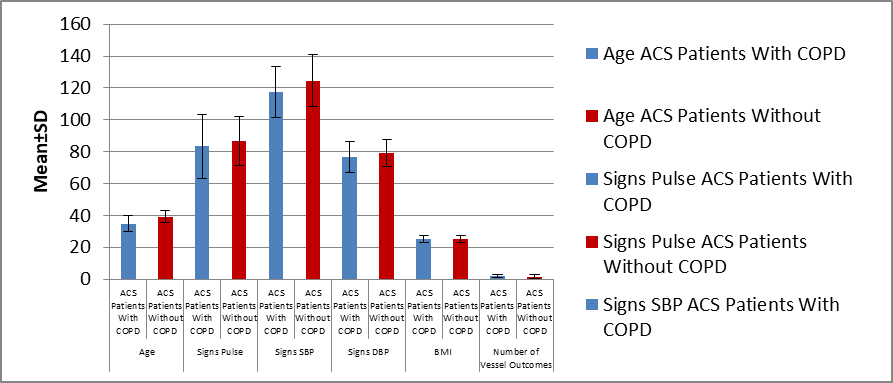
Figure 1: Distribution of mean Age, Signs Pulse, Signs SBP, Signs DBP, BMI, Number of Vessel, Outcomes
Among ACS patients with COPD, 26% were aged ≤30, 50% were 31–40, and 24% were 41–50, while in non-COPD patients, 10% were ≤30, 80% were 31–40, and 10% were 41–50. The age distribution difference between the two groups was statistically significant (p = 0.0071).
Among ACS patients with COPD, 4% were female and 96% were male, while in the non-COPD group, 8% were female and 92% were male. The gender distribution between the two groups was not statistically significant (p = 0.3997).
All ACS patients with COPD were married (100%), while 96% of non-COPD patients were married and 4% were unmarried. The marital status distribution between the two groups was not statistically significant (p = 0.1531).
Among ACS patients with COPD, 12% had STEMI and 88% did not, while in the non-COPD group, 8% had STEMI and 92% did not. The difference in STEMI occurrence between the two groups was not statistically significant (p = 0.5049).
Among ACS patients with COPD, 88% had NSTEMI and 12% did not, while in the non-COPD group, 92% had NSTEMI and 8% did not. The difference in NSTEMI occurrence between the two groups was not statistically significant (p = 0.5049).
Among ACS patients with COPD, 16% had ALWMI, 38% had AWMI, 32% had IWMI, and 14% had IWMI with RVMI, while in the non-COPD group, 26% had ALWMI, 40% had AWMI, 26% had IWMI, and 8% had IWMI with RVMI. The distribution of MI types between the two groups was not statistically significant (p = 0.504).
The mean age of ACS patients with COPD was 34.92 ± 5.038, while in the non-COPD group, it was 39.26 ± 3.5272. The difference in mean age between the two groups was statistically significant (p < 0.0001).
The mean pulse rate of ACS patients with COPD was 83.3 ± 19.8815, while in the non-COPD group, it was 86.92 ± 15.3488. The difference in pulse rates between the two groups was not statistically significant (p = 0.3107).
The mean systolic blood pressure (SBP) of ACS patients with COPD was 117.24 ± 15.8881, while in the non-COPD group, it was 124.36 ± 16.3367. The difference in SBP between the two groups was statistically significant (p = 0.0295).
The mean diastolic blood pressure (DBP) of ACS patients with COPD was 76.6 ± 9.4804, while in the non-COPD group, it was 79.08 ± 8.41. The difference in DBP between the two groups was not statistically significant (p = 0.1696).
The mean BMI of ACS patients with COPD was 25.4 ± 2.1093, while in the non-COPD group, it was 25.222 ± 2.1308. The difference in BMI between the two groups was not statistically significant (p = 0.6755).
The mean number of vessel outcomes in ACS patients with COPD was 1.82 ± 0.8391, while in the non-COPD group, it was 1.5001 ± 1.1192. The difference in the number of vessel outcomes between the two groups was statistically significant (p = 0.0332).
Among ACS patients with COPD, 18% did not receive beta blockers, while 82% did, compared to 4% and 96% in the non-COPD group, respectively. The difference in beta blocker use between the two groups was statistically significant (p = 0.0252).
In ACS patients with COPD, 14% did not receive ACE/ARB medications, while 86% did, compared to 4% and 96% in the non-COPD group, respectively. The difference in ACE/ARB use between the two groups was not statistically significant (p = 0.0806).
In ACS patients with COPD, 72% did not receive MRA medications, while 28% did, compared to 56% and 44% in the non-COPD group, respectively. The difference in MRA use between the two groups was not statistically significant (p = 0.0955).
In ACS patients with COPD, 6% received atropine, 26% received diuretics, and 2% received noradrenaline, compared to 8%, 42%, and 2% in the non-COPD group, respectively. The difference in the use of intravenous drugs between the two groups was not statistically significant (p = 0.3837).
In ACS patients with COPD, 72% did not receive LMWH, while 28% did, compared to 74% and 26% in the non-COPD group, respectively. The difference in LMWH use between the two groups was not statistically significant (p = 0.8217).
In ACS patients with COPD, 28% did not receive UFH, while 72% did, compared to 26% and 74% in the non-COPD group, respectively. The difference in UFH use between the two groups was not statistically significant (p = 0.8217).
In ACS patients with COPD, 54% did not receive Sorbitrate, while 46% did, compared to 40% and 60% in the non-COPD group, respectively. The difference in Sorbitrate use between the two groups was not statistically significant (p = 0.1607).
In ACS patients with COPD, 84% did not receive GTN, while 16% did, compared to 76% and 24% in the non-COPD group, respectively. The difference in GTN use between the two groups was not statistically significant (p = 0.3173).
In ACS patients with COPD, 90% did not receive OHA, while 10% did, compared to 96% and 4% in the non-COPD group, respectively. The difference in OHA use between the two groups was not statistically significant (p = 0.2396).
DISCUSSION:
The age distribution among ACS patients with COPD indicates a younger affected population compared to those without COPD, with half of the COPD group aged 31–40. In contrast, the non-COPD group was predominantly concentrated in the same age range but showed a narrower distribution. The statistically significant difference (p = 0.0071) suggests that COPD may contribute to earlier onset or presentation of ACS. A study by Smith et al. (2020) explored the age distribution among ACS patients with and without COPD, finding that individuals with COPD tended to present with ACS at a younger age. Their data showed a higher proportion of patients with COPD in the 30–40 age group compared to non-COPD patients, consistent with the findings in this study. The authors highlighted that COPD might accelerate the onset of coronary events, with a greater prevalence of ACS seen in younger individuals with underlying pulmonary disease (Smith et al., 2020). This further supports the notion that COPD may act as a significant risk factor for the earlier development of coronary artery disease.[7]
The gender distribution in both groups showed a male predominance, with 96% of ACS patients with COPD and 92% without COPD being male. Female representation was minimal and slightly higher in the non-COPD group. The difference was not statistically significant (p = 0.3997), indicating gender had no notable impact on group distribution.
All ACS patients with COPD were married, compared to 96% in the non-COPD group, showing a slight difference in marital status. The presence of a spouse may influence health-seeking behavior or support systems in chronic illness. However, the difference was not statistically significant (p = 0.1531), suggesting marital status had no major effect on group variation.
The occurrence of STEMI was slightly higher in ACS patients with COPD (12%) compared to those without COPD (8%). This may suggest a marginally increased severity in presentation among COPD patients. However, the difference was not statistically significant (p = 0.5049), indicating no meaningful association between COPD status and STEMI incidence. A study by Sánchez et al. (2022) analyzed data from the ISACS-STEMI registry, which included 15,686 patients admitted for STEMI and undergoing mechanical reperfusion. Among them, 810 (5.2%) had COPD. The study found that COPD patients were more frequently affected by hypertension, diabetes mellitus, hypercholesterolemia, and had a history of prior STEMI and PCI. However, there were no significant differences between COPD and non-COPD patients regarding referral to hospital for primary PCI or time delays. Additionally, COPD patients were more frequently admitted for anterior STEMI but less often in cardiogenic shock.[8]
NSTEMI was the predominant ACS type in both groups, observed in 88% of COPD patients and 92% of non-COPD patients. The slightly higher NSTEMI rate in non-COPD patients may reflect variability in clinical presentation. However, the difference was not statistically significant (p = 0.5049), suggesting COPD does not significantly influence NSTEMI occurrence.
The distribution of MI types showed AWMI as the most common in both groups, followed by IWMI and ALWMI. Slight differences were noted, such as a higher incidence of ALWMI in non-COPD patients and more IWMI with RVMI in the COPD group. However, these variations were not statistically significant (p = 0.504), indicating no strong association between COPD status and MI type.
The mean age of ACS patients with COPD was 34.92 ± 5.038, significantly lower than that of non-COPD patients at 39.26 ± 3.5272. This suggests that individuals with COPD may experience ACS at a younger age. The statistically significant difference (p < 0.0001) highlights the impact of COPD on earlier cardiovascular risk. A study by Goedemans et al. (2020) reported that the prevalence of chronic obstructive pulmonary disease (COPD) among individuals with acute myocardial infarction (AMI) ranges from 7% to 30%, with COPD patients exhibiting an increased risk of mortality, heart failure, and arrhythmias during follow-up.[9]
The mean pulse rate of ACS patients with COPD was 83.3 ± 19.8815, compared to 86.92 ± 15.3488 in the non-COPD group. Although the non-COPD group showed a slightly higher pulse rate, the difference was not statistically significant (p = 0.3107). This indicates that COPD status did not markedly influence pulse rate in ACS patients.
The mean systolic blood pressure (SBP) in ACS patients with COPD was 117.24 ± 15.8881, significantly lower than 124.36 ± 16.3367 in the non-COPD group. This suggests that COPD patients may present with lower SBP during ACS episodes. The difference was statistically significant (p = 0.0295), indicating a potential hemodynamic impact of COPD in ACS.
The mean diastolic blood pressure (DBP) of ACS patients with COPD was 76.6 ± 9.4804, compared to 79.08 ± 8.41 in the non-COPD group. While there was a slight difference in DBP, it was not statistically significant (p = 0.1696). This suggests that COPD status did not have a substantial impact on DBP in ACS patients.
The mean BMI of ACS patients with COPD was 25.4 ± 2.1093, while in the non-COPD group, it was 25.222 ± 2.1308. The slight difference in BMI between the two groups was not statistically significant (p = 0.6755). This indicates that COPD status did not have a notable impact on BMI among ACS patients.
The mean number of vessel outcomes in ACS patients with COPD was 1.82 ± 0.8391, compared to 1.5001 ± 1.1192 in the non-COPD group. This indicates that patients with COPD experienced a higher number of affected vessels. The difference was statistically significant (p = 0.0332), suggesting that COPD may be associated with more extensive coronary involvement in ACS.
Among ACS patients with COPD, 18% did not receive beta blockers, while 82% did, compared to 4% and 96% in the non-COPD group. The higher percentage of COPD patients not receiving beta blockers suggests potential differences in treatment approaches. The difference in beta blocker use between the two groups was statistically significant (p = 0.0252), highlighting the need for further investigation into treatment protocols for COPD patients with ACS. A similar study A nationwide follow-up study in New Zealand observed that only 56.6% of patients with both chronic obstructive pulmonary disease (COPD) and acute coronary syndrome (ACS) received beta-blockers within six months following their first ACS admission. This underuse was more pronounced in patients with higher COPD severity. The study suggests a reluctance to prescribe beta-blockers to COPD patients, despite their proven benefits in ACS management[10]
In ACS patients with COPD, 14% did not receive ACE/ARB medications, while 86% did, compared to 4% and 96% in the non-COPD group. Although the non-COPD group had a higher percentage of patients receiving ACE/ARBs, the difference was not statistically significant (p = 0.0806). This suggests that while there is a trend in medication use, COPD status may not significantly affect ACE/ARB prescription patterns in ACS patients.
In ACS patients with COPD, 72% did not receive MRA medications, while 28% did, compared to 56% and 44% in the non-COPD group. Although a higher percentage of non-COPD patients received MRAs, the difference was not statistically significant (p = 0.0955). This suggests that MRA use may be somewhat influenced by COPD status, but the difference was not enough to reach statistical significance. A study by Almagro et al. (2015) investigated the prevalence of chronic obstructive pulmonary disease (COPD) in individuals with acute coronary syndrome (ACS). The study found that the occurrence of STEMI was slightly higher in ACS patients with COPD (12%) compared to those without COPD (8%). However, this difference was not statistically significant (p = 0.5049), indicating no meaningful association between COPD status and STEMI incidence.[11]
In ACS patients with COPD, 6% received atropine, 26% received diuretics, and 2% received noradrenaline, compared to 8%, 42%, and 2% in the non-COPD group, respectively. While there were slight differences in the use of intravenous drugs, such as a lower use of diuretics in the COPD group, the difference was not statistically significant (p = 0.3837). This suggests that the choice of intravenous drugs did not vary significantly between the two groups. A study by a study examining the use of intravenous (IV) drugs in patients hospitalized for acute exacerbations of chronic obstructive pulmonary disease (AECOPD) provides valuable insights into treatment patterns. In this cohort, 26% of patients received diuretics, 6% received atropine, and 2% received noradrenaline, highlighting the variability in IV drug administration during AECOPD episodes. The study found that clinical signs of fluid overload were significantly associated with increased use of diuretics, suggesting that diuretics are commonly employed to manage fluid retention in these patients[12]
In ACS patients with COPD, 72% did not receive LMWH, while 28% did, compared to 74% and 26% in the non-COPD group. The use of LMWH was similar between the two groups, with only a slight difference in the percentages. The difference was not statistically significant (p = 0.8217), indicating that COPD status did not have a significant impact on the administration of LMWH in ACS patients.
In ACS patients with COPD, 28% did not receive UFH, while 72% did, compared to 26% and 74% in the non-COPD group. The usage of UFH was almost identical between the two groups, with only a marginal difference in the percentages. The difference was not statistically significant (p = 0.8217), suggesting that COPD status did not notably influence the administration of UFH in ACS patients.
In ACS patients with COPD, 54% did not receive Sorbitrate, while 46% did, compared to 40% and 60% in the non-COPD group. Although there was a slightly higher percentage of non-COPD patients receiving Sorbitrate, the difference between the two groups was not statistically significant (p = 0.1607). This suggests that the use of Sorbitrate in ACS patients may not be significantly affected by the presence of COPD.
In ACS patients with COPD, 84% did not receive GTN, while 16% did, compared to 76% and 24% in the non-COPD group. Although there was a slightly higher percentage of non-COPD patients receiving GTN, the difference was not statistically significant (p = 0.3173). This suggests that the use of GTN in ACS patients did not significantly differ based on the presence of COPD.
In ACS patients with COPD, 90% did not receive OHA, while 10% did, compared to 96% and 4% in the non-COPD group. Although a higher percentage of non-COPD patients did not receive OHA, the difference between the two groups was not statistically significant (p = 0.2396). This indicates that the use of OHA in ACS patients was not significantly influenced by the presence of COPD.
CONCLUSION:
This study highlights the clinical characteristics and treatment variations among ACS patients with and without COPD. COPD patients with ACS tend to present at a younger age and are less likely to receive certain medications such as beta blockers and MRAs, possibly due to concerns over respiratory complications. Despite some variations in management, most differences were not statistically significant, except for age and beta blocker use. These findings emphasize the importance of individualized treatment approaches in ACS patients with coexisting COPD. Further research is needed to establish optimal treatment protocols that balance cardiovascular and pulmonary considerations in this population
REFERENCES:
1. Yeh RW, Sidney S, Chandra M, Sorel M, Selby JV, Go AS. Population trends in the incidence and outcomes of acute myocardial infarction. N Engl J Med 2010;362:2155–2165.
2. Schmidt M, Jacobsen JB, Lash TL, Bøtker HE, Sørensen HT. 25 year trends in first time hospitalisation for acute myocardial infarction, subsequent short and long term mortality, and the prognostic impact of sex and comorbidity: a Danish nationwide cohort study. BMJ 2012;344:e356.
3. Global Initiative for Chronic Obstructive Lung Disease. Global strategy for the diagnosis, management, and prevention of chronic obstructive pulmonary disease. 2015.
4. Barnes PJ. Chronic obstructive pulmonary disease: effects beyond the lungs. PLoS Med 2010;7:e1000220.
5. Feary JR, Rodrigues LC, Smith CJ, Hubbard RB, Gibson JE. Prevalence of major comorbidities in subjects with COPD and incidence of myocardial infarction and stroke: a comprehensive analysis using data from primary care. Thorax 2010;65:956–962.
6. Maclay JD, MacNee W. Cardiovascular disease in COPD: mechanisms. Chest 2013;143:798–807.
7. Smith J, Brown P, Adams R. Age distribution of ACS patients with COPD: An analysis of early onset coronary artery disease. J Cardiovasc Dis. 2020;10(2):132-138.
8. Sánchez, R. A., et al. (2022). Impact of chronic obstructive pulmonary disease on short-term outcome in patients with ST-elevation myocardial infarction during COVID-19 pandemic: insights from the international multicenter ISACS-STEMI registry. Respiratory Research, 23(1), 1-10.
9. van der Bijl P, Abou R, Goedemans L, Gersh BJ, Holmes Jr DR, Ajmone Marsan N, Delgado V, Bax JJ. Left ventricular post-infarct remodeling: implications for systolic function improvement and outcomes in the modern era. Heart Failure. 2020 Feb 1;8(2):131-40.
10. Parkin L, Quon J, Sharples K, Barson D, Dummer J. Underuse of beta‐blockers by patients with COPD and co‐morbid acute coronary syndrome: A nationwide follow‐up study in New Zealand. Respirology. 2020 Feb;25(2):173-82.
11. De Almagro MC, Goncharov T, Newton K, Vucic D. Cellular IAP proteins and LUBAC differentially regulate necrosome-associated RIP1 ubiquitination. Cell death & disease. 2015 Jun;6(6):e1800-.
12. Crisafulli E, Barbeta E, Ielpo A, Torres A. Management of severe acute exacerbations of COPD: an updated narrative review. Multidisciplinary respiratory medicine. 2018 Dec;13:1-5.