QUALITY OF LIFE, MENTAL WELL BEING, AND PSYCHOSOCIAL IMPACT IN ADULT PATIENTS WITH ACNE VULGARIS: A HOSPITAL BASED CROSS-SECTIONAL STUDY.
- Amruta V. Maskepatil , Junior Resident, Department of Dermatology, Venerology, and leprosy, Tertiary Care centre, Dr. Panjabrao alias bhausaheb deshmukh medical college and hospital, Amravati 444604.
- Hitesh Khatri , Assistant professor, Department of Dermatology, Venereology, and Leprosy, Tertiary Care Centre, Dr.Panjabrao alias bhausaheb deshmukh medical college and hospital, Amravati 444604.
- Sanjay N. Agarwal , Proffesor and HOD, Department of Dermatology, Venerology and Leprosy, Tertiary Care Center, Dr. Panjabrao alias bhausaheb deshmukh medical college and hospital, Amravati 444604.
- Virendra V. Saoji , Proffesor, Department of Dermatology, Venerology and Leprosy, Tertiary Care Center, Dr. Panjabrao alias bhausaheb deshmukh medical college and hospital, Amravati 444604.
Article Information:
Abstract:
Background: Objectives: To assess the quality of life (QoL) and psychological impact of acne vulgaris in adults, characterize associated behavioral and lifestyle changes, and determine the relationship between acne severity and psychosocial impairment. Materials and Methods: A hospital-based cross-sectional study was conducted over six months among 320 adults (≥18 years) with clinically diagnosed acne vulgaris attending the dermatology outpatient department of a tertiary care center. Data were collected using a structured proforma incorporating the Dermatology Life Quality Index, Cardiff Acne Disability Index, and a Behavioral and Lifestyle Index. Acne severity was graded using the Salami Acne Severity Index. Statistical analysis was performed using SPSS with Pearson correlation coefficients and chi-square tests. Results: The study population was predominantly female (58.8%), with the majority aged 18–25 years (43.1%). Moderate acne was the most common severity grade (46.9%). The mean DLQI score was 12.6 ± 5.8, indicating a very large effect on QoL, while the mean CADI score was 9.1 ± 3.4. Patients with moderate-to-severe acne showed significantly greater impairment in QoL and psychological well-being compared to those with mild acne (p < 0.001). Common psychosocial and behavioral changes included stress related to acne (81%), mirror-checking (75%), skin picking (69%), concealment behavior (66%), dietary modification (63%), and sleep disturbance (52%). Significant positive correlations were observed between acne severity and DLQI (r = 0.64) and CADI (r = 0.60), as well as between behavioral score and CADI (r = 0.57) (all p < 0.001). Conclusion: Adult acne vulgaris has a considerable negative impact on quality of life and psychological well-being, with impairment increasing alongside disease severity. The findings highlight the importance of integrating psychosocial assessment and support into routine dermatological care for comprehensive management of adult acne patients.
Keywords:
Article :
INTRODUCTION:
Acne vulgaris is a chronic inflammatory disorder of the pilosebaceous unit, involving the interplay of increased sebum production, follicular hyperkeratinisation, colonisation by Cutibacterium acnes, and subsequent immune-mediated inflammation [1]. Although traditionally regarded as a condition of adolescence, acne persists into or first manifests during adulthood in a substantial proportion of individuals, with epidemiological data indicating a prevalence of approximately 50% in women in their twenties and up to 26% in women in their forties [2]. Adult-onset or persistent acne tends to follow a chronic, relapsing course and disproportionately affects women, who are more likely to present with hormonal and inflammatory subtypes involving the lower face and jawline [3].
The psychosocial dimensions of acne are well documented and, in many patients, exceed what might be expected from the objective severity of skin lesions [4]. Facial lesions carry particular psychosocial salience, as the face is the primary locus of social identity and interpersonal communication. Patients with acne frequently experience diminished self-esteem, social withdrawal, embarrassment, and impaired body image, with associated symptoms of anxiety and depression that can meaningfully reduce quality of life (QoL) [5]. In adult patients, these effects may be compounded by occupational pressures and the chronicity of disease, leading to a greater overall psychosocial burden than that reported in adolescents [6].
Several validated instruments are available for the systematic assessment of acne-related QoL impairment. The Dermatology Life Quality Index (DLQI) is a widely employed, dermatology-specific patient-reported outcome measure comprising ten items that evaluate the impact of skin disease on daily activities, work, interpersonal relationships, and emotional well-being, with scores ranging from 0 to 30 [7]. The Cardiff Acne Disability Index (CADI) is a disease-specific instrument developed for acne, consisting of five questions scored on a 0-3 scale, yielding a total score of 0–15 that reflects the psychological and social impact of acne [8]. Both tools have demonstrated robust reliability and validity across diverse clinical populations.
Despite the availability of these instruments and a growing body of literature on adolescent acne, data on the psychosocial impact of acne specifically in adult populations particularly in South Asian healthcare settings remain limited. Understanding the full scope of QoL impairment, including associated behavioral changes such as skin picking and concealment behaviour, is essential for developing patient-centred management strategies. This study aimed to assess QoL and psychological impact using DLQI and CADI, to characterise behavioral and lifestyle changes attributable to acne, and to determine correlations between disease severity and psychosocial outcomes in a cohort of adult dermatology outpatients.
MATERIALS AND METHODS:
Study Design and Setting: A hospital-based, cross-sectional observational study was conducted over a period of six months at the dermatology outpatient department of a tertiary care centre. The study adhered to the ethical principles of the Declaration of Helsinki, and institutional ethics committee approval was obtained prior to recruitment. Written informed consent was obtained from all participants, and confidentiality of data was maintained throughout.
Study Participants: A total of 320 adult patients aged 18 years and above with a clinical diagnosis of acne vulgaris were enrolled using consecutive sampling. Patients were eligible for inclusion if they were 18 years of age or older, had a confirmed clinical diagnosis of acne vulgaris, and were willing to participate in the study. Patients were excluded if they had a known psychiatric illness, a concurrent chronic dermatological disorder, or a systemic condition liable to independently affect QoL, in order to ensure that psychosocial impairment was attributable primarily to acne.
Study Instruments: A structured proforma was used to collect demographic data and clinical information. Acne severity was graded according to the Salami Acne Severity Index, which classifies disease into mild, moderate, and severe categories based on lesion type and distribution. Quality of life was assessed using the DLQI, a validated 10-item questionnaire with each item scored 0-3 and a total score range of 0-30, where higher scores indicate greater impairment [7]. Psychological impact was evaluated using the CADI, a 5-item, acne-specific instrument with a maximum score of 15, where higher scores indicate more severe disability [8].
Behavioral and lifestyle changes attributable to acne were assessed using a purpose-designed Behavioral and Lifestyle Index (BLI; score range 0-21), which captured domains including mirror-checking frequency, skin-picking behaviour, dietary modifications, sleep disturbance, stress, and concealment behaviour. Treatment history was recorded using a treatment response score (0-15).
Statistical Analysis
All statistical analyses were performed using IBM SPSS Statistics, version 26. Descriptive data were expressed as mean ± standard deviation (SD) or frequency and percentage, as appropriate. Differences in DLQI and CADI scores across severity groups were examined using one-way analysis of variance (ANOVA), with pairwise comparisons where indicated. Chi-square tests were used to assess associations between categorical variables. Pearson correlation coefficients were computed to quantify the relationships between acne severity and QoL scores, and between behavioral scores and CADI. A p-value of less than 0.05 was considered statistically significant.
RESULTS:
Demographic and Clinical Characteristics: The study enrolled 320 adult patients. The majority were in the 18-25 years age group (n = 138; 43.1%), followed by 26-35 years (n = 112; 35.0%), 36-45 years (n = 48; 15.0%), and above 45 years (n = 22; 6.9%). There was a female predominance, with 188 female patients (58.8%) compared with 132 male patients (41.2%). The demographic distribution is summarised in Tables 1.
Table 1: Gender and age wise distribution of participants
|
Parameter |
N (%) |
|
Gender wise distribution of participants |
|
|
Male |
188 (58) |
|
Female |
132 (41.2) |
|
Age wise distribution of participants |
|
|
18-25 Years |
138 (43.1%) |
|
26-35 |
112 (35%) |
|
36-45 |
48 (15%) |
Acne Severity: Regarding clinical severity, moderate acne was the most prevalent grade (n = 150; 46.9%), followed by severe acne (n = 98; 30.6%) and mild acne (n = 72; 22.5%), as shown in Table 2.
Table 2: Distribution of acene severity grade
|
Acne severity grade |
N (%) |
|
Mild |
72 (22.5%) |
|
Moderate |
150 (46.9) |
|
Severe |
98 (30.6) |
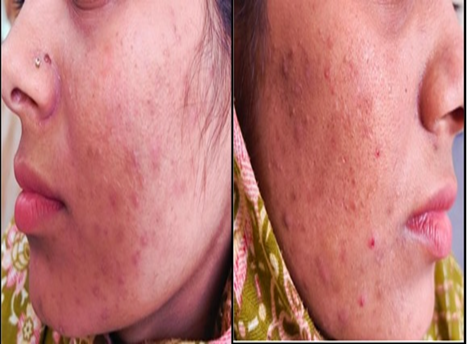
Fig 1: Acne grade 2 with excoriations over few lesions
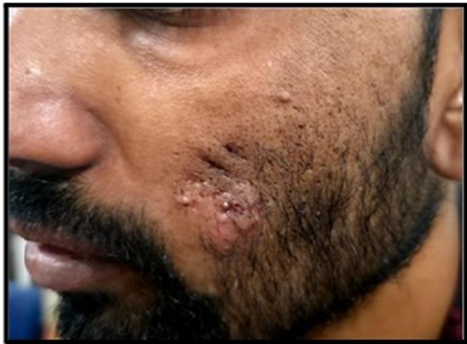
Fig 2: Acne grade 3 patient with persistent lesion since 6 months
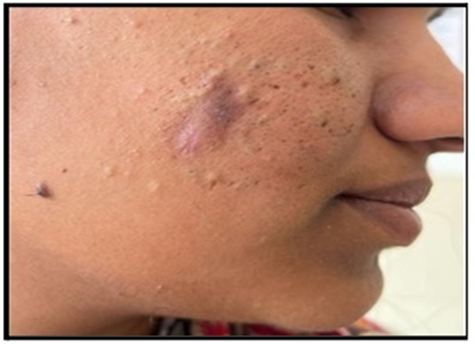
Fig 3: Few open and closed comedones with nodulocystic lesion
Quality of Life: DLQI Findings: The mean DLQI score across the cohort was 12.6 ± 5.8, consistent with a very large effect on QoL. Distribution of DLQI scores across impact categories is presented in Table 3. The largest proportion of patients (42%) fell within the very large impact category (DLQI 11-20), while 14% experienced extremely large impairment (DLQI 21-30). Only 14% reported a small impact (DLQI 0-5). Patients with moderate-to-severe acne demonstrated significantly higher DLQI scores compared with those with mild disease (p < 0.001).
Table 3: Distribution of Dermatology Life Quality Index scores and impact categories
|
DLQI score range |
Impact category |
% of patients |
|
0-5 |
Small |
14 |
|
6-10 |
Moderate |
30 |
|
11-20 |
large |
42 |
|
21-30 |
Extremely Large |
14 |
|
Mean DLQI |
12.6±5.8 |
|
Psychological Impact: CADI Findings: The mean CADI score was 9.1 ± 3.4, reflecting a moderate-to-severe level of psychological impairment across the study group. Nearly half of participants (48%) fell within the moderate impact category (CADI 6–10), while 34% reported severe impairment (CADI 11-15). Only 18% were categorised as having mild impact (CADI 0-5; Table 4). CADI scores were significantly higher in patients with moderate and severe acne than in those with mild disease (p < 0.001).
Table 4: Distribution of CADI scores and impact categories
|
CADI score range |
Impact category |
% of patients |
|
0-5 |
Mild |
18 |
|
6-10 |
Moderate |
48 |
|
11-15 |
severe |
34 |
|
Mean DLQI |
9.1±3.4 |
|
Behavioral and Lifestyle Changes: Acne-related stress was the most prevalent behavioral finding, reported by 81% of participants. This was followed by compulsive mirror-checking (75%), skin picking (69%), concealment behaviour such as avoidance of social situations or use of cosmetic camouflage (66%), dietary modification (63%), and sleep disturbance (52%). These findings are summarised in fig 4.
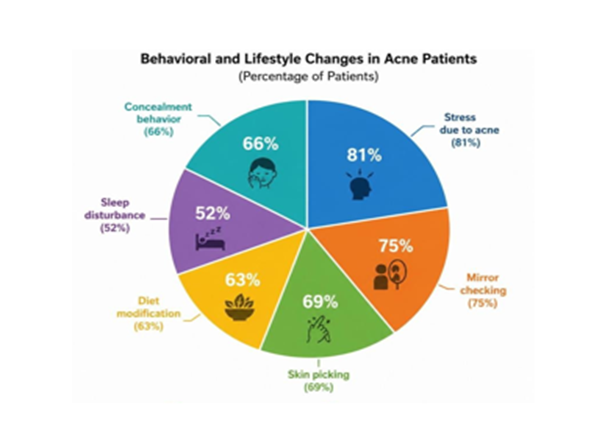
Fig 4: Prevalence of behaviroal and lifestyle changes in acne patients
Correlation Analysis: Pearson correlation analysis revealed strong positive correlations between acne severity and DLQI (r = 0.64, p < 0.001) and between acne severity and CADI (r = 0.60, p < 0.001). A moderate positive correlation was also observed between the behavioral score and CADI (r = 0.57, p < 0.001), indicating that greater behavioral disruption was associated with more severe psychological impairment as measured by the CADI.
DISCUSSION:
This study examined the QoL, psychological impact, and behavioral consequences of acne vulgaris in a cohort of 320 adult dermatology outpatients, demonstrating that the disease exerts a substantial psychosocial burden that scales with clinical severity. The mean DLQI of 12.6 ± 5.8 observed in this cohort is notably higher than scores reported in several earlier studies of mixed adolescent and adult populations, and aligns with the finding that adult acne carries a disproportionate psychosocial load owing to its chronicity and occurrence during occupationally and socially demanding life stages [2,9].
The predominance of female patients (58.8%) in the study cohort is consistent with epidemiological observations that women are more likely to seek dermatological care for adult acne, and that hormonal factors contribute to a higher burden of persistent or late-onset disease in this group [3]. The age distribution, with 78% of participants under 36 years, reflects the peak prevalence window for adult acne and the period of greatest occupational and social vulnerability.
The DLQI findings indicate that 56% of participants experienced very large or extremely large impairment, exceeding thresholds associated with clinically meaningful treatment responses in acne trials [7]. Comparable DLQI scores have been reported in patients with psoriasis and eczema, conditions historically regarded as more debilitating, underscoring the degree to which adult acne can impair daily functioning [5]. The psychological impact, as measured by the CADI, was similarly pronounced: 82% of participants reported at least moderate impairment, with 34% meeting criteria for severe psychological disability. These figures are consistent with data from cross-sectional studies conducted in comparable tertiary care settings, where CADI scores above 6 have been associated with clinically significant anxiety and depressive symptoms [9].
The strong correlations between acne severity and both DLQI (r = 0.64) and CADI (r = 0.60) confirm that psychosocial burden is not decoupled from clinical disease activity in adult patients, contrary to some earlier suggestions that subjective distress may be independent of lesion count. The neuroimmunological basis for this bidirectional relationship wherein psychological stress activates neuropeptide pathways that amplify sebaceous gland activity and inflammatory signalling provides a plausible mechanism by which untreated psychological distress may perpetuate acne severity [10].
The behavioral findings are particularly instructive. Acne-related stress was reported by 81% of participants, the highest frequency of any behavioral variable, while skin-picking behaviour a recognised maladaptive coping mechanism that can worsen scarring and perpetuate inflammation was present in 69% of patients. Concealment behaviour, encompassing both social avoidance and cosmetic camouflage, was reported by 66% of participants, reflecting the profound impact of visible facial lesions on interpersonal confidence and social engagement. The correlation between behavioral score and CADI (r = 0.57) suggests that patients adopting more maladaptive behavioral responses experience greater psychological impairment, creating a potential feedback loop that warrants targeted psychodermatological intervention [11].
Sleep disturbance, reported by 52% of participants, is consistent with data linking skin-related stress to disrupted sleep architecture, which may further impair immune regulation and worsen inflammatory acne [4]. Dietary modification was reported by 63% of participants, reflecting growing patient awareness of the potential role of diet in acne pathogenesis, including evidence supporting associations between high glycaemic index foods, dairy intake, and acne severity [1].
Collectively, these findings reinforce the argument that adult acne should be managed within a holistic, psychodermatological framework rather than purely as a dermatological condition. Validated screening tools such as the DLQI and CADI provide efficient, clinically applicable means of identifying patients who require psychological support alongside pharmacological or procedural treatment. Referral pathways for cognitive behavioural therapy, habit reversal training for skin-picking, and structured counselling should be integrated into multidisciplinary dermatology services [11].
Several limitations of this study merit acknowledgement. The cross-sectional design precludes causal inference and does not allow for longitudinal tracking of QoL changes with treatment. Data on QoL and behavioral variables were self-reported and therefore subject to recall and social desirability bias. As a single-centre study conducted at a tertiary care referral hospital, the cohort may not be representative of the broader population with acne, which could limit generalisability. Future multicentre, prospective studies incorporating objective lesion assessment, hormonal profiling, and longitudinal QoL measurement would substantially advance understanding of the psychosocial trajectory of adult acne.
CONCLUSION:
Adult acne vulgaris imposes a clinically significant burden on quality of life and psychological well-being, with the degree of impairment strongly correlated with disease severity. Behavioral consequences including acne-related stress, compulsive skin picking, mirror-checking, and concealment behaviour are highly prevalent and associated with greater psychological morbidity. These findings support the recognition of adult acne not merely as a dermatological condition but as a disorder with substantial psychosocial dimensions requiring a holistic and, where indicated, multidisciplinary management approach.
Routine incorporation of validated instruments such as the DLQI and CADI into clinical practice offers a practical means of identifying patients who would benefit from integrated psychodermatological care. Addressing both the cutaneous and psychological dimensions of the disease is essential for optimising patient outcomes and improving overall well-being.
Ethical Statement: This study was conducted in accordance with the ethical principles outlined in the Declaration of Helsinki. Approval was granted by the Institutional Ethics Committee prior to study commencement. Written informed consent was obtained from all participants. All data were handled in strict confidence and anonymised for analysis.
Conflicts of Interest: The authors declare no conflicts of interest in relation to this study. No external funding was received.
REFERENCES:
1. Zaenglein AL, Pathy AL, Schlosser BJ, Alikhan A, Baldwin HE, Berson DS, et al. Guidelines of care for the management of acne vulgaris. J Am Acad Dermatol. 2016;74(5):945-973.
2. Tan JK, Bhate K. A global perspective on the epidemiology of acne. Br J Dermatol. 2015;172 Suppl 1:3-12.
3. Holzmann R, Shakery K. Postadolescent acne in females. Skin Pharmacol Physiol. 2014;27 Suppl 1:3-8.
4. Dalgard FJ, Gieler U, Tomas-Aragones L, Lien L, Poot F, Jemec GB, et al. The psychological burden of skin diseases: a cross-sectional multicenter study among dermatological out-patients in 13 European countries. J Invest Dermatol. 2015;135(4):984-991.
5. Morshed ASM, Mannan A, Hossain MM, Islam S. Understanding the impact of acne vulgaris and associated psychological factors on daily life. Sci Rep. 2023;13:18542.
6. Poli F, Auffret N, Beylot C, Chivot M, Faure M, Moyse D, et al. Acne as seen by adolescents: results of questionnaire study in 852 French adolescents. Acta Derm Venereol. 2011;91(5):531-536.
7. Finlay AY, Khan GK. Dermatology Life Quality Index (DLQI): a simple practical measure for routine clinical use. Clin Exp Dermatol. 1994;19(3):210-216.
8. Motley RJ, Finlay AY. Practical use of a disability index in the routine management of acne. Clin Exp Dermatol. 1992;17(1):1-3.
9. Basra MK, Fenech R, Gatt RM, Salek MS, Finlay AY. The Dermatology Life Quality Index 1994-2007: a comprehensive review of validation data and clinical results. Br J Dermatol. 2008;159(5):997-1035.
10. Arck PC, Slominski A, Theoharides TC, Peters EM, Paus R. Neuroimmunology of stress: skin takes center stage. J Invest Dermatol. 2006;126(8):1697-1704.
11. Liyanage A, Prathapan S, Perera J. Validation and cultural adaptation of the Sinhala version of the Cardiff Acne Disability Index. Patient Relat Outcome Meas. 2024;15:131-141.