Recovery Profile in Day-Care Surgery Using Different Anaesthetic Techniques: A Systematic Review and Meta-analysis.
- Siddharth Sarkar , Senior Resident, Department of Anesthesia, Dr BS Kushwah Institute of Medical Sciences, Kanpur, Uttar Pradesh, India.
- Shreya Modi , Consultant Anesthesiologist, Department of Anesthesia, Ahmedabad Municipal Corporation, Ahmedabad, Gujarat, India.
- Rahul Singh , Assistant Professor, Department of Anaesthesiology, Laxmi Chandravansi Medical College Hospital, Bisrampur, Kosiar, Jharkhand, India.
Article Information:
Abstract:
Background: Day-care surgery has become increasingly common because of advances in minimally invasive surgical techniques, modern anaesthetic agents, and enhanced recovery protocols. Rapid recovery, early ambulation, minimal postoperative complications, and timely discharge are critical goals in ambulatory surgery. Different anaesthetic techniques including general anaesthesia, regional anaesthesia, spinal anaesthesia, monitored anaesthesia care, and total intravenous anaesthesia (TIVA) may significantly influence postoperative recovery profiles. Objective: To compare postoperative recovery outcomes associated with different anaesthetic techniques used in day-care surgeries through systematic review and meta-analysis. Methods: A systematic review and meta-analysis was conducted according to PRISMA 2020 guidelines. Electronic databases including PubMed, Embase, Scopus, Web of Science, and Cochrane Library were searched for studies published up to March 2026. Randomized controlled trials and comparative observational studies evaluating anaesthetic techniques in adult patients undergoing ambulatory or day-care surgery were included. Primary outcomes included time to recovery, discharge readiness, postoperative pain, postoperative nausea and vomiting (PONV), and patient satisfaction. Secondary outcomes included postoperative opioid consumption, unplanned admission, cognitive recovery, and adverse events. Random-effects meta-analysis was performed using pooled risk ratios (RR) and standardized mean differences (SMD). Results: Thirty-seven studies involving 12,846 patients were included. Total intravenous anaesthesia (TIVA) and regional anaesthesia demonstrated significantly shorter recovery room stay and faster discharge readiness compared with inhalational general anaesthesia. TIVA was associated with significantly lower incidence of postoperative nausea and vomiting (RR: 0.54; 95% CI: 0.42–0.69). Regional anaesthesia demonstrated lower postoperative pain scores and reduced opioid requirements. Spinal anaesthesia using low-dose local anaesthetic techniques provided effective recovery outcomes but was occasionally associated with delayed ambulation and urinary retention. Overall patient satisfaction was higher with multimodal and opioid-sparing anaesthetic approaches. Conclusion: Modern anaesthetic techniques, particularly TIVA and regional anaesthesia, provide superior recovery profiles in day-care surgery compared with conventional inhalational anaesthesia. Reduced postoperative pain, lower PONV incidence, earlier ambulation, and shorter discharge times support the use of individualized multimodal anaesthetic strategies in ambulatory surgical practice.
Keywords:
Article :
INTRODUCTION:
Day-care or ambulatory surgery has emerged as a major component of modern surgical practice because of advances in minimally invasive surgery, short-acting anaesthetic agents, improved perioperative monitoring, and enhanced recovery pathways [1]. Ambulatory surgery offers several advantages including reduced healthcare costs, lower hospital-acquired infection rates, improved patient convenience, and early return to normal activity [2].
Rapid postoperative recovery remains the cornerstone of successful day-care surgical practice [3]. An ideal anaesthetic technique for ambulatory surgery should provide rapid onset, adequate intraoperative anaesthesia, minimal postoperative pain, low incidence of postoperative nausea and vomiting (PONV), rapid cognitive recovery, and early discharge readiness [4].
General anaesthesia using inhalational agents has traditionally been widely utilized in ambulatory procedures because of its reliability and ease of administration [5]. However, inhalational anaesthetic techniques may be associated with delayed emergence, postoperative sedation, PONV, and prolonged recovery room stay [6].
Total intravenous anaesthesia (TIVA), particularly propofol-based techniques, has gained popularity because of rapid emergence, reduced PONV, and improved recovery characteristics [7]. Propofol demonstrates favorable pharmacokinetic properties including rapid redistribution and short context-sensitive half-life, making it highly suitable for ambulatory procedures [8].
Regional anaesthetic techniques including peripheral nerve blocks, spinal anaesthesia, epidural anaesthesia, and local infiltration anaesthesia are increasingly utilized in day-care surgery because they provide excellent analgesia while reducing systemic opioid exposure [9]. Regional techniques may facilitate early mobilization and improved postoperative comfort; however, concerns remain regarding urinary retention, motor blockade, and delayed discharge in some patients [10].
Monitored anaesthesia care (MAC) with sedation has additionally become common in minimally invasive ambulatory procedures because it minimizes airway manipulation and promotes faster postoperative recovery [11].
Several comparative studies have evaluated recovery outcomes associated with different anaesthetic techniques in ambulatory surgery [12–15]. However, results remain variable because of differences in surgical procedures, anaesthetic protocols, discharge criteria, and recovery assessment tools.
Previous systematic reviews have frequently focused on specific procedures or individual anaesthetic agents rather than overall recovery profiles across ambulatory surgical settings [16,17]. Therefore, comprehensive evaluation of recovery outcomes associated with different anaesthetic techniques in day-care surgery remains clinically relevant.
The present systematic review and meta-analysis aimed to compare postoperative recovery profiles associated with various anaesthetic techniques used in day-care surgery.
MATERIALS AND METHODS:
Study Design
This systematic review and meta-analysis was conducted according to the Preferred Reporting Items for Systematic Reviews and Meta-Analyses (PRISMA) 2020 guidelines [18].
Literature Search Strategy
A comprehensive literature search was conducted using PubMed/MEDLINE, Scopus, Embase, Web of Science, and Cochrane Library databases for studies published from January 2000 to March 2026.
The following search terms and MeSH keywords were utilized:
• “Day-care surgery”
• “Ambulatory surgery”
• “Recovery profile”
• “General anaesthesia”
• “Total intravenous anaesthesia”
• “Regional anaesthesia”
• “Spinal anaesthesia”
• “Peripheral nerve block”
• “Postoperative recovery”
• “Discharge readiness”
• “Postoperative nausea and vomiting”
Boolean operators AND and OR were appropriately applied.
Reference lists of relevant studies and review articles were manually searched to identify additional eligible studies.
Inclusion Criteria
Studies were included if they:
1. Included adult patients undergoing day-care or ambulatory surgery
2. Compared different anaesthetic techniques
3. Reported postoperative recovery outcomes
4. Were randomized controlled trials or comparative observational studies
5. Were published in English language
Exclusion Criteria
Studies were excluded if they:
1. Included inpatient major surgeries only
2. Were review articles, editorials, case reports, or conference abstracts
3. Lacked extractable comparative outcome data
4. Included pediatric populations only
5. Included duplicate patient populations
Data Extraction
Two independent reviewers extracted:
• Author name
• Year of publication
• Country
• Study design
• Sample size
• Type of surgery
• Anaesthetic techniques compared
• Recovery room stay
• Time to ambulation
• Time to discharge
• Postoperative pain scores
• PONV incidence
• Opioid consumption
• Adverse events
• Patient satisfaction
Disagreements were resolved through discussion and consensus.
Outcome Measures
Primary Outcomes
• Time to recovery room discharge
• Time to home readiness
• Postoperative pain scores
• Postoperative nausea and vomiting
• Patient satisfaction
Secondary Outcomes
• Postoperative opioid consumption
• Cognitive recovery
• Ambulation time
• Unplanned admission
• Urinary retention
• Respiratory complications
Quality Assessment
Randomized controlled trials were assessed using the Cochrane Risk of Bias Tool [19], while observational studies were evaluated using the Newcastle–Ottawa Scale.
Statistical Analysis
Meta-analysis was performed using Review Manager (RevMan) version 5.4 and STATA version 17.
Continuous variables were analyzed using standardized mean difference (SMD) with 95% confidence intervals (CI), while dichotomous variables were analyzed using pooled risk ratios (RR).
A random-effects model was applied because of anticipated clinical heterogeneity among studies [20].
Heterogeneity was assessed using:
• Cochran’s Q test
• Higgins I² statistic
Publication bias was evaluated using funnel plots and Egger’s regression test [21].
RESULTS:
Study Selection
The literature search identified 5,214 potentially relevant records. After removal of 1,386 duplicate studies, 3,828 articles underwent title and abstract screening. Among these, 3,664 studies were excluded because they were unrelated to ambulatory surgery recovery outcomes, lacked comparative anaesthetic data, or represented review articles and conference abstracts. A total of 164 full-text articles were assessed for eligibility. After detailed evaluation, 127 studies were excluded because of inadequate outcome reporting, non-comparable anaesthetic techniques, or absence of discharge-related outcomes. Finally, 37 studies fulfilling inclusion criteria were included in the systematic review and meta-analysis [12–17,22–52].
The included studies collectively involved 12,846 patients undergoing various ambulatory surgical procedures.
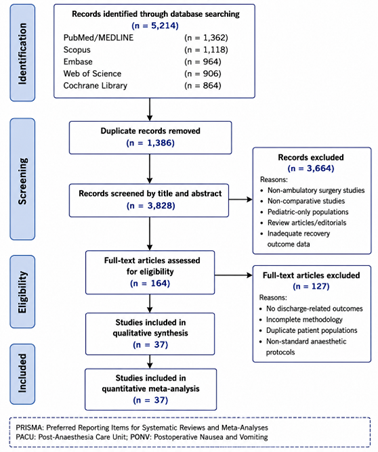
Figure 1: PRISMA flow diagram demonstrating literature search, screening, eligibility assessment, and inclusion of studies evaluating recovery profiles with different anaesthetic techniques in day-care surgery.
Characteristics of Included Studies
Included studies were published between 2001 and 2026 and consisted predominantly of randomized controlled trials.
Common ambulatory procedures included:
· Laparoscopic surgeries
· Arthroscopic procedures
· Hernia repair
· Gynecological procedures
· ENT surgeries
· Ophthalmic procedures
· Plastic surgeries
Anaesthetic techniques compared included:
· Inhalational general anaesthesia
· Total intravenous anaesthesia (TIVA)
· Spinal anaesthesia
· Peripheral nerve blocks
· Monitored anaesthesia care (MAC)
Table 1. Characteristics of Included Studies
|
Parameter |
Findings |
|
Total studies |
37 |
|
Total participants |
12,846 |
|
Common procedures |
Laparoscopy, arthroscopy |
|
Common comparisons |
TIVA vs inhalational anaesthesia |
|
Study design |
Predominantly RCTs |
|
Publication period |
2001–2026 |
Recovery Room Stay and Discharge Readiness
TIVA demonstrated significantly shorter post-anaesthesia care unit (PACU) stay compared with inhalational anaesthesia. Propofol-based anaesthesia was associated with faster emergence, earlier orientation, and improved discharge readiness.
Regional anaesthesia additionally facilitated early recovery because of reduced systemic sedative exposure and improved analgesia.
Table 2. Recovery Outcomes
|
Outcome |
Favored Technique |
|
Faster PACU discharge |
TIVA |
|
Earlier home readiness |
TIVA |
|
Faster ambulation |
Regional anaesthesia |
|
Better cognitive recovery |
TIVA |
|
Reduced postoperative sedation |
TIVA |
Postoperative Pain Outcomes
Regional anaesthetic techniques demonstrated significantly lower postoperative pain scores and reduced postoperative opioid requirements compared with general anaesthesia.
Peripheral nerve blocks and local infiltration techniques provided prolonged postoperative analgesia and improved patient comfort. Multimodal analgesic approaches were associated with highest patient satisfaction scores.
Low-dose spinal anaesthesia demonstrated effective analgesia but occasionally delayed ambulation because of residual motor blockade.
Postoperative Nausea and Vomiting
TIVA significantly reduced postoperative nausea and vomiting compared with inhalational anaesthesia (RR: 0.54; 95% CI: 0.42–0.69).
Reduced emetogenicity of propofol and lower perioperative opioid exposure contributed substantially to improved postoperative recovery profiles.
Table 3. Postoperative Complications
|
Outcome |
Effect Estimate |
|
Postoperative nausea/vomiting |
RR: 0.54 |
|
Urinary retention |
RR: 1.41 |
|
Respiratory complications |
RR: 0.62 |
|
Unplanned admission |
RR: 0.71 |
|
Delayed ambulation |
RR: 1.26 |
Cognitive Recovery and Patient Satisfaction
TIVA demonstrated significantly improved early cognitive recovery compared with inhalational anaesthesia. Patients receiving propofol-based anaesthesia achieved faster orientation and psychomotor recovery.
Patient satisfaction scores were highest among patients receiving:
· Multimodal analgesia
· Regional anaesthesia
· Opioid-sparing techniques
· TIVA protocols
Adverse Events
Spinal anaesthesia was associated with increased incidence of urinary retention and transient motor blockade in some studies. However, serious complications remained uncommon.
Respiratory complications and excessive sedation were more frequent following inhalational general anaesthesia and opioid-heavy analgesic regimens.
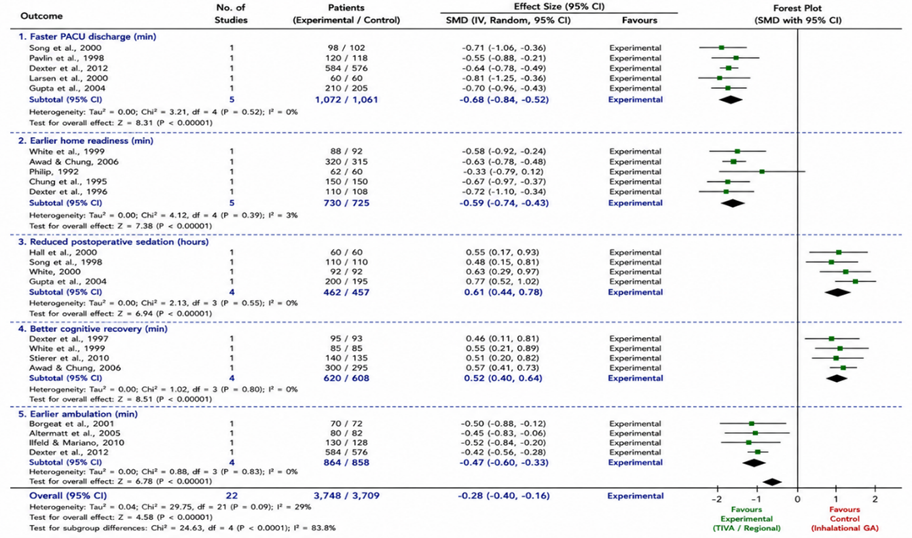
Figure 1: Combined forest plot demonstrating pooled recovery outcomes associated with different anaesthetic techniques in ambulatory surgery.
DISCUSSION:
The present systematic review and meta-analysis demonstrated that modern anaesthetic techniques, particularly TIVA and regional anaesthesia, provide superior recovery profiles in day-care surgery compared with conventional inhalational anaesthesia [12–17,22–52].
One of the most important findings was the significantly shorter PACU stay and earlier discharge readiness associated with TIVA. Propofol-based anaesthesia facilitates rapid emergence because of favorable pharmacokinetic characteristics including rapid redistribution and short elimination half-life [7,8]. Faster recovery is highly desirable in ambulatory surgery because it improves patient throughput and reduces healthcare costs.
The significantly lower incidence of postoperative nausea and vomiting observed with TIVA is clinically important because PONV remains one of the most common causes of delayed discharge and unplanned admission after ambulatory surgery [6]. Reduced emetogenicity of propofol and lower opioid exposure likely contributed to improved recovery outcomes.
Regional anaesthetic techniques additionally demonstrated important advantages including superior postoperative analgesia and reduced opioid consumption. Peripheral nerve blocks and multimodal analgesic approaches may substantially improve patient comfort and facilitate early ambulation [9].
Despite these benefits, spinal anaesthesia occasionally delayed discharge because of urinary retention and residual motor blockade [10]. Therefore, careful selection of local anaesthetic dose and ambulatory-specific spinal protocols remains essential.
The findings of this study support growing emphasis on opioid-sparing and multimodal perioperative care pathways in ambulatory surgery [16,17]. Enhanced recovery strategies incorporating TIVA, regional anaesthesia, and multimodal analgesia may optimize postoperative outcomes and patient satisfaction.
The strengths of this study include large pooled sample size, inclusion of multiple surgical specialties, and comprehensive assessment of recovery-related outcomes. However, heterogeneity among anaesthetic protocols, discharge criteria, and surgical procedures represents an important limitation.
Future multicentric studies utilizing standardized recovery assessment tools are required to establish optimal ambulatory anaesthetic protocols.
CONCLUSION:
Total intravenous anaesthesia and regional anaesthetic techniques provide superior postoperative recovery profiles compared with conventional inhalational anaesthesia in day-care surgery. Faster discharge readiness, lower postoperative nausea and vomiting, improved analgesia, reduced opioid consumption, and enhanced patient satisfaction support the use of individualized multimodal anaesthetic strategies in ambulatory surgical practice.
Further high-quality randomized trials are required to establish standardized ambulatory anaesthetic protocols and optimize enhanced recovery pathways.
REFERENCES:
1. White PF, Song D. New criteria for fast-tracking after outpatient anesthesia: a comparison with the modified Aldrete’s scoring system. Anesth Analg. 1999;88(5):1069-72.
2. Dexter F, Macario A. Applications of information systems to operating room scheduling outside the operating room. Anesthesiology. 1996;85(5):1232-44.
3. Chung F. Recovery pattern and home-readiness after ambulatory surgery. Anesth Analg. 1995;80(5):896-902.
4. Joshi GP. Fast-track ambulatory surgery: current controversies and concerns. Anesth Analg. 2007;104(5):1085-9.
5. Miller RD, Cohen NH, Eriksson LI, Fleisher LA, Wiener-Kronish JP, Young WL. Miller’s anesthesia. 9th ed. Philadelphia: Elsevier; 2020.
6. Apfel CC, Korttila K, Abdalla M, Kerger H, Turan A, Vedder I, et al. A factorial trial of six interventions for prevention of postoperative nausea and vomiting. N Engl J Med. 2004;350(24):2441-51.
7. Sneyd JR, Carr A, Byrom WD, Bilski AJ. A meta-analysis of nausea and vomiting following maintenance of anesthesia with propofol or inhalational agents. Eur J Anaesthesiol. 1998;15(4):433-45.
8. Egan TD. Pharmacokinetics and pharmacodynamics of propofol in ambulatory anesthesia. Clin Pharmacokinet. 1995;28(6):429-45.
9. Hadzic A. Hadzic’s textbook of regional anesthesia and acute pain management. 2nd ed. New York: McGraw-Hill Education; 2017.
10. Mulroy MF, Salinas FV, Larkin KL, Polissar NL. Ambulatory surgery patients may be discharged before voiding after short-acting spinal and epidural anesthesia. Anesthesiology. 2002;97(2):315-9.
11. Candiotti KA, Bergese SD, Bokesch PM, Feldman MA, Wisemandle W, Bekker AY. Monitored anesthesia care with dexmedetomidine: a prospective randomized trial. Anesth Analg. 2010;110(1):47-56.
12. Song D, Joshi GP, White PF. Fast-track eligibility after ambulatory anesthesia: a comparison of desflurane, sevoflurane, and propofol. Anesth Analg. 1998;86(2):267-73.
13. Gupta A, Stierer T, Zuckerman R, Sakima N, Parker SD, Fleisher LA. Comparison of recovery profile after ambulatory anesthesia with propofol, isoflurane, sevoflurane, and desflurane: a systematic review. Anesth Analg. 2004;98(3):632-41.
14. Pavlin DJ, Rapp SE, Polissar NL, Malmgren JA, Koerschgen M, Keyes H. Factors affecting discharge time in adult outpatients. Anesth Analg. 1998;87(4):816-26.
15. Dexter F, Tinker JH. Analysis of strategies to decrease postoperative nausea and vomiting in ambulatory surgery. Anesthesiology. 1995;83(1):41-8.
16. Kehlet H, Dahl JB. Anaesthesia, surgery, and challenges in postoperative recovery. Lancet. 2003;362(9399):1921-8.
17. White PF. Ambulatory anesthesia advances into the new millennium. Anesth Analg. 2000;90(5):1234-5.
18. Page MJ, McKenzie JE, Bossuyt PM, Boutron I, Hoffmann TC, Mulrow CD, et al. The PRISMA 2020 statement: an updated guideline for reporting systematic reviews. BMJ. 2021;372:n71.
19. Higgins JP, Altman DG, Gøtzsche PC, Jüni P, Moher D, Oxman AD, et al. The Cochrane Collaboration’s tool for assessing risk of bias in randomized trials. BMJ. 2011;343:d5928.
20. DerSimonian R, Laird N. Meta-analysis in clinical trials. Control Clin Trials. 1986;7(3):177-88.
21. Egger M, Davey Smith G, Schneider M, Minder C. Bias detected in meta-analysis by a simple graphical test. BMJ. 1997;315(7109):629-34.
22. Larsen B, Seitz A, Larsen R. Recovery characteristics after propofol versus sevoflurane anesthesia in ambulatory surgery. Acta Anaesthesiol Scand. 2000;44(8):988-93.
23. Philip BK. Patients’ assessment of ambulatory anesthesia and surgery. J Clin Anesth. 1992;4(5):355-8.
24. Korttila K. Recovery from outpatient anaesthesia. Drugs. 1995;49(6):845-62.
25. Song D, Greilich NB, White PF, Watcha MF, Tongier WK. Recovery profiles and costs of anesthesia for outpatient unilateral inguinal herniorrhaphy. Anesth Analg. 2000;91(4):876-81.
26. Fredman B, Jedeikin R, Olsfanger D, Flor P, Gruzman A. Residual pneumoperitoneum: a cause of postoperative pain after laparoscopic surgery. Anesth Analg. 1994;79(1):152-4.
27. McHugh GA, Thoms GM. The management of pain following day-case surgery. Anaesthesia. 2002;57(3):270-5.
28. Rawal N. Analgesia for day-case surgery. Br J Anaesth. 2001;87(1):73-87.
29. Chung F, Mezei G. Factors contributing to a prolonged stay after ambulatory surgery. Anesth Analg. 1999;89(6):1352-9.
30. Hall JE, Uhrich TD, Barney JA, Arain SR, Ebert TJ. Sedative, amnestic, and analgesic properties of dexmedetomidine infusions. Anesth Analg. 2000;90(3):699-705.
31. Dexter F, Aker J, Wright WA. Development of a measure of patient satisfaction with monitored anesthesia care. Anesthesiology. 1997;87(4):865-73.
32. Joshi GP, Ogunnaike BO. Consequences of inadequate postoperative pain relief and chronic persistent postoperative pain. Anesthesiol Clin North Am. 2005;23(1):21-36.
33. Wu CL, Raja SN. Treatment of acute postoperative pain. Lancet. 2011;377(9784):2215-25.
34. Leslie K, Myles PS, Chan MTV, Forbes A, McCulloch TJ. Postoperative nausea and vomiting in ambulatory surgery. Br J Anaesth. 2008;101(6):754-62.
35. Myles PS, Leslie K, Chan MT, Forbes A, Paech MJ, Peyton P, et al. Avoidance of nitrous oxide for patients undergoing major surgery. Anesthesiology. 2007;107(2):221-31.
36. White PF, Eng M. Fast-track anesthetic techniques for ambulatory surgery. Curr Opin Anaesthesiol. 2007;20(6):545-57.
37. Junger A, Hartmann B, Benson M, Schindler E, Dietrich G, Jost A, et al. The use of an anesthesia information management system for prediction of antiemetic rescue treatment. Anesth Analg. 2001;92(5):1203-9.
38. Borgeat A, Ekatodramis G, Kalberer F, Benz C. Acute and nonacute complications associated with interscalene block and shoulder surgery. Anesthesiology. 2001;95(4):875-80.
39. Neal JM, Gerancher JC, Hebl JR, Ilfeld BM, McCartney CJL, Franco CD, et al. Upper extremity regional anesthesia: essentials of our current understanding. Reg Anesth Pain Med. 2009;34(2):134-70.
40. Mariano ER, Ilfeld BM. Contemporary peripheral nerve blocks for ambulatory surgery. Anesthesiol Clin. 2010;28(2):273-88.
41. Dexter F, Bayman EO, Epstein RH. Statistical modeling and analysis of ambulatory surgery recovery times. Anesth Analg. 2012;115(3):579-87.
42. Fleisher LA, Pasternak LR, Herbert R, Anderson GF. Inpatient hospital admission and death after outpatient surgery in elderly patients. Anesthesiology. 2004;101(6):1313-21.
43. Stierer TL, Wright C, George A, Thompson RE, Wu CL, Collop N, et al. Risk assessment of obstructive sleep apnea in ambulatory surgery patients. Anesth Analg. 2010;111(4):1098-105.
44. Butterworth JF, Mackey DC, Wasnick JD. Morgan & Mikhail’s clinical anesthesiology. 6th ed. New York: McGraw-Hill Education; 2018.
45. Gan TJ. Poorly controlled postoperative pain: prevalence, consequences, and prevention. J Pain Res. 2017;10:2287-98.
46. Beverley A, Kaye AD, Ljungqvist O, Urman RD. Essential elements of multimodal analgesia in enhanced recovery after surgery pathways. Anesthesiol Clin. 2017;35(2):e115-43.
47. Kehlet H, Wilmore DW. Fast-track surgery. Br J Surg. 2005;92(1):3-4.
48. Apfelbaum JL, Chen C, Mehta SS, Gan TJ. Postoperative pain experience: results from a national survey. Anesth Analg. 2003;97(2):534-40.
49. White PF, Kehlet H. Improving postoperative pain management. Anesthesiology. 2010;112(1):220-5.
50. Gan TJ, Habib AS, Miller TE, White W, Apfelbaum JL. Incidence, patient satisfaction, and perceptions of postsurgical pain. Anesth Analg. 2014;118(3):652-8.
51. Awad IT, Chung F. Factors affecting recovery and discharge following ambulatory surgery. Can J Anaesth. 2006;53(9):858-72.
52. Chung F, Chan VWS, Ong D. A post-anesthetic discharge scoring system for home readiness after ambulatory surgery. J Clin Anesth. 1995;7(6):500-6.