Impact of Digital Detox on Mental Health: A Mixed-Methods Study among Medical Students of a Tertiary Care Teaching Hospital in Southern Tamil Nadu.
- Vetrivel M , Assistant Professor, Department of Psychiatry, Melmaruvathur Adhiparasakthi Institute of Medical Sciences and Research, Melmaruvathur, Tamil Nadu, India.
- Rama Swathika N , Assistant Professor, Department of Community Medicine, Tirunelveli Government Medical College, Tirunelveli, Tamil Nadu, India.
- Keerthana A , Assistant Professor, Department of Community Medicine, Tirunelveli Government Medical College, Tirunelveli, Tamil Nadu, India.
- Arunsudhan M , MBBS, Tirunelveli Government Medical College, Tirunelveli, Tamil Nadu, India.
- Aseel Afrith M , MBBS, Tirunelveli Government Medical College, Tirunelveli, Tamil Nadu, India.
- Ashitha B , MBBS, Tirunelveli Government Medical College, Tirunelveli, Tamil Nadu, India.
- Aswathy Suresh , MBBS, Tirunelveli Government Medical College, Tirunelveli, Tamil Nadu, India.
- Kabilanathan N , MBBS, Tirunelveli Government Medical College, Tirunelveli, Tamil Nadu, India.
Article Information:
Abstract:
Background: Excessive use of digital devices among medical students has been associated with increased stress, poor sleep quality, and declining mental well-being. Digital detox interventions may help improve psychological health and reduce smartphone dependency. Aim: To assess the impact of a structured digital detox intervention on mental well-being and smartphone addiction among medical students in a tertiary care teaching hospital in Southern Tamil Nadu. Methods: This mixed-method study was conducted among 100 first-year MBBS students at Tirunelveli Medical College Hospital from January to February 2026. Participants were randomly allocated into experimental (n=50) and control (n=50) groups. The experimental group underwent a structured digital detox intervention involving reduction of screen time by 2–3 hours per day and avoidance of device use before bedtime. Mental well-being and smartphone addiction were assessed using the Warwick–Edinburgh Mental Well-being Scale (WEMWBS) and Smartphone Addiction Scale–Short Version (SAS-SV), respectively, at baseline and post-intervention. Quantitative data were analysed using t-test and ANCOVA, while qualitative data were analysed thematically. Results: Baseline characteristics were comparable between groups. Post-intervention, the experimental group showed significantly higher mental well-being scores (51.3 ± 7.21 vs 40.5 ± 5.97; p < 0.001) and lower smartphone addiction scores (27.4 ± 8.20 vs 33.0 ± 7.36; p < 0.001) compared to controls. Within-group analysis also demonstrated significant improvement in WEMWBS (t=8.10, p<0.001) and reduction in SAS-SV scores (t=-4.07, p<0.001). ANCOVA confirmed a significant independent effect of the intervention on both outcomes (p<0.001). Qualitative findings revealed improved sleep quality, emotional well-being, interpersonal relationships, and academic concentration. Conclusion: Structured digital detox intervention significantly improves mental well-being and reduces smartphone addiction among medical students. Incorporation of digital hygiene practices in student wellness programs is recommended. As is being investigated in head and neck cancer, thereby maximizing treatment effectiveness.
Keywords:
Article :
INTRODUCTION:
The rapid expansion of digital technology and smartphone accessibility has transformed communication, education, and social interaction across the globe. Smartphones and other digital devices have become indispensable tools among university students, particularly medical students, due to their extensive academic requirements, online learning platforms, and social networking activities. Although digital technology offers several educational advantages, excessive and uncontrolled usage has increasingly been associated with adverse psychological and behavioral outcomes including stress, anxiety, poor sleep quality, reduced concentration, and diminished mental well-being[1]. Smartphone addiction, a form of behavioral addiction characterized by compulsive and excessive smartphone use, has emerged as a growing public health concern among young adults. Medical students represent a particularly vulnerable population because of academic pressure, long study hours, and frequent reliance on digital platforms for educational purposes. Recent studies among undergraduate medical students have reported a high prevalence of problematic smartphone use and significant associations with anxiety, stress, depression, and sleep disturbances[2]. A cross-sectional study conducted among medical students in India reported substantial levels of smartphone addiction, highlighting its impact on emotional health and academic functioning.[3]
Globally, increasing screen time and digital dependency have prompted interest in “digital detox,” which refers to a deliberate reduction or temporary abstinence from digital device usage in order to improve psychological well-being and restore healthy behavioral patterns. Evidence suggests that reducing screen exposure may improve sleep quality, emotional regulation, interpersonal relationships, and productivity[4]. Several recent studies have demonstrated that problematic smartphone use is strongly associated with lower quality of life and poorer mental health outcomes among college students[1]. In India, smartphone penetration among adolescents and young adults has increased dramatically over the past decade, especially following the expansion of online education after the COVID-19 pandemic[5]. Reports indicate that a considerable proportion of medical students spend more than 4–6 hours daily on smartphones, primarily for entertainment and social media activities rather than academic purposes.[6] Excessive digital engagement may contribute to poor sleep hygiene, emotional exhaustion, reduced attention span, and social isolation, thereby negatively affecting academic performance and overall well-being[7].
Despite growing awareness regarding digital overuse, there remains limited evidence from India evaluating the effectiveness of structured digital detox interventions among medical students using both quantitative and qualitative approaches. Most existing studies are cross-sectional and focus primarily on prevalence and associated factors rather than intervention outcomes. Furthermore, qualitative insights exploring students’ lived experiences during digital detox are scarce. Hence, the present mixed-method study was undertaken among medical students of Tirunelveli Medical College Hospital to assess the impact of a structured digital detox intervention on mental well-being and smartphone addiction. The study also aimed to explore participants’ perceptions and experiences regarding reduced digital engagement, thereby contributing evidence toward digital wellness strategies for medical students.
Aim
To assess the impact of digital detox practices on mental health status among medical students in a tertiary care teaching hospital in Southern Tamil Nadu.
Objectives
Primary Objective
• To evaluate the impact of a digital detox intervention on mental well-being among medical students at Tirunelveli Medical College Hospital.
Secondary Objectives
• To assess the baseline level of digital device usage among medical students.
• To evaluate the effectiveness of a digital detox intervention in reducing smartphone addiction.
MATERIALS AND METHODS:
Study Design
The present study was conducted as a mixed-method research design incorporating both quantitative and qualitative components. The quantitative component followed a quasi-experimental approach with a pre-test and post-test control group design to assess the effect of a structured digital detox intervention on mental well-being and smartphone addiction among medical students. The qualitative component employed a phenomenological approach to explore participants’ lived experiences and perceptions regarding digital detox and its influence on daily life and mental health.
Study Setting
The study was carried out at Tirunelveli Medical College Hospital, Tamil Nadu, a tertiary care teaching institution in Southern India.
Study Population
The study population comprised first-year MBBS students enrolled at Tirunelveli Medical College Hospital during the study period.
Study Period
The study was conducted over a period of two months, from January 2026 to February 2026.
Operational Definitions
1. Digital Detox:
Digital detox was defined as a deliberate and temporary reduction or restriction in the use of digital devices such as smartphones, tablets, and laptops, intended to reduce excessive screen exposure and improve psychological well-being.
2. Mental Well-being:
Mental well-being referred to the psychological status of participants as assessed using the Warwick–Edinburgh Mental Well-being Scale (WEMWBS). It was quantified based on total score, where higher scores indicated better well-being. A score above 60 indicated high well-being, while a score below 42 indicated low well-being.
3. Smartphone Addiction:
Smartphone addiction was defined as the degree of dependence on smartphone use measured using the Smartphone Addiction Scale–Short Version (SAS-SV). Higher scores indicated greater addiction, with cut-off values of >33 for females and >31 for males indicating problematic use.
Sample Size Calculation
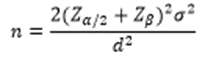
The sample size for the quantitative component was calculated using the formula for comparison of two independent means:
Based on parameters obtained from a previous similar study, a confidence level of 99% (Zα/2 = 2.58) and power of 99% (Zβ = 2.33) were used. Assuming an estimated standard deviation and clinically meaningful difference between groups derived from literature, the final calculated sample size was 100 participants. To ensure adequate power and account for possible attrition, 50 participants were allocated to the experimental group and 50 to the control group.
Sample Size and Sampling Technique
A total of 100 first-year MBBS students were included in the quantitative component. Participants were selected using simple random sampling from the eligible student list and were equally allocated into:
· Experimental group: 50 students
· Control group: 50 students
For the qualitative component, purposive sampling was used to select participants from the experimental group. In-depth interviews were conducted until data saturation was achieved, which occurred after interviewing 5 participants.
Inclusion Criteria
· Students using digital devices such as smartphones, tablets, or laptops
· Students with a minimum daily screen time of more than 3 hours
· Students willing to participate and providing written informed consent
Exclusion Criteria
· Students with daily screen time less than 3 hours
· Students who had previously undergone structured digital detox interventions for a prolonged period
· Students with known psychiatric illness under treatment (if applicable as per institutional protocol)
Intervention
Participants in the experimental group were introduced to a structured digital detox program. They were instructed to reduce their daily screen time by approximately 2–3 hours from their baseline usage. They were also advised to avoid digital device usage for at least one hour before bedtime to improve sleep hygiene. Participants were encouraged to replace digital engagement with alternative activities such as physical exercise, reading academic or non-academic material, meditation, and interpersonal social interactions. Screen time was monitored using built-in digital well-being tools available on their smartphones. The control group continued their usual digital habits without any intervention during the study period.
Data Collection
Data were collected using a pre-tested structured questionnaire that included socio-demographic details and patterns of digital device usage.
Standardized instruments used were:
· Warwick–Edinburgh Mental Well-being Scale (WEMWBS): to assess mental well-being
· Smartphone Addiction Scale–Short Version (SAS-SV): to assess smartphone addiction
Baseline (pre-intervention) data were collected prior to initiation of the digital detox program. Post-intervention data were collected after completion of the study period.
Qualitative Component
To explore subjective experiences, in-depth interviews were conducted among selected participants from the experimental group. Each interview lasted approximately 15–20 minutes and was conducted in Tamil to ensure clarity and participant comfort. Interviews were audio-recorded with prior informed consent, transcribed verbatim, and translated into English for analysis. A semi-structured interview guide was used to explore domains such as emotional changes, sleep quality, concentration levels, academic performance, and perceived impact of reduced digital usage.
Data Analysis
Quantitative Data Analysis
Quantitative data were entered into Microsoft Excel and analyzed using Jamovi software. Descriptive statistics such as mean, standard deviation, frequency, and percentage were used to summarize the data.
Inferential statistical tests included:
· Independent samples t-test for intergroup comparisons
· Paired t-test for intragroup pre- and post-intervention comparisons
· Analysis of Covariance (ANCOVA) to adjust for baseline differences
A p-value of <0.05 was considered statistically significant.
Qualitative Data Analysis
Qualitative data were analyzed using thematic analysis. Transcripts were repeatedly reviewed to identify meaningful patterns, which were coded and grouped into themes and subthemes. MAXQDA software was used to facilitate data organization and coding, ensuring systematic analysis and interpretation of participant narratives.
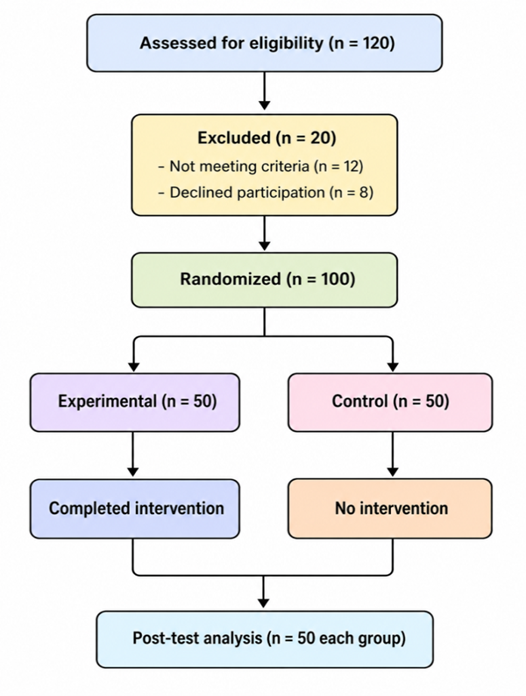
Figure 1: CONSORT Flowchart
RESULTS:
Table 1: Socio-demographic distribution of study participants (N = 100)
|
Variable |
Category |
Experimental n (%) |
Control n (%) |
Total n (%) |
|
Age (years) |
17–19 |
34 (34.0) |
32 (32.0) |
66 (66.0) |
|
20–22 |
16 (16.0) |
18 (18.0) |
34 (34.0) |
|
|
Sex |
Female |
31 (31.0) |
34 (34.0) |
65 (65.0) |
|
Male |
19 (19.0) |
16 (16.0) |
35 (35.0) |
Table 2: Baseline comparison of study variables
|
Variable |
Group |
Mean ± SD |
t-value |
p-value |
|
WEMWBS (Pre-test) |
Experimental |
41.8 ± 7.86 |
-0.917 |
0.362 |
|
Control |
43.3 ± 8.28 |
|||
|
SAS-SV (Pre-test) |
Experimental |
34.3 ± 9.61 |
1.46 |
0.148 |
|
Control |
31.7 ± 7.84 |
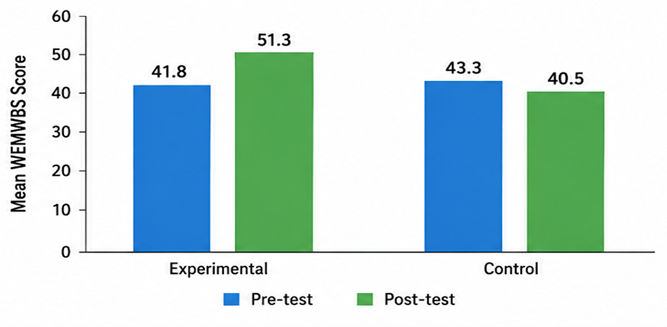
Figure 2: Mean WEMWBS scores (Pre vs Post)
Table 3: Post-intervention comparison between groups
|
Variable |
Group |
Mean ± SD |
t-value |
p-value |
|
WEMWBS (Post-test) |
Experimental |
51.3 ± 7.21 |
8.155 |
<0.001 |
|
Control |
40.5 ± 5.97 |
|||
|
SAS-SV (Post-test) |
Experimental |
27.4 ± 8.20 |
-3.58 |
<0.001 |
|
Control |
33.0 ± 7.36 |
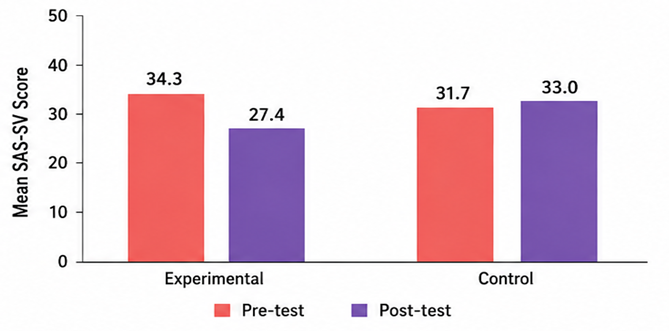
Figure 3: Mean SAS-SV scores (Pre vs Post)
Table 4: Within-group (pre–post) comparison in experimental group
|
Variable |
Pre-test Mean ± SD |
Post-test Mean ± SD |
t-value |
p-value |
|
WEMWBS |
41.8 ± 7.86 |
51.3 ± 7.21 |
8.10 |
<0.001 |
|
SAS-SV |
34.3 ± 9.61 |
27.4 ± 8.20 |
-4.07 |
<0.001 |
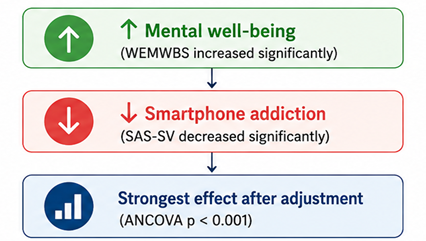
Figure 4: Effect of digital detox on outcomes (summary model)
Table 5: ANCOVA analysis for post-test outcomes
|
Outcome |
Source |
F-value |
p-value |
Interpretation |
|
WEMWBS |
Group (Intervention) |
104.31 |
<0.001 |
Significant effect |
|
WEMWBS |
Pre-test score |
62.97 |
<0.001 |
Significant covariate |
|
WEMWBS |
Age |
1.398 |
0.240 |
Not significant |
|
WEMWBS |
Sex |
3.045 |
0.084 |
Not significant |
|
SAS-SV |
Group (Intervention) |
19.92 |
<0.001 |
Significant effect |
|
SAS-SV |
Pre-test score |
27.41 |
<0.001 |
Significant covariate |
|
SAS-SV |
Age |
0.407 |
0.525 |
Not significant |
|
SAS-SV |
Sex |
3.022 |
0.086 |
Not significant |
Digital detox intervention had a significant independent effect on improving mental well-being and reducing smartphone addiction after adjusting for confounders.
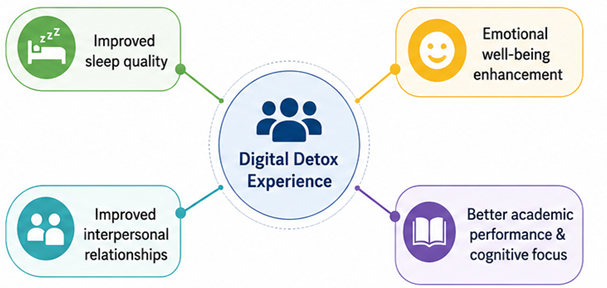
Figure 5: Thematic model from qualitative analysis
DISCUSSION:
The present mixed-method study evaluated the impact of a structured digital detox intervention on mental well-being and smartphone addiction among medical students. The findings demonstrated that digital detox significantly improved mental well-being and reduced problematic smartphone usage among participants in the experimental group. In the present study, the majority of participants belonged to the 17–19 years age group, and females constituted a slightly higher proportion than males in both study groups. Comparable demographic distribution between the experimental and control groups indicated baseline homogeneity, thereby minimizing confounding effects. Similar demographic patterns among undergraduate medical students were reported by Prasad et al.[3], who observed higher smartphone usage among younger medical students because of increased social media engagement and academic reliance on smartphones. Baseline comparison of WEMWBS and SAS-SV scores revealed no statistically significant difference between groups before intervention, indicating that both groups were comparable prior to digital detox implementation. This finding strengthens the validity of the intervention outcomes observed in the present study.
Following the intervention, the experimental group demonstrated a significant improvement in mental well-being scores compared to the control group. The mean post-test WEMWBS score increased from 41.8 ± 7.86 to 51.3 ± 7.21 in the intervention group, while the control group showed no improvement. Similar findings were observed in the longitudinal study conducted by Oliveira et al.[1], who reported that excessive digital addiction was associated with poorer mental health, reduced quality of life, and decreased motivation among medical students. The improvement in emotional well-being observed in the current study may be attributed to reduced exposure to social media stressors, improved sleep hygiene, and increased interpersonal interaction during the detox period. The present study also demonstrated a statistically significant reduction in smartphone addiction following digital detox intervention. The mean SAS-SV score in the experimental group decreased from 34.3 ± 9.61 to 27.4 ± 8.20 after intervention. This finding is consistent with previous studies that identified excessive smartphone use as a significant behavioral concern among medical students. Verma et al. reported a strong association between smartphone addiction, perceived stress, and loneliness among medical students[8]. Similarly, Nikolic et al. found that smartphone addiction was significantly associated with anxiety, depression, stress, and poor sleep quality[2].
The present findings are also in agreement with studies conducted in India among undergraduate medical students. A cross-sectional study from Tamil Nadu reported a considerable prevalence of smartphone addiction among medical students and highlighted its detrimental effect on psychological well-being and academic performance[9]. Another Indian study by Pomal et al. demonstrated that students spending more than 3–6 hours daily on smartphones had higher addiction scores and poorer behavioral outcomes[10]. Within-group paired analysis in the present study showed significant improvement in mental well-being and reduction in smartphone addiction after intervention. ANCOVA analysis further confirmed that the intervention independently influenced both outcomes even after adjusting for age and sex. Age and gender were not statistically significant predictors in the adjusted model. Similar observations were made in previous studies where problematic smartphone use affected students irrespective of demographic variables[11].
The qualitative findings of the present study provided additional insight into the beneficial effects of digital detox. Participants commonly reported improved sleep quality, enhanced emotional stability, better concentration, increased productivity, and stronger interpersonal relationships. These findings support earlier evidence suggesting that reducing digital exposure may restore attention span, improve emotional regulation, and enhance social connectedness.[12] Participants also described feeling more focused and academically productive during the intervention period, which aligns with emerging literature indicating that excessive smartphone usage contributes to distraction and reduced academic engagement.[13] Overall, the present study highlights the growing burden of digital overuse among medical students and demonstrates that structured digital detox interventions can significantly improve mental well-being while reducing smartphone addiction. The integration of digital wellness strategies into medical education may therefore help promote healthier technology use and improve overall student mental health.
Limitations
The study was conducted among first-year medical students in a single tertiary care institution with a relatively small sample size, which may limit the generalizability of the findings. The intervention period was short, and long-term sustainability of digital detox effects could not be assessed. Self-reported questionnaires may also have introduced response bias. Additionally, external factors influencing.
CONCLUSION:
The present mixed-method study demonstrated that a structured digital detox intervention significantly improved mental well-being and reduced smartphone addiction among medical students. Participants who underwent digital detox showed better emotional well-being, improved sleep quality, enhanced interpersonal relationships, and increased academic concentration compared to the control group. The findings emphasize the importance of promoting healthy digital habits and incorporating digital wellness strategies within medical education to improve students’ psychological health and overall quality of life.
REFERENCES:
1. Machado de Oliveira M, Lucchetti G, da Silva Ezequiel O, Lamas Granero Lucchetti A. Association of Smartphone Use and Digital Addiction with Mental Health, Quality of Life, Motivation and Learning of Medical Students: A Two-Year Follow-Up Study. Psychiatry. 2023;86(3):200–13. doi:10.1080/00332747.2022.2161258 PubMed PMID: 36688827.
2. Nikolic A, Bukurov B, Kocic I, Vukovic M, Ladjevic N, Vrhovac M, et al. Frontiers | Smartphone addiction, sleep quality, depression, anxiety, and stress among medical students [Internet]. doi:10.3389/fpubh.2023.1252371
3. Prasad S, Harshe D, Kaur N, Jangannavar S, Srivastava A, Achanta U, et al. A Study of Magnitude and Psychological Correlates of Smartphone Use in Medical Students: A Pilot Study with A Novel Telemetric Approach. Indian J Psychol Med. 2018;40(5):468–75. doi:10.4103/IJPSYM.IJPSYM_133_18 PubMed PMID: 30275623; PubMed Central PMCID: PMC6149309.
4. Cemiloglu D, Almourad MB, McAlaney J, Ali R. Combatting digital addiction: Current approaches and future directions. Technology in Society. 2022;68:101832. doi:10.1016/j.techsoc.2021.101832
5. T P DS, Nair MrA, Mb DAS, Murali MrA, Vijay MsA, Sasidharan MsA, et al. Smartphone addiction and anxiety among medical students: a cross-sectional study in kerala. JPTCP. 2025;32(10). doi:10.53555/ba0mna33
6. Gunasekar A, Udayakumar R, Murugesan RK, N T, J R, Srirangaramasamy J. Smartphone Addiction Among Medical Students and Its Implications on Sleep Quality and BMI: A Cross-Sectional Study. Cureus. 17(8):e90637. doi:10.7759/cureus.90637 PubMed PMID: 40984947; PubMed Central PMCID: PMC12450477.
7. Kumar VA, Chandrasekaran V, Brahadeeswari H. Prevalence of smartphone addiction and its effects on sleep quality: A cross-sectional study among medical students. Ind Psychiatry J. 2019 Jan-Jun;28(1):82-85. doi: 10.4103/ipj.ipj_56_19. Epub 2019 Dec 11. PMID: 31879452; PMCID: PMC6929238.
8. Verma N, Khan H, Singh A, Saxena R. Smartphone addiction in medical students: Association with perceived stress, personality factors and loneliness. Indian J Public Health 2023;67:15‑20.
9. Ravi J, Devendran D. Smartphone addiction: prevalence and associated factors among undergraduate students of a medical college in tamil nadu, india – a cross-sectional study – DOAJ [Internet]. [cited 2026 May 24]. Available from: https://cmhp.lenterakaji.org/index.php/cmhp/article/view/310
10. Pomal P, Khilnani AK, Gala V. A cross-sectional study to evaluate smartphone addiction among undergraduate medical students. Int J Res Med Sci. 2026;14(2):591–6. doi:10.18203/2320-6012.ijrms20260247
11. Dharmadhikari SP, Harshe SD, Bhide PP. Prevalence and Correlates of Excessive Smartphone Use among Medical Students: A Cross-sectional Study. Indian Journal of Psychological Medicine. 2019;41(6):549–55. doi:10.4103/IJPSYM.IJPSYM_75_19
12. Mirbabaie M, Marx J, Braun LM, Stieglitz S. Digital Detox -- Mitigating Digital Overuse in Times of Remote Work and Social Isolation [Internet]. arXiv; 2020 [cited 2026 May 24]. Available from: https://arxiv.org/abs/2012.09535 doi:10.48550/ARXIV.2012.09535
13. Xuan, Wei & Roy Chowdhury, Meghna & Ding, Yi & Zhao, Yixue. (2025). Unlocking Mental Health: Exploring College Students’ Well-being through Smartphone Behaviors. 10.48550/arXiv.2502.08766.