ATYPICAL MYCOBACTERIAL SEPTIC ARTHRITIS OF THE WRIST: A CASE REPORT.
- GOWTHAM RAJ G , Postgraduate Resident, DEPARTMENT OF ORTHOPAEDICS, SREE MOOKAMBIKA INSTITUTE OF MEDICAL SCIENCES, KULASEKHARAM, KANYAKUMARI - 629161, TAMILNADU, INDIA.
- K. C. MATHEW , Professor and Head of the department, DEPARTMENT OF ORTHOPAEDICS, SREE MOOKAMBIKA INSTITUTE OF MEDICAL SCIENCES, KULASEKHARAM, KANYAKUMARI - 629161, TAMILNADU, INDIA.
- ANAZ MOHAMMED N S , Postgraduate Resident, DEPARTMENT OF ORTHOPAEDICS, SREE MOOKAMBIKA INSTITUTE OF MEDICAL SCIENCES, KULASEKHARAM, KANYAKUMARI - 629161, TAMILNADU, INDIA.
- KIRAN SREEKANDAN , Senior Resident, DEPARTMENT OF ORTHOPAEDICS, SREE MOOKAMBIKA INSTITUTE OF MEDICAL SCIENCES, KULASEKHARAM, KANYAKUMARI - 629161, TAMILNADU, INDIA,
- SUGIN GLEN BAISIL J , Postgraduate Resident, DEPARTMENT OF ORTHOPAEDICS, SREE MOOKAMBIKA INSTITUTE OF MEDICAL SCIENCES, KULASEKHARAM, KANYAKUMARI - 629161, TAMILNADU, INDIA.
- KAVIN RAJA S , Postgraduate Resident, DEPARTMENT OF ORTHOPAEDICS, SREE MOOKAMBIKA INSTITUTE OF MEDICAL SCIENCES, KULASEKHARAM, KANYAKUMARI - 629161, TAMILNADU, INDIA.
- ZAKIR HUSSAIN MOHAMED , Postgraduate Resident, DEPARTMENT OF ORTHOPAEDICS, SREE MOOKAMBIKA INSTITUTE OF MEDICAL SCIENCES, KULASEKHARAM, KANYAKUMARI - 629161, TAMILNADU, INDIA.
Article Information:
Abstract:
Atypical mycobacterial infection involving the wrist joint is an uncommon clinical presentation. We present a case of destructive wrist arthritis secondary to Mycobacterium intracellular in a 52-year-old man with chronic corticosteroid exposure. The patient had refractory symptoms despite repeated drainage procedures and prolonged antimicrobial therapy. Imaging demonstrated destruction of the carpal bones with osteopenia and lytic changes. Definitive management involved radical debridement, targeted multidrug chemotherapy and subsequent wrist arthrodesis using a vascularised fibular graft. The patient remained pain free with no evidence of recurrent infection after a follow-up period of 36 months. This case illustrates the diagnostic challenge and complex surgical management of atypical mycobacterial infection of the wrist.
Keywords:
Article :
INTRODUCTION:
Septic arthritis of the wrist accounts for only a small proportion of joint infections, with Staphylococcus aureus being the organism most commonly isolated in routine clinical practice [5]. In contrast, musculoskeletal infections caused by atypical or nontuberculous mycobacteria are distinctly uncommon and are usually encountered in immunocompromised individuals. Although the Mycobacterium avium–intracellulare complex (MAC) is recognised as an opportunistic pathogen, involvement of the wrist joint remains exceptionally rare [1].
Because of its indolent progression and resemblance to tuberculous arthritis, delayed diagnosis is common. Early recognition is important, as advanced disease may result in severe joint destruction requiring extensive reconstruction. We report a rare case of wrist septic arthritis caused by Mycobacterium Intracellulare that was successfully treated with aggressive debridement followed by wrist arthrodesis using a vascularised fibular graft.
CASE PRESENTATION :
A 52-year-old male landscape architect presented with persistent pain, swelling, and progressive stiffness of the right wrist. He had a history of prolonged corticosteroid therapy for severe bronchial asthma. Symptoms had initially developed three years before presentation and gradually worsened over time.
Two years earlier, the patient underwent incision and drainage elsewhere and was diagnosed with wrist infection caused by the Mycobacterium avium–intracellulare complex. Despite receiving antimycobacterial therapy and undergoing multiple subsequent drainage procedures, the infection continued to progress.
On examination, diffuse swelling and tenderness of the wrist were noted, with marked restriction of movement. Radiographs demonstrated diffuse osteopenia, erosive changes, and multiple lytic lesions involving the carpal bones, suggestive of chronic infective arthritis (Figure 1).
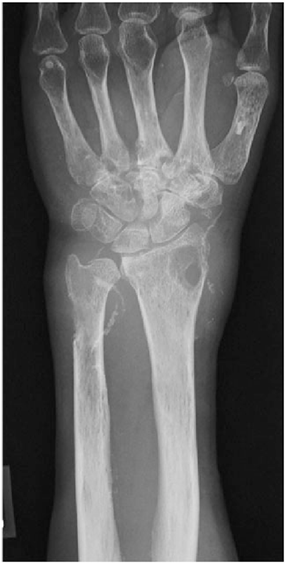
Figure 1. Preoperative radiograph of the wrist demonstrating destructive arthritic changes
The patient underwent extensive surgical debridement. Necrotic soft tissue and infected carpal bone were excised, and the wrist was temporarily stabilised with Kirschner wires and antibiotic-loaded bone cement containing streptomycin (Figure 2). Polymerase chain reaction (PCR) analysis of the debrided tissue confirmed the presence of M. intracellulare.
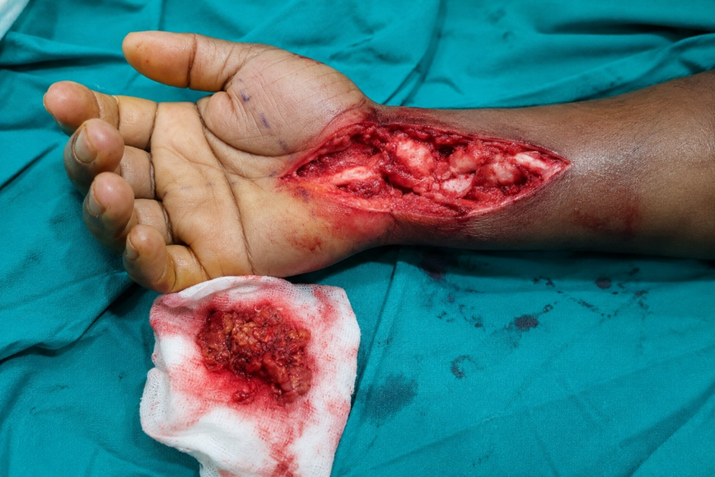
Figure 2. Intraoperative debridement of infected wrist tissue
Following debridement, the patient was treated with multidrug chemotherapy consisting of clarithromycin, rifampicin, and ethambutol. Ten weeks later, definitive wrist arthrodesis was performed using a vascularised fibular graft. Through a volar approach, the fibular graft was positioned between the third metacarpal and the distal radius. Microvascular anastomosis was completed between the peroneal and radial vessels, and flap perfusion remained satisfactory postoperatively. Radiological union was achieved within five months (Figure 3).
Antimicrobial therapy was continued for six months after surgery. At final follow-up after 36 months, the patient reported complete pain relief, satisfactory hand function for daily activities, and no evidence of recurrence.
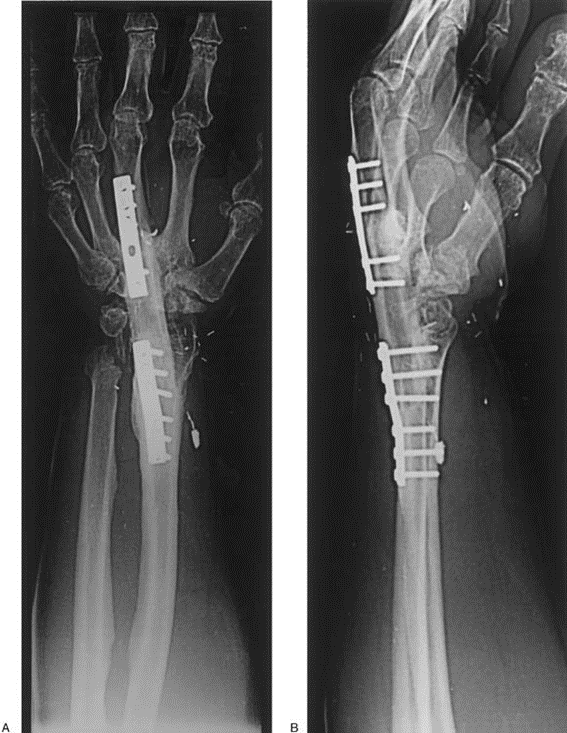
Figure 3. Follow-up postoperative radiographs of the wrist demonstrating arthrodesis with vascularised fibular graft fixation and satisfactory radiological union. (A) Posteroanterior view. (B) Lateral view.
DISCUSSION:
The present case demonstrates the aggressive nature of atypical mycobacterial infection involving the wrist, particularly in individuals with prolonged corticosteroid exposure [1,2]. Chronic immunosuppression likely contributed to both susceptibility and delayed eradication of infection in our patient. Unlike acute bacterial septic arthritis, infections caused by nontuberculous mycobacteria often progress slowly, producing persistent pain and swelling over several months or years before a definitive diagnosis is established [1].
One of the major clinical challenges in such cases is the nonspecific presentation. The patient initially underwent repeated drainage procedures and empirical therapy before organism identification was achieved. In many patients, these infections mimic tuberculous arthritis, inflammatory arthropathy, or chronic osteomyelitis, which may delay appropriate management [1,3]. Radiological findings in our case, including osteopenia and destructive lytic changes, reflected advanced disease with substantial carpal involvement [1].
Accurate microbiological diagnosis is essential because treatment strategies differ significantly from conventional pyogenic infections [5]. Culture-based identification of MAC organisms is often time-consuming because of their slow growth characteristics. In the present case, PCR testing enabled early confirmation of M. intracellulare, allowing targeted antimicrobial therapy to be initiated promptly [6]. Molecular diagnostic techniques therefore play an important role when atypical infection is clinically suspected [6].
The extent of joint destruction in our patient made reconstructive preservation of the wrist impractical. Therefore, definitive arthrodesis was selected after infection control had been achieved through radical debridement. Use of a vascularised fibular graft provided stable structural support while also improving biological incorporation at the fusion site [4]. The procedure resulted in reliable union and satisfactory long-term function without recurrence during follow-up [4].
Compared with previously reported cases, our patient required more extensive reconstruction because of severe osseous destruction and persistent disease despite prior interventions. This highlights the importance of early recognition and aggressive management before irreversible joint collapse occurs. Clinicians should consider atypical mycobacterial infection in patients with chronic wrist arthritis that does not respond to routine treatment, especially when associated with immunosuppression or repeated surgical procedures [2].
Overall, this case underlines that successful treatment depends on a multidisciplinary approach combining early diagnosis, organism-specific chemotherapy, adequate debridement, and appropriate reconstructive surgery. Timely diagnosis and combined medical–surgical management can provide durable infection control and satisfactory functional recovery, even in advanced cases.
CONCLUSION:
Atypical mycobacterial septic arthritis of the wrist is a rare and challenging condition that may lead to progressive joint destruction if diagnosis is delayed. Early microbiological diagnosis combined with aggressive debridement, targeted antimicrobial therapy, and appropriate reconstructive surgery can provide satisfactory long-term functional outcomes and infection control.
Informed Consent
Written informed consent was obtained from the patient for publication of this case report.
REFERENCES:
1. Yano, K., Kazuki, K., Ikeda, M., & Yoneda, M. (2014). Osteomyelitis and arthritis of the wrist caused by Mycobacterium intracellulare in an immunocompetent patient: A case report and literature review. Acta Reumatológica Portuguesa, 39(2), 176–181.
2. Anim-Appiah D, Bono B, Fleegler E, et al. Mycobacterium avium complex tenosynovitis of the wrist and hand. Arthritis Rheum. 2004;51(1):140–142.
3. Cheung JP, Fung BK, Ip WY. Mycobacterium marinum infection of the deep structures of the hand and wrist: 25 years of experience. Hand Surg. 2010;15(3):211–216.
4. Taniguchi Y, Yoshida M, Doi N, et al. Vascularized fibular osteocutaneous grafts in the treatment of severely infected wrist arthritis. J Reconstr Microsurg. 2002;18(2):71–75.
5. Kelly PJ. Bacterial arthritis in the adult. Orthop Clin North Am. 1975;6(4):973–981 .
6. Saito H, Tomioka H, Sato K, et al. Identification of various serovar strains of Mycobacterium avium complex by using DNA probes specific for Mycobacterium avium and Mycobacterium intracellulare. J Clin Microbiol. 1990;28(8):1694–1697.