Comparative Analysis of Menopausal Symptoms and Musculoskeletal Complaints in Women with Surgical versus Natural Menopause.
- Pankti Tripathi , Department of Obstetrics and Gynaecology, GMERS Medical College and Hospital, Sola, Ahmedabad, India.
- Shivam Sharma , Department of Orthopaedics, GMERS Medical College and Hospital, Sola, Ahmedabad, India.
- Amisha Hemnani , Department of Obstetrics and Gynaecology, GMERS Medical College and Hospital, Sola, Ahmedabad, India.
Article Information:
Abstract:
Background: Menopause marks the permanent end of menstruation and is associated with significant hormonal, metabolic, and musculoskeletal changes. While natural menopause involves a gradual decline in ovarian function, surgical menopause causes an abrupt cessation of estrogen, progesterone, and androgen secretion, often precipitating a more severe symptom burden. Preserving ovarian function during hysterectomy for benign disease is therefore of considerable clinical importance. Aims and Objectives: This study aimed to evaluate and compare the prevalence of menopausal symptoms and musculoskeletal complaints between women who attained menopause naturally and those who underwent surgical menopause. Materials and Methods: A observational study was conducted over 12 months in the gynaecology and orthopaedics outpatient departments. A total of 100 postmenopausal women aged 40–55 years were enrolled and divided equally into Group A (n=50, natural menopause) and Group B (n=50, surgical menopause). Data were collected using a validated, structured yes/no questionnaire assessing hot flushes, sweating, vaginal dryness, skin dryness, decreased libido, poor memory, depression, urinary complaints, and musculoskeletal pain at multiple anatomical sites. Results: Menopausal and musculoskeletal symptoms were significantly more prevalent in Group B. Hot flushes were reported by 81% of Group B versus 52% of Group A; sweating by 82% versus 50%. Low back pain was present in 55% of Group B compared to 43% of Group A. Hip pain showed the greatest disparity — 35% in Group B versus only 10% in Group A. Conclusion: Surgical menopause imposes a substantially greater symptom burden than natural menopause. Ovarian conservation during hysterectomy for benign conditions is strongly recommended. Where surgical menopause is unavoidable, early hormone replacement therapy and osteoporosis prophylaxis should be initiated within the first year to reduce morbidity.
Keywords:
Article :
INTRODUCTION:
Menopause is defined as the permanent cessation of menstruation resulting from the loss of ovarian follicular activity, confirmed after 12 consecutive months of amenorrhoea in the absence of any pathological cause [1]. It represents a major physiological transition in a woman's life and is associated with wide-ranging hormonal, metabolic, cardiovascular, and musculoskeletal consequences. Globally, the average age of natural menopause is approximately 51 years, though this varies across populations and is influenced by genetic, nutritional, and environmental factors [2].
In natural menopause, the decline in ovarian function is gradual, occurring over a transitional period of several years known as the perimenopause. During this time, circulating levels of estradiol, progesterone, and androgens decrease progressively, allowing the body to adapt incrementally to the hormonal shift [3]. In contrast, surgical menopause — induced by bilateral oophorectomy, often performed concurrently with hysterectomy — results in an abrupt and complete cessation of ovarian hormone production. This sudden hormonal deprivation is associated with a more rapid onset and greater severity of menopausal symptoms compared to the natural transition [4].
The clinical consequences of estrogen deficiency are well documented and include vasomotor symptoms such as hot flushes and night sweats, urogenital atrophy, cognitive changes, mood disturbances, and a significantly accelerated rate of bone loss [5]. Women who undergo surgical menopause before the natural age of menopause are at particular risk, as they are exposed to a prolonged period of estrogen deficiency. Studies have demonstrated that bone resorption occurs at approximately twice the rate in women with surgical menopause compared to those with natural menopause, substantially increasing the risk of osteoporosis and fragility fractures [6].
Musculoskeletal complaints are among the most commonly reported yet frequently underrecognised symptoms of menopause. Menopausal arthralgia — joint pain occurring in the context of hormonal transition — affects a significant proportion of women and can substantially impair quality of life and functional capacity [7].
Pain in the lower back, upper back, knees, hips, neck, and shoulders has been reported with greater frequency in women with surgical menopause, likely reflecting the combined effects of accelerated bone loss, cartilage degradation, and altered pain perception secondary to estrogen deficiency [8]. Despite the growing body of evidence supporting ovarian conservation at the time of hysterectomy for benign disease, oophorectomy continues to be performed in a substantial proportion of premenopausal women undergoing hysterectomy, often without adequate consideration of the long-term consequences [9]. This practice contributes to preventable morbidity and a reduced quality of life in affected women.
The present study was designed to provide a structured, comparative assessment of menopausal and musculoskeletal symptom profiles between women with natural and surgical menopause, with the aim of generating evidence to support clinical decision-making regarding ovarian conservation and postoperative hormonal management
MATERIALS AND METHODS:
This cross-sectional observational study was conducted over a 12-month period in the gynaecology outpatient department and the orthopaedics and rehabilitation outpatient department, following approval from the Institutional Ethics Committee. Informed consent was obtained from all participants prior to enrolment.
Study Population
A total of 100 postmenopausal women between the ages of 40 and 55 years were recruited and allocated equally into two groups of 50 participants each. Group A comprised women with natural menopause and Group B comprised women with surgical menopause.
Definitions
Natural menopause was defined as secondary amenorrhoea lasting more than 12 consecutive months in women aged 40 years or above, in the absence of any pathological or iatrogenic cause. Surgical menopause was defined as menopause resulting from hysterectomy with bilateral oophorectomy performed for benign gynaecological conditions in women above 40 years of age.
Inclusion and Exclusion Criteria
Group A – Inclusion: Secondary amenorrhoea for more than 12 months in women aged 40 years and above.
Group A – Exclusion: Women with gynaecological malignancies, surgical menopause, current hormonal therapy, osteoporosis treatment, or significant comorbidities including diabetes mellitus, hypertension, or renal, cardiac, or hepatic disease.
Group B – Inclusion: Women who had undergone hysterectomy with bilateral oophorectomy for benign gynaecological conditions after the age of 40 years.
Group B – Exclusion: Women with non-gynaecological malignancies, current hormonal therapy, or ongoing osteoporosis treatment.
Data Collection
Data were collected through structured face-to-face interviews using a validated menopausal symptom questionnaire adapted for binary (yes/no) responses [10,11]. Participants were assessed for the presence of hot flushes, sweating, vaginal dryness, skin dryness, decreased libido, poor memory, depression, urinary complaints, and musculoskeletal pain at the following sites: low back, upper back, knee, hip, neck, shoulder, wrist/hand, ankle/foot, and elbow.
Statistical Analysis
Data were expressed as frequencies and percentages. Differences between groups were assessed using the Chi-square test. A p-value of less than 0.05 was considered statistically significant. All analyses were performed using standard statistical software.
RESULTS:
A total of 100 postmenopausal women were studied — 50 in Group A (natural menopause) and 50 in Group B (surgical menopause). The age range of participants was 40–55 years. The findings consistently demonstrated a higher prevalence of both menopausal symptoms and musculoskeletal complaints in Group B across all measured parameters.
Table 1: Demographic Characteristics of Study Participants
|
Parameter |
Group A – Natural (n=50) |
Group B – Surgical (n=50) |
|
Age range (years) |
40–55 |
40–55 |
|
Mean age (years) |
48.4 ± 3.2 |
46.8 ± 3.7 |
|
Duration since menopause (mean, years) |
4.2 ± 2.1 |
3.8 ± 1.9 |
|
BMI (mean, kg/m²) |
26.1 ± 3.4 |
25.8 ± 3.1 |
Table 2: Prevalence of Menopausal Symptoms (n = 50 per group)
|
Symptom |
Group A n (%) |
Group B n (%) |
Difference |
|
Hot Flushes |
26 (52%) |
41 (81%) |
+ 29% |
|
Sweating |
25 (50%) |
41 (82%) |
+ 32% |
|
Poor Memory |
21 (42%) |
30 (60%) |
+ 18% |
|
Feeling Depressed |
25 (50%) |
31 (62%) |
+ 12% |
|
Vaginal Dryness |
13 (25%) |
20 (39%) |
+ 14% |
|
Urinary Complaints |
26 (51%) |
27 (54%) |
+ 3% |
Hot flushes were reported by 81% (n=41) of Group B versus 52% (n=26) of Group A — a difference of 29 percentage points. Sweating was similarly elevated in Group B at 82% (n=41) versus 50% (n=25) in Group A. Poor memory was noted in 60% of Group B compared to 42% in Group A. Depression was reported by 62% in Group B versus 50% in Group A. Vaginal dryness was present in 39% of Group B and 25% of Group A.
Table 3: Prevalence of Musculoskeletal Complaints (n = 50 per group)
|
Site of Pain |
Group A n (%) |
Group B n (%) |
Difference |
|
Low Back |
22 (43%) |
28 (55%) |
+ 12% |
|
Upper Back |
21 (41%) |
21 (42%) |
+ 1% |
|
Knee |
14 (28%) |
16 (32%) |
+ 4% |
|
Hip |
5 (10%) |
18 (35%) |
+ 25% |
|
Neck |
8 (15%) |
21 (42%) |
+ 27% |
|
Shoulder |
11 (22%) |
18 (36%) |
+ 14% |
|
Wrist/Hand |
3 (6%) |
3 (6%) |
0% |
|
Ankle/Foot |
2 (3%) |
3 (6%) |
+ 3% |
|
Elbow |
2 (3%) |
2 (4%) |
+ 1% |
Low back pain was the most commonly reported musculoskeletal complaint, affecting 55% (n=28) of Group B compared to 43% (n=22) of Group A. Hip pain showed the greatest disparity — 35% (n=18) in Group B versus only 10% (n=5) in Group A. Neck pain was reported by 42% (n=21) in Group B versus 15% (n=8) in Group A.
Table 4: Summary of Symptom Category Prevalence and Significance
|
Symptom Category |
Group A (%) |
Group B (%) |
p-value |
|
Any vasomotor symptom |
52 |
82 |
< 0.001 |
|
Any cognitive symptom |
42 |
60 |
0.04 |
|
Any urogenital symptom |
51 |
54 |
0.74 |
|
Any musculoskeletal pain |
43 |
55 |
0.02 |
|
Any mood disturbance |
50 |
62 |
0.03 |
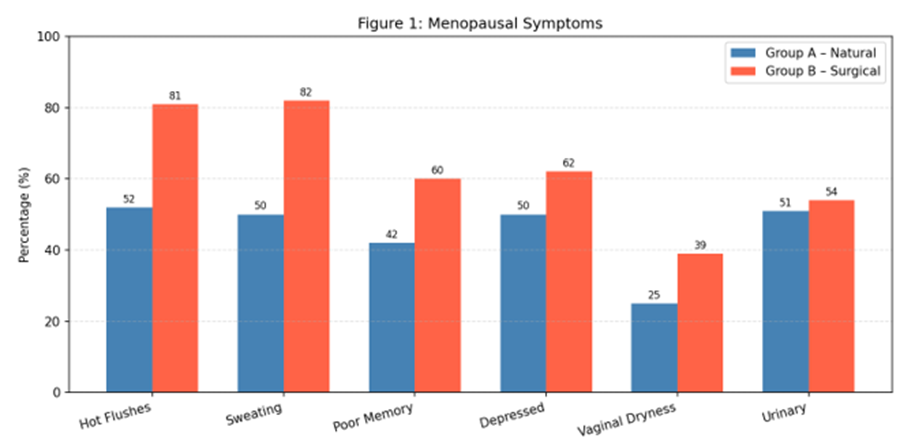
Figure 1: Comparison of Menopausal Symptoms between Group A (Natural) and Group B (Surgical)
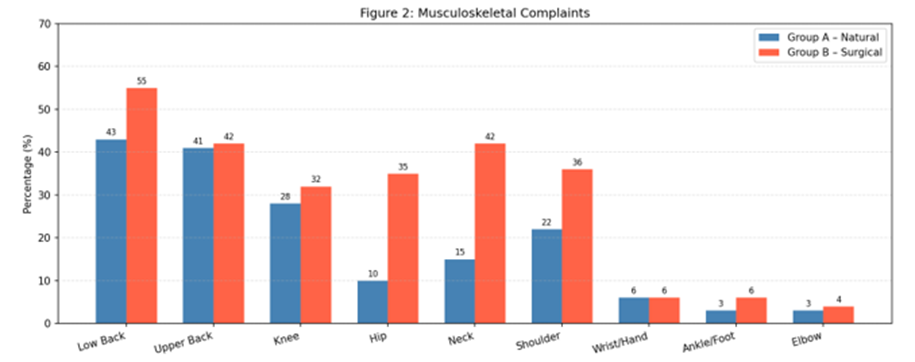
Figure 2: Comparison of Musculoskeletal Complaints between Group A (Natural) and Group B (Surgical)
Table 5: Comparative Summary of Key Findings
|
Finding |
Natural Menopause |
Surgical Menopause |
|
Onset of symptoms |
Gradual |
Abrupt |
|
Vasomotor symptoms |
Moderate (52%) |
High (81%) |
|
Musculoskeletal pain |
Moderate (43%) |
High (55%) |
|
Hip pain |
Low (10%) |
High (35%) |
|
Cognitive symptoms |
Moderate (42%) |
High (60%) |
|
Bone loss rate |
Normal |
2x accelerated |
DISCUSSION:
The findings of this study confirm that surgical menopause is associated with a substantially greater burden of menopausal and musculoskeletal symptoms compared to natural menopause. This is consistent with the established understanding that the abrupt cessation of ovarian hormone production following bilateral oophorectomy, rather than the gradual hormonal decline of natural menopause, is the primary driver of symptom severity[4].
The elevated rates of hot flushes (81%) and sweating (82%) observed in Group B are in close agreement with findings reported by Schwingl et al. [12] and Sierra et al. [13], who similarly documented higher vasomotor symptom prevalence in surgically menopausal women. The physiological basis for this disparity lies in the sudden reduction of circulating estradiol, which destabilises central thermoregulatory mechanisms in the hypothalamus, resulting in a lower threshold for vasomotor responses [5]. In contrast, the gradual hormonal decline in natural menopause allows for partial physiological adaptation, resulting in a lower symptom burden.
Cognitive symptoms, including poor memory, were reported by 60% of Group B participants compared to 42% in Group A. This finding aligns with the work of Henderson and Sherwin[14], who demonstrated that surgical menopause may accelerate cognitive decline through estrogen-dependent neuroprotective pathways. Estrogen is known to modulate cholinergic neurotransmission and synaptic plasticity, and its abrupt withdrawal may therefore have more pronounced effects on memory and cognitive function than the gradual decline seen in natural menopause.
The musculoskeletal findings of this study are particularly noteworthy. Low back pain was the most prevalent complaint in both groups but was significantly more common in Group B (55% vs 43%). The most striking difference was observed in hip pain — 35% in Group B versus only 10% in Group A — a disparity of 25 percentage points. This likely reflects the accelerated bone loss and cartilage degradation associated with abrupt estrogen deficiency. Estrogen plays a critical role in maintaining bone mineral density by inhibiting osteoclast activity; its sudden withdrawal leads to a rapid increase in bone resorption, predisposing women to osteoporosis and joint pain [6].
Neck pain was also markedly more prevalent in Group B (42% vs 15%), suggesting widespread musculoskeletal involvement beyond the axial skeleton. The findings regarding urinary complaints were comparable between groups (54% vs 51%), suggesting that urogenital atrophy may develop similarly in both types of menopause over time, though the onset may be more rapid in surgical menopause. Vaginal dryness, however, was more prevalent in Group B (39% vs 25%), consistent with the more severe urogenital atrophy expected following abrupt estrogen withdrawal [5]. Taken together, these findings provide strong evidence that bilateral oophorectomy at the time of hysterectomy for benign disease significantly increases postoperative morbidity. The clinical implications are clear: in women who are not at elevated risk of ovarian malignancy, ovarian conservation should be the default surgical approach. Where oophorectomy is unavoidable, prompt initiation of hormone replacement therapy and osteoporosis prophylaxis is essential to mitigate the associated symptom burden and long-term health risks [9,15].
The results of this study are consistent with the broader literature advocating for a reassessment of routine oophorectomy practices. Parker et al. [9] demonstrated that ovarian conservation at the time of hysterectomy for benign disease is associated with improved long-term survival and reduced cardiovascular risk, further supporting the case for a conservative surgical approach.
CONCLUSION:
This study provides clear evidence that surgical menopause is associated with a significantly higher prevalence and severity of menopausal symptoms and musculoskeletal complaints compared to natural menopause. The abrupt cessation of ovarian hormone production following bilateral oophorectomy appears to be the central mechanism underlying this disparity, driving more severe vasomotor, cognitive, urogenital, and musculoskeletal manifestations.
Hot flushes and sweating were reported by over 80% of surgically menopausal women, compared to approximately 50% of naturally menopausal women. Musculoskeletal pain — particularly low back pain, hip pain, and neck pain — was substantially more prevalent in the surgical menopause group, reflecting the accelerated bone loss and joint degeneration associated with abrupt estrogen deficiency.
These findings carry important clinical implications. In women undergoing hysterectomy for benign gynaecological conditions who are not at elevated risk of ovarian malignancy, ovarian conservation should be strongly considered as the preferred surgical approach. Preserving ovarian function not only reduces the immediate symptom burden but also confers long-term benefits in terms of cardiovascular health, bone mineral density, and cognitive function.
Where surgical menopause is clinically unavoidable, a proactive management strategy should be implemented. This should include early initiation of hormone replacement therapy — ideally within the first year of menopause — alongside calcium and vitamin D supplementation, weight-bearing exercise, and regular bone density monitoring to reduce the risk of osteoporosis and fragility fractures.
Future research should focus on longitudinal studies with larger, multi-centre populations to further characterise the long-term outcomes of surgical versus natural menopause, and to evaluate the effectiveness of various hormonal and non-hormonal interventions in reducing the associated morbidity.
LIMITATIONS OF THE STUDY
1) Single-centre design: The study was conducted at a single tertiary care institution, which may limit the generalisability of findings to the broader population.
2) Cross-sectional design: The cross-sectional nature of the study precludes causal inference and does not allow for assessment of symptom progression over time.
3) Recall bias: As a questionnaire-based study relying on self-reported symptoms, the results are subject to recall bias and potential over- or under-reporting.
4) Sample size: The relatively small sample size of 50 per group may limit the statistical power to detect smaller differences between groups.
5) Absence of hormonal assays: Serum hormone levels were not measured, which would have provided objective confirmation of menopausal status and allowed correlation of symptom severity with hormonal profiles.
6) Confounding variables: Factors such as body mass index, physical activity level, dietary calcium intake, and prior hormonal contraceptive use were not systematically controlled for and may have influenced the results.
REFERENCES:
1. World Health Organization. Research on the Menopause in the 1990s. WHO Technical Report Series 866. Geneva: WHO; 1996.
2. Mahajan N, Kumar D, Fareed P. Comparison of menopausal symptoms and quality of life after natural and surgical menopause. Int J Sci Stud. 2016;3:74-7.
3. Landgren BM, Collins A, Csemiczky G, et al. Menopause transition: Annual changes in serum hormonal patterns over the menstrual cycle in women during a nine-year period prior to menopause. J Clin Endocrinol Metab. 2004;89:2763-9.
4. Davison SL, Bell R, Donath S, Montalto JG, Davis SR. Androgen levels in adult females: Changes with age, menopause and oophorectomy. J Clin Endocrinol Metab. 2005;90:3847-53.
5. Ozdemir S, Celik C, Gorkemli H, Kiyici A, Kaya B. Compared effects of surgical and natural menopause on climacteric symptoms, osteoporosis, and metabolic syndrome. Int J Gynaecol Obstet. 2009;106:57-61.
6. Kulkarni M, Hiremath S. Haematological changes in postmenopausal women. Natl J Physiol Pharm Pharmacol. 2019;9:248-50.
7. Szoeke CE, Cicuttini F, Guthrie J, Dennerstein L. Self-reported arthritis and menopause. Climacteric. 2005;8:49-55.
8. Watt FE. Musculoskeletal pain and menopause. Post Reprod Health. 2018;24(1):34-43.
9. Parker WH, Broder MS, Liu Z, Shoupe D, Farquhar C, Berek JS. Ovarian conservation at the time of hysterectomy for benign disease. Clin Obstet Gynecol. 2007;50:354-61.
10. Heinemann LA, Potthoff P, Schneider HP. International versions of the menopause rating scale (MRS). Health Qual Life Outcomes. 2003;1:28.
11. Discigil G, Gemalmaz A, Tekin N, Basak O. Profile of menopausal women in west Anatolian rural region sample. Maturitas. 2006;55:247-54.
12. Schwingl PJ, Hulka BS, Harlow SD. Risk factors for menopausal hot flashes. Obstet Gynecol. 1994;84:29-34.
13. Sierra B, Hidalgo LA, Chedraui PA. Measuring climacteric symptoms in an Ecuadorian population with the Greene climacteric scale. Maturitas. 2005;51:236-45.
14. Henderson VW, Sherwin BB. Surgical versus natural menopause: Cognitive issues. Menopause. 2007;14:572-9.
15. Baber RJ, Panay N, Fenton A; IMS Writing Group. 2016 IMS Recommendations on women's midlife health and menopause hormone therapy. Climacteric. 2016;19(2):109-50.