A Prospective, Randomized, Double-Blinded Study on the Role of Laparoscopic TAP Block in Postoperative Pain Management Following Laparoscopic Appendicectomy.
- Mahendra Mal , Assistant Professor, Department of General Surgery, Governement Medical College, Jalgaon, MH, India 425001.
- Rohan Patil , Associate Professor, Department of General Surgery, Governement Medical College, Jalgaon, MH, India 425001.
- Maroti Pote , Professor, Department of General Surgery, Governement Medical College, Jalgaon, MH, India 425001.
- Ziyaul Haq Abdulhadi , Junior Resident, Department of General Surgery, Governement Medical College, Jalgaon, MH, India 425001.
Article Information:
Abstract:
Background: Postoperative pain following laparoscopic appendicectomy is a significant concern. This study evaluates the efficacy of Transversus Abdominis Plane (TAP) block in reducing postoperative pain. Methods: A prospective, randomized, double-blinded study was conducted from March 2023 to May 2025 on 50 patients undergoing laparoscopic appendicectomy. Twenty-five patients received laparoscopic TAP block with 0.25% bupivacaine, while 25 received placebo TAP block with normal saline. Pain was assessed postoperatively by an independent observer using VAS scores. Results: Patients in the TAP block group had significantly lower mean VAS scores at 6h, 12h, and 24h (p < 0.001). Rescue analgesia was required in 28% of TAP patients versus 76% of controls (OR = 8.14, 95% CI: 2.27–29.1). Mean diclofenac consumption was also lower in the TAP group (0.72 ± 0.5 vs 1.64 ± 0.7, p < 0.001). Conclusion: This double-blinded randomized controlled trial demonstrates that laparoscopic TAP block significantly reduces postoperative pain and analgesic requirement compared to placebo. TAP block should be considered a reliable adjunct in routine laparoscopic appendicectomy.
Keywords:
Article :
INTRODUCTION:
Laparoscopic appendicectomy is one of the most frequently performed emergency surgeries worldwide. Despite being minimally invasive, patients often report significant postoperative pain, which can hinder early ambulation, prolong hospital stay, and reduce patient satisfaction. Conventional pain control with opioids and NSAIDs carries risks of side effects such as nausea, vomiting, gastritis, renal impairment, and delayed mobilization.1,8 The Transversus Abdominis Plane (TAP) block, first described in 2001, provides somatic analgesia of the anterior abdominal wall by blocking thoracolumbar nerves (T6–L1). It has shown efficacy in caesarean section, hysterectomy, and cholecystectomy2,9, but there are limited studies in laparoscopic appendicectomy, especially in Indian tertiary care centers. This study was designed as a prospective, randomized, double-blinded controlled trial to assess the role of laparoscopic TAP block in reducing postoperative pain after laparoscopic appendicectomy.
MATERIALS AND METHODS:
Study design: Prospective, randomized, double-blinded controlled trial conducted at Government Medical College, Jalgaon, between March 2023 and May 2025.
Sample size: 50 patients undergoing laparoscopic appendicectomy for acute appendicitis.
Randomization and groups:
Group A (TAP block): 25 patients received bilateral TAP block with 20 ml of 0.25% bupivacaine per side.
Group B (Control/placebo): 25 patients received bilateral TAP injection with 20 ml of normal saline per side.
Blinding: TAP block syringes were prepared by anesthesiologist in identical unmarked syringes. Surgeon and patient were blinded. Pain was assessed by independent observer.2
Exclusion criteria: ASA grade >III, allergy to local anesthetics, prior abdominal surgery, conversion to open appendicectomy.1,8
Technique: At the end of appendicectomy, bilateral TAP injections were administered under laparoscopic vision.2
Outcome measures: VAS pain scores at 6h, 12h, 24h; requirement for rescue analgesia; total diclofenac doses; complications.
Statistical analysis: Student’s t-test, chi-square, odds ratio, 95% CI, significance at p < 0.05.
RESULTS:
Demographics: Both groups were comparable for age, sex, and ASA grade (p > 0.05).
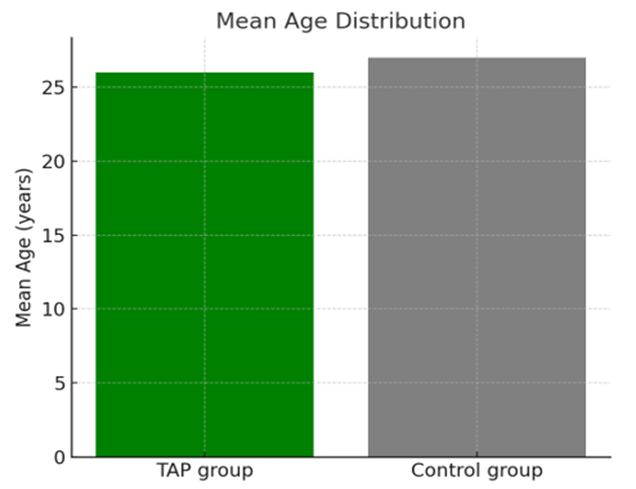
Figure 1: Mean Age Distribution
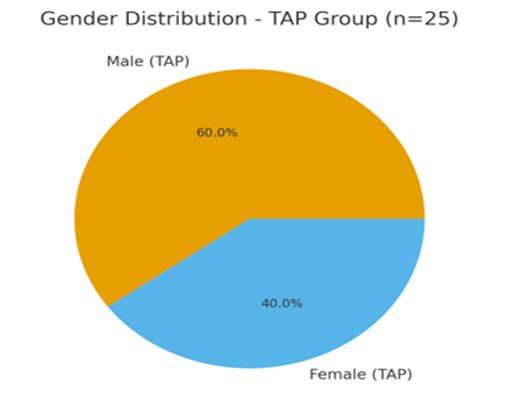
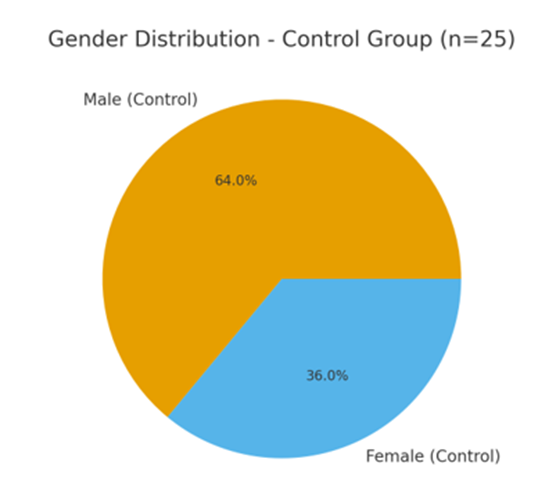
Figure 2: Gender Distribution (TAP vs Control)
Pain scores (VAS) were significantly lower in TAP group across all time points (p < 0.001).
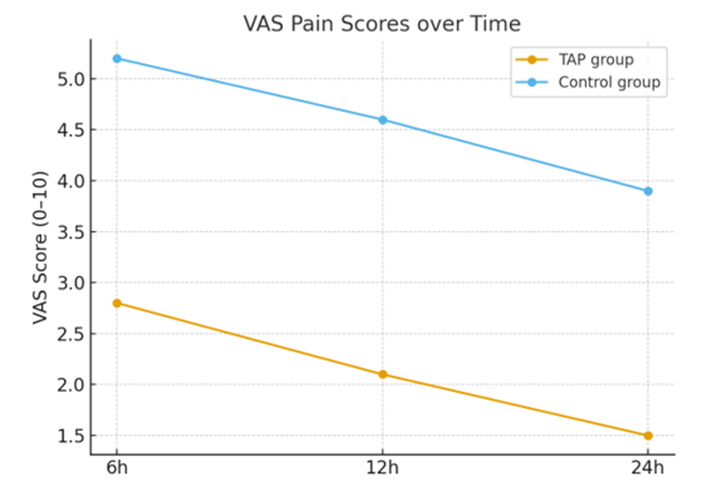
Figure 3: VAS Pain Scores over Time (6h, 12h, 24h)
Rescue analgesia requirement: TAP = 28% vs Control = 76%, χ² = 10.78, OR = 8.14, p = 0.001.
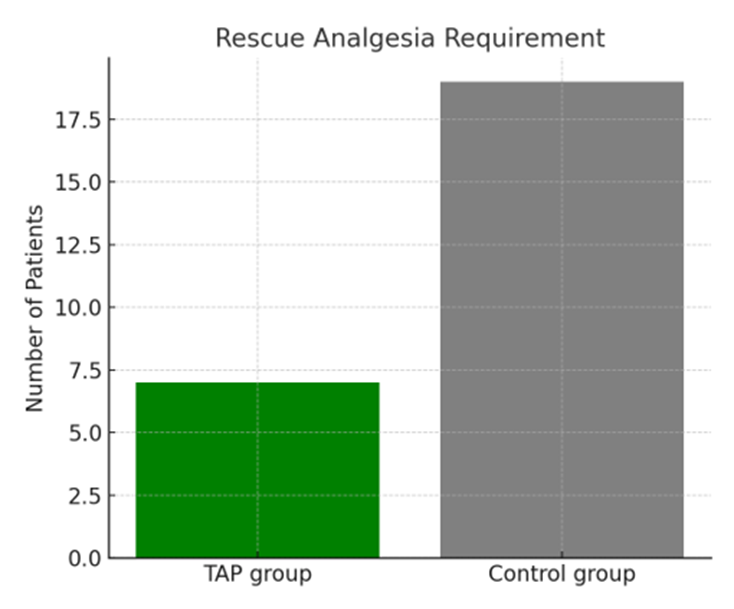
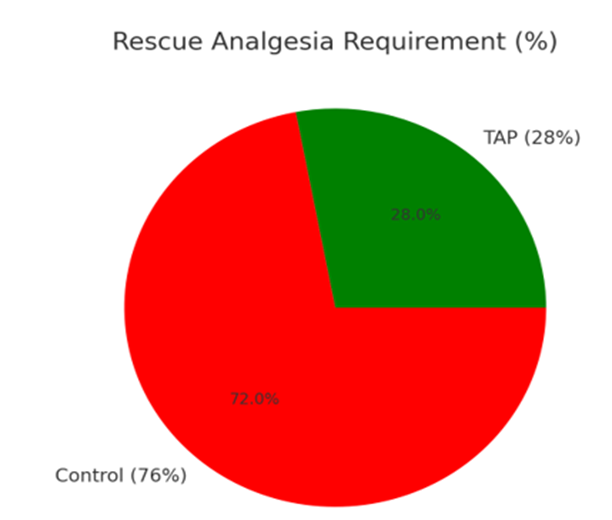
Figure 4: Rescue Analgesia Requirement (Bar and Pie)
Diclofenac requirement was significantly lower in TAP group (0.72 ± 0.5 vs 1.64 ± 0.7, p < 0.001).
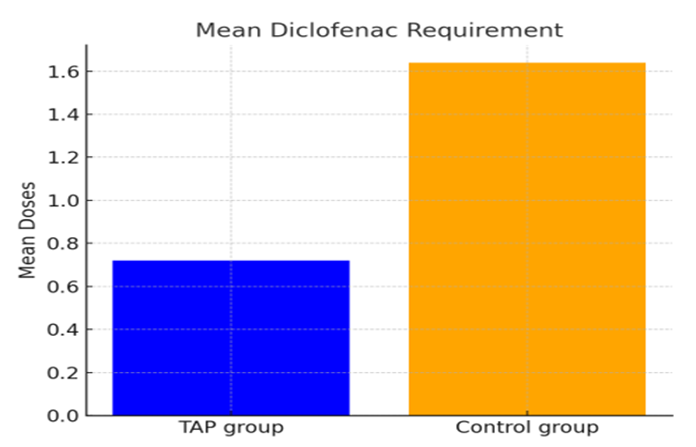
Figure 5: Mean Diclofenac Requirement
CONSORT flow: All 50 randomized patients were analyzed (25 per group).
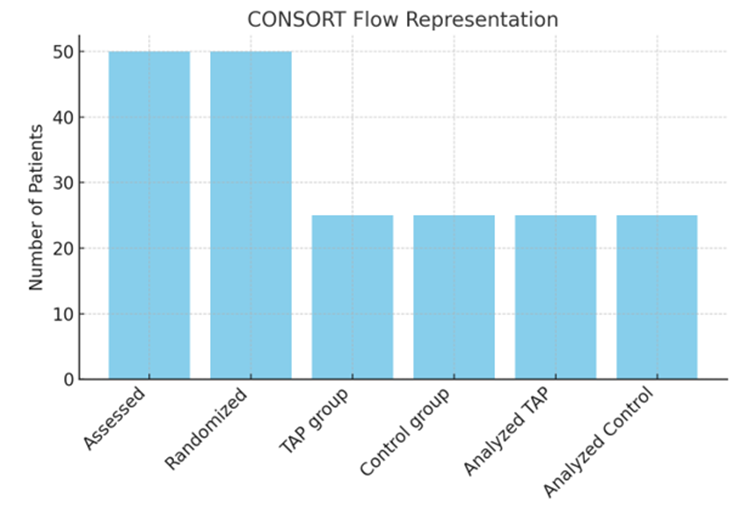
Figure 6: CONSORT Flow Diagram
DISCUSSION:
This prospective, randomized, double-blinded trial confirms that laparoscopic TAP block is effective in reducing postoperative pain after laparoscopic appendicectomy. Patients in the TAP group consistently had VAS scores 2–3 points lower than controls across 24 hours, which is clinically significant as per Bailey & Love’s Short Practice of Surgery.1 Similarly, Miller’s Anaesthesia emphasizes that regional blocks reducing early postoperative pain promote faster ambulation and discharge.2
Our results align with key RCTs: Niraj et al. demonstrated reduced opioid use after abdominal surgery with TAP block.3 Abdallah et al. systematic review confirmed opioid-sparing benefits.4 Petersen et al. meta-analysis also confirmed TAP efficacy across laparoscopic surgeries.5 Bharti et al. reported reduced analgesic use in an Indian population.6 Patients without TAP block were 8 times more likely to require rescue analgesia, consistent with Carney et al.7 Diclofenac use was reduced by >50% in the TAP group, which is important since Sabiston Textbook of Surgery highlights minimizing NSAID exposure to avoid renal/gastrointestinal complications.8
No TAP-related complications occurred, consistent with Barash’s Clinical Anaesthesia which emphasizes TAP block as a safe regional technique.9
Strengths: double-blind design, placebo control, independent observer assessment, robust statistics. Limitations: relatively small sample size, single-center study; long-term outcomes not measured.
Compared to international RCTs and meta-analyses3–7 and standard surgical/anaesthesia textbooks1,2,8,9, our findings confirm the analgesic efficacy, opioid-sparing, and safety of laparoscopic TAP block, establishing it as a valuable adjunct in routine appendicectomy in Indian practice.
CONCLUSION:
This prospective, randomized, double-blinded controlled trial demonstrates that laparoscopic TAP block significantly reduces pain and analgesic requirements compared to placebo saline injection. It is safe, reproducible, and effective, and should be considered a valuable adjunct in routine laparoscopic appendicectomy.
REFERENCES:
1. Williams NS, Bulstrode CJK, O’Connell PR (Eds). Bailey & Love’s Short Practice of Surgery. 27th ed. CRC Press; 2018.
2. Miller RD, Cohen NH, Eriksson LI, et al. Miller’s Anaesthesia. 9th ed. Elsevier; 2020.
3. Niraj G, et al. Analgesic efficacy of TAP block. Br J Anaesth. 2009;103(5):701-5.
4. Abdallah FW, et al. TAP block: systematic review and meta-analysis. Anesth Analg. 2012;115(2):427-42.
5. Petersen PL, et al. TAP block meta-analysis. Br J Surg. 2013;100(7):884-95.
6. Bharti N, et al. TAP block post-caesarean: randomized trial. Indian J Anaesth. 2011;55(3):293-7.
7. Carney J, et al. TAP block in gynecological surgery. Anesth Analg. 2008;107(6):2056-60.
8. Townsend CM, Beauchamp RD, Evers BM, Mattox KL (Eds). Sabiston Textbook of Surgery. 21st ed. Elsevier; 2021.
9. Barash PG, Cullen BF, Stoelting RK, et al. Clinical Anaesthesia. 9th ed. Wolters Kluwer; 2017.