A Community-Based Cross-Sectional Study on Knowledge, Attitude, and Practice (KAP) of Tobacco Quitting Patterns among Rural Adults in Ghanpur and Ismailkhanpet, Telangana.
- Venkatesh , Assistant Professor, Community-Medicine, OSMANIA MEDICAL COLLEGE, HYDERABAD, TELANGANA.
- Suresh mekala , Assistant Professor, Paediatrics, GMC-Rajanna Siricilla, TELANGANA.
- Saikumar thaduka , Assistant Professor, Paediatrics, GMC-Rajanna Siricilla, TELANGANA,
Article Information:
Abstract:
Background: Tobacco consumption is a major preventable cause of mortality in India, yet rural populations face unique socio-cultural barriers to cessation. In the rural mandals of Telangana, the intersection of agricultural labor and the proximity to industrial corridors creates distinct tobacco usage patterns that necessitate localized study. Objectives: To assess the Knowledge, Attitude, and Practice (KAP) regarding tobacco quitting patterns among adults in the rural subcentres of Ghanpur and Ismailkhanpet, Telangana. Sample size was calculated using a 95% confidence level and a 5% margin of error based on regional prevalence data. Methods: A community-based cross-sectional study was conducted among 160 adults. Data were collected via an interviewer-administered structured questionnaire covering sociodemographics and cessation behavior. Results: The prevalence of current tobacco use was 29.4% (n=47). The study included 160 participants (mean age 47.3 years; 55% male). While general awareness of tobacco-related health risks was high (80.6%), clinical knowledge was significantly lower, with only 30% aware of Nicotine Replacement Therapy and 35% aware of government cessation services. The mean knowledge score was 3.67/6. The mean attitude score was 15.29/25, with the primary motivator for quitting being financial gain (47.5%) and the main barrier being low self-confidence (38.1%). In practice, 25% had made a serious quit attempt in the past year, primarily using traditional remedies (23.9%). Only 26.8% of participants reported receiving formal cessation advice during health facility visits. Conclusion: There is a significant "Quit-Gap" in rural Telangana; while health awareness is moderate, successful cessation is hampered by a lack of professional medical support and environmental triggers.
Keywords:
Article :
INTRODUCTION:
Tobacco consumption remains the single largest preventable cause of death and disease globally, responsible for more than 8 million deaths annually according to the World Health Organization . India carries a disproportionate share of this burden as the world's second-largest tobacco consumer, with an estimated 267 million users of smoked and smokeless tobacco products. The economic impact is equally devastating; the total economic costs attributable to tobacco use from all diseases in India for persons aged 35 years and above amounted to approximately 1% of the GDP.
Unique to India is the widespread use of smokeless tobacco (SLT), including khaini, gutka, zarda, and paan masala, in addition to smoked forms such as bidis, cigarettes, and hookah . In rural landscapes, smokeless tobacco is often culturally integrated and perceived as less harmful than smoking, despite its direct link to oral cavity cancers and cardiovascular morbidity.
Telangana continues to face significant tobacco-related morbidity, with rural areas like Patancheruvu Mandal presenting specific public health challenges . The local population in Ghanpur and Ismailkhanpet is predominantly engaged in agricultural livelihoods. In these settings, tobacco is often used to suppress hunger or fatigue during long farm hours. Furthermore, the proximity to the Patancheruvu industrial corridor introduces a transition in tobacco patterns—from traditional bidis to manufactured cigarettes and flavored gutka—that are not fully captured in national surveys like NFHS-5 or GATS-2
Rationale for the Study:The rationale for this study is centered on the need for localized, granular data to address the specific public health challenges of rural Telangana. While general state-level data exists, there is a significant lack of village-level information regarding the Knowledge, Attitude, and Practice (KAP) of tobacco quitting.
• Localized Data: Village-level data on Knowledge, Attitude, and Practice (KAP) is lacking for the Patancheruvu Mandal.
• Closing the "Quit-Gap": The study investigates why many users who intend to quit fail, focusing on the lack of access to formal cessation services.
• Cultural Perceptions: In these settings, smokeless tobacco (SLT) is often perceived as less harmful than smoking, necessitating targeted education.
Aims and Objectives
• Primary Objective: To assess the knowledge, attitude, and practice (KAP) of tobacco quitting patterns among adults aged 18 and above in Ghanpur and Ismailkhanpet.
Secondary Objectives:
• To determine the prevalence of tobacco use in the study area.
• To study quitting patterns and identify barriers associated with cessation.
•To identify barriers and factors associated with cessation failure
• To evaluate awareness of formal cessation services.
MATERIALS AND METHODS:
Study Design
This is a community-based, cross-sectional study using the KAP framework.
Study area
The study area comprises the rural villages of Ghanpur and Ismailkhanpet in Patancheruvu Mandal
Study Population
All adults aged 18 years and above who are permanent residents (residing for more than 6 months) were eligible. We excluded transient workers, seasonal migrants, and individuals with cognitive impairments preventing meaningful participation.
Inclusion Criteria
• Age ≥ 18 years (both sexes)
• Residing in the selected rural villages of Ghanpur and Ismailkhanpet ,Patancheruvu Mandal for ≥ 6 months
• Willing to provide written/verbal informed consent
• Current tobacco users, ex-users, and never-users (all included for KAP comparison)
Exclusion Criteria
Age < 18 years
• Transient workers, seasonal migrants, or visitors
• Individuals with serious psychiatric illness or cognitive impairment preventing meaningful
participation
• Those who decline to give consent
Sample Size and Sampling
The sample size of 160 was calculated using the formula
n=4pq/l2
We utilized a baseline prevalence (p) of 11.3% derived from the 2026 EAC-PM Working Paper on rural tobacco trends. A systematic random sampling of households was employed across the two subcentres.
p=0.113,q=0.887 and l=precision(allowable error,typically 5%).
RESULTS:
Socio-Demographic Profile
Analysis of the 160 participants revealed the following:
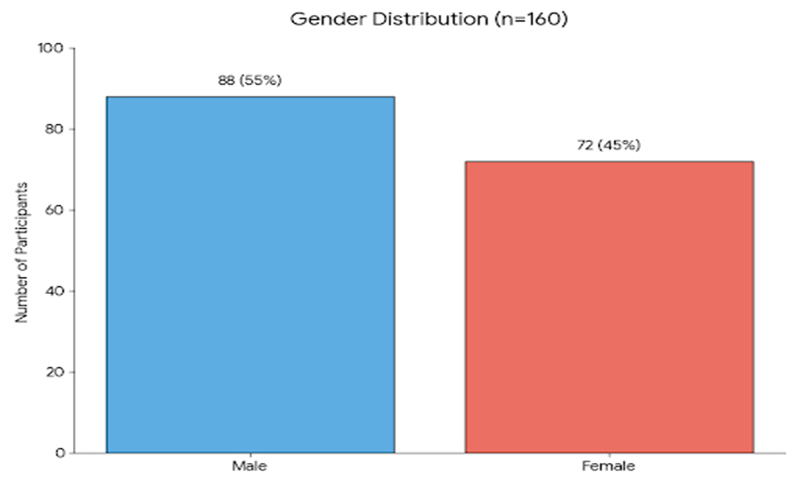
Gender: 55% Male (n=88) and 45% Female (n=72).
Education: A diverse spread with 25% illiterate (n=40) and 28.8% with primary education (n=46).
Occupation: Predominantly daily wage laborers (21.9%, n=35) and agricultural workers (14.4%, n=23).
Mean Age: The average age of the cohort was 47.2 years.
Prevalence of Tobacco Usage
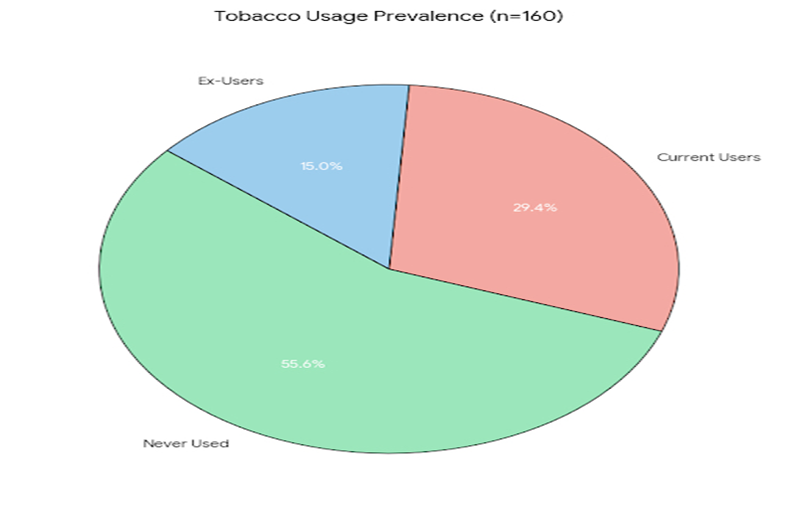
Current Users: 29.4% (n=47) of the population currently uses tobacco.
Ex-Users: 15% (n=24) identified as successful quitters/ex-users.
Never Used: 55.6% (n=89).

Knowledge, Attitude, and Practice of Tobacco Quitting.
Knowledge :
The overall average knowledge score for the 160 participants has adjusted to 3.67 out of 6.
High Awareness: General Health Risks
Participants remain well-informed about the direct physical dangers of tobacco use.
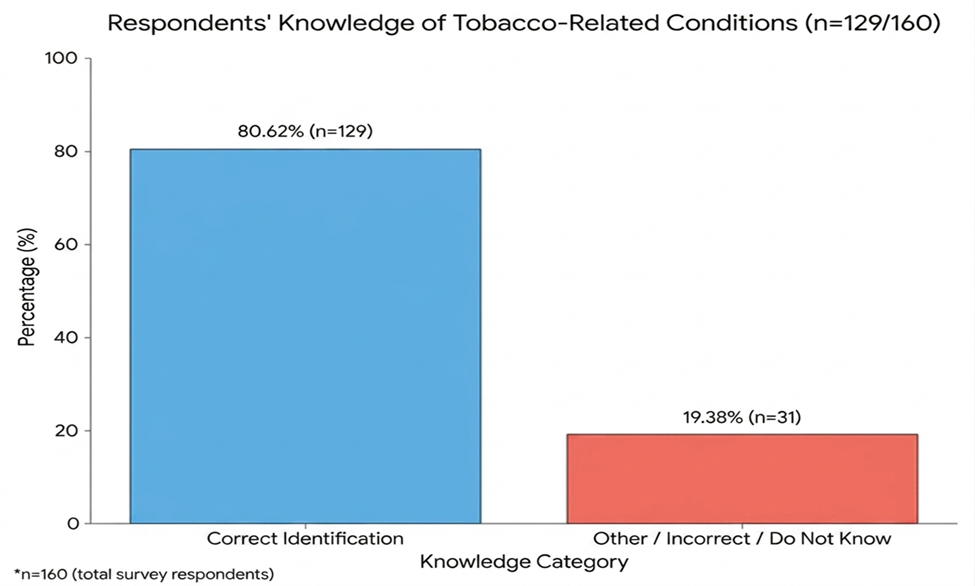
Disease Correlation: 80.62% of respondents correctly identify the link between tobacco and serious conditions such as oral cancer and lung disease.
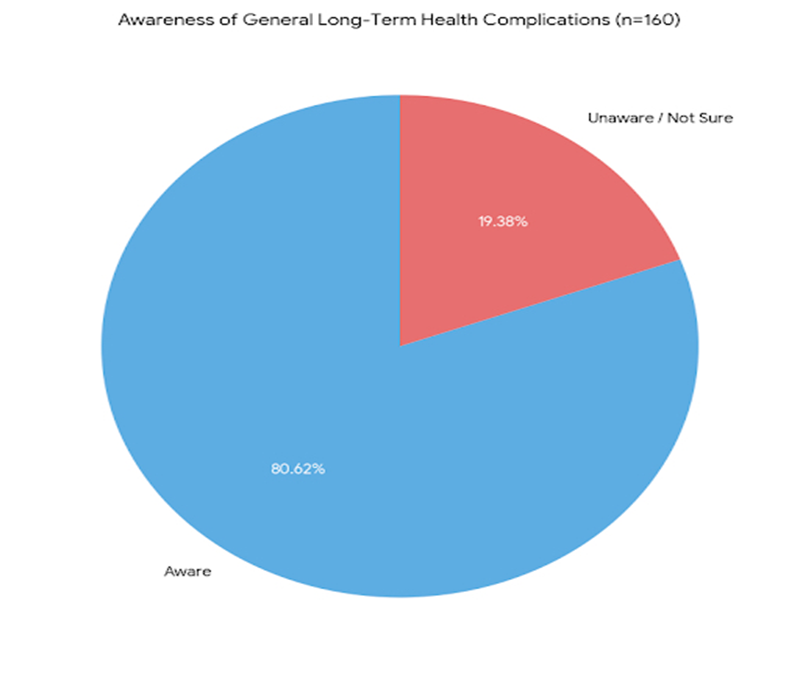
Long-term Impact: An identical 80.62% are aware of general long-term health complications.
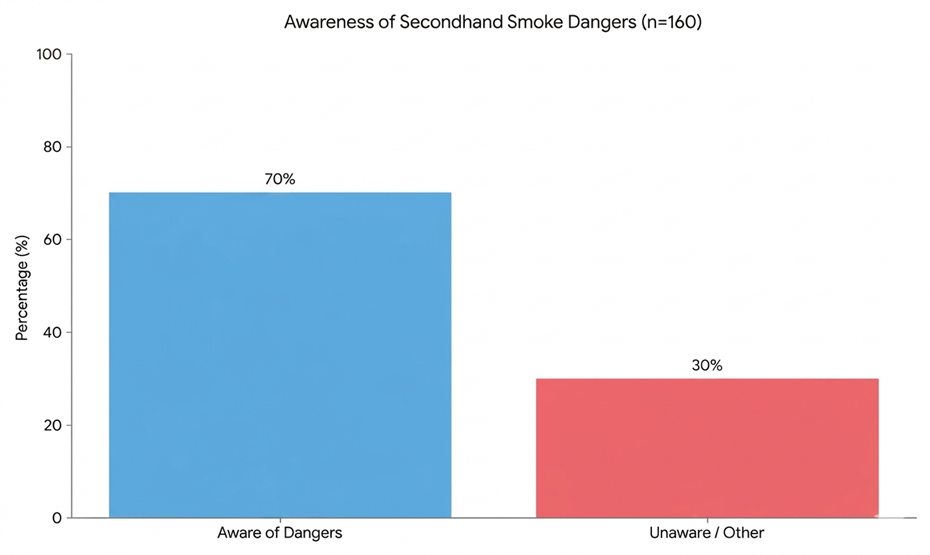
Environmental & Recovery Awareness: Awareness remains moderate for the dangers of secondhand smoke (70%) and the body’s ability to recover after quitting (70.6%).
The Clinical "Knowledge Void"
The most significant finding in the updated data is the profound lack of awareness regarding formal cessation assistance.
Government Services: Awareness of government-led cessation services (such as the National Tobacco Quitline or mCessation initiatives) is 35.%.
• Cessation Therapies (NRT): Knowledge of Nicotine Replacement Therapy remains low at 30%.
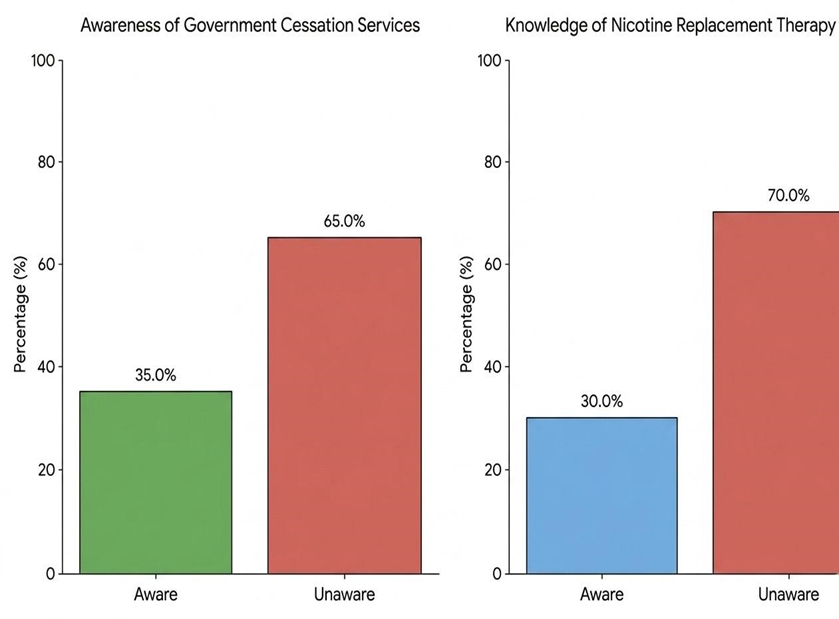
Implication: There is a clear disconnect between knowing that one should quit and knowing how to quit using available medical or state-sponsored resources.
Sociodemographic Correlation
Knowledge by Education Level:
Illiterate Group: This group recorded the highest mean knowledge score of 3.83/6. This suggests that oral communication and community-based health awareness programs (like those led by ASHA workers) are effectively reaching this demographic.
Higher Education: Participants with higher secondary or graduate education followed closely with a mean score of 3.76/6.
Primary/Secondary Schooling: Mean scores ranged between 3.52 and 3.60, indicating a consistent level of basic health literacy across all educational tiers in Ghanpur and Ismailkhanpet.
Knowledge by Occupation :Work environment and daily routines appear to play a role in exposure to health information.
Business & Agricultural Workers: Those who are self-employed (3.77) or agricultural laborers (3.74) showed slightly higher knowledge levels this may be due to higher community interaction or proximity to local health centers during transit.
Daily Wage Laborers: This group recorded the lowest mean score of 3.51/6. Long working hours and high-stress environments may limit their exposure to health education materials or cessation campaigns.
Homemakers: Reported a strong knowledge base with a mean of 3.75/6, possibly due to localized health outreach programs.
Knowledge by Sex
Female Participants: Demonstrated a slightly higher mean knowledge score (3.75/6) compared to their male counterparts.
Male Participants: Recorded a mean score of 3.60/6. While males are traditionally the primary consumers of tobacco in these regions, their slightly lower knowledge regarding cessation services highlights a critical area for targeted male-centric intervention.
Attitude :
The mean total attitude score for the 160 participants was 15.29 out of 25, indicating a neutral to slightly positive outlook on quitting.
Core Motivations and Perceptions
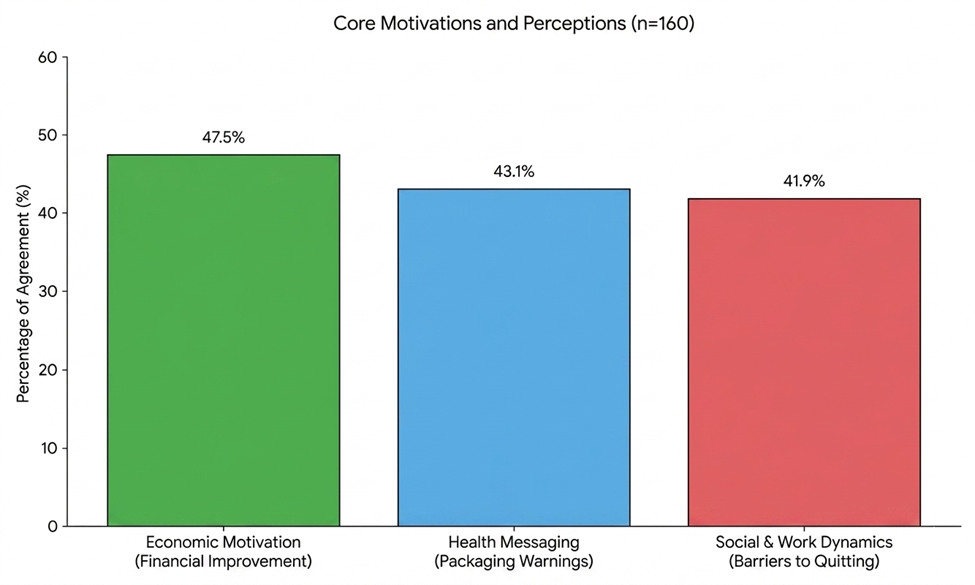
The analysis highlights varying levels of agreement across key motivational factors:
Economic Motivation: 47.5% of participants agreed or strongly agreed that quitting tobacco would significantly improve their financial status, making this the strongest perceived benefit.
Health Messaging: 43.1% felt that health warnings on tobacco packaging were a motivating factor for cessation.
Social and Work Dynamics: 41.9% identified social circles and work pressure as significant barriers to their intent to quit.
Confidence and Professional Support
The data suggests a notable gap in confidence and perceived responsibility:
Low Quitting Confidence: Only 38.1% of participants expressed high confidence in their ability to quit tobacco, even with available support.
Provider Dependency: 38.1% believed it is the primary responsibility of health workers to manage their cessation process. Mean Item Scores: On a 5-point Likert scale, the item "Health worker responsibility" received the lowest mean score (2.96), suggesting that many participants do not yet view professional medical guidance as a core component of their personal journey to quit.
Practice & Barriers :
Key Motivations for Practice
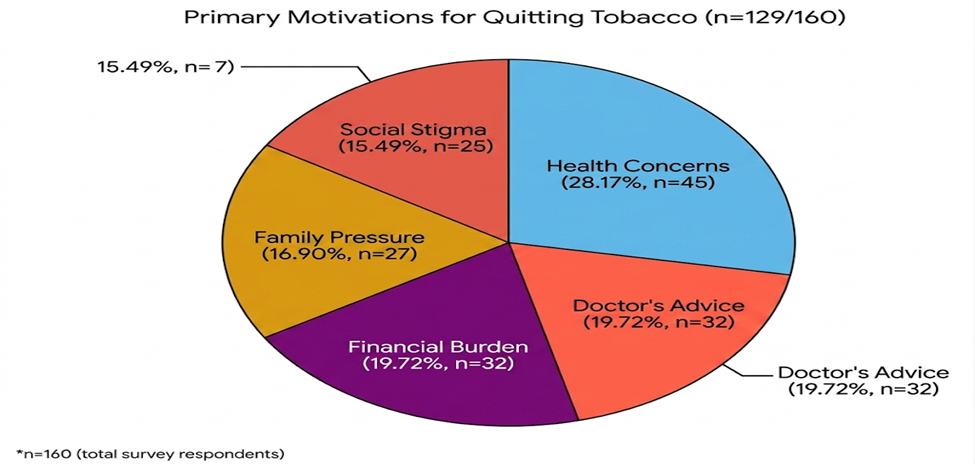
Health Concerns: This remains the primary driver, with 28.17% citing personal health as their main reason for wanting to stop.
External Advice & Finance: Both Doctor's advice and Financial burden accounted for 19.72% each, showing that medical guidance and cost are equally strong practical motivators.
Social Factors: Family pressure (16.90%) and Social stigma (15.49%) also play significant roles in influencing behavior.
Practice Methods Employed:
When participants attempt to quit, they often rely on non-clinical or self-managed methods: Traditional Remedies,The most common method used is traditional remedies (23.94%), which may include local herbal substitutes.
Behavioral Modification: Reducing the frequency of use was practiced by 22.54%.
Self-Will & Professional Aid: Self-will and Professional help were utilized by 19.72% of participants respectively
This highlights that roughly 1 in 5 participants are seeking formal assistance.
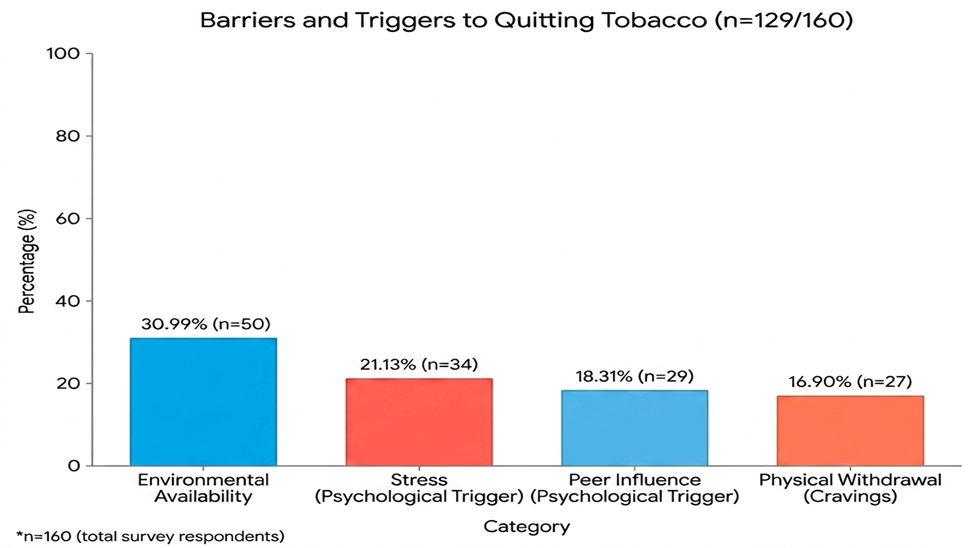
Barriers to Sustained Cessation
The data identifies significant obstacles that prevent participants from successfully staying tobacco-free:
Environmental Availability: The availability of tobacco products is the largest barrier, cited by 30.99% of participants. This suggests that constant exposure makes quitting difficult.
Psychological Triggers: Stress (21.13%) and Peer influence (18.31%) are major situational triggers for relapse.
Physical Withdrawal: Cravings affect 16.90% of those attempting to quit.
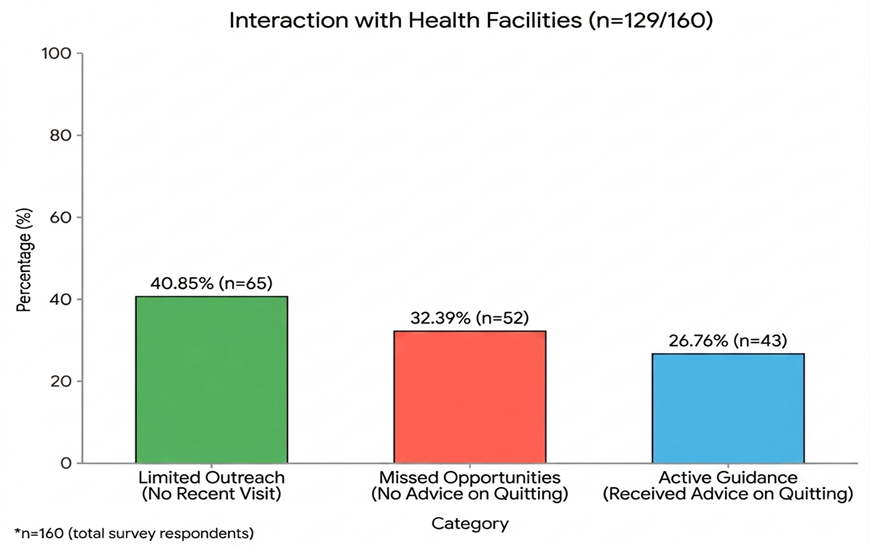
Interaction with Health Facilities
There is a notable gap in professional intervention during clinical visits:
• Limited Outreach: 40.85% of participants had not visited a health facility recently.
• Missed Opportunities: Of those who did visit, 32.39% reported that they did not receive any advice on quitting tobacco from the health staff.
• Active Guidance: Only 26.76% received direct cessation advice from a health facility.
DISCUSSION:
The 29.4% prevalence found in this study aligns with regional trends but highlights a significant "Quit-Gap". While general awareness of health risks like cancer is high (80.6%), there is a significant "clinical knowledge gap Only 30% of participants know about NRT, and 35% are aware of government services. This suggests that while people know tobacco is harmful, they do not know how to quit using modern medical method.
The moderate mean knowledge score of 3.67/6 indicates that public health messaging is reaching the community but remains superficial, focusing on fear (risks) rather than solutions (cessation tools). The attitude mean of 15.29/25 suggests a population that is "contemplative" but not yet fully committed to quitting.47.5% of participants are motivated by financial savings. In rural settings, the cost of tobacco is often a more immediate daily pressure than long-term health risksA critical finding is that only 38.1% feel confident they can quit. This low self-confidence acts as a psychological barrier, preventing people from even attempting to stop because they expect to fail.
Traditional Methods and Environmental Barriers
Behavioral patterns reflect a high level of self-reliance and environmental struggle , 23.9% use traditional remedies to quit, while only 19.7% seek professional help. This highlights a cultural preference for local solutions or a lack of trust/access to clinical interventions. The fact that 30.9% cite "availability" as their biggest barrier suggests that tobacco is deeply integrated into the social and physical environment of the villages.The most concerning result is that 73.2% of participants either did not visit a doctor or received no advice during their visit. This represents a "missed opportunity" for brief clinical interventions that could significantly boost quit.
CONCLUSION:
This study demonstrates a significant "Awareness-to-Action" gap within the community. While there is a high level of basic knowledge regarding the life-threatening risks of tobacco use, such as cancer and lung disease (80.6%), this awareness does not translate into effective quitting practices.
The low awareness of clinical cessation tools, like Nicotine Replacement Therapy (30%) and government-sponsored services (35%), highlights a critical lack of access to formal medical support.
The motivational landscape is primarily driven by economic factors, with nearly half of the participants (47.5%) viewing financial savings as the top benefit of quitting. However, high environmental availability of tobacco products and a severe lack of self-confidence (38.1%) create a cycle of relapse and failed attempts. Furthermore, the finding that over 70% of participants did not receive any cessation advice during health facility visits points to a massive missed opportunity in the primary healthcare system.
Ultimately, for tobacco cessation programs to be successful in this region, they must move beyond general health education. Efforts should focus on Increasing the accessibility of clinical cessation tools like Nicotine Replacement Therapy ,Training local health workers to provide proactive counseling during every patient interaction,Implementing community-based support groups to build the psychological confidence necessary for long-term abstinence.
Recommendations
1. Training ASHAs to provide basic nicotine cessation counseling.
2. Access to NRT: Making Nicotine Replacement Therapy more accessible at local PHCs.
3. Workplace Programs: Implementing "Smoke-Free" and "Tobacco-Free" initiatives at agricultural and industrial worksites.
4. Messaging: Use visual aids to show the daily financial savings of quitting, targeting the primary motivator for 47.5% of participants.
5. Establish village support circles to counter peer pressure and the high environmental availability of tobacco
6. Launch mobile SMS support or a "Quitline" to boost the low confidence levels (38.1%) found in the study.
REFERENCES:
1. International Institute for Population Sciences (IIPS). National Family Health Survey-5 (NFHS-5), Telangana. Mumbai: IIPS; 2021.
2. Ministry of Health & Family Welfare. Global Adult Tobacco Survey - India Round 2 (GATS-2). New Delhi; 2018.
3. World Health Organization. WHO Report on the Global Tobacco Epidemic, 2023. Geneva: WHO; 2023.
4. Singh R, et al. Tobacco cessation in India: Current trends and challenges. J Global Oral Health. 2025
5. Chandrupatla SG, et al. Tobacco use among adults in India: analysis of NFHS-5. Int J Community Med Public Health. 2026.
6. Khurana P, Banerjee R. Prevalence of tobacco use among young adults. Int J Community Med Public Health. 2024
7. Gawde NC, Quazi SZ. Correlates of tobacco quit attempts in India. Asian Pac J Cancer Prev. 2024-25
8. Park K. Park's Textbook of Preventive and Social Medicine. 26th ed. Jabalpur: Banarsidas Bhanot Publishers; 2021.
9. Economic Advisory Council to the Prime Minister (EAC-PM). Rise in Tobacco Consumption Working Paper. Feb 2026.
10. Gupta PC, et al. Smokeless tobacco use in India: A health crisis. Indian J Med Res. 2023.
11. Reddy KS, et al. Tobacco control in India. Health Policy. 2024.
12. Jha P, et al. A nationally representative case-control study of smoking and death in India. N Engl J Med. 2025
13. 1WHO. Tobacco Free Initiative (TFI): Cessation. 2023.
14. 1National Tobacco Control Programme (NTCP). Operational Guidelines. New Delhi: MoHFW; 2022.
15. Banerjee A, et al. Socio-economic determinants of tobacco use. J Prev Med. 2026.
16. Rao V, et al. Rural health challenges in Telangana. Telangana Med J. 2025.
17. Kumar A, et al. Impact of graphic warnings in rural India. J Health Comm. 2025.